👥 Social Forestry -- Forestry of the People, by the People
Definition, types (farm, extension, recreational, urban forestry), community woodlots, Van Mahotsav, arboriculture, and restoration of degraded forests
When Villages Became Forest Managers
The previous lesson covered the silviculture of individual tree species -- their families, uses, and growing conditions. Now we look at a broader movement: Social Forestry, which took those species out of government forests and put them into the hands of communities and farmers.
In the 1970s, India faced a fuelwood crisis. Rural families spent hours collecting firewood from distant forests, children missed school, and women bore the heaviest burden. The government realised that forests managed exclusively by officials could not meet the needs of 300 million forest-dependent people. The solution? Give the people a stake in growing and managing their own trees.
This lesson covers:
- Definition and origin -- J.C. Westoby and NCA 1976
- Types -- farm, extension, recreational, restoration, and urban forestry
- Agricultural connection -- how social forestry supports farming
What is Social Forestry?
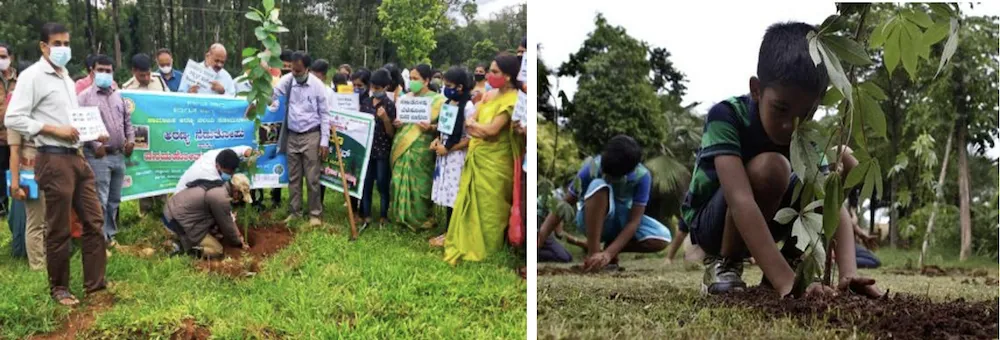
Social forestry is the science and art of growing trees in and outside traditional forest areas with intimate involvement of the people, integrated with other land-use operations, to provide a wide range of goods and services to individuals and society.
Pro Content Locked
Upgrade to Pro to access this lesson and all other premium content.
₹99 charged monthly · Cancel anytime
- All Agriculture & Banking Courses
- AI Lesson Questions (100/day)
- AI Doubt Solver (50/day)
- Glows & Grows Feedback (30/day)
- AI Section Quiz (20/day)
- 22-Language Translation (100/day)
- Recall Questions (20/day)
- AI Quiz (15/day)
- AI Quiz Paper Analysis (100/day)
- AI Step-by-Step Explanations (100/day)
- Spaced Repetition Recall (FSRS)
- AI Tutor
- Immersive Text Questions
- Audio Lessons — Hindi & English
- Mock Tests & Previous Year Papers
- Summary & Mind Maps
- XP, Levels, Leaderboard & Badges
- Generate New Classrooms
- Voice AI Teacher (AgriDots Live)
- AI Revision Assistant
- Knowledge Gap Analysis
- Interactive Revision (LangGraph)
🔒 Secure via Razorpay · Cancel anytime · No hidden fees
When Villages Became Forest Managers
The previous lesson covered the silviculture of individual tree species -- their families, uses, and growing conditions. Now we look at a broader movement: Social Forestry, which took those species out of government forests and put them into the hands of communities and farmers.
In the 1970s, India faced a fuelwood crisis. Rural families spent hours collecting firewood from distant forests, children missed school, and women bore the heaviest burden. The government realised that forests managed exclusively by officials could not meet the needs of 300 million forest-dependent people. The solution? Give the people a stake in growing and managing their own trees.
This lesson covers:
- Definition and origin -- J.C. Westoby and NCA 1976
- Types -- farm, extension, recreational, restoration, and urban forestry
- Agricultural connection -- how social forestry supports farming
What is Social Forestry?
Social forestry is the science and art of growing trees in and outside traditional forest areas with intimate involvement of the people, integrated with other land-use operations, to provide a wide range of goods and services to individuals and society.
| Feature | Detail |
|---|---|
| Also called | Community forestry |
| Term coined by | J.C. Westoby in 1976 |
| First recognised by | National Commission on Agriculture (NCA), 1976 |
| Core principle | Forestry of the people, by the people, for the people |
| Example event | Van Mahotsav -- annual tree-planting festival |
| Scope (NCA) | Farm forestry, community woodlots, reforestation of degraded lands |
IMPORTANT
Social forestry is practiced on lands outside conventional forest areas for the benefit of rural and urban communities. The defining characteristic is people's participation -- not top-down government management.
NOTE
Van Mahotsav was initiated by K. M. Munshi in 1950 and is commonly observed in the first week of July. This date-and-founder pair is a standard forestry one-liner.
NOTE
A small textbook contradiction exists around the origin-year recall for social forestry: many current exam notes use J.C. Westoby (1976), while some older objective books cite 1968. The shared course keeps the 1976 framing and flags the older 1968 value as a legacy-book variant.
Types of Social Forestry
| Type | Focus | Location |
|---|---|---|
| Farm Forestry | Trees on individual farms | Private agricultural land |
| Extension Forestry | Extending tree cover to treeless areas | Roads, canals, wastelands, avenues |
| Recreational Forestry | Trees for aesthetic value and recreation | Urban and peri-urban areas |
| Restoration Forestry | Rehabilitating degraded forests | Degraded forest lands |
| Urban Forestry | Managing trees in and around cities | Urban centres |
1. Farm Forestry
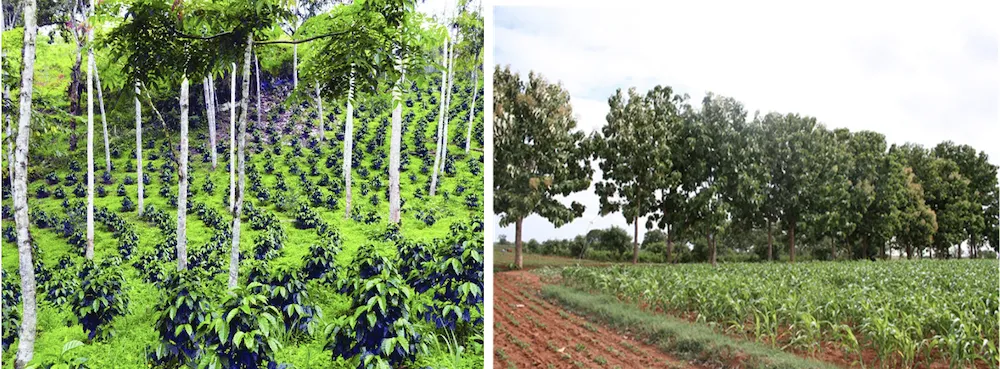
Growing trees by farmers on their own land -- on bunds, boundaries, and within fields.
| Aspect | Detail |
|---|---|
| Commercial farm forestry | Growing Eucalyptus, Poplar for sale to industries |
| Non-commercial | Meeting household needs (fuel, fodder, timber) |
| Includes | Windbreaks and shelterbelts around farms |
TIP
Exam distinction: Farm forestry = individual farmer grows trees on own land. Community forestry = trees on community/village land. Both fall under social forestry.
2. Extension Forestry
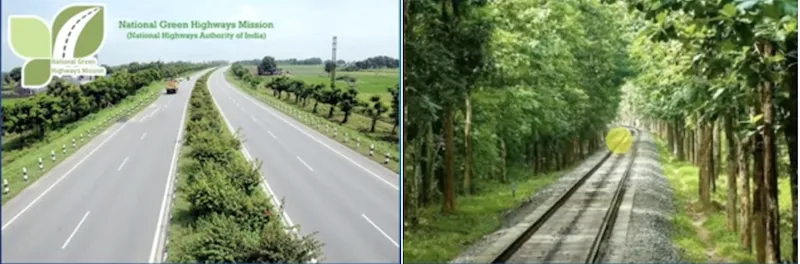
Growing trees in areas devoid of tree growth, away from conventional forests, to extend forest cover.
| Sub-type | Description | Example |
|---|---|---|
| Mixed forestry | Fodder grass with scattered fodder, fruit, and fuelwood trees on wastelands | Village common lands |
| Shelterbelts | Wide belts of trees at right angles to prevailing wind | Regional wind protection |
| Windbreaks | 2-3 rows of trees protecting individual farms | Farm-level wind protection |
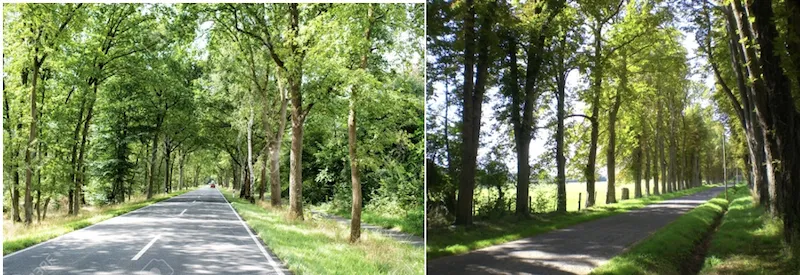
| Linear strip plantations | Fast-growing species along roads, canals, railways | National highway plantations |
| Environmental forestry | Trees around industrial complexes | Pollution and noise reduction |
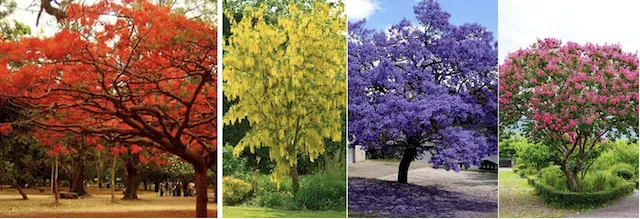
| Avenue planting | Trees on both sides of roads for shade and beauty | Gulmohar, Neem, Peltophorum |
| Community woodlots | Fuelwood plantations on community village lands | Village-managed fuelwood supply |
NOTE
Community woodlots are managed collectively by the village. They reduce pressure on natural forests by providing a local, sustainable source of fuelwood and fodder.
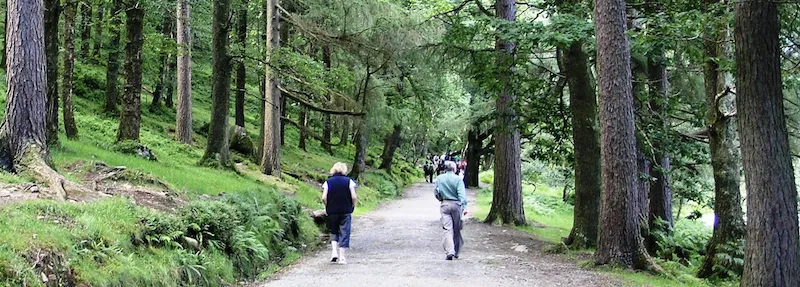
3. Recreational Forestry (Aesthetic Forestry)
| Feature | Detail |
|---|---|
| Purpose | Raising avenue and flowering trees for recreation and scenic value |
| Also called | Aesthetic forestry |
| Related profession | Arboriculture -- the art and science of caring for individual ornamental trees |
| Importance | Provides green spaces for physical and mental health in urban areas |
4. Restoration of Degraded Forests
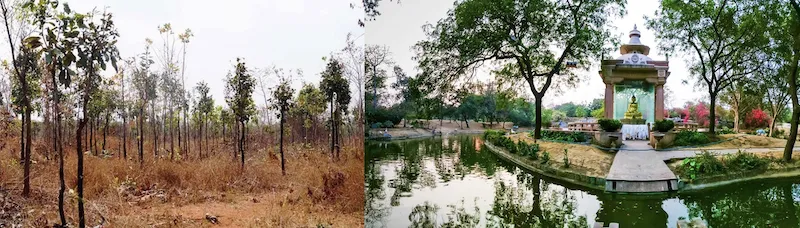
Re-establishing forest ecosystems on degraded, damaged, or destroyed lands.
NCA 1976 objectives for reforestation:
- Grow short-rotation fuel and timber species
- Organize fuelwood supplies at reasonable rates
- Link degraded forests with nearby rural/semi-urban centres
- Provide employment to local communities
- Rehabilitate degraded forests
Example: Buddha Jayanti Park, New Delhi -- a restored forest in the heart of the capital.
5. Urban Forestry
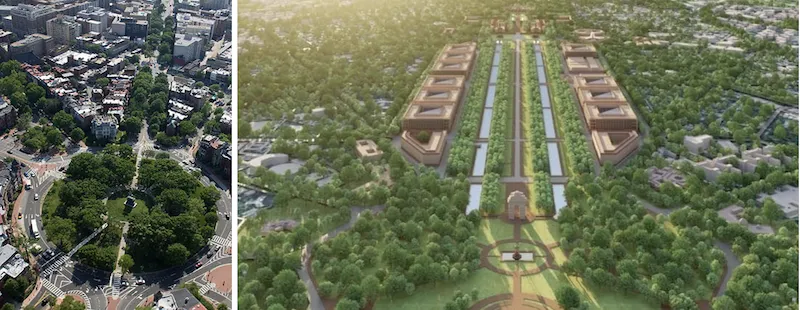
Management of trees on public and private lands in and around urban centres.
| Ecosystem Service | How Urban Forests Help |
|---|---|
| Air purification | Trees absorb pollutants and release oxygen |
| Temperature regulation | Reduce urban heat island effect |
| Noise reduction | Trees act as sound barriers |
| Stormwater management | Tree roots and soil absorb runoff |
| Mental health | Green spaces reduce stress and improve well-being |
| Aesthetic value | Beautify cityscapes |
- A recent exam-facing policy link is the Nagar Van Scheme, launched by MoEFCC on 5 June 2020 to support the development of urban forests across the country. Older objective-book phrasing often adds the target of about 200 urban forests, with financing linked to CAMPA. It is a useful modern example of how urban forestry moved from a concept into a named programme.
- CAMPA expands to Compensatory Afforestation Fund Management and Planning Authority. Another recall point from forestry objective books is that the E-Green Watch portal is used to monitor activities funded through CAMPA.
Agricultural Connection
Social forestry directly supports agriculture:
| Social Forestry Type | Benefit to Agriculture |
|---|---|
| Farm forestry | Windbreaks protect crops; trees on boundaries provide timber income |
| Shelterbelts | Reduce wind erosion of topsoil; protect crop yields |
| Community woodlots | Reduce farmer's need to buy fuelwood, saving money for farm inputs |
| Linear strip plantations | Trees along canals reduce evaporation; roadside trees provide shade |
| Restoration forestry | Rehabilitated watersheds improve water availability for irrigation |
Comparison of Social Forestry Types
| Type | Who Manages | Where | Primary Output |
|---|---|---|---|
| Farm forestry | Individual farmer | Own land | Timber, fuelwood, income |
| Extension forestry | Government + community | Wastelands, roadsides | Extended tree cover |
| Recreational forestry | Government | Urban/peri-urban | Aesthetic + recreation |
| Restoration forestry | Government + community | Degraded forests | Ecosystem recovery |
| Urban forestry | Municipal bodies | Cities | Ecosystem services |
Exam Tips
TIP
High-frequency exam facts:
- Social Forestry coined by -- J.C. Westoby (1976)
- First recognised by -- NCA 1976
- Also called -- Community forestry
- Core slogan -- "Of the people, by the people, for the people"
- Van Mahotsav -- annual tree-planting festival
- Arboriculture -- maintenance of ornamental trees
- Farm forestry -- trees on own land
- Community woodlots -- trees on village/community land
- Extension forestry -- extending tree cover to treeless areas
- Aesthetic forestry = Recreational forestry
Summary Table
| Topic | Key Fact |
|---|---|
| Definition | Trees in/outside forests with people's participation |
| Coined by | J.C. Westoby (1976) |
| Recognised by | NCA 1976 |
| Also called | Community forestry |
| Core principle | Of, by, for the people |
| Farm forestry | Trees on own land (commercial or non-commercial) |
| Extension forestry | Extending tree cover (avenues, shelterbelts, woodlots) |
| Recreational forestry | Aesthetic/scenic value; Arboriculture |
| Restoration | Rehabilitating degraded forests (e.g., Buddha Jayanti Park) |
| Urban forestry | Trees in cities for ecosystem services |
| Van Mahotsav | Annual tree-planting festival |
Summary Cheat Sheet
| Concept / Topic | Key Details |
|---|---|
| Social Forestry | Forestry of the people, by the people, for the people |
| Term coined by | J.C. Westoby (1976) at World Forestry Congress |
| Purpose | Meet fuel, fodder, timber needs of local communities |
| Farm forestry | Tree planting on private agricultural land by farmers |
| Community forestry | Tree planting on community/village land for common benefit |
| Extension forestry | Planting along roads, canals, railways |
| Urban forestry | Trees in cities for ecosystem services (air quality, shade, aesthetics) |
| Restoration forestry | Rehabilitating degraded forests (e.g., Buddha Jayanti Park) |
| Van Mahotsav | Annual tree-planting festival in India |
| Social vs Agroforestry | Social forestry = community focus; AF = farm-level integration of trees+crops |
| Key difference | Social forestry on common/waste land; agroforestry on farm land |
| Benefits | Fuelwood, fodder, employment, soil conservation, microclimate improvement |
| Target areas | Wastelands, degraded forests, village commons, roadsides |
TIP
Next lesson: Social forestry brings trees to communities, but how do we measure their growth and value? The next lesson covers Forest Mensuration -- the science of measuring tree dimensions, volume, age, and economic value.