👮🏼♀️ Forest Legislation in India
Indian Forest Act 1927, National Forest Policy 1988, Wildlife Protection Act 1972, Biodiversity Act 2026, and the Chipko Movement
From Hugging Trees to Writing Laws
The previous lesson covered Forest Mensuration -- how we measure trees and forests. But measuring forests is only meaningful if there is a legal framework to protect and manage them. India's forest legislation spans over a century, from colonial-era acts to modern biodiversity laws.
In 1973, villagers in Chamoli district (now Uttarakhand) wrapped their arms around trees to prevent contractors from felling them. This Chipko Movement sparked a national consciousness about forest conservation that eventually influenced India's forest policy.
This lesson covers:
- Indian Forest Act, 1927 -- the primary forest law and its three forest categories
- National Forest Policy, 1988 -- the current policy prioritising ecology over economics
- Wildlife Protection Act, 1972 -- and its 2006 amendment creating NTCA
- Biodiversity Act, 2002 -- regulating access to biological resources
- Chipko Movement -- the people's resistance that shaped policy
Timeline of Key Forest Laws
| Year | Legislation / Event | Significance |
|---|---|---|
| 1865 | First Indian Forest Act | First forest law in India |
| 1894 | First National Forest Policy | Public benefit as the central objective |
| 1927 | Indian Forest Act | Primary legislation governing forest management |
| 1952 | First National Forest Policy | Classified forests by function (now superseded) |
| 1972 | Wildlife Protection Act | Protection of wild animals, birds, and plants |
| 1973 | Chipko Movement | People's resistance to deforestation |
| 1976 | Tree Protection Act | Protection of trees |
| 1980 | Forest Conservation Act | Restricts diversion of forest land for non-forest use |
| 1988 | National Forest Policy (current) | Ecology over economics; 33% forest cover target |
| 2002 | Biodiversity Act | Regulates access to biological resources |
| 2006 | Wildlife Amendment Act | Created NTCA and Wildlife Crime Control Bureau |
Indian Forest Act, 1927
The primary legislation governing forests in India for nearly a century.
Pro Content Locked
Upgrade to Pro to access this lesson and all other premium content.
₹99 charged monthly · Cancel anytime
- All Agriculture & Banking Courses
- AI Lesson Questions (100/day)
- AI Doubt Solver (50/day)
- Glows & Grows Feedback (30/day)
- AI Section Quiz (20/day)
- 22-Language Translation (100/day)
- Recall Questions (20/day)
- AI Quiz (15/day)
- AI Quiz Paper Analysis (100/day)
- AI Step-by-Step Explanations (100/day)
- Spaced Repetition Recall (FSRS)
- AI Tutor
- Immersive Text Questions
- Audio Lessons — Hindi & English
- Mock Tests & Previous Year Papers
- Summary & Mind Maps
- XP, Levels, Leaderboard & Badges
- Generate New Classrooms
- Voice AI Teacher (AgriDots Live)
- AI Revision Assistant
- Knowledge Gap Analysis
- Interactive Revision (LangGraph)
🔒 Secure via Razorpay · Cancel anytime · No hidden fees
From Hugging Trees to Writing Laws
The previous lesson covered Forest Mensuration -- how we measure trees and forests. But measuring forests is only meaningful if there is a legal framework to protect and manage them. India's forest legislation spans over a century, from colonial-era acts to modern biodiversity laws.
In 1973, villagers in Chamoli district (now Uttarakhand) wrapped their arms around trees to prevent contractors from felling them. This Chipko Movement sparked a national consciousness about forest conservation that eventually influenced India's forest policy.
This lesson covers:
- Indian Forest Act, 1927 -- the primary forest law and its three forest categories
- National Forest Policy, 1988 -- the current policy prioritising ecology over economics
- Wildlife Protection Act, 1972 -- and its 2006 amendment creating NTCA
- Biodiversity Act, 2002 -- regulating access to biological resources
- Chipko Movement -- the people's resistance that shaped policy
Timeline of Key Forest Laws
| Year | Legislation / Event | Significance |
|---|---|---|
| 1865 | First Indian Forest Act | First forest law in India |
| 1894 | First National Forest Policy | Public benefit as the central objective |
| 1927 | Indian Forest Act | Primary legislation governing forest management |
| 1952 | First National Forest Policy | Classified forests by function (now superseded) |
| 1972 | Wildlife Protection Act | Protection of wild animals, birds, and plants |
| 1973 | Chipko Movement | People's resistance to deforestation |
| 1976 | Tree Protection Act | Protection of trees |
| 1980 | Forest Conservation Act | Restricts diversion of forest land for non-forest use |
| 1988 | National Forest Policy (current) | Ecology over economics; 33% forest cover target |
| 2002 | Biodiversity Act | Regulates access to biological resources |
| 2006 | Wildlife Amendment Act | Created NTCA and Wildlife Crime Control Bureau |
Indian Forest Act, 1927
The primary legislation governing forests in India for nearly a century.
Key provisions:
- Provides legal framework for forest management across the country
- Regulates movement of forest produce and levies duties
- Describes forest offences and penalties
- Classifies forests into three categories (Reserved, Protected, Village)
- Implementation is the responsibility of State/UT governments
- Some states (Kerala, Maharashtra, Karnataka) have their own acts based on this
Three Categories of Forests
| Category | Legal Basis | Protection Level | Default Rule |
|---|---|---|---|
| Reserved Forest | Chapter II | Highest | Everything prohibited unless specifically permitted |
| Protected Forest | Chapter IV | Moderate | Everything allowed unless specifically prohibited |
| Village Forest | Chapter III | Community use | State assigns rights to village community |
IMPORTANT
The most tested distinction in exams:
- Reserved forest = "Locked by default" -- nothing allowed unless a Forest Officer permits it
- Protected forest = "Open by default" -- everything allowed unless explicitly banned
- Degree of protection: Reserved > Protected > Village

TIP
Memory aid: Think of Reserved like a reserved train seat -- no one can use it without specific permission. Protected is like a general compartment -- open to all unless rules say otherwise.
National Forest Policy, 1988
The current forest policy of India, replacing the 1952 policy.
| Feature | Detail |
|---|---|
| Replaces | National Forest Policy 1952 |
| Principal aim | Environmental stability and ecological balance |
| Key principle | Ecological considerations > economic gains |
| Forest cover target (plains) | One-third (33%) of total area IBPS 2018 |
| Forest cover target (hills) | Two-thirds (66%) of total area |
| Tribal recognition | Symbiotic relationship between tribal people and forests |
Key shifts from 1952 to 1988:
| Aspect | 1952 Policy | 1988 Policy |
|---|---|---|
| Priority | Production forestry | Conservation and protection |
| View of forests | Economic resource | Ecological necessity |
| Community role | Minimal | Active tribal participation in protection and regeneration |
| Forest cover target | Not clearly defined | 33% plains, 66% hills |
NOTE
The higher target for hilly areas (66%) reflects that mountain ecosystems are more fragile and more dependent on forest cover for stability, erosion prevention, and water regulation.
Wildlife Protection Act, 1972
- Provides protection for India's wild animals, birds, and plant species
- Forms the legal basis for national parks, wildlife sanctuaries, and protected areas
- Introduced a system of Schedules (I-VI) classifying species by protection level
- Schedule I species receive the highest protection (e.g., Tiger, Elephant, Rhinoceros)
- Restricts hunting of listed animal species
Wildlife (Protection) Amendment Act, 2006
Created two key institutions:
| Institution | Full Name | Function |
|---|---|---|
| NTCA | National Tiger Conservation Authority | Oversees Project Tiger and tiger conservation |
| WCCB | Wildlife Crime Control Bureau | Tackles wildlife trafficking and poaching |
This amendment was enacted in response to the alarming decline in tiger populations and the need for dedicated institutional frameworks.
Biodiversity Act, 2002
India is one of the 17 mega-diverse countries in the world (as per UNEP classification), hosting about 7-8% of global biodiversity.
- In older forestry and environment one-liners, the Ministry of Environment, Forest and Climate Change (MoEFCC) is commonly keyed to its establishment year: 1985.
WARNING
Exam trap: Some sources say India is one of 12 mega-diversity countries (older Vavilov-era list), while others say 17 (UNEP's current list). The 17 mega-diverse countries is the more widely accepted and current figure. Check which list your exam source references.
| Feature | Detail |
|---|---|
| Introduced in Parliament | 2000 |
| Passed | 2002 |
| Aim | Regulate access to biological resources; ensure equitable benefit sharing |
| Aligned with | Convention on Biological Diversity (CBD) |
Key Institutions
| Body | Headquarters | Function |
|---|---|---|
| National Biodiversity Board | New Delhi | Advises central government on biodiversity conservation |
| National Biodiversity Authority (NBA) | Chennai | Statutory body regulating use of biological resources and traditional knowledge |
TIP
Exam tip: National Biodiversity Board = New Delhi. National Biodiversity Authority = Chennai. The Authority (NBA) is the statutory regulator; the Board is advisory.

Chipko Movement (1973)
| Feature | Detail |
|---|---|
| Origin | Chamoli district, Uttar Pradesh (now Uttarakhand), 1973 |
| Type | Non-violent environmental agitation |
| Method | Villagers hugged trees to prevent felling |
| Key figure | Sunderlal Bahuguna (1927-2021) Exams |
| Famous slogan | "Ecology is permanent economy" |
| Significance | Inspired conservation movements worldwide |
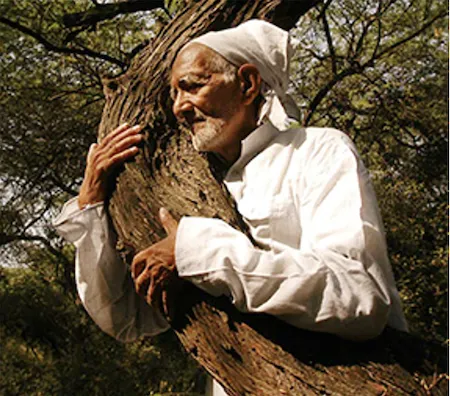
Bahuguna's slogan encapsulates the idea that environmental conservation is not opposed to economic development -- a healthy ecology is the foundation of a sustainable economy.
Related Conservation Movement: Appiko
The Appiko Movement is often revised together with Chipko because it carried the same tree-protection spirit into peninsular India.
| Feature | Detail |
|---|---|
| Movement | Appiko Movement |
| Started in | 1983 |
| Region | Karnataka |
| Core idea | Local people protected trees through direct action inspired by the Chipko model |
Agricultural Connection
Forest legislation directly impacts agriculture in several ways:
| Law | Impact on Agriculture |
|---|---|
| Indian Forest Act 1927 | Regulates movement of timber and forest produce used in farming |
| National Forest Policy 1988 | 33% forest cover target affects land allocation for agriculture |
| Wildlife Act 1972 | Restrictions on clearing forest land for cultivation |
| Biodiversity Act 2002 | Regulates use of indigenous crop varieties and traditional knowledge |
| Chipko legacy | Community forest management models used in farm forestry |
Exam Tips
TIP
High-frequency exam facts:
- Indian Forest Act -- 1927
- Reserved Forest -- Chapter II (highest protection)
- Protected Forest -- Chapter IV (moderate)
- Village Forest -- Chapter III
- Current forest policy -- 1988 (not 1952)
- Forest cover target (plains) -- 33%
- Forest cover target (hills) -- 66%
- Wildlife Protection Act -- 1972
- NTCA created by -- 2006 Amendment
- Chipko Movement -- 1973, Chamoli
- Sunderlal Bahuguna's slogan -- "Ecology is permanent economy"
- NBA headquarters -- Chennai
Summary Table
| Legislation | Year | Key Provision |
|---|---|---|
| Indian Forest Act | 1927 | Classification: Reserved (Ch. II) > Protected (Ch. IV) > Village (Ch. III) |
| National Forest Policy | 1988 | 33% cover (plains), 66% (hills); ecology > economics |
| Wildlife Protection Act | 1972 | Schedules I-VI; basis for national parks/sanctuaries |
| Wildlife Amendment | 2006 | Created NTCA and Wildlife Crime Control Bureau |
| Biodiversity Act | 2002 | NBA at Chennai; equitable benefit sharing |
| Chipko Movement | 1973 | Non-violent; "Ecology is permanent economy" |
Summary Cheat Sheet
| Concept / Topic | Key Details |
|---|---|
| First Indian Forest Act | 1865 — first forest law in India |
| Indian Forest Act | 1927 — currently in force; Reserved/Protected/Village forests |
| National Forest Policy 1894 | India's first forest policy; sole objective: public benefits |
| National Forest Policy 1952 | Functional classification: Protection, National, Village, Tree Land |
| National Forest Policy 1988 | Current policy; ecological balance > economic gains; 33% forest target |
| Wildlife Protection Act | 1972; protects wild animals, birds, plants; national parks & sanctuaries |
| Wildlife Amendment 2006 | Created NTCA and Wildlife Crime Control Bureau |
| Forest Conservation Act | 1980; prevents diversion of forest land for non-forest use |
| Biodiversity Act | 2002; NBA at Chennai; equitable benefit sharing |
| Chipko Movement | 1973; non-violent; "Ecology is permanent economy" |
| Forest Rights Act (FRA) | 2006; recognises rights of forest-dwelling tribal communities |
| Key exam dates | 1865 (first act), 1927 (current IFA), 1980 (conservation), 1988 (policy) |
TIP
Next lesson: With the legal framework established, the next lesson covers the India State of Forest Report (ISFR) 2023 -- the data report that measures how well India is meeting its forest policy targets, with state-wise rankings, carbon stock figures, and mangrove statistics.