🍄 Spawn, Substrate, Compost and Casing Science
Learn the core science behind mushroom production before crop-specific methods -- spawn, mother culture, substrate preparation, biological efficiency, compost C:N ratio, pasteurisation, casing soil, and contamination prevention.
The Cultivation Pipeline
Every cultivated mushroom moves through the same broad logic:
Culture -> Spawn -> Substrate or compost -> Incubation -> Fruiting -> Harvest
The crop-specific differences come later. Button mushroom needs selective compost and casing. Oyster mushroom needs pasteurised straw and good ventilation. Paddy straw mushroom needs warm conditions and fast marketing.
Culture and Spawn
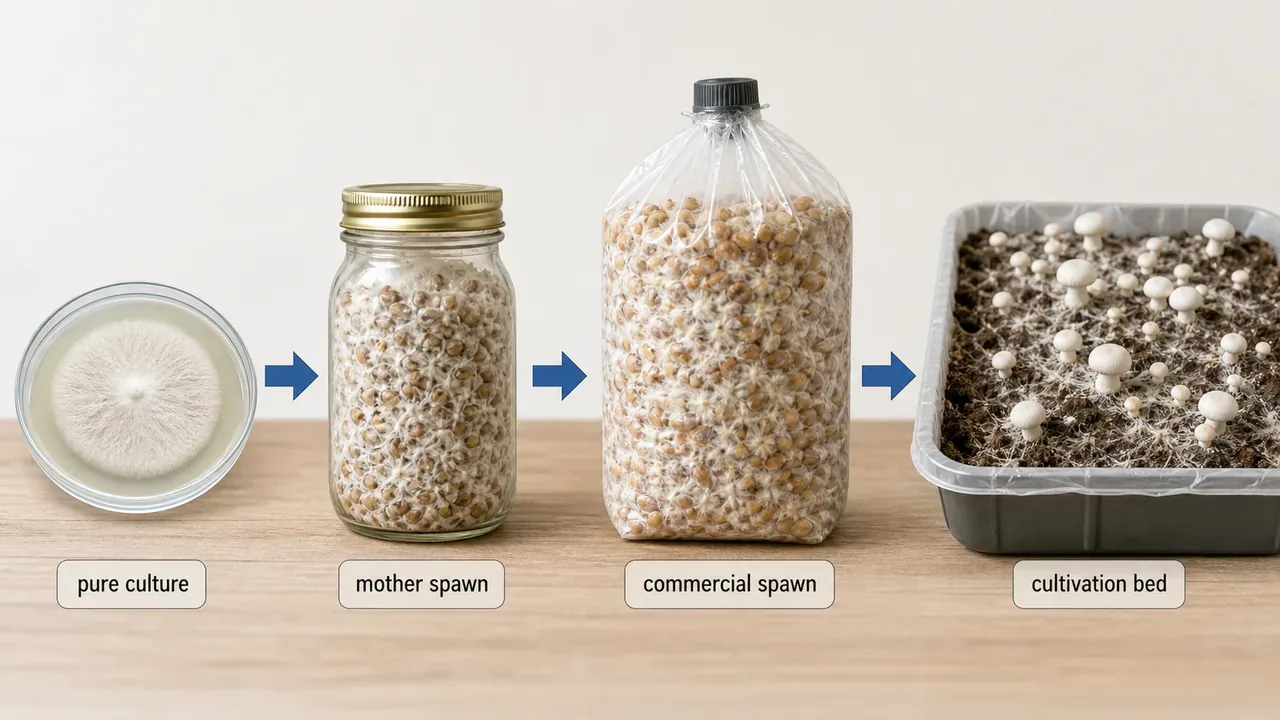
| Stage | What happens | Why it matters |
|---|---|---|
| Pure culture | A clean fungal culture is maintained on media such as PDA. | Maintains genetic purity and disease-free starting material. |
| Mother spawn | Mycelium is multiplied on sterilised grains. | Converts a small culture into usable planting material. |
| Commercial spawn | Grain spawn is packed and incubated until fully colonised. | This is what farmers buy and mix into substrate. |
Spawn is commonly prepared on wheat, rye, paddy, maize, or sorghum grains. The grain is often buffered with CaCO3 and CaSO4 to prevent clumping and keep pH favourable.
IMPORTANT
Bad spawn = bad crop. Weak, old, contaminated, overheated, or dried spawn can ruin even perfect substrate.
Substrate vs Compost
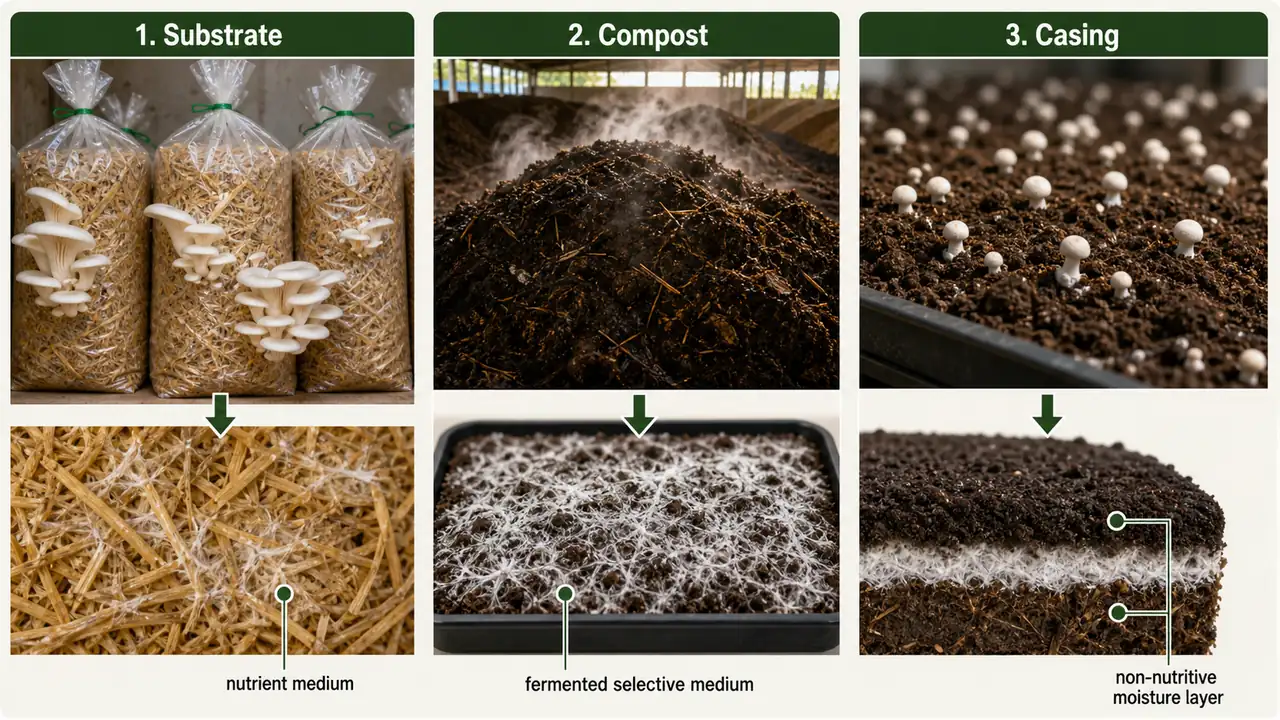
| Term | Used for | Meaning |
|---|---|---|
| Substrate | Oyster, milky, paddy straw, many tropical mushrooms | The material the fungus grows on, such as paddy straw, wheat straw, sawdust, bagasse, cotton waste, or corn cobs. |
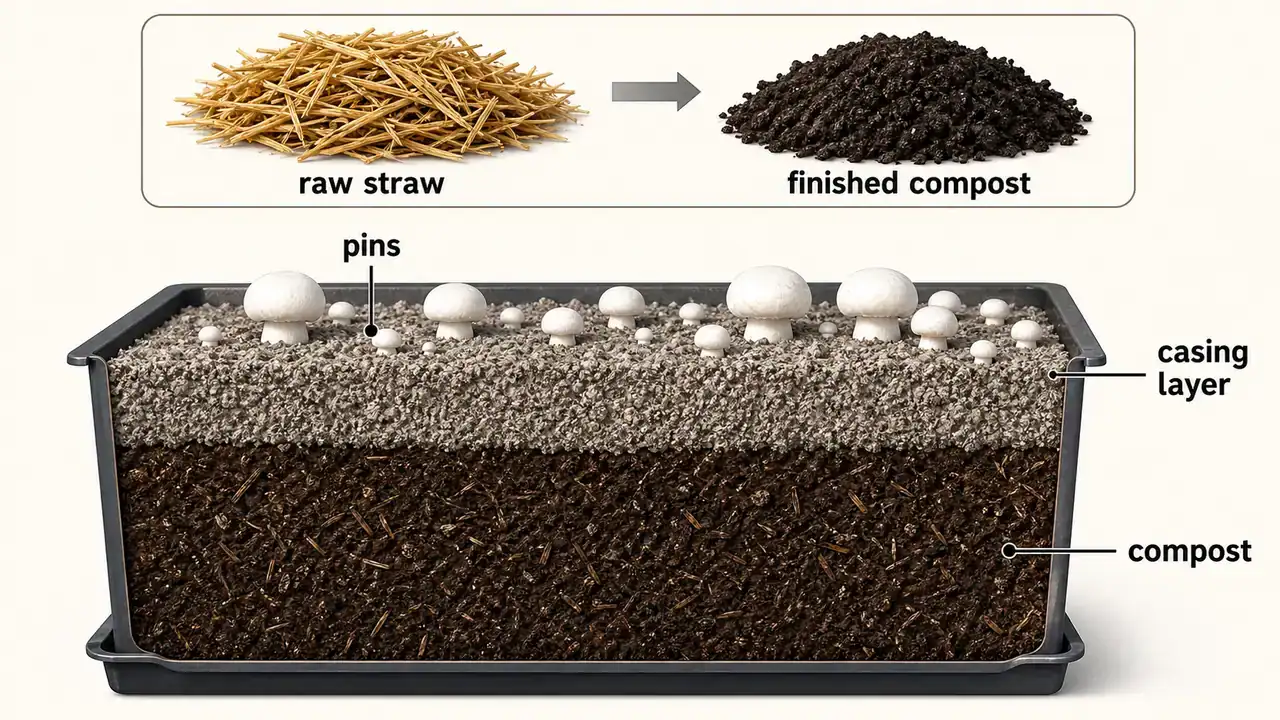
| Compost | Button mushroom | A microbially fermented, selective medium that favours Agaricus bisporus over competitor fungi. |
| Casing | Button and milky mushroom | A non-nutritive top layer that supports pin formation and moisture. |
Oyster mushroom is simpler because Pleurotus directly degrades lignocellulose. Button mushroom is more technical because it is a secondary decomposer that prefers compost already transformed by microbes.
Biological Efficiency
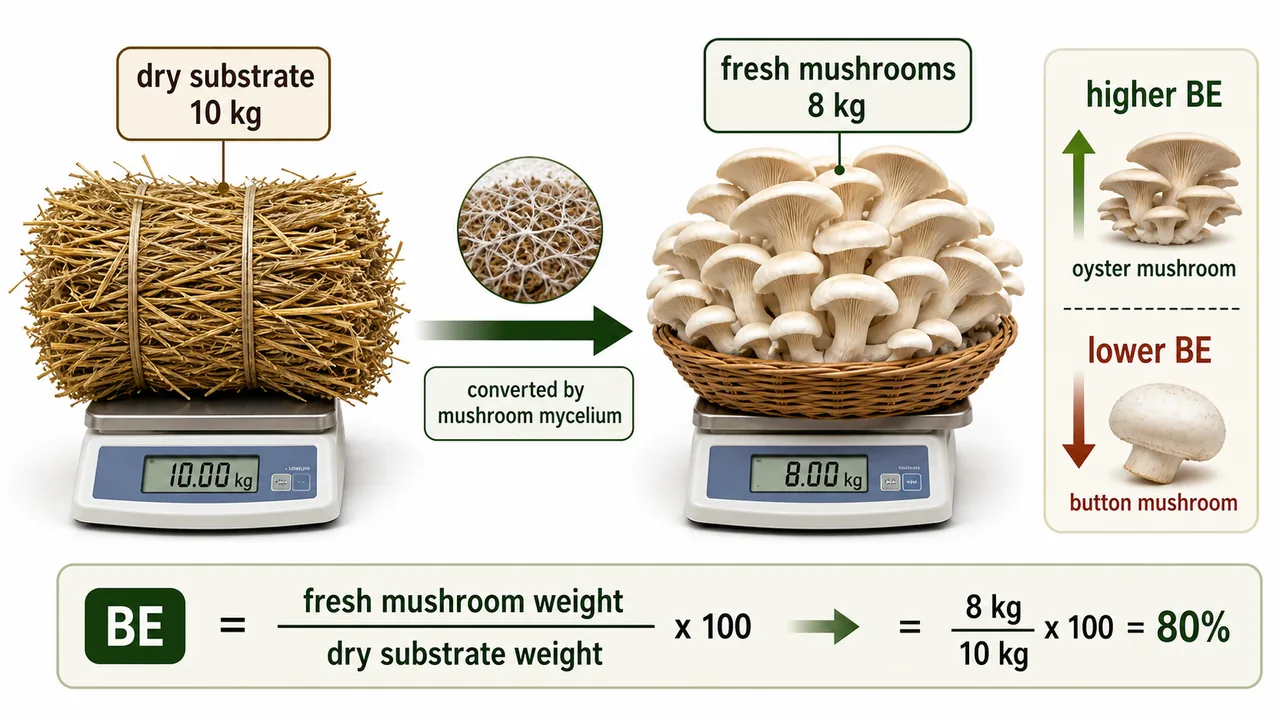
Biological Efficiency (BE) measures how efficiently a mushroom converts dry substrate into fresh mushrooms.
Formula:
BE (%) = Fresh mushroom weight / Dry substrate weight x 100
| Mushroom | Exam interpretation |
|---|---|
| Button | Lower BE; often discussed as kg fresh mushroom per 100 kg compost. |
| Oyster | Higher BE; often 50-100% or more under good management. |
| Milky | High BE in warm climates when substrate and casing are well managed. |
TIP
BE is not profit. It is biological conversion. Profit also depends on spawn cost, labour, electricity, packaging, market price, and spoilage.
Button Compost Science
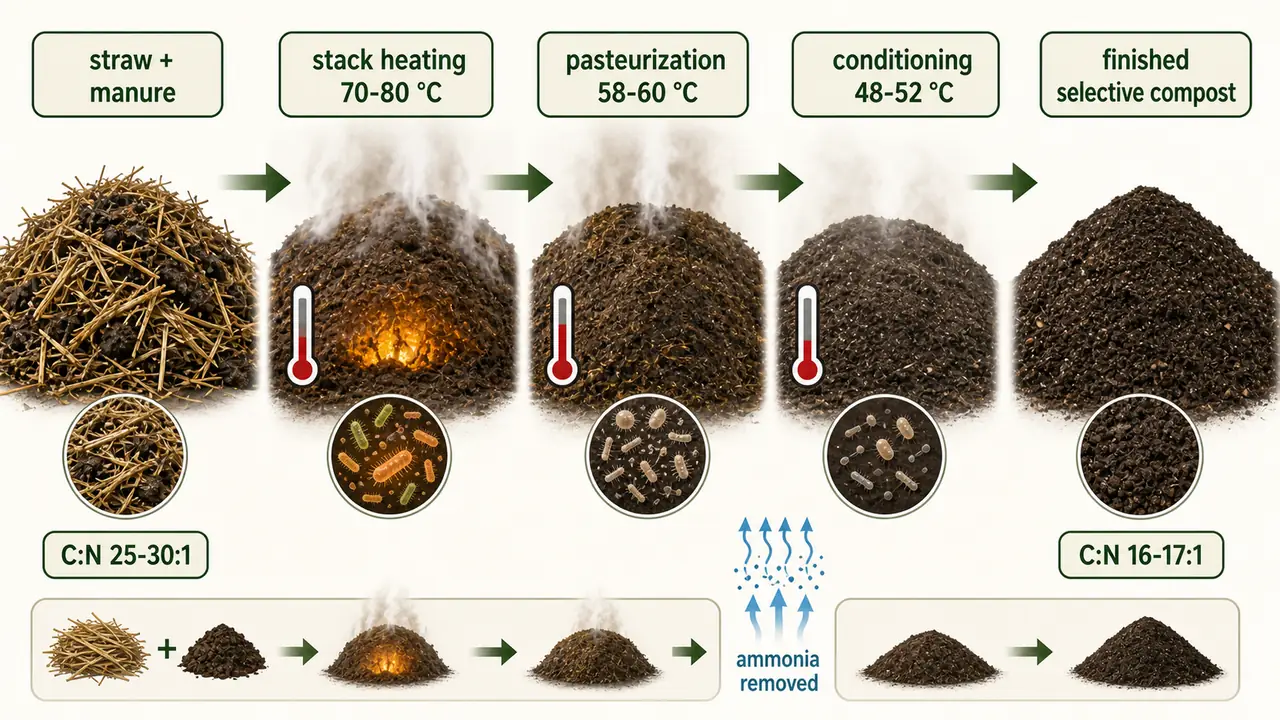
Button mushroom compost must become selective. The composting process reduces easily available carbon, removes ammonia, pasteurises pests, and leaves a medium suited to Agaricus.
| Parameter | Value |
|---|---|
| C:N ratio at stacking | 25-30:1 |
| Final compost C:N ratio | 16-17:1 |
| Phase I peak heat | Often 70-80°C in the stack |
| Phase II pasteurisation | Around 58-60°C for 6-8 hours |
| Conditioning | Around 48-52°C until ammonia smell disappears |
The C:N ratio drops because microbes consume carbon during composting while nitrogen becomes relatively concentrated.
Casing Soil Science
Casing is not food for button mushroom. It is a physical and biological trigger for fruiting.
| Casing role | Explanation |
|---|---|
| Water reservoir | Keeps the surface humid for pin initiation. |
| Physical support | Supports developing fruit bodies. |
| Gas exchange buffer | Helps the shift from high-CO2 spawn run to low-CO2 fruiting. |
| Microbial trigger | Beneficial bacteria in casing help primordia formation. |
Good casing should have high porosity, high water-holding capacity, pH around 7.0-7.5, and low contamination. Sphagnum peat is ideal in many countries, but Indian systems also use combinations of loam soil, decomposed FYM, spent mushroom substrate, sand, lime, and coir pith.
Contamination Prevention
Most mushroom failures come from contamination or bad environment control.
| Risk | Prevention |
|---|---|
| Competitor moulds | Pasteurise/sterilise substrate properly; avoid wet, anaerobic pockets. |
| Bacterial contamination | Use clean water, clean tools, and avoid over-wetting caps. |
| Fly infestation | Use screens, sanitation, and proper disposal of spent substrate. |
| Poor spawn run | Use fresh spawn, correct temperature, and correct moisture. |
| Long storage loss | Sell fresh quickly or dry/can/process. |
Summary Points
| Concept | Key detail |
|---|---|
| Spawn | Mycelium on a carrier, usually grain. |
| Button mushroom medium | Selective compost plus casing. |
| Oyster mushroom medium | Pasteurised straw or other lignocellulosic substrate. |
| BE formula | Fresh mushroom weight / dry substrate weight x 100. |
| Button compost C:N | 25-30:1 at stacking; 16-17:1 final. |
| Phase II pasteurisation | 58-60°C for 6-8 hours. |
| Casing thickness | Usually 3-4 cm in button mushroom. |
| Casing pH | Around 7.0-7.5. |
| Best casing function | Moisture reservoir and pinning support, not nutrition. |
Lesson Doubts
Ask questions, get expert answers