🌱 Pearl Millet (Bajra) Pests: A Complete Field Guide
Complete guide to all major pests of pearl millet — shoot fly, white grub, stem borer, termite, pink stem borer, grain midge, stink bug, and white borer with scientific names, damage symptoms, management, and exam mnemonics
In the sandy soils of Rajasthan's Barmer and Jodhpur districts, pearl millet (bajra) is the lifeline crop — it thrives in hot, dry conditions where rice and wheat cannot survive. But even this hardy crop faces enemies. After the first monsoon rains, a farmer notices that many of his young bajra seedlings have wilted central shoots — a telltale "dead heart" caused by the shoot fly. Meanwhile, below the soil surface, fat, white, C-shaped grubs of the white grub are silently feeding on the roots, causing entire patches to dry up. Pearl millet shares many pests with sorghum and maize (since all three are millets/cereals), but some pests and their species are specific to bajra.
Pearl Millet Pest Complex at a Glance
Pearl Millet Pests — Quick Reference Table
| S.No. | Pest | Scientific Name | Family | Order | Key Symptom |
|---|---|---|---|---|---|
| 1 | Shoot Fly | Atherigona approximata | Muscidae | Diptera | Dead heart |
| 2 | White Grub | Holotrichia consanguinea | Melolonthidae | Coleoptera | Root damage; wilting |
| 3 | Stem Borer | Chilo partellus | Crambidae | Lepidoptera | Dead heart + shot hole |
| 4 | Termite | Odontotermes obesus | Termitidae | Isoptera | Drying; mud galleries |
| 5 | Pink Stem Borer | Sesamia inferens | Noctuidae | Lepidoptera | Dead heart |
| 6 | Grain Midge | Geromyia penniseti | Cecidomyiidae | Diptera | Grainless glumes |
| 7 | Stink Bug | Nezara viridula | Pentatomidae | Hemiptera | Chaffy grains; smell |
| 8 | White Borer | Saluria inficita | Phycitidae | Lepidoptera | Dead heart at base |
Pest Damage by Crop Stage
| Crop Stage | Pests Active | Primary Damage |
|---|---|---|
| Seedling (1-3 weeks) | Shoot fly, White grub, Termite | Dead heart; root feeding; wilting |
| Vegetative (3-8 weeks) | Stem borer, Pink stem borer, White borer | Dead heart; tunnelling |
| Earhead/grain filling | Grain midge, Stink bug | Grainless glumes; chaffy grains |
1. Shoot Fly — Atherigona approximata
Family: Muscidae | Order: Diptera
Pro Content Locked
Upgrade to Pro to access this lesson and all other premium content.
Charged once for one year · ₹1188 total
Save ₹100/month vs ₹2388/year launch price
- All Agriculture & Banking Courses
- AI Lesson Questions (100/day)
- AI Doubt Solver (50/day)
- Glows & Grows Feedback (30/day)
- AI Section Quiz (20/day)
- 22-Language Translation (100/day)
- Recall Questions (20/day)
- AI Quiz (15/day)
- AI Quiz Paper Analysis (100/day)
- AI Step-by-Step Explanations (100/day)
- Spaced Repetition Recall (FSRS)
- AI Tutor
- Immersive Text Questions
- Audio Lessons — Hindi & English
- Mock Tests & Previous Year Papers
- Summary & Mind Maps
- XP, Levels, Leaderboard & Badges
- Generate New Classrooms
- Voice AI Teacher (AgriDots Live)
- AI Revision Assistant
- Knowledge Gap Analysis
- Interactive Revision (LangGraph)
🔒 Secure one-time yearly payment via Razorpay · No hidden fees
In the sandy soils of Rajasthan's Barmer and Jodhpur districts, pearl millet (bajra) is the lifeline crop — it thrives in hot, dry conditions where rice and wheat cannot survive. But even this hardy crop faces enemies. After the first monsoon rains, a farmer notices that many of his young bajra seedlings have wilted central shoots — a telltale "dead heart" caused by the shoot fly. Meanwhile, below the soil surface, fat, white, C-shaped grubs of the white grub are silently feeding on the roots, causing entire patches to dry up. Pearl millet shares many pests with sorghum and maize (since all three are millets/cereals), but some pests and their species are specific to bajra.
Pearl Millet Pest Complex at a Glance
Pearl Millet Pests — Quick Reference Table
| S.No. | Pest | Scientific Name | Family | Order | Key Symptom |
|---|---|---|---|---|---|
| 1 | Shoot Fly | Atherigona approximata | Muscidae | Diptera | Dead heart |
| 2 | White Grub | Holotrichia consanguinea | Melolonthidae | Coleoptera | Root damage; wilting |
| 3 | Stem Borer | Chilo partellus | Crambidae | Lepidoptera | Dead heart + shot hole |
| 4 | Termite | Odontotermes obesus | Termitidae | Isoptera | Drying; mud galleries |
| 5 | Pink Stem Borer | Sesamia inferens | Noctuidae | Lepidoptera | Dead heart |
| 6 | Grain Midge | Geromyia penniseti | Cecidomyiidae | Diptera | Grainless glumes |
| 7 | Stink Bug | Nezara viridula | Pentatomidae | Hemiptera | Chaffy grains; smell |
| 8 | White Borer | Saluria inficita | Phycitidae | Lepidoptera | Dead heart at base |
Pest Damage by Crop Stage
| Crop Stage | Pests Active | Primary Damage |
|---|---|---|
| Seedling (1-3 weeks) | Shoot fly, White grub, Termite | Dead heart; root feeding; wilting |
| Vegetative (3-8 weeks) | Stem borer, Pink stem borer, White borer | Dead heart; tunnelling |
| Earhead/grain filling | Grain midge, Stink bug | Grainless glumes; chaffy grains |
1. Shoot Fly — Atherigona approximata
Family: Muscidae | Order: Diptera
Damage Symptoms
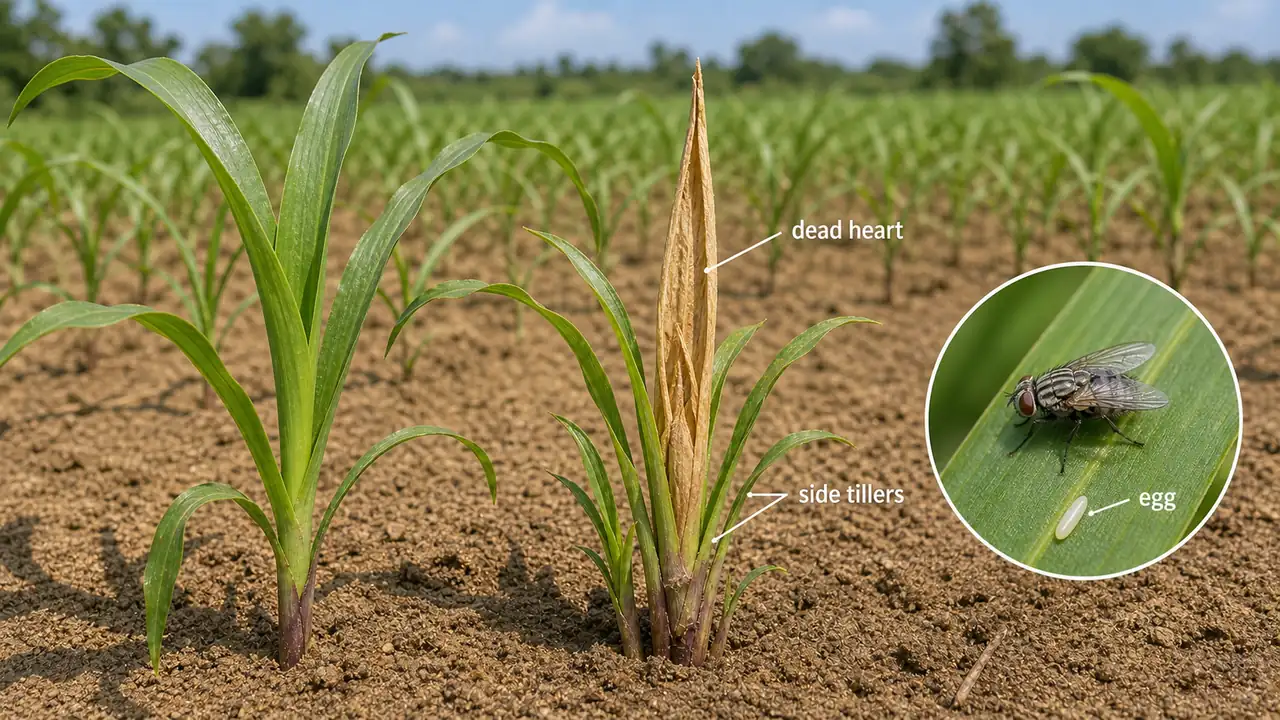
- Similar to sorghum shoot fly — the maggot cuts the growing point inside the stem, causing dead heart
- The infested plant produces side tillers from the base as a compensatory response
Management
- Early sowing — immediately after monsoon onset helps the crop escape peak fly activity
- Higher seed rate — compensates for shoot fly losses during thinning
- Fish meal traps — attract adult flies for monitoring and trapping
IMPORTANT
Species distinction — a classic exam question:
| Crop | Shoot Fly Species |
|---|---|
| Sorghum | Atherigona soccata |
| Maize | Atherigona orientalis |
| Pearl millet | Atherigona approximata |
All three belong to the same genus (Atherigona, family Muscidae) but are different species. The species name changes with the crop — this is frequently tested.
2. White Grub — Holotrichia consanguinea
Family: Melolonthidae | Order: Coleoptera
Host range: Sorghum, maize, pearl millet, chillies, okra (bhendi), brinjal, groundnut — a highly polyphagous pest
The white grub is one of the most feared soil pests of kharif crops in western and central India.
Damage Symptoms
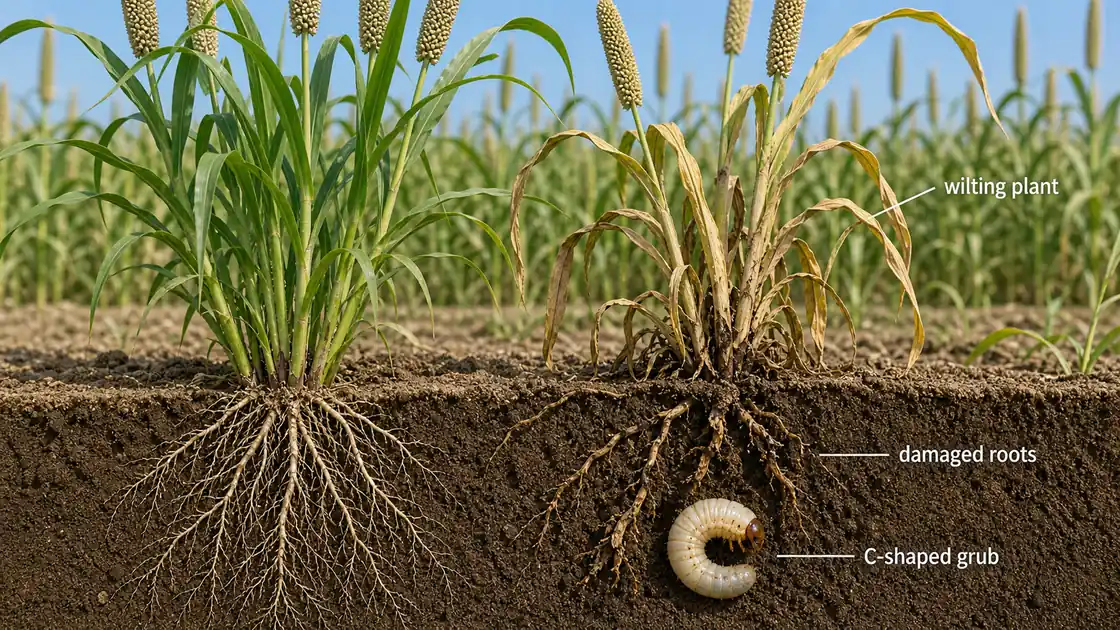
- The grub is 'C' shaped, whitish yellow, and found close to the base of plant clumps
- Feeds on roots, causing drying of the crown preceded by yellowing and wilting of leaves
- Affected plants come off easily when pulled — because the root system has been eaten away
- Can cause extensive, patch-wise damage that may require resowing
- Adults are dark brown beetles, attracted to neem trees during monsoon season for mating
IMPORTANT
White grub (Holotrichia consanguinea) is designated as a National Pest of India. This is one of the most frequently asked facts in all agricultural competitive exams.
Management
- Grow resistant cultivars: Co 6304, Co 1158, Co 5510
- Set up light traps to attract and destroy adult beetles at night
- Provide adequate irrigation — moist soil reduces grub damage
- Practice crop rotation in endemic areas
- Collect and destroy adult beetles from neem, Ailanthus, and Acacia trees (where they aggregate for mating)
- Summer ploughing exposes pupae to sun and predators
Agricultural context: In Rajasthan's bajra belt, white grub emergence is tightly linked to the first monsoon rains. Adults emerge from the soil, fly to nearby neem trees for mating, and females return to lay eggs in the crop field. Community-level beetle collection drives from neem trees during June-July can dramatically reduce grub populations.
TIP
White grub lifecycle mnemonic: "Grubs below, beetles above."
- Below ground: 'C'-shaped grubs feed on roots (cause crop damage)
- Above ground: Adults feed on tree leaves (attracted to neem)
- Phorate 10G is the key soil insecticide
3. Stem Borer — Chilo partellus
Family: Crambidae | Order: Lepidoptera
Host range: Jowar, bajra, sugarcane, rice — the same species that attacks sorghum and maize
Damage Symptoms
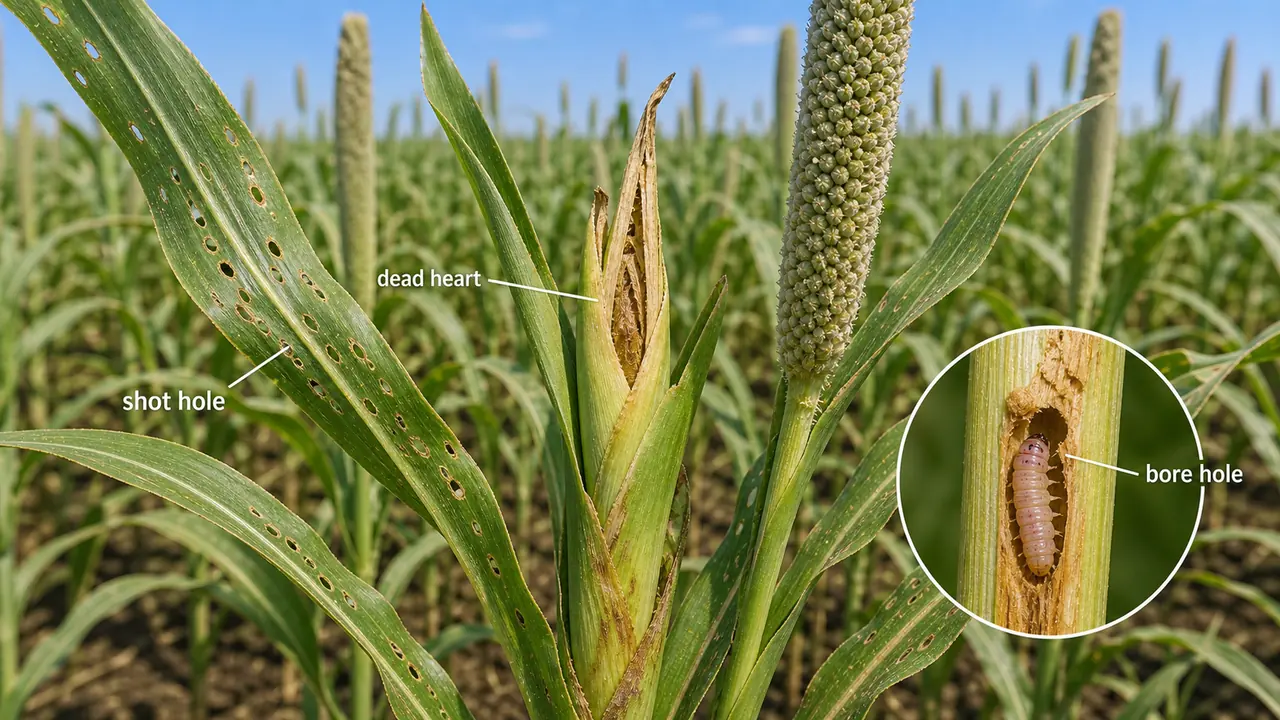
- Central shoot withering leading to "dead heart"
- Bore holes visible on stem near nodes
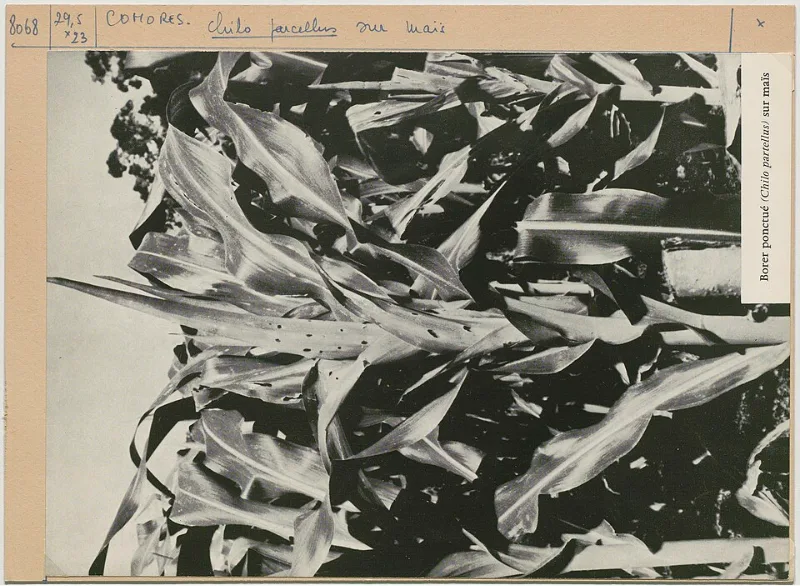
- "Shot hole" symptom on folded leaves (rows of tiny holes when leaf unfolds)
- Larvae hibernate in stubbles between crop seasons
NOTE
Chilo partellus attacks all three major millets — sorghum, maize, and pearl millet. The same species, same symptoms, same management. This cross-crop relevance is often tested.
4. Termite — Odontotermes obesus
Family: Termitidae | Order: Isoptera
Termites are a particular problem in pearl millet because bajra is often grown in light, sandy soils with low moisture — ideal conditions for termite activity.
Damage Symptoms
- A major problem in light soils (sandy and sandy loam)
- Causes poor germination by attacking seeds/seedlings underground
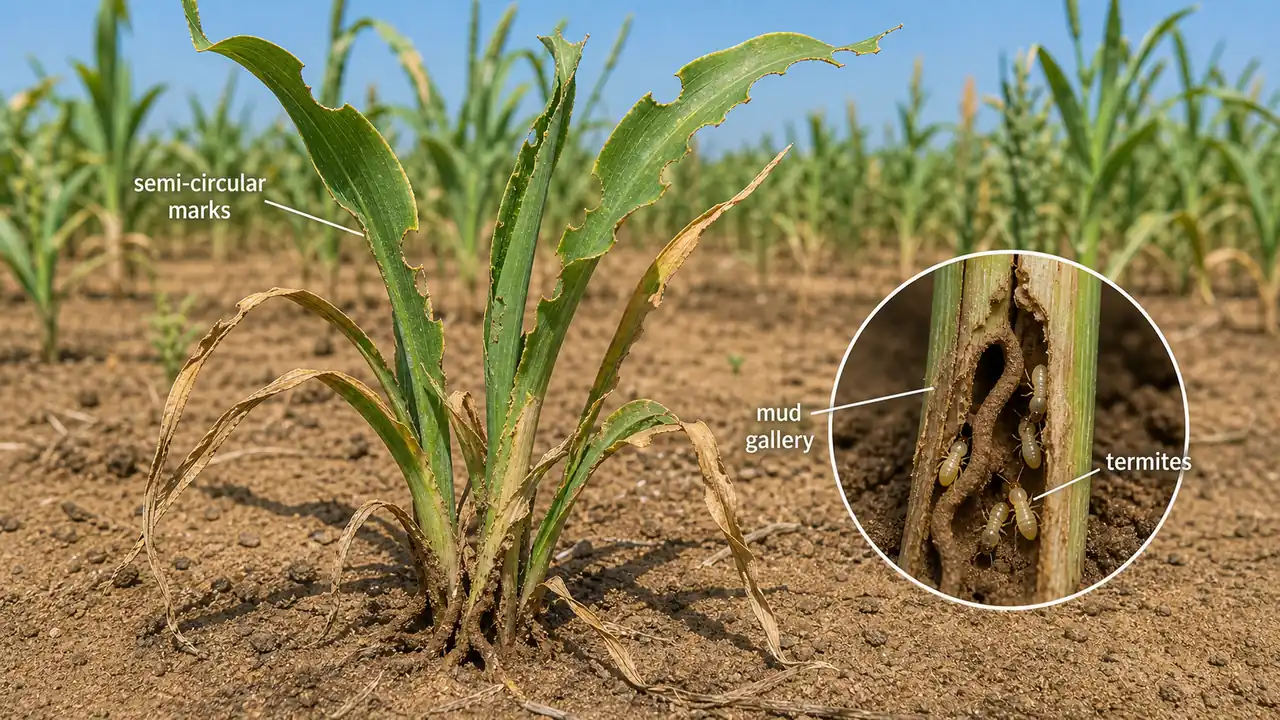
- Characteristic semi-circular feeding marks on leaf margins in the standing crop
- Entire shoot dries up and can be pulled out — roots and stem are hollowed
- Stems and roots filled with mud galleries; plants collapse if disturbed
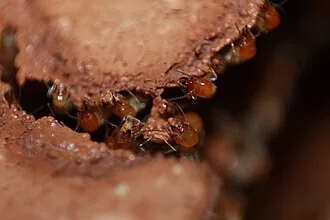
- Adults are cream-coloured tiny insects resembling ants with a dark-coloured head
Management
- Treat seeds/setts with Imidacloprid 70 WS (100-150 g per 100 setts)
- Spray chlorantraniliprole 18.5 SC (500-625 ml) or imidacloprid 17.8 SL (350 ml) with 500 L water/ha
- Adequate irrigation reduces termite damage in irrigated fields
- Avoid prolonged dry spells between irrigations
TIP
Termite vs. White Grub — Both cause wilting in bajra, but the cause differs:
| Feature | Termite | White Grub |
|---|---|---|
| Scientific name | Odontotermes obesus | Holotrichia consanguinea |
| Order | Isoptera | Coleoptera |
| Body shape | Ant-like, cream-coloured | 'C'-shaped, whitish-yellow |
| Feeding | Chews roots + stem; fills with mud | Feeds on roots only |
| Diagnostic sign | Mud galleries inside stem | Plants come off easily when pulled |
| Soil preference | Light/sandy soils | All soil types (kharif season) |
| Designation | Common soil pest | National Pest |
5. Pink Stem Borer — Sesamia inferens
Family: Noctuidae | Order: Lepidoptera
Host range: Sorghum, maize, rice, wheat, sugarcane, bajra, ragi, barley, guinea grasses — the most polyphagous of all stem borers.
Damage Symptoms
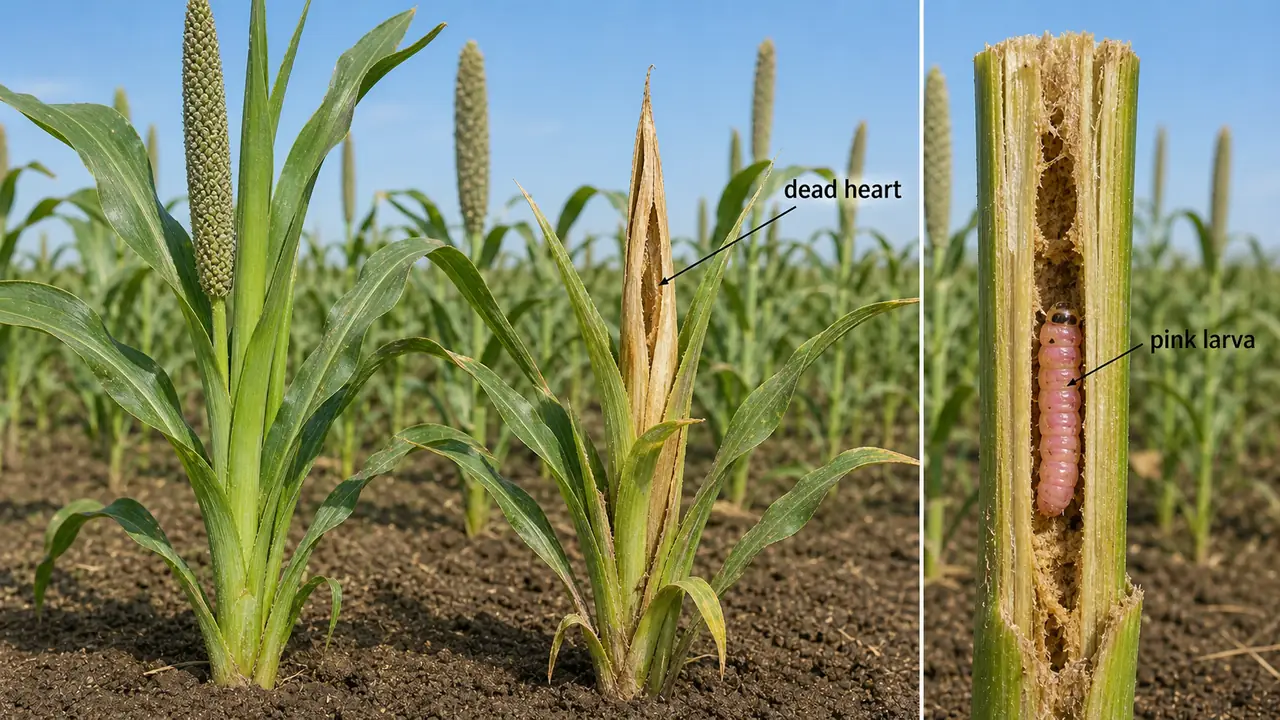
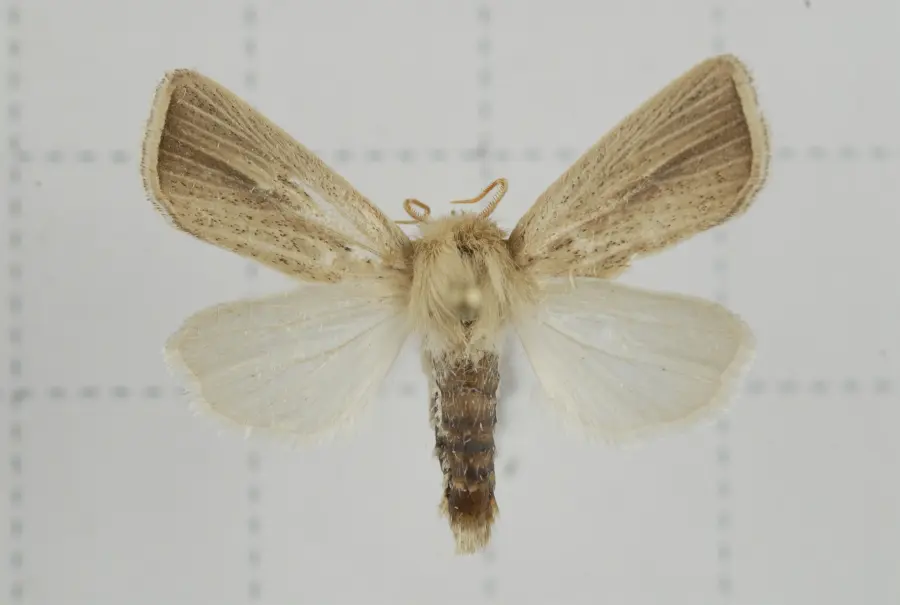
- Pink larva enters the stem, causing dead heart symptom
- Similar in effect to Chilo partellus but caused by a distinctly pink-coloured larva (vs. cream-coloured for Chilo)
NOTE
Sesamia inferens attacks the widest range of cereal crops of any stem borer — rice, wheat, maize, sorghum, bajra, ragi, sugarcane, and barley. If an exam asks "which stem borer is most polyphagous?" — the answer is Sesamia inferens.
6. White Borer — Saluria inficita
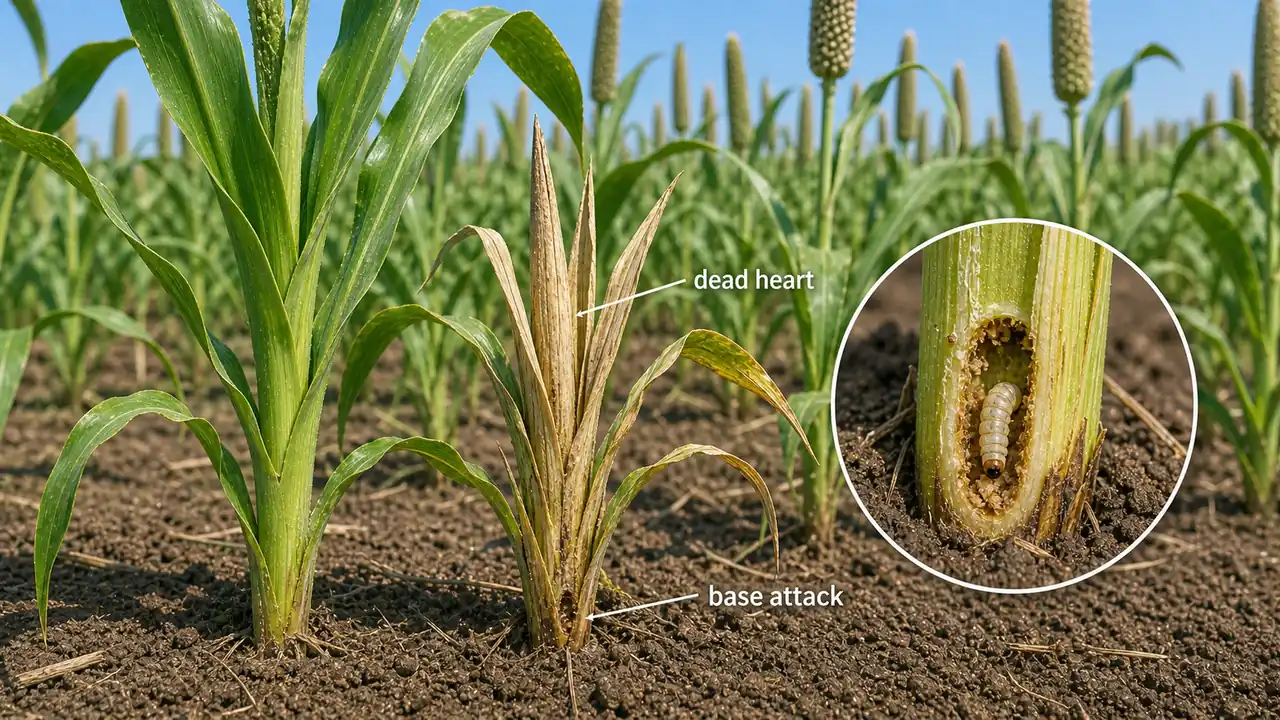
Family: Phycitidae | Order: Lepidoptera
Damage Symptoms
- A potential pest on finger millet in South India, but also attacks pearl millet
- Larva bores into the stem at the base of the tiller close to the soil level, causing dead heart
TIP
Point of attack differentiates the borers:
- White borer (Saluria inficita) — attacks at the base near soil level
- Stem borer (Chilo partellus) — attacks at mid-stem near nodes
- Pink stem borer (Sesamia inferens) — attacks mid to upper stem
7. Grain Midge — Geromyia penniseti
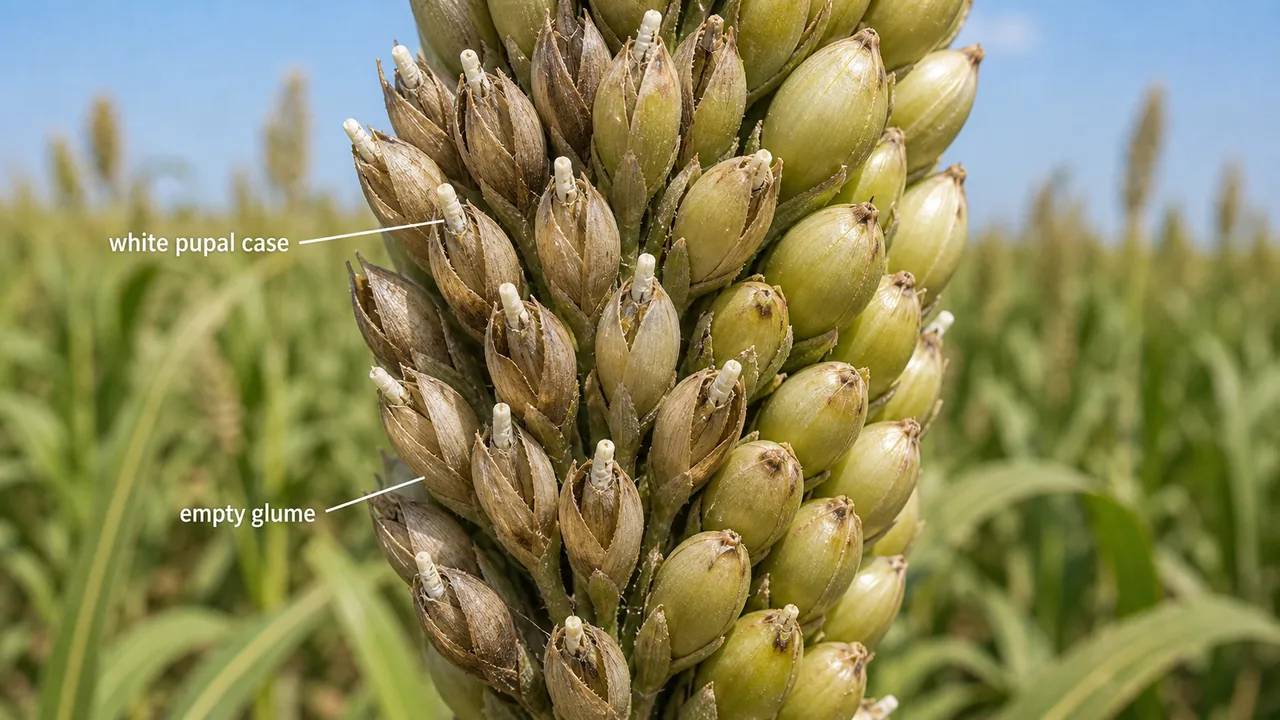
Family: Cecidomyiidae | Order: Diptera
Damage Symptoms
- Maggot feeds on developing grains causing grainless glumes
- White pupal cases attached to the tip of the spikelet are the diagnostic sign
- Earheads appear full but are actually empty — a deceptive symptom
Agricultural context: In bajra-growing areas of Gujarat and Rajasthan, farmers sometimes do not realize the extent of grain midge damage until harvest, because the earheads look normal from a distance. Only close inspection reveals empty glumes with tiny pupal cases.
8. Stink Bug — Nezara viridula
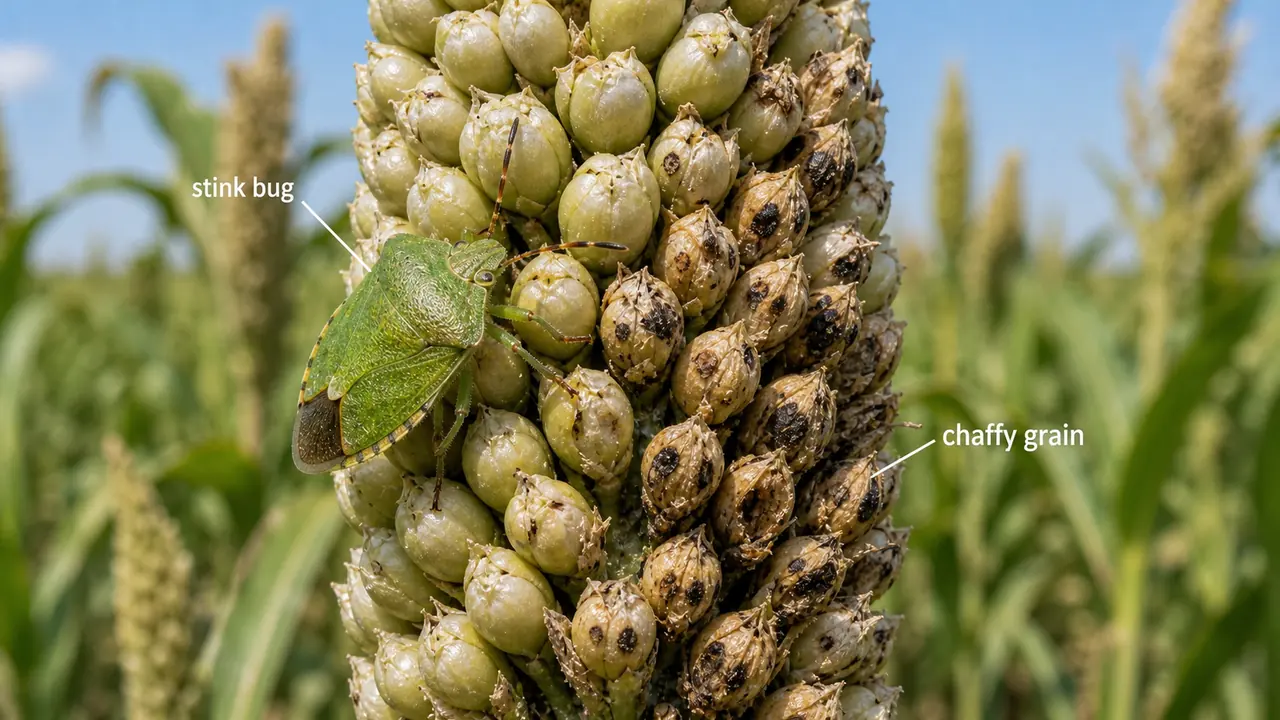
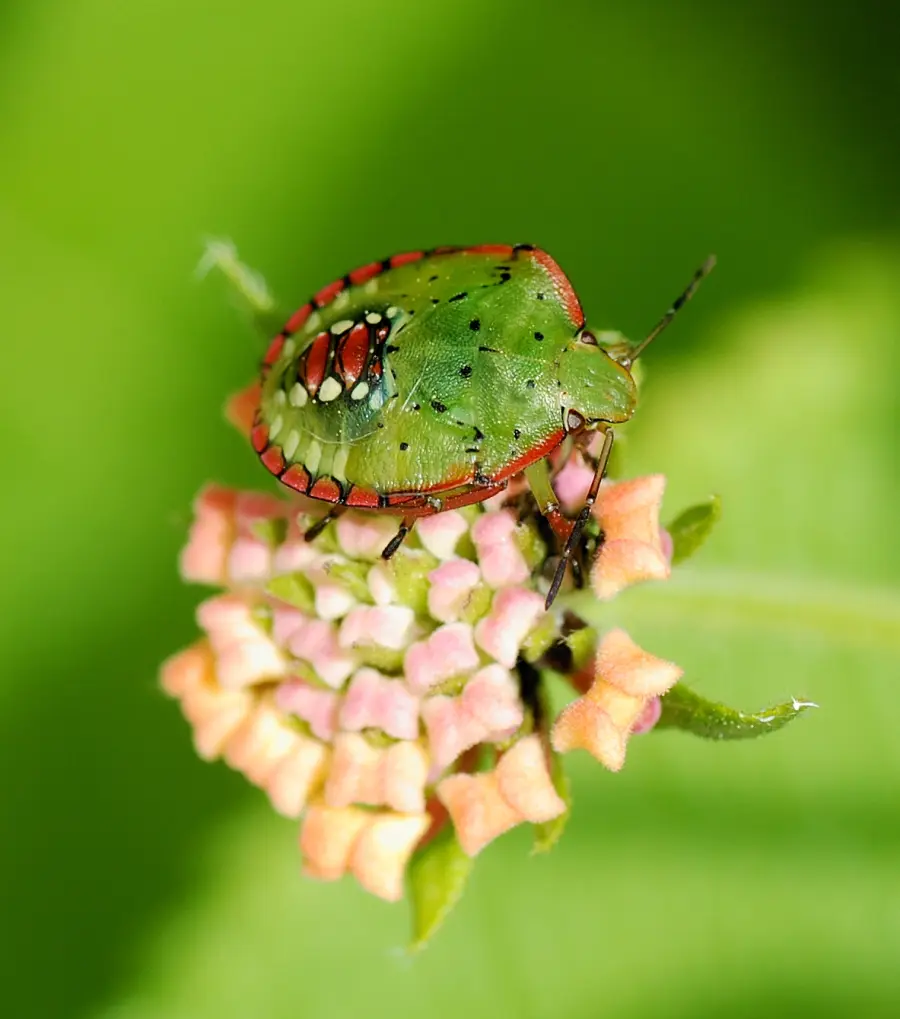
Family: Pentatomidae | Order: Hemiptera
Damage Symptoms
- Grains become chaffy, spotted black, and shrivelled due to sap sucking
- A stinking smell emanates from the bug when disturbed — its defining characteristic
- Green-coloured shield-shaped bug (hence also called "green stink bug")
TIP
Nezara viridula (green stink bug) is a polyphagous pest that also attacks rice, cotton, soybean, and pulses. It appears in bajra, sorghum, and many other crops. Remember it by its stinking smell and green shield shape.
Field Diagnosis: Pearl Millet — Dead Heart or Something Else?
Multiple pests cause "dead heart" in bajra — here's how to tell them apart:
Dead heart at seedling stage (15-30 days)?
- Central shoot pulls out easily, side tillers develop? → Shoot Fly (Atherigona) — maggot (Diptera); most common cause
- Shot holes visible on unfolded leaves + dead heart? → Stem Borer (Chilo partellus) — caterpillar (Lepidoptera)
- Pink-coloured larva inside stem? → Pink Stem Borer (Sesamia inferens) — most polyphagous; also attacks rice, maize, sugarcane
- Damage at base near soil level, shoots wither? → White Borer (Saluria inficita) — attacks at soil surface
Damage at grain stage?
- Grainless glumes, white pupal cases at spikelet tip? → Grain Midge (Geromyia penniseti)
- Chaffy grains + stinking smell from green shield bug? → Stink Bug (Nezara viridula)
Poor germination + underground damage?
- C-shaped white grubs in soil near roots? → White Grub (Holotrichia)
- Mud galleries on stem base? → Termite (Odontotermes)
Exam Tips and Mnemonics
TIP
Four "Dead Heart" pests of pearl millet: Shoot fly, Stem borer, Pink stem borer, White borer. To distinguish them:
- Shoot fly = Diptera (maggot), seedling stage, side tillers
- Stem borer = Lepidoptera (Chilo), shot hole + dead heart
- Pink stem borer = Lepidoptera (Sesamia), pink larva, most polyphagous
- White borer = Lepidoptera (Saluria), at base near soil
Key facts to lock in:
- White grub = National Pest of India
- White grub adults attracted to neem trees
- Atherigona approximata = pearl millet shoot fly (not soccata)
- Grain midge = Geromyia penniseti (different from sorghum midge Contarinia sorghicola)
Summary Table: Pearl Millet Pests at a Glance
| Fact | Answer |
|---|---|
| Pearl millet shoot fly species | Atherigona approximata (different from sorghum) |
| National Pest of India | White grub (Holotrichia consanguinea) |
| White grub body shape | 'C' shaped, whitish yellow |
| White grub adults attracted to | Neem trees during monsoon |
| Stem borer (same in sorghum & maize) | Chilo partellus |
| Most polyphagous stem borer | Sesamia inferens (Pink Stem Borer) |
| Grain midge of pearl millet | Geromyia penniseti |
| Grain midge diagnostic sign | Grainless glumes with white pupal cases |
| Green stink bug | Nezara viridula — stinking smell |
| White borer attacks at | Base of tiller near soil level |
| Soil insecticide for white grub | Phorate 10G |
| Termite seed treatment | Imidacloprid 70 WS |
Summary Cheat Sheet
| Concept / Topic | Key Details |
|---|---|
| Pearl millet shoot fly | Atherigona approximata (Muscidae, Diptera) — dead heart |
| Shoot fly species distinction | Sorghum = soccata, Maize = orientalis, Bajra = approximata |
| White grub | Holotrichia consanguinea — designated National Pest of India |
| White grub body | 'C' shaped, whitish yellow; feeds on roots |
| White grub adults | Dark brown beetles; attracted to neem trees during monsoon |
| White grub control | Light traps, summer ploughing, Phorate 10G |
| Stem borer | Chilo partellus — same species as sorghum and maize; dead heart + shot hole |
| Termite | Odontotermes obesus — problem in light/sandy soils |
| Termite symptoms | Mud galleries inside stem; poor germination; semi-circular leaf marks |
| Termite treatment | Seed treat with Imidacloprid 70 WS (100-150 g/100 setts) |
| Pink stem borer | Sesamia inferens — most polyphagous stem borer; pink larva |
| White borer | Saluria inficita — bores at base of tiller near soil level |
| Borer attack points | White borer = base; Stem borer = mid-stem; Pink borer = mid to upper |
| Grain midge | Geromyia penniseti — grainless glumes; white pupal cases at spikelet tip |
| Stink bug | Nezara viridula (green shield bug) — chaffy grains; stinking smell |
| Four dead heart pests | Shoot fly (Diptera), Stem borer, Pink borer, White borer (all Lepidoptera) |
| Termite vs White grub | Termite = mud galleries, ant-like; White grub = 'C'-shaped, roots only |
TIP
Next: Maize pests share Chilo partellus and Sesamia inferens with sorghum and bajra, but add the Fall Armyworm (Spodoptera frugiperda) — an invasive pest first reported in India in 2018.