🌾 Wheat Pests: Armyworm to Nematodes
Complete guide to all major and minor pests of wheat — armyworm, wheat aphid, ghujhia weevil, gram pod borer, termites, molya nematode, wheat-gall nematode, and 8 minor pests with scientific names, ETL, damage, management, and exam mnemonics
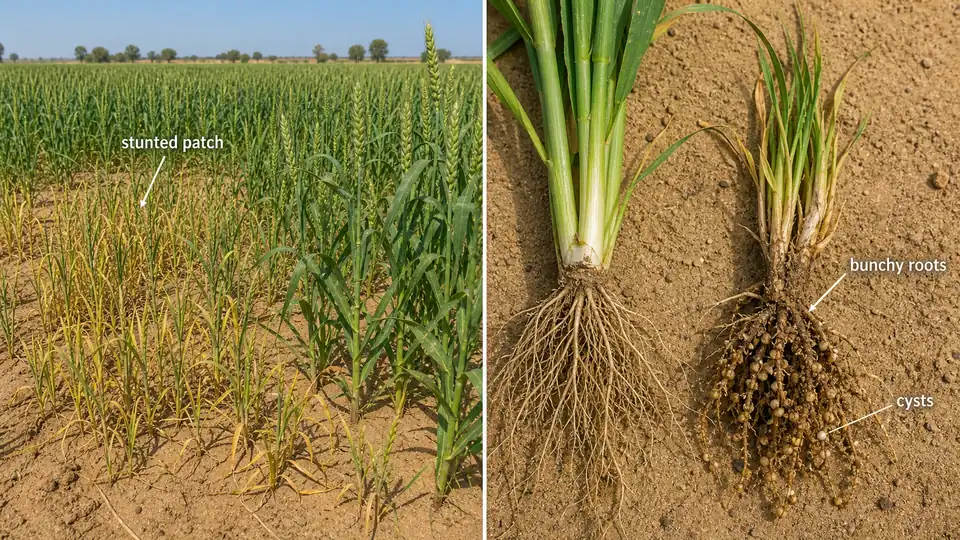
A wheat farmer in Rajasthan's Sikar district inspects his field in January and notices something alarming: patches of stunted plants with shrivelled, unhealthy leaves and short, bunchy roots covered with tiny galls. This is Molya disease — caused by the cyst nematode Heterodera avenae, a hidden enemy that attacks below the soil surface. Meanwhile, in the lush, well-irrigated wheat fields of Punjab, a different threat emerges: clouds of tiny green insects — wheat aphids — clustering on the earheads during cold, cloudy weather, sucking the sap from developing grains. Wheat pests in India range from marching armyworm caterpillars to microscopic nematodes, and understanding each one is critical for competitive exams.
Wheat Pest Complex at a Glance
Wheat Pests — Quick Reference Table
Major Pests
| S.No. | Pest | Scientific Name | Family | Order | Key Damage |
|---|---|---|---|---|---|
| 1 | Armyworm | Mythimna separata | Noctuidae | Lepidoptera | Field "grazed by cattle" |
| 2 | Wheat Aphid | Macrosiphum miscanthi | Aphididae | Hemiptera | Sap sucking on ears |
| 3 | Ghujhia Weevil | Tanymecus indicus | Curculionidae | Coleoptera | Cuts seedlings at ground |
| 4 | Gram Pod Borer | Helicoverpa armigera | Noctuidae | Lepidoptera | Feeds on ear grains |
| 5 | Termites | Odontotermes obesus & Microtermes obesi | Termitidae | Isoptera | Seedling death; white ears |
| 6 | Molya Nematode | Heterodera avenae | Heteroderidae | Tylenchida | Stunted plants; bunchy roots |
| 7 | Wheat-Gall Nematode | Anguina tritici | Tylenchidae | Tylenchida | Ear-cockle (mamni); tundu disease |
Minor Pests
| S.No. | Pest | Scientific Name | Family | Order |
|---|---|---|---|---|
| 8 | Aphid | Schizaphis graminum & Rhopalosiphum maidis | Aphididae | Hemiptera |
| 9 | Hopper | Laodelphax striatella & Pyrilla perpusilla | Delphacidae / Lophopidae | Hemiptera |
| 10 | Jassids | Amrasca spp. | Cicadellidae | Hemiptera |
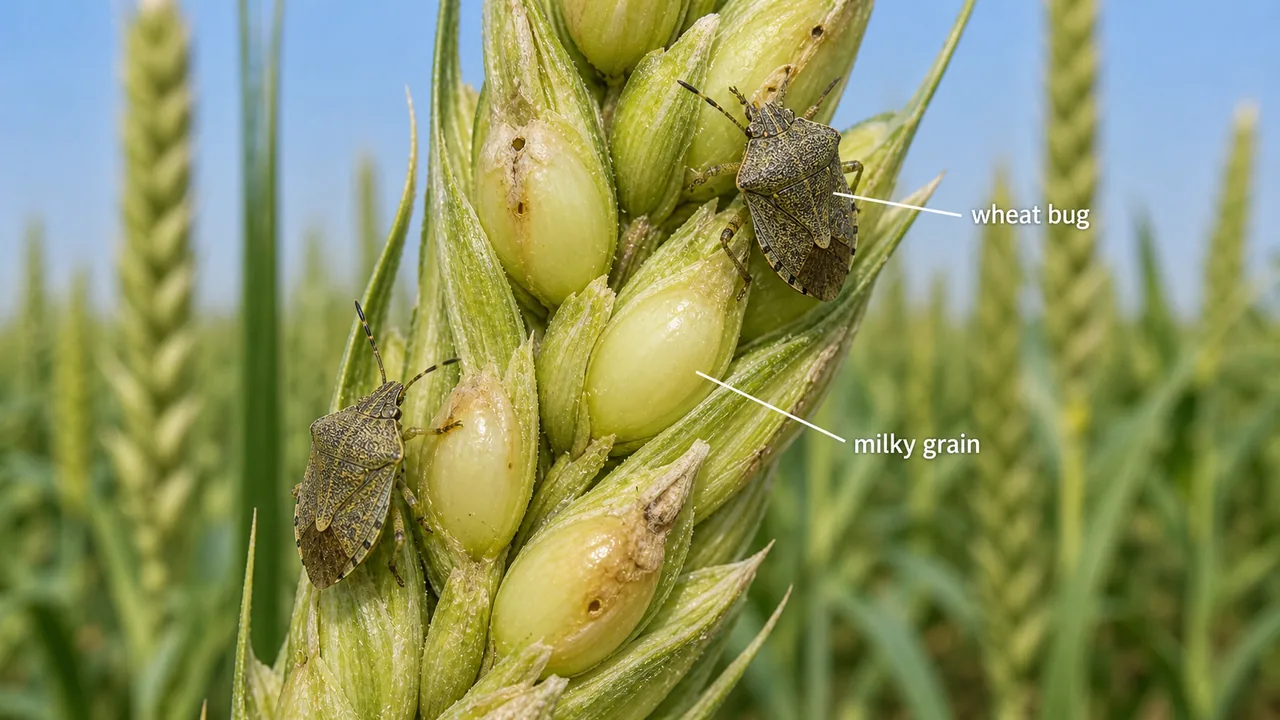
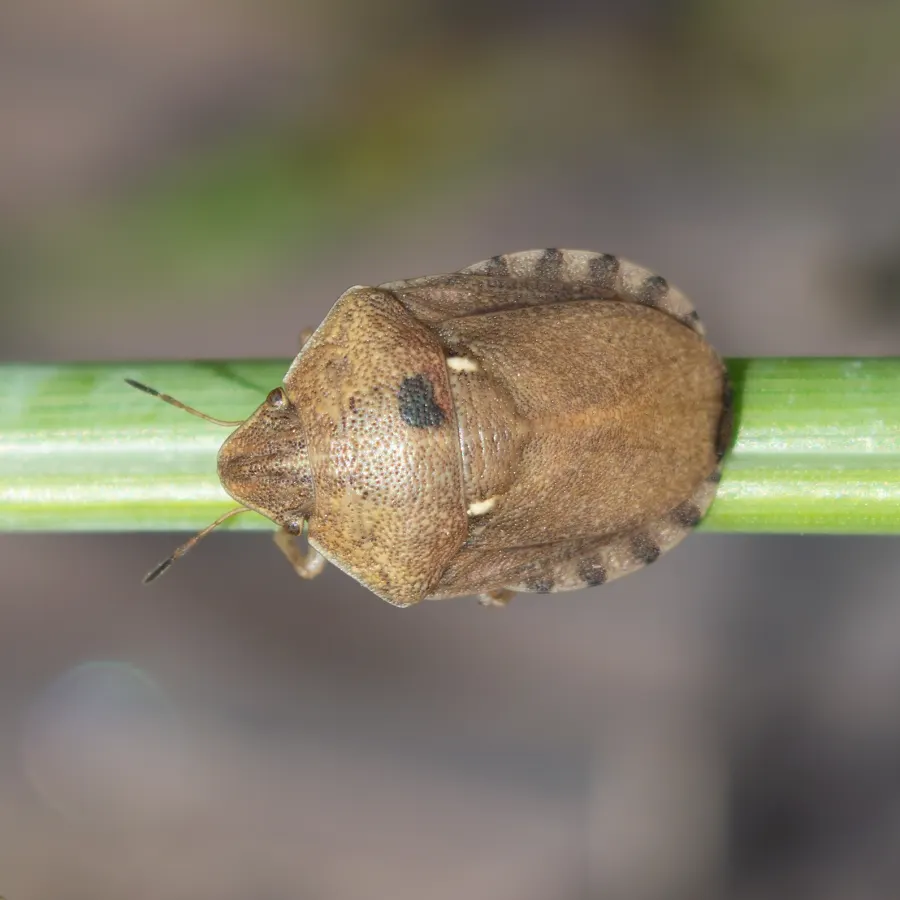
| 11 | Wheat Bug | Eurygaster maura | Pentatomidae | Hemiptera |
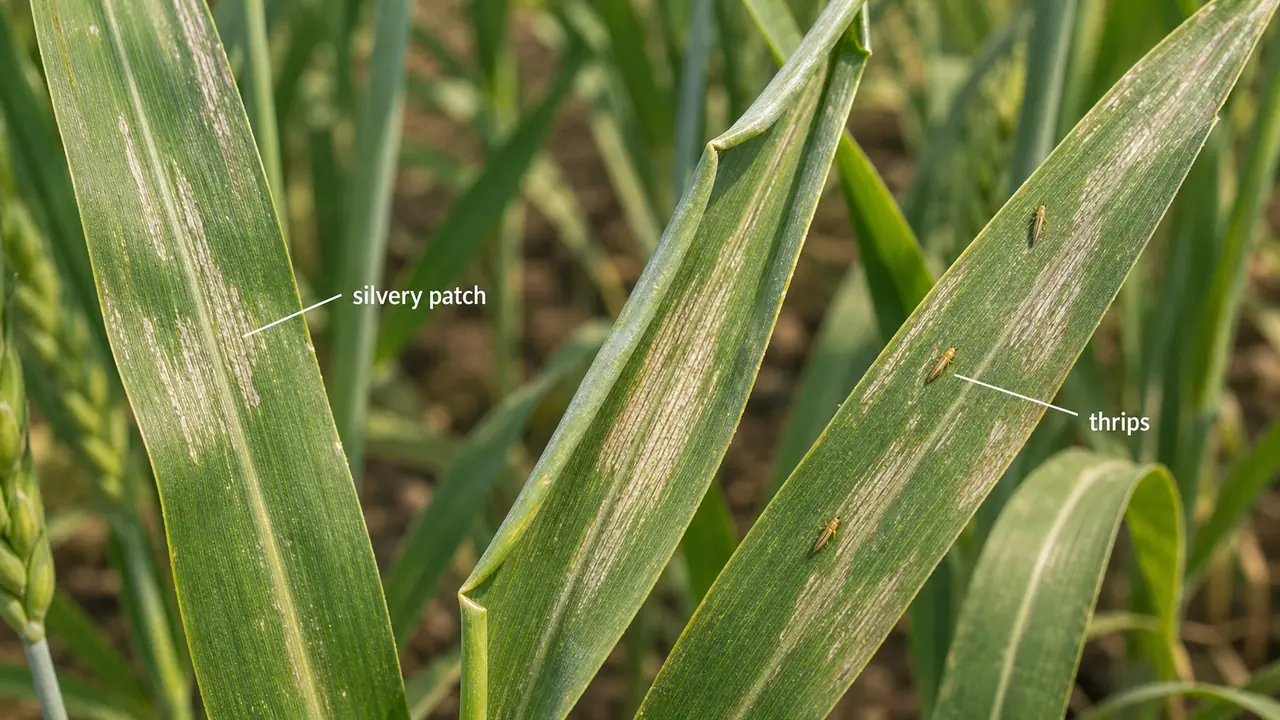
| 12 | Wheat Thrips | Anaphothrips favicinctus | Thripidae | Thysanoptera |
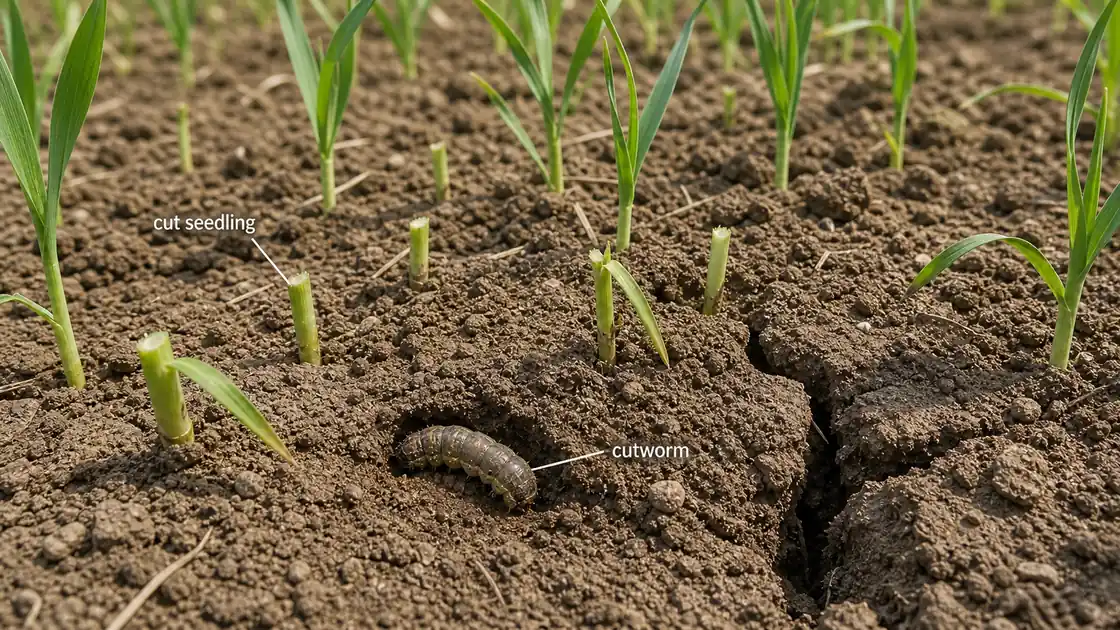
| 13 | Cut Worms | Agrotis spp. & Marasmia trapezalis | Noctuidae / Pyraustidae | Lepidoptera |
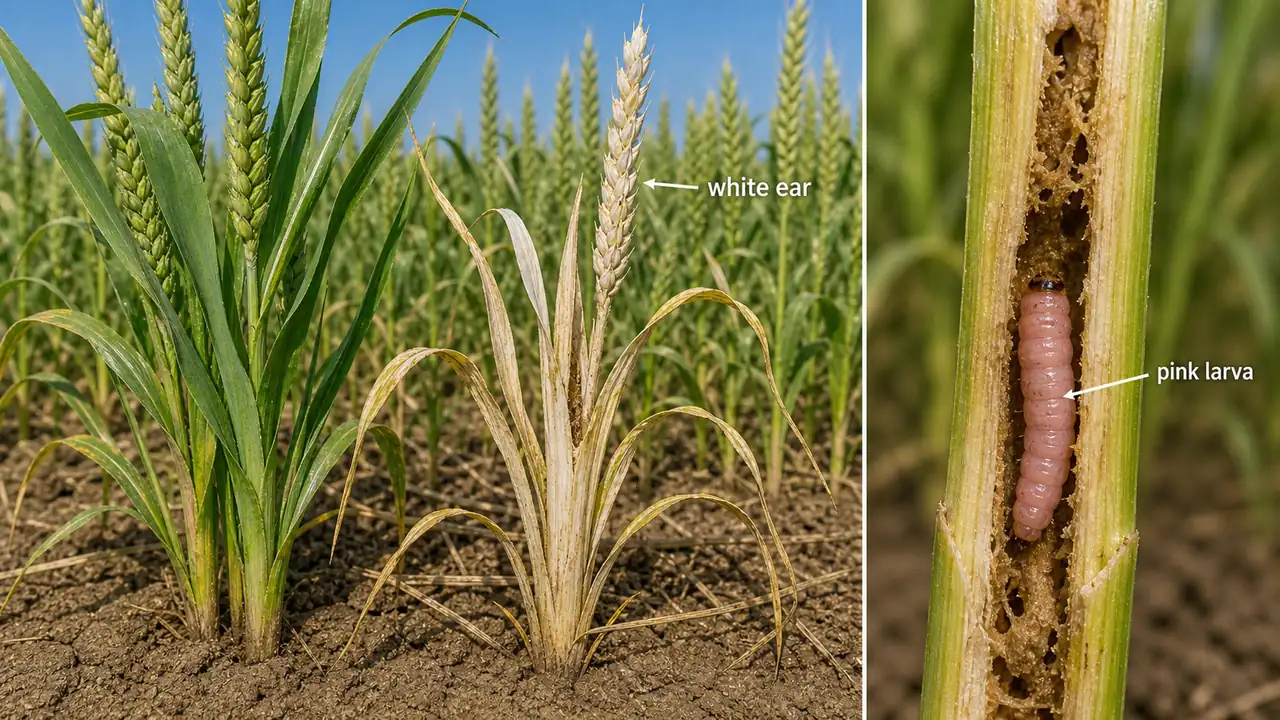
| 14 | Pink Borer | Sesamia inferens | Noctuidae | Lepidoptera |
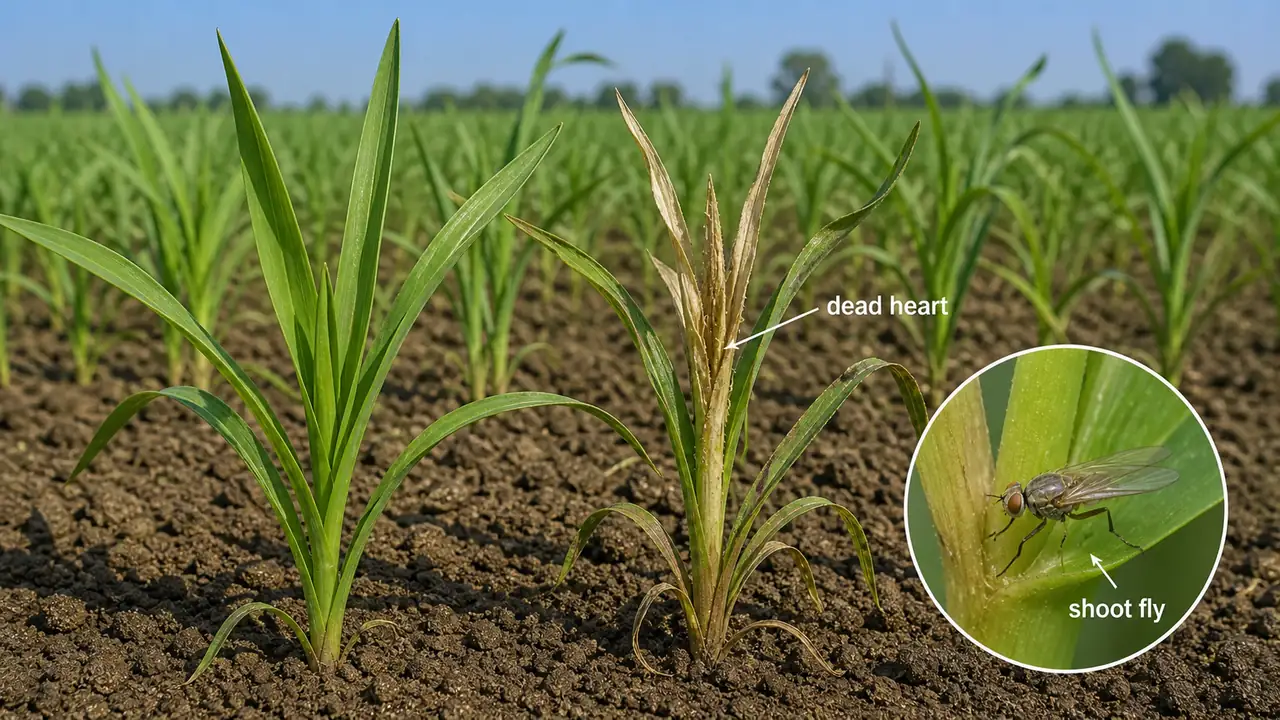
| 15 | Shoot Fly | Atherigona naqvii & A. orzae | Muscidae | Diptera |
Pest Damage by Crop Stage
| Crop Stage | Pests Active | Primary Damage |
|---|---|---|
| Germination/Seedling | Ghujhia weevil, Termites, Cut worms, Shoot fly | Seedlings cut/killed |
| Vegetative/Tillering | Armyworm, Aphids, Thrips, Pink borer | Defoliation; sap sucking |
| Ear emergence/Maturity | Wheat aphid, Gram pod borer, Wheat bug | Grain feeding; sap from ears |
| Underground (all stages) | Molya nematode, Wheat-gall nematode, Termites | Root/ear galls; stunting |
1. Armyworm — Mythimna separata
Family: Noctuidae | Order: Lepidoptera
Pro Content Locked
Upgrade to Pro to access this lesson and all other premium content.
Charged once for one year · ₹1188 total
Save ₹100/month vs ₹2388/year launch price
- All Agriculture & Banking Courses
- AI Lesson Questions (100/day)
- AI Doubt Solver (50/day)
- Glows & Grows Feedback (30/day)
- AI Section Quiz (20/day)
- 22-Language Translation (100/day)
- Recall Questions (20/day)
- AI Quiz (15/day)
- AI Quiz Paper Analysis (100/day)
- AI Step-by-Step Explanations (100/day)
- Spaced Repetition Recall (FSRS)
- AI Tutor
- Immersive Text Questions
- Audio Lessons — Hindi & English
- Mock Tests & Previous Year Papers
- Summary & Mind Maps
- XP, Levels, Leaderboard & Badges
- Generate New Classrooms
- Voice AI Teacher (AgriDots Live)
- AI Revision Assistant
- Knowledge Gap Analysis
- Interactive Revision (LangGraph)
🔒 Secure one-time yearly payment via Razorpay · No hidden fees
A wheat farmer in Rajasthan's Sikar district inspects his field in January and notices something alarming: patches of stunted plants with shrivelled, unhealthy leaves and short, bunchy roots covered with tiny galls. This is Molya disease — caused by the cyst nematode Heterodera avenae, a hidden enemy that attacks below the soil surface. Meanwhile, in the lush, well-irrigated wheat fields of Punjab, a different threat emerges: clouds of tiny green insects — wheat aphids — clustering on the earheads during cold, cloudy weather, sucking the sap from developing grains. Wheat pests in India range from marching armyworm caterpillars to microscopic nematodes, and understanding each one is critical for competitive exams.
Wheat Pest Complex at a Glance
Wheat Pests — Quick Reference Table
Major Pests
| S.No. | Pest | Scientific Name | Family | Order | Key Damage |
|---|---|---|---|---|---|
| 1 | Armyworm | Mythimna separata | Noctuidae | Lepidoptera | Field "grazed by cattle" |
| 2 | Wheat Aphid | Macrosiphum miscanthi | Aphididae | Hemiptera | Sap sucking on ears |
| 3 | Ghujhia Weevil | Tanymecus indicus | Curculionidae | Coleoptera | Cuts seedlings at ground |
| 4 | Gram Pod Borer | Helicoverpa armigera | Noctuidae | Lepidoptera | Feeds on ear grains |
| 5 | Termites | Odontotermes obesus & Microtermes obesi | Termitidae | Isoptera | Seedling death; white ears |
| 6 | Molya Nematode | Heterodera avenae | Heteroderidae | Tylenchida | Stunted plants; bunchy roots |
| 7 | Wheat-Gall Nematode | Anguina tritici | Tylenchidae | Tylenchida | Ear-cockle (mamni); tundu disease |
Minor Pests
| S.No. | Pest | Scientific Name | Family | Order |
|---|---|---|---|---|
| 8 | Aphid | Schizaphis graminum & Rhopalosiphum maidis | Aphididae | Hemiptera |
| 9 | Hopper | Laodelphax striatella & Pyrilla perpusilla | Delphacidae / Lophopidae | Hemiptera |
| 10 | Jassids | Amrasca spp. | Cicadellidae | Hemiptera |
| 11 | Wheat Bug | Eurygaster maura | Pentatomidae | Hemiptera |
| 12 | Wheat Thrips | Anaphothrips favicinctus | Thripidae | Thysanoptera |
| 13 | Cut Worms | Agrotis spp. & Marasmia trapezalis | Noctuidae / Pyraustidae | Lepidoptera |
| 14 | Pink Borer | Sesamia inferens | Noctuidae | Lepidoptera |
| 15 | Shoot Fly | Atherigona naqvii & A. orzae | Muscidae | Diptera |
Pest Damage by Crop Stage
| Crop Stage | Pests Active | Primary Damage |
|---|---|---|
| Germination/Seedling | Ghujhia weevil, Termites, Cut worms, Shoot fly | Seedlings cut/killed |
| Vegetative/Tillering | Armyworm, Aphids, Thrips, Pink borer | Defoliation; sap sucking |
| Ear emergence/Maturity | Wheat aphid, Gram pod borer, Wheat bug | Grain feeding; sap from ears |
| Underground (all stages) | Molya nematode, Wheat-gall nematode, Termites | Root/ear galls; stunting |
1. Armyworm — Mythimna separata
Family: Noctuidae | Order: Lepidoptera
Distribution & Status: Cosmopolitan. Sporadic pest that gained prominence after the introduction of Mexican wheat varieties in India during the Green Revolution.
Host range: Wheat, sugarcane, maize, jowar, bajra, baru grass (Sorghum halepense), and other graminaceous crops
Damage Symptoms
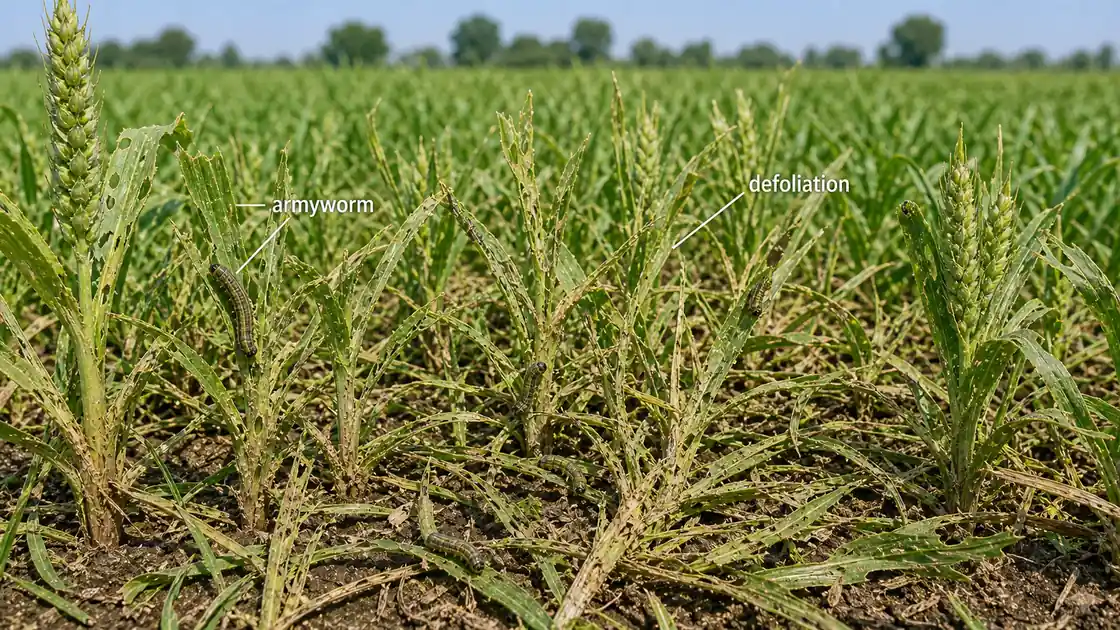
- Freshly hatched larvae spin threads from which they suspend themselves in the air, then use air currents to disperse from one plant to another
- In early stages, they feed on tender leaves in the central whorl
- Later, they feed on older leaves and skeletonize them completely
- Grown-up caterpillars produce conspicuous faecal pellets
- In severe attack, whole leaves including the midrib are consumed and the field looks as if grazed by cattle — a classic exam description
- Larvae are voracious feeders that migrate in army-like bands from field to field
- The pest may also eat the ears, including awns and immature grains
IMPORTANT
Armyworm gained prominence in India after the introduction of Mexican wheat varieties during the Green Revolution. The caterpillars march in groups (hence "armyworm") and can completely defoliate a field overnight. "Field grazed by cattle" is the defining exam phrase.
Agricultural context: Armyworm outbreaks are sporadic — they may not appear for several years, then suddenly devastate large areas. In Madhya Pradesh and Maharashtra, district agriculture officers issue alerts when armyworm populations build up in border areas.
2. Wheat Aphid — Macrosiphum miscanthi
Family: Aphididae | Order: Hemiptera
Host range: Wheat, barley, oats, Cynodon dactylon
Damage Symptoms
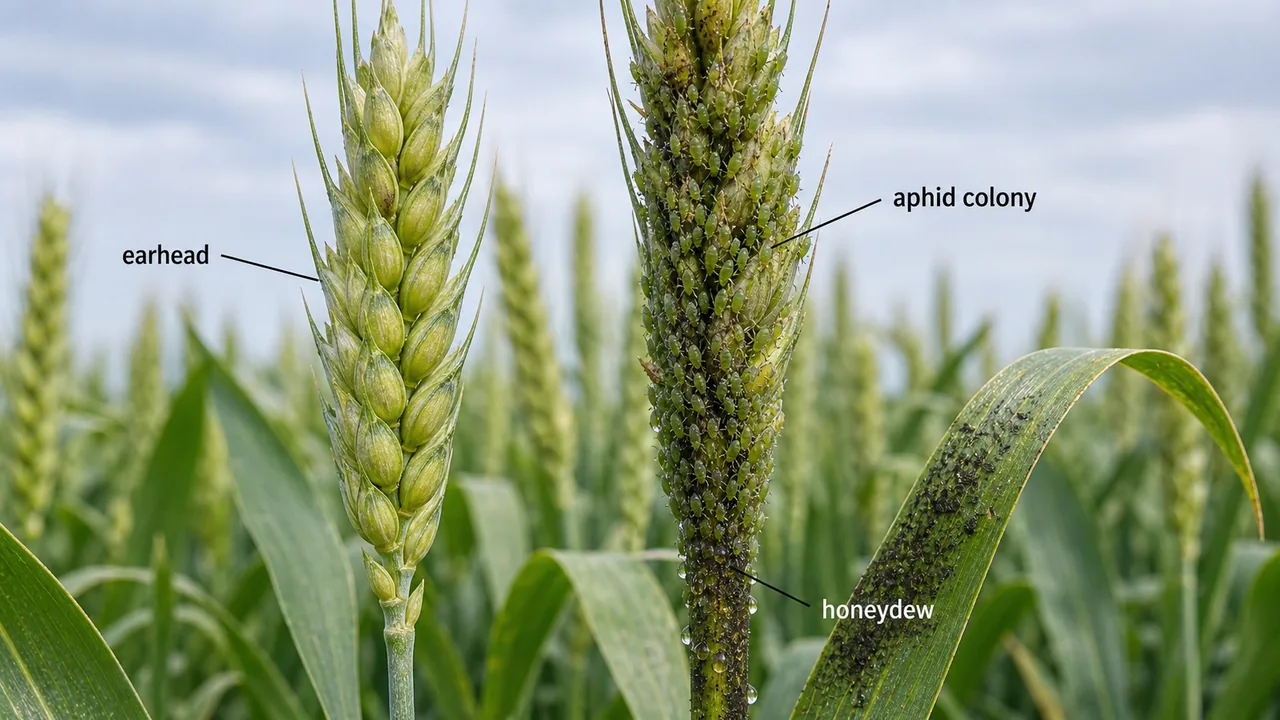
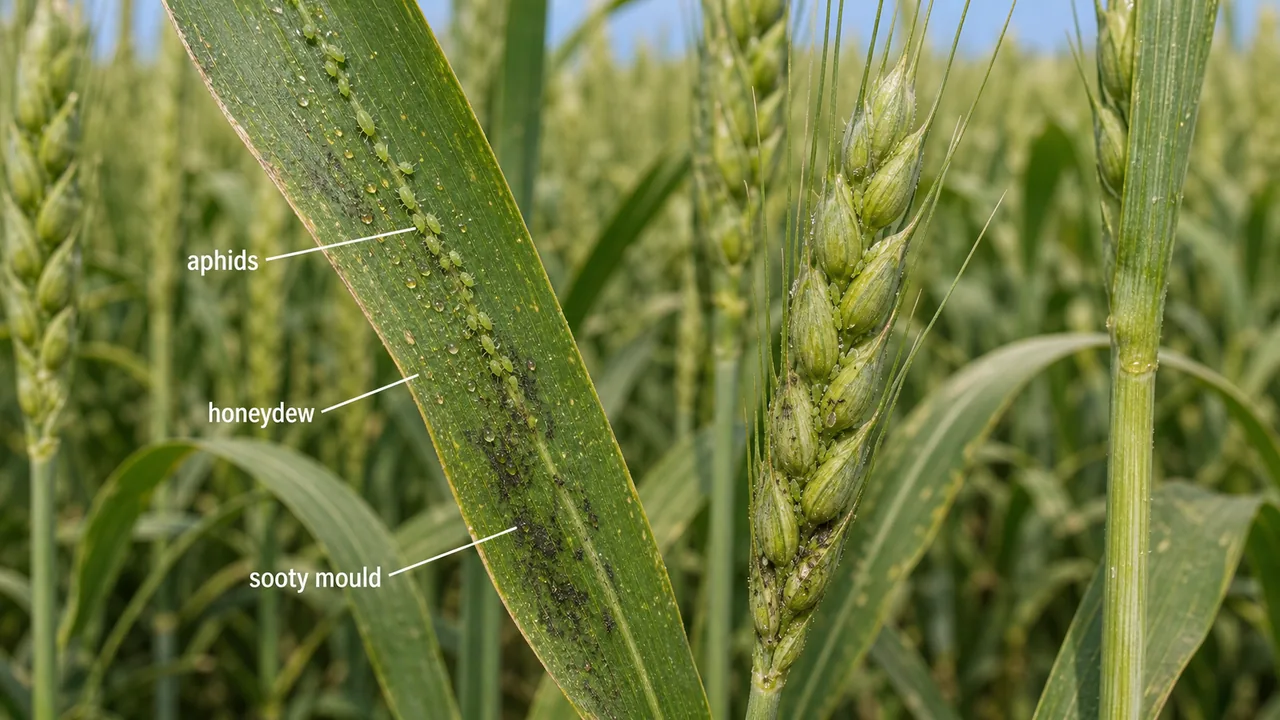
- Nymphs and adults suck sap from plants, particularly from earheads
- They appear in large numbers during cold and cloudy weather
- Damage is most severe in years with prolonged cold, cloudy spells
- A heavily manured, well-irrigated, succulent crop harbours the pest longer and suffers greater damage
- Honeydew secretion leads to sooty mould on the ears
IMPORTANT
ETL: 5 aphids per earhead. Key exam fact: wheat aphid populations explode during cold and cloudy weather. Well-fertilised, irrigated crops are more susceptible.
Agricultural context: In Punjab and Haryana during January-February, when foggy, overcast conditions persist, wheat aphid populations can build up rapidly on the earheads. Farmers should scout specifically during such weather.
3. Ghujhia Weevil — Tanymecus indicus
Family: Curculionidae | Order: Coleoptera
Distribution & Status: Sporadic pest of considerable importance in wheat-growing areas
Host range: Germinating rabi crops — wheat, barley, gram, and mustard
Damage Symptoms
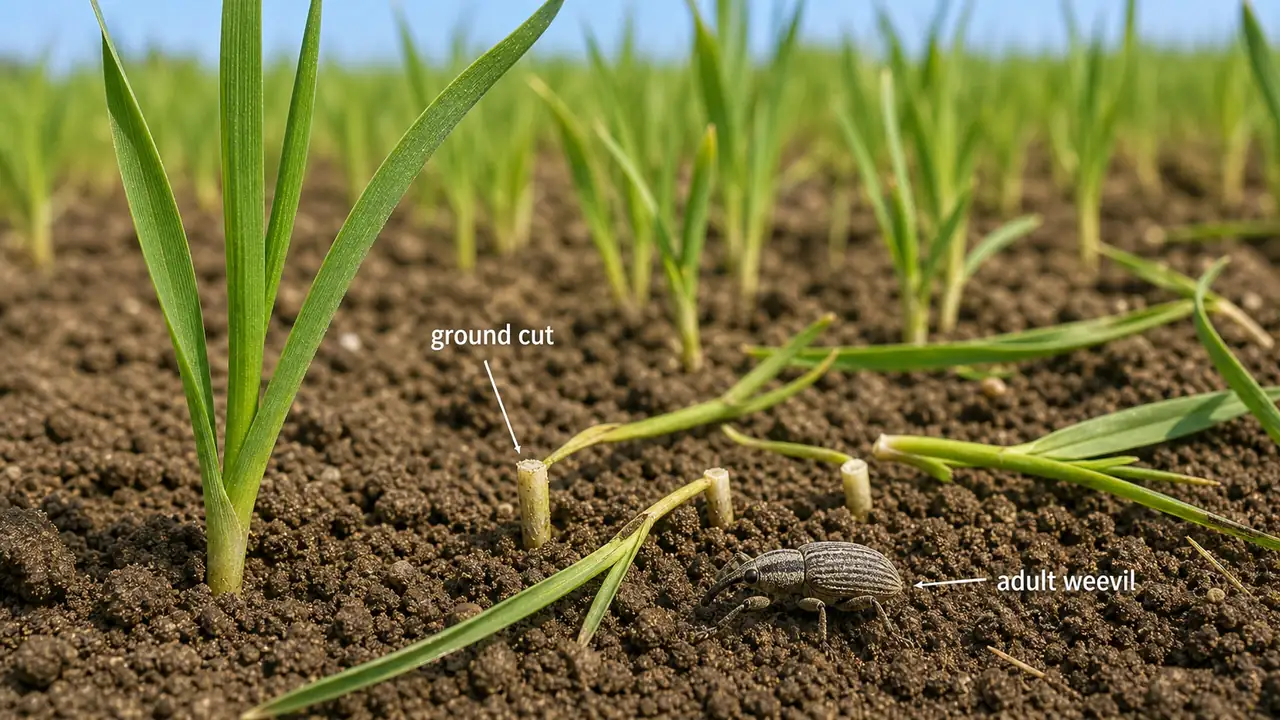
- Only adults feed on leaves and tender shoots (grubs are not the damaging stage here)
- They cut the germinating seedlings at ground level — often requiring resowing
- Damage is particularly serious during October-November when rabi crops are germinating
- Specific pest of wheat nursery/seedling stage
TIP
Mnemonic: "Ghujhia cuts at Ground level during Germination." This weevil is a rabi season pest that specifically attacks germinating seedlings. Adults (not grubs) cause the damage — an important distinction from most beetles.
4. Gram Pod Borer on Wheat — Helicoverpa armigera
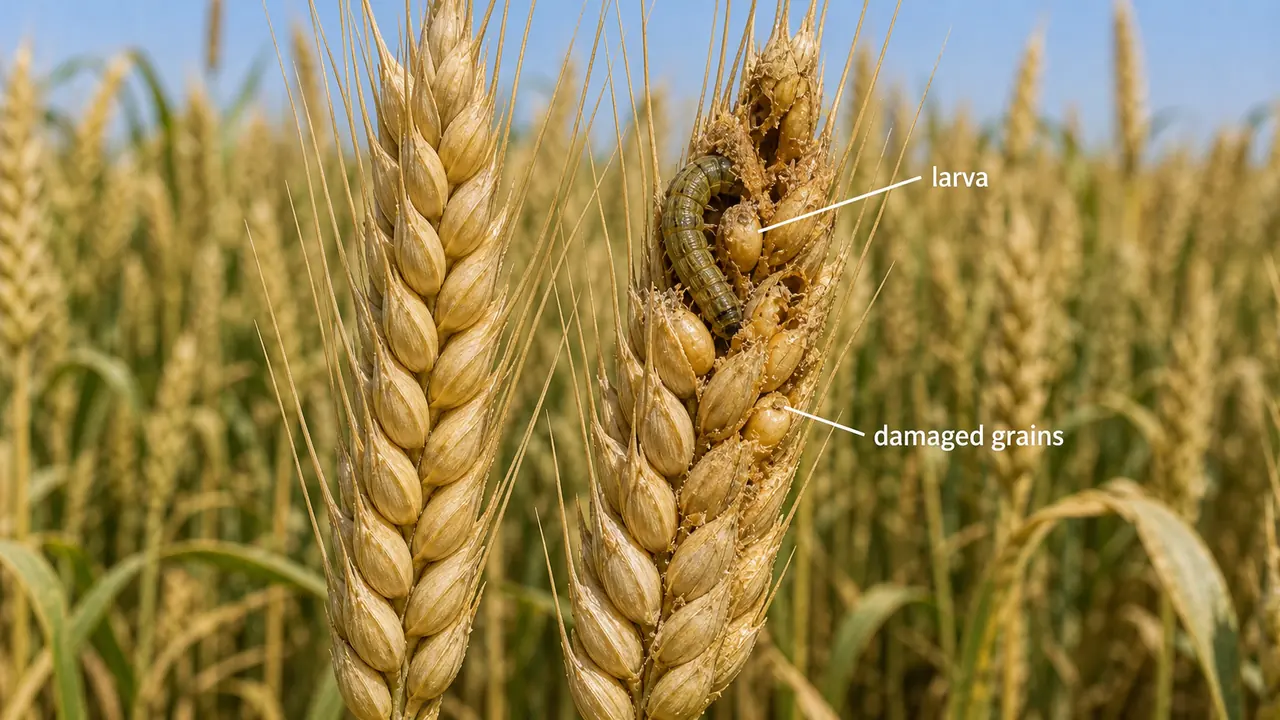
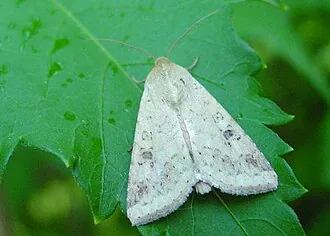
Family: Noctuidae | Order: Lepidoptera
Damage Symptoms
- Attacks wheat at maturity, feeding on grains in the earheads
- Damage is more severe where wheat follows cotton — the Helicoverpa population carries over from the cotton crop
NOTE
Helicoverpa armigera is polyphagous and attacks nearly every major crop. In wheat, it is a late-season pest that feeds on maturing grains. The wheat-after-cotton rotation exacerbates damage.
5. Termites — Odontotermes obesus & Microtermes obesi
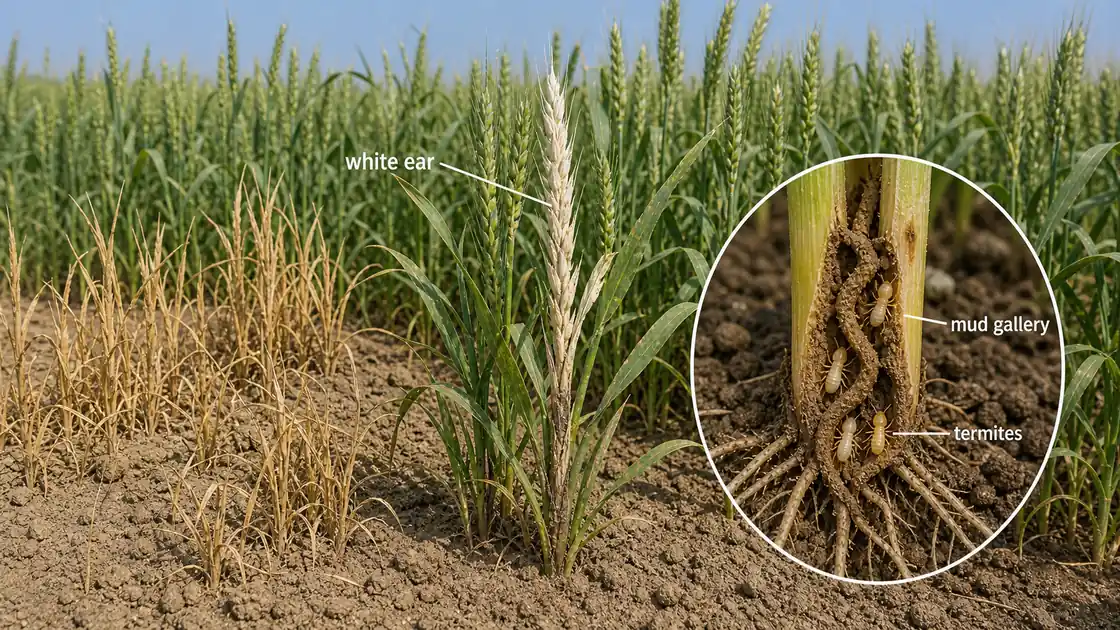
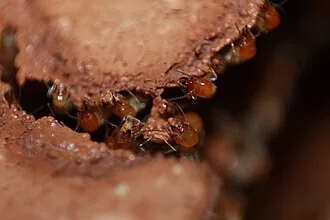
Family: Termitidae | Order: Isoptera
Damage Symptoms
Termites attack wheat at two critical periods:
| Period | Symptom | Effect |
|---|---|---|
| Soon after sowing | Seedlings die; poor germination | May require resowing |
| Near maturity | Plants dry up completely; white ears appear | Yield loss |
- Damaged plants dry up completely and are easily pulled out
- Workers feed on the roots and underground basal portions of the plant, and in stressed stands may also nibble leaf margins near the soil-contact zone
- Late-stage damage produces white ears (similar to stem borer, but caused by root/underground feeding)
IMPORTANT
Termites are a major problem in rainfed wheat and sandy/light soils. The two key damage periods — sowing and maturity — must be remembered separately.
Management
- Seed treatment with Imidacloprid or Chlorpyriphos
- Apply Chlorpyriphos 20 EC in irrigation water
- Adequate irrigation significantly reduces termite damage (termites prefer dry conditions)
6. Molya Nematode / Cyst Nematode — Heterodera avenae
Family: Heteroderidae | Order: Tylenchida
Distribution: Widely distributed in Europe and Australia; in India, recorded in Rajasthan, Haryana, and Punjab
Host range: Wheat, barley, oats, and rye
Damage Symptoms
- Attacked plants remain stunted with a shrivelled, unhealthy appearance
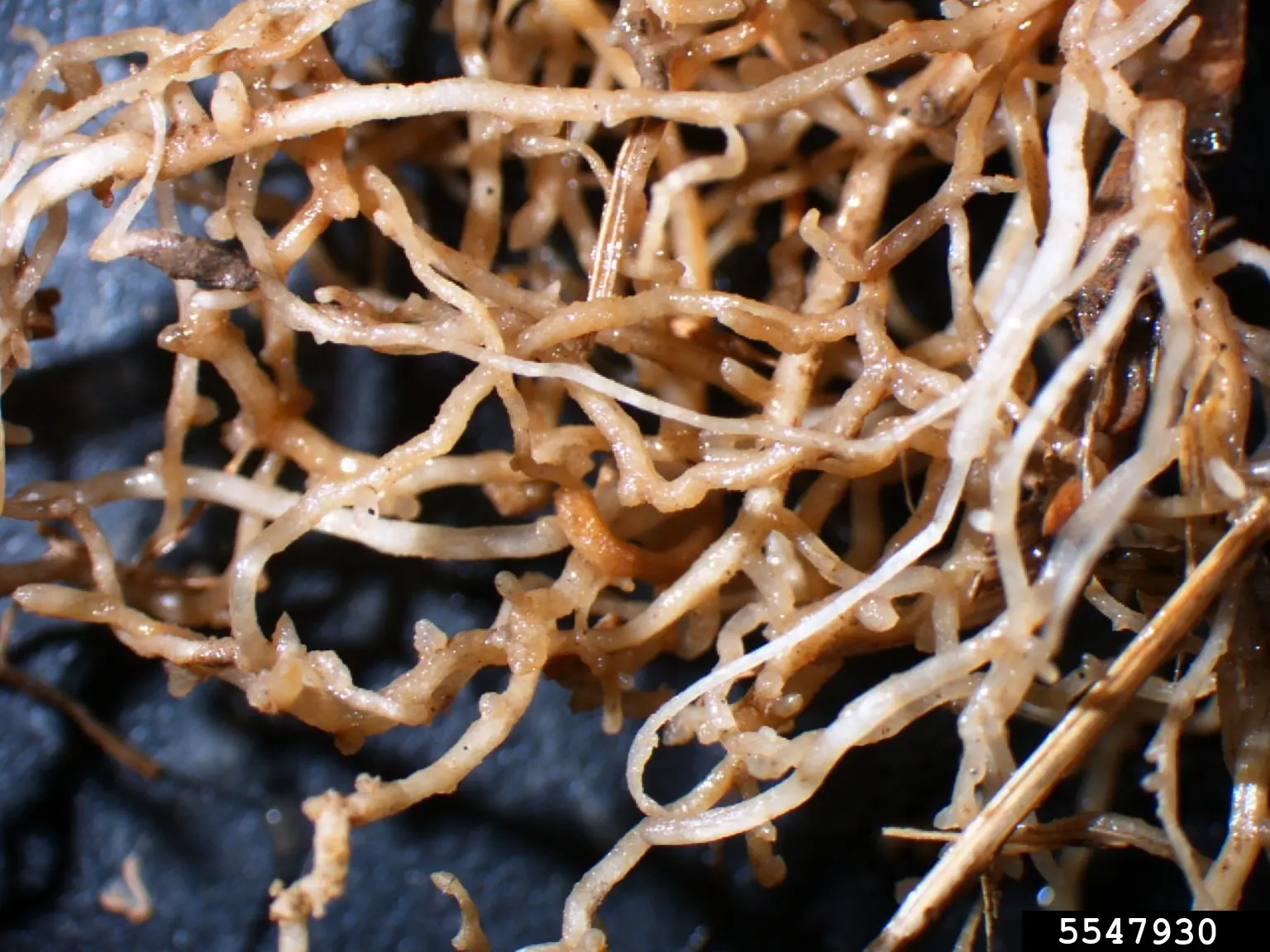
- Nematode infection stimulates formation of branched rootlets
- Main root remains short or bunchy, bearing small galls
- In severe infestation, seedlings may fail to emerge
- Plants that survive produce short stalks and ears, yielding a poor harvest
IMPORTANT
Molya disease is caused by the cyst nematode Heterodera avenae. It is a major problem in the sandy soils of Rajasthan and Haryana. The diagnostic field sign is stunted plants with bunchy, galled roots.
Management
- Crop rotation with non-host crops: mustard, pulses, fenugreek, or carrot for 1-2 years
- Grow resistant wheat: Raj MR-1 or resistant barley: RD 2035 or RD 2052
- Summer ploughing (2-3 times) to expose cysts to sun and desiccation
- Apply carbofuran @ 45 kg/ha as soil application
Agricultural context: In Rajasthan's Sikar, Jhunjhunu, and Churu districts, Molya disease is a persistent problem in wheat. Extension workers identify it by the patch-wise stunting pattern and confirm by examining roots for characteristic galls and tiny lemon-shaped cysts.
7. Wheat-Gall Nematode — Anguina tritici
Family: Tylenchidae | Order: Tylenchida
Distribution: Cosmopolitan. Causes ear-cockle or mamni disease.
Dual disease role: This nematode is also the carrier of tundu disease (bacterial yellow slime ear-rot caused by Corynebacterium tritici).
Host range: Rye, spelt, and emmer. Notably, oats and barley are immune.
Damage Symptoms
- Affected plants are stunted; leaves are wrinkled, rolled, or twisted
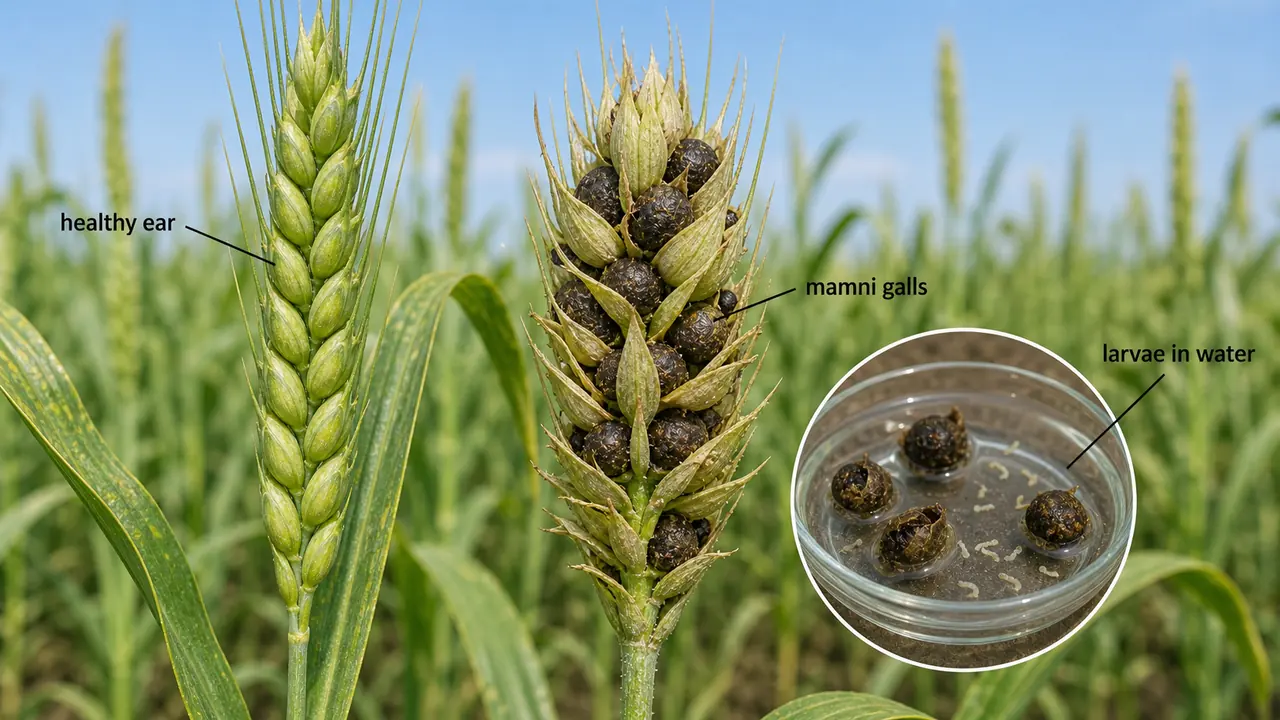
- A variable number of grains in infested ears are replaced by dark, round galls (mamni galls)
- Diseased ears are shorter and thicker than healthy ones; glumes are spread apart
- If mamni galls are soaked in water overnight, the coat softens and thousands of larvae are released
Life Cycle (exam-relevant details)
- Galls planted with seed → moisture softens the galls → larvae are released into the soil
- Larvae crawl to host plants (within 1/3 metre) and climb up the stem
- They reach the growing points and eventually enter the flower bud primordia
- Instead of normal seeds, galls form in place of grains
IMPORTANT
Three key exam facts about Anguina tritici:
- Causes ear-cockle / mamni disease (galls replace grains)
- Is the carrier of tundu disease (bacterial yellow slime ear-rot by Corynebacterium tritici)
- Oats and barley are immune to this nematode
Management
- Separate galls from wheat seed by floating them on water in a tub — galls are lighter and float on the surface; they can be skimmed off. Dry the seed before sowing.
- Hot water treatment: 50°C for 2 hours — used as seed treatment to control Tundu disease in wheat (kills Corynebacterium tritici and reduces nematode infestation in seed lot)
TIP
"50°C for 2 hours = Tundu control" — Hot water treatment at this temperature for 2 hours is the seed treatment standard for Tundu disease. Also used against nematode-infected seed material.
The Two Wheat Nematodes — A Critical Comparison
| Feature | Molya Nematode | Wheat-Gall Nematode |
|---|---|---|
| Scientific name | Heterodera avenae | Anguina tritici |
| Common name | Cyst nematode | Ear-cockle nematode |
| Disease caused | Molya disease | Ear-cockle / mamni disease |
| Plant part attacked | Roots | Ears (grains) |
| Symptoms | Stunted plants; bunchy galled roots | Galls replace grains; wrinkled leaves |
| Distribution (India) | Rajasthan, Haryana, Punjab | Widespread |
| Resistant variety | Raj MR-1 (wheat); RD 2035/2052 (barley) | No specific variety |
| Oats/barley status | Susceptible | Immune |
| Additional role | None | Carrier of tundu disease |
| Control | Crop rotation; summer ploughing | Float galls in water to separate |
TIP
Mnemonic: "Heterodera attacks Hidden roots (below ground); Anguina attacks Aerial ears (above ground)." Molya = roots, Mamni = ears. This distinction is the most frequently tested nematode question in agriculture exams.
Minor Pests of Wheat
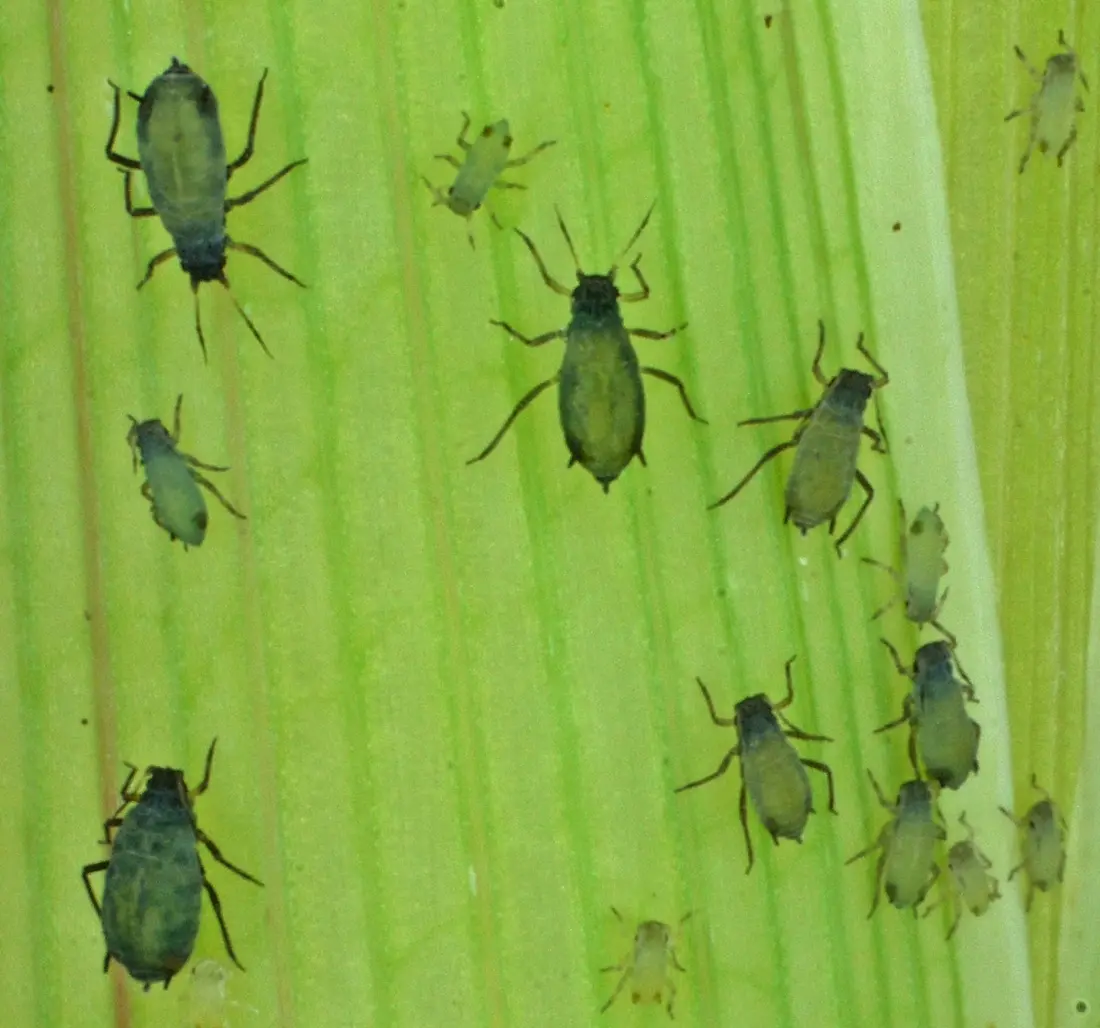
8. Wheat Aphid — Schizaphis graminum & Rhopalosiphum maidis
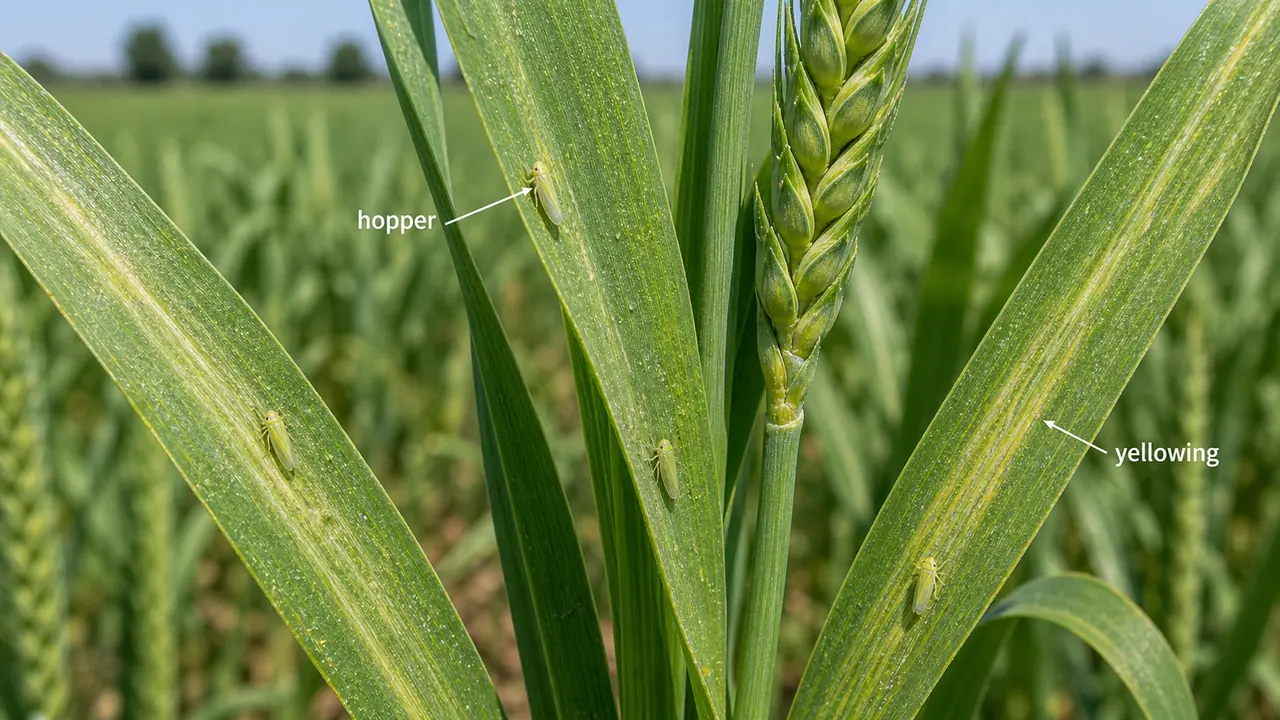
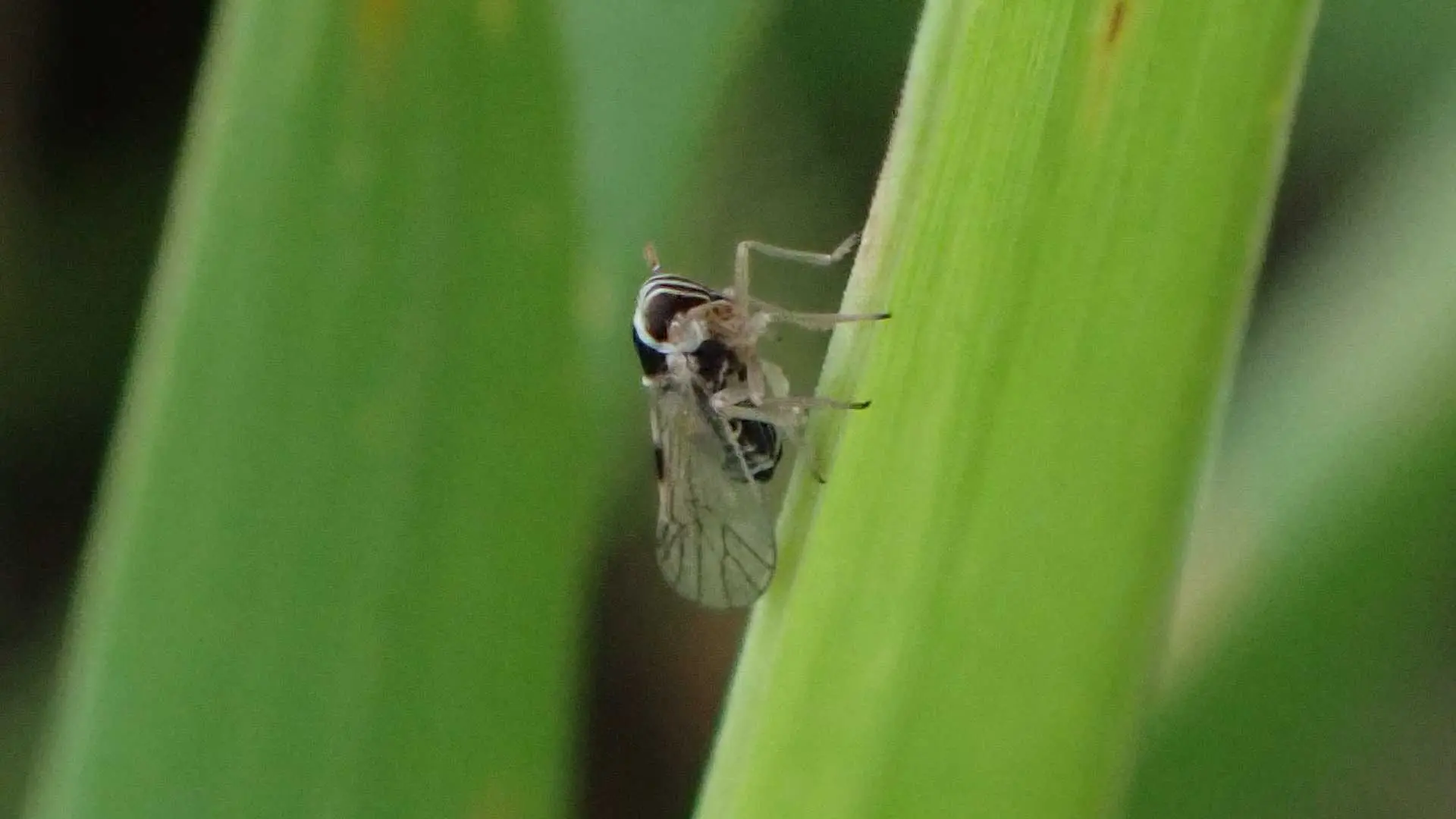
9. Hoppers — Laodelphax striatella & Pyrilla perpusilla
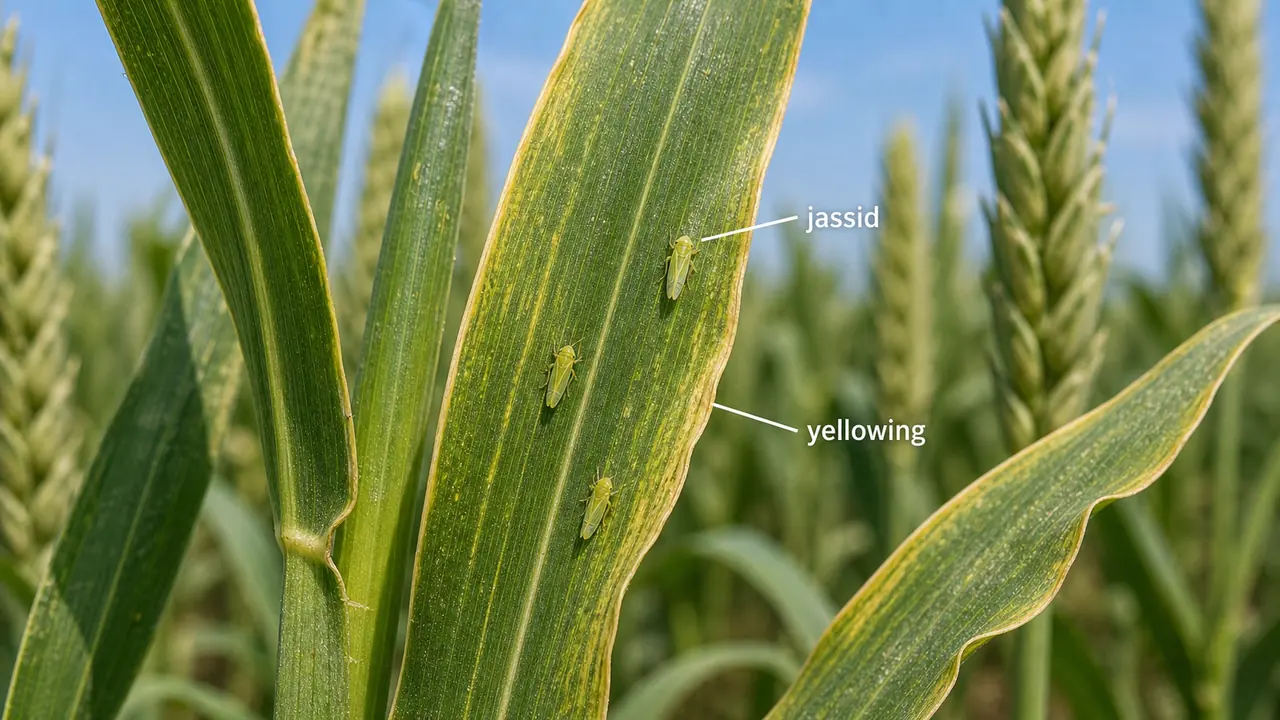
10. Jassids — Amrasca spp.
11. Wheat Bug — Eurygaster maura
12. Wheat Thrips — Anaphothrips favicinctus
13. Cut Worms — Agrotis spp. & Marasmia trapezalis
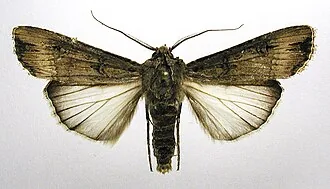
14. Pink Borer — Sesamia inferens
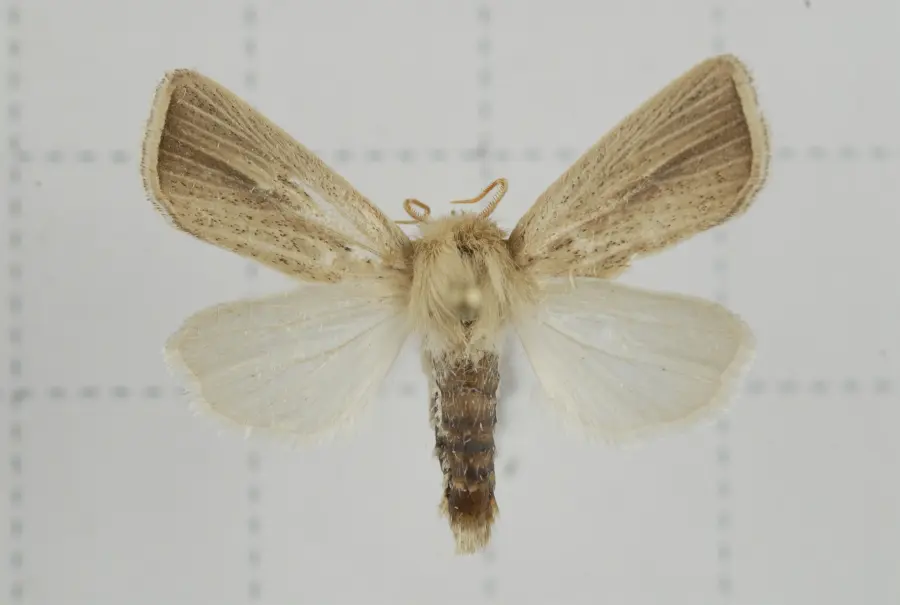
15. Shoot Fly — Atherigona naqvii & A. orzae
Field Diagnosis: Wheat — What's Causing the Damage?
Step 1: When does damage appear?
Seedling stage damage?
- Seedlings cut at ground level, fallen? → Ghujhia Weevil (T. indicus) — adult beetles, rabi pest
- Poor germination + mud galleries in soil? → Termites (Odontotermes) — check underground
Vegetative stage damage?
- Leaves stripped overnight, field looks "grazed by cattle"? → Armyworm (M. separata) — sporadic, gregarious; check for caterpillars hiding at plant base during day
- Stunted plants, root cysts visible on roots? → Molya Nematode (H. avenae) — pull out plant, check roots for tiny lemon-shaped cysts
Ear/grain stage damage?
- Ear galls replacing normal spikelets, dark and hard? → Wheat-Gall Nematode (Anguina tritici) — "ear cockle"; galls contain nematode masses
- Aphid colonies on ears, sticky honeydew? → Wheat Aphid (M. miscanthi) — sap feeding reduces grain filling
- Grains eaten, head damage? → Gram Pod Borer (H. armigera) — polyphagous, same pest as in cotton/pulses
Exam Tips and Mnemonics
TIP
"AGG-HTM" — The 7 Major Wheat Pests:
- Armyworm — Field "grazed by cattle"; sporadic; Mexican varieties
- Ghujhia weevil — Cuts seedlings at ground; rabi; adults damage
- Gram pod borer — Feeds on grains at maturity; worse after cotton
- Heterodera (Molya) — Cyst nematode; roots; bunchy galls; Raj MR-1
- Termites — Two damage periods (sowing + maturity); white ears
- Macrosiphum aphid — ETL: 5/earhead; cold & cloudy weather
- aNguina (Wheat-gall) — Ear-cockle/mamni; tundu carrier; oats immune
Critical numbers:
- Aphid ETL: 5 per earhead
- Ghujhia damage period: October-November
- Carbofuran for Molya: 45 kg/ha
Summary Table: Wheat Pests at a Glance
| Fact | Answer |
|---|---|
| Field looks "grazed by cattle" | Armyworm (Mythimna separata) |
| Armyworm gained prominence after | Introduction of Mexican wheat varieties |
| Wheat aphid ETL | 5 aphids per earhead |
| Aphid favoured by | Cold and cloudy weather |
| Cuts seedlings at ground level (rabi) | Ghujhia weevil (Tanymecus indicus) |
| Feeds on wheat grains at maturity | Gram pod borer (Helicoverpa armigera) |
| Worse when wheat follows cotton | Helicoverpa armigera |
| Termite damage periods | Soon after sowing + near maturity |
| Molya disease caused by | Heterodera avenae (Cyst nematode) |
| Molya symptom | Stunted plants; bunchy, galled roots |
| Molya resistant wheat variety | Raj MR-1 |
| Molya distribution in India | Rajasthan, Haryana, Punjab |
| Ear-cockle / mamni disease | Anguina tritici (Wheat-gall nematode) |
| Carrier of tundu disease | Anguina tritici |
| Oats and barley status vs Anguina | Immune |
| Gall separation method | Floating on water (galls are lighter) |
Summary Cheat Sheet
| Concept / Topic | Key Details |
|---|---|
| Armyworm (Mythimna separata) | Noctuidae; field looks "grazed by cattle"; sporadic pest |
| Armyworm prominence | After introduction of Mexican wheat varieties (Green Revolution) |
| Armyworm dispersal | Larvae spin threads and use air currents; march in army-like bands |
| Wheat aphid (Macrosiphum miscanthi) | Sucks sap from earheads; favoured by cold, cloudy weather |
| Wheat aphid ETL | 5 aphids per earhead |
| Ghujhia weevil (Tanymecus indicus) | Curculionidae; adults cut seedlings at ground level; Oct-Nov damage |
| Gram pod borer (H. armigera) | Feeds on wheat grains at maturity; worse when wheat follows cotton |
| Termites | Odontotermes obesus + Microtermes obesi; two damage periods: sowing + maturity |
| Termite late damage | Produces white ears (similar to stem borer but from underground feeding) |
| Termite management | Seed treatment with Imidacloprid/Chlorpyriphos; adequate irrigation |
| Molya disease | Caused by cyst nematode Heterodera avenae; attacks roots |
| Molya symptoms | Stunted plants; short/bunchy roots with galls |
| Molya distribution | Rajasthan, Haryana, Punjab (sandy soils) |
| Molya resistant variety | Wheat: Raj MR-1; Barley: RD 2035/RD 2052 |
| Ear-cockle / mamni disease | Anguina tritici (wheat-gall nematode); galls replace grains |
| Tundu disease carrier | Anguina tritici carries Corynebacterium tritici (bacterial yellow slime) |
| Oats and barley vs Anguina | Immune |
| Gall separation | Float on water — galls are lighter and rise to surface |
| Heterodera vs Anguina | Heterodera = roots (below); Anguina = ears (above) |
| Pink borer (S. inferens) | Minor pest of wheat; same species as sorghum/maize |
| Wheat shoot fly | Atherigona naqvii and A. orzae — minor pest |
TIP
Next: We move from cereals to commercial crops. The cotton bollworms lesson covers spotted, American, and pink bollworm — including Bt cotton technology.