🐛 Cotton Bollworms: Spotted, American & Pink Bollworm Identification and Management
Master the three major cotton bollworms — spotted bollworm (Earias vittella), American bollworm (Helicoverpa armigera), and pink bollworm (Pectinophora gossypiella) — with damage symptoms, ETL values, Bt cotton technology, and biological control for IBPS AFO and ICAR exams.
Picture a cotton farmer in Gujarat inspecting a promising crop. The squares have formed, flowers are blooming, and bolls are swelling. Then she notices holes in the bolls, rotting seeds, and stained lint. Within weeks, half the harvest is ruined. The culprits? Bollworms — the single most destructive group of cotton pests worldwide. They attack the economically valuable parts (squares, flowers, and bolls) and cause direct yield and quality losses that no other pest group can match.
Understanding which bollworm causes which type of damage is not just academic — it determines whether a farmer chooses Bt cotton, releases Trichogramma, or sprays endosulfan. For competitive exams, bollworm identification based on damage symptoms is among the most frequently tested topics.
This lesson covers:
- Spotted bollworm — Earias vittella, the shoot-then-boll attacker
- American bollworm — Helicoverpa armigera, the most polyphagous pest
- Pink bollworm — Pectinophora gossypiella, the hidden destroyer
- Bt cotton technology — Bollgard I vs II, refuge strategy
- Biological and chemical control — parasitoids, predators, and last-resort sprays
All three bollworms are high-yield for IBPS AFO and ICAR exams.
Pro Content Locked
Upgrade to Pro to access this lesson and all other premium content.
Charged once for one year · ₹1188 total
Save ₹100/month vs ₹2388/year launch price
- All Agriculture & Banking Courses
- AI Lesson Questions (100/day)
- AI Doubt Solver (50/day)
- Glows & Grows Feedback (30/day)
- AI Section Quiz (20/day)
- 22-Language Translation (100/day)
- Recall Questions (20/day)
- AI Quiz (15/day)
- AI Quiz Paper Analysis (100/day)
- AI Step-by-Step Explanations (100/day)
- Spaced Repetition Recall (FSRS)
- AI Tutor
- Immersive Text Questions
- Audio Lessons — Hindi & English
- Mock Tests & Previous Year Papers
- Summary & Mind Maps
- XP, Levels, Leaderboard & Badges
- Generate New Classrooms
- Voice AI Teacher (AgriDots Live)
- AI Revision Assistant
- Knowledge Gap Analysis
- Interactive Revision (LangGraph)
🔒 Secure one-time yearly payment via Razorpay · No hidden fees
Picture a cotton farmer in Gujarat inspecting a promising crop. The squares have formed, flowers are blooming, and bolls are swelling. Then she notices holes in the bolls, rotting seeds, and stained lint. Within weeks, half the harvest is ruined. The culprits? Bollworms — the single most destructive group of cotton pests worldwide. They attack the economically valuable parts (squares, flowers, and bolls) and cause direct yield and quality losses that no other pest group can match.
Understanding which bollworm causes which type of damage is not just academic — it determines whether a farmer chooses Bt cotton, releases Trichogramma, or sprays endosulfan. For competitive exams, bollworm identification based on damage symptoms is among the most frequently tested topics.
This lesson covers:
- Spotted bollworm — Earias vittella, the shoot-then-boll attacker
- American bollworm — Helicoverpa armigera, the most polyphagous pest
- Pink bollworm — Pectinophora gossypiella, the hidden destroyer
- Bt cotton technology — Bollgard I vs II, refuge strategy
- Biological and chemical control — parasitoids, predators, and last-resort sprays
All three bollworms are high-yield for IBPS AFO and ICAR exams.
The Three Cotton Bollworms at a Glance
India's cotton crop faces three major bollworms. All belong to Order Lepidoptera, but they differ in family, feeding behaviour, and the symptoms they produce.
| S.No. | Common Name | Scientific Name | Family | Order |
|---|---|---|---|---|
| 1. | Spotted bollworm | Earias vittella & E. insulana | Noctuidae | Lepidoptera |
| 2. | American bollworm (Green bollworm) | Helicoverpa armigera | Noctuidae | Lepidoptera |
| 3. | Pink bollworm | Pectinophora gossypiella | Gelechiidae | Lepidoptera |
IMPORTANT
Spotted and American bollworms belong to Noctuidae, while pink bollworm belongs to Gelechiidae. All three are in Order Lepidoptera. Exams often test the family-level distinction.
1. Spotted Bollworm
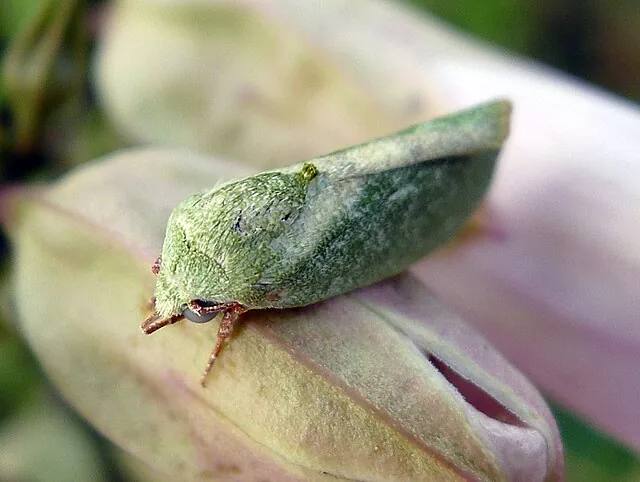
Scientific Name: Earias vittella & E. insulana
Family: Noctuidae | Order: Lepidoptera
Distribution: Cosmopolitan. Major pest of cotton across India.
Host Range: Cotton, bhendi (okra), hollyhock, Hibiscus cannabinus, Abutilon indicum
How It Attacks — From Shoot to Boll
The spotted bollworm follows a predictable two-stage attack pattern that is important for both field scouting and exam answers:
Stage 1 — Shoot Boring (Vegetative Phase):
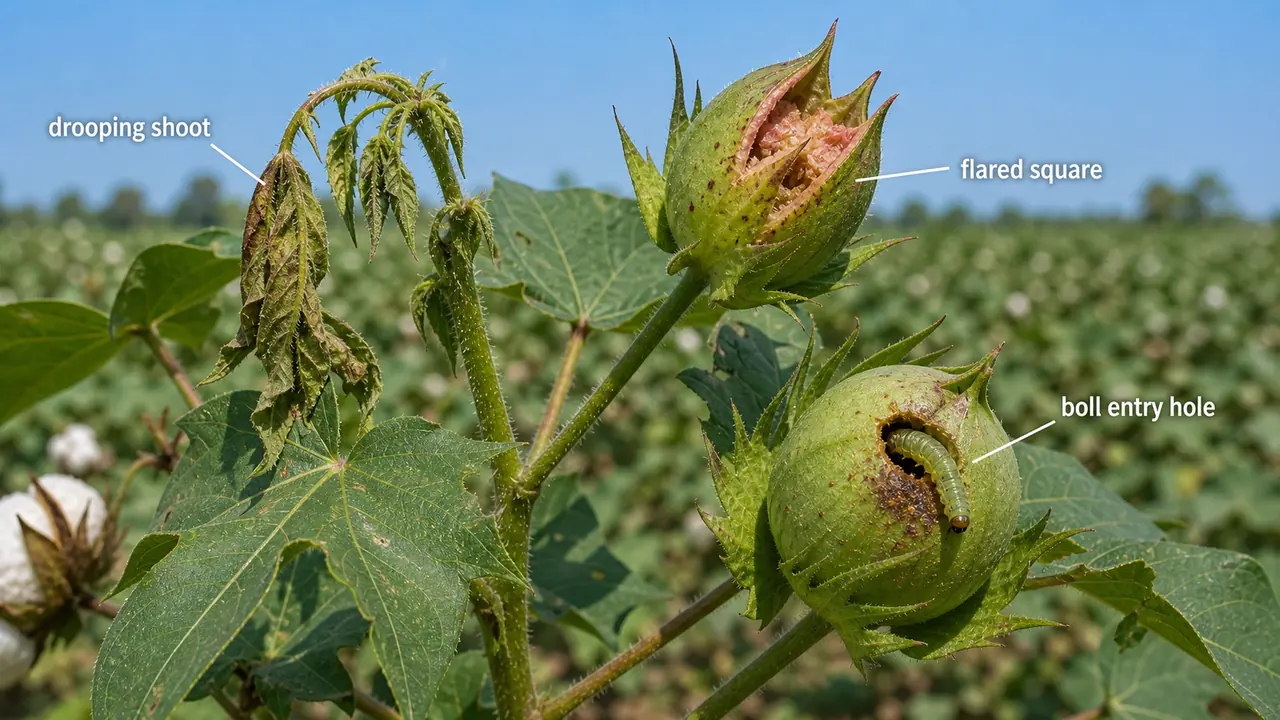
- The small caterpillar bores into the top tender shoot
- The portion above the damage point withers, droops, and dries up
- Depending on locality, up to 50% of the crop may be damaged at this stage
Stage 2 — Boll Boring (Reproductive Phase):
- When squares and bolls develop, caterpillars move from shoots to bolls, making conspicuous holes
- Squares and small bolls injured by larvae drop away from the plant
- Infested bolls are destroyed — larvae eat seeds and fill the boll with excrement
- Flaring up of square is the characteristic symptom
- Affected bolls may open prematurely and produce poor-quality lint
TIP
Key Exam Point: "Flaring up of square" is the hallmark symptom of spotted bollworm. If an exam describes a caterpillar first attacking shoots (causing drooping) then moving to bolls, the answer is always Earias vittella.
Agricultural Example
In Maharashtra's Vidarbha region, spotted bollworm damage in the vegetative stage causes shoot drooping that farmers often mistake for water stress. The key difference: pulling the drooping shoot reveals a caterpillar and bore hole inside, while water-stressed shoots show no internal damage.
2. American Bollworm (Green Bollworm)
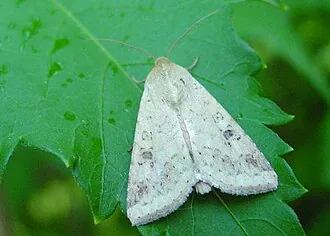
Scientific Name: Helicoverpa armigera
Family: Noctuidae | Order: Lepidoptera
Distribution: Cosmopolitan. Major pest — considered the most damaging single species pest globally.
Host Range: Sorghum, lablab, soybean, peas, sunflower, safflower, chillies, groundnut, tobacco, bhendi, maize, tomato — highly polyphagous (feeds on 100+ plant species)
How It Attacks — The "Head-In" Feeder
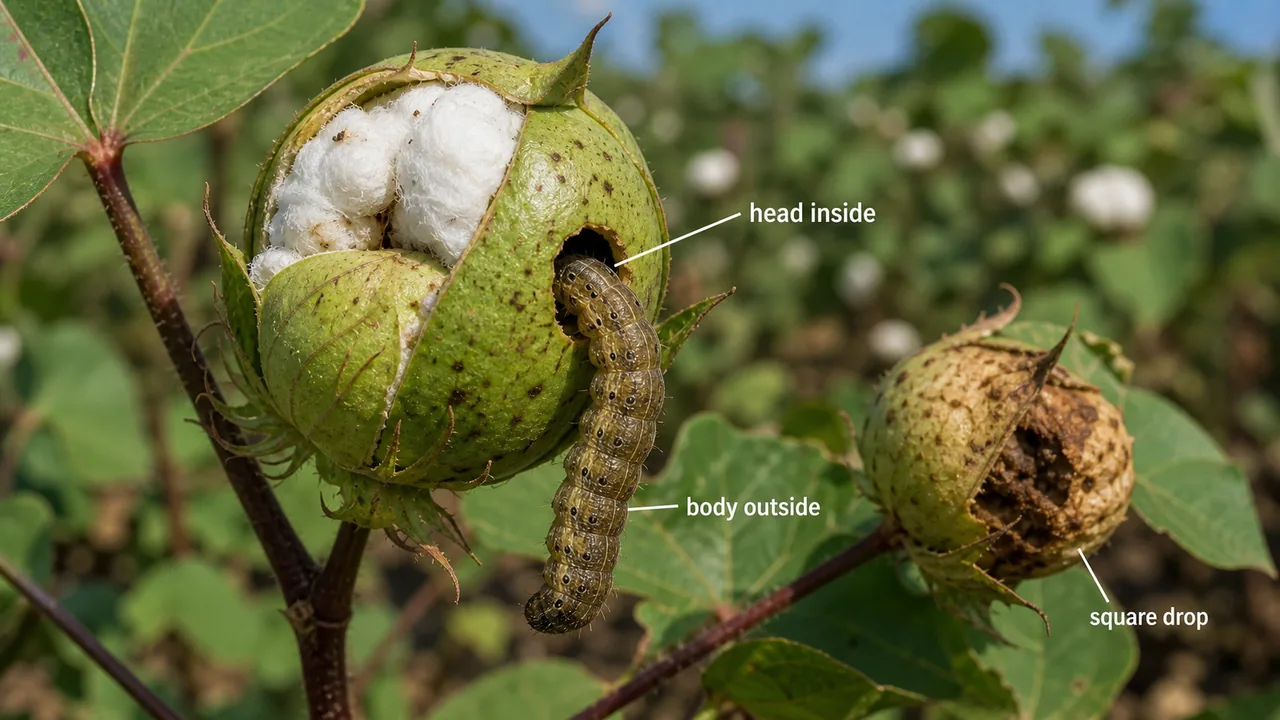
- Caterpillars feed on leaves, squares, flowers, and small bolls
- The characteristic feeding posture: they feed by thrusting their head inside the boll while the rest of the body hangs outside
- Damaged squares and young bolls drop away from plants
- Developed bolls and open bolls are not attacked — only squares, flowers, and small bolls
IMPORTANT
Unique Identification: Helicoverpa armigera larvae feed with their head thrust inside the boll and body hanging outside. This posture is diagnostic. Also remember: developed and open bolls are NOT attacked.
ETL (Economic Threshold Level)
10% of affected fruiting parts or bolls OR one egg per plant OR one larva per plant
Management
1. Monitoring
- Pest monitoring through light traps and pheromone traps
- In pink-bollworm-prone areas, the same pheromone principle may be scaled up into field-wide mating disruption using rope dispensers such as PB Knot rope, usually installed around 35-40 days after sowing across a large contiguous block rather than in isolated single fields
2. Cultural Practices — Bt Cotton Technology
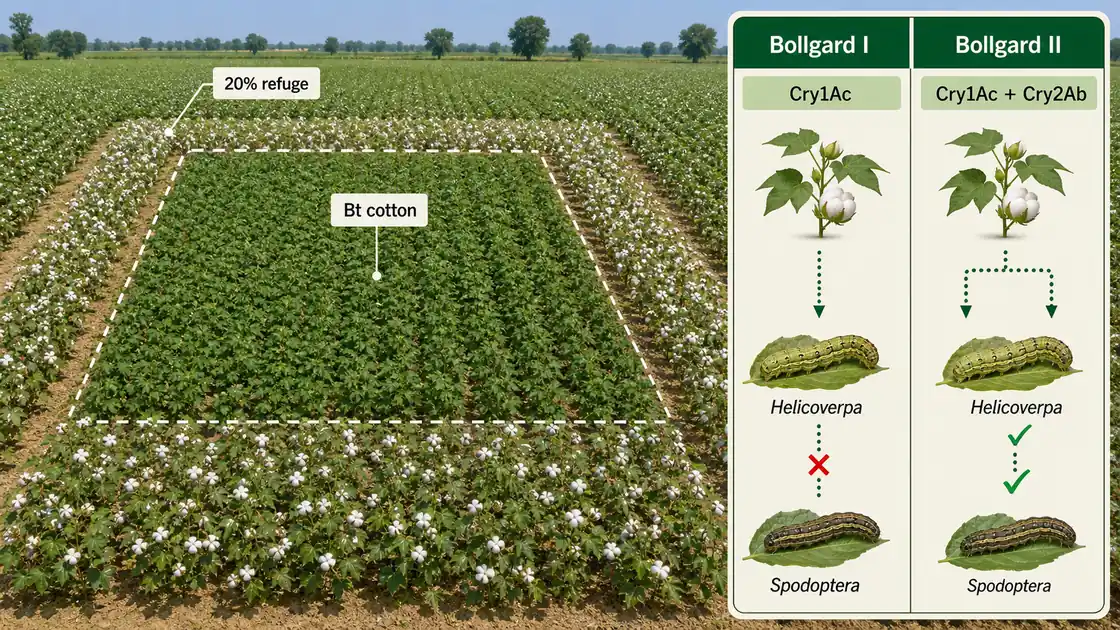
Bt cotton is the single most important management tool against Helicoverpa armigera in modern Indian agriculture.
| Feature | Bollgard I | Bollgard II |
|---|---|---|
| Cry Protein | Cry 1 Ac only | Cry 1 Ac + Cry 2 Ab |
| Target Pests | American bollworm only | Spodoptera AND Helicoverpa |
| Protection Duration | Limited | Season-long |
| Refuge Requirement | 20% non-Bt cotton | 20% non-Bt cotton |
IMPORTANT
Bt Cotton for Exams:
- Bollgard I = Cry 1 Ac (protects against American bollworm only)
- Bollgard II = Cry 1 Ac + Cry 2 Ab (protects against both Spodoptera AND Helicoverpa)
- A minimum of 20% non-Bt cotton refuge must surround Bt fields to delay resistance development
- In packaged-seed systems, the same resistance-management idea may appear as RIB = refuge-in-bag, where a fixed small proportion of non-Bt seed is pre-mixed with Bt seed
- This distinction is frequently tested in exams and ICAR exams.
Resistant Varieties
- Helicoverpa resistant: L 1245, LD 135, Sujata, LK 861, Abadhita
- Spotted bollworm resistant: L 1245, JK 119-25-54, BCS 10, BCS 10-75, FBRN 2-6, HAO 66-107-1/1, Hopi, Deltapine, LH 95, UK 48G 27, Sanguineum
NOTE
L 1245 is resistant to both Helicoverpa AND spotted bollworm — a versatile variety worth remembering.
3. Biological Control
- Egg parasitoid (inundative release): Trichogramma spp.
- Egg-larval parasitoid: Chelonus blackburnii
- Predator: Chrysoperla @ 1,00,000/ha
- HaNPV (Helicoverpa armigera NPV) is a standard microbial option, and older field recommendations commonly recall about 500 LE/ha for cotton-bollworm management.
4. Chemical Control
- During early stages of square formation: endosulfan 35 EC @ 0.2 l/ha
3. Pink Bollworm
Scientific Name: Pectinophora gossypiella
Family: Gelechiidae | Order: Lepidoptera
Host Range: Cotton, bhendi, hollyhock, and other malvaceous plants
How It Attacks — The Hidden Destroyer
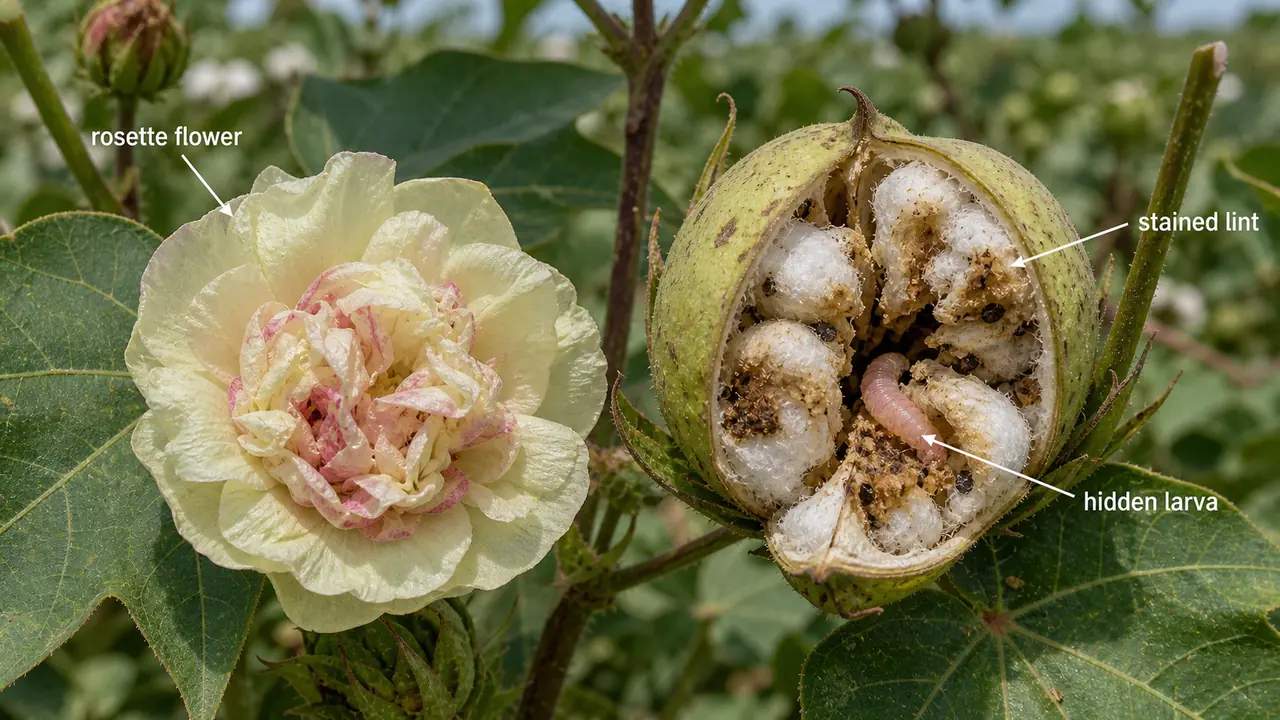
Pink bollworm is the most insidious of the three bollworms because its entry hole seals shut, making detection extremely difficult until damage is already done.
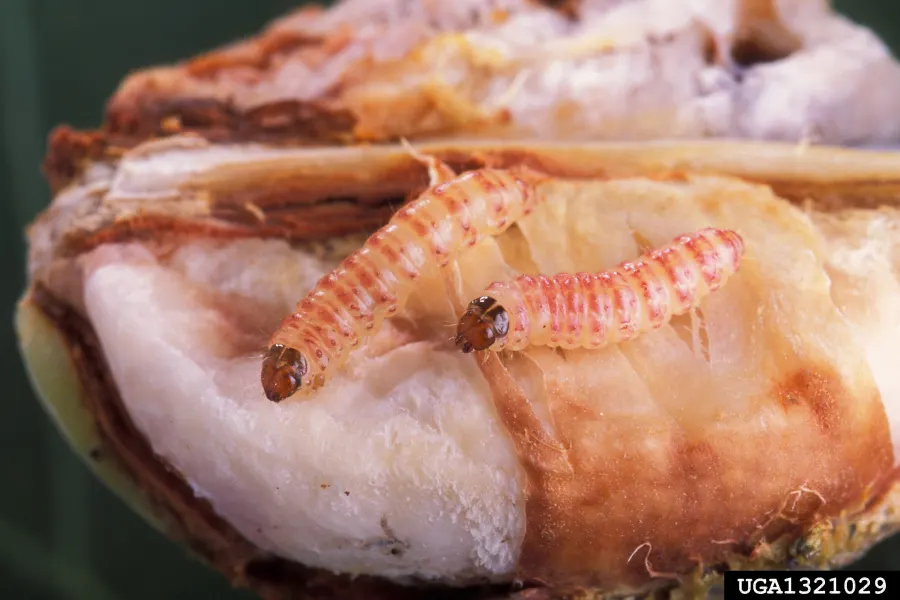
- Caterpillars feed on flower buds, flowers, and bore into bolls
- Infested flowers do not open properly and give a "rosette appearance" — petals remain bunched together
- Young bolls when attacked are shed after a few days, but larger bolls remain on the plant
- Locules are damaged and interlocular burrowing can be noticed inside retained bolls
- Seeds are destroyed and lint gets stained — reducing fibre quality and market value
- The entry hole through which larvae enter is closed — making it difficult to distinguish healthy bolls from infested ones externally
- Damaged seeds may stick together and create the classic "double seed" clue inside infested bolls
TIP
Pink Bollworm Exam Essentials:
- "Rosette appearance" of flowers — the most characteristic and tested symptom
- Entry hole in boll is closed — makes detection difficult (compare with conspicuous holes of spotted and American bollworms)
- Lint gets stained — affects cotton quality and price
- Only bollworm in family Gelechiidae (spotted and American are Noctuidae)
Management
- Grow Bt cotton resistant varieties
- Burn plant debris after harvest to destroy overwintering stages
- Deep ploughing in February to expose pupae
- Exposure of retained or seed cotton to sun heat helps reduce carryover of diapausing pink bollworm larvae
- Larval parasitoids: Bracon greeni, Chelonus pectinophorae
Bollworm Damage Pattern Comparison
| Bollworm | Bore Hole | Key Symptom | Other Clue |
|---|---|---|---|
| American (Helicoverpa) | Large circular holes + faecal pellets on bolls | Head inside boll, body outside | Polyphagous: tomato, chickpea, pigeonpea |
| Pink (Pectinophora) | Closed/sealed entry | Rosetted flowers | Lint staining |
| Spotted (Earias) | Small entry holes | Flaring of square | First attacks shoots |
IMPORTANT
Most susceptible cotton = Gossypium hirsutum (American cotton).
TIP
Cowpea intercropped with cotton reduces Spotted bollworm. Castor intercropping with cotton is NOT recommended — attracts Spodoptera that shifts to cotton.
Comparison: Spotted vs American vs Pink Bollworm
This table consolidates the most exam-relevant differences. Study it carefully — exams often present a symptom and ask you to identify the bollworm.
| Feature | Spotted Bollworm | American Bollworm | Pink Bollworm |
|---|---|---|---|
| Scientific Name | Earias vittella | Helicoverpa armigera | Pectinophora gossypiella |
| Family | Noctuidae | Noctuidae | Gelechiidae |
| Host Range | Cotton, bhendi | Highly polyphagous (100+ hosts) | Malvaceous plants |
| Key Symptom | Flaring up of square | Head inside boll, body outside | Rosette appearance of flowers |
| Attack Sequence | Shoots first, then bolls | Squares, flowers, small bolls | Flower buds, flowers, bolls |
| Boll Entry Hole | Conspicuous | Conspicuous | Closed (hidden) |
| Open Bolls Attacked? | May open prematurely | Not attacked | Lint stained inside |
| ETL | Not specified | 10% fruiting parts or 1 egg/plant | Not specified |
| Bt Protection | Bollgard I & II | Bollgard I & II | Bollgard I & II |
Field Diagnosis: Which Bollworm Is It?
When you find boll damage in cotton, follow these steps:
Step 1: Open the damaged boll and check the larva
- Larva feeding head-first inside boll, body hanging out? → American Bollworm (H. armigera) — large entry hole visible
- Larva hidden deep inside locules, hard to find? → Pink Bollworm (P. gossypiella) — look for stained pinkish lint
- Damage on squares (flower buds) + young bolls? → Spotted Bollworm (E. vittella) — also bores shoots
Step 2: Check secondary signs
- Lint stained pink/yellow? → Pink Bollworm — also check for "rosette" flowers (petals stuck together)
- Wilted/drooping shoot tips before boll stage? → Spotted Bollworm — attacks shoots first, then bolls
- Large conspicuous bore hole with frass? → American Bollworm — most polyphagous pest in India (100+ hosts)
Exam Tips and Mnemonics
TIP
Mnemonic — "SHE FRoC" to remember the three bollworms:
- Spotted = Flaring up of square
- H (Helicoverpa/American) = Head inside boll
- (P) Pink = Rosette appearance, entry hole Closed
Family Memory Aid:
- "NoctuiDAE — Double A, Double E" — both spotted (Earias) and American (Armigera) are in Noctuidae
- Pink is the odd one out — Gelechiidae (think: "P for Pectinophora, G for Gelechiidae" — both have unusual letters)
Bt Cotton Quick Recall:
- Bollgard I = 1 protein (Cry 1 Ac) = 1 target (Helicoverpa)
- Bollgard II = 2 proteins (Cry 1 Ac + Cry 2 Ab) = 2 targets (Helicoverpa + Spodoptera)
Summary Table for Quick Revision
| Topic | Key Fact |
|---|---|
| Most destructive cotton pest group | Bollworms (attack squares, flowers, bolls) |
| Spotted bollworm (E. vittella) | Family Noctuidae; "flaring up of square"; shoots then bolls |
| American bollworm (H. armigera) | Family Noctuidae; head inside boll; highly polyphagous; ETL = 10% or 1 egg/plant |
| Pink bollworm (P. gossypiella) | Family Gelechiidae; "rosette appearance"; closed entry hole; lint staining |
| Bollgard I | Cry 1 Ac; protects against American bollworm only |
| Bollgard II | Cry 1 Ac + Cry 2 Ab; season-long; protects against Helicoverpa + Spodoptera |
| Refuge requirement | 20% non-Bt cotton around Bt fields |
| Key bio-control agents | Trichogramma (egg), Chelonus blackburnii (egg-larval), Chrysoperla (predator) |
| Dual-resistant variety | L 1245 (resists both Helicoverpa and spotted bollworm) |
| Chemical control | Endosulfan 35 EC @ 0.2 l/ha at early square formation |
TIP
Next: Cotton sucking pests — jassid (hopper burn), aphid (sooty mould), whitefly (CLCuD virus vector), thrips (silvery sheen), and stainer bugs that reduce lint quality.
Summary Cheat Sheet
| Concept / Topic | Key Details / Explanation |
|---|---|
| Three cotton bollworms | Spotted (Earias vittella), American (Helicoverpa armigera), Pink (Pectinophora gossypiella) — all Lepidoptera |
| Family distinction | Spotted + American = Noctuidae; Pink = Gelechiidae |
| Spotted bollworm (E. vittella) | Attacks shoots first, then bolls; flaring up of square is key symptom |
| Spotted bollworm shoot damage | Top shoot withers and droops; up to 50% crop affected |
| American bollworm (H. armigera) | Most polyphagous pest globally; head thrust inside boll, body outside |
| American bollworm ETL | 10% affected fruiting parts or 1 egg/plant or 1 larva/plant |
| American bollworm names | Corn earworm (maize), American bollworm (cotton), Gram pod borer (pulses), Tomato fruit borer |
| Pink bollworm (P. gossypiella) | Rosette appearance of flowers; entry hole closed/sealed — hidden destroyer |
| Pink bollworm quality damage | Lint gets stained; locules damaged by interlocular burrowing |
| Bollgard I | Cry 1 Ac protein; protects against American bollworm only |
| Bollgard II | Cry 1 Ac + Cry 2 Ab; season-long; protects against Helicoverpa + Spodoptera |
| Refuge requirement | 20% non-Bt cotton around Bt fields to delay resistance |
| Dual-resistant variety | L 1245 — resistant to both Helicoverpa and spotted bollworm |
| Biocontrol agents | Trichogramma spp. (egg parasitoid); Chelonus blackburnii (egg-larval); Chrysoperla @ 1,00,000/ha (predator) |
| Pink bollworm biocontrol | Bracon greeni, Chelonus pectinophorae (larval parasitoids) |
| Chemical control | Endosulfan 35 EC @ 0.2 l/ha at early square formation |
| Most susceptible cotton | Gossypium hirsutum (American cotton) |
| Intercropping caution | Cowpea with cotton reduces spotted bollworm; castor NOT recommended (attracts Spodoptera) |