🐜 Cotton Sucking & Foliage Pests: Jassid, Aphid, Whitefly, Thrips, and Stainers
Complete guide to all 10 cotton sap feeders and foliage pests — leafhopper (hopper burn), aphid (sooty mould), whitefly (CLCuD vector), thrips (silvery sheen), red cotton bug (lint stainer), with ETL values and management for IBPS AFO and ICAR exams.
In the previous lesson, we covered the three bollworms that destroy cotton's fruiting parts. Now we shift to an equally damaging but less obvious group: the sucking pests and foliage feeders.
Walk into any cotton field in Andhra Pradesh during August, and the first damage you notice will not be from bollworms. Instead, you will see leaves curled downward with a bronze tint, sticky honeydew coating the canopy, and a black sooty mould making plants look diseased. These are the telltale signs of sucking pests — a group that causes indirect but devastating damage by extracting plant sap, injecting toxins, transmitting viral diseases, and promoting fungal growth.
Unlike bollworms that destroy the harvested product directly, sucking pests weaken the entire plant system. A heavily infested plant produces fewer and smaller bolls, even if no bollworm ever touches it. For exams, sucking pests are tested through their characteristic damage symptoms, ETL values, and disease transmission roles.
Pro Content Locked
Upgrade to Pro to access this lesson and all other premium content.
Charged once for one year · ₹1188 total
Save ₹100/month vs ₹2388/year launch price
- All Agriculture & Banking Courses
- AI Lesson Questions (100/day)
- AI Doubt Solver (50/day)
- Glows & Grows Feedback (30/day)
- AI Section Quiz (20/day)
- 22-Language Translation (100/day)
- Recall Questions (20/day)
- AI Quiz (15/day)
- AI Quiz Paper Analysis (100/day)
- AI Step-by-Step Explanations (100/day)
- Spaced Repetition Recall (FSRS)
- AI Tutor
- Immersive Text Questions
- Audio Lessons — Hindi & English
- Mock Tests & Previous Year Papers
- Summary & Mind Maps
- XP, Levels, Leaderboard & Badges
- Generate New Classrooms
- Voice AI Teacher (AgriDots Live)
- AI Revision Assistant
- Knowledge Gap Analysis
- Interactive Revision (LangGraph)
🔒 Secure one-time yearly payment via Razorpay · No hidden fees
In the previous lesson, we covered the three bollworms that destroy cotton's fruiting parts. Now we shift to an equally damaging but less obvious group: the sucking pests and foliage feeders.
Walk into any cotton field in Andhra Pradesh during August, and the first damage you notice will not be from bollworms. Instead, you will see leaves curled downward with a bronze tint, sticky honeydew coating the canopy, and a black sooty mould making plants look diseased. These are the telltale signs of sucking pests — a group that causes indirect but devastating damage by extracting plant sap, injecting toxins, transmitting viral diseases, and promoting fungal growth.
Unlike bollworms that destroy the harvested product directly, sucking pests weaken the entire plant system. A heavily infested plant produces fewer and smaller bolls, even if no bollworm ever touches it. For exams, sucking pests are tested through their characteristic damage symptoms, ETL values, and disease transmission roles.
This lesson covers:
- Leafhopper / Jassid — hopper burn, bronze leaves
- Cotton aphid — sooty mould, honeydew
- Thrips — silvery sheen, rasping-sucking mouthparts
- Whitefly — CLCuD virus vector
- Mealybug, stainer bugs, and foliage pests — lint quality reducers
Classification of Cotton Sucking & Foliage Pests
Major Pests
| S.No. | Common Name | Scientific Name | Family | Order |
|---|---|---|---|---|
| 1. | Leafhopper | Amrasca devastans | Cicadellidae | Hemiptera |
| 2. | Cotton aphid | Aphis gossypii | Aphididae | Hemiptera |
| 3. | Thrips | Thrips tabaci | Thripidae | Thysanoptera |
| 4. | Whitefly | Bemisia tabaci | Aleyrodidae | Hemiptera |
| 5. | Mealy bug | Phenacoccus solani, Paracoccus marginatus | Pseudococcidae | Hemiptera |
| 6. | Cotton jassid | Amrasca biguttula | Cicadellidae | Hemiptera |
Minor but Regular Pests
| S.No. | Common Name | Scientific Name | Family | Order |
|---|---|---|---|---|
| 7. | Red cotton bug | Dysdercus cingulatus | Pyrrhocoridae | Hemiptera |
| 8. | Dusky cotton bug | Oxycarenus hyalinipennis | Lygaeidae | Hemiptera |
| 9. | Leaf roller | Sylepta derogata | Pyraustidae | Lepidoptera |
| 10. | Semiloopers | Anomis flava, Xanthodes graelsi, Tarache nitidula | Noctuidae | Lepidoptera |
NOTE
Most sucking pests belong to Order Hemiptera. The exceptions are thrips (Thysanoptera) and the foliage feeders — leaf roller and semiloopers (Lepidoptera).
1. Leafhopper / Cotton Jassid
Scientific Name: Amrasca devastans (also known as Amrasca biguttula)
Family: Cicadellidae | Order: Hemiptera
Host Range: Cotton, potato, brinjal, castor, bhendi, tomato, hollyhock, sunflower
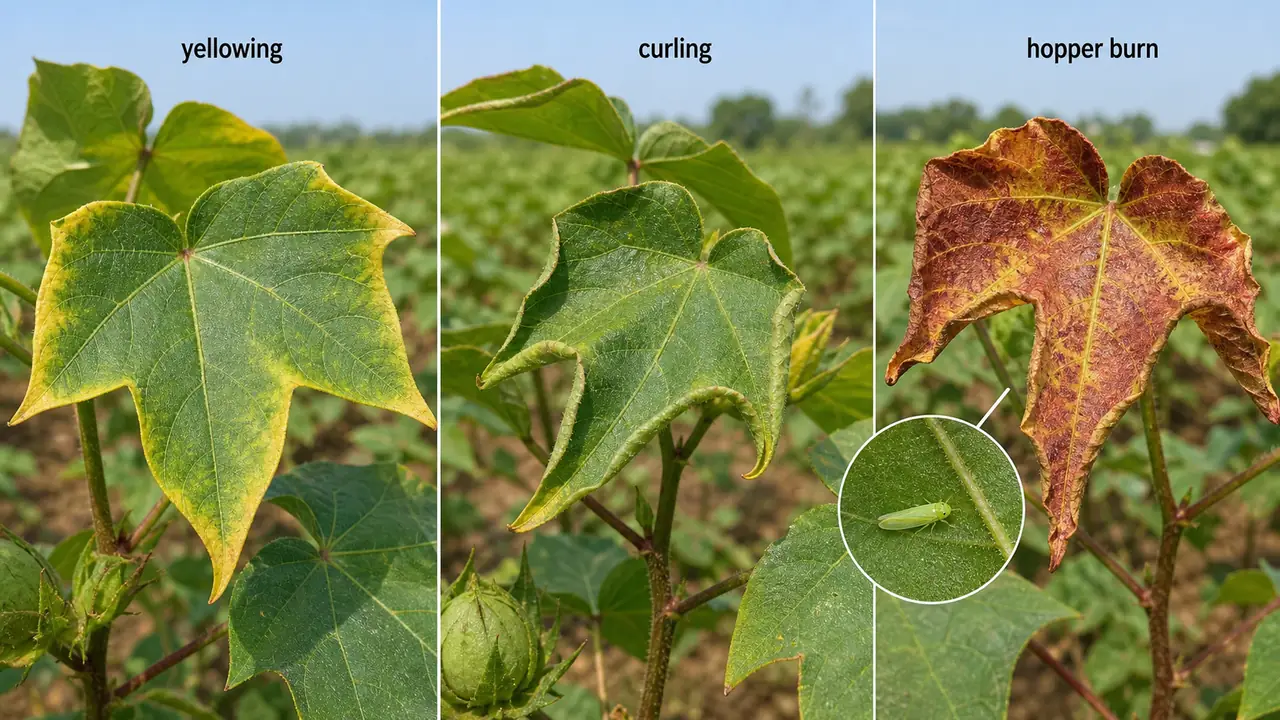
Damage Symptoms — "Hopper Burn"
The leafhopper causes one of the most visually striking symptoms in cotton:
- Both nymphs and adults suck sap from the undersurface of leaves
- Tender leaves first turn yellow, then leaf margins curl downwards
- Reddening sets in progressively
- In severe infestation, leaves develop a bronze or brick red colour — this is the classic "hopper burn"
- Overall crop growth is retarded
- It is a destructive pest of American cotton
IMPORTANT
"Hopper burn" (bronze or brick red leaves) is the characteristic symptom of jassid/leafhopper attack. This is one of the most frequently asked symptoms in competitive exams. The progression is: yellow → curling → reddening → bronze/brick red.
Agricultural Example
In Punjab's cotton belt, hopper burn during July-August can reduce yields by 20-30%. Farmers often confuse early-stage hopper burn with nutrient deficiency (potassium), but the key difference is that hopper burn starts at leaf margins with downward curling, while K deficiency causes marginal scorching without curling.
2. Cotton Aphid
Scientific Name: Aphis gossypii
Family: Aphididae | Order: Hemiptera
Host Plants: Cotton, bhendi, brinjal, chillies, guava
Damage Symptoms
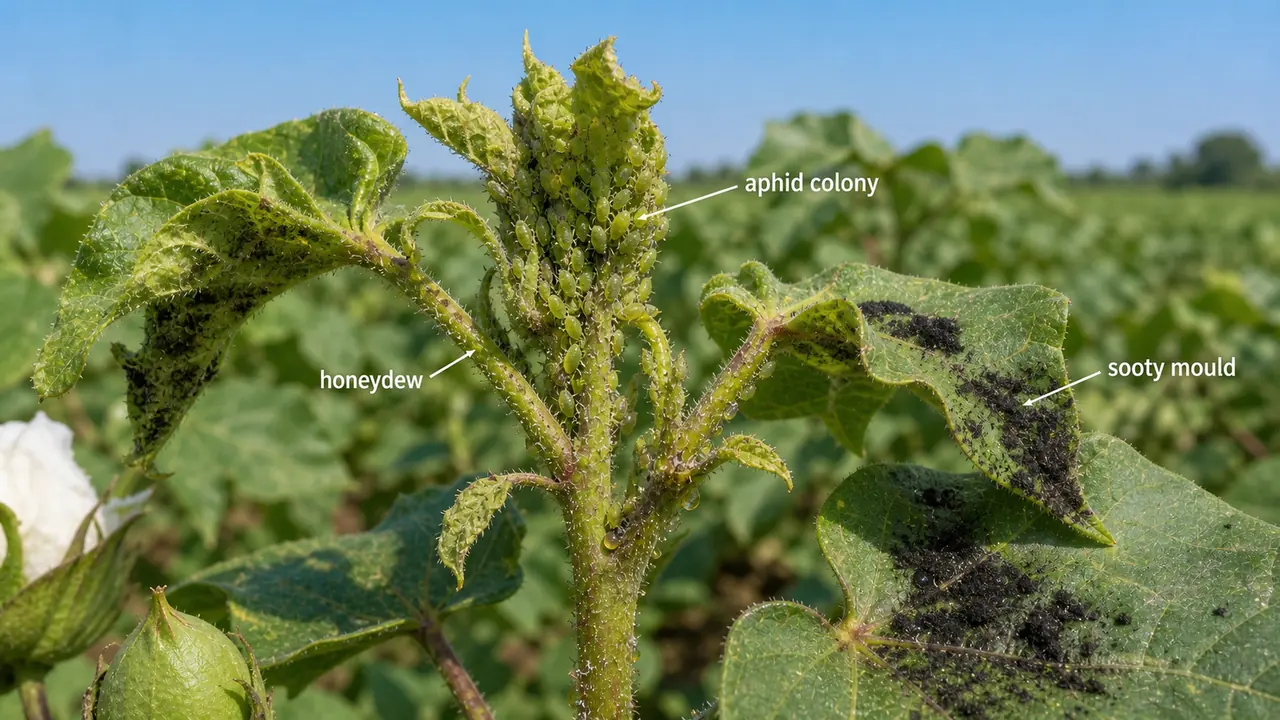
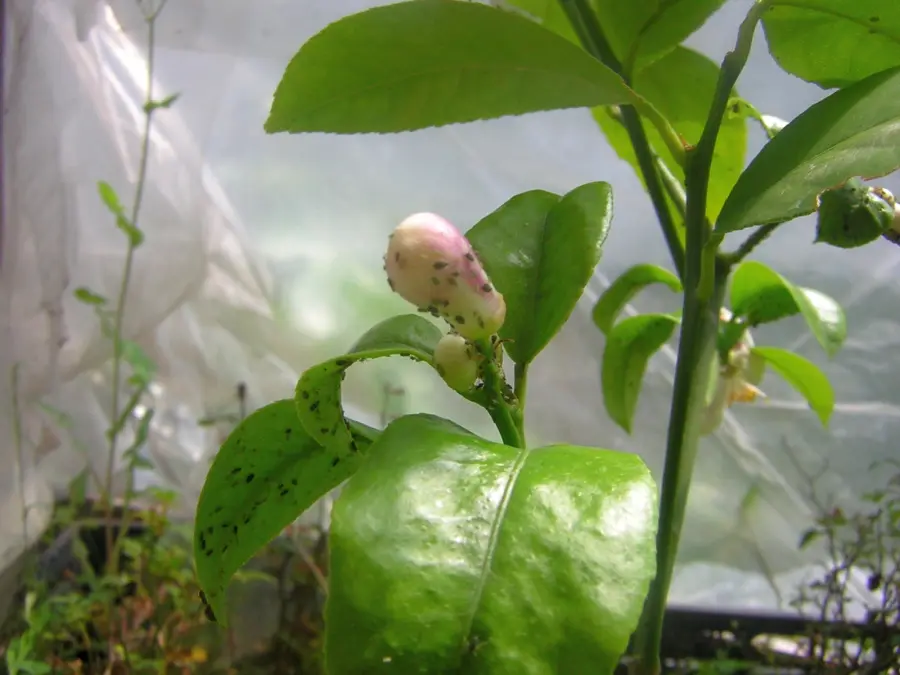
- Infests tender shoots and undersurface of leaves in large colonies
- Sap sucking causes stunted growth, gradual drying, and eventually plant death
- Honeydew excretion leads to black sooty mould development, giving plants a dark, dirty appearance
ETL
5% of infested plants
Management
- Conserve natural enemies: Monochilus sexmaculatus, Coccinella septumpunctata (ladybird beetles), Aphelinus mali, A. flavipes (parasitoids), Phylloscopus tristis (bird predator)
TIP
Aphid vs Whitefly — Both cause sooty mould, but:
- Aphid colonies are visible as dense clusters on tender shoots
- Whitefly adults fly up in a white cloud when plants are disturbed
- Aphid ETL = 5% plants; Whitefly ETL = 5-10 nymphs/leaf
3. Thrips
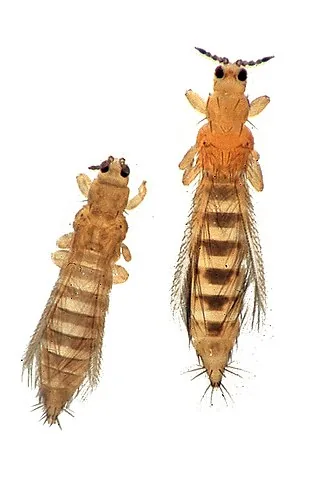
Scientific Name: Thrips tabaci
Family: Thripidae | Order: Thysanoptera
Damage Symptoms
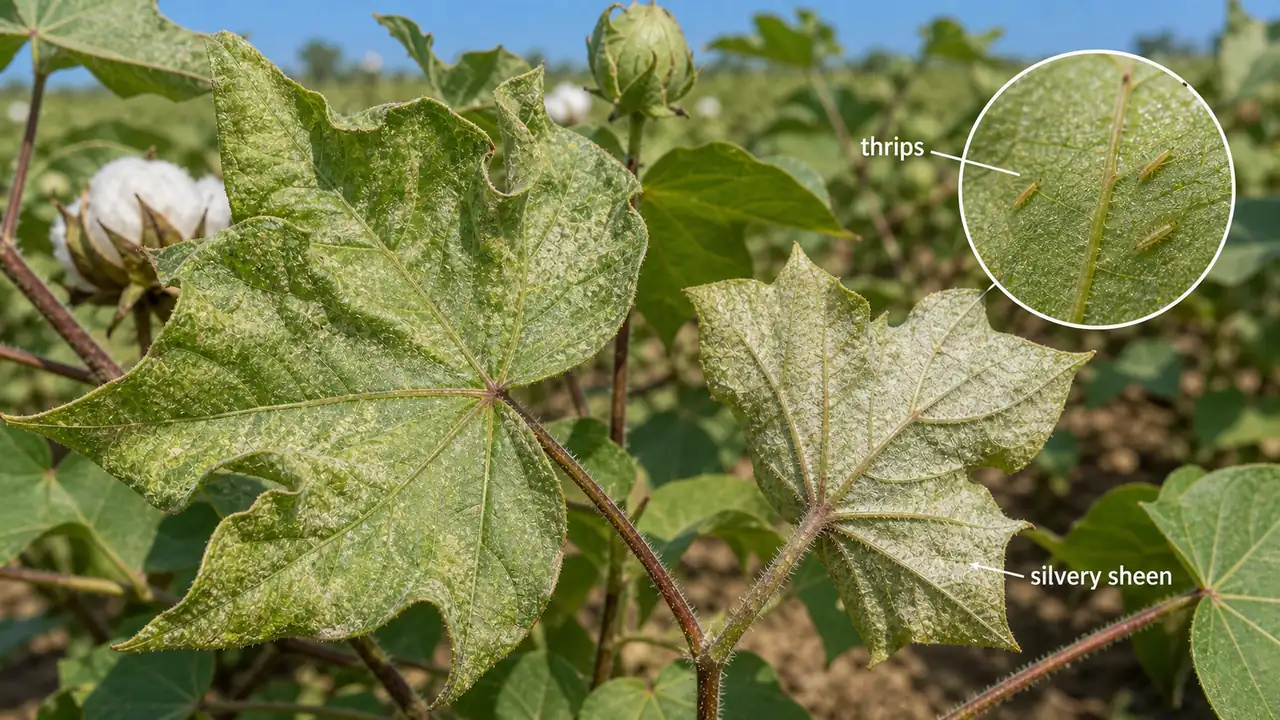
- Both nymphs and adults lacerate the tissue and suck sap from upper and lower leaf surfaces (rasping-sucking mouthparts)
- In severe infestation, leaves curl up and become crumpled
- Silvery sheen on the lower surface of leaves in early stages of attack
ETL
1 No./leaf
IMPORTANT
Thrips belong to Order Thysanoptera (not Hemiptera like other sucking pests). They have rasping-sucking mouthparts that lacerate tissue first, then suck — creating the characteristic silvery sheen. The ETL of just 1 per leaf shows how damaging even low populations can be.
4. Whitefly — The Virus Vector
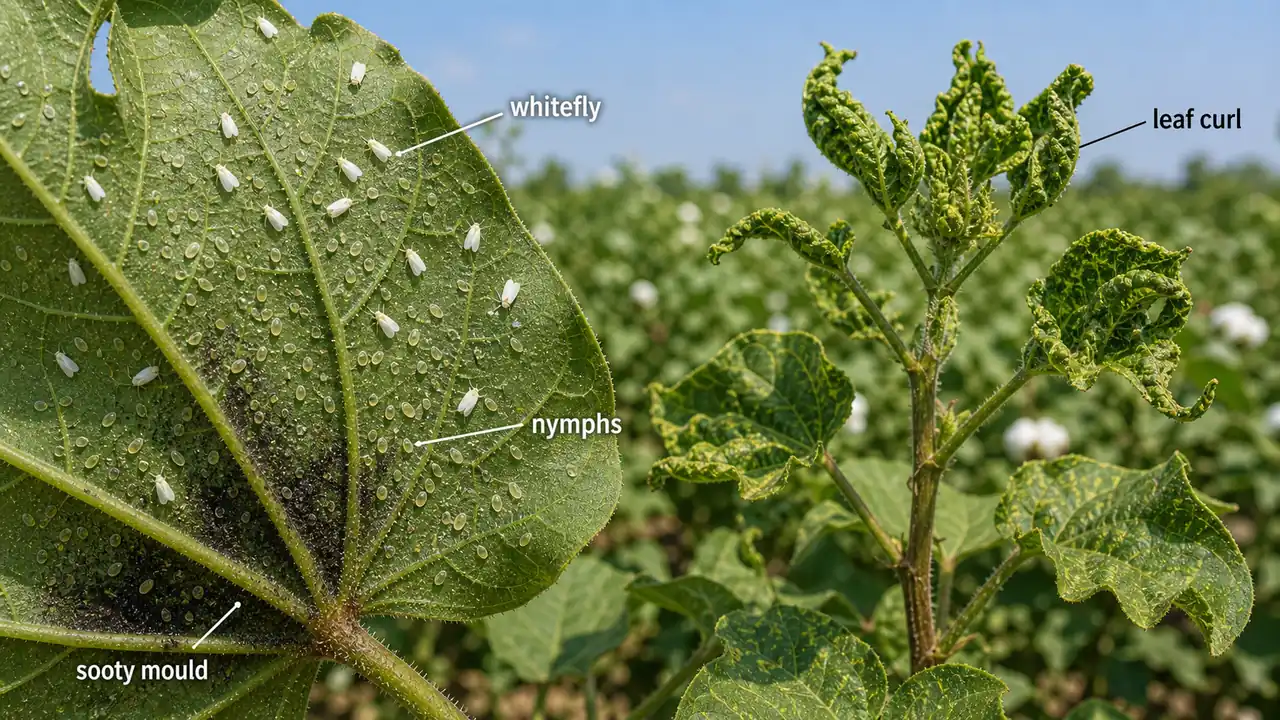
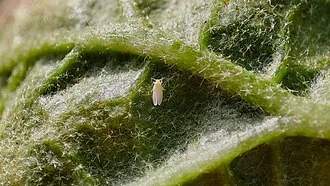
Scientific Name: Bemisia tabaci
Family: Aleyrodidae | Order: Hemiptera
Host Range: Cotton, tomato, tobacco, sweet potato, cassava, cabbage, cauliflower, melon, brinjal, bhendi — highly polyphagous
Damage Symptoms
- Nymphs and adults suck sap from the undersurface of leaves
- Severe infestation causes premature defoliation, sooty mould, shedding of buds and bolls, and poor boll opening
- Most critically: it transmits cotton leaf curl virus disease (CLCuD), as well as leaf curl disease of tobacco, vein curling of okra, and leaf curl of sesame
- Highly polyphagous and known to have biotypes (genetic variants with different host preferences)
Bemisia tabaci eggs are pediculate (stalked) — laid on a short stalk on the leaf underside. This is a key morphological identification feature distinguishing it from other whitefly species.
ETL
5-10 nymphs/leaf
Management
- Avoid alternative host crops (brinjal, bhendi, tomato, tobacco) in the vicinity of cotton fields
- Adopt crop rotation with non-preferred hosts (sorghum, ragi, maize)
IMPORTANT
Bemisia tabaci is the vector of cotton leaf curl virus disease (CLCuD) — one of the most important facts for IBPS AFO, NABARD, and FCI exams. CLCuD has devastated cotton in Punjab and Haryana. The whitefly has multiple biotypes, making control challenging.
5. Mealy Bug
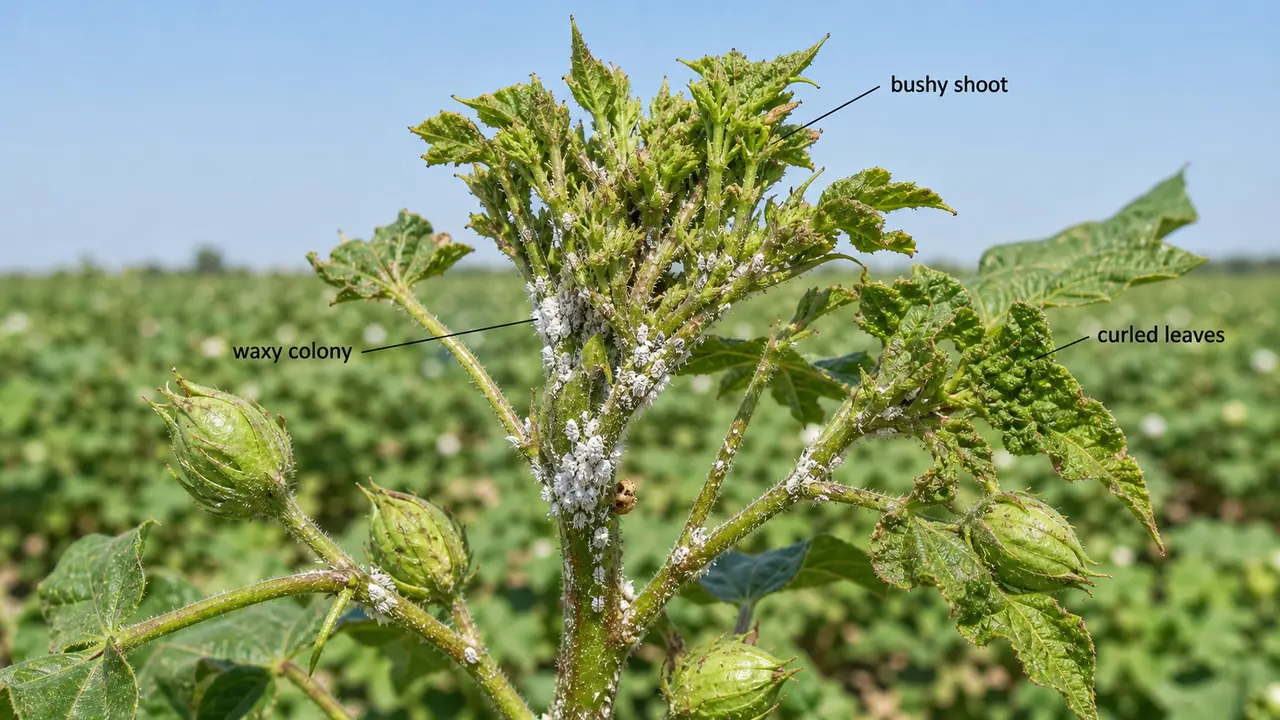
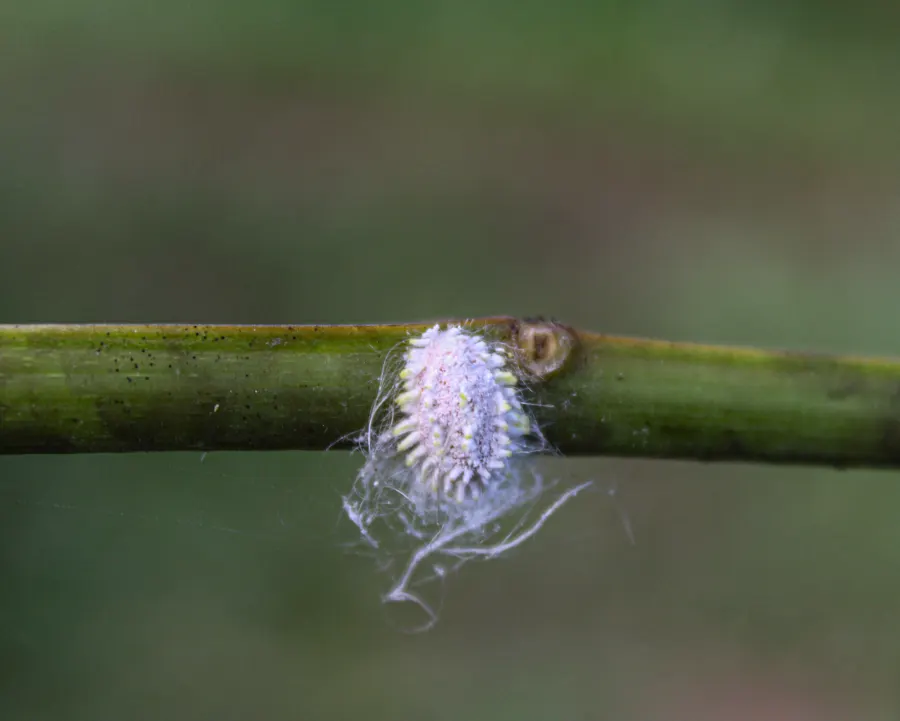
Scientific Name: Phenacoccus solani / Paracoccus marginatus
Family: Pseudococcidae | Order: Hemiptera
Host Range: Polyphagous — ornamental plants, fruit crops, vegetables, and field crops. 90 host plants across 24 families recorded in India.
Damage Symptoms
- Vegetative phase: Leaf curling, distorted and bushy shoots, crinkled and twisted leaves
- Plants become stunted and dry
- Reproductive phase: Late opening of bolls, reduced plant vigour, early crop senescence
Agricultural Example
The 2006-2007 mealybug outbreak in Gujarat and Punjab caused panic among cotton farmers. Fields appeared as though they had been sprayed with white powder — the waxy coating of mealybug colonies. Yield losses exceeded 50% in severely affected areas, highlighting how a previously "minor" pest can become devastating.
One of the most repeatedly cited biological-control allies from that outbreak phase is the encyrtid parasitoid Aenasius bambawalei, which became closely associated with natural suppression of invasive cotton mealybug populations.
6. Red Cotton Bug — The Lint Stainer
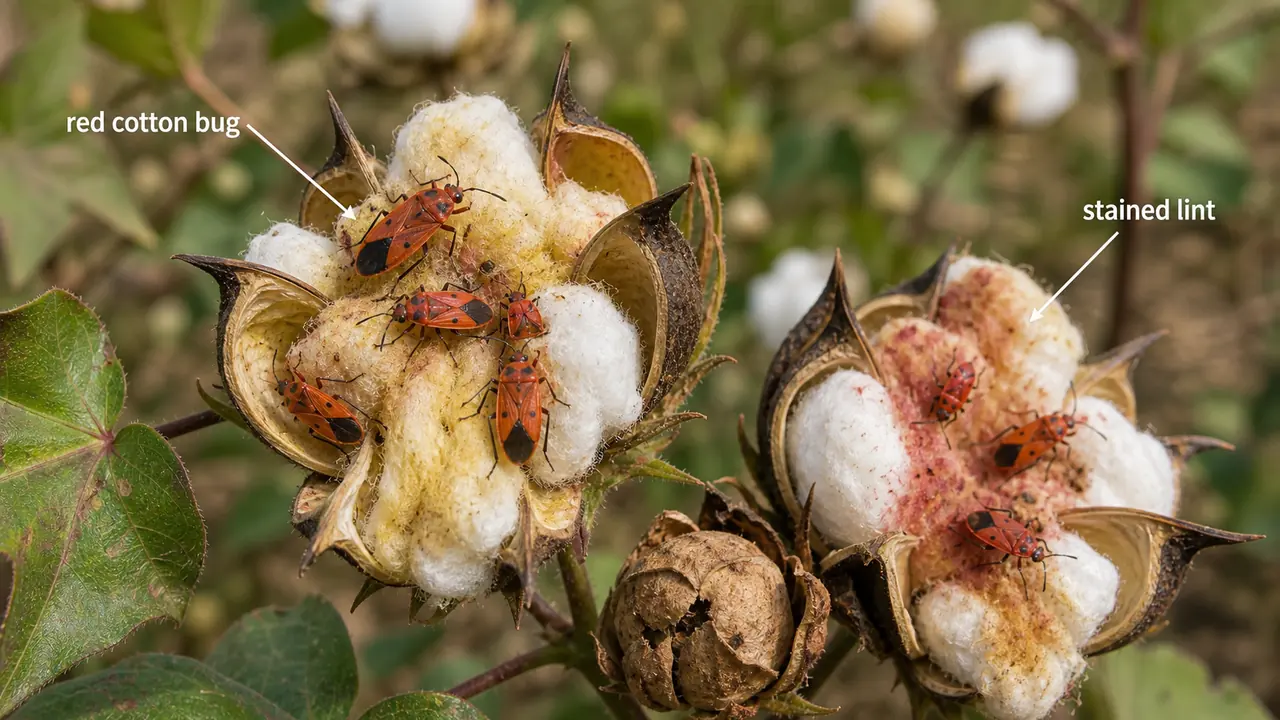
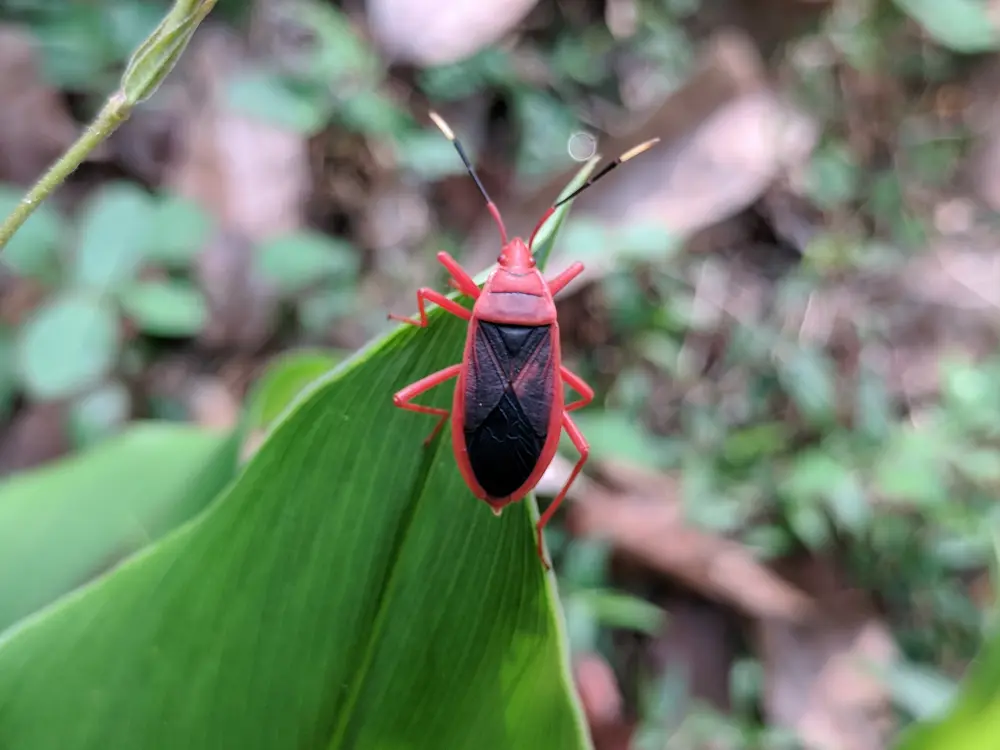
Scientific Name: Dysdercus cingulatus
Family: Pyrrhocoridae | Order: Hemiptera
Host Plants: Cotton, bhendi, maize, pearl millet, hollyhock, clover, sorghum, silk cotton
Damage Symptoms
- Both nymphs and adults suck sap of bolls and stain the lint
- Also called "cotton boll stainers" due to the staining they cause
- Bugs are gregarious in habit — they feed in groups
- Attacked seeds lose their viability
- The bacterium Nematospora gossypii enters through feeding wounds and further stains the fibre yellow
IMPORTANT
Red cotton bug = "cotton boll stainer". The staining has two causes: (1) direct feeding damage and (2) the bacterium Nematospora gossypii entering through feeding wounds. Both the insect and the bacterium contribute to lint staining — a key exam fact.
7. Dusky Cotton Bug
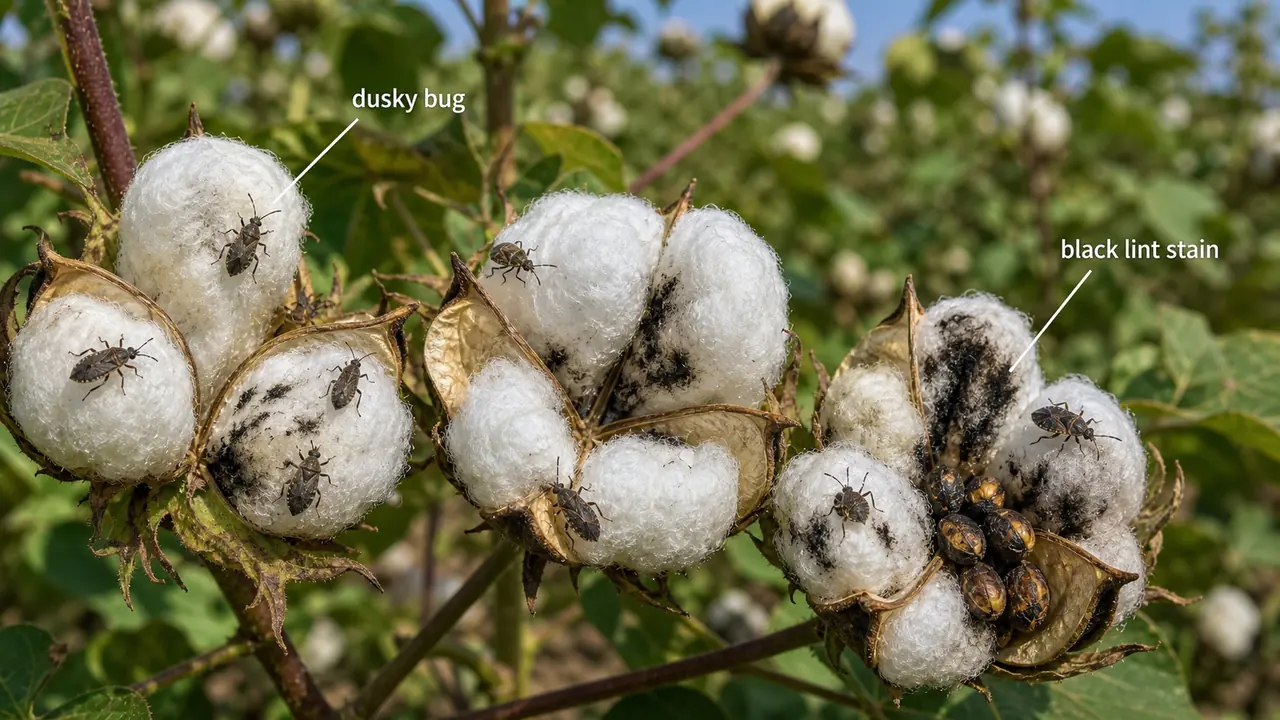
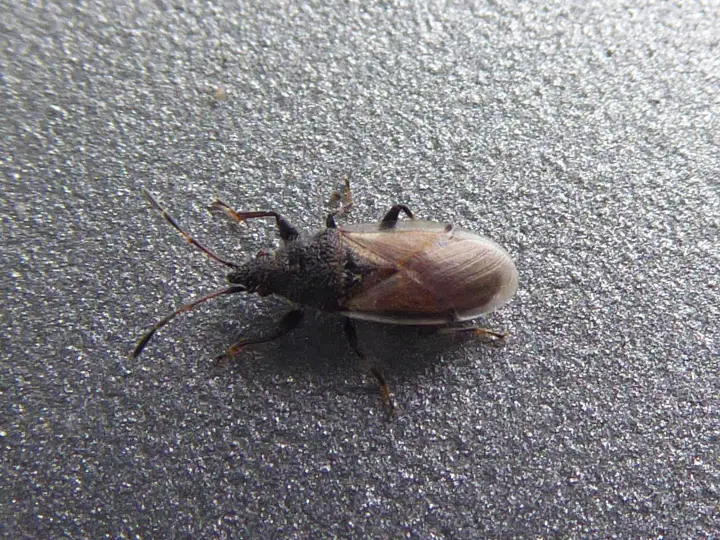
Scientific Name: Oxycarenus hyalinipennis
Family: Lygaeidae | Order: Hemiptera
Host Range: Cotton, bhendi, hollyhock, and other malvaceous weeds
Damage Symptoms
- Sucks sap from developing seeds in open bolls and stains the lint black
- Seeds become discoloured and shrunken
- Eggs are commonly recalled as cigar-shaped in exam-oriented pest tables
TIP
Red vs Dusky Cotton Bug:
- Red cotton bug (Dysdercus) stains lint red/yellow (with Nematospora bacterium)
- Dusky cotton bug (Oxycarenus) stains lint black
- Both are boll-stage pests, but they belong to different families (Pyrrhocoridae vs Lygaeidae)
8. Leaf Roller — Sylepta derogata
Scientific Name: Sylepta derogata
Family: Pyraustidae | Order: Lepidoptera
Damage Symptoms
- Larvae feed from inside rolled leaves, using the folded lamina as a shelter
- Feeding reduces the effective leaf area available for photosynthesis
- This pest is usually remembered as a foliage feeder rather than a sap sucker
NOTE
The leaf roller matters mainly as a recognition fact in cotton pest tables: if the symptom is a caterpillar hidden inside a neatly rolled cotton leaf, think Sylepta derogata.
9. Tobacco Cutworm / Spodoptera litura
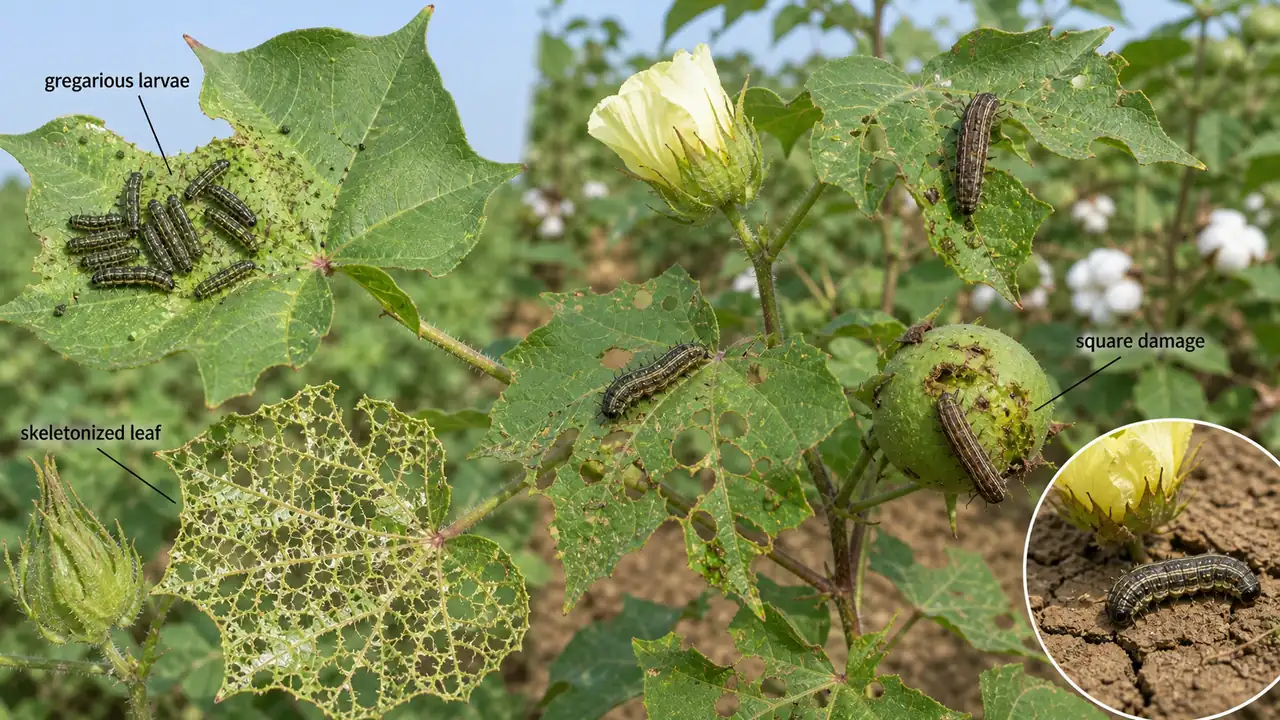
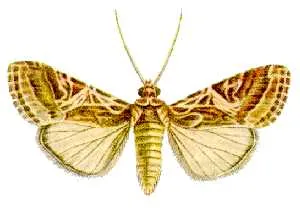
Scientific Name: Spodoptera litura
Family: Noctuidae | Order: Lepidoptera
Host Range: Groundnut, citrus, soybean, cotton, tobacco, castor, pulses, millets, safflower, banana, cabbage, tomato, sweet potato, bhendi, chillies — regular pest
Damage Symptoms
- First instar larvae feed gregariously, scraping the epidermal layer and leaving the skeleton of veins — skeletonized leaves may dry up
- Later, larvae disperse and feed by making small holes in leaves
- In severe attack, only the stem and side shoots remain — no leaf or bolls
- Once squares and bolls develop, larvae prefer these — they bore in and cause shedding of squares and young bolls
- Caterpillars are nocturnal — they hide in flowers or cracks of soil during the day
- Pest causes damage in all stages of crop growth
NOTE
Spodoptera litura is a regular pest of cotton and also a major pest of groundnut. It is one of the target pests of Bollgard II (Cry 2 Ab). Its gregarious, nocturnal feeding pattern is a key identification feature.
Comparison: How Sucking Pests Differ from Each Other
| Pest | Characteristic Symptom | Mouthparts | ETL | Disease/Quality Impact |
|---|---|---|---|---|
| Leafhopper | Hopper burn (bronze/brick red) | Piercing-sucking | — | Growth retardation |
| Aphid | Sooty mould, stunted growth | Piercing-sucking | 5% plants | Honeydew + sooty mould |
| Thrips | Silvery sheen on leaves | Rasping-sucking | 1/leaf | Leaf curling |
| Whitefly | Premature defoliation | Piercing-sucking | 5-10 nymphs/leaf | CLCuD virus vector |
| Mealybug | Bushy shoots, leaf curling | Piercing-sucking | — | Late boll opening |
| Red cotton bug | Lint staining (red/yellow) | Piercing-sucking | — | Nematospora staining |
| Dusky cotton bug | Black lint staining | Piercing-sucking | — | Seed discolouration |
Disease Transmission by Cotton Pests
| Pest | Disease Transmitted |
|---|---|
| Bemisia tabaci (Whitefly) | Cotton leaf curl virus disease (CLCuD) |
| Bemisia tabaci (Whitefly) | Leaf curl disease of tobacco |
| Bemisia tabaci (Whitefly) | Vein curling of okra |
| Bemisia tabaci (Whitefly) | Leaf curl of sesame |
| Bemisia tabaci (Whitefly) | Yellow Mosaic Virus (YMV) — pulses (mung, soybean, cotton) |
| Dysdercus cingulatus (Red cotton bug) | Nematospora gossypii (bacterial lint staining) |
IMPORTANT
Whitefly (Bemisia tabaci) is the only major virus vector among cotton pests. It transmits leaf curl diseases in multiple crops. This makes whitefly management critical not just for cotton but for the entire cropping system.
Field Diagnosis: Cotton Leaf Damage — Which Sucking Pest?
When cotton leaves show damage but no holes, follow this flowchart:
Step 1: Check leaf colour change pattern
- Leaves turning yellow → curling → reddish-brown/bronze from margins? → Jassid (A. biguttula) — "hopper burn"; check leaf undersurface for tiny green wedge-shaped insects
- Leaves curling upward with sticky surface + black coating? → Whitefly (B. tabaci) — tiny white moths fly up when plant is disturbed; check for leaf curl virus
- Leaves with crinkled appearance + honeydew + black mold? → Aphid (A. gossypii) — colonies on undersurface; sooty mold grows on honeydew
Step 2: Check other plant parts
- White cottony masses on stems/branches? → Mealybug (P. solenopsis) — waxy white covering
- Red/orange bugs on open bolls, lint stained? → Red Cotton Bug (D. koenigii) — stains lint, transmits Nematospora
- Leaves with silvery sheen + distorted buds? → Thrips — check with hand lens, tiny slender insects
exams key fact: If you see leaf curl symptoms, always suspect whitefly first — Bemisia tabaci transmits CLCuD (Cotton Leaf Curl Disease), the most devastating viral disease of cotton in north India.
Exam Tips and Mnemonics
TIP
Mnemonic — "HSSRFSL" for Symptom-Pest Matching:
- Hopper burn = Leafhopper/Jassid
- Sooty mould = Aphid (also whitefly and mealybug, but aphid is the classic association)
- Silvery sheen = Thrips (Thysanoptera)
- Rosette = Pink bollworm (from bollworm lesson — not a sucking pest)
- Flaring = Spotted bollworm (from bollworm lesson)
- Staining (red) = Red cotton bug (Dysdercus = Stainer)
- Leaf curl virus = Whitefly
ETL Memory Aid — "A5 T1 W5-10 H10":
- Aphid = 5% plants
- Thrips = 1 per leaf
- Whitefly = 5-10 nymphs/leaf
- Helicoverpa = 10% or 1 egg/plant
Order Exception: All cotton sucking pests are Hemiptera EXCEPT thrips = Thysanoptera
Summary Table for Quick Revision
| Topic | Key Fact |
|---|---|
| Most common sucking pest symptom | Hopper burn (bronze/brick red leaves) — Leafhopper (Amrasca devastans) |
| Aphid (A. gossypii) | Sooty mould, stunted growth; ETL = 5% plants; conserve Coccinella, Aphelinus |
| Thrips (T. tabaci) | Silvery sheen; Order Thysanoptera (not Hemiptera); ETL = 1/leaf |
| Whitefly (B. tabaci) | Vector of CLCuD; ETL = 5-10 nymphs/leaf; avoid alternate hosts nearby |
| Mealybug | Bushy shoots, leaf curling; 90 host plants across 24 families |
| Red cotton bug (D. cingulatus) | "Cotton boll stainer"; Nematospora gossypii bacterium causes additional staining |
| Dusky cotton bug | Black lint staining; Family Lygaeidae |
| Spodoptera litura | Gregarious, nocturnal; target of Bollgard II (Cry 2 Ab) |
| Only virus vector | Whitefly — transmits CLCuD, tobacco leaf curl, okra vein curling, sesame leaf curl |
| Staining pests | Red cotton bug (red/yellow) vs Dusky cotton bug (black) |
TIP
Next: The cotton IPM lesson brings bollworms and sucking pests together into a season-wise management calendar — pre-sowing to harvest.
Summary Cheat Sheet
| Concept / Topic | Key Details / Explanation |
|---|---|
| Leafhopper / Jassid (Amrasca devastans) | Cicadellidae, Hemiptera; sucks sap from undersurface of leaves |
| Hopper burn | Yellow → curl downward → reddening → bronze/brick red leaves; classic jassid symptom |
| Cotton aphid (Aphis gossypii) | Aphididae; dense colonies on tender shoots; causes black sooty mould |
| Aphid ETL | 5% of infested plants |
| Aphid biocontrol | Coccinella septumpunctata (ladybird), Aphelinus mali, A. flavipes (parasitoids) |
| Thrips (Thrips tabaci) | Thysanoptera (NOT Hemiptera); rasping-sucking mouthparts; silvery sheen on leaves |
| Thrips ETL | 1 per leaf — lowest ETL of all cotton pests |
| Whitefly (Bemisia tabaci) | Aleyrodidae; pediculate (stalked) eggs; vector of CLCuD (cotton leaf curl virus) |
| Whitefly ETL | 5-10 nymphs/leaf |
| CLCuD | Cotton Leaf Curl Disease; transmitted by whitefly; devastated Punjab/Haryana cotton |
| Whitefly other diseases | Tobacco leaf curl, vein curling of okra, leaf curl of sesame, Yellow Mosaic Virus |
| Mealybug (Phenacoccus solani) | Pseudococcidae; bushy/distorted shoots; 90 host plants across 24 families |
| Mealybug boll damage | Late opening of bolls; 2006-07 outbreak caused 50%+ yield loss in Gujarat/Punjab |
| Red cotton bug (Dysdercus cingulatus) | Pyrrhocoridae; "cotton boll stainer"; gregarious; stains lint red/yellow |
| Red bug staining mechanism | Direct feeding + bacterium Nematospora gossypii entering through wounds |
| Dusky cotton bug (Oxycarenus hyalinipennis) | Lygaeidae; attacks open bolls; stains lint black |
| Spodoptera litura | Noctuidae; gregarious + nocturnal; target of Bollgard II (Cry 2 Ab) |
| ETL summary | Aphid: 5% plants; Thrips: 1/leaf; Whitefly: 5-10 nymphs/leaf; Helicoverpa: 10%/1 egg/plant |
| Order exception | All cotton sucking pests = Hemiptera EXCEPT Thrips = Thysanoptera |
| Only virus vector | Whitefly (Bemisia tabaci) transmits CLCuD and other viral diseases |