🥜 Groundnut Pests: Sap Feeders, Defoliators, and Pod Borers
Complete guide to groundnut pests — aphid, leafhopper, thrips, red hairy caterpillar, Spodoptera litura, Helicoverpa armigera, white grub, and pod borer — with ETL values, trap crops, resistant varieties, and biological control for IBPS AFO and ICAR exams.
After covering cotton pests and IPM, we now move to groundnut — a crop with a unique pest management challenge because its harvested product (pods) develops underground.
A groundnut farmer in Anantapur, Andhra Pradesh — India's largest groundnut-growing district — faces a problem that cotton or rice farmers do not: soil pests like white grubs and earwigs can directly destroy the yield without any visible aboveground symptoms until it is too late. Meanwhile, aboveground, the crop is attacked by sap feeders, defoliators, and pod borers that span five different insect orders.
This diversity makes groundnut one of the most complex crops from an entomological perspective. For exams, the key is to organize these pests by their feeding guild and remember the characteristic damage symptoms, ETL values, and trap crops associated with each.
This lesson covers:
- Sap feeders — aphid, leafhopper, thrips
- Defoliators — red hairy caterpillar, Spodoptera litura
- Pod borers — Helicoverpa armigera, earwig, pod bug
- ETL values and trap crops — the most exam-tested management facts
Classification of Groundnut Pests
Major Pests
| S.No. | Common Name | Scientific Name | Family | Order |
|---|---|---|---|---|
| 1. | Aphid | Aphis craccivora | Aphididae | Hemiptera |
| 2. | Leafhopper | Empoasca kerri | Cicadellidae | Hemiptera |
| 3. | Thrips | Scirtothrips dorsalis | Thripidae | Thysanoptera |
| 4. | Red hairy caterpillar | Amsacta albistriga | Arctiidae | Lepidoptera |
| 5. | Leaf miner | Aproaerema modicella | Gelechiidae | Lepidoptera |
| 6. | Gram pod borer | Helicoverpa armigera | Noctuidae | Lepidoptera |
| 7. | Pod borer (Earwig) | Anisolabis stalli | Forficulidae | Dermaptera |
| 8. | Pod bug | Elasmolomus sordidus | Lygaeidae | Hemiptera |
Minor Pests
| S.No. | Common Name | Scientific Name | Family | Order |
|---|---|---|---|---|
| 9. | Bud borer | Anarsia ephippias | Gelechiidae | Lepidoptera |
NOTE
Pro Content Locked
Upgrade to Pro to access this lesson and all other premium content.
Charged once for one year · ₹1188 total
Save ₹100/month vs ₹2388/year launch price
- All Agriculture & Banking Courses
- AI Lesson Questions (100/day)
- AI Doubt Solver (50/day)
- Glows & Grows Feedback (30/day)
- AI Section Quiz (20/day)
- 22-Language Translation (100/day)
- Recall Questions (20/day)
- AI Quiz (15/day)
- AI Quiz Paper Analysis (100/day)
- AI Step-by-Step Explanations (100/day)
- Spaced Repetition Recall (FSRS)
- AI Tutor
- Immersive Text Questions
- Audio Lessons — Hindi & English
- Mock Tests & Previous Year Papers
- Summary & Mind Maps
- XP, Levels, Leaderboard & Badges
- Generate New Classrooms
- Voice AI Teacher (AgriDots Live)
- AI Revision Assistant
- Knowledge Gap Analysis
- Interactive Revision (LangGraph)
🔒 Secure one-time yearly payment via Razorpay · No hidden fees
After covering cotton pests and IPM, we now move to groundnut — a crop with a unique pest management challenge because its harvested product (pods) develops underground.
A groundnut farmer in Anantapur, Andhra Pradesh — India's largest groundnut-growing district — faces a problem that cotton or rice farmers do not: soil pests like white grubs and earwigs can directly destroy the yield without any visible aboveground symptoms until it is too late. Meanwhile, aboveground, the crop is attacked by sap feeders, defoliators, and pod borers that span five different insect orders.
This diversity makes groundnut one of the most complex crops from an entomological perspective. For exams, the key is to organize these pests by their feeding guild and remember the characteristic damage symptoms, ETL values, and trap crops associated with each.
This lesson covers:
- Sap feeders — aphid, leafhopper, thrips
- Defoliators — red hairy caterpillar, Spodoptera litura
- Pod borers — Helicoverpa armigera, earwig, pod bug
- ETL values and trap crops — the most exam-tested management facts
Classification of Groundnut Pests
Major Pests
| S.No. | Common Name | Scientific Name | Family | Order |
|---|---|---|---|---|
| 1. | Aphid | Aphis craccivora | Aphididae | Hemiptera |
| 2. | Leafhopper | Empoasca kerri | Cicadellidae | Hemiptera |
| 3. | Thrips | Scirtothrips dorsalis | Thripidae | Thysanoptera |
| 4. | Red hairy caterpillar | Amsacta albistriga | Arctiidae | Lepidoptera |
| 5. | Leaf miner | Aproaerema modicella | Gelechiidae | Lepidoptera |
| 6. | Gram pod borer | Helicoverpa armigera | Noctuidae | Lepidoptera |
| 7. | Pod borer (Earwig) | Anisolabis stalli | Forficulidae | Dermaptera |
| 8. | Pod bug | Elasmolomus sordidus | Lygaeidae | Hemiptera |
Minor Pests
| S.No. | Common Name | Scientific Name | Family | Order |
|---|---|---|---|---|
| 9. | Bud borer | Anarsia ephippias | Gelechiidae | Lepidoptera |
NOTE
Groundnut pests span five different insect orders — Hemiptera, Thysanoptera, Lepidoptera, Dermaptera, and Coleoptera. This multi-order diversity is a common exam question. The earwig (Anisolabis stalli) from Order Dermaptera is particularly notable as Dermaptera pests are rarely encountered in other crops.
Sap Feeders — Pests That Drain the Plant
1. Groundnut Aphid
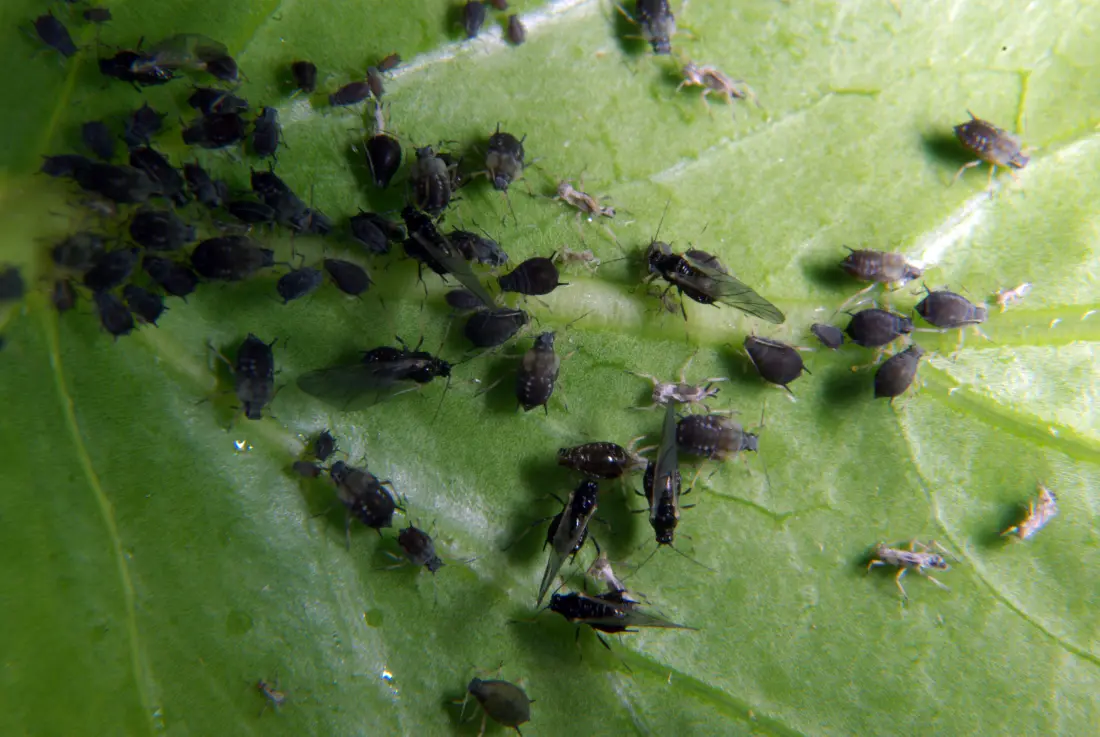
Scientific Name: Aphis craccivora
Family: Aphididae | Order: Hemiptera
Host Plants: Groundnut, beans, safflower, lablab, niger, peas, pulses, and some weeds
Damage Symptoms
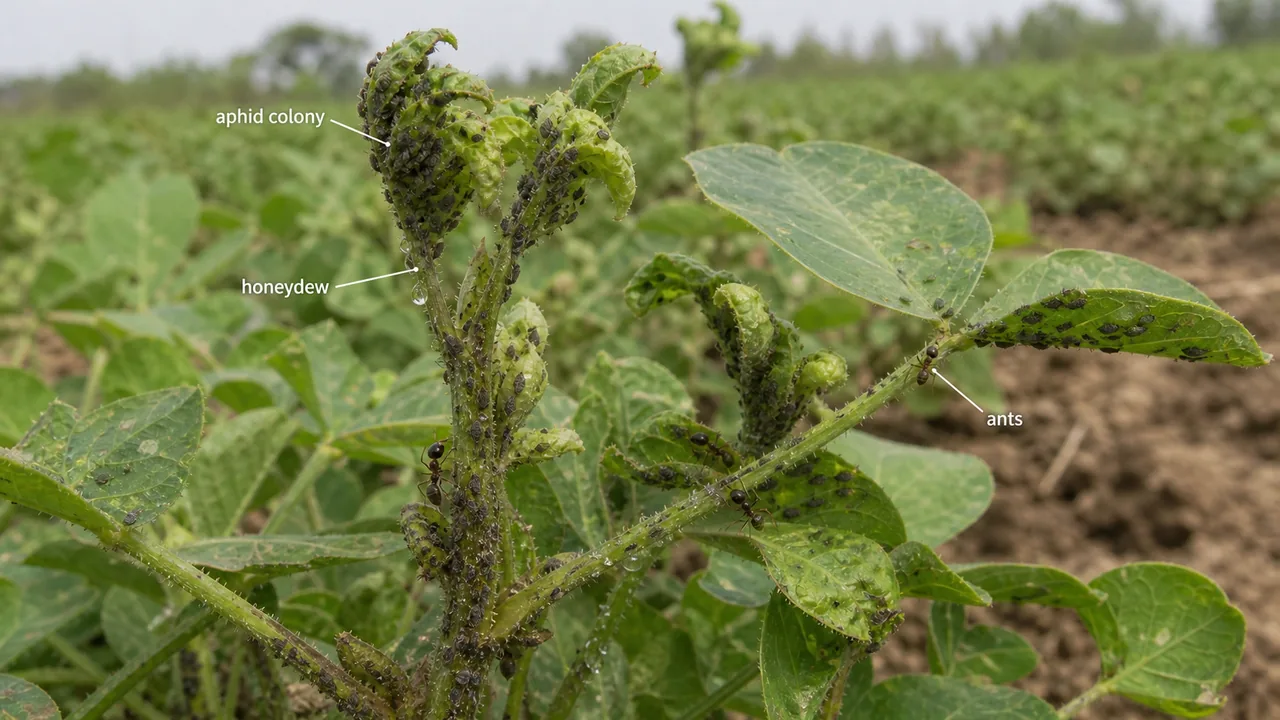
- Causes wilting of tender shoots during hot weather
- Leaves become mottled with chlorotic or dark green spots and plant growth is stunted
- Honeydew deposited on leaves and shoots attracts ants — ant activity on groundnut plants is often the first visible sign of aphid infestation
TIP
Aphid Species Memory Aid: Aphis craccivora attacks gram and groundnut (legumes), while Aphis gossypii attacks cotton (malvaceae). The species name hints at the host.
IMPORTANT
Aphis craccivora is the vector of Rosette Disease of groundnut — a devastating viral disease causing severe stunting. High-frequency exam question.
2. Leafhopper
Scientific Name: Empoasca kerri
Family: Cicadellidae | Order: Hemiptera
Damage Symptoms
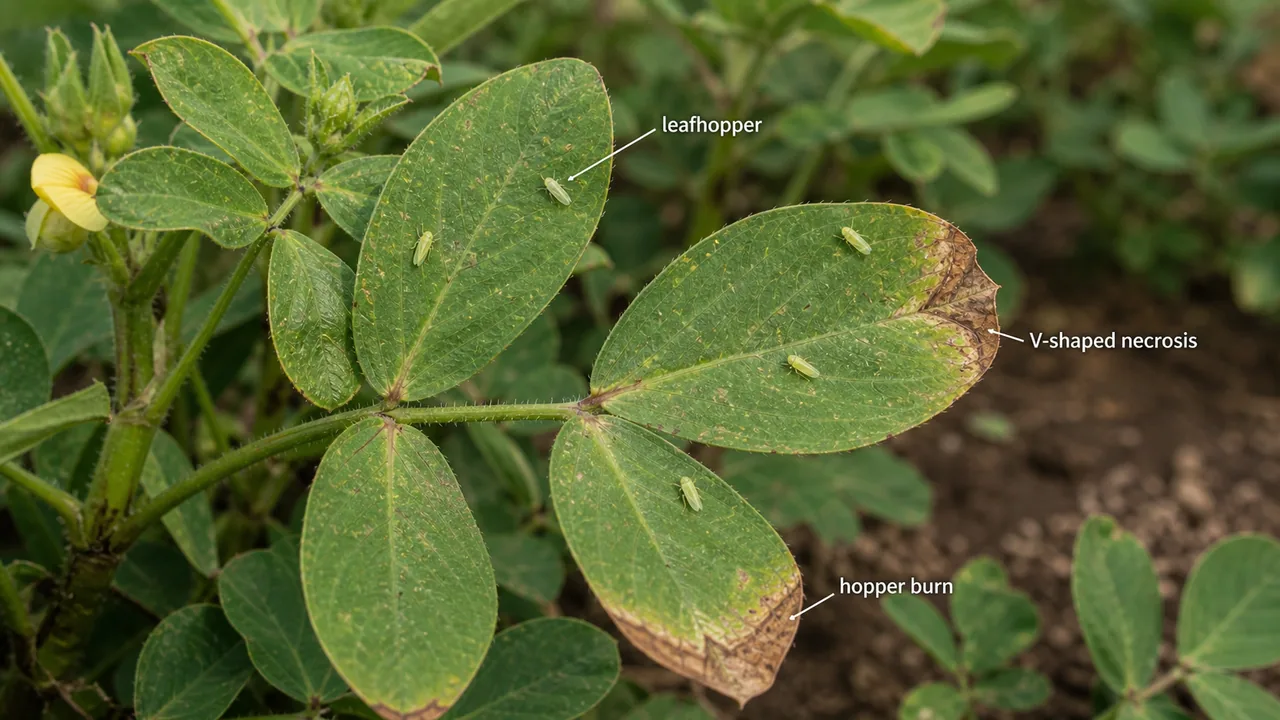
- Under severe infestation, leaf tips become necrotic in a typical V shape
- The crop develops a scorched appearance known as "hopper burn"
Management
- Intercrop lablab with groundnut in a 1:4 ratio — lablab acts as a barrier and alternate host that reduces leafhopper pressure on groundnut
IMPORTANT
"Hopper burn" occurs in both cotton (Amrasca devastans) and groundnut (Empoasca kerri). The distinguishing feature: groundnut leafhopper causes V-shaped necrosis of leaf tips, while cotton leafhopper causes bronze/brick red discolouration of entire leaves.
Comparison: Leafhopper on Cotton vs Groundnut
| Feature | Cotton Leafhopper | Groundnut Leafhopper |
|---|---|---|
| Scientific name | Amrasca devastans | Empoasca kerri |
| Key symptom | Bronze/brick red leaves | V-shaped necrosis at leaf tips |
| Common name | Hopper burn (both crops) | Hopper burn (both crops) |
| Management | — | Lablab intercrop 1:4 |
3. Thrips
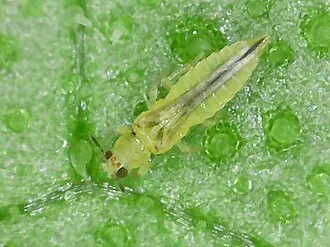
Scientific Name: Scirtothrips dorsalis
Family: Thripidae | Order: Thysanoptera
Damage Symptoms
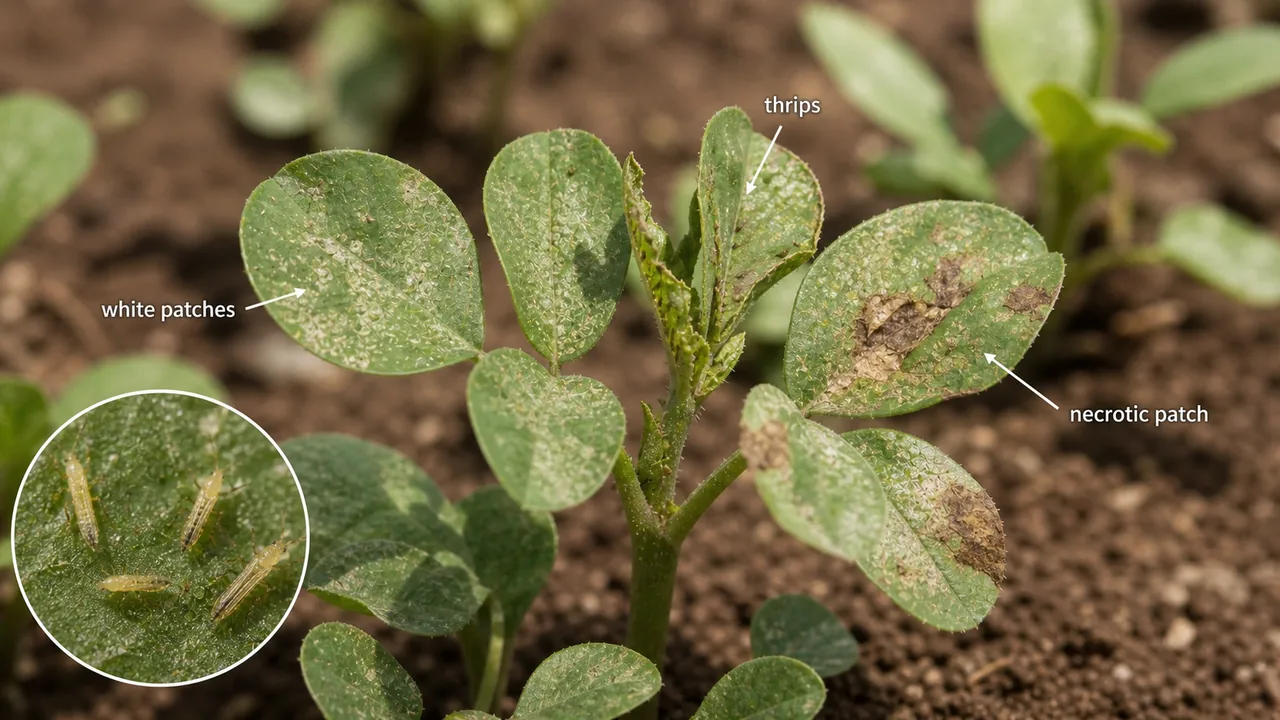
- Nymphs and adults suck sap from the surface of leaflets using rasping-sucking mouthparts
- Produces white patches on the upper surface and necrotic patches on the lower surface
- Young leaflets become distorted with patchy areas of necrotic tissue that puncture and split as they grow
- Injury is normally seen in seedlings — early crop stage is most vulnerable
IMPORTANT
Thrips (Scirtothrips dorsalis, Thrips palmi) are vectors of Bud Necrosis Disease (Tomato Spotted Wilt Virus) in groundnut.
WARNING
Groundnut Bud Necrosis → vector = Thrips (NOT aphids). Cucurbit Bud Necrosis → vector = Aphids. Classic trick question.
NOTE
Groundnut thrips (Scirtothrips dorsalis) differs from cotton thrips (Thrips tabaci) in species and host preference, but both use the same rasping-sucking feeding mechanism that creates surface damage patterns.
Defoliators — Pests That Consume the Canopy
4. Red Hairy Caterpillar
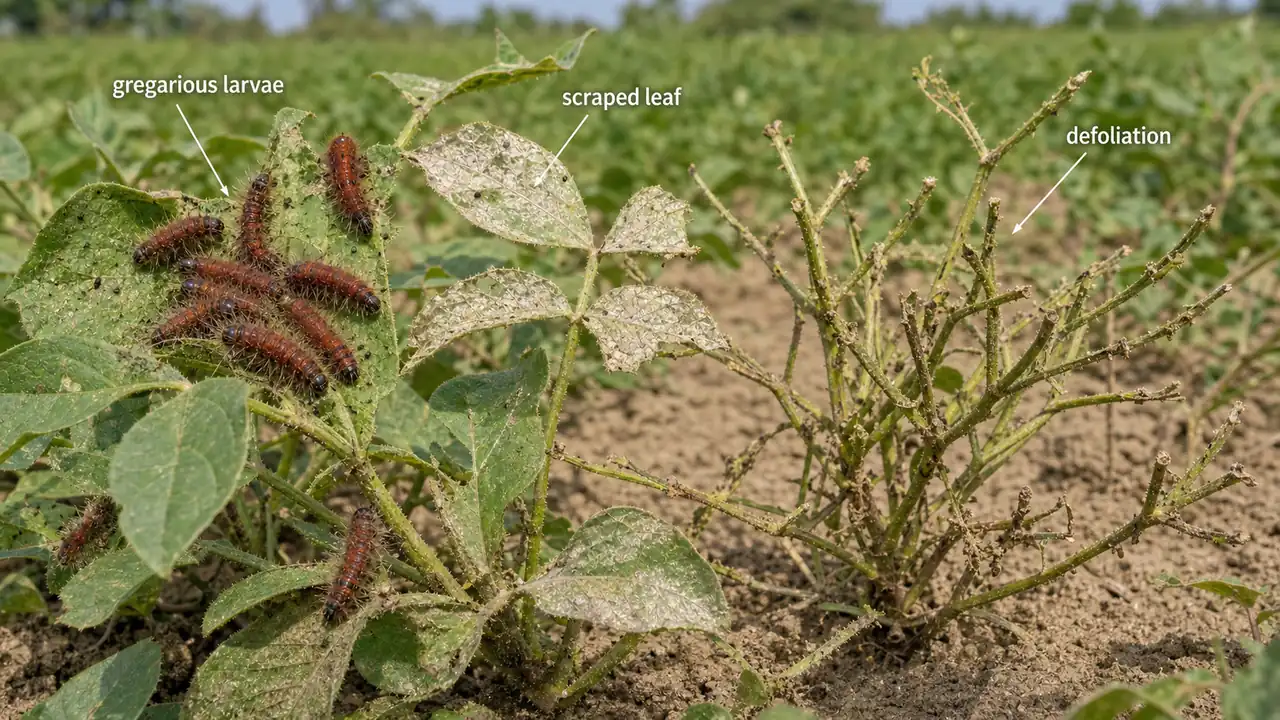
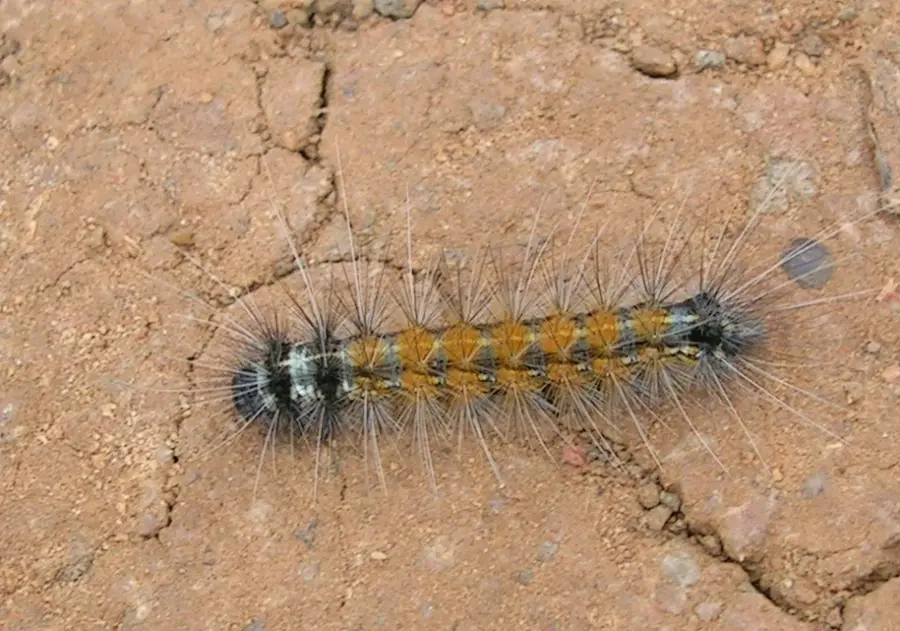
Scientific Name: Amsacta albistriga
Family: Arctiidae | Order: Lepidoptera
Host Range: Maize, sorghum, green gram, sesame, pearl millet, finger millet, groundnut, sunhemp, castor, cotton
Damage Symptoms
This is one of the most dramatic pests in Indian agriculture:
- Larvae initially feed gregariously by scraping the undersurface of tender leaflets, leaving the upper epidermal layer intact
- As they grow, they feed voraciously on leaves and the main stem
- The most alarming behaviour: they march from field to field gregariously in large numbers, devouring everything in their path
- A severely affected field looks as though grazed by cattle
- Can result in total loss of pods
ETL
8 egg masses per 100 metres
Management
- Grow cowpea as border/trap crop — attracts adult moths for egg-laying; also traps leaf miner (Aproaerema modicella) and tobacco caterpillar (Spodoptera litura)
- Set up 3-4 light traps and bonfires immediately at the onset of rains, at 4 weeks after sowing in the rainfed season — this attracts and kills moths and helps monitor brood emergence
IMPORTANT
Red hairy caterpillar is a gregarious marcher — it physically moves from field to field in armies. The ETL is 8 egg masses per 100 metres. Light traps and bonfires at the onset of monsoon rains are critical because adult moth emergence is synchronized with the first rains.
Agricultural Example
In Rajasthan's rainfed groundnut areas, red hairy caterpillar outbreaks often coincide with the first heavy monsoon rains. Farmers traditionally light bonfires at field edges during the first rain evenings to attract and destroy emerging moths. This ancient practice is now validated as a formal IPM recommendation.
5. Tobacco Caterpillar (Spodoptera litura)
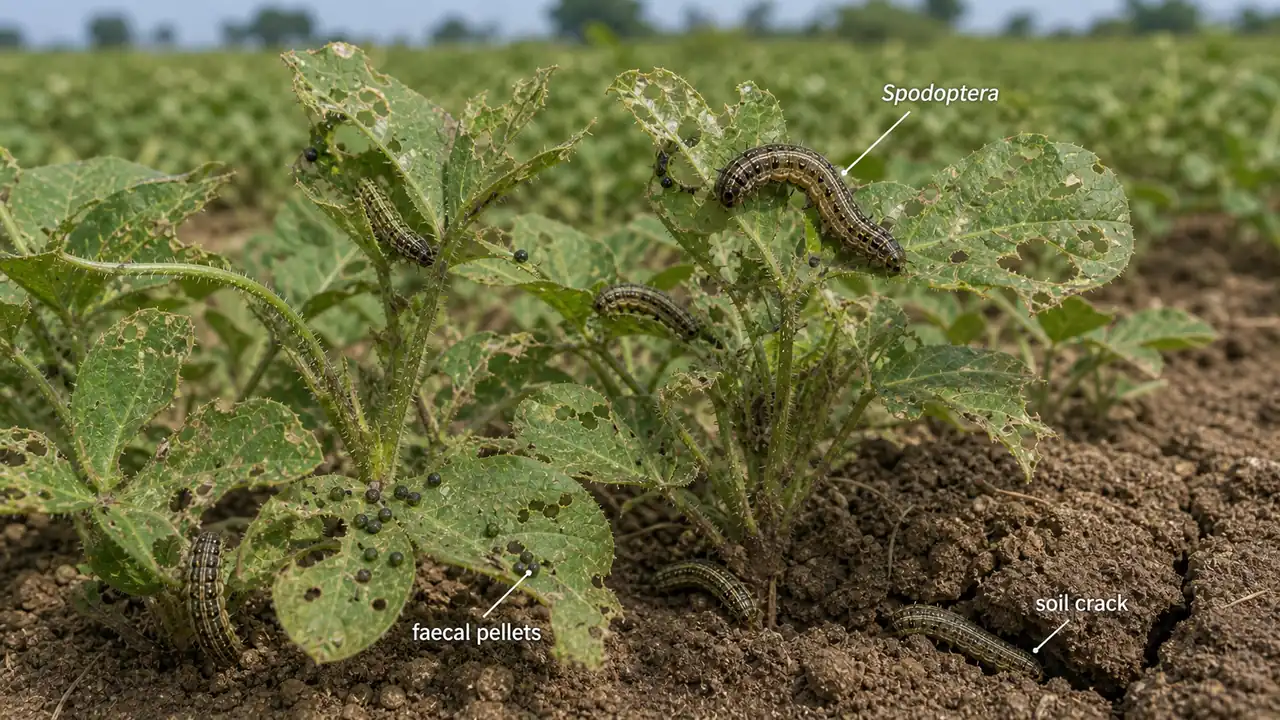
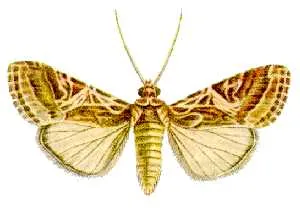
Scientific Name: Spodoptera litura
Family: Noctuidae | Order: Lepidoptera
Host Range: Groundnut, citrus, soybean, cotton, tobacco, castor, pulses, millets, safflower, banana, cabbage, tomato, sweet potato, bhendi, chillies — regular pest across many crops
Damage Symptoms
- Neonate green caterpillars feed on leaves voraciously
- Field appears as if grazed by cattle — same appearance as red hairy caterpillar damage
- The pest is nocturnal — larvae hide under plants, in cracks and crevices of soil during the day
- Faecal pellets on leaves and ground indicate pest incidence (a useful scouting clue)
ETL
1-2 egg masses per metre of crop row (of 7-12 plants) OR pheromone trap catches exceed 100 moths per night averaged over a week
Management
- Grow castor as border or intercrop — serves as indicator and trap crop
- Grow resistant cultivars: ICGV 86031, FDRS 10
- Set up pheromone traps (Pherodin SL) @ 12 nos./ha; change septa once in 3 weeks
Spodoptera vs Red Hairy Caterpillar — Key Differences
Both cause the "grazed by cattle" appearance, but they differ in behaviour and management. This comparison is frequently tested.
| Feature | Red Hairy Caterpillar | Spodoptera litura |
|---|---|---|
| Scientific name | Amsacta albistriga | Spodoptera litura |
| Family | Arctiidae | Noctuidae |
| Activity pattern | Diurnal, gregarious marcher | Nocturnal (hides during day) |
| Movement | Marches from field to field | Stays in same field |
| ETL | 8 egg masses/100 m | 1-2 egg masses/m row |
| Trap crop | Cowpea / Red gram | Castor |
| Detection clue | Visible marching larvae | Faecal pellets on ground |
| Monitoring | Light traps + bonfires | Pheromone traps (Pherodin SL) |
| Resistant varieties | — | ICGV 86031, FDRS 10 |
5A. Leaf Miner
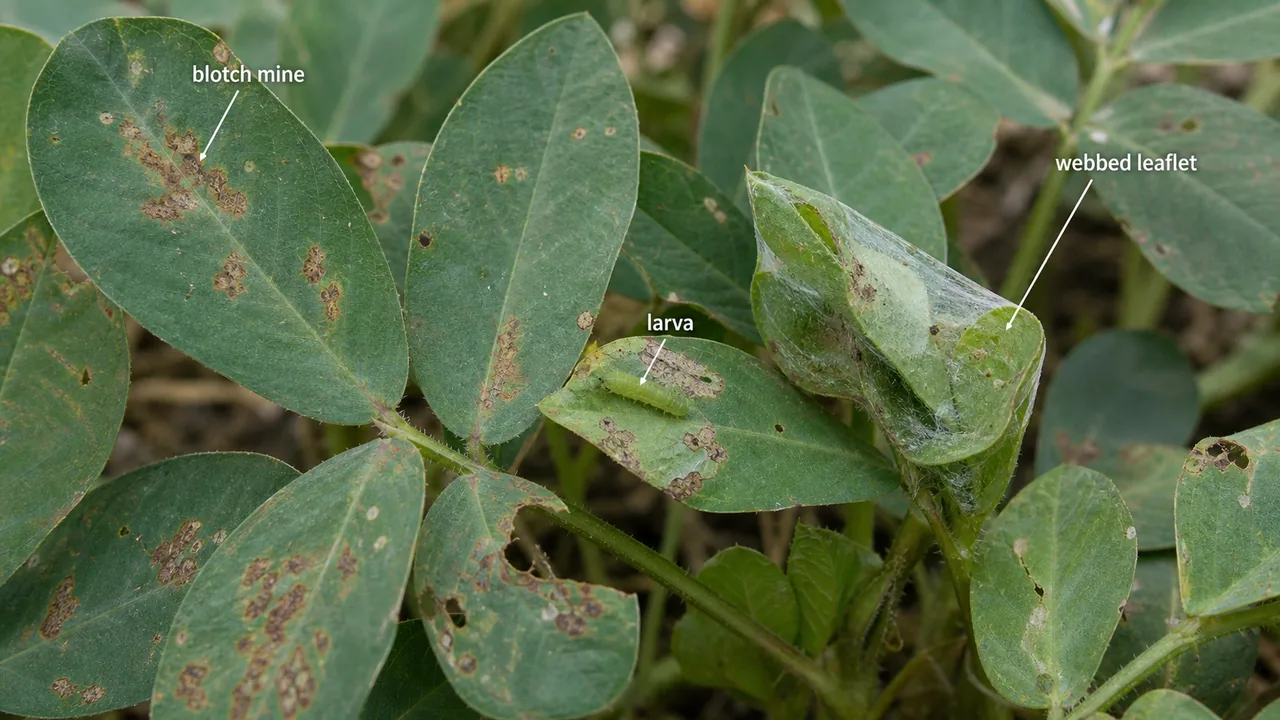
Scientific Name: Aproaerema modicella
Family: Gelechiidae | Order: Lepidoptera
Damage Symptoms
- Early larvae mine within the leaflet and form irregular blotch mines
- Later instars web and fold leaflets together while feeding, producing a papery, mined appearance
- In heavier attack, the mined and webbed terminal leaflets dry up together and the field may take on a dull burnt / scorched appearance from a distance
- Heavy infestation reduces photosynthetic area and weakens the crop before pod filling
TIP
Cowpea used as a border or trap crop for red hairy caterpillar also attracts leaf miner, so the same field strategy supports control of more than one groundnut pest.
Pod Borers and Soil Pests — The Underground Threat
6. Gram Pod Borer (Helicoverpa armigera)
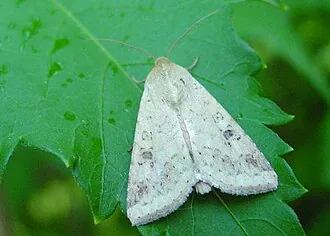
Scientific Name: Helicoverpa armigera
Family: Noctuidae | Order: Lepidoptera
Distribution: Worldwide. Polyphagous and cosmopolitan.
Host Range: Cotton, sorghum, lablab, pea, chillies, groundnut, tobacco, okra, maize, tomato, soybean, safflower, gram — attacks 100+ plant species
Damage Symptoms
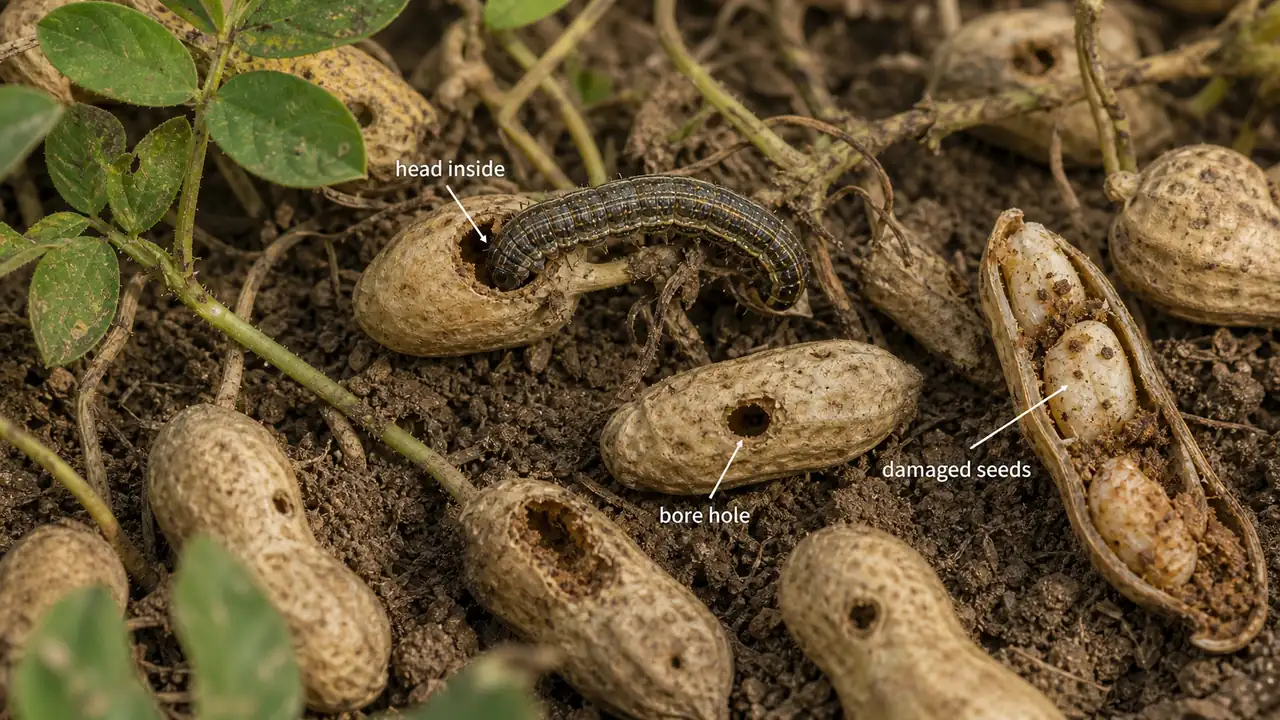
- Caterpillar first feeds on foliage, then bores into pods and feeds on seeds
- Larva feeds with head inside the pod and the rest of the body hanging out — the same "head-in" posture seen in cotton
- Boreholes on pods, absence of seeds, and defoliation in early stages
ETL
One larva per five plants in the pod initiation stage
Management
- Egg parasitoid: Trichogramma chilonis
- Larval parasitoid: Campoletis chloridae
- Application of NPV (Nuclear Polyhedrosis Virus) @ 250-500 L.E./ha
- Use light traps and pheromone traps for monitoring
TIP
Helicoverpa armigera attacks both cotton (as "American bollworm") and groundnut (as "gram pod borer"). The feeding posture — head inside, body outside — is the same in both crops. This cross-crop knowledge is valuable in exams.
7. Pod Borer (Earwig)
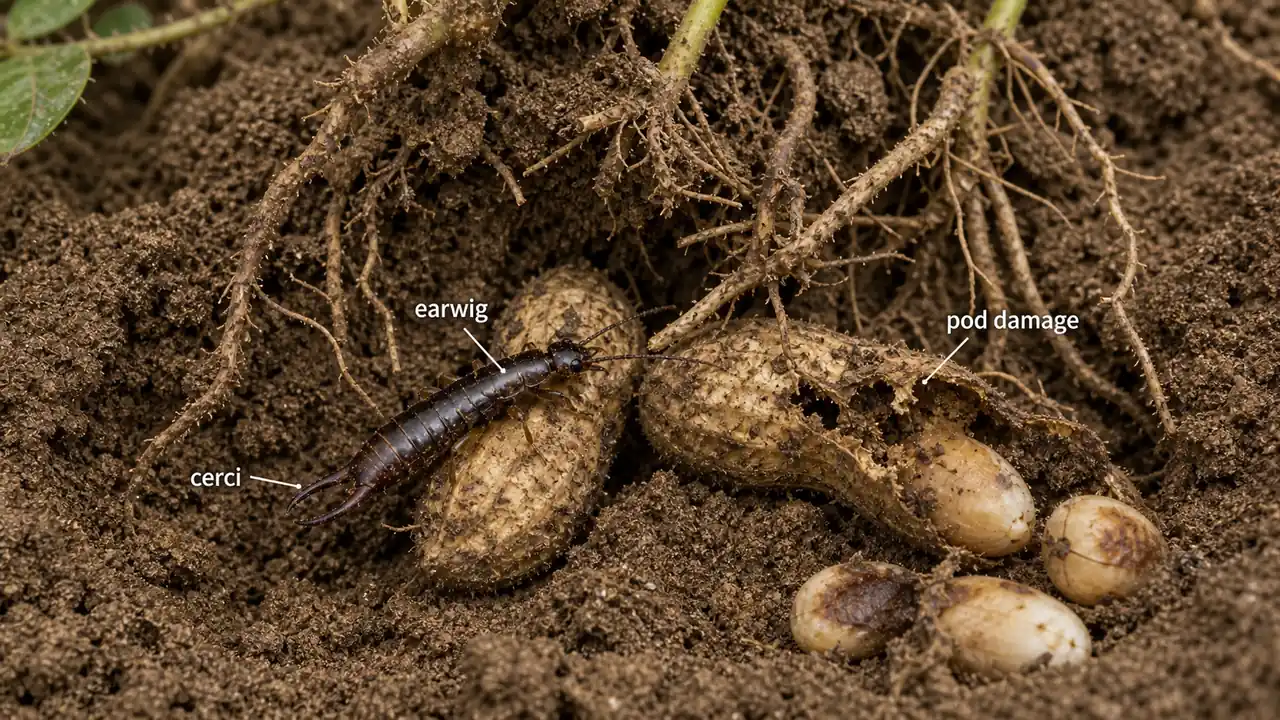
Scientific Name: Anisolabis stalli
Family: Forficulidae | Order: Dermaptera
Damage Symptoms
- Feeds on developing pods in the soil zone, making the injury easy to miss until lifting
- Damaged pods show feeding scars, broken shells, and injured kernels
- Forceps-like cerci at the abdomen tip are the easiest identification feature
NOTE
The earwig belongs to Order Dermaptera — a rare order in crop-pest questions. Remember the insect by its diagnostic forceps-like cerci.
8. Pod Bug
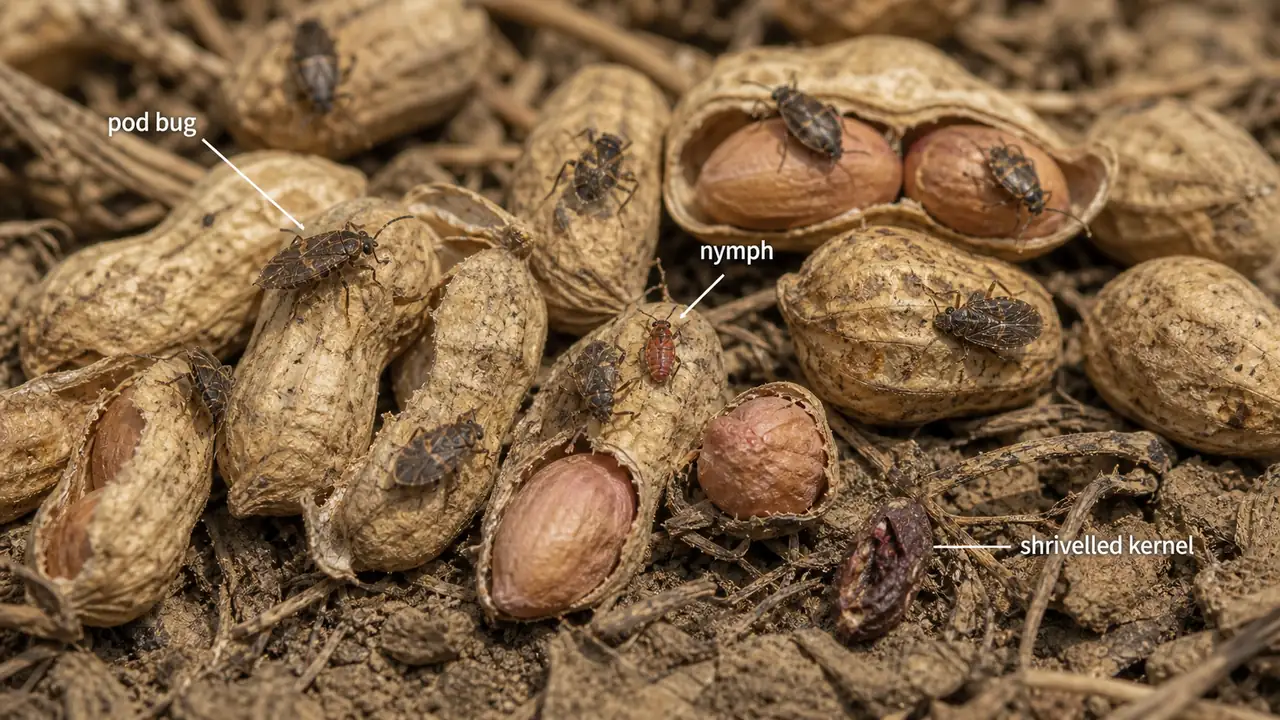
Scientific Name: Elasmolomus sordidus
Family: Lygaeidae | Order: Hemiptera
Damage Symptoms
- Bugs suck sap from developing pods and exposed kernels
- Affected kernels become shrivelled and poorly filled
- Injury is most obvious around drying pods and harvested produce exposed in the field
9. Bud Borer
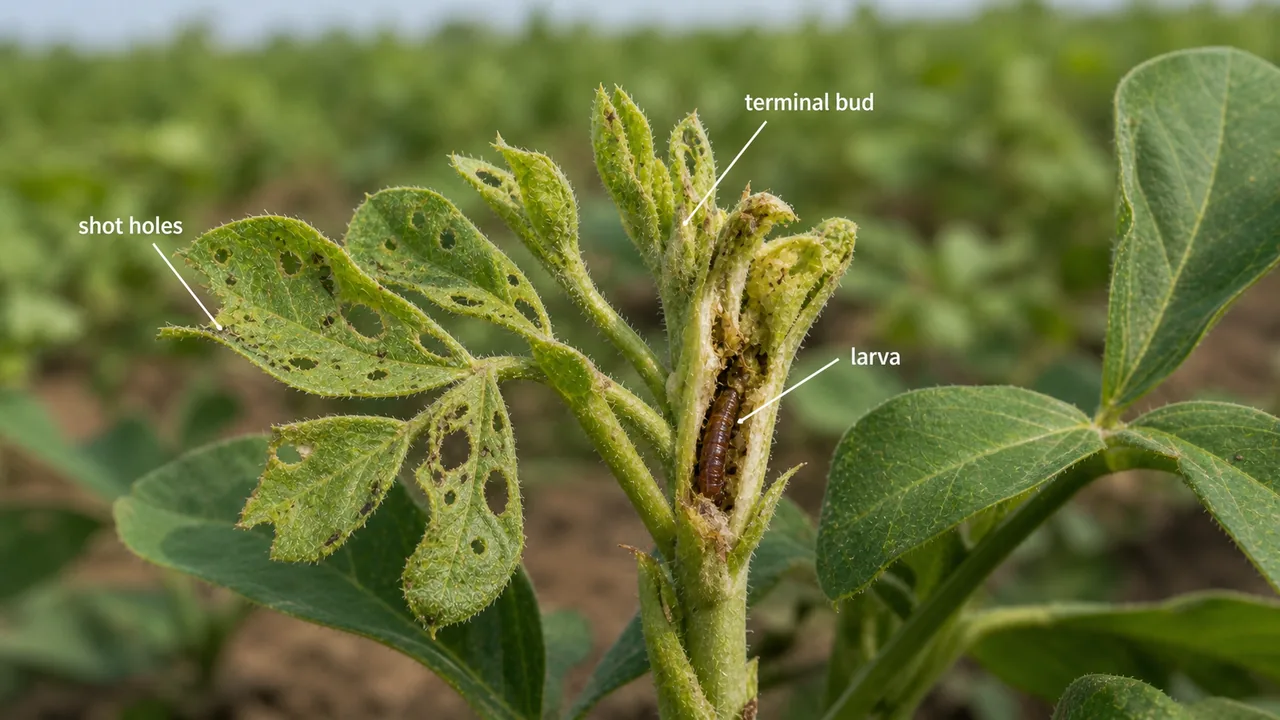
Scientific Name: Anarsia ephippias
Family: Gelechiidae | Order: Lepidoptera
Damage Symptoms
- Larva bores into the terminal bud and tender shoot
- Newly emerging leaflets show shot holes and feeding punctures
- Repeated attack distorts the growing point and checks vegetative growth
ETL Summary for All Groundnut Pests
| Pest | ETL | When to Monitor |
|---|---|---|
| Red hairy caterpillar (Amsacta albistriga) | 8 egg masses/100 metres | Onset of monsoon rains |
| Tobacco caterpillar (Spodoptera litura) | 1-2 egg masses/metre row or 100 moths/night/trap | Throughout crop season |
| Gram pod borer (Helicoverpa armigera) | 1 larva per 5 plants | Pod initiation stage |
Management Quick Reference
| Pest | Cultural Control | Biological Control | Trap Crop |
|---|---|---|---|
| Aphid | — | Conserve natural enemies | — |
| Leafhopper | Intercrop lablab 1:4 | — | Lablab (as intercrop) |
| Red hairy caterpillar | Light traps + bonfires at onset of rains | — | Cowpea / Red gram |
| Spodoptera | Pheromone traps (Pherodin SL) @ 12/ha | — | Castor (border/intercrop) |
| Helicoverpa | Light traps + pheromone traps | Trichogramma chilonis, Cosmopletis, NPV | — |
Field Diagnosis: Groundnut — What's Attacking?
Step 1: Check the type of damage
Leaf damage:
- Colonies of small green/yellow insects on undersurface, leaves curling? → Aphid (A. craccivora) — check for honeydew; also vector of rosette virus
- Leaves with whitish patches, tiny wedge-shaped insects jump? → Leafhopper (E. kerri) — intercrop with lablab 1:4 as trap crop
- Leaves completely stripped, gregarious hairy caterpillars? → Red Hairy Caterpillar (A. albistriga) — adults attracted to light traps after first monsoon rains
- Leaves with ragged holes, brown caterpillar? → Tobacco Cutworm (S. litura) — use castor as border trap crop + pheromone traps
Pod/flower damage:
- Bore holes in pods, larva inside? → Gram Pod Borer (H. armigera) — polyphagous; use light traps + Trichogramma + NPV
- Thrips on flowers, bud necrosis? → Thrips — vector of bud necrosis virus (PBNV) in groundnut
Trap crop strategy: Plant cowpea/red gram for red hairy caterpillar, castor for Spodoptera — these attract pests away from groundnut.
Exam Tips and Mnemonics
TIP
Mnemonic — "CRC" for Trap Crops:
- Cowpea / Red gram → Red hairy Caterpillar
- Castor → Spodoptera (tobacco Caterpillar)
- Lablab → Leafhopper (1:4 intercrop)
ETL Memory Trick — "8-1-1":
- 8 egg masses/100 m → Red hairy caterpillar (the big marcher needs a big ETL number)
- 1-2 egg masses/m → Spodoptera (nocturnal, so lower threshold)
- 1 larva/5 plants → Helicoverpa (high value damage per larva)
Nocturnal vs Diurnal:
- Spodoptera is nocturnal → find it by faecal pellets, not by seeing larvae
- Red hairy caterpillar is diurnal → visible marching armies
Cross-Crop Connections:
- Helicoverpa armigera = American bollworm (cotton) = Gram pod borer (groundnut/pulses)
- Spodoptera litura = pest of both cotton and groundnut; target of Bollgard II
- Hopper burn = symptom in both cotton and groundnut (different species, same name)
Summary Table for Quick Revision
| Topic | Key Fact |
|---|---|
| Pest diversity | 5 insect orders — Hemiptera, Thysanoptera, Lepidoptera, Dermaptera, Coleoptera |
| Aphid (A. craccivora) | Wilting of tender shoots; honeydew attracts ants |
| Leafhopper (E. kerri) | V-shaped necrosis; hopper burn; manage with lablab intercrop 1:4 |
| Thrips (S. dorsalis) | White patches on upper surface; seedling stage most vulnerable |
| Red hairy caterpillar (A. albistriga) | Gregarious marcher; "grazed by cattle"; ETL = 8 egg masses/100 m; trap crop = cowpea/red gram |
| Spodoptera (S. litura) | Nocturnal; faecal pellets as clue; ETL = 1-2 egg masses/m; trap crop = castor; resistant = ICGV 86031, FDRS 10 |
| Helicoverpa (H. armigera) | Head-in feeding; ETL = 1 larva/5 plants at pod initiation; bio-control = Trichogramma, NPV |
| Earwig (A. stalli) | Order Dermaptera; damages pods underground |
| Leaf miner (A. modicella) | Blotch mines in leaflets; Family Gelechiidae |
| Key trap crops | Cowpea/red gram (RHC), Castor (Spodoptera), Lablab (leafhopper) |