🌿 Pests of Mustard: Aphids, Sawflies & Crucifer Enemies
Complete guide to all 8 major pests of mustard and cruciferous oilseeds — mustard aphid, painted bug, mustard sawfly, green peach aphid, diamondback moth, Bihar hairy caterpillar, cabbage butterfly, pea leaf-miner with scientific names, damage, management, and exam mnemonics
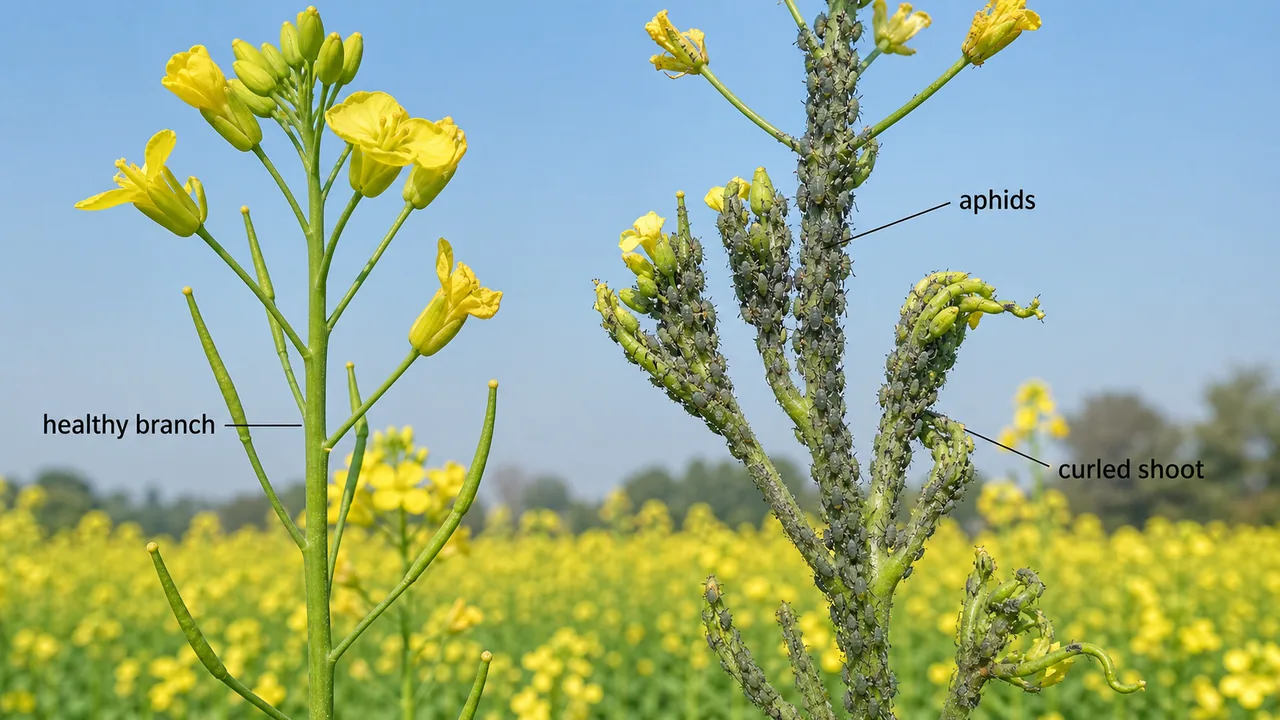
In the yellow mustard fields of Rajasthan's Bharatpur district during February, a farmer notices that his plants have stopped forming pods. The leaves are curled, the inflorescences are covered with dense clusters of tiny grey-green insects, and the plants look sickly and stunted. This is the work of the mustard aphid (Lipaphis erysimi) — the most destructive pest of mustard, capable of reducing yield to just one-fourth or one-fifth of normal. Mustard and other cruciferous oilseeds (toria, sarson, raya, taramira) face a unique pest complex that includes the only Hymenopteran crop pest (the sawfly), the globally notorious diamondback moth, and several caterpillar pests. Mastering this pest complex is essential for competitive exams.
Why Mustard Pests Are Distinctive
Mustard belongs to the family Brassicaceae (Cruciferae), and cruciferous crops share a distinctive chemistry: they produce glucosinolates — sulphur-containing compounds that give mustard its pungent taste. These chemicals attract specialised pests (mustard aphid, sawfly, diamondback moth) while deterring generalist feeders. This is why many mustard pests are specific to cruciferous crops.
Pro Content Locked
Upgrade to Pro to access this lesson and all other premium content.
Charged once for one year · ₹1188 total
Save ₹100/month vs ₹2388/year launch price
- All Agriculture & Banking Courses
- AI Lesson Questions (100/day)
- AI Doubt Solver (50/day)
- Glows & Grows Feedback (30/day)
- AI Section Quiz (20/day)
- 22-Language Translation (100/day)
- Recall Questions (20/day)
- AI Quiz (15/day)
- AI Quiz Paper Analysis (100/day)
- AI Step-by-Step Explanations (100/day)
- Spaced Repetition Recall (FSRS)
- AI Tutor
- Immersive Text Questions
- Audio Lessons — Hindi & English
- Mock Tests & Previous Year Papers
- Summary & Mind Maps
- XP, Levels, Leaderboard & Badges
- Generate New Classrooms
- Voice AI Teacher (AgriDots Live)
- AI Revision Assistant
- Knowledge Gap Analysis
- Interactive Revision (LangGraph)
🔒 Secure one-time yearly payment via Razorpay · No hidden fees
In the yellow mustard fields of Rajasthan's Bharatpur district during February, a farmer notices that his plants have stopped forming pods. The leaves are curled, the inflorescences are covered with dense clusters of tiny grey-green insects, and the plants look sickly and stunted. This is the work of the mustard aphid (Lipaphis erysimi) — the most destructive pest of mustard, capable of reducing yield to just one-fourth or one-fifth of normal. Mustard and other cruciferous oilseeds (toria, sarson, raya, taramira) face a unique pest complex that includes the only Hymenopteran crop pest (the sawfly), the globally notorious diamondback moth, and several caterpillar pests. Mastering this pest complex is essential for competitive exams.
Why Mustard Pests Are Distinctive
Mustard belongs to the family Brassicaceae (Cruciferae), and cruciferous crops share a distinctive chemistry: they produce glucosinolates — sulphur-containing compounds that give mustard its pungent taste. These chemicals attract specialised pests (mustard aphid, sawfly, diamondback moth) while deterring generalist feeders. This is why many mustard pests are specific to cruciferous crops.
Pest Summary Table — Mustard
| S.No | Common Name | Scientific Name | Family | Order | Key Feature |
|---|---|---|---|---|---|
| 1 | Mustard Aphid | Lipaphis erysimi | Aphididae | Hemiptera | Most destructive; yield to 1/4th |
| 2 | Painted Bug | Bagrada hilaris | Pentatomidae | Hemiptera | Resinous excretion on pods |
| 3 | Mustard Sawfly | Athalia lugens | Tenthredinidae | Hymenoptera | Only Hymenopteran pest |
| 4 | Green Peach Aphid | Myzus persicae | Aphididae | Hemiptera | Important virus vector |
| 5 | Pea Leaf-miner | Chromatomyia horticola | Agromyzidae | Diptera | Serpentine leaf mines |
| 6 | Bihar Hairy Caterpillar | Spilosoma obliqua | Arctiidae | Lepidoptera | Gregarious early instars |
| 7 | Cabbage Butterfly | Pieris brassicae | Pieridae | Lepidoptera | Gregarious young; migratory adults |
| 8 | Diamondback Moth | Plutella xylostella | Yponomeutidae | Lepidoptera | Window-pane damage; insecticide resistance |
Pest Damage by Crop Stage
| Crop Stage | Pests Active | Primary Damage |
|---|---|---|
| Seedling (germination to 4 weeks) | Mustard sawfly, Painted bug | Seedling defoliation; sap sucking |
| Vegetative (4-8 weeks) | Bihar hairy caterpillar, Cabbage butterfly, Diamondback moth, Leaf-miner | Defoliation; leaf mining |
| Flowering/Pod formation | Mustard aphid, Green peach aphid, Painted bug | Sap from inflorescence; pod spoilage |
1. Mustard Aphid — Lipaphis erysimi
Family: Aphididae | Order: Hemiptera
IMPORTANT
Mustard aphid is the most destructive pest of mustard. It can reduce yield to one-fourth or one-fifth of normal. This is the single most important fact about mustard pests for exams.
Cultural reduction clues: Earlier sowing of mustard helps the crop escape peak aphid multiplication, and exam-oriented agronomy notes also associate taramira intercropped with raya with lower mustard-aphid pressure.
Host range: Cruciferous oilseeds (toria, sarson, raya, taramira) and Brassica vegetables (cabbage, cauliflower, knol-khol)
Damage Symptoms
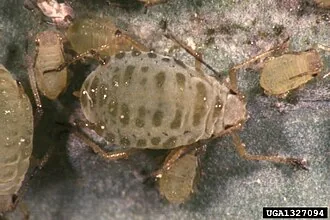
- Both nymphs and adults suck cell sap from leaves, stems, inflorescence, and developing pods
- Plant vitality is greatly reduced
- Leaves acquire a curly appearance
- Flowers fail to form pods; developing pods do not produce healthy seeds
- In severe infestations, yield reduces to one-fourth or one-fifth
Management
- Use the predatory lady bird beetle: Coccinella septumpunctata — this is the most important biocontrol agent for aphids in mustard
- Spray neem-based products or systemic insecticides when populations exceed ETL
TIP
Do not confuse the two aphids of mustard:
| Feature | Mustard Aphid | Green Peach Aphid |
|---|---|---|
| Scientific name | Lipaphis erysimi | Myzus persicae |
| Primary role | Direct feeding damage | Virus vector |
| Yield impact | Reduces to 1/4th or 1/5th | Moderate direct damage |
| Specificity | Crucifers mainly | Highly polyphagous |
| Biocontrol | Coccinella septumpunctata | Natural enemies |
Mnemonic: "Lipaphis Leaves you with Less yield (1/4th)." "Myzus Moves viruses."
Agricultural context: In Rajasthan and Haryana, mustard aphid populations peak during January-February when the crop is at the flowering-pod stage. The lady bird beetle Coccinella septumpunctata is the farmer's best friend — each beetle can consume 50-80 aphids per day. Indiscriminate insecticide spraying kills these beneficials and worsens aphid problems.
2. Painted Bug — Bagrada hilaris
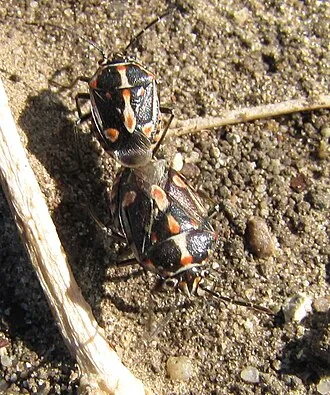
Family: Pentatomidae | Order: Hemiptera
Host range: Crucifers, rice, sugarcane, indigo, and coffee
Damage Symptoms
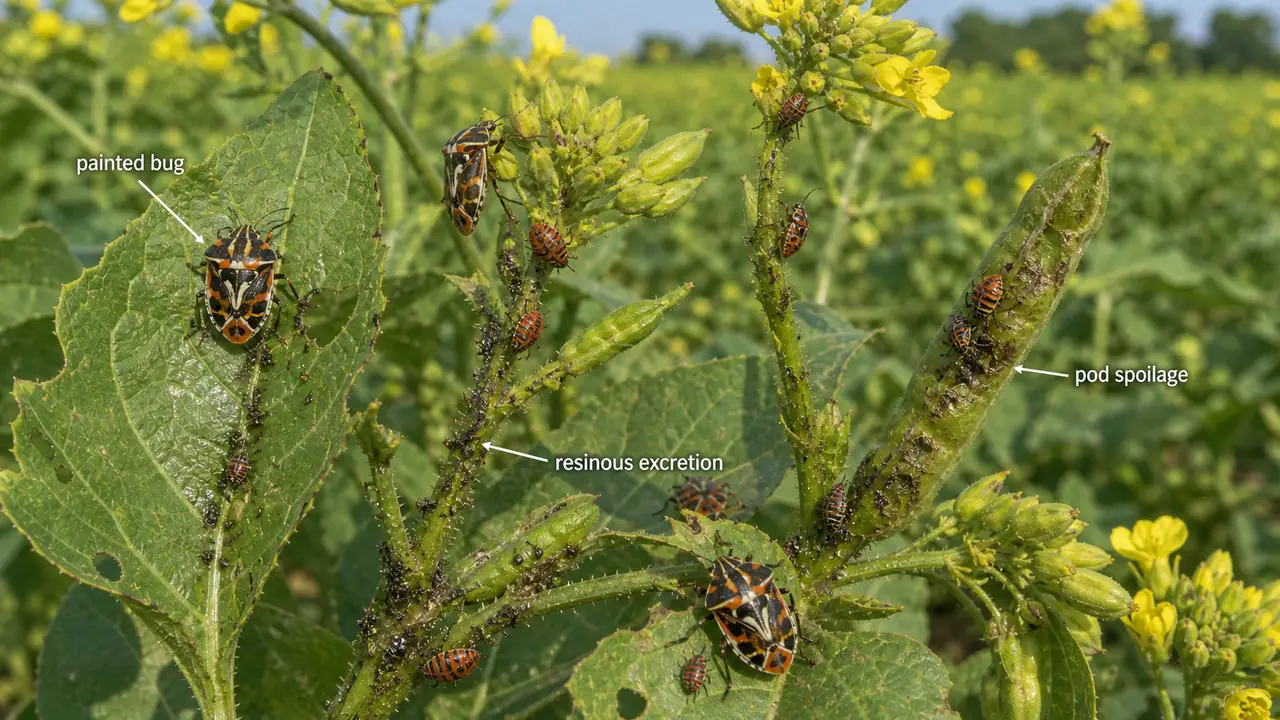
- Both nymphs and adults suck cell sap from leaves and developing pods
- Plants gradually wilt and dry up
- The bugs excrete a resinous material that spoils the pods — a distinctive diagnostic feature
- Also called "painted" bug because of its colourful orange, white, and black markings
Management
- Conserve egg parasitoid Gryon sp. (Scelionidae)
- Conserve adult parasitoid Alophora sp. (Tachinidae)
NOTE
Painted bug belongs to Pentatomidae (the stink bug family). The resinous excretion that spoils pods is a characteristic identification feature that distinguishes it from aphid damage (which is curling and stunting).
3. Mustard Sawfly — Athalia lugens
Family: Tenthredinidae | Order: Hymenoptera
IMPORTANT
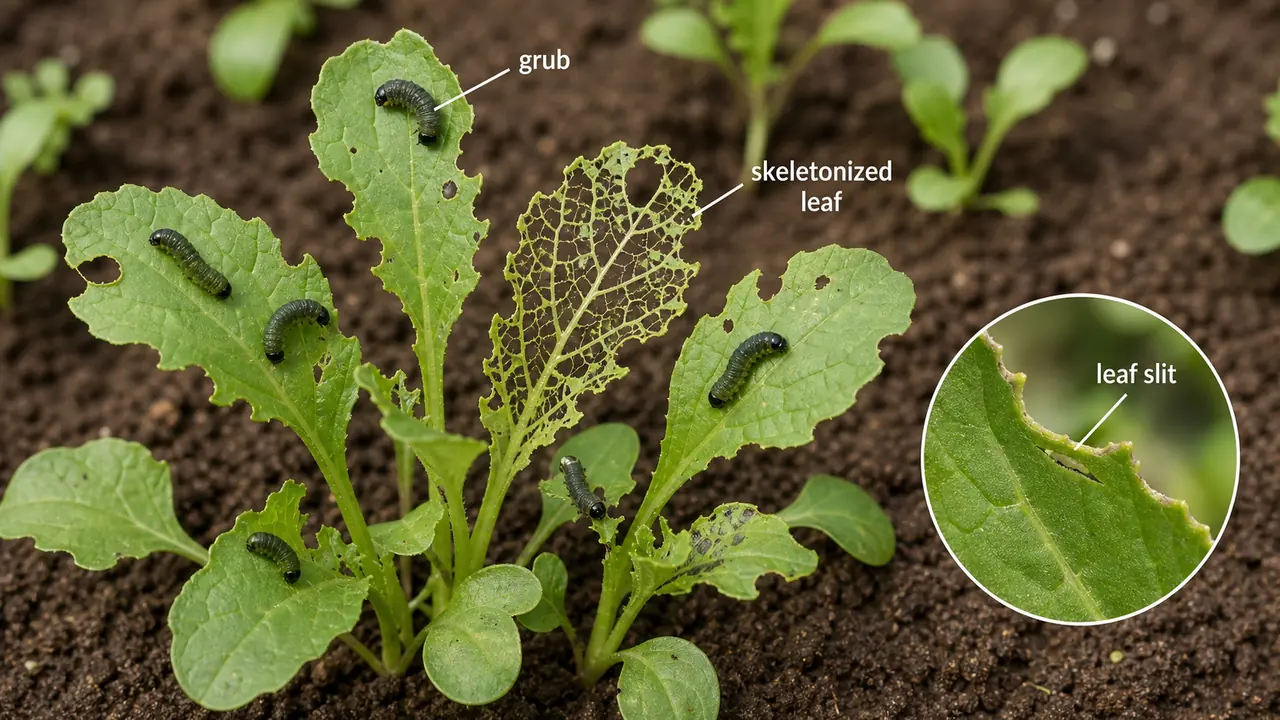
Mustard sawfly is the only Hymenopteran pest of mustard — and one of the few Hymenopteran crop pests in Indian agriculture. The larvae are called grubs (not caterpillars), even though they look similar. This is a classic exam question.
Host range: Mustard, toria (Brassica campestris), rapeseed, cabbage, cauliflower, knol-khol, turnip, radish
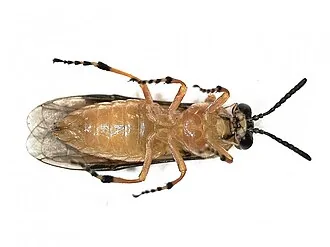
Damage Symptoms
- Grubs alone are destructive — adults do not feed on the crop
- They bite holes into leaves, preferring young growth
- They skeletonize the leaves completely, leaving only veins
- Sometimes even the epidermis of the shoot is eaten
- Seedlings succumb to severe damage; older plants survive but do not bear seeds
Why "Sawfly"?
The female has a saw-like ovipositor that she uses to cut slits in leaf margins to deposit eggs. This saw-like structure gives the entire family (Tenthredinidae) its common name.
TIP
Key exam distinction — Sawfly vs. Caterpillar:
| Feature | Sawfly Grub | Caterpillar |
|---|---|---|
| Order | Hymenoptera | Lepidoptera |
| Prolegs | 6-8 pairs (more) | 2-5 pairs (fewer) |
| Larval name | Grub | Caterpillar |
| Example | Athalia lugens | Pieris brassicae |
Mnemonic: "Sawfly = Six+ prolegs; Caterpillar = Countable (2-5) prolegs." This distinction is frequently tested because sawfly grubs look like caterpillars but are taxonomically different.
4. Green Peach Aphid — Myzus persicae
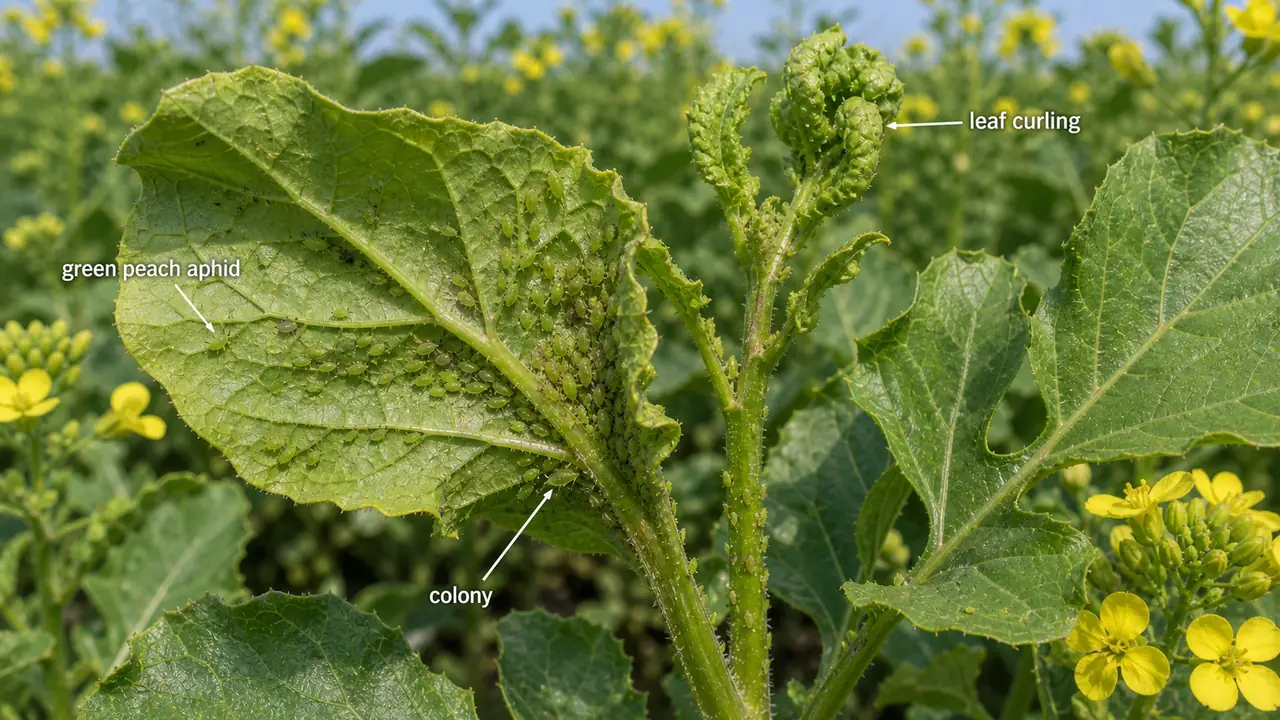
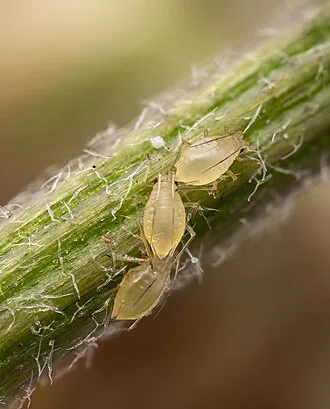
Family: Aphididae | Order: Hemiptera
- Found on mustard and other cruciferous crops
- Primary importance as a virus vector for several plant viruses (over 100 viruses)
- Sucks cell sap from leaves and tender shoots
- One of the most polyphagous aphid species globally
NOTE
Myzus persicae is important not for its direct feeding damage (which is moderate) but because it vectors more than 100 plant viruses. It is one of the most efficient insect virus vectors known.
5. Pea Leaf-miner — Chromatomyia horticola
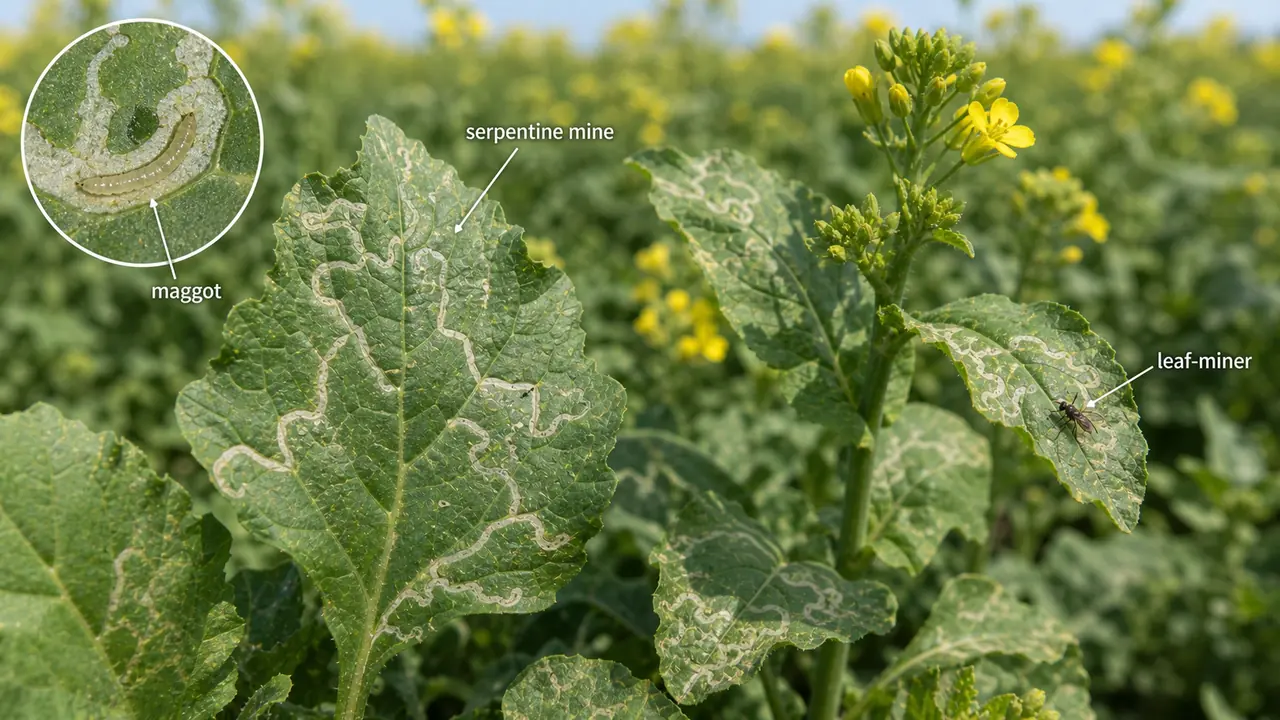
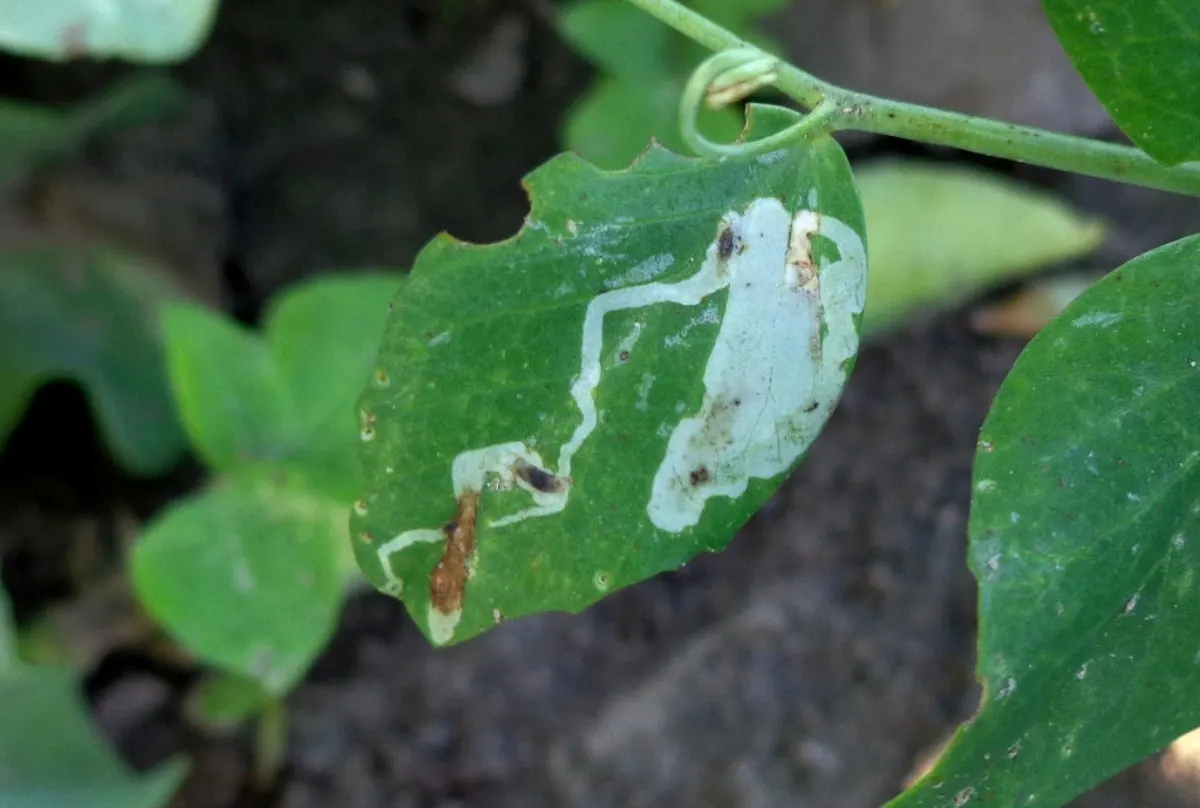
Family: Agromyzidae | Order: Diptera
- Larvae mine into the leaf tissue, creating serpentine galleries (winding, irregular tunnels)
- Reduces photosynthetic area of the plant
- A Dipteran pest (true fly) — the maggot lives between the two leaf surfaces
6. Bihar Hairy Caterpillar — Spilosoma obliqua
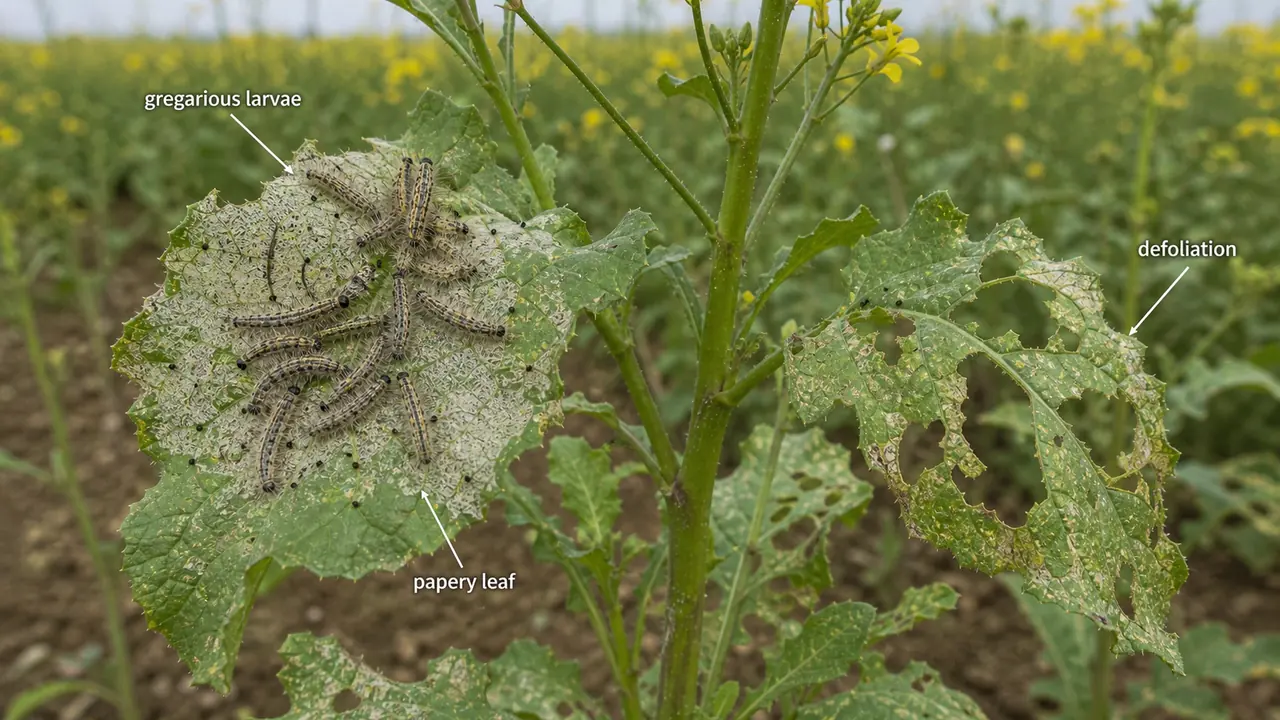
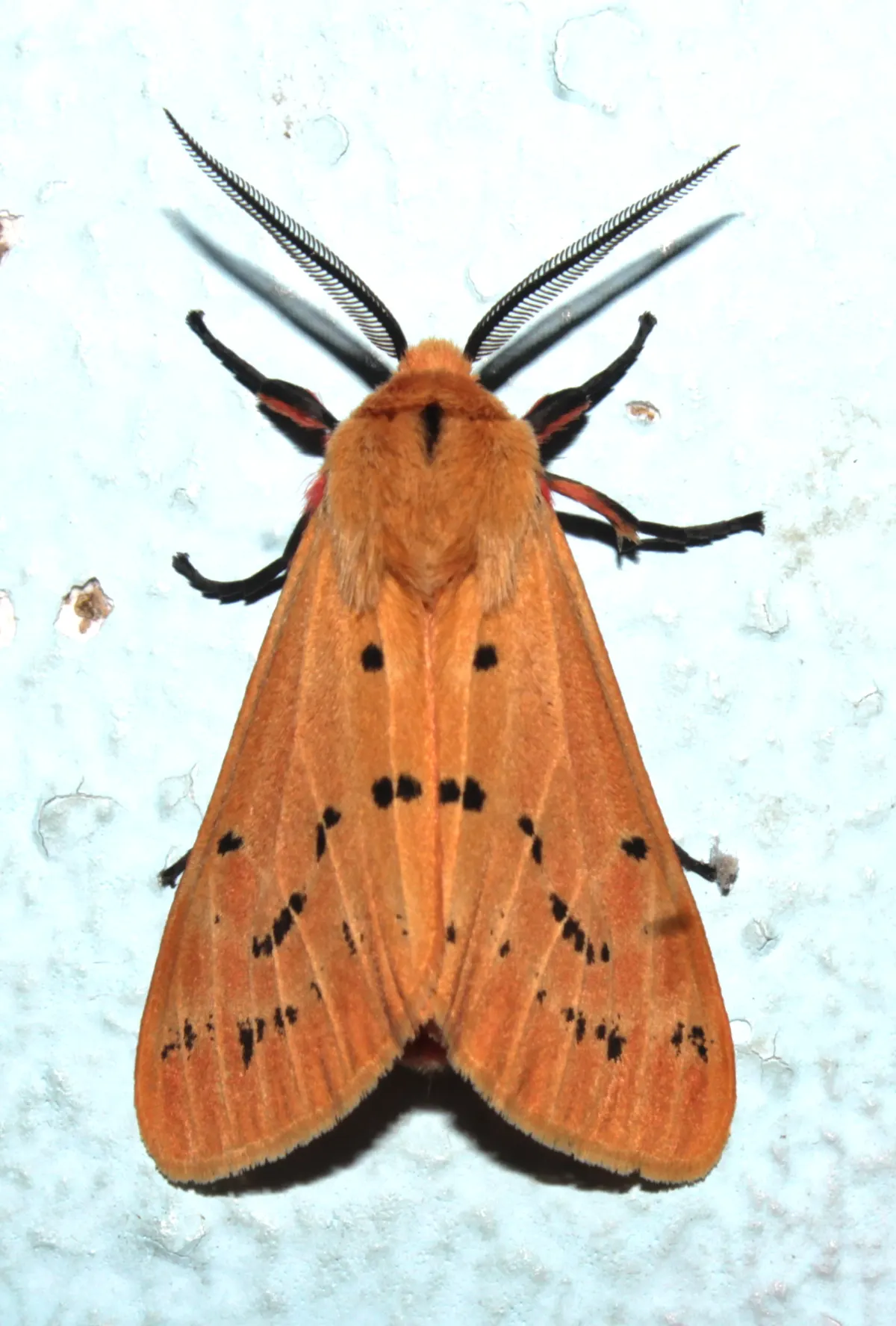
Family: Arctiidae | Order: Lepidoptera
IMPORTANT
Bihar hairy caterpillar is a polyphagous pest that attacks mustard, pulses, vegetables, and many other crops. The gregarious feeding habit of early instars is the key identification feature.
Damage Symptoms (Progressive stages)
| Larval Stage | Feeding Behaviour | Damage |
|---|---|---|
| Early instars | Gregarious feeders (clustered together) | Scrape chlorophyll; leaves turn papery white |
| Middle instars | Become solitary | Make irregular holes on leaves |
| Late instars | Voracious feeders | Skeletonize leaves (only veins and petioles remain) |
| Severe infestation | Spread to adjacent plants | Complete defoliation |
Agricultural context: In Bihar and eastern Uttar Pradesh, this caterpillar appears in large numbers during late kharif. The early instar larvae cluster together on the underside of leaves — at this stage, a single spray can control an entire colony. Once they disperse, control becomes much more difficult and expensive.
7. Cabbage Butterfly — Pieris brassicae
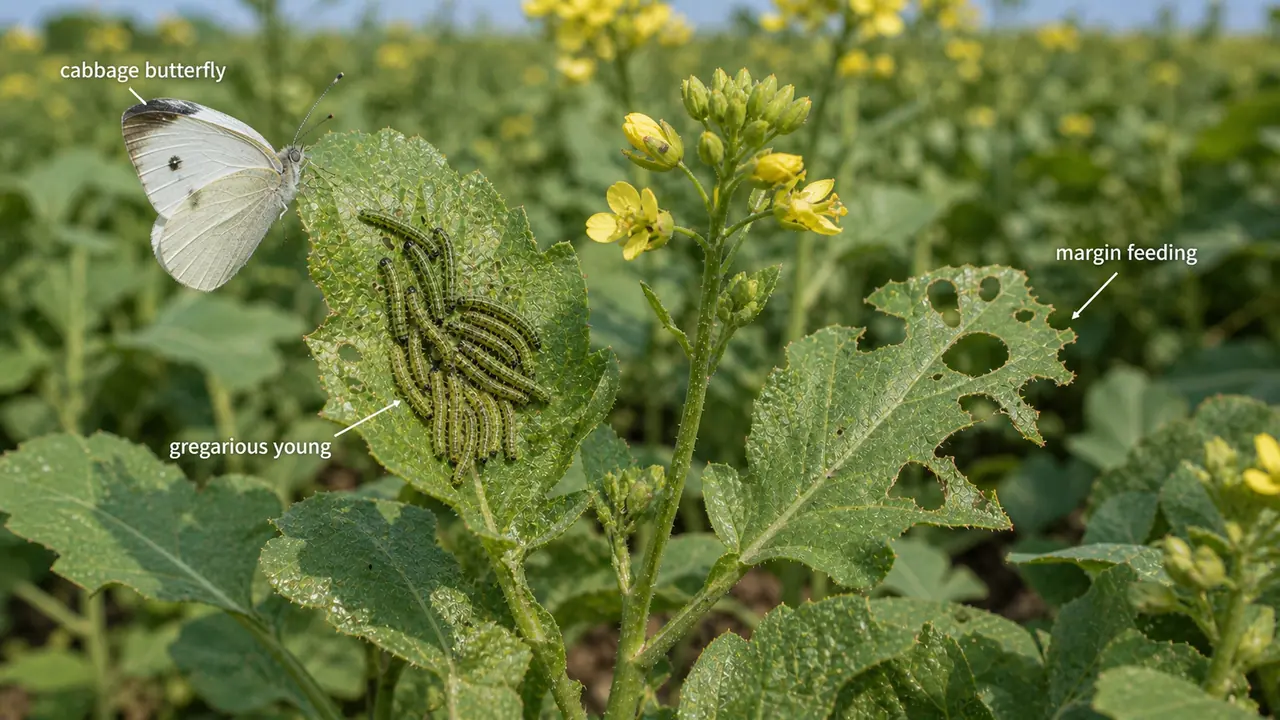
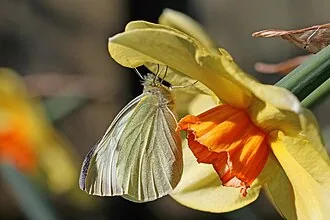
Family: Pieridae | Order: Lepidoptera
Host range: Cabbage, cauliflower, knol-khol, turnip, radish, sarson, toria, and other cruciferous plants
Damage Symptoms
- Caterpillars alone feed on leaves, young shoots, and green pods
- When young, they feed gregariously (clustered on leaves)
- Grown-up caterpillars migrate from one field to another
- First instar caterpillars just scrape the leaf surface
- Later instars eat leaves from the margins inwards, leaving only the main veins
- In severe cases, entire plants are eaten up
Management
- Conserve larval parasitoid Apanteles glomeratus (Braconidae)
8. Diamondback Moth — Plutella xylostella
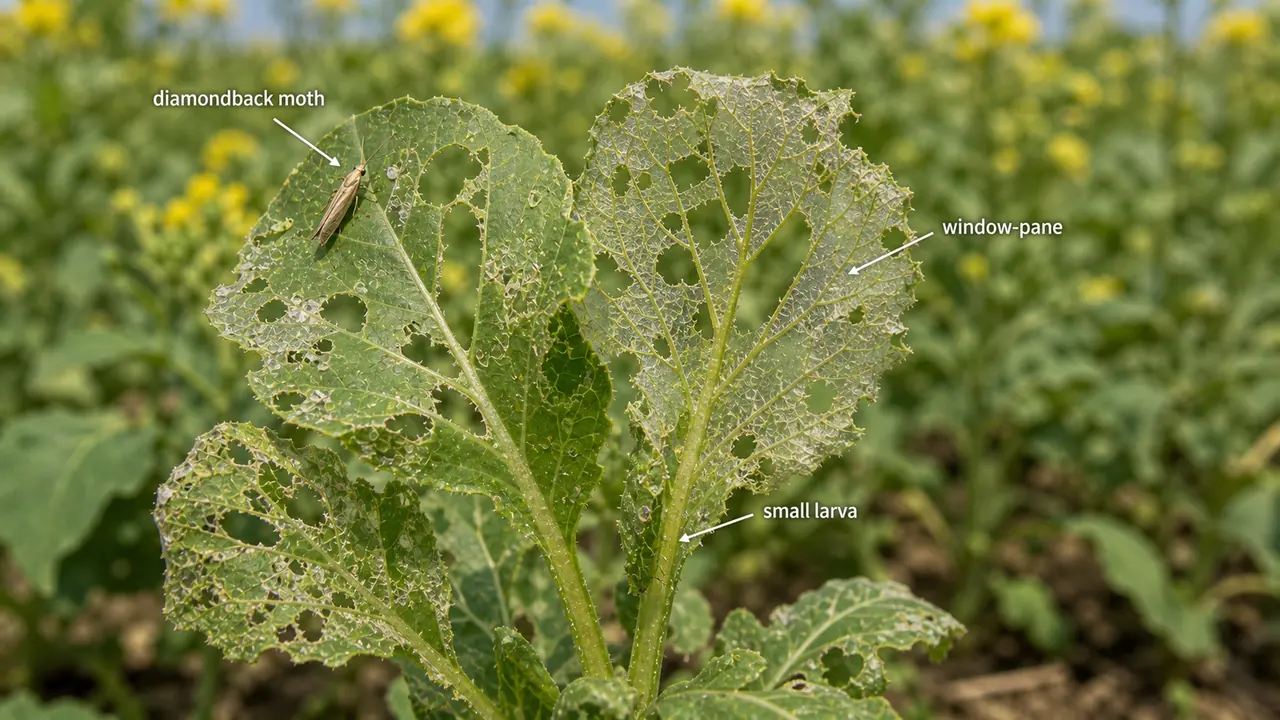
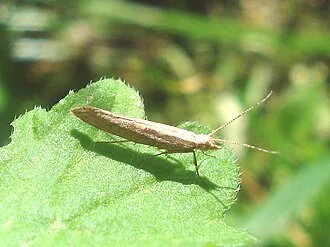
Family: Yponomeutidae | Order: Lepidoptera
The diamondback moth is the single most difficult pest to control on cruciferous crops worldwide, primarily because of its ability to develop insecticide resistance.
Damage Symptoms
- Larvae feed on leaves creating characteristic window-pane damage — they eat one surface of the leaf, leaving the other intact as a translucent "window"
- Has developed resistance to virtually every class of insecticide globally
- Small size makes it easy to overlook until damage is severe
Management
- Biological control with Diadegma semiclausum (ichneumonid parasitoid) is the most sustainable approach
- Bt (Bacillus thuringiensis) is effective where resistance to synthetic insecticides exists
NOTE
Diamondback moth (Plutella xylostella) belongs to family Yponomeutidae. It is one of the most difficult pests to control due to rapid insecticide resistance development. Over 90 insecticide active ingredients have lost effectiveness against this pest globally.
Comparing the Defoliators of Mustard
| Feature | Mustard Sawfly | Bihar Hairy Caterpillar | Cabbage Butterfly | Diamondback Moth |
|---|---|---|---|---|
| Scientific name | Athalia lugens | Spilosoma obliqua | Pieris brassicae | Plutella xylostella |
| Order | Hymenoptera | Lepidoptera | Lepidoptera | Lepidoptera |
| Larval type | Grub | Hairy caterpillar | Smooth caterpillar | Small green larva |
| Feeding pattern | Skeletonizes | Gregarious → voracious | Margins inward | Window-pane |
| Host range | Crucifers | Polyphagous | Crucifers | Crucifers |
| Special feature | Only Hymenopteran | Gregarious early instars | Migratory later instars | Insecticide resistance |
| Key biocontrol | — | — | Apanteles glomeratus | Diadegma semiclausum |
Field Diagnosis: Mustard — Which Defoliator?
Step 1: Check how the leaves are eaten
- Leaves skeletonised (veins remain, lamina eaten), dark grubs on plant? → Mustard Sawfly (A. lugens) — only Hymenopteran pest; grubs, not caterpillars
- Young plants completely stripped by gregarious hairy caterpillars? → Bihar Hairy Caterpillar (S. obliqua) — early instars gregarious, then disperse
- Leaves eaten from margins inward, smooth green caterpillars? → Cabbage Butterfly (P. brassicae) — smooth caterpillar, migratory later instars
- Small window-pane holes (transparent patches), tiny green larvae? → Diamondback Moth (P. xylostella) — notorious for insecticide resistance
Not a defoliator?
- Massive aphid colonies, plants look sooty and stunted, yield drops to 1/4th? → Mustard Aphid (L. erysimi) — most destructive mustard pest; peak in Jan-Feb
- Small beetles feeding on petals, painting-like marks on pods? → Painted Bug (B. hilaris) — sucks sap from pods; Hemiptera
Exam Tips and Mnemonics
TIP
"LAMP-BCD" — The 8 Mustard Pests in order of exam importance:
- Lipaphis (Mustard aphid) — Most destructive; yield to 1/4th-1/5th
- Athalia (Sawfly) — Only Hymenopteran; grubs (not caterpillars)
- Myzus (Green peach aphid) — Virus vector (100+ viruses)
- Plutella (Diamondback moth) — Window-pane; insecticide resistance
- Bagrada (Painted bug) — Resinous excretion spoils pods
- Cabbage butterfly (Pieris) — Gregarious young; margins inward
- Desi caterpillar (Spilosoma) — Bihar hairy; gregarious → voracious
The "1/4th or 1/5th" rule: Only Lipaphis erysimi causes this extreme yield reduction. No other mustard pest reduces yield this dramatically.
Biocontrol key fact: Coccinella septumpunctata (seven-spotted lady bird beetle) is the premier predator of mustard aphid.
Summary Cheat Sheet
| Concept / Topic | Key Details |
|---|---|
| Most destructive pest of mustard | Lipaphis erysimi (Mustard aphid) — Aphididae; crucifers specialist |
| Yield reduction by mustard aphid | To 1/4th or 1/5th of normal — most extreme yield loss among mustard pests |
| Predator of mustard aphid | Coccinella septumpunctata (seven-spotted lady bird beetle) — consumes 50-80 aphids/day |
| Only Hymenopteran pest of mustard | Athalia lugens (Mustard sawfly) — Tenthredinidae |
| Sawfly — damaging stage | Grubs (not caterpillars) — 6-8 pairs of prolegs (more than Lepidoptera) |
| Sawfly damage | Skeletonize leaves completely, leaving only veins |
| Important virus vector on mustard | Myzus persicae (Green peach aphid) — vectors 100+ plant viruses |
| Resinous excretion spoils pods | Bagrada hilaris (Painted bug) — Pentatomidae |
| Painted bug parasitoids | Egg: Gryon sp. (Scelionidae); Adult: Alophora sp. (Tachinidae) |
| Gregarious early instars; polyphagous | Spilosoma obliqua (Bihar hairy caterpillar) — Arctiidae |
| Window-pane leaf damage | Plutella xylostella (Diamondback moth) — Yponomeutidae |
| Insecticide resistance problem | Plutella xylostella — 90+ insecticides lost effectiveness |
| Eats leaves from margins inward | Pieris brassicae (Cabbage butterfly) — Pieridae |
| Parasitoid of cabbage butterfly | Apanteles glomeratus (Braconidae) |
| Serpentine leaf mines on mustard | Chromatomyia horticola (Pea leaf-miner) — Agromyzidae; Diptera |