🌾 Pests of Finger Millet (Ragi): A Compact Guide
Complete guide to all 5 major pests of finger millet (ragi) — pink stem borer, white borer, root aphid, cut worm, and white grub (National Pest) with scientific names, damage, management, comparison tables, and exam mnemonics
In the red laterite soils of Karnataka's Hassan district — the heartland of finger millet (ragi) cultivation in India — a farmer notices that some of his transplanted ragi seedlings have a wilted central shoot that pulls out easily. The culprit is the pink stem borer (Sesamia inferens), the same pest that attacks rice and sugarcane. Finger millet (Eleusine coracana) is one of the hardiest millet crops, thriving in poor soils and low-rainfall areas across South India, but even this resilient crop is attacked by five important pests. While the pest complex is smaller than that of rice or sorghum, each pest has exam-relevant facts that must be mastered.
Why Finger Millet Has Fewer Pests
Finger millet is relatively hardy and has a shorter pest list because:
- It grows in poor, acidic soils where many pests do not thrive
- Its small grain size makes it less attractive to many storage and field pests
- It is often grown as a rainfed crop in upland areas with lower pest pressure
- Its dense tillering habit compensates for some dead-heart losses
However, the pests that do attack finger millet can cause significant damage, especially at the seedling and root-zone level.
Pro Content Locked
Upgrade to Pro to access this lesson and all other premium content.
Charged once for one year · ₹1188 total
Save ₹100/month vs ₹2388/year launch price
- All Agriculture & Banking Courses
- AI Lesson Questions (100/day)
- AI Doubt Solver (50/day)
- Glows & Grows Feedback (30/day)
- AI Section Quiz (20/day)
- 22-Language Translation (100/day)
- Recall Questions (20/day)
- AI Quiz (15/day)
- AI Quiz Paper Analysis (100/day)
- AI Step-by-Step Explanations (100/day)
- Spaced Repetition Recall (FSRS)
- AI Tutor
- Immersive Text Questions
- Audio Lessons — Hindi & English
- Mock Tests & Previous Year Papers
- Summary & Mind Maps
- XP, Levels, Leaderboard & Badges
- Generate New Classrooms
- Voice AI Teacher (AgriDots Live)
- AI Revision Assistant
- Knowledge Gap Analysis
- Interactive Revision (LangGraph)
🔒 Secure one-time yearly payment via Razorpay · No hidden fees
In the red laterite soils of Karnataka's Hassan district — the heartland of finger millet (ragi) cultivation in India — a farmer notices that some of his transplanted ragi seedlings have a wilted central shoot that pulls out easily. The culprit is the pink stem borer (Sesamia inferens), the same pest that attacks rice and sugarcane. Finger millet (Eleusine coracana) is one of the hardiest millet crops, thriving in poor soils and low-rainfall areas across South India, but even this resilient crop is attacked by five important pests. While the pest complex is smaller than that of rice or sorghum, each pest has exam-relevant facts that must be mastered.
Why Finger Millet Has Fewer Pests
Finger millet is relatively hardy and has a shorter pest list because:
- It grows in poor, acidic soils where many pests do not thrive
- Its small grain size makes it less attractive to many storage and field pests
- It is often grown as a rainfed crop in upland areas with lower pest pressure
- Its dense tillering habit compensates for some dead-heart losses
However, the pests that do attack finger millet can cause significant damage, especially at the seedling and root-zone level.
Pest Summary Table — Finger Millet
| S.No | Common Name | Scientific Name | Family | Order | Key Symptom |
|---|---|---|---|---|---|
| 1 | Pink stem borer | Sesamia inferens | Noctuidae | Lepidoptera | Dead heart (pink larva) |
| 2 | White borer | Saluria inficita | Phycitidae | Lepidoptera | Dead heart at tiller base |
| 3 | Root aphid | Tetraneura nigriabdominalis | Aphididae | Hemiptera | Root feeding; yellowing |
| 4 | Cut worm | Spodoptera exigua | Noctuidae | Lepidoptera | Seedlings cut at base |
| 5 | White grub | Holotrichia consanguinea | Melolonthidae | Coleoptera | Root damage; National Pest |
Pest Damage by Crop Stage
| Crop Stage | Pests Active | Primary Damage |
|---|---|---|
| Seedling/Nursery | Cut worm, White grub | Seedlings cut or wilted |
| Tillering/Vegetative | Pink stem borer, White borer | Dead heart in tillers |
| Throughout (underground) | Root aphid, White grub | Root feeding; stunting |
1. Pink Stem Borer — Sesamia inferens
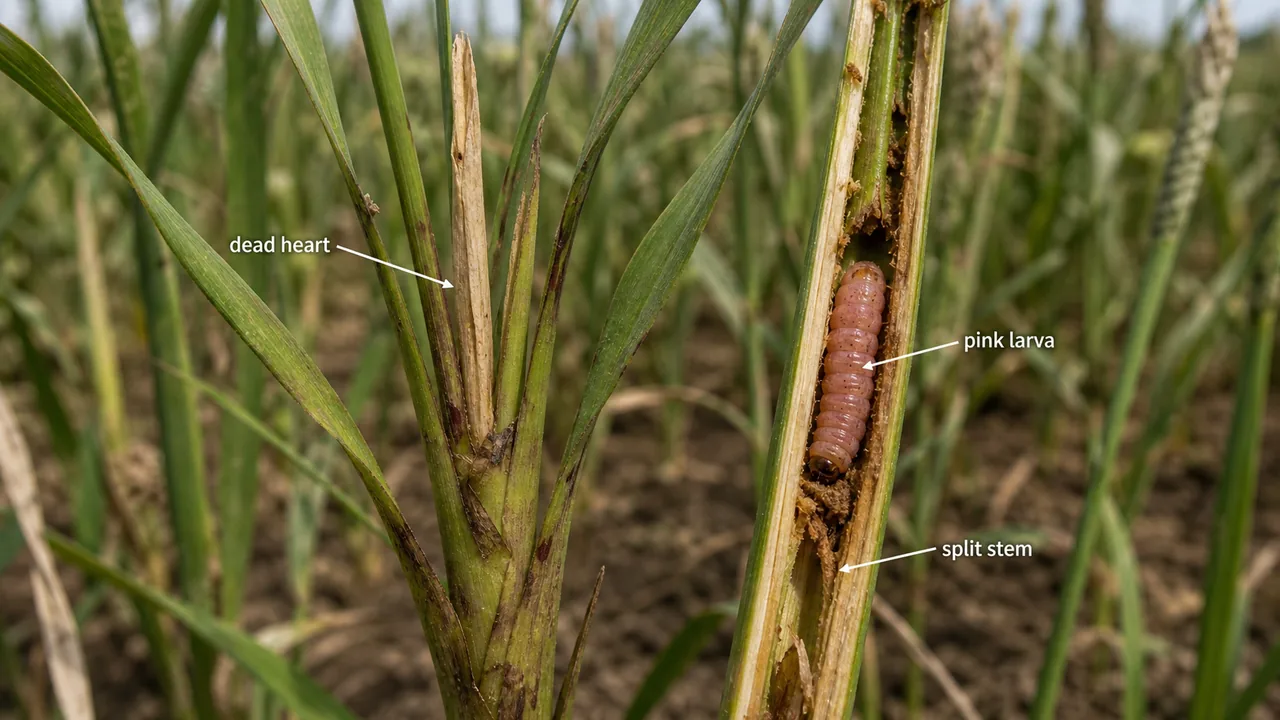
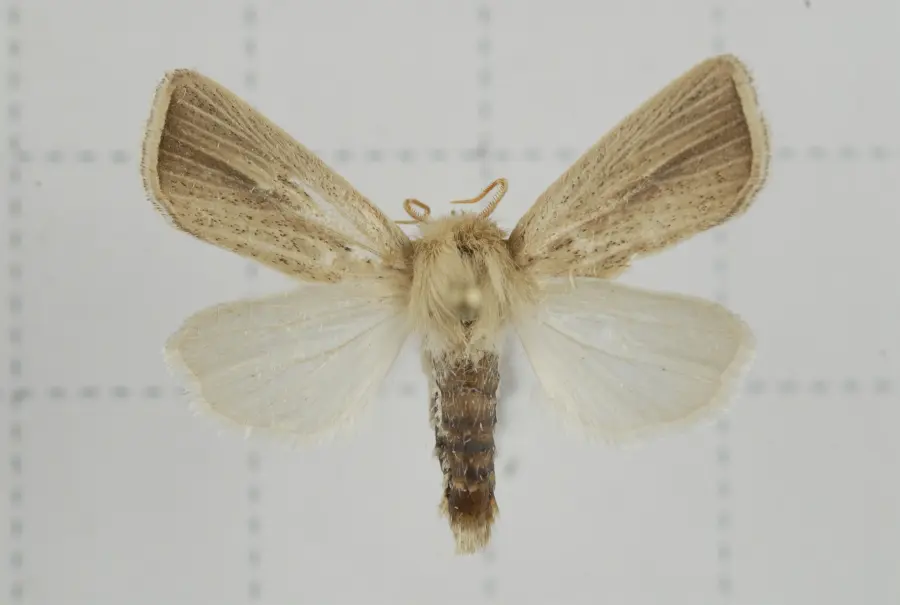
Family: Noctuidae | Order: Lepidoptera
IMPORTANT
Pink stem borer is the most polyphagous stem borer in Indian agriculture. It attacks rice, sugarcane, maize, sorghum, wheat, pearl millet, finger millet, and barley — more crops than any other borer. In finger millet, it causes the characteristic dead heart symptom.
Damage Symptoms
- The distinctly pink-coloured larva enters the stem and destroys the growing point
- The central shoot dries up — this is the dead heart symptom
- The dead heart can be easily pulled out from the base
- This is the primary diagnostic feature in the field
Cross-Crop Significance
| Crop | Is Sesamia inferens a pest? |
|---|---|
| Rice | Yes (major) |
| Sugarcane | Yes (major) |
| Maize | Yes |
| Sorghum | Yes |
| Wheat | Yes (minor) |
| Pearl millet | Yes |
| Finger millet | Yes |
| Barley | Yes |
TIP
Sesamia inferens is called the "pink" stem borer because the larva has a distinctly pink body. Mnemonic: "Sesamia = Salmon pink larva." It is the most widely distributed stem borer across cereals.
2. White Borer — Saluria inficita
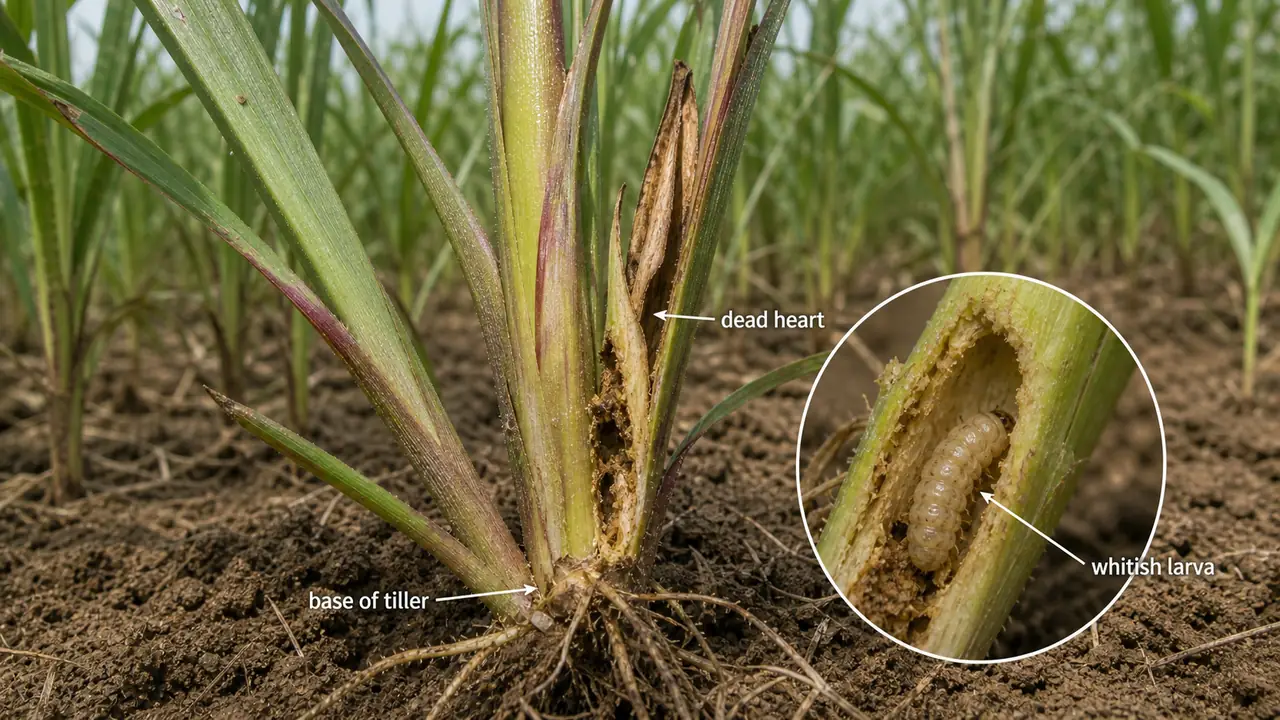
Family: Phycitidae | Order: Lepidoptera
Damage Symptoms
- A potential pest on finger millet in South India
- Larva bores into the stem at the base of the tiller close to the soil level
- Causes dead heart similar to pink stem borer
- Damage is concentrated low on the plant, near the ground
How to Distinguish from Pink Stem Borer
NOTE
Both pink stem borer and white borer cause dead heart, but they differ in the point of attack:
| Feature | Pink Stem Borer | White Borer |
|---|---|---|
| Scientific name | Sesamia inferens | Saluria inficita |
| Family | Noctuidae | Phycitidae |
| Larva colour | Pink | Whitish |
| Attack point | Mid-stem and above | Base of tiller near soil |
| Distribution | All India | Primarily South India |
| Host range | All cereals (most polyphagous) | Mainly finger millet |
3. Root Aphid — Tetraneura nigriabdominalis
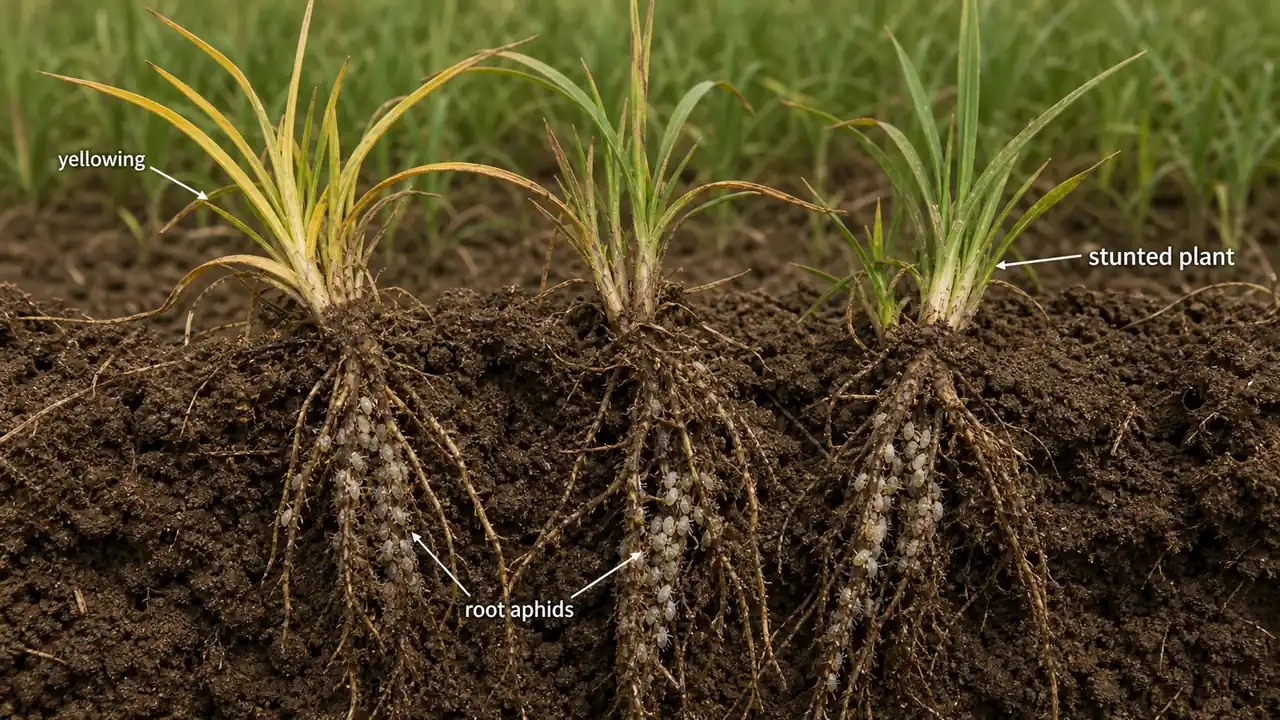
Family: Aphididae | Order: Hemiptera
Root aphids are unusual because they feed underground on the roots, unlike most aphids that colonise above-ground parts.
Damage Symptoms
- Feeds on the roots of finger millet
- Infested plants show yellowing and stunted growth
- Colonies of whitish aphids can be found on roots when plants are carefully uprooted
- More common in dry conditions when soil moisture is low
Agricultural context: Root aphid infestation in ragi is often misdiagnosed as nutrient deficiency because the above-ground symptoms (yellowing, stunting) look similar. The key diagnostic step is to carefully uproot a few stunted plants and examine the roots for aphid colonies — they appear as small, whitish clusters clinging to the root surface.
TIP
Most aphids feed above ground, but Tetraneura nigriabdominalis feeds below ground on roots. This underground feeding habit makes it unusual among aphids and is a potential exam distinction.
4. Cut Worm — Spodoptera exigua
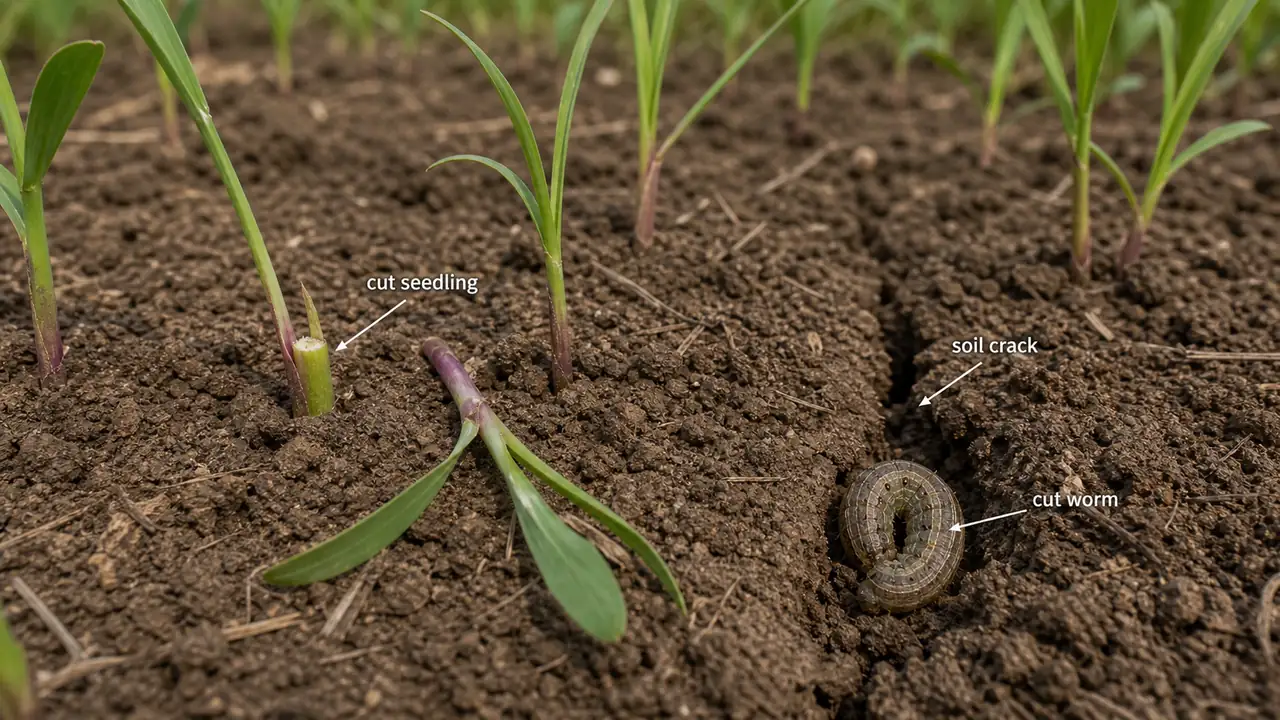
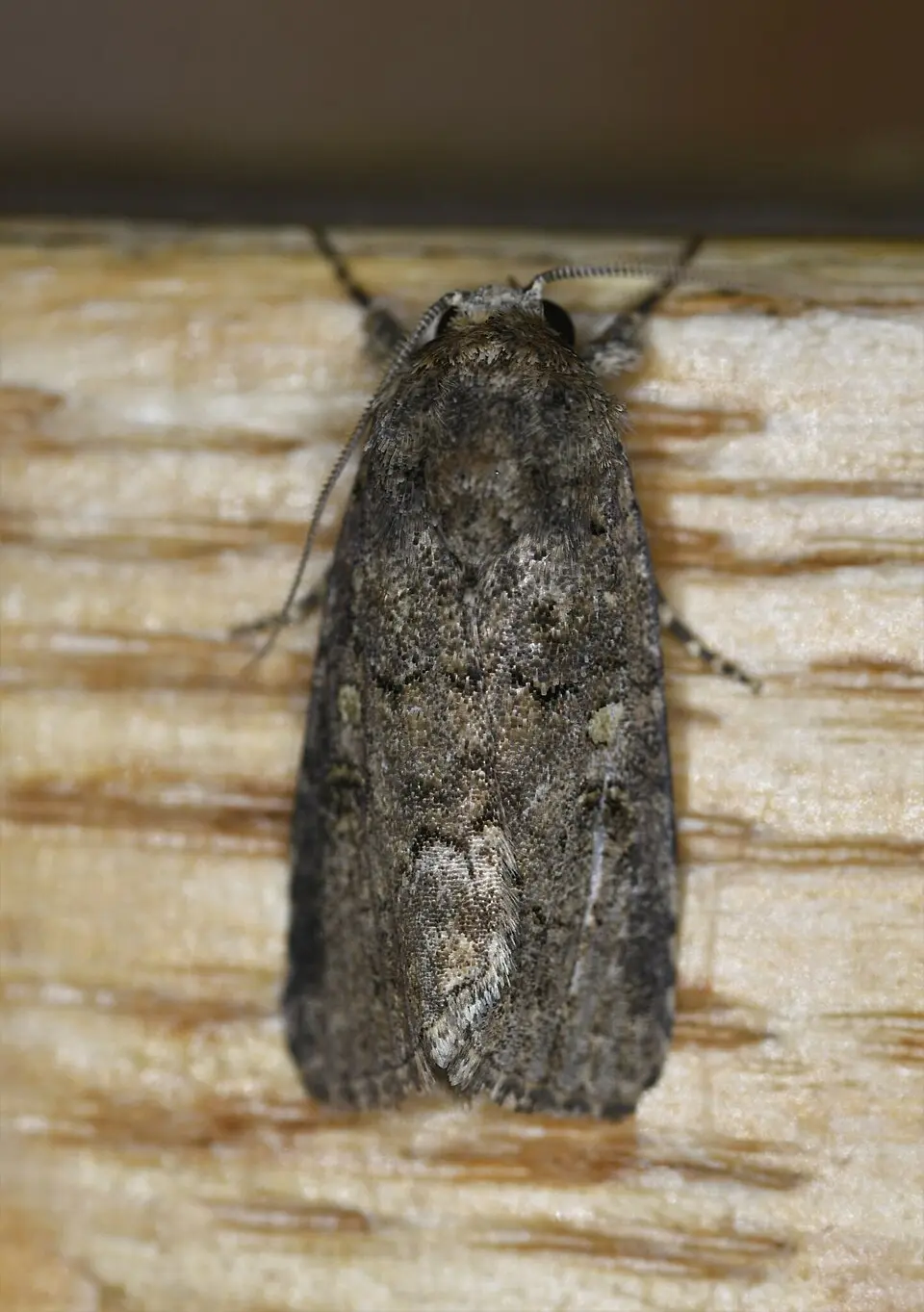
Family: Noctuidae | Order: Lepidoptera
Damage Symptoms
- Larvae are nocturnal feeders — they emerge from soil at night
- They cut young seedlings at the base during the night
- During daytime, larvae hide in soil cracks near the base of plants
- Can cause significant damage in nurseries and newly transplanted fields
- The characteristic morning discovery: seedlings found fallen with stems cleanly cut
NOTE
The cut worm of finger millet (Spodoptera exigua) is different from the gram cut worm (Agrotis ipsilon). Both are nocturnal and cut seedlings at the base, but they are different species. Spodoptera exigua is also called the beet armyworm in international literature.
5. White Grub — Holotrichia consanguinea (National Pest)
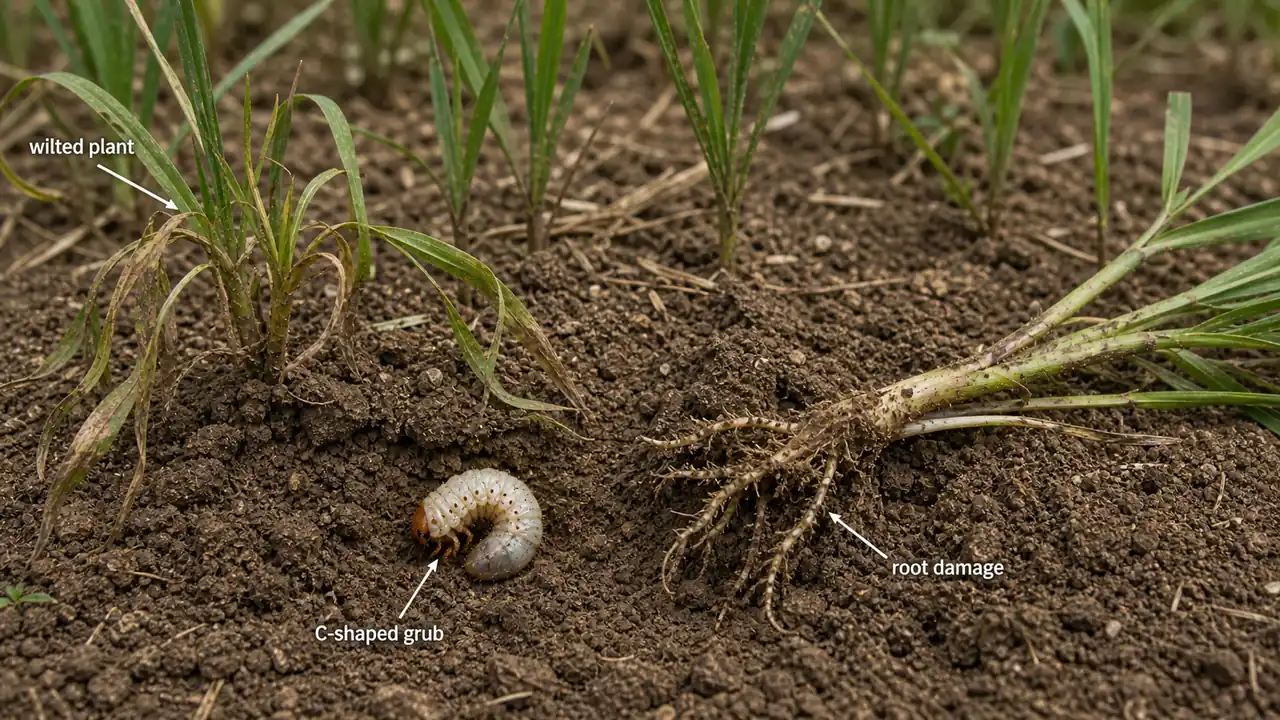
Family: Melolonthidae | Order: Coleoptera
IMPORTANT
White grub is designated as a National Pest of India. It attacks the roots of finger millet and a vast range of other kharif crops. This is one of the most frequently tested facts in all agricultural exams.
Host range: Groundnut, bajra, jowar, sesame, cotton, sugarcane, finger millet, vegetables — feeds on all kharif vegetation.
Damage Symptoms
- Grubs damage roots in field crops; adults damage leaves on trees — a dual-damage pattern
- Grubs are 'C' shaped, whitish yellow, found near the base of plant clumps
- Affected plants wilt, turn yellow, and finally dry out
- Plants come off easily when pulled (root system is destroyed)
- Sometimes resowing is required due to severity of damage
- Adults are dark brown beetles, attracted to neem trees during monsoon for mating
Management
| Method | Details |
|---|---|
| Light traps | Attract and destroy adult beetles at night |
| Summer ploughing | Exposes pupae to sun and predators |
| Phorate 10G | Soil-applied granular insecticide |
| Beetle collection | Collect adults from neem, Ailanthus, and Acacia trees at dusk |
| Adequate irrigation | Moist soil reduces grub activity |
TIP
White grub key facts — the "National Pest toolkit":
- Designation: National Pest of India
- Body: 'C' shaped, whitish yellow grub
- Damage: Grubs below (roots), beetles above (tree leaves)
- Attraction: Adults fly to neem trees during monsoon
- Chemical: Phorate 10G (soil application)
- Management: Light traps + beetle collection + summer ploughing
Comparison of All Five Finger Millet Pests
| Feature | Pink Stem Borer | White Borer | Root Aphid | Cut Worm | White Grub |
|---|---|---|---|---|---|
| Scientific name | Sesamia inferens | Saluria inficita | Tetraneura nigriabdominalis | Spodoptera exigua | Holotrichia consanguinea |
| Order | Lepidoptera | Lepidoptera | Hemiptera | Lepidoptera | Coleoptera |
| Damaging stage | Pink caterpillar | Whitish caterpillar | Nymphs + adults | Caterpillar | 'C'-shaped grub |
| Plant part | Stem (mid+) | Stem (base) | Roots | Stem base (cuts) | Roots |
| Symptom | Dead heart | Dead heart | Yellowing/stunting | Seedlings fallen | Wilting/drying |
| Time of activity | Day | Day | Continuous | Night | Underground |
| Special status | Most polyphagous borer | South India specific | Underground feeder | Nocturnal | National Pest |
Field Diagnosis: Finger Millet (Ragi) — What's Causing Damage?
Dead heart symptoms?
- Pink larva inside stem? → Pink Stem Borer (S. inferens) — most polyphagous borer; attacks rice, maize, sugarcane too
- Whitish caterpillar at stem base near soil? → White Borer (S. inficita) — South India specific
No dead heart — other symptoms?
- Plants yellowing and stunted, roots have small insects? → Root Aphid (T. nigriabdominalis) — underground feeder; dig up roots to confirm
- Seedlings cut and fallen overnight? → Cutworm (S. exigua) — nocturnal; larvae hide in soil during day
- Plants wilting, C-shaped grubs in soil? → White Grub (H. consanguinea) — National Pest status; Coleoptera
Exam Tips and Mnemonics
TIP
"PWRCW" — The 5 Finger Millet Pests:
- Pink stem borer — Pink larva; dead heart; most polyphagous borer
- White borer — At base near soil; South India; dead heart
- Root aphid — Underground; yellowing; dry conditions
- Cut worm — Nocturnal; cuts seedlings at base
- White grub — National Pest; 'C' shaped; neem; Phorate 10G
Key distinctions for exams:
- Two borers cause dead heart: pink stem borer (mid-stem) vs. white borer (base)
- Only one pest feeds underground on roots: root aphid
- Only one pest is nocturnal: cut worm
- Only one has "National Pest" status: white grub
Summary Cheat Sheet
| Concept / Topic | Key Details |
|---|---|
| Pink larva causing dead heart | Sesamia inferens (Pink stem borer) — Noctuidae; distinctly pink body |
| Most polyphagous stem borer | Sesamia inferens — attacks 8+ cereal crops (rice, sugarcane, maize, sorghum, wheat, pearl millet, finger millet, barley) |
| Bores at base of tiller near soil | Saluria inficita (White borer) — Phycitidae; whitish larva |
| White borer region | South India (primarily finger millet) |
| Root-feeding aphid | Tetraneura nigriabdominalis — Aphididae; feeds underground on roots |
| Root aphid diagnostic | Yellowing + stunting; whitish aphid colonies on roots; worse in dry conditions |
| Nocturnal pest cutting seedlings | Spodoptera exigua (Cut worm) — also called beet armyworm |
| National Pest of India | Holotrichia consanguinea (White grub) — Melolonthidae; Coleoptera |
| White grub body shape | 'C' shaped, whitish yellow |
| White grub dual damage | Grubs damage roots (below ground); adults damage tree leaves (above ground) |
| White grub adults attracted to | Neem trees during monsoon for mating |
| Soil insecticide for white grub | Phorate 10G (soil application) |