🍅 Tomato & Brinjal Pests: Fruit Borer, Shoot Borer, Whitefly Vectors & Key Identification
Complete guide to pests of tomato and brinjal — Helicoverpa fruit borer, serpentine leaf miner, Bemisia whitefly (leaf curl vector), Leucinodes shoot borer (most serious brinjal pest), hadda beetle, and brown leafhopper (little leaf vector). With comparison tables, IPM, and exam mnemonics.
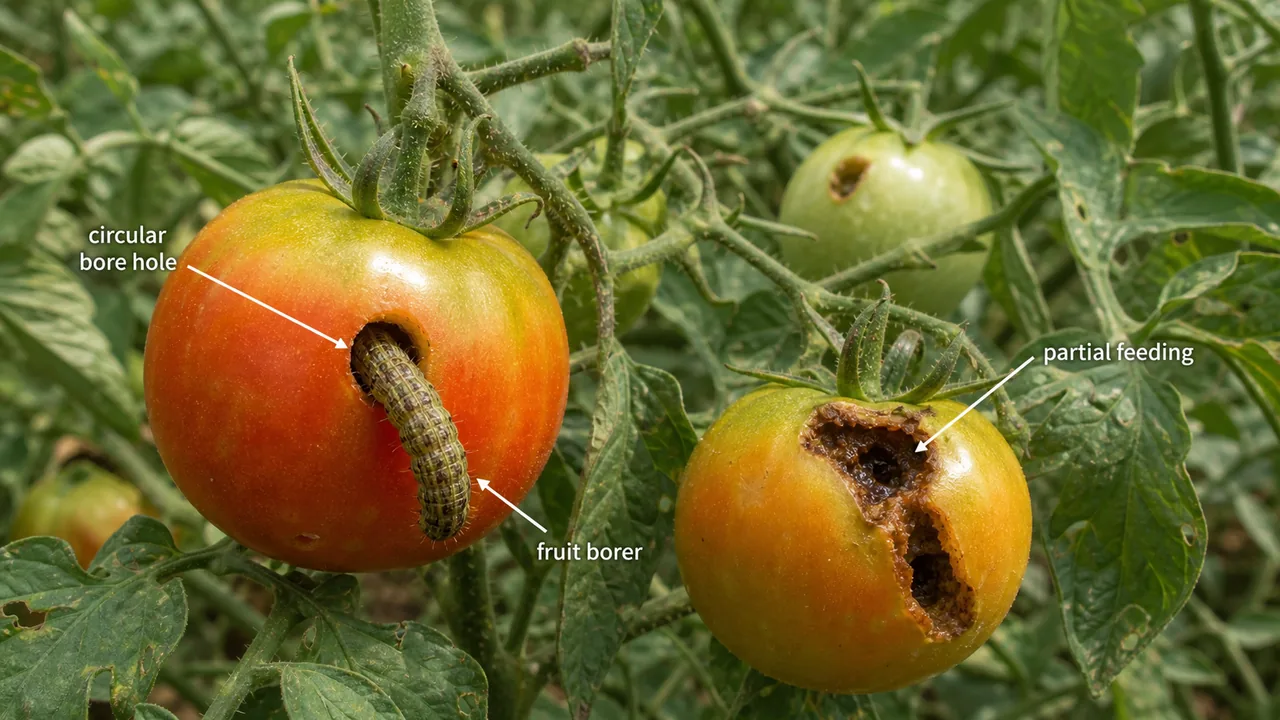
Field scenario: A tomato farmer in Kolar (Karnataka) finds circular holes on his ripening fruits with a fat, greenish caterpillar partially inside — the infamous tomato fruit borer (Helicoverpa armigera), the same pest that devastates cotton as the American bollworm and chickpea as the gram pod borer. Meanwhile, his neighbour's brinjal field tells a different story: terminal shoots are wilting one by one, and bore holes plugged with excreta dot the fruits — the work of the brinjal shoot and fruit borer (Leucinodes orbonalis), the single most serious pest of brinjal in India.
Tomato and brinjal are both solanaceous crops, so they share several pests (whitefly, thrips, Spodoptera). However, each crop also has its signature pest. For tomato, it is Helicoverpa armigera; for brinjal, it is Leucinodes orbonalis. This lesson covers all major pests of both crops, with special attention to the pest-vector-disease relationships that examiners love to test.
Pro Content Locked
Upgrade to Pro to access this lesson and all other premium content.
Charged once for one year · ₹1188 total
Save ₹100/month vs ₹2388/year launch price
- All Agriculture & Banking Courses
- AI Lesson Questions (100/day)
- AI Doubt Solver (50/day)
- Glows & Grows Feedback (30/day)
- AI Section Quiz (20/day)
- 22-Language Translation (100/day)
- Recall Questions (20/day)
- AI Quiz (15/day)
- AI Quiz Paper Analysis (100/day)
- AI Step-by-Step Explanations (100/day)
- Spaced Repetition Recall (FSRS)
- AI Tutor
- Immersive Text Questions
- Audio Lessons — Hindi & English
- Mock Tests & Previous Year Papers
- Summary & Mind Maps
- XP, Levels, Leaderboard & Badges
- Generate New Classrooms
- Voice AI Teacher (AgriDots Live)
- AI Revision Assistant
- Knowledge Gap Analysis
- Interactive Revision (LangGraph)
🔒 Secure one-time yearly payment via Razorpay · No hidden fees
Field scenario: A tomato farmer in Kolar (Karnataka) finds circular holes on his ripening fruits with a fat, greenish caterpillar partially inside — the infamous tomato fruit borer (Helicoverpa armigera), the same pest that devastates cotton as the American bollworm and chickpea as the gram pod borer. Meanwhile, his neighbour's brinjal field tells a different story: terminal shoots are wilting one by one, and bore holes plugged with excreta dot the fruits — the work of the brinjal shoot and fruit borer (Leucinodes orbonalis), the single most serious pest of brinjal in India.
Tomato and brinjal are both solanaceous crops, so they share several pests (whitefly, thrips, Spodoptera). However, each crop also has its signature pest. For tomato, it is Helicoverpa armigera; for brinjal, it is Leucinodes orbonalis. This lesson covers all major pests of both crops, with special attention to the pest-vector-disease relationships that examiners love to test.
How This Lesson Is Organised
We cover tomato pests first (6 pests), then brinjal pests (4 pests). Within each crop, pests are arranged from the most exam-important to the least. We end with a unified vector-disease comparison table that brings together the key relationships across both crops.
Tomato Pests
Classification Table — Tomato
| No. | Common Name | Scientific Name | Family: Order | Key Feature |
|---|---|---|---|---|
| 1 | Fruit Borer | Helicoverpa armigera | Noctuidae: Lepidoptera | Circular bore holes in fruits |
| 2 | Serpentine Leaf Miner | Liriomyza trifolii | Agromyzidae: Diptera | Winding mines on leaves |
| 3 | Leaf Eating Caterpillar | Spodoptera litura | Noctuidae: Lepidoptera | Scrapes and defoliates leaves |
| 4 | Whitefly | Bemisia tabaci | Aleyrodidae: Hemiptera | Vector of tomato leaf curl |
| 5 | Thrips | Thrips tabaci, Frankliniella spp. | Thripidae: Thysanoptera | Vector of spotted wilt virus |
| 6 | Striped Mealybug | Ferrisia virgata | Pseudococcidae: Hemiptera | Cottony masses, stunted growth |
1. Tomato Fruit Borer — Helicoverpa armigera (Noctuidae: Lepidoptera)
IMPORTANT
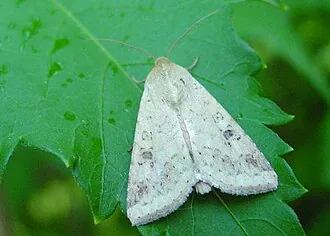
Helicoverpa armigera is a highly polyphagous pest attacking tomato, cotton, chickpea, pigeon pea, okra, and many other crops. It goes by different common names depending on the crop: tomato fruit borer, American bollworm (cotton), and gram pod borer (chickpea/pigeon pea). It is the noctuid common to both pigeonpea and chickpea — the same species causes major losses in cotton, pulses, and vegetable crops across India (100+ hosts).
Agricultural context: In the Kolar-Chikkaballapur tomato belt of Karnataka, Helicoverpa causes losses of 30-40% in some seasons. The pest is especially difficult to manage because its head remains outside the fruit while it feeds — it "tastes" many fruits, increasing damage proportionally.
Damage Symptoms
- Young larvae feed on tender foliage
- Mature larvae bore circular holes in fruits
- Larva thrusts only a part of its body into the fruit and eats the inner content
- A single larva can damage 5-8 fruits by partial feeding
- Leads to significant yield and quality loss
Same Pest, Different Names
| Crop | Common Name |
|---|---|
| Tomato | Tomato Fruit Borer |
| Cotton | American Bollworm |
| Chickpea / Pigeon pea | Gram Pod Borer |
| Okra | Bhendi Fruit Borer |
| Tobacco | Tobacco Budworm |
Management
- Use marigold as trap crop — ideal trap crop for tomato fruit borer
- Install pheromone traps (Helilure) for monitoring and mass trapping
- Spray NPV (Nuclear Polyhedrosis Virus) — HaNPV is the most effective biocontrol agent
- Release Trichogramma chilonis egg parasitoid
- Apply recommended insecticides at ETL (Economic Threshold Level)
- Helicoverpa armigera shows cannibalism — typically only one larva per fruit
TIP
Exam mnemonic: "Helicoverpa Has Hundreds of hosts" — remember it is one of the most polyphagous pests. The trap crop for tomato fruit borer is marigold. NPV (HaNPV) is the biocontrol of choice.
2. Serpentine Leaf Miner — Liriomyza trifolii (Agromyzidae: Diptera)
Host range: Tomato, beans, peas, chrysanthemum, gerbera, and many vegetables and ornamentals
Damage Symptoms
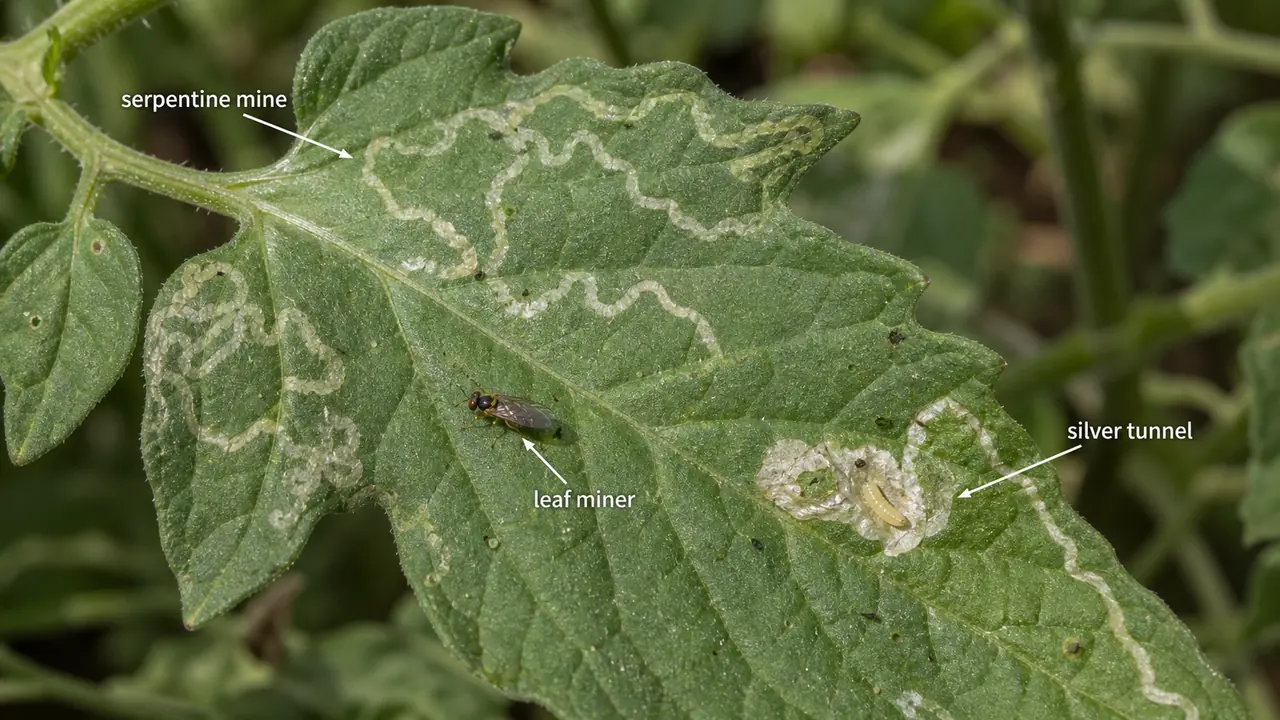
- Leaves show serpentine (winding) mines — irregular, silvery tunnels
- Drying and dropping of affected leaves
- Severe infestation reduces photosynthetic area, stunting the plant
- The tiny maggot feeds between the upper and lower leaf epidermis
Management
- Remove and destroy heavily mined leaves
- Spray neem oil or neem seed kernel extract (NSKE 5%)
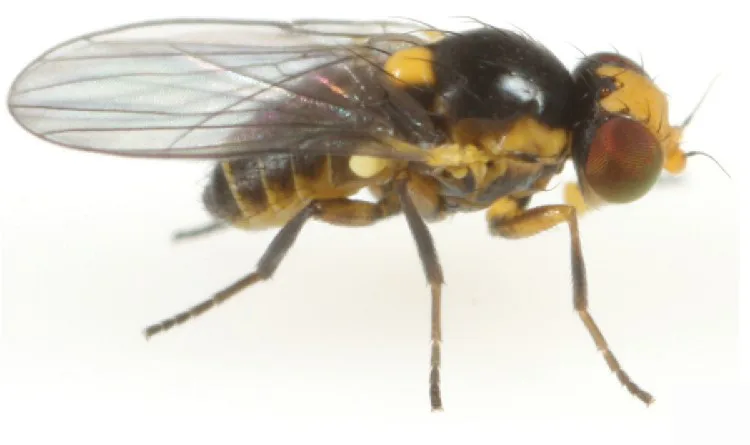
- Use yellow sticky traps to capture adult flies
- Avoid excessive nitrogen fertilisation (promotes succulent growth favoured by the miner)
3. Leaf Eating Caterpillar (Tobacco Cutworm) — Spodoptera litura (Noctuidae: Lepidoptera)
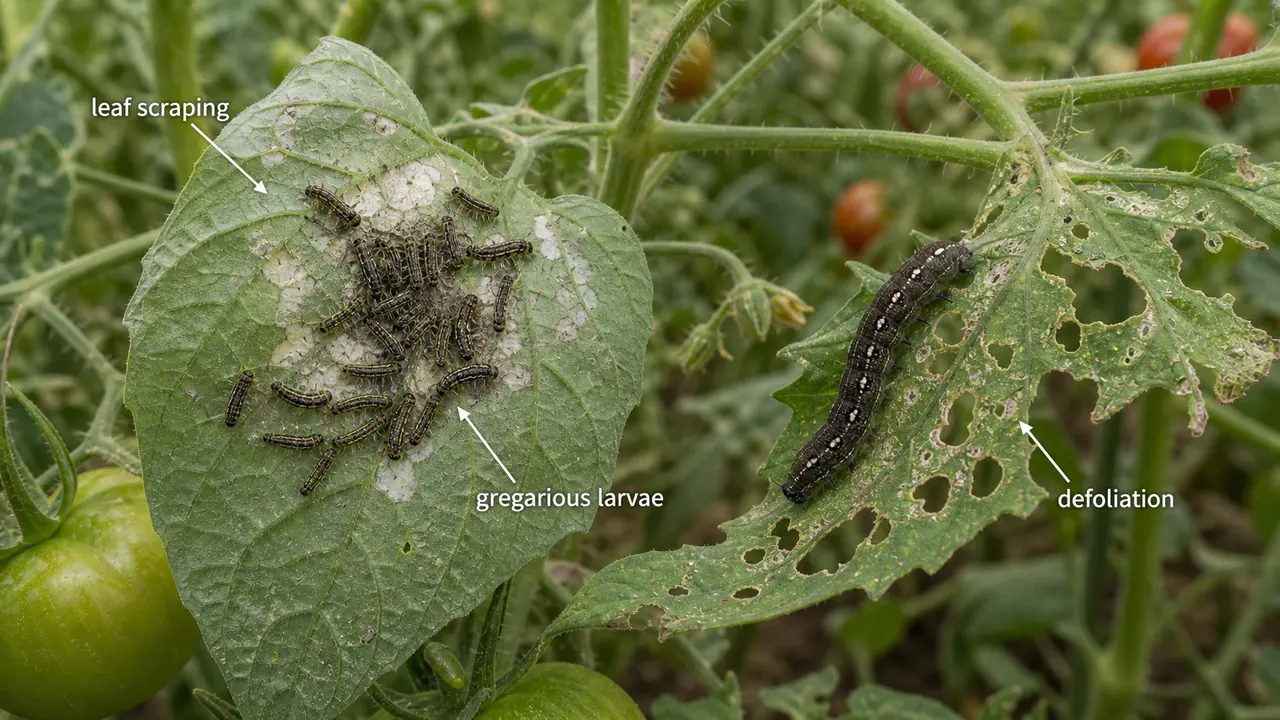
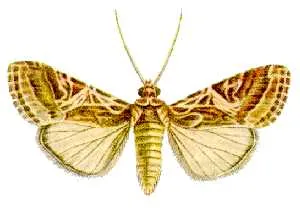
Host range: Tomato, chilli, tobacco, groundnut, cotton, and many other crops — highly polyphagous
Damage Symptoms
- Young larvae scrape leaves on the ventral surface, giving a papery white appearance
- Grown-up caterpillars defoliate the crop completely
- Gregarious in early instars; disperse as they grow
Management
- Collect and destroy egg masses (laid in clusters on leaf undersurface)
- Spray SlNPV (Spodoptera litura NPV)
- Use pheromone traps (Spodolure)
- Poison baiting: rice bran + jaggery + carbaryl (applied in the evening)
4. Whitefly — Bemisia tabaci (Aleyrodidae: Hemiptera)
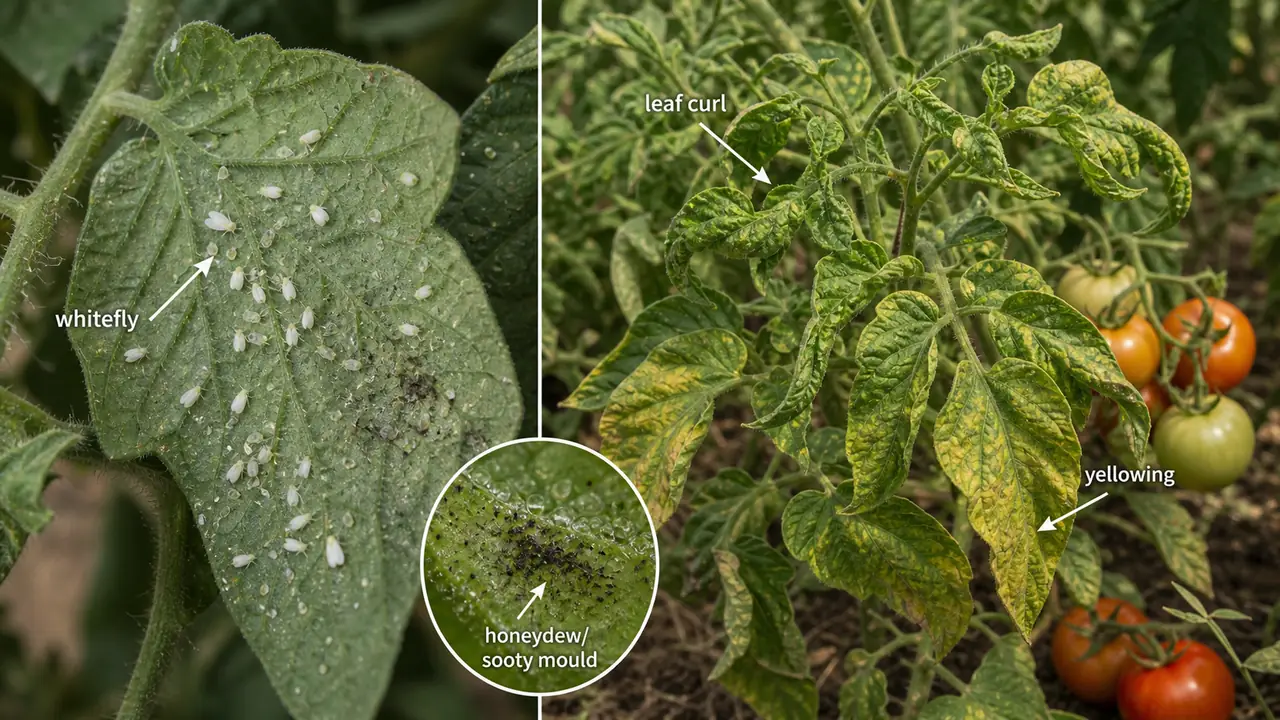
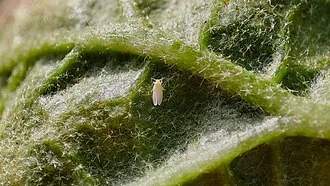
IMPORTANT
Bemisia tabaci is the vector of Tomato Leaf Curl Disease (ToLCD) and Yellow Mosaic Virus. It is one of the most important insect vectors in Indian agriculture, transmitting viral diseases across tomato, chilli, okra, cotton, and many other crops.
Damage Symptoms
- Chlorotic spots on leaves
- Yellowing of foliage
- Downward curling and drying of leaves (in leaf curl disease)
- Development of sooty mould on honeydew secretion
Diseases Transmitted by Bemisia tabaci
| Disease | Crop |
|---|---|
| Tomato Leaf Curl Disease (ToLCD) | Tomato |
| Yellow Mosaic Virus (YMV) | Mung bean, soybean |
| Yellow Vein Mosaic Virus (YVMV) | Okra |
| Chilli Mosaic Virus | Chilli |
| Cotton Leaf Curl Virus | Cotton |
Management
- Grow resistant/tolerant varieties
- Use yellow sticky traps for monitoring
- Spray imidacloprid 17.8 SL or thiamethoxam 25 WG
- Remove virus-infected plants promptly to reduce inoculum
- Use reflective silver mulch to repel whiteflies
5. Thrips — Thrips tabaci, Frankliniella spp. (Thripidae: Thysanoptera)
IMPORTANT
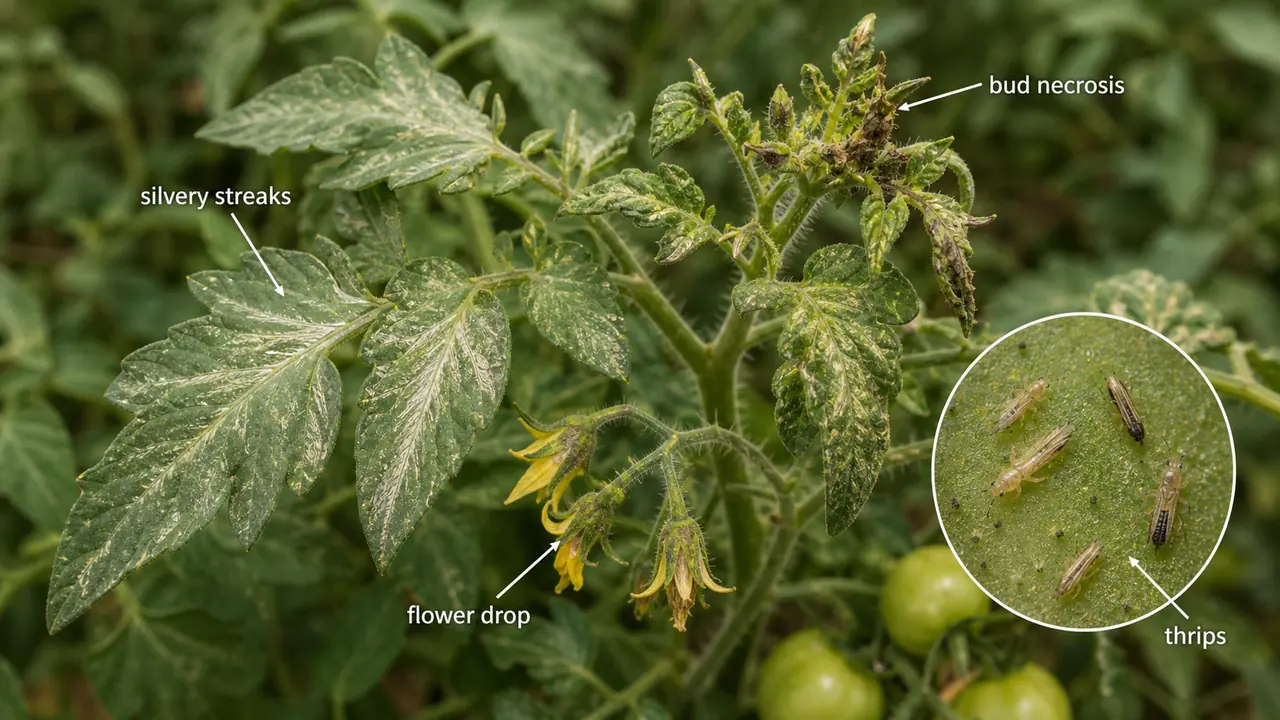
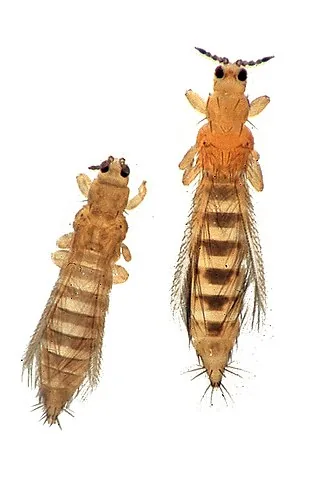
Thrips are the vector of Tomato Spotted Wilt Virus (TSWV). An anatomical fact: the right mandible is absent in thrips (asymmetrical mouthparts). Thrips also transmit Bud Necrosis in groundnut.
WARNING
Common exam trap — Bud Necrosis vectors:
- Groundnut Bud Necrosis (TSWV) → vector = Thrips (NOT aphids)
- Watermelon/Muskmelon Bud Necrosis → vector = Aphids
These are frequently confused. Thrips = groundnut bud necrosis; Aphids = cucurbit bud necrosis.
Damage Symptoms
- Silvery streaks on leaf surface
- Premature dropping of flowers
- Bud necrosis — growing tip turns brown and dies
Management
- Spray fipronil or spinosad
- Use blue sticky traps for monitoring
- Maintain proper irrigation — thrips thrive in dry conditions
6. Striped Mealybug — Ferrisia virgata (Pseudococcidae: Hemiptera)
Damage Symptoms
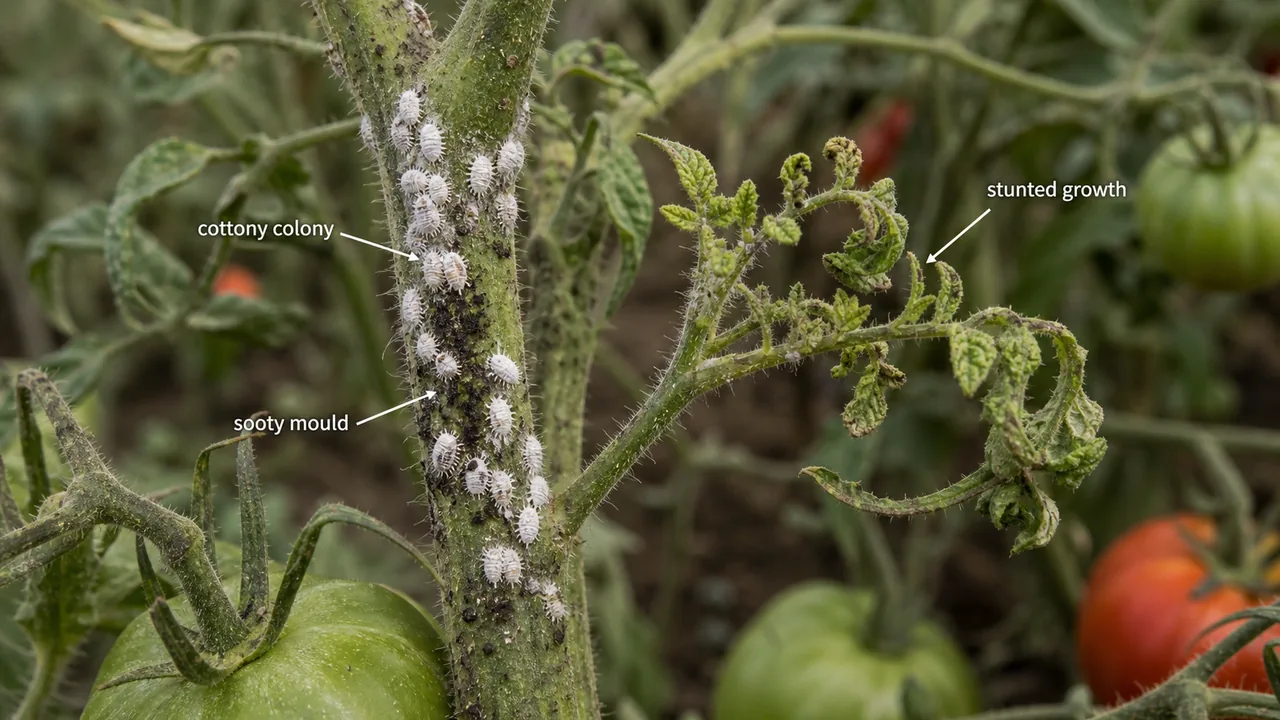
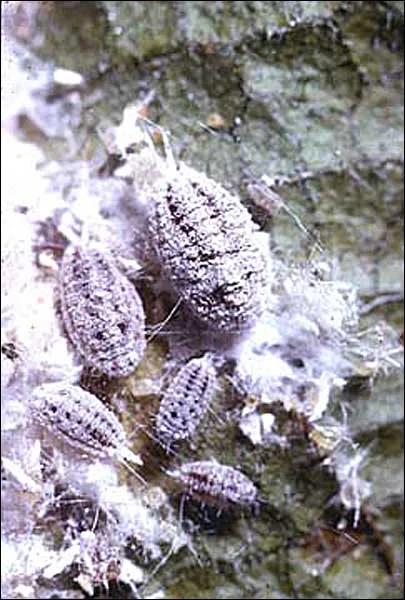
- Presence of white, cottony mealy bugs on leaves and twigs
- Stunted growth of plants
- Honeydew secretion leading to sooty mould development
Management
- Release Cryptolaemus montrouzieri (Australian ladybird beetle)
- Spray fish oil rosin soap (25 g/L)
- Remove and destroy heavily infested plant parts
Brinjal (Eggplant) Pests
Classification Table — Brinjal
| No. | Common Name | Scientific Name | Family: Order | Key Feature |
|---|---|---|---|---|
| 1 | Shoot and Fruit Borer | Leucinodes orbonalis | Pyralidae: Lepidoptera | Dead hearts + bore holes in fruits |
| 2 | Stem Borer | Euzophera perticella | Pyralidae: Lepidoptera | Drooping shoots, stunted plants |
| 3 | Hadda Beetle | Henosepilachna vigintioctopunctata | Coccinellidae: Coleoptera | Scraping of chlorophyll |
| 4 | Brown Leaf Hopper | Cestius phycitis | Cicadellidae: Hemiptera | Vector of Little Leaf disease |
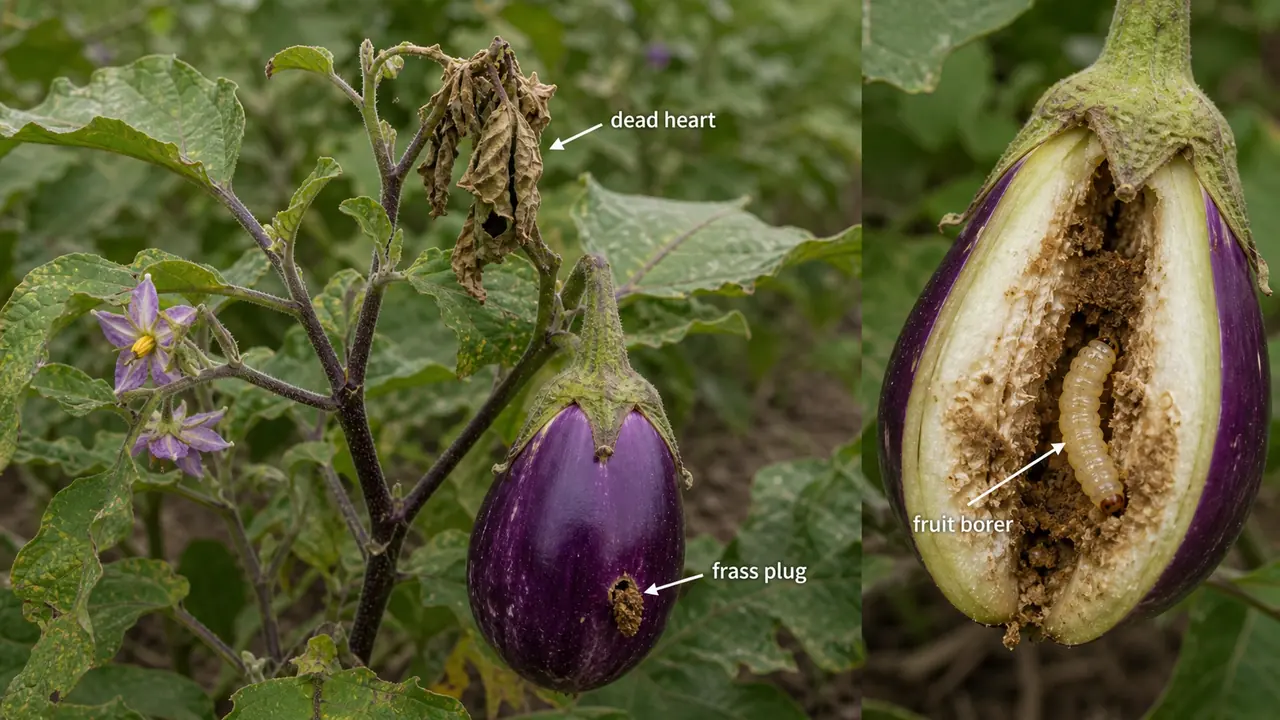
1. Brinjal Shoot and Fruit Borer — Leucinodes orbonalis (Pyralidae: Lepidoptera)

IMPORTANT
Leucinodes orbonalis is the most serious pest of brinjal in India. It attacks both vegetative shoots (causing dead hearts) and fruits (making them unmarketable). Losses can reach 70-90% in unprotected fields.
Agricultural context: In almost every brinjal market in India, buyers check for bore holes — fruits with even a single bore hole are rejected. This single pest is the reason why brinjal is one of the most heavily sprayed vegetables in India.
Damage Symptoms
- Withering of terminal shoots / dead hearts (vegetative stage damage)
- Bore holes on shoots and fruits plugged with excreta
- Shedding of flower buds
- Withering and drying of leaves around bore sites
- Fruits become unfit for consumption due to internal feeding and frass
Comparison: Shoot and Fruit Borers Across Crops
| Crop | Pest | Scientific Name | Family |
|---|---|---|---|
| Brinjal | Shoot and Fruit Borer | Leucinodes orbonalis | Pyralidae |
| Okra | Shoot and Fruit Borer | Earias vittella, E. insulana | Noctuidae |
| Cotton | Spotted Bollworm | Earias vittella, E. insulana | Noctuidae |
Management
- Remove and destroy affected shoots and fruits regularly
- Use pheromone traps for monitoring
- Spray recommended insecticides during the non-fruiting (vegetative) stage
- Avoid spraying during fruiting to prevent residues — use Bt formulations instead
- Grow resistant varieties where available
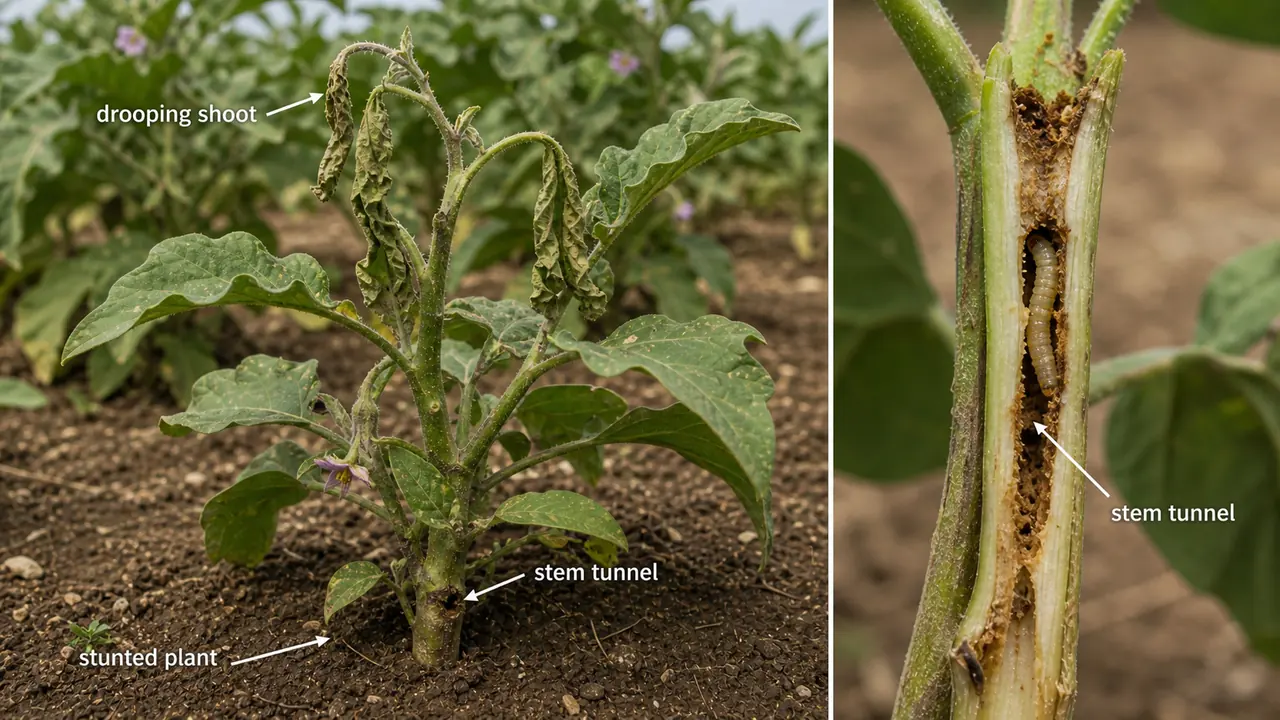
2. Brinjal Stem Borer — Euzophera perticella (Pyralidae: Lepidoptera)
Damage Symptoms
- Top shoots of young plants droop and wither
- Older plants become stunted
- Fruit bearing is severely affected
- Larva bores into the stem near the base
Management
- Remove and destroy wilted shoots
- Apply carbofuran 3G in the soil near plant base
- Practice crop rotation
3. Hadda Beetle / Spotted Beetle — Henosepilachna vigintioctopunctata (Coccinellidae: Coleoptera)
IMPORTANT
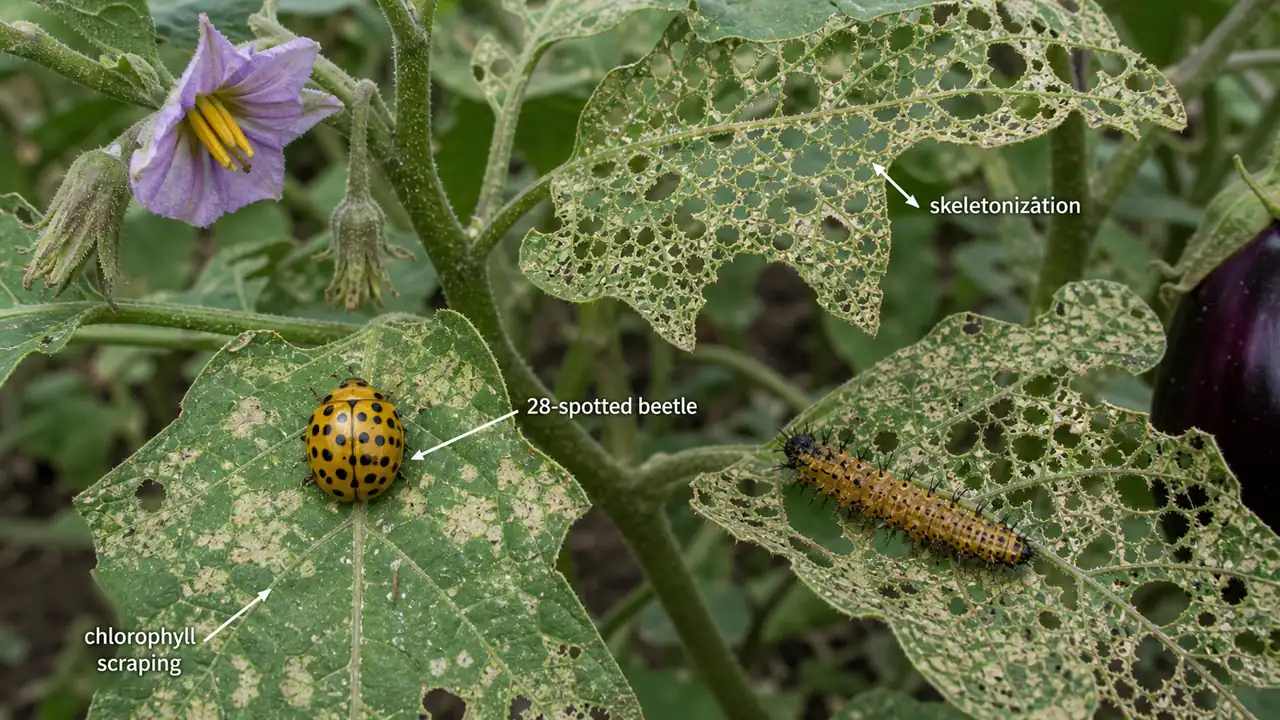
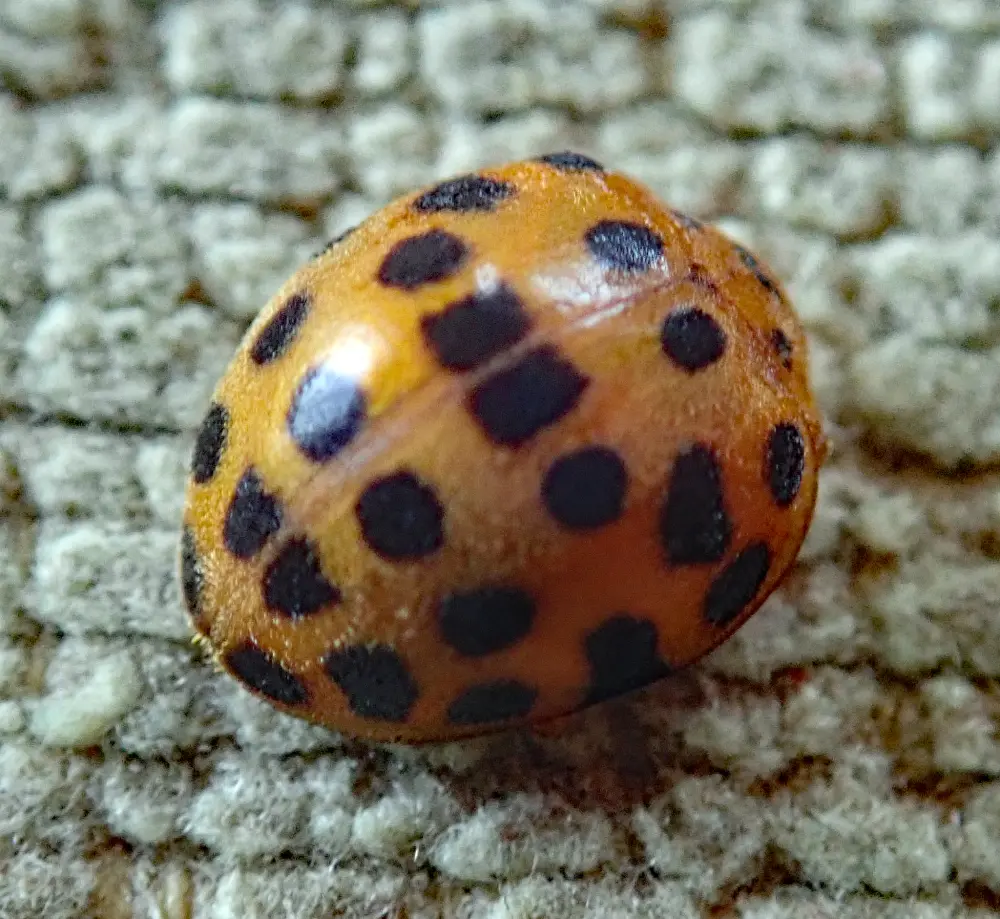
Hadda beetle is one of the few phytophagous (plant-feeding) Coccinellidae — most ladybird beetles are predators. It has 28 spots on its elytra (hence "vigintioctopunctata" = 28-spotted).
Damage Symptoms
- Scraping of chlorophyll from leaves, leaving behind a network of veins
- Skeletonisation and drying of leaves
- Both grubs and adults cause damage (unusual — in most beetles, only one stage is damaging)
Important Exam Distinction
| Damage Pattern on Brinjal | Pest Responsible |
|---|---|
| Chlorophyll scraping + skeletonisation | Henosepilachna vigintioctopunctata (Hadda beetle) |
| Half-moon shaped scrapings | Myllocerus sp. (ash weevil) — NOT Hadda beetle |
NOTE
Half-moon shaped scrapings on brinjal leaves are caused by Myllocerus sp. (weevil), not hadda beetle. This distinction is a common exam trap.
Management
- Hand-pick adults and grubs
- Spray carbaryl 50 WP (2 g/L)
- Use neem-based formulations
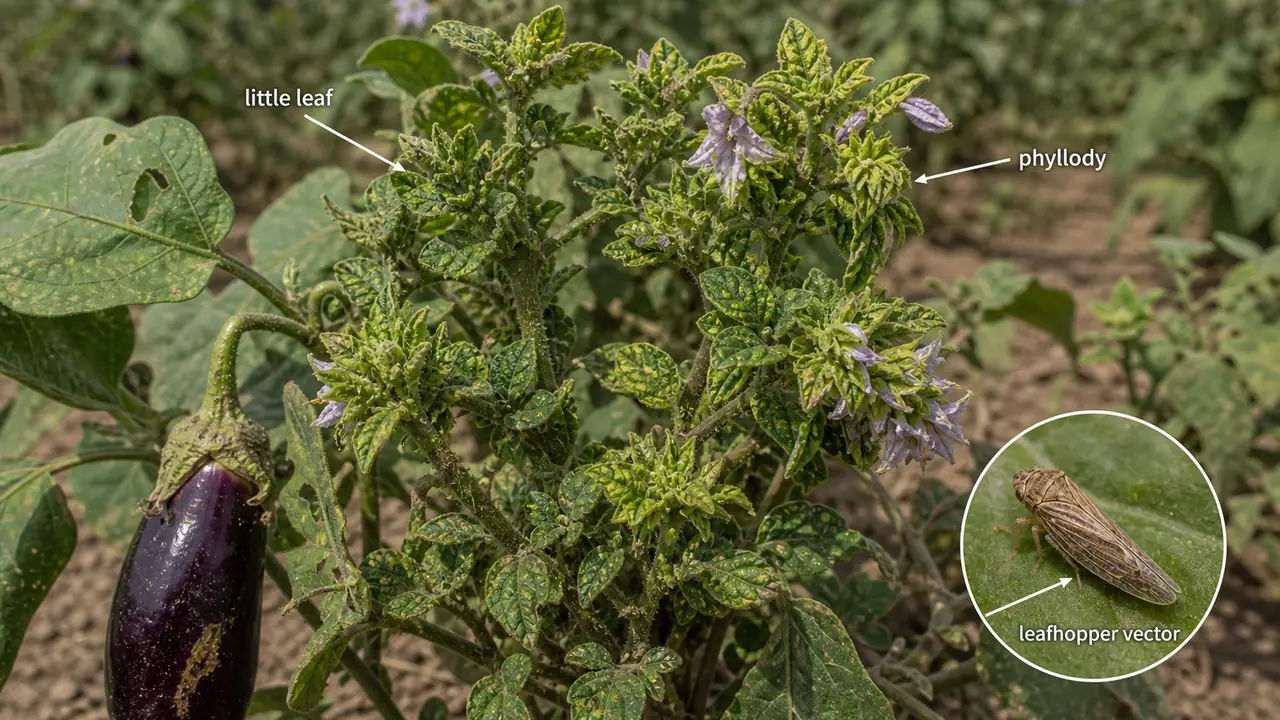
4. Brown Leaf Hopper — Cestius phycitis (Cicadellidae: Hemiptera)
IMPORTANT
Cestius phycitis is the vector of Little Leaf of Brinjal, a phytoplasma disease. The disease causes phyllody — conversion of floral parts into leafy structures. This vector-disease relationship is a high-frequency exam question.
Damage Symptoms
- Reduction in size of leaves
- Shortened petioles
- Excessive growth of branches — general stunting of plants
- Conversion of floral parts into leafy structures (phyllody)
- Plants become bushy; fruiting is rare or absent
- Infected plants look like witches' brooms
Phytoplasma Disease Comparison
| Disease | Crop | Vector | Key Symptom |
|---|---|---|---|
| Little Leaf | Brinjal | Cestius phycitis (leafhopper) | Phyllody, bushy growth |
| Grassy Shoot | Sugarcane | Leafhopper | Proliferation of tillers |
| Sesamum Phyllody | Sesamum | Orosius albicinctus (leafhopper) | Phyllody |
Management
- Remove and destroy infected plants immediately
- Spray systemic insecticides to control leafhopper populations
- Use tolerant varieties
- Maintain weed-free fields (weeds harbour leafhoppers)
Comparison: Pest-Vector-Disease Relationships in Tomato and Brinjal
| Pest (Vector) | Disease Transmitted | Crop | Pathogen Type |
|---|---|---|---|
| Bemisia tabaci (Whitefly) | Tomato Leaf Curl Disease (ToLCD) | Tomato | Virus (Begomovirus) |
| Thrips tabaci (Thrips) | Tomato Spotted Wilt Virus (TSWV) | Tomato | Virus (Tospovirus) |
| Cestius phycitis (Leafhopper) | Little Leaf of Brinjal | Brinjal | Phytoplasma |
TIP
Exam mnemonic — "WTL" for solanaceous vectors: Whitefly transmits Leaf Curl, Thrips transmits TSWV, Leafhopper transmits Little Leaf. Three vectors, three diseases, three crops — learn them as a set.
Field Diagnosis: Tomato & Brinjal — What's Attacking?
Step 1: Where is the damage?
Fruit damage:
- Round bore holes in tomato fruits? → Fruit Borer (H. armigera) — larva feeds head-first; check for frass at entry
- Bore holes in brinjal fruits with excreta plugging the hole? → Shoot & Fruit Borer (L. orbonalis) — most serious brinjal pest
Leaf damage:
- Winding serpentine mines on leaves? → Leaf Miner (L. trifolii) — hold leaf up to light, see tunnels
- Leaves scraped/skeletonised, spotted beetles? → Hadda Beetle (H. vigintioctopunctata) — 28-spotted ladybird beetle (a pest, not beneficial!)
- Silvery streaks + distorted buds? → Thrips — check for bud necrosis virus in tomato
Whole plant symptoms:
- Stunted plants with small leaves + phyllody? → Leafhopper (C. phycitis) — vector of Little Leaf (phytoplasma) in brinjal
- Leaf curling + white flies? → Whitefly (B. tabaci) — vector of ToLCD in tomato
Exam Tips and Mnemonics
- Helicoverpa armigera has three famous names: Tomato Fruit Borer, American Bollworm, Gram Pod Borer — all the same pest
- Trap crop for tomato fruit borer = Marigold; Biocontrol = HaNPV
- Right mandible absent in thrips — asymmetrical mouthparts (unique morphological fact)
- Leucinodes orbonalis is the most serious pest of brinjal — look for dead hearts + bore holes plugged with excreta
- Hadda beetle vs. ash weevil: Chlorophyll scraping = hadda beetle; half-moon scrapings = Myllocerus sp.
- Phytophagous Coccinellidae: Hadda beetle (Henosepilachna) feeds on plants — exception to the rule that ladybird beetles are beneficial predators
- Little Leaf = phytoplasma = phyllody — vectored by Cestius phycitis
Summary Cheat Sheet
| No. | Pest | Crop | Scientific Name | Family: Order | Key Exam Fact |
|---|---|---|---|---|---|
| 1 | Fruit Borer | Tomato | Helicoverpa armigera | Noctuidae: Lepidoptera | Polyphagous; circular holes; trap crop = marigold; biocontrol = HaNPV |
| 2 | Serpentine Leaf Miner | Tomato | Liriomyza trifolii | Agromyzidae: Diptera | Winding mines between leaf epidermis; yellow sticky traps |
| 3 | Tobacco Cutworm | Tomato | Spodoptera litura | Noctuidae: Lepidoptera | Papery white leaves (early instar); gregarious; SlNPV |
| 4 | Whitefly | Tomato | Bemisia tabaci | Aleyrodidae: Hemiptera | Vector of ToLCD and YMV; most important sap-sucking vector |
| 5 | Thrips | Tomato | Thrips tabaci | Thripidae: Thysanoptera | Vector of TSWV; right mandible absent; silvery streaks |
| 6 | Mealybug | Tomato | Ferrisia virgata | Pseudococcidae: Hemiptera | Cottony masses; biocontrol = Cryptolaemus montrouzieri |
| 7 | Shoot and Fruit Borer | Brinjal | Leucinodes orbonalis | Pyralidae: Lepidoptera | Most serious brinjal pest; dead hearts + bore holes plugged with excreta |
| 8 | Stem Borer | Brinjal | Euzophera perticella | Pyralidae: Lepidoptera | Drooping top shoots; stunted growth |
| 9 | Hadda Beetle | Brinjal | Henosepilachna vigintioctopunctata | Coccinellidae: Coleoptera | 28 spots; scrapes chlorophyll; phytophagous ladybird (exception) |
| 10 | Brown Leafhopper | Brinjal | Cestius phycitis | Cicadellidae: Hemiptera | Vector of Little Leaf (phytoplasma); phyllody |