🌶 Chilli & Okra Pests: Thrips, Cutworm, Whitefly Vectors & Spotted Bollworm Connection
Complete guide to pests of chilli and okra — chilli thrips (upward curling), tobacco cutworm, Bemisia whitefly (mosaic and YVMV vectors), and okra shoot borer (same as cotton spotted bollworm). With comparison tables, IPM, and exam mnemonics for exams, NABARD & ICAR.
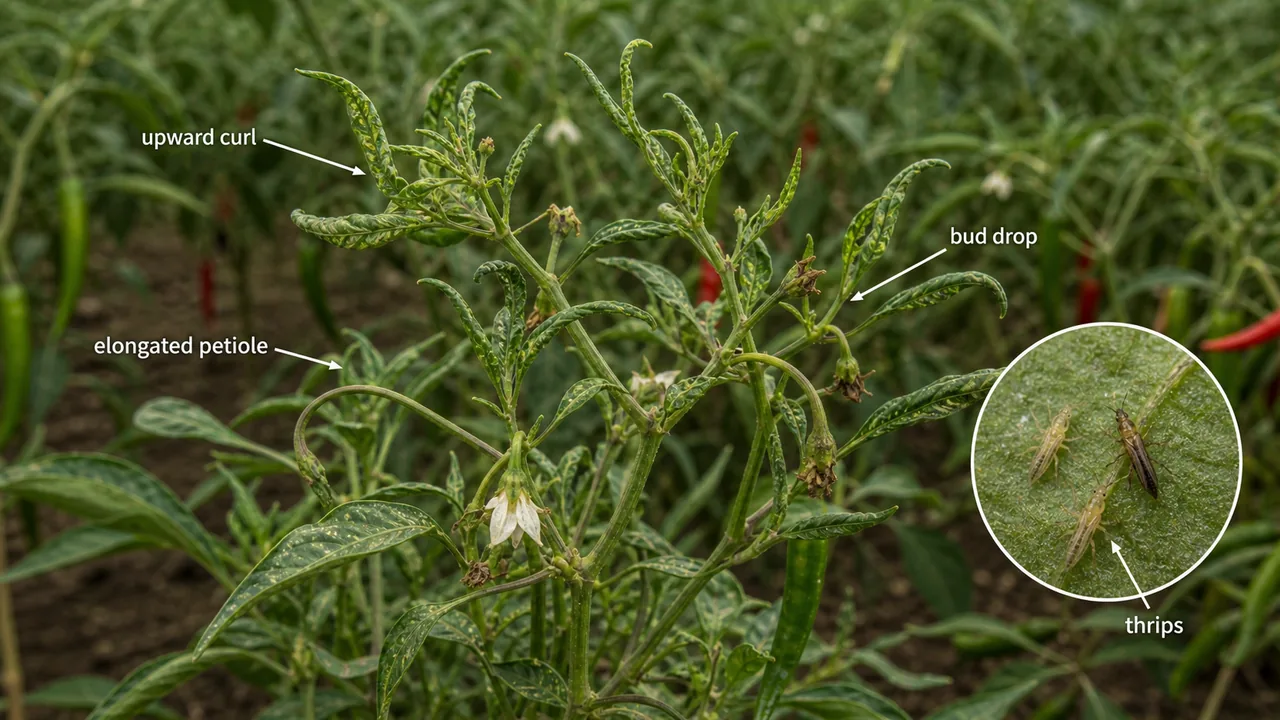
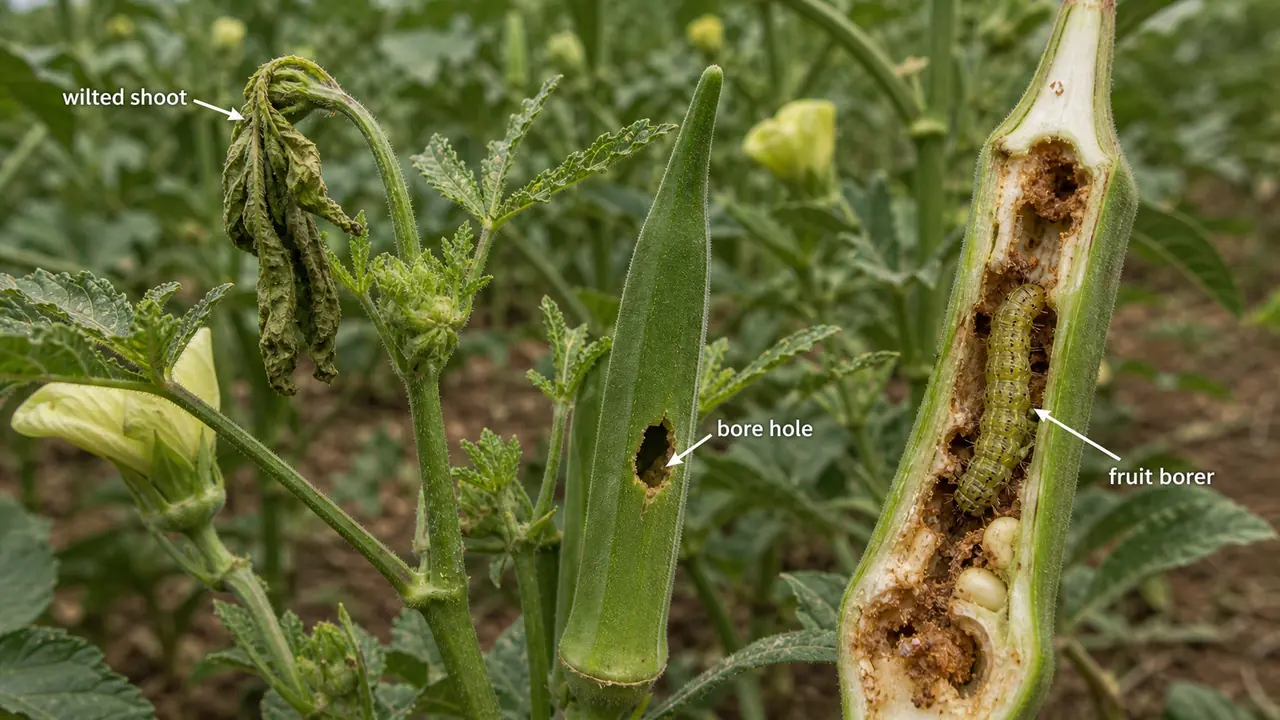
Field scenario: A chilli grower in Guntur (Andhra Pradesh) — India's chilli capital — notices that his plants have severely crinkled leaves curling upward. He fears a virus, but an entomologist explains that the culprit is chilli thrips (Scirtothrips dorsalis), whose feeding causes the distinctive upward curl. Down the road, an okra farmer sees his terminal shoots wilting and drooping. Inside the bore holes, he finds a greenish caterpillar — the okra shoot and fruit borer (Earias vittella) — the same pest that cotton farmers call the spotted bollworm.
Chilli and okra are two of India's most important vegetable crops. Both are attacked by Bemisia tabaci (whitefly), which transmits different viral diseases in each crop. Understanding which pest causes which symptom — and especially the curl direction distinction in chilli (upward = thrips, downward = mites) — is essential for competitive examinations.
How This Lesson Is Organised
We cover chilli pests first (3 pests, focusing on the thrips-vs-mites distinction), then okra pests (3 pests, with the cotton bollworm connection). The lesson ends with a combined quick-reference table highlighting the most exam-critical distinctions.
Pro Content Locked
Upgrade to Pro to access this lesson and all other premium content.
Charged once for one year · ₹1188 total
Save ₹100/month vs ₹2388/year launch price
- All Agriculture & Banking Courses
- AI Lesson Questions (100/day)
- AI Doubt Solver (50/day)
- Glows & Grows Feedback (30/day)
- AI Section Quiz (20/day)
- 22-Language Translation (100/day)
- Recall Questions (20/day)
- AI Quiz (15/day)
- AI Quiz Paper Analysis (100/day)
- AI Step-by-Step Explanations (100/day)
- Spaced Repetition Recall (FSRS)
- AI Tutor
- Immersive Text Questions
- Audio Lessons — Hindi & English
- Mock Tests & Previous Year Papers
- Summary & Mind Maps
- XP, Levels, Leaderboard & Badges
- Generate New Classrooms
- Voice AI Teacher (AgriDots Live)
- AI Revision Assistant
- Knowledge Gap Analysis
- Interactive Revision (LangGraph)
🔒 Secure one-time yearly payment via Razorpay · No hidden fees
Field scenario: A chilli grower in Guntur (Andhra Pradesh) — India's chilli capital — notices that his plants have severely crinkled leaves curling upward. He fears a virus, but an entomologist explains that the culprit is chilli thrips (Scirtothrips dorsalis), whose feeding causes the distinctive upward curl. Down the road, an okra farmer sees his terminal shoots wilting and drooping. Inside the bore holes, he finds a greenish caterpillar — the okra shoot and fruit borer (Earias vittella) — the same pest that cotton farmers call the spotted bollworm.
Chilli and okra are two of India's most important vegetable crops. Both are attacked by Bemisia tabaci (whitefly), which transmits different viral diseases in each crop. Understanding which pest causes which symptom — and especially the curl direction distinction in chilli (upward = thrips, downward = mites) — is essential for competitive examinations.
How This Lesson Is Organised
We cover chilli pests first (3 pests, focusing on the thrips-vs-mites distinction), then okra pests (3 pests, with the cotton bollworm connection). The lesson ends with a combined quick-reference table highlighting the most exam-critical distinctions.
Chilli Pests
Classification Table — Chilli
| No. | Common Name | Scientific Name | Family: Order | Key Feature |
|---|---|---|---|---|
| 1 | Chilli Thrips | Scirtothrips dorsalis | Thripidae: Thysanoptera | Leaf curling upward |
| 2 | Tobacco Cutworm | Spodoptera litura | Noctuidae: Lepidoptera | Papery white leaf appearance |
| 3 | Whitefly | Bemisia tabaci | Aleyrodidae: Hemiptera | Vector of Chilli Mosaic Virus |
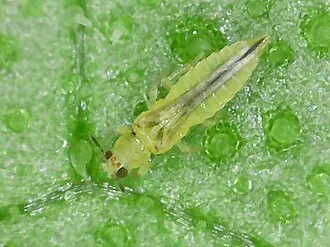
1. Chilli Thrips — Scirtothrips dorsalis (Thripidae: Thysanoptera)
IMPORTANT
The most tested exam fact about chilli pests: Upward curling of chilli leaves is caused by thrips (Scirtothrips dorsalis). Downward curling is caused by mites. This distinction is asked repeatedly in exams and ICAR exams.
Agricultural context: Guntur district alone accounts for nearly 50% of India's chilli production. Thrips is the number one pest here, causing "leaf curl complex" that reduces yields by 30-50%. The pest is so tiny (barely 1 mm) that farmers often mistake the damage for a disease.
Damage Symptoms
- Infested leaves develop crinkles and curl upwards
- Elongated petioles (abnormal stretching)
- Buds become brittle and drop prematurely
- Early-stage infestation leads to stunted growth and reduced flower production
- Fruit set is arrested in severe cases
The Critical Curl Direction Distinction
| Symptom | Cause | Key Difference |
|---|---|---|
| Leaf curling upward | Thrips (Scirtothrips dorsalis) | Insect; rasping-sucking mouthparts |
| Leaf curling downward | Mites (broad mite / yellow mite) | Arachnid; piercing mouthparts |
| Seedling cut at ground level | Agrotis ipsilon (Cutworm) | Nocturnal caterpillar |
Management
- Spray dimethoate 30 EC or fipronil 5 SC
- Use blue sticky traps for monitoring (thrips are attracted to blue colour)
NOTE
Thrips tabaci on onion causes drying from tip with white patches on leaves (rasping damage). On chilli, Scirtothrips dorsalis causes upward curling. Both use rasping-sucking mouthparts — they lacerate tissue first, then suck the oozing sap.
- Maintain field hygiene — remove crop debris that harbours thrips
- Intercrop with coriander or maize as barrier crops
- Avoid water stress — irrigate regularly as drought favours thrips buildup
TIP
Exam mnemonic: "Thrips go Top (upward curling), Mites go Mown (downward curling)" — T for Thrips = T for Top; M for Mites = M for "Mown" (down). Also: blue sticky traps for thrips, yellow sticky traps for whiteflies.
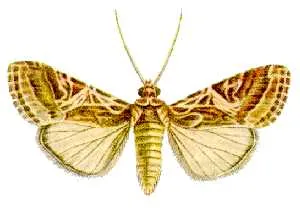
2. Tobacco Cutworm — Spodoptera litura (Noctuidae: Lepidoptera)
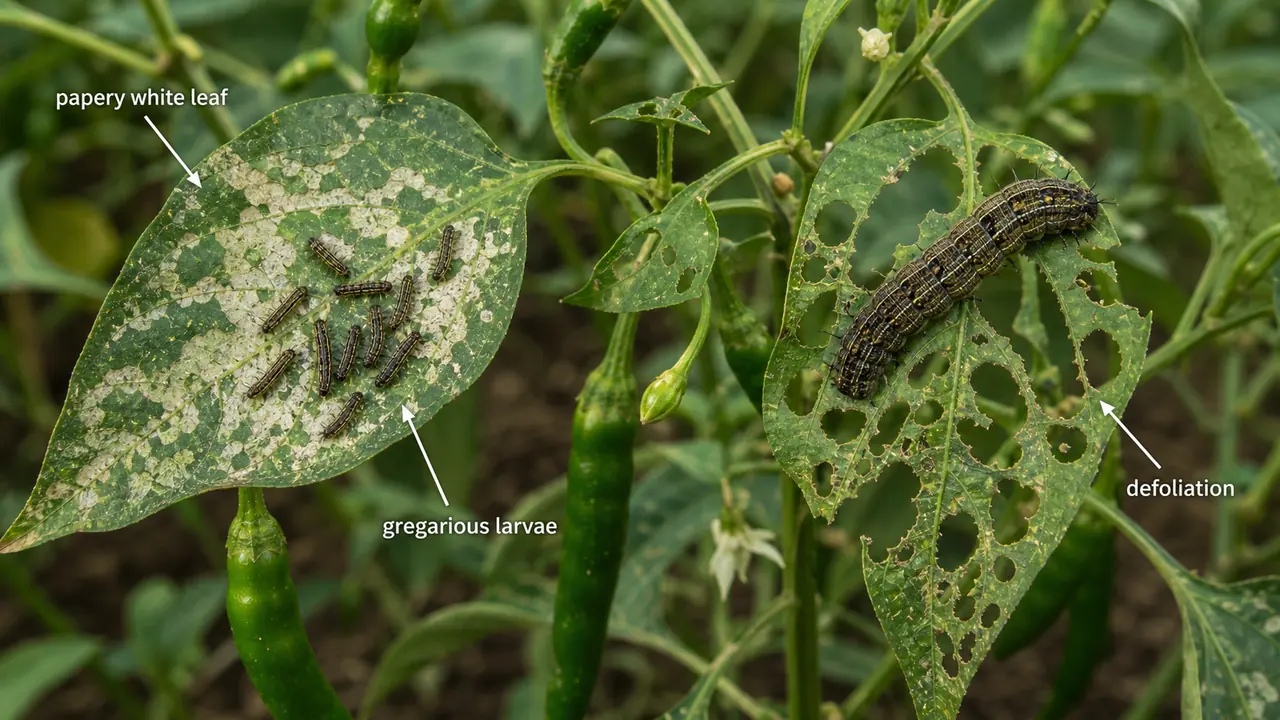
Agricultural context: When chilli leaves in a field suddenly turn papery white — as if bleached — the culprit is usually early-instar larvae of Spodoptera litura feeding gregariously on the chlorophyll while leaving the epidermis intact.
Damage Symptoms
- Newly hatched larvae scrape the green matter from the leaf
- Affected leaves develop a papery white structure (chlorophyll removed, epidermis intact)
- Later-instar larvae make small holes in leaves
- In severe infestations, they feed voraciously on the entire lamina and petiole, leaving behind only the midrib
Comparison: Cutworm vs. Leaf Eating Caterpillar
| Feature | Agrotis ipsilon (Cutworm) | Spodoptera litura (Tobacco Cutworm) |
|---|---|---|
| Damage pattern | Cuts seedlings at ground level | Scrapes chlorophyll / defoliation |
| Feeding time | Strictly nocturnal | Nocturnal but also feeds during day |
| Hiding place | Soil during day | Soil cracks and leaf litter |
| Specificity | Polyphagous | Highly polyphagous |
| Exam clue | "Cut at ground level" | "Papery white leaf" |
NOTE
Exam trap: Chilli seedlings cut at ground level = Agrotis ipsilon (cutworm), NOT Spodoptera litura. The cutworm hides in soil during the day and cuts seedlings at the base at night.
Management
- Collect and destroy egg masses (laid in clusters on leaf undersurface, covered with brown hair)
- Use pheromone traps (Spodolure) — 10 traps per hectare
- Spray SlNPV @ 250 LE per hectare
- Apply poison baiting: rice bran + jaggery (10%) + carbaryl 50 WP — spread in the evening
- Grow trap crops and maintain field borders clean
3. Whitefly — Bemisia tabaci (Aleyrodidae: Hemiptera)
IMPORTANT
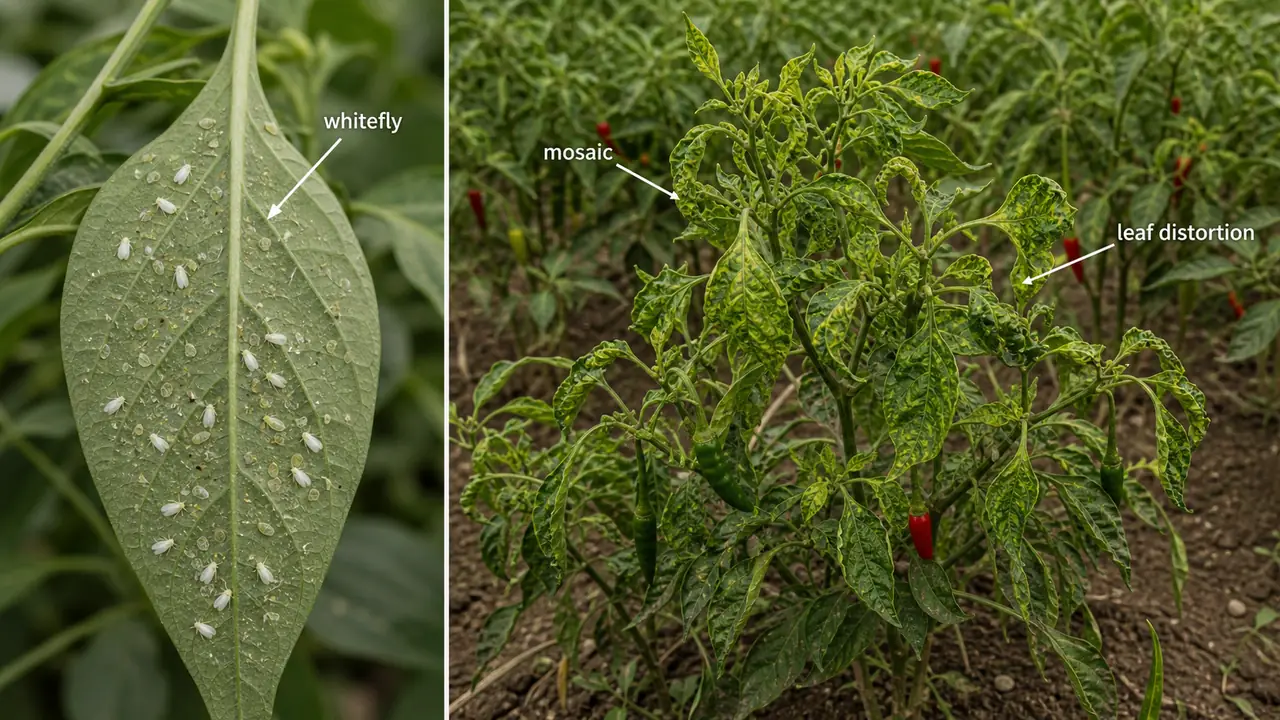
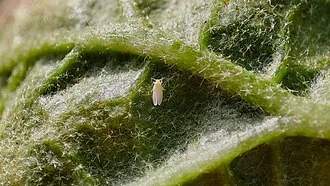
Bemisia tabaci transmits Chilli Mosaic Virus. This is the same whitefly species that transmits ToLCD in tomato, YVMV in okra, and YMV in mung bean. It is the single most important sap-sucking insect vector in Indian agriculture.
Damage Symptoms
- Sap sucking causes yellowing and weakening of plants
- Honeydew secretion leads to sooty mould development (black coating on leaves)
- Transmission of Chilli Mosaic Virus causes mosaic patterns and leaf distortion
- Severely infected plants produce fewer and smaller fruits
Viruses Transmitted by Bemisia tabaci — Consolidated Table
| Disease | Crop | Virus Type |
|---|---|---|
| Tomato Leaf Curl Disease (ToLCD) | Tomato | Begomovirus |
| Yellow Mosaic Virus (YMV) | Mung bean, soybean | Begomovirus |
| Yellow Vein Mosaic Virus (YVMV) | Okra | Begomovirus |
| Chilli Mosaic Virus | Chilli | Begomovirus |
| Cotton Leaf Curl Virus (CLCuV) | Cotton | Begomovirus |
Management
- Grow resistant varieties
- Use yellow sticky traps for monitoring
- Spray imidacloprid 17.8 SL or thiamethoxam 25 WG
- Remove and destroy virus-infected plants immediately
- Maintain weed-free borders (weeds act as virus reservoirs)
TIP
Exam mnemonic: "Bemisia = Biggest Vector" — Bemisia tabaci transmits more crop viruses than any other insect in India. All the viruses it transmits in the table above are Begomoviruses — this is a useful grouping fact.
Okra (Bhendi) Pests
Classification Table — Okra
| No. | Common Name | Scientific Name | Family: Order | Key Feature |
|---|---|---|---|---|
| 1 | Shoot and Fruit Borer | Earias vittella, E. insulana | Noctuidae: Lepidoptera | Terminal shoot withering |
| 2 | Bhendi Fruit Borer | Helicoverpa armigera | Noctuidae: Lepidoptera | Circular boreholes on fruits |
| 3 | Whitefly | Bemisia tabaci | Aleyrodidae: Hemiptera | Vector of YVMV |
1. Okra Shoot and Fruit Borer — Earias vittella, E. insulana (Noctuidae: Lepidoptera)
IMPORTANT
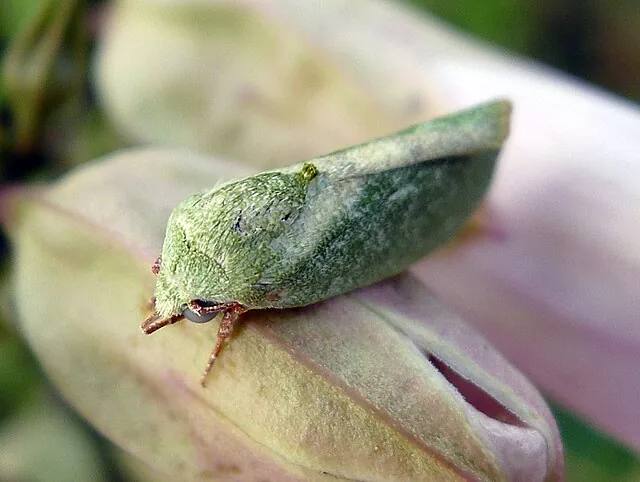
Earias vittella and E. insulana are the same pests that attack cotton as spotted bollworms. They attack okra and other malvaceous crops because okra and cotton both belong to family Malvaceae.
Agricultural context: This is a perfect example of how understanding plant taxonomy helps predict pest occurrence. Cotton and okra belong to the same family (Malvaceae), so they share the Earias pest. Farmers growing both crops in rotation often face persistent Earias problems.
Damage Symptoms
- Terminal shoots wither and droop (vegetative stage)
- Shedding of buds and flowers
- Bore holes in fruits with larval feeding inside
- Deformed and twisted fruits unfit for market
Cross-Crop Pest Connection
| Crop | Common Name for Earias | Family (Plant) |
|---|---|---|
| Okra | Shoot and Fruit Borer | Malvaceae |
| Cotton | Spotted Bollworm | Malvaceae |
Management
- Remove and destroy affected shoots and fruits
- Grow castor as trap crop around the okra field (attracts Earias)
- Release Trichogramma chilonis egg parasitoid
- Spray recommended insecticides at the flowering stage
- Practice crop rotation — avoid planting okra after cotton or vice versa
2. Bhendi Fruit Borer — Helicoverpa armigera (Noctuidae: Lepidoptera)
Damage Symptoms
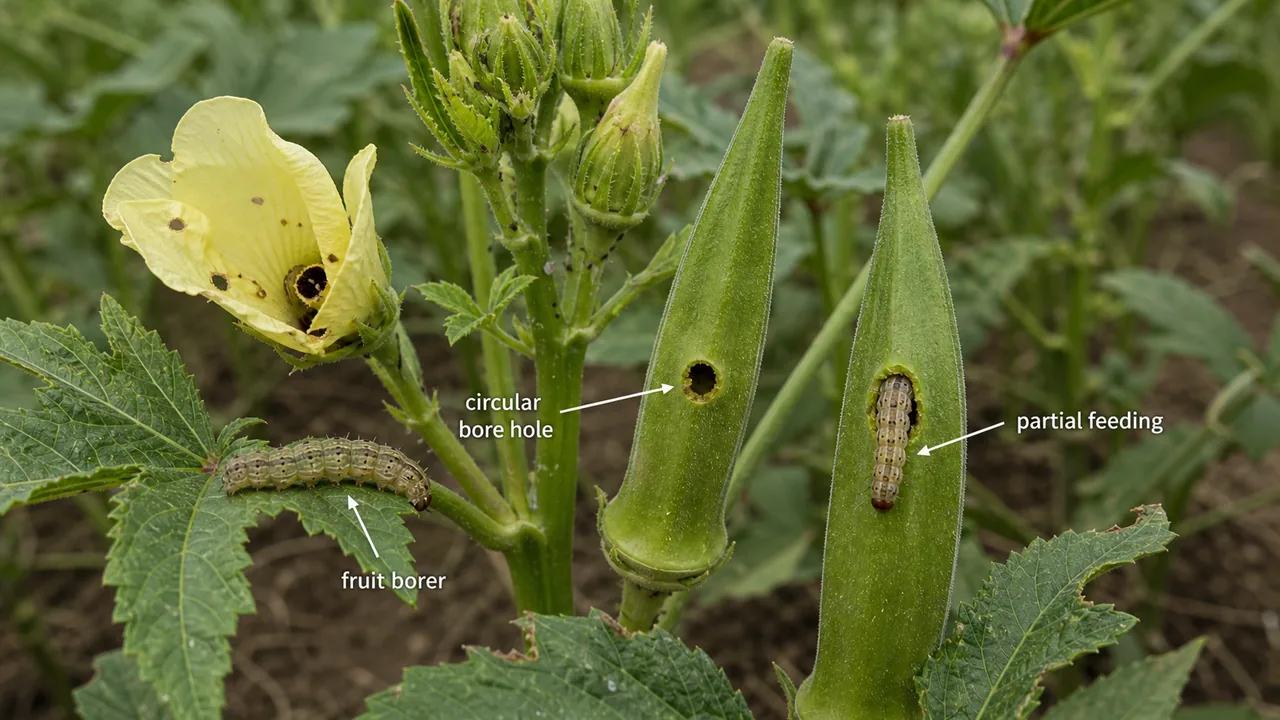
- Feeds on the flowers first
- Circular boreholes on fruits
- Larva thrusts only part of its body inside the fruit to feed (same behaviour as in tomato)
- Damaged fruits become unmarketable
Management
- Install pheromone traps (Helilure)
- Spray HaNPV
- Use marigold as trap crop (effective for Helicoverpa across all crops)
3. Okra Whitefly — Bemisia tabaci (Aleyrodidae: Hemiptera)
IMPORTANT
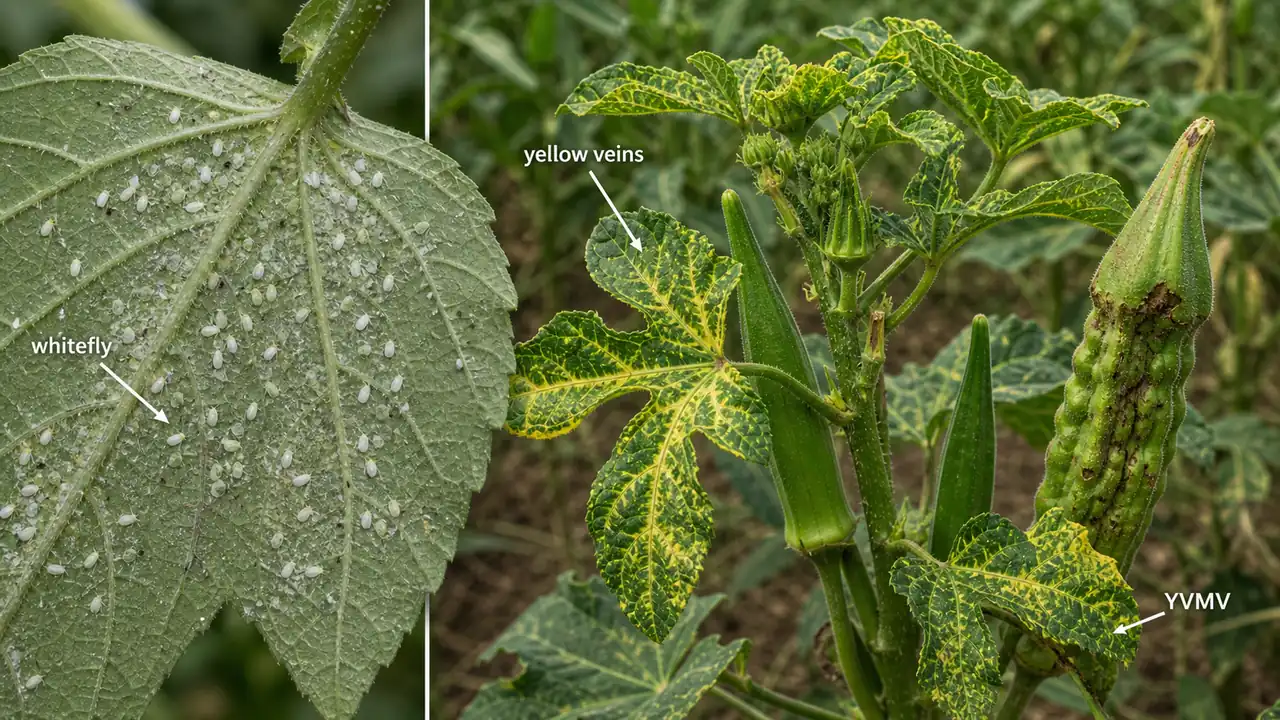
Bemisia tabaci is the vector of Yellow Vein Mosaic Virus (YVMV) of okra — the most serious viral disease of okra in India. YVMV causes distinctive yellow vein clearing on leaves, making fruits tough and unmarketable.
Damage Symptoms
- Chlorotic spots on leaves that later coalesce into irregular yellowing
- Severe infestation results in premature defoliation
- Development of sooty mould on honeydew
- YVMV-infected plants show bright yellow vein networks on leaves
Management
- Grow YVMV-resistant varieties (most effective long-term strategy)
- Remove and destroy virus-infected plants immediately
- Spray systemic insecticides (imidacloprid) at seedling and vegetative stages
- Use yellow sticky traps for monitoring whitefly populations
- Avoid planting okra near cotton or tomato fields (shared whitefly populations)
Comparison: Borers of Okra
| Feature | Shoot and Fruit Borer (Earias) | Fruit Borer (Helicoverpa) |
|---|---|---|
| Also attacks | Cotton (spotted bollworm) | Tomato, chickpea, cotton |
| Primary damage | Shoot wilting + fruit boring | Fruit boring |
| Bore hole shape | Irregular | Circular |
| Larval behaviour | Feeds entirely inside fruit | Thrusts part of body inside |
| Trap crop | Castor | Marigold |
Exam Tips and Mnemonics
- The Curl Direction Rule for Chilli: Up = Thrips, Down = Mites. This is the single most tested fact in this chapter.
- Seedling cut at base = Cutworm (Agrotis ipsilon), NOT Spodoptera litura — a common exam trap
- Papery white leaf = Spodoptera litura — early-instar gregarious feeding
- Bemisia tabaci transmits viruses in tomato (ToLCD), chilli (Mosaic), okra (YVMV), cotton (CLCuV), and legumes (YMV) — all Begomoviruses
- Earias vittella is both the okra shoot borer AND the cotton spotted bollworm — same pest, same family (Malvaceae crops)
- Trap crops to remember: Marigold for Helicoverpa; Castor for Earias; Mustard for DBM
- Sticky trap colours: Blue = thrips, Yellow = whiteflies and leaf miners
Summary Cheat Sheet
| No. | Pest | Crop | Scientific Name | Family: Order | Key Exam Fact |
|---|---|---|---|---|---|
| 1 | Chilli Thrips | Chilli | Scirtothrips dorsalis | Thripidae: Thysanoptera | Leaf curling upward; downward = mites; blue sticky traps |
| 2 | Tobacco Cutworm | Chilli | Spodoptera litura | Noctuidae: Lepidoptera | Papery white leaves; gregarious early instars; SlNPV |
| 3 | Whitefly | Chilli | Bemisia tabaci | Aleyrodidae: Hemiptera | Vector of Chilli Mosaic Virus; all Begomoviruses |
| 4 | Shoot and Fruit Borer | Okra | Earias vittella, E. insulana | Noctuidae: Lepidoptera | Same as cotton spotted bollworm; trap crop = castor |
| 5 | Fruit Borer | Okra | Helicoverpa armigera | Noctuidae: Lepidoptera | Circular boreholes; trap crop = marigold |
| 6 | Whitefly | Okra | Bemisia tabaci | Aleyrodidae: Hemiptera | Vector of YVMV (most serious okra virus) |