🍈 Guava & Pomegranate Pests: Tea Mosquito Bug, Anar Butterfly, Fruit Flies & IPM
Complete guide to all pests of guava and pomegranate — tea mosquito bug (corky scab), fruit fly, anar butterfly (fruit borer), castor semilooper (dual-role pest), with comparison tables, IPM strategies, and exam mnemonics for exams, NABARD & ICAR.
Field scenario: A guava grower in Allahabad (Prayagraj) notices that his Allahabad Safeda fruits have developed rough, corky patches that make them unmarketable. He initially suspects a fungal disease, but an extension officer points out the tiny feeding punctures with resinous exudate on the shoots — the hallmark of the tea mosquito bug (Helopeltis antonii). Across town, a pomegranate farmer cracks open a healthy-looking fruit only to find the inside rotting with an offensive smell. A small, round bore hole on the rind reveals the entry point of the anar butterfly (Virachola isocrates) — pomegranate's most destructive pest.
Guava and pomegranate are important subtropical fruit crops of India that share several common pests, notably the bark eating caterpillar and the anar butterfly (fruit borer). Understanding which pest is most damaging to which crop and the distinctive damage symptoms is essential for exams, NABARD, and ICAR examinations.
Pro Content Locked
Upgrade to Pro to access this lesson and all other premium content.
Charged once for one year · ₹1188 total
Save ₹100/month vs ₹2388/year launch price
- All Agriculture & Banking Courses
- AI Lesson Questions (100/day)
- AI Doubt Solver (50/day)
- Glows & Grows Feedback (30/day)
- AI Section Quiz (20/day)
- 22-Language Translation (100/day)
- Recall Questions (20/day)
- AI Quiz (15/day)
- AI Quiz Paper Analysis (100/day)
- AI Step-by-Step Explanations (100/day)
- Spaced Repetition Recall (FSRS)
- AI Tutor
- Immersive Text Questions
- Audio Lessons — Hindi & English
- Mock Tests & Previous Year Papers
- Summary & Mind Maps
- XP, Levels, Leaderboard & Badges
- Generate New Classrooms
- Voice AI Teacher (AgriDots Live)
- AI Revision Assistant
- Knowledge Gap Analysis
- Interactive Revision (LangGraph)
🔒 Secure one-time yearly payment via Razorpay · No hidden fees
Field scenario: A guava grower in Allahabad (Prayagraj) notices that his Allahabad Safeda fruits have developed rough, corky patches that make them unmarketable. He initially suspects a fungal disease, but an extension officer points out the tiny feeding punctures with resinous exudate on the shoots — the hallmark of the tea mosquito bug (Helopeltis antonii). Across town, a pomegranate farmer cracks open a healthy-looking fruit only to find the inside rotting with an offensive smell. A small, round bore hole on the rind reveals the entry point of the anar butterfly (Virachola isocrates) — pomegranate's most destructive pest.
Guava and pomegranate are important subtropical fruit crops of India that share several common pests, notably the bark eating caterpillar and the anar butterfly (fruit borer). Understanding which pest is most damaging to which crop and the distinctive damage symptoms is essential for exams, NABARD, and ICAR examinations.
How This Lesson Is Organised
This lesson is divided into two parts: Part A covers guava pests (with the tea mosquito bug being the most important) and Part B covers pomegranate pests (with the anar butterfly being the most important). Cross-crop pests like the anar butterfly and bark caterpillar are discussed with comparisons. We conclude with a unified summary table.
Part A: Pests of Guava
Pest Classification Table — Guava
Major Pests
| No. | Common Name | Scientific Name | Family | Order | Key Damage |
|---|---|---|---|---|---|
| 1 | Tea Mosquito Bug | Helopeltis antonii | Miridae | Hemiptera | Corky scab on fruits |
| 2 | Fruit Fly | Bactrocera diversus | Tephritidae | Diptera | Maggots in pulp |
| 3 | Fruit Borer (Anar Butterfly) | Virachola isocrates, Rapala varuna | Lycaenidae | Lepidoptera | Round bore holes, internal rot |
| 4 | Mealy Bug | Ferrisia virgata, Maconellicoccus hirsutus | Pseudococcidae | Hemiptera | Leaf crinkling, yellowing |
| 5 | Bark Caterpillar | Indarbela tetraonis | Metarbelidae | Lepidoptera | Silk + frass galleries |
Minor Pests
| Common Name | Scientific Name | Family | Order |
|---|---|---|---|
| Aphids | Aphis gossypii | Aphididae | Hemiptera |
| Guava Scale | Chloropulivinaria psidii | Coccidae | Hemiptera |
| Whitefly | Aleurotuberculatus psidii | Aleyrodidae | Hemiptera |
| Thrips | Selenothrips rubrocinctus | Thripidae | Thysanoptera |
1. Tea Mosquito Bug — Helopeltis antonii (Miridae: Hemiptera)
IMPORTANT
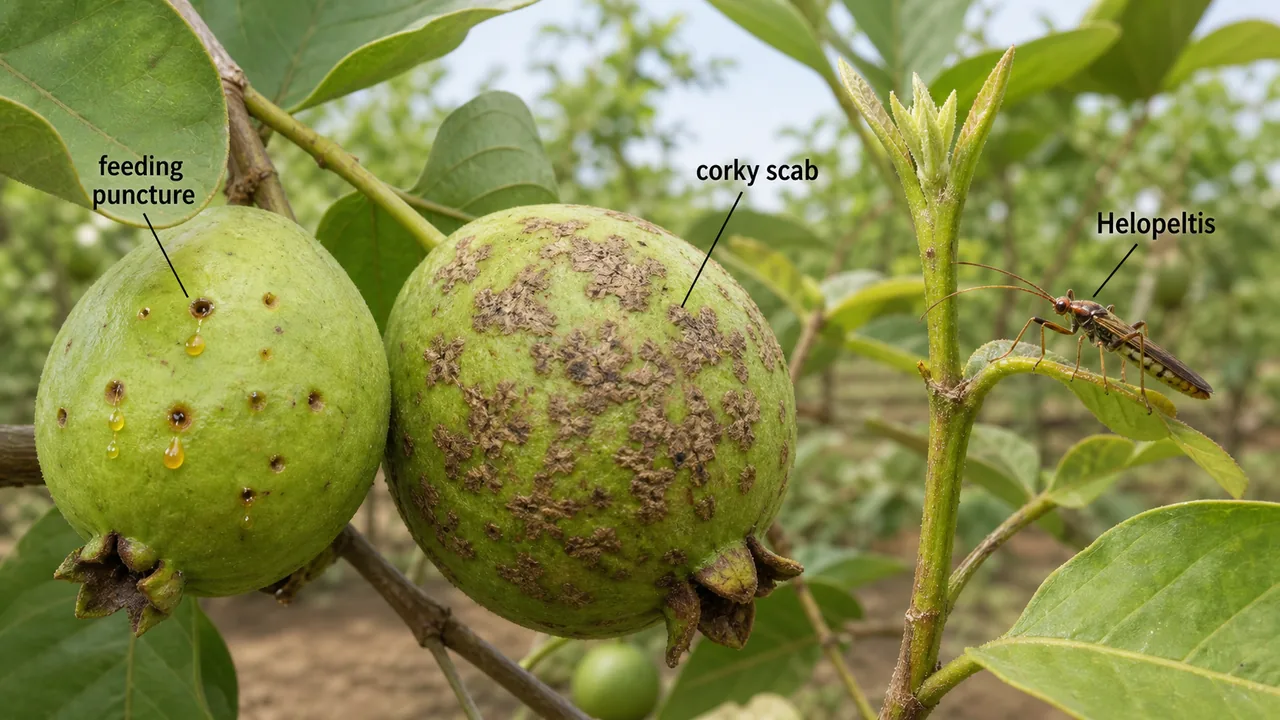
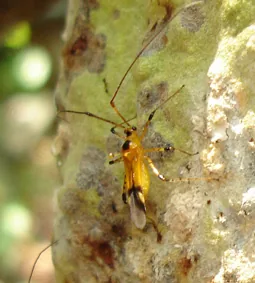
Tea mosquito bug is the most destructive pest of guava. Despite its name, it is not related to mosquitoes — it is a mirid bug that injects toxic saliva while feeding, causing necrotic lesions and corky scab formation.
"Kajji" symptoms (corky, scab-like patches) on guava = Helopeltis antonii. "Kajji" is a regional term for this distinctive corky lesion — commonly used in exam questions.
Why the name "tea mosquito bug"? The insect was first described as a serious pest of tea. It has a long, needle-like rostrum and a slender body that resembles a mosquito. It also attacks cashew, neem, and moringa.
Host range: Guava, cashew, tea, moringa, neem, and others
Damage Symptoms
- Adults and nymphs feed on petioles, tender shoots, and leaf veins, causing necrotic lesions that coalesce into patches
- On foliage: brownish-black necrotic patches with resin exuding from feeding punctures
- On fruits: blisters, scales, rusty corky growth, and scab formation (called "kajji" symptoms)
- On cashew, the same species is often remembered for brownish-black patches and cankerous spots on nuts, and older tables may also mention associated inflorescence blight
- Widespread drying of shoots, inflorescence, and flowers
- Fruit shedding in severe infestations
Comparison: Helopeltis Species Across Crops
| Species | Primary Crop | Common Name | Key Symptom |
|---|---|---|---|
| Helopeltis antonii | Guava, cashew | Tea mosquito bug | Corky scab ("kajji") on fruits |
| Helopeltis theivora | Tea | Tea mosquito bug | Reddish-brown spots on leaves |
Management
- Prune affected shoots and destroy them
- Spray insecticides during the critical fruit development stage
- Avoid dense planting — the pest thrives in humid, shaded conditions
- Biological control: conserve predatory spiders and reduviid bugs
TIP
Exam clincher: Corky scab on guava fruits = tea mosquito bug (Helopeltis antonii). Do not mistake this for a disease — it is insect feeding damage caused by toxic saliva injection.
2. Guava Fruit Fly — Bactrocera diversus (Tephritidae: Diptera)
Host range: Guava, tomato, and other commercial fruits
Damage Symptoms
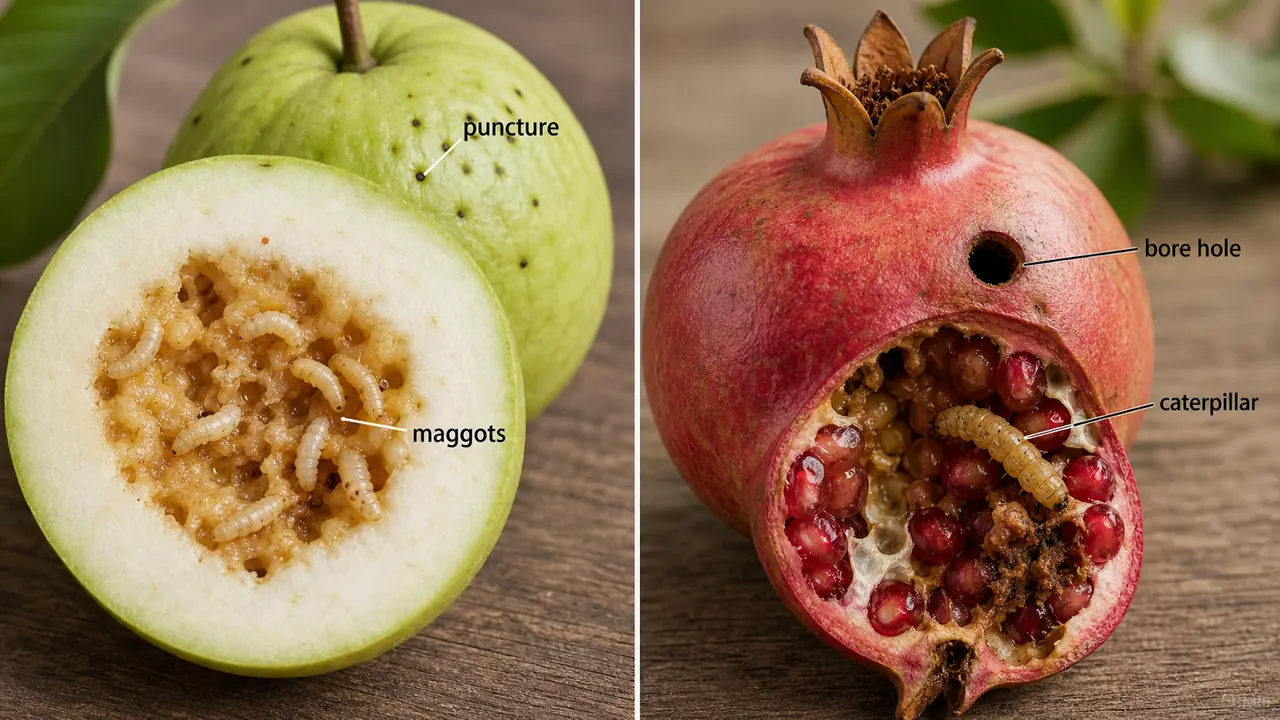
- Maggots bore into fruits and feed on soft pulp
- Infested fruits show small cavities with dark greenish punctures on the surface
- When cut open, wriggling maggots are visible inside
- Infestation causes rotting and dropping of fruits
Management
- Collect and destroy fallen and infested fruits daily
- Use methyl eugenol traps for monitoring and mass trapping of males
- Apply bait spray (malathion + jaggery)
- Harvest fruits at colour-break stage before full ripening
NOTE
Exam distinction: Bactrocera diversus attacks guava while Bactrocera dorsalis attacks mango. Both belong to Tephritidae. The species name distinction is frequently tested.
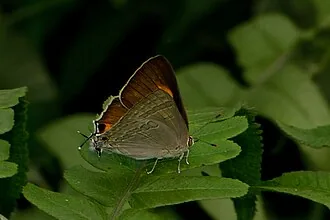
3. Fruit Borer (Anar Butterfly) — Virachola isocrates, Rapala varuna (Lycaenidae: Lepidoptera)
IMPORTANT
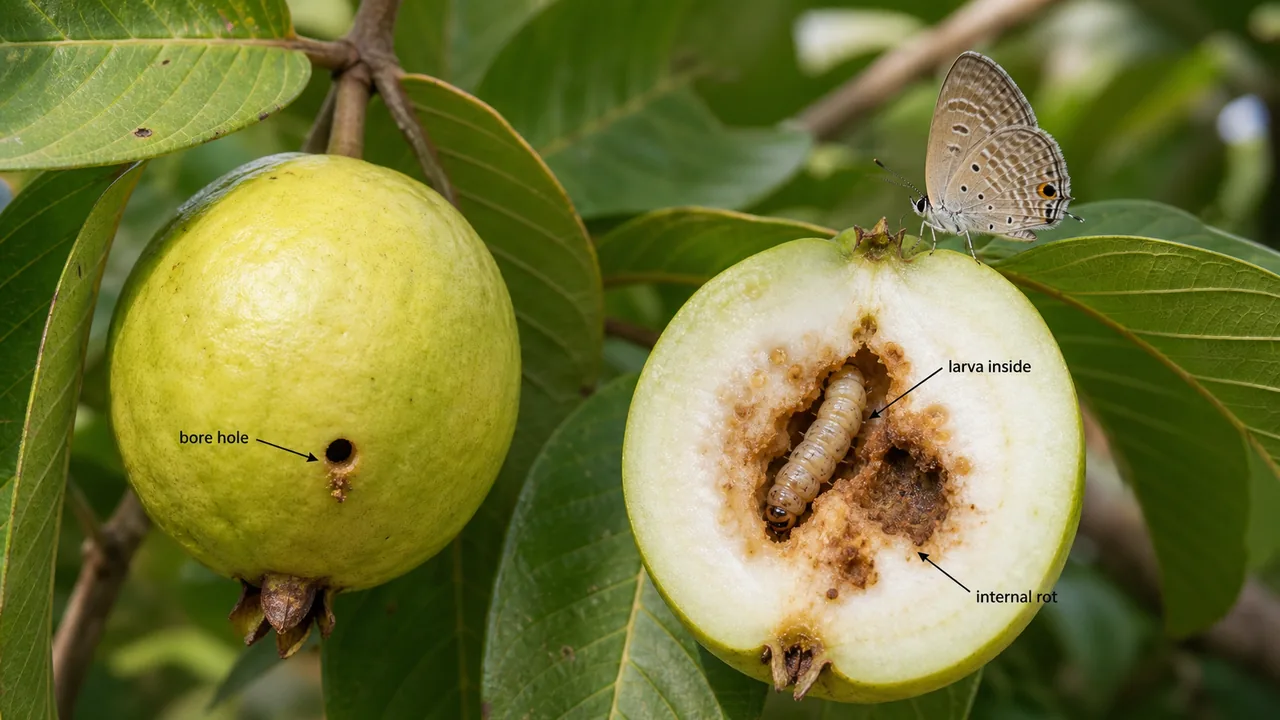
Virachola isocrates is called the Anar butterfly (pomegranate butterfly) but it also attacks guava, citrus, litchi, and many other fruits. The round bore holes on fruits and offensive smell from secondary infection are diagnostic.
Host range: Aonla, apple, ber, citrus, guava, litchi, loquat, peach, mulberry, pear, sapota, tamarind — highly polyphagous
Damage Symptoms
- Female butterfly lays eggs on developing fruits or flower buds
- Larvae bore inside developing fruits and feed on pulp and seeds
- Round bore holes visible on the fruit rind (entry or exit holes)
- Infested fruits develop secondary infection by bacteria and fungi, producing an offensive smell
- Fruits ultimately fall prematurely
Management
- Bag developing fruits with butter paper or muslin bags (especially for pomegranate)
- Remove and destroy infested fruits
- Spray contact insecticides at fruit set stage
- Use neem-based formulations as a repellent
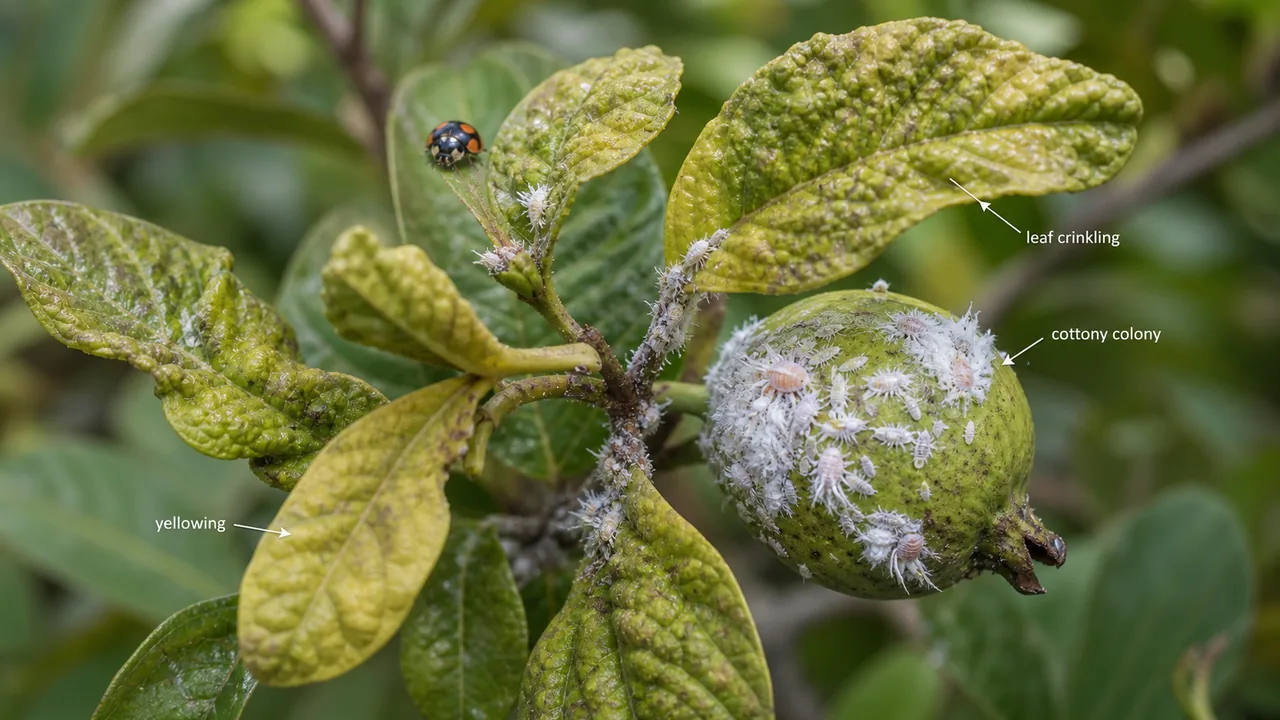
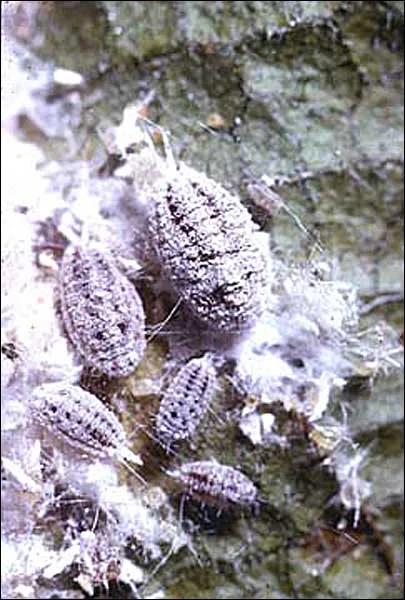
4. Mealy Bug — Ferrisia virgata, Maconellicoccus hirsutus (Pseudococcidae: Hemiptera)
Host range: Grapevine, hibiscus, mulberry, guava, custard apple, okra, tamarind, and glyricidia
Damage Symptoms
- Both nymphs and adults suck sap, resulting in crinkling and yellowing of leaves
- Heavy infestations cause rotting of berries and fruit drop
- White, cottony wax coating on body is diagnostic
Management
- Spray fish oil rosin soap or neem oil
- Release Cryptolaemus montrouzieri (Australian ladybird) for biological control
- Avoid over-use of nitrogenous fertilizers
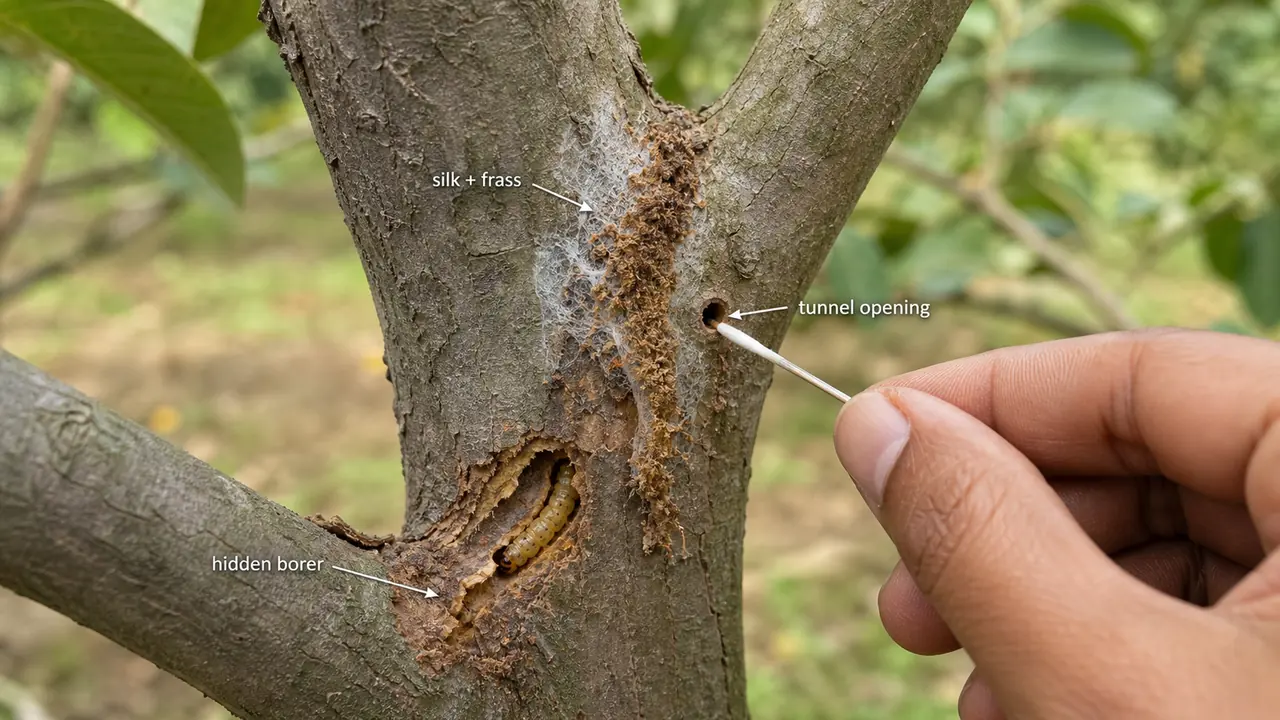
5. Bark Caterpillar — Indarbela tetraonis (Metarbelidae: Lepidoptera)
- Same pest that attacks mango, citrus, and pomegranate
- Bores into trunk and branch junctions, making zig-zag galleries
- Silk and frass galleries at branch junctions are the key diagnostic feature
- Management: inject fumigant into tunnel and seal with mud (same across all crops)
Minor Pests of Guava
Aphids (Aphis gossypii) — Suck sap from tender shoots; honeydew leads to sooty mould
Guava Scale (Chloropulivinaria psidii) — Encrusts on leaves and twigs; causes sap depletion
Whitefly (Aleurotuberculatus psidii) — Sap sucking from leaf undersurface; honeydew and sooty mould
Thrips (Selenothrips rubrocinctus) — Lacerate and suck sap from leaves and fruits; cause silvery patches
Part B: Pests of Pomegranate
Pest Classification Table — Pomegranate
| No. | Common Name | Scientific Name | Family | Order | Key Damage |
|---|---|---|---|---|---|
| 1 | Anar Butterfly / Fruit Borer | Virachola isocrates, Rapala varuna | Lycaenidae | Lepidoptera | Bore holes in fruits, internal rot |
| 2 | Castor Semilooper | Achaea janata | Noctuidae | Lepidoptera | Defoliation (larva) + fruit sucking (adult) |
| 3 | Fruit Fly | Bactrocera zonata | Tephritidae | Diptera | Maggots in pulp |
| 4 | Fruit Borer | Conogethes punctiferalis | Pyraustidae | Lepidoptera | Bore into developing fruits |
| 5 | Pomegranate Aphid | Aphis punicae | Aphididae | Hemiptera | Leaf curling, fruit drop |
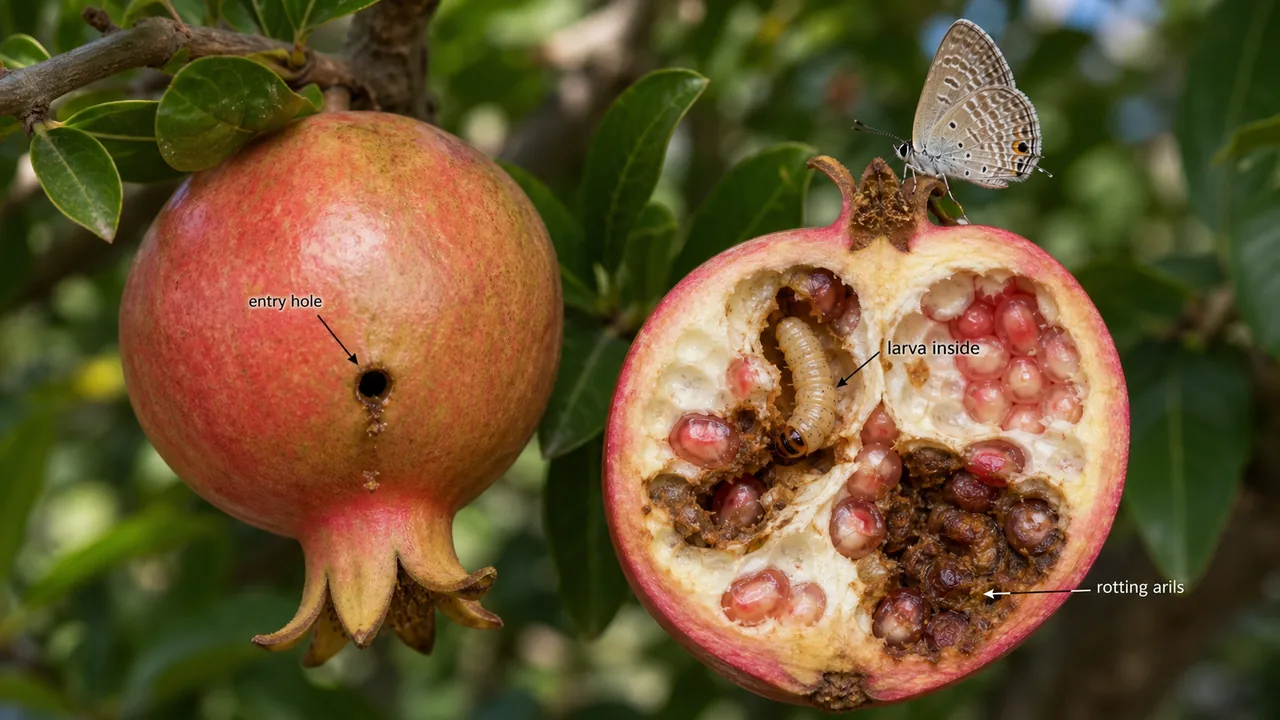
1. Anar Butterfly / Fruit Borer — Virachola isocrates, Rapala varuna (Lycaenidae: Lepidoptera)
IMPORTANT
Anar butterfly is the most destructive pest of pomegranate. The same pest also attacks guava and many other fruits. The round bore holes and secondary infection producing an offensive smell are the diagnostic features.
Deudorix isocrates is the older synonym (also Virachola isocrates) for anar butterfly. Bored holes on pomegranate = anar butterfly regardless of name used.
Management specific to pomegranate:
- Bag individual fruits with butter paper bags after fruit set — most effective method
- Remove and destroy infested fruits immediately
- Spray carbaryl 50 WP (2 g/L) at fruit set and repeat at 15-day intervals
- Maintain orchard hygiene by removing fallen fruits
2. Castor Semilooper — Achaea janata (Noctuidae: Lepidoptera)
IMPORTANT
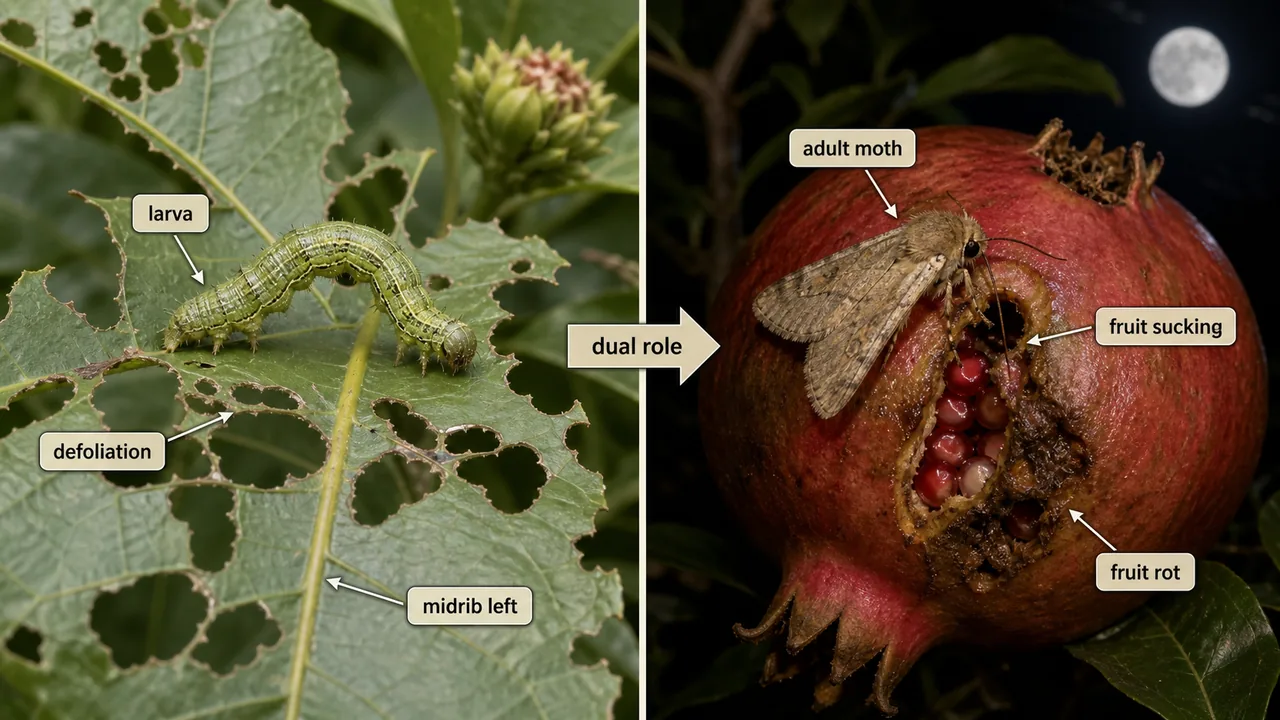
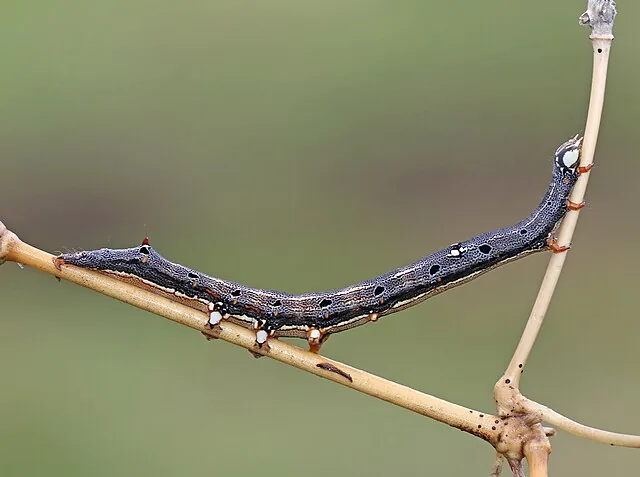
Achaea janata has a dual damage role: the caterpillar is a defoliator (semilooper on castor and pomegranate), while the adult moth is a fruit sucking moth that damages citrus and other fruits.
Host range: Castor, rose, pomegranate, tea, citrus, mango
Damage Symptoms
- As caterpillar: Feeds voraciously on leaves from the edges inwards, leaving only the midrib and stalk
- Maximum damage occurs in August, September, and October
- As adult moth: Pierces ripe fruits with its proboscis and sucks juice (fruit sucking moth)
Dual Role Comparison
| Stage | Role | Crop Affected | Damage Type |
|---|---|---|---|
| Caterpillar (larva) | Semilooper defoliator | Castor, pomegranate | Defoliation — leaves eaten to midrib |
| Adult moth | Fruit sucking moth | Citrus, mango | Juice sucking — fruit rot |
Management
- Hand-pick caterpillars during early morning hours
- Spray NPV or Bt formulations against caterpillars
- Use light traps to monitor and capture adult moths
- Harvest fruits before full ripening to reduce adult moth damage
TIP
Exam favourite: "What pest has both a defoliating larva AND a fruit-sucking adult?" Answer: Achaea janata. The larva is the castor semilooper; the adult is a fruit sucking moth. This dual role is a classic exam question.
3. Fruit Fly — Bactrocera zonata (Tephritidae: Diptera)
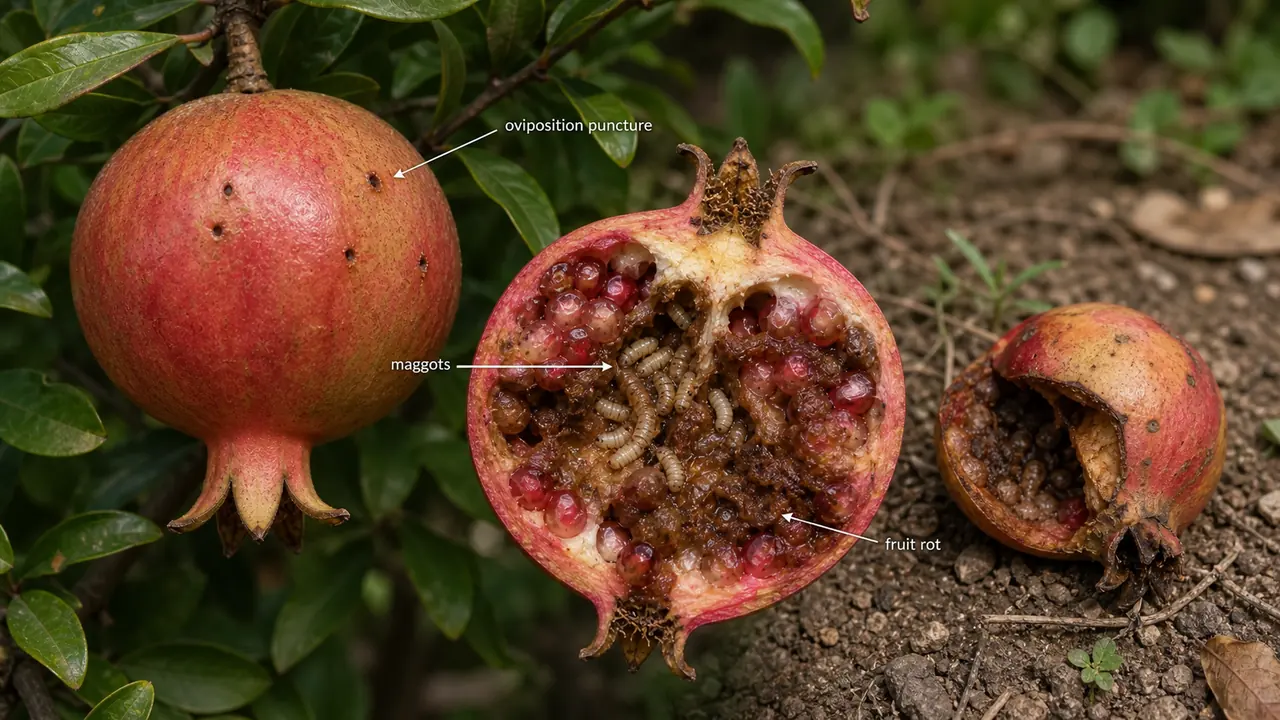
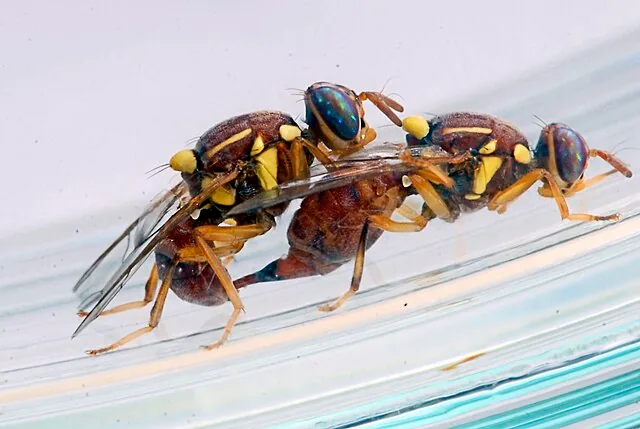
- Attacks pomegranate and other fruits
- Maggots bore into fruits and feed on pulp, causing fruit rot and drop
- Bactrocera zonata is the species specific to pomegranate (different from mango and guava fruit flies)
Fruit Fly Species Across Fruit Crops
| Fruit Crop | Fruit Fly Species |
|---|---|
| Mango | Bactrocera dorsalis |
| Guava | Bactrocera diversus |
| Pomegranate | Bactrocera zonata |
| Cucurbits | Bactrocera cucurbitae |
Management
- Methyl eugenol traps for monitoring
- Bait spray (malathion + jaggery)
- Collect and destroy fallen fruits
- Deep ploughing to expose pupae
4. Fruit Borer — Conogethes punctiferalis (Pyraustidae: Lepidoptera)
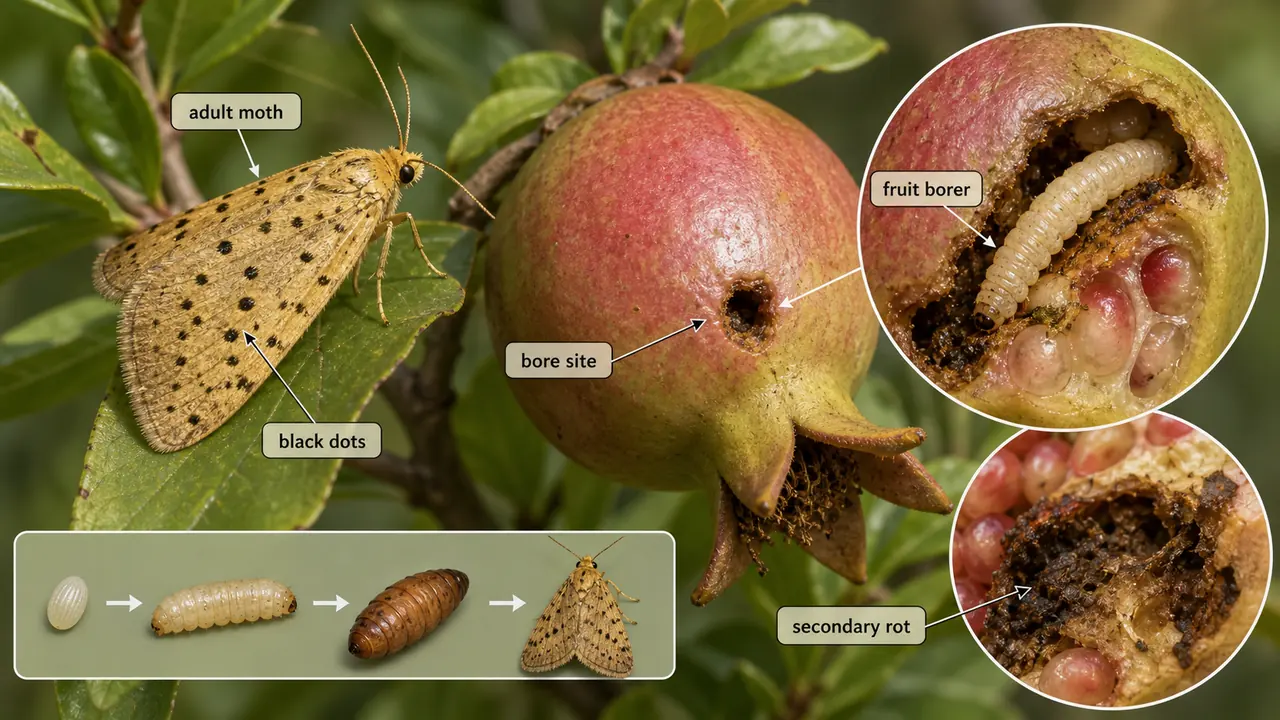
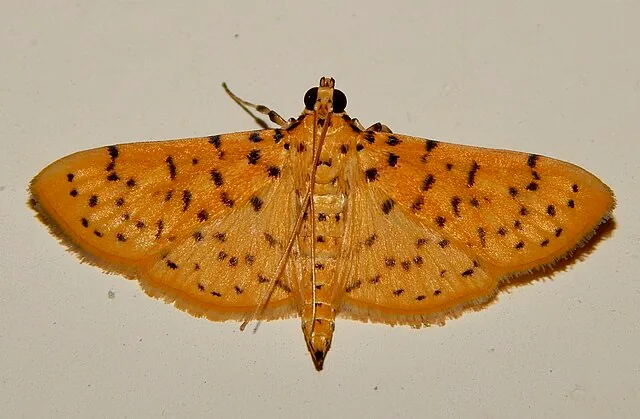
- Larvae bore into developing fruits of pomegranate
- Also attacks castor, cardamom, and ginger
- Causes fruit rot due to secondary infection at bore sites
- Yellowish-brown moth with black dots on wings
Management
- Bag fruits with butter paper after fruit set
- Remove and destroy infested fruits
- Spray contact insecticides at fruit set stage
5. Pomegranate Aphid — Aphis punicae (Aphididae: Hemiptera)
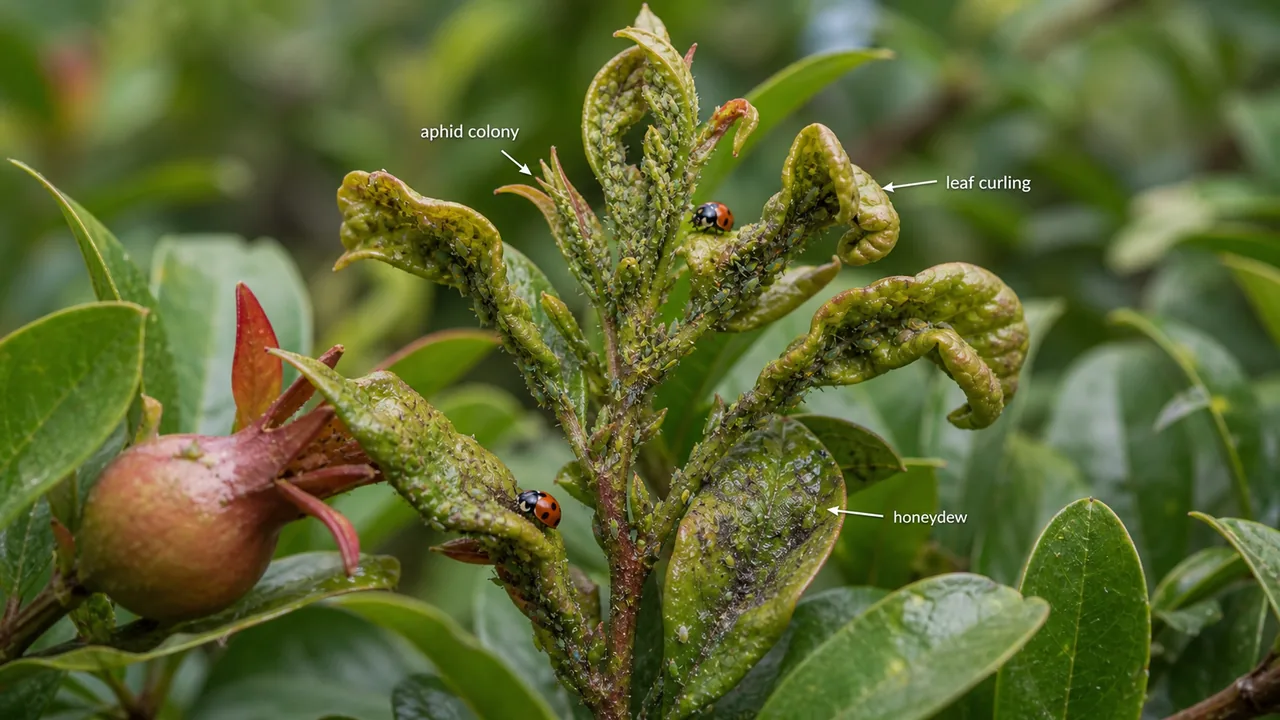
Damage Symptoms
- Both nymphs and adults infest leaves, causing curling and yellowing
- Wilting of terminal shoots and premature fruit drop
- Honeydew secretion leads to sooty mould development
Management
- Spray dimethoate 30 EC or imidacloprid
- Conserve ladybird beetles (Coccinella spp.) as natural predators
- Maintain proper irrigation — drought-stressed plants are more susceptible
Cross-Crop Comparison: Pests Shared Between Guava and Pomegranate
| Pest | Guava | Pomegranate | Most Destructive To |
|---|---|---|---|
| Anar Butterfly (Virachola isocrates) | Attacks fruits | Most destructive pest | Pomegranate |
| Bark Caterpillar (Indarbela tetraonis) | Attacks trunk | Also attacks trunk | Both equally |
| Fruit Fly | B. diversus | B. zonata | Different species for each crop |
| Tea Mosquito Bug (Helopeltis antonii) | Most destructive pest | Not a major pest | Guava |
Other Exam-Listed Fruit Pests from Ber, Aonla, and Apple
These crops do not yet have full dedicated lessons in the shared entomology fruit block, but a few pests recur often enough in older agriculture compilations that they are worth anchoring here.
Ber
- Ber fruit fly — Carpomyia vesuviana (Tephritidae: Diptera) is classically remembered as a monophagous pest of ber
- Eggs are laid in or on fruits; maggots feed inside the pulp, causing deformation and rotting
- Pupation occurs in the soil, and older exam tables often note a population peak during February-March
- Ber fruit borer — Meridarchis scyrodes (Carposinidae: Lepidoptera) is the other named ber pest in condensed fruit-pest tables; larvae bore into fruits and feed on pulp
Aonla
- Bark eating caterpillar — Indarbela quadrinotata is a named aonla trunk pest in older lists; retain the same field clue used elsewhere: silk-and-frass galleries at branch or trunk entry points
- Shoot gall maker — Betousa stylophora (Thyrididae: Lepidoptera) is the standard aonla-specific recall from these tables
Apple
- Apple woolly aphid — Eriosoma lanigerum (Aphididae: Hemiptera) produces a characteristic ashy or cottony coating on stems and may induce knot-like swellings on roots
- It is repeatedly described as a serious pest of apple and pear
- Older management tables often attach the resistant-rootstock recall Northern Spy and the parasitoid Aphelinus mali to this pest
- San Jose scale — Quadraspidiotus perniciosus is remembered for pinkish bark and pink encrustations on apple fruits; older tables may attach the parasitoid recall Encarsia perniciosi
- Codling moth — Cydia pomonella is the classical apple fruit borer in compact fruit-pest lists
- Peach leaf curl aphid — Brachycaudus helichrysi causes yellowing and curling of leaves
- Apple stem borer — Apriona cinerea causes branch drying and wilting by grub boring inside stems
Field Diagnosis: Guava vs Pomegranate — Which Pest?
Guava fruit damage:
- Raised, scab-like corky patches (kajji) on fruit surface? → Tea Mosquito Bug (Helopeltis antonii) — most destructive guava pest; insect damage, NOT a disease
- Soft, rotting fruit with maggots inside? → Guava Fruit Fly (B. diversus) — different species from mango fruit fly
Pomegranate fruit damage:
- Bore hole in fruit, caterpillar feeding on seeds inside? → Anar Butterfly (V. isocrates) — most destructive pomegranate pest; frass visible at entry hole
- Fruit spotting/cracking + bacterial ooze? → Bacterial Blight — often confused with insect damage; check for no larva inside
Both crops:
- Frass and webbing at trunk/branch junctions? → Bark Caterpillar (Indarbela) — inject fumigant + seal with mud
- Leaves defoliated by semilooper caterpillar, adults suck fruit juice at night? → Achaea janata — dual-role pest (larva defoliates, adult damages fruits)
Exam Tips and Mnemonics
- "Helopeltis = Kajji/Scab" on guava fruits — insect damage, NOT disease
- Anar butterfly attacks both guava and pomegranate but is MOST destructive to pomegranate
- Dual-role pest: Achaea janata — larva defoliates (semilooper), adult sucks fruit juice
- Fruit fly species distinction: dorsalis (mango), diversus (guava), zonata (pomegranate) — learn the species names
- Bark caterpillar (Indarbela tetraonis) is the most polyphagous pest in this lesson — attacks mango, citrus, guava, pomegranate, and many more. Same management everywhere: fumigant + seal with mud
- Two Lycaenidae members to remember: Virachola isocrates (anar butterfly) and Rapala varuna — both bore into fruits
Summary Cheat Sheet
| No. | Pest | Crop | Scientific Name | Family: Order | Key Exam Fact |
|---|---|---|---|---|---|
| 1 | Tea Mosquito Bug | Guava | Helopeltis antonii | Miridae: Hemiptera | Most destructive pest of guava; corky scab ("kajji") on fruits; toxic saliva |
| 2 | Guava Fruit Fly | Guava | Bactrocera diversus | Tephritidae: Diptera | Maggots in pulp; dark greenish punctures |
| 3 | Anar Butterfly | Guava + Pomegranate | Virachola isocrates | Lycaenidae: Lepidoptera | Most destructive pest of pomegranate; round bore holes; offensive smell |
| 4 | Mealy Bug | Guava | Ferrisia virgata | Pseudococcidae: Hemiptera | Crinkling + yellowing; biocontrol: Cryptolaemus montrouzieri |
| 5 | Bark Caterpillar | Guava | Indarbela tetraonis | Metarbelidae: Lepidoptera | Silk + frass galleries; polyphagous; inject fumigant + seal with mud |
| 6 | Castor Semilooper | Pomegranate | Achaea janata | Noctuidae: Lepidoptera | Dual role: larva = semilooper defoliator; adult = fruit sucking moth |
| 7 | Pomegranate Fruit Fly | Pomegranate | Bactrocera zonata | Tephritidae: Diptera | Species specific to pomegranate (zonata) |
| 8 | Fruit Borer | Pomegranate | Conogethes punctiferalis | Pyraustidae: Lepidoptera | Bores into developing fruits; also attacks cardamom, ginger |
| 9 | Pomegranate Aphid | Pomegranate | Aphis punicae | Aphididae: Hemiptera | Curling + yellowing; premature fruit drop |