🪲 Secondary Storage Pests: The External Grain Feeders
Complete guide to secondary stored grain pests (external feeders) — khapra beetle, Indian meal moth, rice moth, red flour beetle, saw-toothed grain beetle, flat grain beetle, grain mite with scientific names, damage, and exam mnemonics
A flour mill owner in Punjab noticed something alarming: his wheat flour had turned slightly pinkish, and customers complained of a strange, pungent smell. On inspection, he found tiny reddish-brown beetles crawling through his flour bags. These were Red Flour Beetles — a classic secondary storage pest that thrives on processed grain products. Unlike primary pests that can bore into whole grains, secondary pests exploit grains that are already broken, cracked, or ground into flour. Understanding the difference between primary and secondary pests is a fundamental concept tested repeatedly in IBPS AFO, NABARD Grade A, and FCI exams.
What Makes a Pest "Secondary"?
Secondary storage pests are external feeders — they cannot penetrate sound, intact grain. They depend on grains that are already:
- Broken or cracked during threshing or handling
- Damaged by primary pests (weevils, borers)
- Processed into flour, semolina, or other products
Despite being "secondary," these pests can cause severe economic losses, especially in flour mills, processed food storage, and grain that has already suffered primary pest damage.
Pro Content Locked
Upgrade to Pro to access this lesson and all other premium content.
Charged once for one year · ₹1188 total
Save ₹100/month vs ₹2388/year launch price
- All Agriculture & Banking Courses
- AI Lesson Questions (100/day)
- AI Doubt Solver (50/day)
- Glows & Grows Feedback (30/day)
- AI Section Quiz (20/day)
- 22-Language Translation (100/day)
- Recall Questions (20/day)
- AI Quiz (15/day)
- AI Quiz Paper Analysis (100/day)
- AI Step-by-Step Explanations (100/day)
- Spaced Repetition Recall (FSRS)
- AI Tutor
- Immersive Text Questions
- Audio Lessons — Hindi & English
- Mock Tests & Previous Year Papers
- Summary & Mind Maps
- XP, Levels, Leaderboard & Badges
- Generate New Classrooms
- Voice AI Teacher (AgriDots Live)
- AI Revision Assistant
- Knowledge Gap Analysis
- Interactive Revision (LangGraph)
🔒 Secure one-time yearly payment via Razorpay · No hidden fees
A flour mill owner in Punjab noticed something alarming: his wheat flour had turned slightly pinkish, and customers complained of a strange, pungent smell. On inspection, he found tiny reddish-brown beetles crawling through his flour bags. These were Red Flour Beetles — a classic secondary storage pest that thrives on processed grain products. Unlike primary pests that can bore into whole grains, secondary pests exploit grains that are already broken, cracked, or ground into flour. Understanding the difference between primary and secondary pests is a fundamental concept tested repeatedly in IBPS AFO, NABARD Grade A, and FCI exams.
What Makes a Pest "Secondary"?
Secondary storage pests are external feeders — they cannot penetrate sound, intact grain. They depend on grains that are already:
- Broken or cracked during threshing or handling
- Damaged by primary pests (weevils, borers)
- Processed into flour, semolina, or other products
Despite being "secondary," these pests can cause severe economic losses, especially in flour mills, processed food storage, and grain that has already suffered primary pest damage.
Primary vs. Secondary Storage Pests — A Fundamental Comparison
| Feature | Primary Pests (Internal Feeders) | Secondary Pests (External Feeders) |
|---|---|---|
| Grain condition required | Can attack sound, intact grains | Feed only on broken/damaged grains |
| Feeding location | Feed inside the grain | Feed from outside |
| Development | Complete development inside grain | Develop outside the grain |
| Damage severity | Usually more destructive (first attackers) | Follow primary damage; worsen losses |
| Examples | Rice weevil, Lesser grain borer, Pulse beetle | Khapra beetle, Red flour beetle, Grain mite |
TIP
Exam mnemonic: "Primary = Penetrate inside; Secondary = Surface outside." Primary pests are like burglars who break into a locked house; secondary pests are like scavengers who enter through a door that is already open.
Overview of Secondary Storage Pests
| S.No. | Common Name | Scientific Name | Family | Order | Key Feature |
|---|---|---|---|---|---|
| 1 | Khapra Beetle | Trogoderma granarium | Dermestidae | Coleoptera | Survives extreme conditions |
| 2 | Indian Meal Moth | Plodia interpunctella | Pyralidae | Lepidoptera | Silken web on grains |
| 3 | Fig Moth / Almond Moth | Ephestia cautella | Pyralidae | Lepidoptera | Dense webbing |
| 4 | Rice Moth | Corcyra cephalonica | Pyralidae | Lepidoptera | Factitious host for biocontrol |
| 5 | Saw-toothed Grain Beetle | Oryzaephilus surinamensis | Silvanidae | Coleoptera | Cannot attack intact grains |
| 6 | Long-headed Flour Beetle | Latheticus oryzae | Tenebrionidae | Coleoptera | Feeds on rice flour |
| 7 | Red Flour Beetle | Tribolium castaneum | Tenebrionidae | Coleoptera | Most common flour mill pest |
| 8 | Flat Grain Beetle | Cryptolestes minutus | Laemophloeidae | Coleoptera | Very small; enters tiny cracks |
| 9 | Grain Mite | Acarus siro | Acaridae | Acariformes | Not an insect; needs high moisture |
1. Khapra Beetle — The Hardiest Storage Pest
Scientific Name: Trogoderma granarium
Family: Dermestidae | Order: Coleoptera
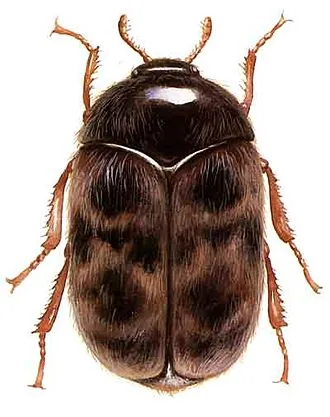
The Khapra beetle is perhaps the most feared secondary storage pest globally. It is a quarantine pest in many countries because of its extraordinary ability to survive extreme conditions where all other storage insects perish.
Damage Symptoms
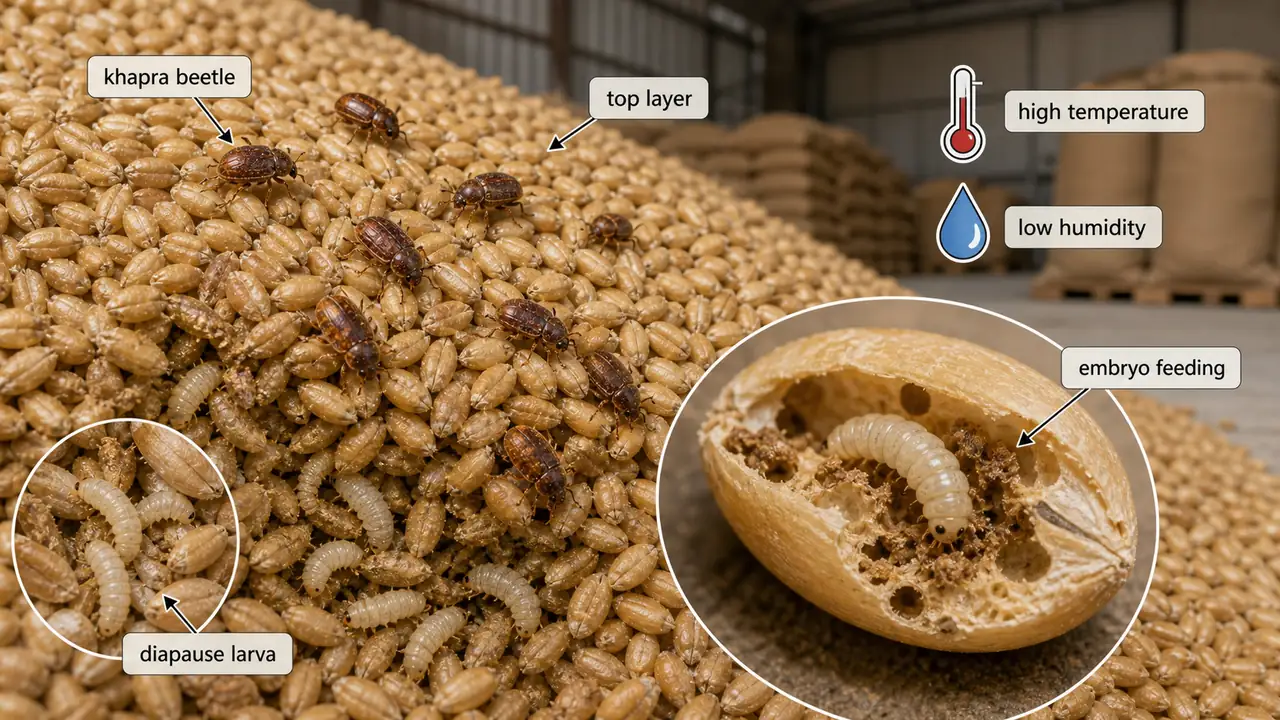
- Grubs mainly attack stored wheat and other grains
- Grubs eat near the embryo region of the grains, destroying viability
- They usually remain in the top layers of the heap
- Feeding consists of scarring and roughening of the grain surface
- Can survive at low humidity and high temperature — conditions that would kill most other pests
- Grubs can enter diapause (a dormant state) and survive for months without food
- In older storage notes, the pest is also recalled as hibernating in the larval stage inside cracks during the cooler months
- Adults cause little or no direct feeding damage; the main injury is from the larvae
- Infested grain is contaminated with cast skins, frass, and hairs, making stocks unfit and dusty
IMPORTANT
Khapra beetle can survive at low humidity and high temperature — making it extremely difficult to control. It is one of the most destructive pests of stored wheat worldwide. This unique survival ability is a frequently asked exam fact.
Agricultural context: Indian warehouses in hot, dry regions like Rajasthan face persistent Khapra beetle infestations precisely because the hot, dry conditions that deter other pests actually favour this species. Even after fumigation, diapausing larvae hidden in cracks can revive and re-infest the grain.
One reason hermetic or near-airtight storage helps against Khapra is that low-oxygen conditions suppress surviving larvae that otherwise tolerate hot, dry storage remarkably well.
2. Indian Meal Moth
Scientific Name: Plodia interpunctella
Family: Pyralidae | Order: Lepidoptera
Damage Symptoms
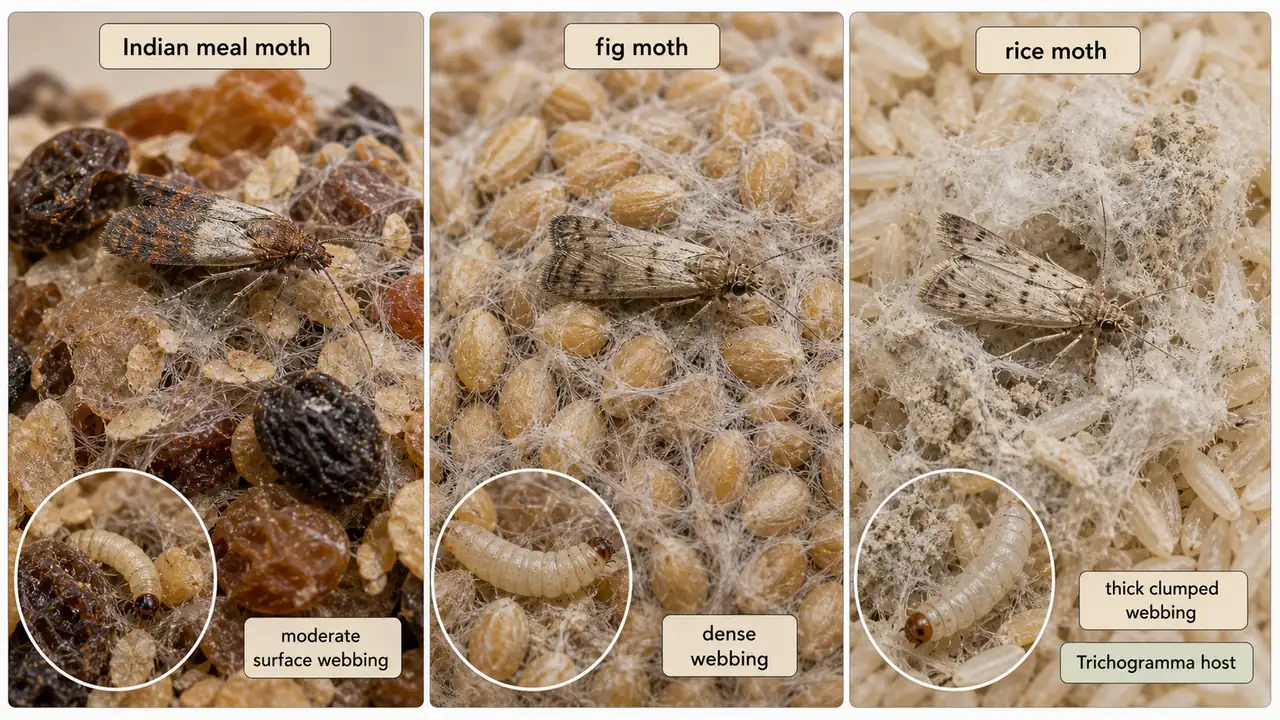
- Larvae feed on grains and dried fruits under a silken web
- Webbing on the surface of grain mass is the characteristic sign of infestation
- Also attacks nuts, chocolate, dried fruits, and cereal products
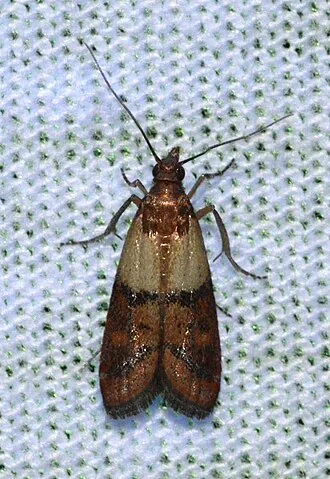
- Adults are easily identified — forewings have a distinctive reddish-brown outer half
Agricultural example: Dry fruit traders in Delhi's Khari Baoli market regularly inspect their stocks for the telltale silken webbing that signals Indian meal moth infestation in stored almonds, cashews, and raisins.
3. Fig Moth / Almond Moth
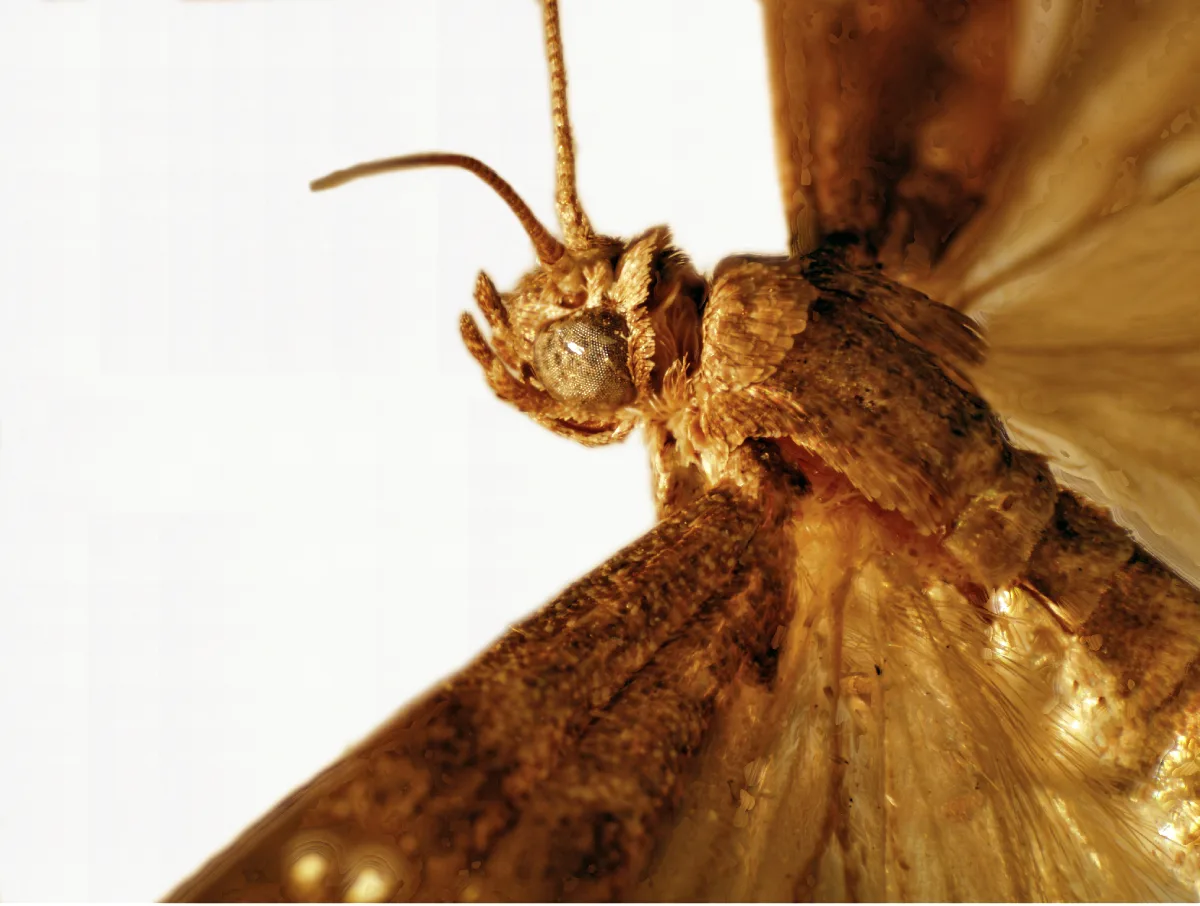
Scientific Name: Ephestia cautella
Family: Pyralidae | Order: Lepidoptera
Damage Symptoms
- Larvae web the grains and feed on the grains by remaining inside the webbed mass
- Produces dense webbing on grain surface — denser than Indian meal moth
- Also attacks dried fruits, nuts, and spices
4. Rice Moth — The Biocontrol Helper
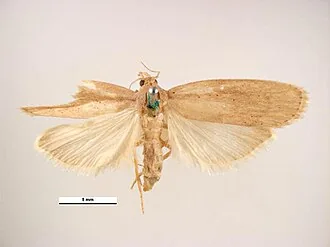
Scientific Name: Corcyra cephalonica
Family: Pyralidae | Order: Lepidoptera
Damage Symptoms
- Larvae web together the grains and feed within the webbed mass
- Produces thick silken webbing that binds grains together into clumps
- Important pest of stored rice and other cereals
- The webbing may become so dense that the grain mass looks caked or matted on the surface
IMPORTANT
Corcyra cephalonica (Rice Moth) has a dual significance: it is a storage pest, but it is also used as a factitious host for mass rearing of egg parasitoids like Trichogramma in biological control programs. This dual role is frequently asked in exams.
Agricultural context: Biocontrol laboratories across India, including those run by NBAIR (Bengaluru), mass-rear Corcyra cephalonica eggs to multiply Trichogramma wasps. These tiny parasitoids are then released in farmers' fields to control stem borers in rice and sugarcane. So the same moth that damages stored grain also serves biological pest management.
The Three Webbing Moths — A Comparison
| Feature | Indian Meal Moth | Fig/Almond Moth | Rice Moth |
|---|---|---|---|
| Scientific name | Plodia interpunctella | Ephestia cautella | Corcyra cephalonica |
| Webbing density | Moderate | Dense | Thick, clumping |
| Primary hosts | Dried fruits, nuts, cereals | Dried fruits, nuts, spices | Rice, cereals |
| Special feature | Bicoloured forewings | Dense surface webbing | Factitious host for Trichogramma |
| Family | Pyralidae | Pyralidae | Pyralidae |
TIP
Mnemonic for the three Pyralid moths: "Plodia Ephestia Corcyra — PECk at your grains." All three belong to family Pyralidae and cause webbing, but Corcyra is special because it is used in biocontrol.
5. Saw-toothed Grain Beetle
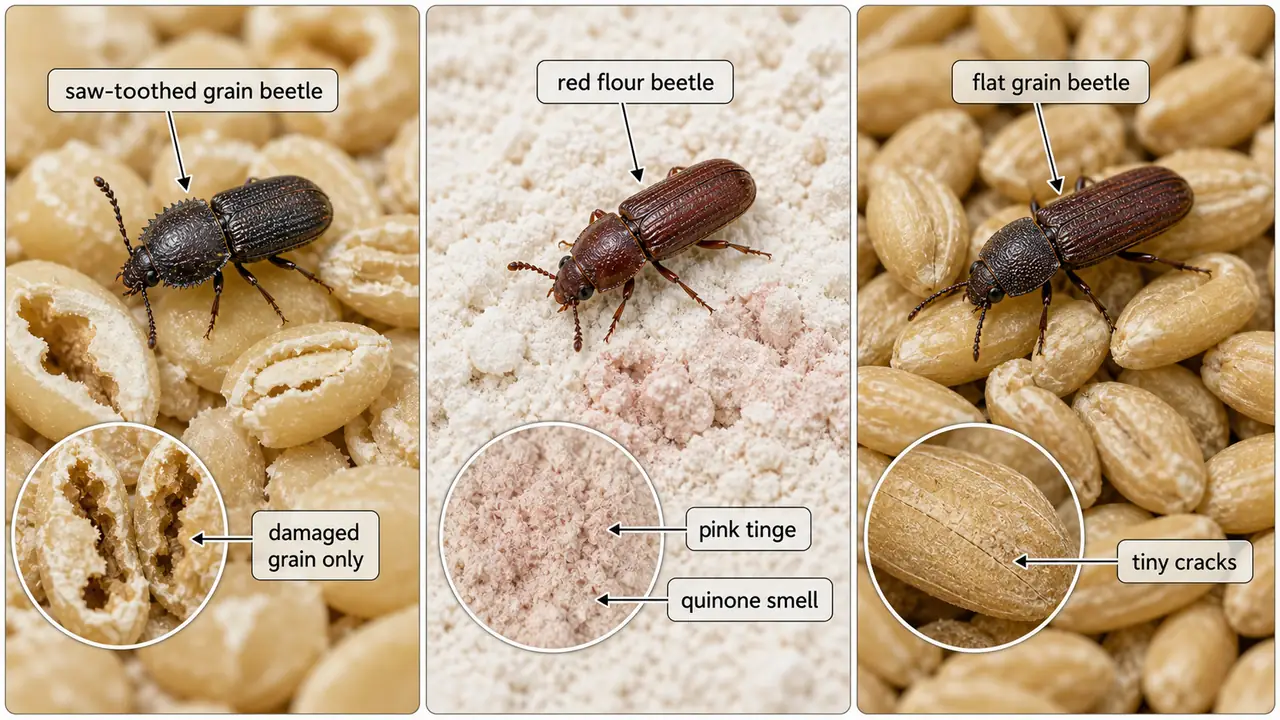
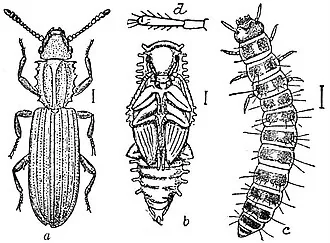
Scientific Name: Oryzaephilus surinamensis
Family: Silvanidae | Order: Coleoptera
Damage Symptoms
- Grubs and adults feed on grains that are already damaged by other insects
- Feeding consists of scarring and roughening of the grain surface
- A cosmopolitan pest of processed cereals, flour, and dried fruits
- Cannot attack intact grains — a classic secondary pest
The beetle gets its common name from the six saw-tooth-like projections on each side of its thorax (12 total).
6. Long-headed Flour Beetle
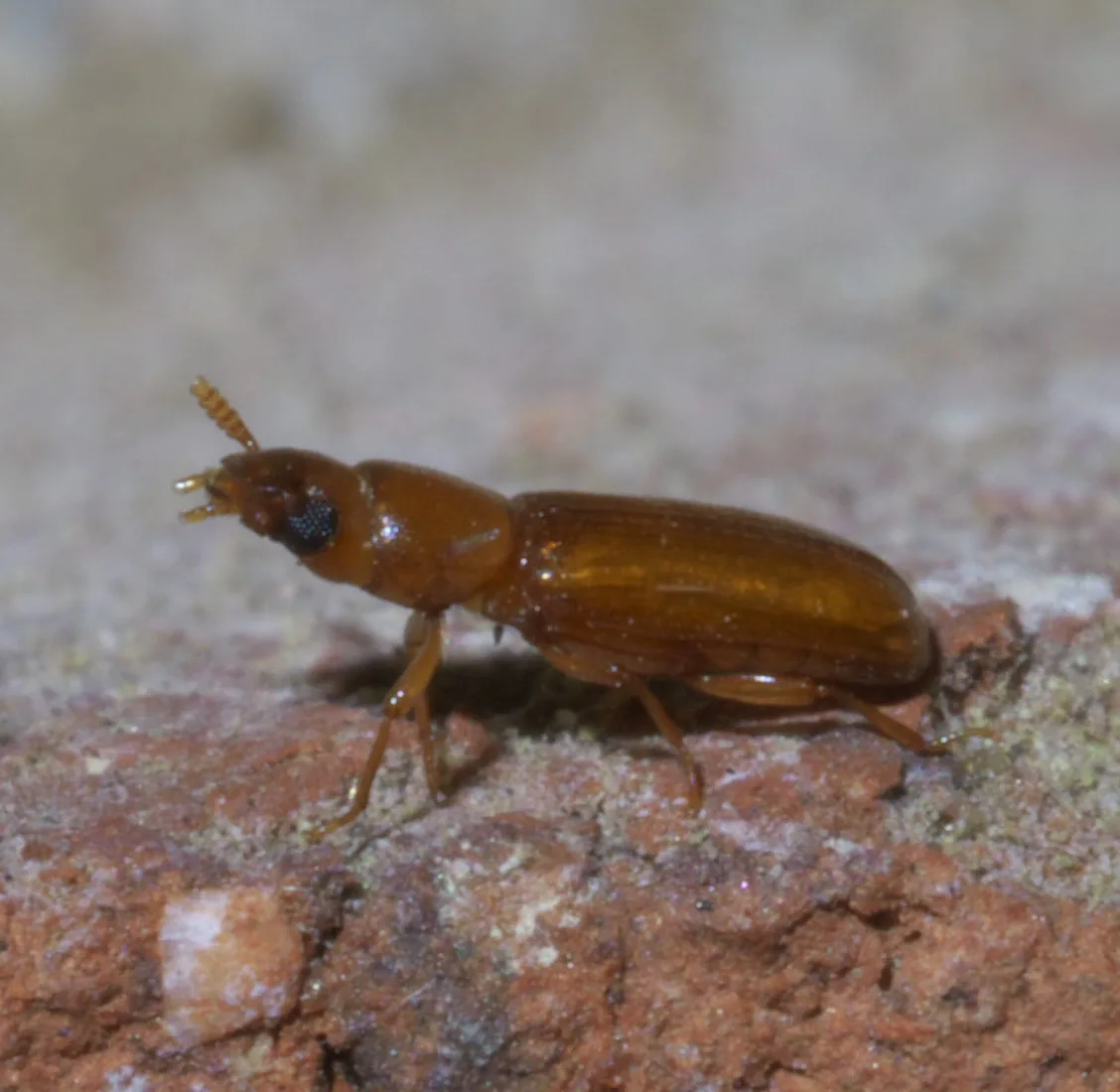
Scientific Name: Latheticus oryzae
Family: Tenebrionidae | Order: Coleoptera
Damage Symptoms
- Grubs and adults feed on stored grains, particularly rice flour and other processed products
- A secondary feeder on damaged grains
- Often found alongside Red Flour Beetle in flour mills
7. Red Flour Beetle — The Flour Mill Menace
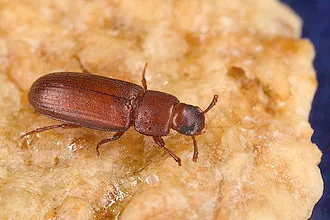
Scientific Name: Tribolium castaneum
Family: Tenebrionidae | Order: Coleoptera
This is the most economically important pest of flour mills and processed grain products worldwide.
Damage Symptoms
- Grubs and adults feed from outside on broken grains and flour
- Serious pest of processed foods — flour, semolina, broken grains, dry fruits
- Cannot attack whole, intact grains
- Produces a pungent, disagreeable odour in infested products
- Imparts a pinkish tinge to infested flour — a key identification sign
- Secretes quinones (defensive chemicals) that contaminate the flour
IMPORTANT
Tribolium castaneum (Red Flour Beetle) is the most common pest of flour mills. It cannot attack whole grains. The pinkish tinge and pungent smell in infested flour are classic exam facts.
Agricultural context: Every atta chakki (flour mill) in India deals with this pest. The pinkish discolouration of flour and the unpleasant quinone smell are the first complaints from consumers — and the telltale signs that red flour beetles have contaminated the product.
8. Flat Grain Beetle
Scientific Name: Cryptolestes minutus
Family: Laemophloeidae | Order: Coleoptera
Damage Symptoms
- Grubs feed on broken grains
- Very small (about 1.5 mm), flat beetle that can enter tiny cracks and crevices
- Common secondary pest in grain stores
- Its extremely flat body allows it to penetrate between tightly packed grains
9. Grain Mite — Not an Insect
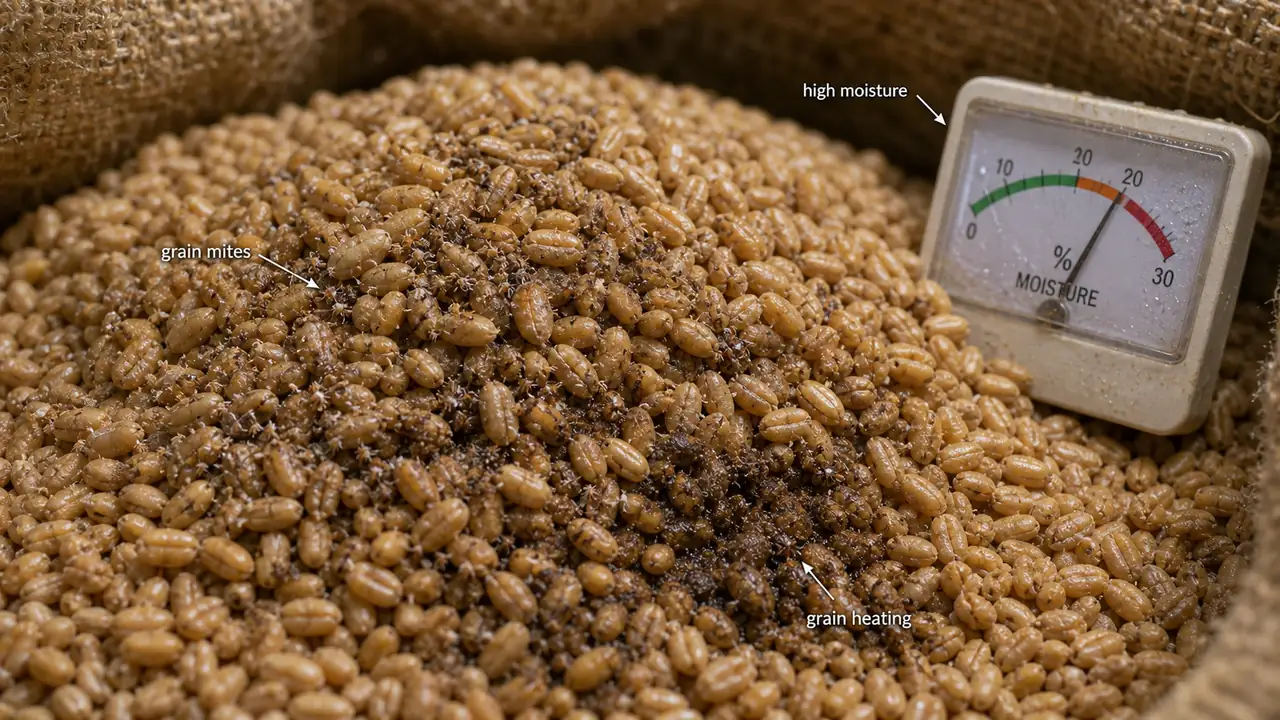
Scientific Name: Acarus siro
Class: Arachnida | Order: Acariformes
Damage Symptoms
- Not an insect — belongs to class Arachnida (along with spiders and ticks)
- Attacks stored grains at high moisture conditions (above 14% grain moisture)
- Feeds on grain germ and causes heating of the grain mass
- Produces a characteristic musty, sweet smell
- Extremely tiny — barely visible to the naked eye
- Heavy mite build-up can also aid mould development and act as a source of inoculum spread in damp grain stores
NOTE
Grain mites thrive only in high moisture conditions. Proper drying of grains below 12% moisture is the single most effective preventive measure against mite infestation. This is also the most important general rule for all storage pest prevention.
Older storage recommendations may also mention sulphur fumigation for mite disinfestation in godowns, but moisture control and sound drying remain the more dependable preventive principles.
Agricultural context: During the monsoon season, when humidity is high, grain stored in poorly ventilated farm structures across eastern India (West Bengal, Odisha, Bihar) is particularly susceptible to mite infestation. The grain heats up, develops a sweet-musty smell, and rapidly deteriorates.
Exam Tips and Mnemonics
TIP
Key distinctions to remember:
- Khapra beetle = survives low humidity + high temperature (opposite of grain mite)
- Grain mite = needs high moisture (opposite of Khapra beetle)
- Red flour beetle = flour mills, pinkish tinge, quinone smell
- Rice moth = pest AND biocontrol host (dual role)
- Grain mite = Arachnida, NOT Insecta
Mnemonic for Khapra beetle: "Khapra is a Killer that survives the Kharif heat" — it thrives in hot, dry conditions.
Summary Cheat Sheet
| Concept / Topic | Key Details |
|---|---|
| Khapra Beetle | Trogoderma granarium; Dermestidae; survives low humidity + high temperature; feeds near embryo region of wheat; quarantine pest |
| Indian Meal Moth | Plodia interpunctella; Pyralidae; silken web on grain; bicoloured forewings |
| Fig / Almond Moth | Ephestia cautella; Pyralidae; dense webbing on grain surface |
| Rice Moth (dual role) | Corcyra cephalonica; Pyralidae; storage pest AND factitious host for Trichogramma |
| Saw-toothed Grain Beetle | Oryzaephilus surinamensis; Silvanidae; feeds on already damaged grains only |
| Long-headed Flour Beetle | Latheticus oryzae; Tenebrionidae; feeds on rice flour |
| Red Flour Beetle | Tribolium castaneum; Tenebrionidae; most common flour mill pest; imparts pinkish tinge; secretes quinones |
| Flat Grain Beetle | Cryptolestes minutus; Laemophloeidae; very small, flat body |
| Grain Mite | Acarus siro; Arachnida (not Insecta); needs high moisture; musty sweet smell |
| Safe grain moisture for storage | Below 12% |
| Primary vs. Secondary | Primary = penetrate intact grain (internal); Secondary = feed on broken/damaged grain (external) |