🏘️ Rural Development Agencies & Programmes
NATP, IVLP, watershed development programmes (DPAP, DDP, IWDP), SFDA, MFALA, ITDA, IRDP, SGSY — comprehensive details for IBPS AFO/NABARD exam.
Visual Overview
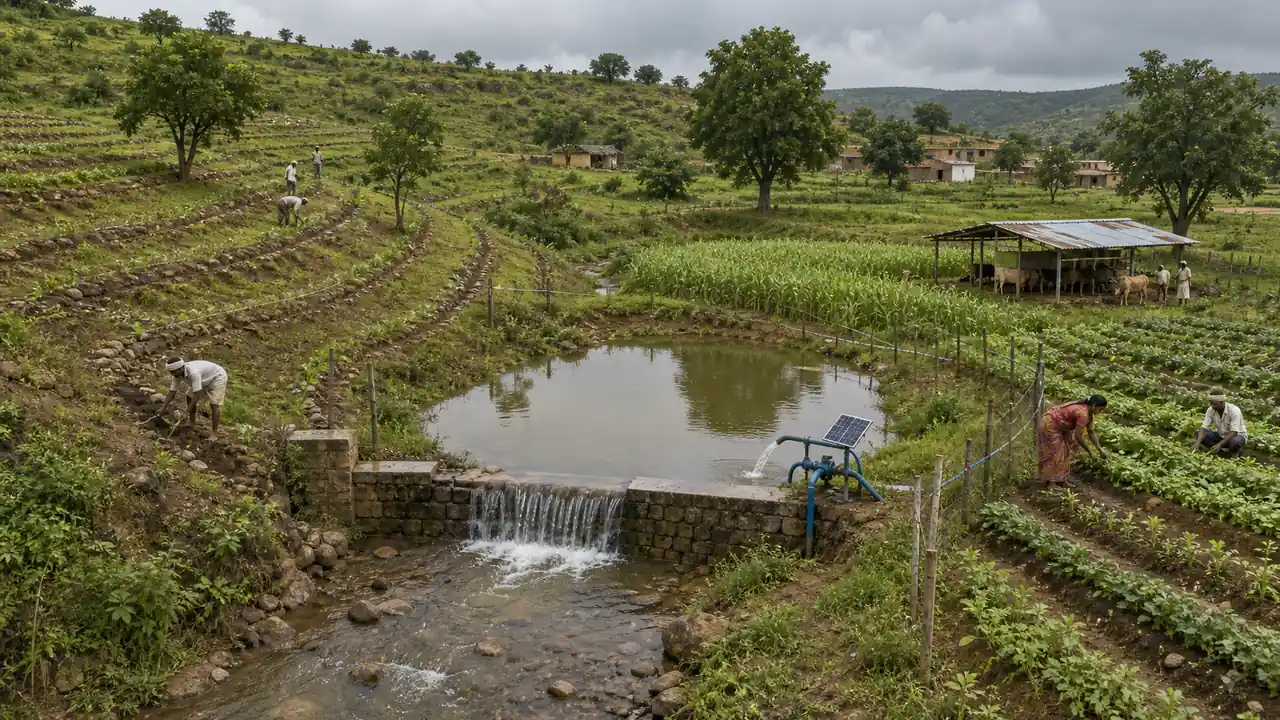
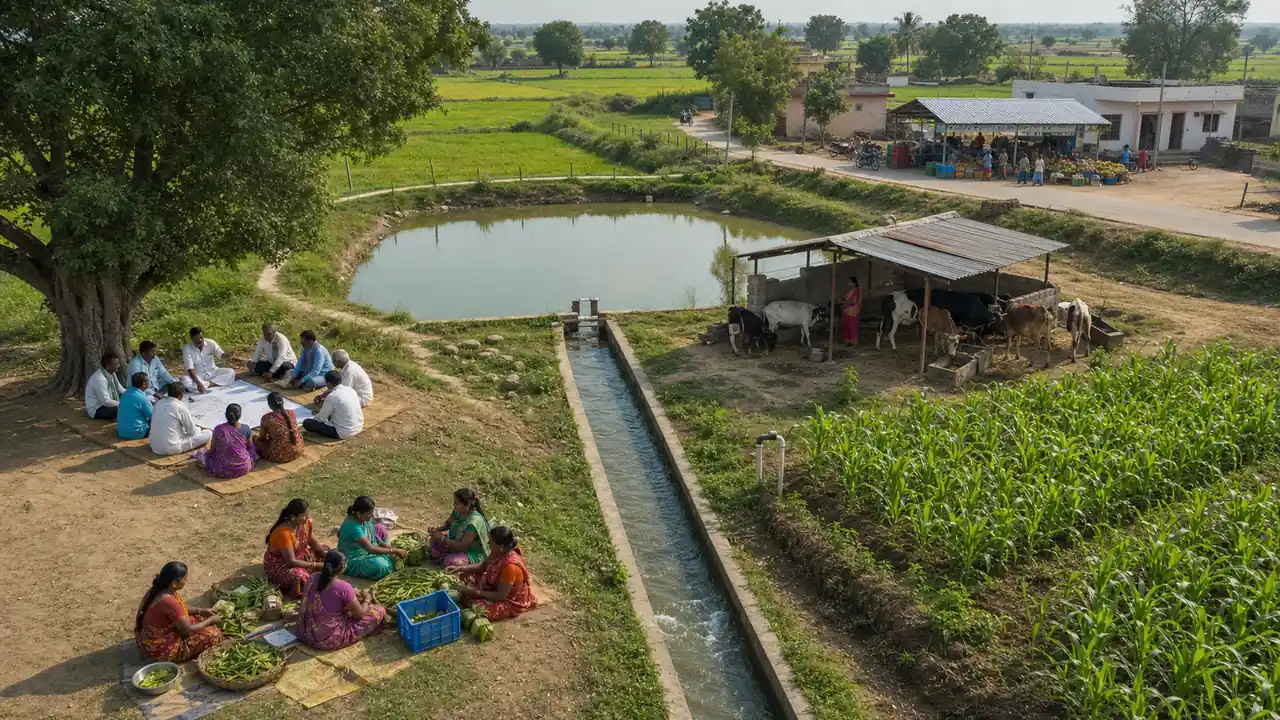
In the previous lesson, we explored ICAR, agricultural organizations, and international institutions — the research backbone that develops new technologies. But technology alone does not transform rural India. It needs programmes and agencies that channel funds, build infrastructure, and target the most vulnerable communities. This lesson covers the key rural development schemes and agencies that exams frequently test.
This lesson covers:
- NATP and IVLP — technology transfer projects
- Watershed programmes — DPAP, DDP, IWDP and their cost-sharing ratios
- Targeted agencies — SFDA, MFALA, ITDA for specific rural groups
- Poverty alleviation — IRDP, SGSY, and programme consolidation
- Employment schemes — NREP, JRY, TRYSEM
All topics are high-yield for exams, NABARD, and RRB exams.
National Agriculture Technology Project (NATP)
NATP was a landmark project that pioneered the decentralized, demand-driven approach to agricultural extension — the same approach later institutionalized through ATMA (covered in lesson 03-10).
Pro Content Locked
Upgrade to Pro to access this lesson and all other premium content.
₹99 charged monthly · Cancel anytime
- All Agriculture & Banking Courses
- AI Lesson Questions (100/day)
- AI Doubt Solver (50/day)
- Glows & Grows Feedback (30/day)
- AI Section Quiz (20/day)
- 22-Language Translation (100/day)
- Recall Questions (20/day)
- AI Quiz (15/day)
- AI Quiz Paper Analysis (100/day)
- AI Step-by-Step Explanations (100/day)
- Spaced Repetition Recall (FSRS)
- AI Tutor
- Immersive Text Questions
- Audio Lessons — Hindi & English
- Mock Tests & Previous Year Papers
- Summary & Mind Maps
- XP, Levels, Leaderboard & Badges
- Generate New Classrooms
- Voice AI Teacher (AgriDots Live)
- AI Revision Assistant
- Knowledge Gap Analysis
- Interactive Revision (LangGraph)
🔒 Secure via Razorpay · Cancel anytime · No hidden fees
Visual Overview
In the previous lesson, we explored ICAR, agricultural organizations, and international institutions — the research backbone that develops new technologies. But technology alone does not transform rural India. It needs programmes and agencies that channel funds, build infrastructure, and target the most vulnerable communities. This lesson covers the key rural development schemes and agencies that exams frequently test.
This lesson covers:
- NATP and IVLP — technology transfer projects
- Watershed programmes — DPAP, DDP, IWDP and their cost-sharing ratios
- Targeted agencies — SFDA, MFALA, ITDA for specific rural groups
- Poverty alleviation — IRDP, SGSY, and programme consolidation
- Employment schemes — NREP, JRY, TRYSEM
All topics are high-yield for exams, NABARD, and RRB exams.
National Agriculture Technology Project (NATP)
NATP was a landmark project that pioneered the decentralized, demand-driven approach to agricultural extension — the same approach later institutionalized through ATMA (covered in lesson 03-10).
- Initiated by Ministry of Agriculture, Government of India with financial assistance of World Bank — the World Bank provided both funds and the institutional design framework
- Implemented with the assistance of MANAGE — MANAGE trained the extension personnel who ran the project
- Coverage: 28 districts covering 7 states — chosen as pilot districts to test the new extension model before nationwide rollout
- Duration: 5 years (1998-2003) — after its success, the approach was scaled up as ATMA across 676 districts
Institution Village Linkage Programme (IVLP)
IVLP addressed a persistent problem in Indian agriculture: research institutions develop excellent technologies, but they often fail to reach farmers because scientists and farmers rarely interact directly.
- An innovative programme developed by ICAR — making it research-institution-driven rather than extension-department-driven
- Objective: to help scientists have direct interaction with the farming community — scientists physically visit villages and work with farmers to adapt technologies
- Bridges the gap between research institutions and farmers at the field level — a complementary approach to KVK-based extension
National Watershed Development Programmes
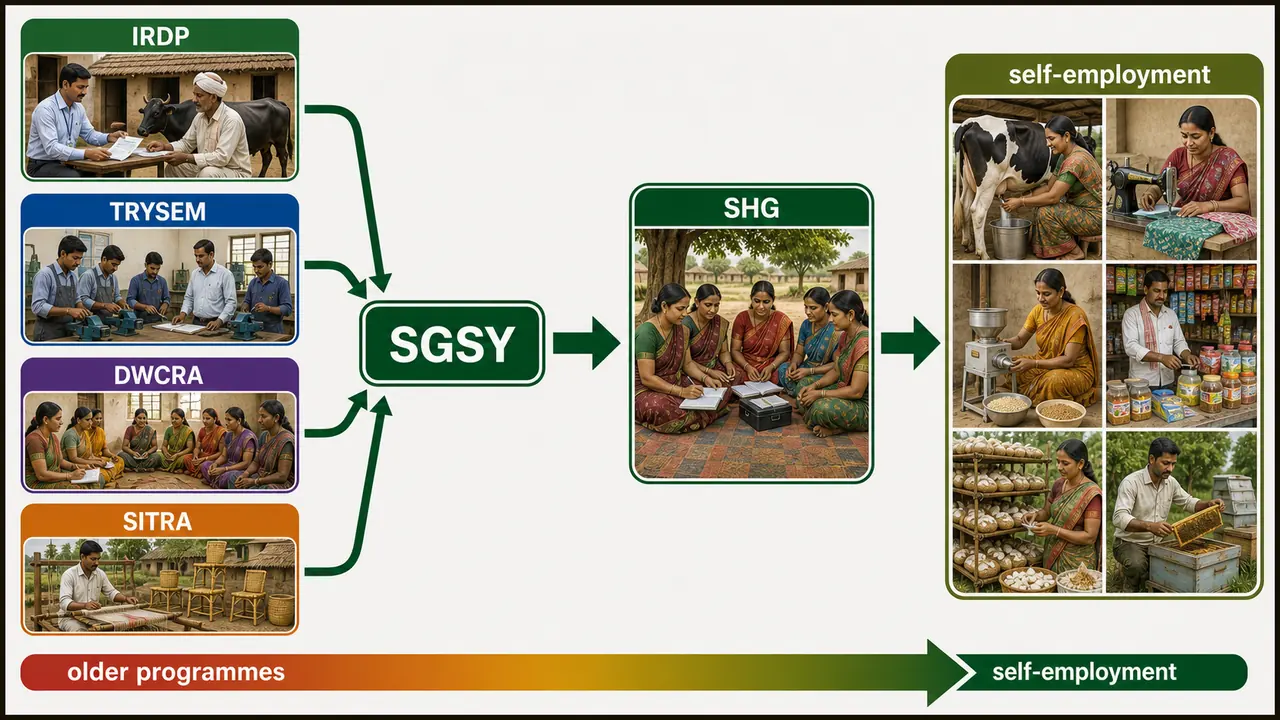
Watershed development aims to conserve soil and water in rain-dependent areas where irrigation is limited. India's watershed approach is implemented through three major programmes, each targeting a different type of degraded land. Understanding their cost-sharing ratios is critical for exams.
| Programme | Full Form | Year |
|---|---|---|
| DPAP | Drought Prone Area Programme | 1973-74 |
| DDP | Desert Development Programme | 1977-78 |
| IWDP | Integrated Wasteland Development Programme | 1989-90 |
IMPORTANT
Since 1 April 1995, all three programmes are implemented on the basis of common guidelines for watershed development.
Cost Sharing Ratios (Centre : State)
| Programme | Centre | State |
|---|---|---|
| DPAP & DDP | 75 | 25 |
| IWDP | 11 | 1 |
TIP
Memory Aid: DPAP & DDP share the same ratio (75:25). IWDP has a much higher central share (11:1) because it deals with wastelands which are a national priority.
SFDA and MFALA
These two agencies were among India's first targeted interventions for the most economically vulnerable farmers — recognizing that general agricultural programmes often bypassed those who needed help most.
Small Farmer Development Agency (SFDA)
Marginal Farmers and Agricultural Labourers Agency (MFALA)
- Government accepted the recommendation made in the 4th Five Year Plan and set up both agencies in selected districts — reflecting the Plan's emphasis on social justice and equitable growth
- Started functioning from: 1971-72 onwards
- Provision of subsidy at the rate of 25% and 33% of the cost of an approved scheme to selected beneficiaries — the higher rate (33%) was for marginal farmers and agricultural labourers who had even fewer resources than small farmers
Integrated Tribal Development Agency (ITDA)
ITDA focuses specifically on tribal communities, which often live in remote, forested areas with poor infrastructure and limited access to mainstream development programmes.
- Main objective: socio-economic development of tribal communities through income-generating schemes — including agriculture, animal husbandry, cottage industries, and infrastructure development
- ITDA project areas are generally contiguous areas of the size of a Tehsil or Block or more — ensuring concentrated effort rather than scattered interventions
- Criterion: ST population is 50% or more of the total population — this threshold ensures the agency operates only in genuinely tribal-dominated areas
Integrated Rural Development Programme (IRDP)
IRDP was one of India's largest poverty alleviation programmes, targeting individuals rather than communities. It provided subsidized credit to BPL families to acquire income-generating assets like milch cattle, poultry units, or handlooms.
- Started: 1978 — launched during the 6th Five Year Plan period as part of a major push towards poverty eradication
- Funding: 50:50 basis by the centre and states — equal cost-sharing ensured state-level ownership of the programme
- Mainly for individual development of people below the poverty line — beneficiaries received a combination of subsidy and bank loan to purchase productive assets
Swarna Jayanti Gram Swarozgar Yojana (SGSY)
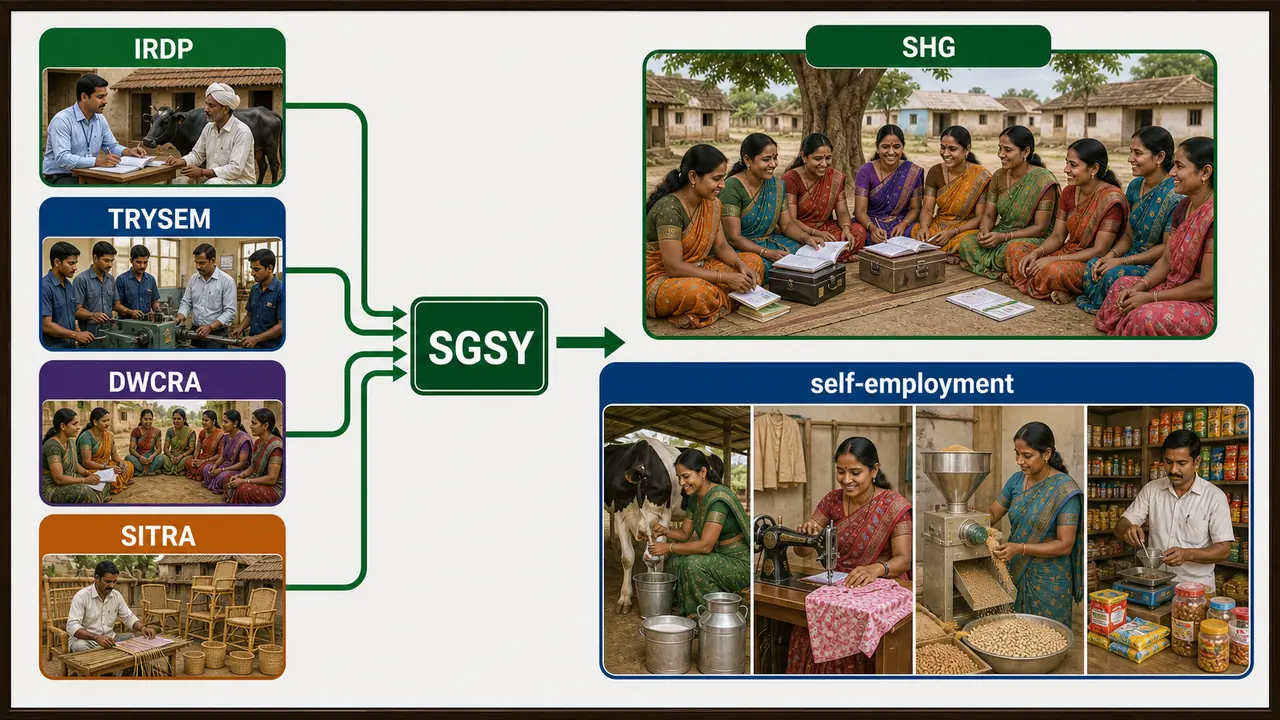
SGSY consolidated multiple fragmented poverty alleviation schemes into a single, holistic self-employment programme. Instead of running IRDP, TRYSEM, DWCRA, and SITRA separately with overlapping beneficiaries, SGSY unified them under one framework focused on Self Help Groups (SHGs).
- Effective from: 1st April 1999 (1999-2000)
- Main programme for promoting poverty alleviation through self-employment — shifted focus from individual asset distribution (IRDP model) to group-based micro-enterprise development
- SGSY is a holistic package that replaces the earlier:
- IRDP
- TRYSEM
- DWCRA
- SITRA
- and other related programmes
IMPORTANT
Exam favourite: "Which programme replaced IRDP, TRYSEM, DWCRA, and SITRA?" → Answer: SGSY (1999)
Other Key Programmes
These programmes addressed rural unemployment and youth skill development — two persistent challenges that limit the impact of agricultural extension and rural development efforts.
NREP (National Rural Employment Programme)
- Launched: 1980 — during the 6th Five Year Plan
- Objective: Increase employment opportunities in rural areas through creation of community assets like roads, irrigation channels, and school buildings — a precursor to today's MGNREGA
JRY (Jawahar Rozgar Yojana)
- Started: 1989 — merged NREP and RLEGP (Rural Landless Employment Guarantee Programme) into a single scheme
- Objective: Generate additional gainful employment for unemployed rural youth — implemented through Panchayati Raj Institutions to ensure local participation
TRYSEM (Training of Rural Youth for Self-Employment)
- Launched: 1979 — one year after IRDP, designed to complement it by building skills
- Objective: Provide rural youth (18-35 years) from families below poverty line with training and technical skills for self-employment in agriculture, industry, services, and business — later merged into SGSY in 1999
NOTE
Key Funding Ratios to Remember:
- IRDP = 50:50 (Centre:State)
- DPAP & DDP = 75:25 (Centre:State)
- IWDP = 11:1 (Centre:State)
Summary Cheat Sheet
| Concept / Topic | Key Details |
|---|---|
| NATP | 1998-2003; World Bank funded; implemented by MANAGE; 28 districts, 7 states |
| IVLP | By ICAR; direct scientist-farmer interaction at field level |
| DPAP | Drought Prone Area Programme; 1973-74; Centre:State = 75:25 |
| DDP | Desert Development Programme; 1977-78; Centre:State = 75:25 |
| IWDP | Integrated Wasteland Development; 1989-90; Centre:State = 11:1 |
| Common guidelines | All 3 watershed programmes follow common guidelines since 1 April 1995 |
| SFDA & MFALA | Started 1971-72; subsidy 25% and 33%; recommended in 4th Five Year Plan |
| ITDA | For tribal communities; ST population 50% or more; area = Tehsil/Block size |
| IRDP | Started 1978; funding 50:50; for BPL individuals |
| SGSY | 1 April 1999; replaced IRDP, TRYSEM, DWCRA, SITRA; poverty alleviation through self-employment |
| NREP | 1980; rural employment generation |
| JRY | 1989; additional gainful employment for rural youth |
| TRYSEM | 1979; training rural youth 18-35 years from BPL families |
TIP
Next: Lesson 03-12 covers Communication Models — the theoretical frameworks that explain how extension messages travel from source to farmer, and what causes distortion along the way.