🐟 Aquaculture
Important terms, Types, Integrated Fish Farming
Definition
Aquaculture is the science, art, and business of cultivating aquatic organisms in controlled or semi-controlled environments. It is often described as the aquatic equivalent of agriculture.
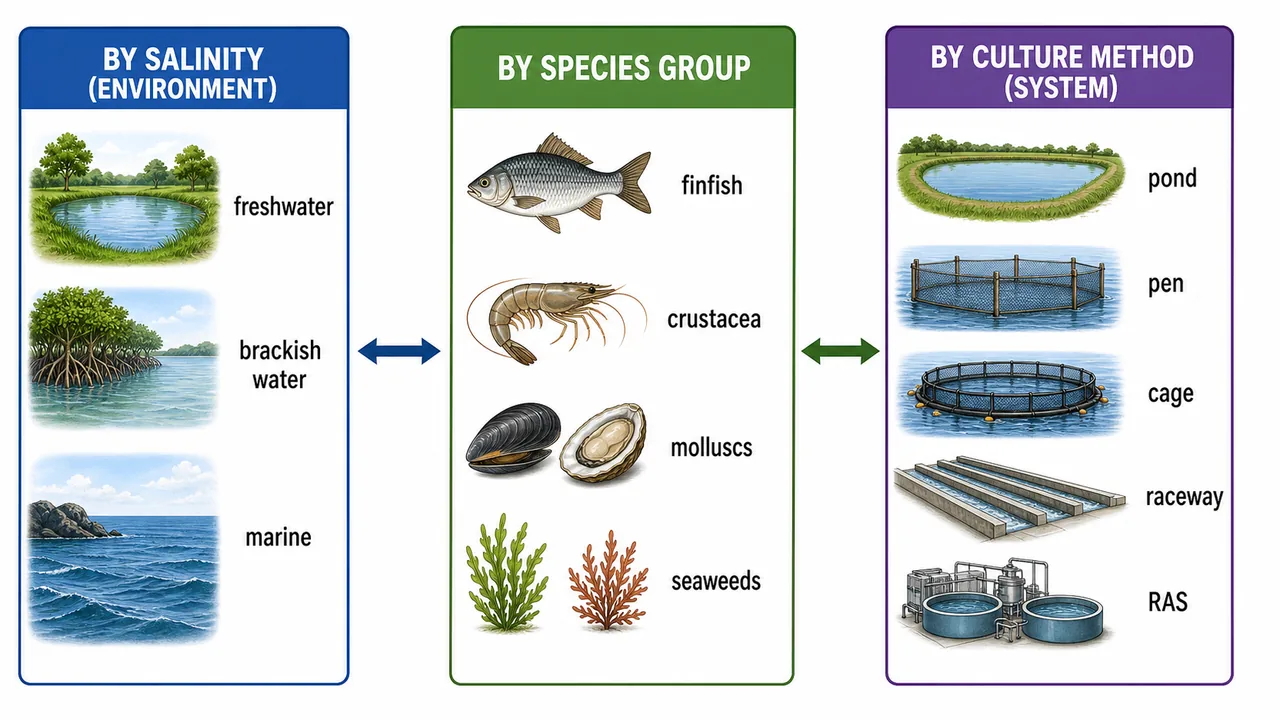
- Aquaculture or farming in water is the aquatic equivalent of agriculture or farming on land.
- Defined broadly, agriculture includes farming both animals (animal husbandry) and plants (agronomy, horticulture and forestry in part).
- Similarly, aquaculture covers the farming of both animals (including crustaceans, finfish and molluscs) and plants (including seaweeds and freshwater macrophytes).
- While agriculture is predominantly based on use of freshwater, aquaculture occurs in both inland (freshwater) and coastal (brackish water, seawater) areas.
- It implies some form of intervention in the rearing process to increase production, such as regular stocking, feeding and protection against predators. The key distinction between aquaculture and capture fisheries is this element of human intervention in the production process.
- This farming also implies individual or corporate ownership of the stock being cultivated.
IMPORTANT
Pro Content Locked
Upgrade to Pro to access this lesson and all other premium content.
₹99 charged monthly · Cancel anytime
- All Agriculture & Banking Courses
- AI Lesson Questions (100/day)
- AI Doubt Solver (50/day)
- Glows & Grows Feedback (30/day)
- AI Section Quiz (20/day)
- 22-Language Translation (100/day)
- Recall Questions (20/day)
- AI Quiz (15/day)
- AI Quiz Paper Analysis (100/day)
- AI Step-by-Step Explanations (100/day)
- Spaced Repetition Recall (FSRS)
- AI Tutor
- Immersive Text Questions
- Audio Lessons — Hindi & English
- Mock Tests & Previous Year Papers
- Summary & Mind Maps
- XP, Levels, Leaderboard & Badges
- Generate New Classrooms
- Voice AI Teacher (AgriDots Live)
- AI Revision Assistant
- Knowledge Gap Analysis
- Interactive Revision (LangGraph)
🔒 Secure via Razorpay · Cancel anytime · No hidden fees
Definition
Aquaculture is the science, art, and business of cultivating aquatic organisms in controlled or semi-controlled environments. It is often described as the aquatic equivalent of agriculture.
- Aquaculture or farming in water is the aquatic equivalent of agriculture or farming on land.
- Defined broadly, agriculture includes farming both animals (animal husbandry) and plants (agronomy, horticulture and forestry in part).
- Similarly, aquaculture covers the farming of both animals (including crustaceans, finfish and molluscs) and plants (including seaweeds and freshwater macrophytes).
- While agriculture is predominantly based on use of freshwater, aquaculture occurs in both inland (freshwater) and coastal (brackish water, seawater) areas.
- It implies some form of intervention in the rearing process to increase production, such as regular stocking, feeding and protection against predators. The key distinction between aquaculture and capture fisheries is this element of human intervention in the production process.
- This farming also implies individual or corporate ownership of the stock being cultivated.
IMPORTANT
The defining feature of aquaculture versus capture fisheries is human intervention — stocking, feeding, and protection — combined with individual or corporate ownership of the stock.
👉🏻 FAO (1988) introduced a definition of aquaculture:
The Food and Agriculture Organization (FAO) of the United Nations provided a widely accepted formal definition that helps distinguish aquaculture from wild-capture fisheries:
- Aquaculture is the farming of aquatic organisms, including fish, molluscs, crustaceans and aquatic plants.
- Farming implies some form of intervention in the rearing process to enhance production, such as regular stocking, feeding, protection from predators, etc.
- Farming also implies individual or corporate ownership of the stock being cultivated.
- For statistical purposes, aquatic organisms which are harvested by an individual or corporate body which has owned them throughout their rearing period contribute to aquaculture, while aquatic organisms which are exploitable by the public as a common property resources, with or without appropriate licences, are the harvest of fisheries.
FAO Definition — Exam Tip
The FAO definition draws a clear line: if the organism was owned throughout rearing it counts as aquaculture; if it was harvested from common property resources it counts as fisheries. This distinction is frequently tested.
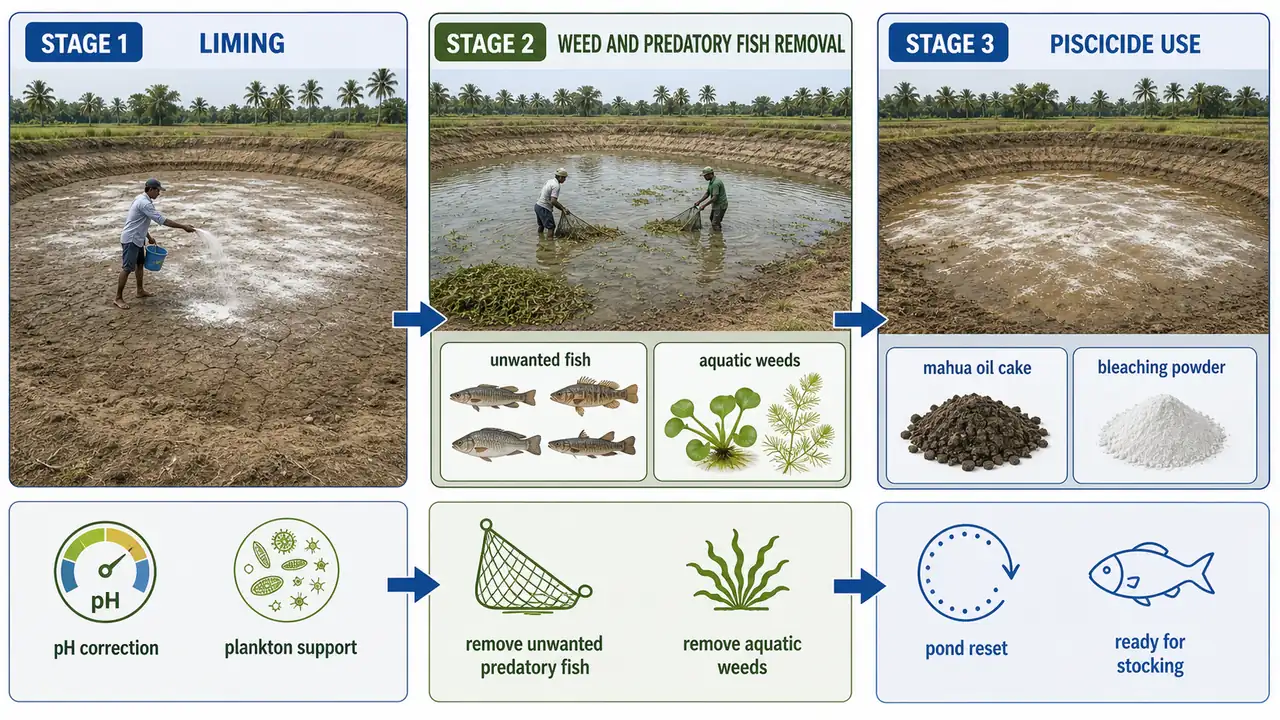
The following are important water quality and management parameters for successful fish production:
- The desirable pH for optimum fish production is 7.5 – 8.5 (Alkaline). Maintaining a slightly alkaline pH is crucial because it supports healthy plankton growth and ensures good water quality for fish survival and growth.
- There should be at least 7 - 10 days interval between liming and manuring in fish pond. This interval is necessary because lime alters the pH, and applying manure too soon can reduce the effectiveness of both treatments.
- While reclaiming acid water in aquatic pond, 250 kg lime IBPS 2018 is required (as per NABARD Norms).
- Total amount of lime application in fish pond a month should not exceed 600 kg/ha. Excessive liming can make the water too alkaline, which is harmful to fish and plankton.
TIP
Remember the sequence: Lime first, then manure after 7-10 days. This ensures the pH stabilises before organic matter is introduced.
Important Terms
Fish Seed
Understanding the different juvenile stages of fish is fundamental to aquaculture, as proper management at each stage determines the success of the entire fish farming operation.
- Fertilized fish eggs are known as Fish seeds. In simple words, they are the baby fishes used for seeding new ponds in fisheries.
- "Seed" is an industrial/technical term in fish farming used to refer either collectively to the juvenile life stages of fish (hatchling, spawn, fry and fingerling), or specifically to fry (the stage after the yolk sac disappears and before scales form).
NOTE
The progression of juvenile stages is: Hatchling → Spawn → Fry → Fingerling. Each stage has distinct characteristics and management requirements.
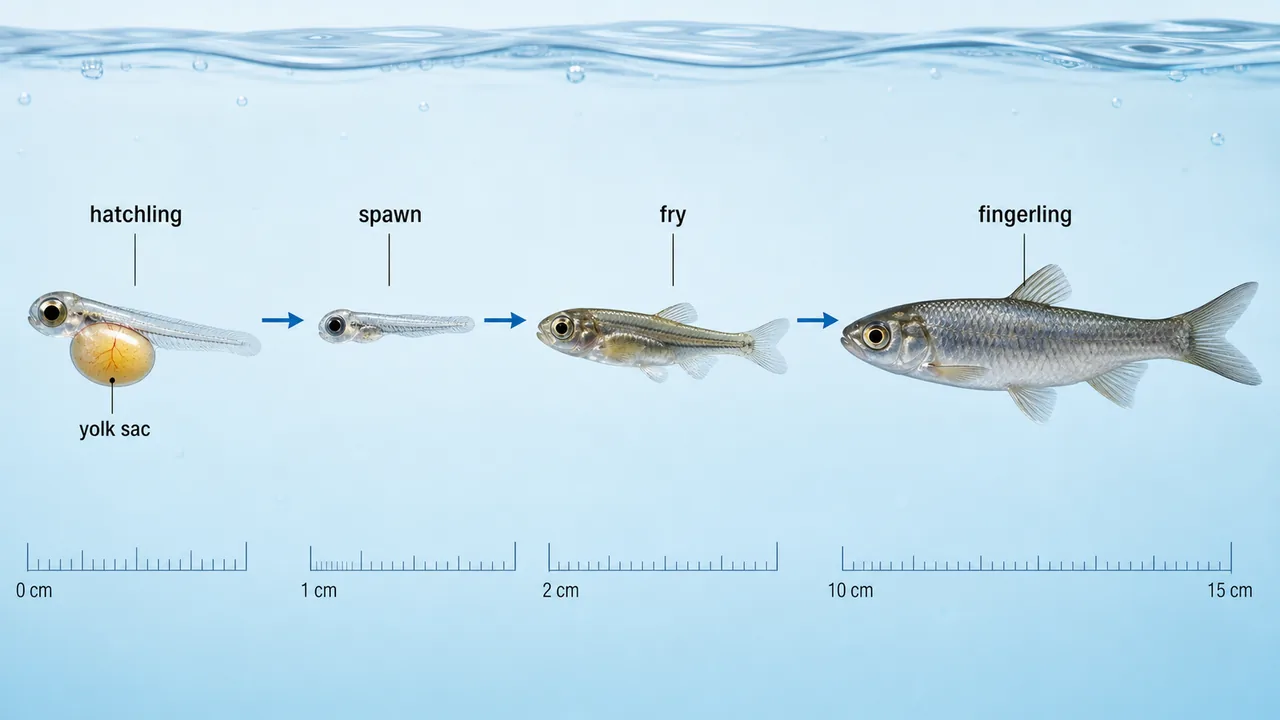
👉🏻 The Juvenile stages are:
Hatchling
- The larvae emerging from the fertilized eggs after hatching is called hatchling.
- It is characterized by the presence of yolk sac hanging below from where it draws its nutrition for 2-3 days. The yolk sac contains stored nutrients that sustain the hatchling during its earliest phase of life before it can feed independently.
- At this stage the mouth is not formed and hence it does not take food from outside.
Fry
- When the fishes have developed to the point where they are capable of feeding themselves, the fish are called fry (1 - 2 cm). At this stage, the yolk sac has been fully absorbed, the mouth is functional, and the fry begin to consume external food such as microscopic plankton.
Fingerling
- As soon as the fry grow up to 10 - 15 cm size or roughly equal the size of a finger it is known as fingerling. The name "fingerling" is derived from the fact that the fish is approximately the size of a human finger.
- Fingerling is the proper size for stocking in table fish production ponds. Table fish refers to fish grown to a size suitable for consumption, and fingerlings are the ideal starting point for this final grow-out phase.
- It takes about 30-60 days for the fry to grow up to fingerling size.
NOTE
Sometimes, we come across a juvenile stage called spawn — it is the intermediate stage between hatchling and fry.
Feed
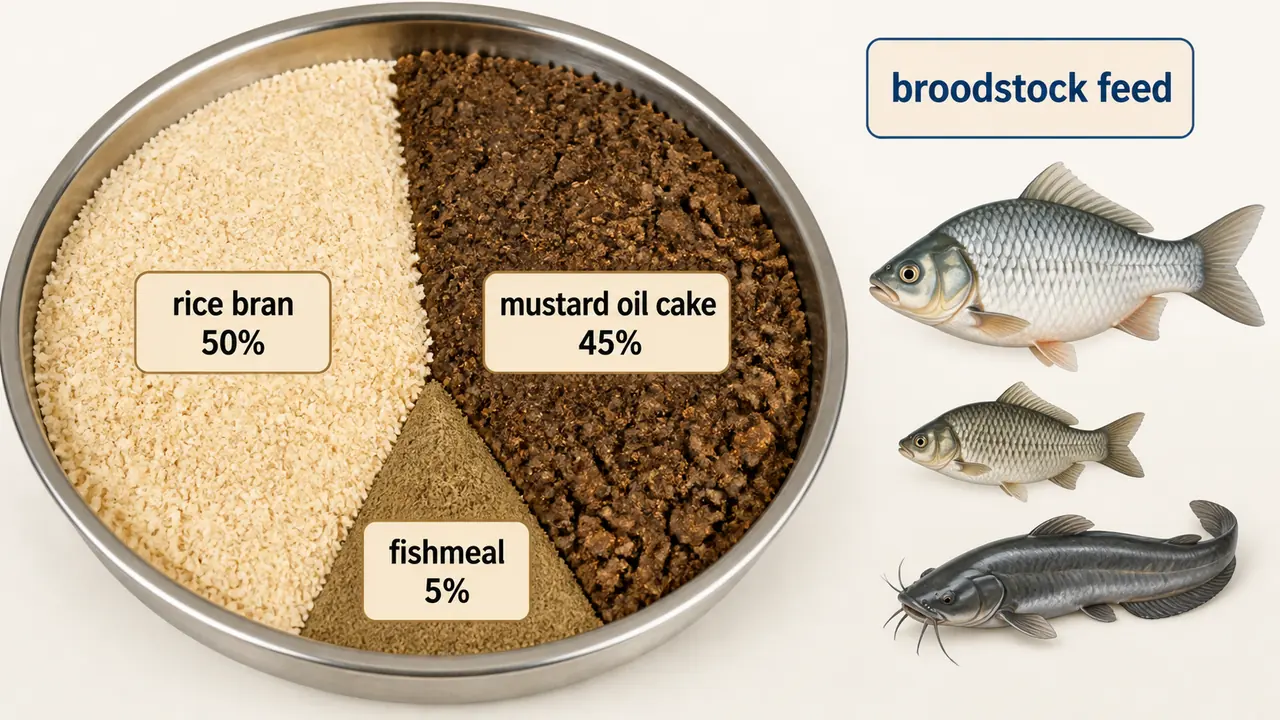
Proper nutrition is essential for healthy broodstock development and successful reproduction in aquaculture.
- Most fish farmers feed their broodstock with a supplementary feed comprising of 50% rice bran IBPS 2018 or wheat bran, 45% mustard oil cake and 5% fishmeal (Islam, 1989). This combination provides a balanced mix of carbohydrates (from rice/wheat bran), protein (from mustard oil cake), and animal protein with essential amino acids (from fishmeal).
TIP
Easy memory aid for broodstock feed ratio: 50 : 45 : 5 (Bran : Oil Cake : Fishmeal). The largest component is always the energy source (bran).
Classification of Aquaculture
Aquaculture systems can be classified in several ways, each providing a different perspective on how fish farming is practiced.
👉🏻 Based on the degree of intensity:
The level of management input, stocking density, and feeding practices determine whether a system is extensive, semi-intensive, or intensive.
- Intensive production involves the high-density culture of organisms, and regular and nutritionally complete feeding;
- Semi-intensive systems involve lower densities, with the enhancement of naturally occurring feed, and some direct feeding;
- Extensive aquaculture involves a low density of organisms, sometimes with the enhancement of naturally occurring feed.
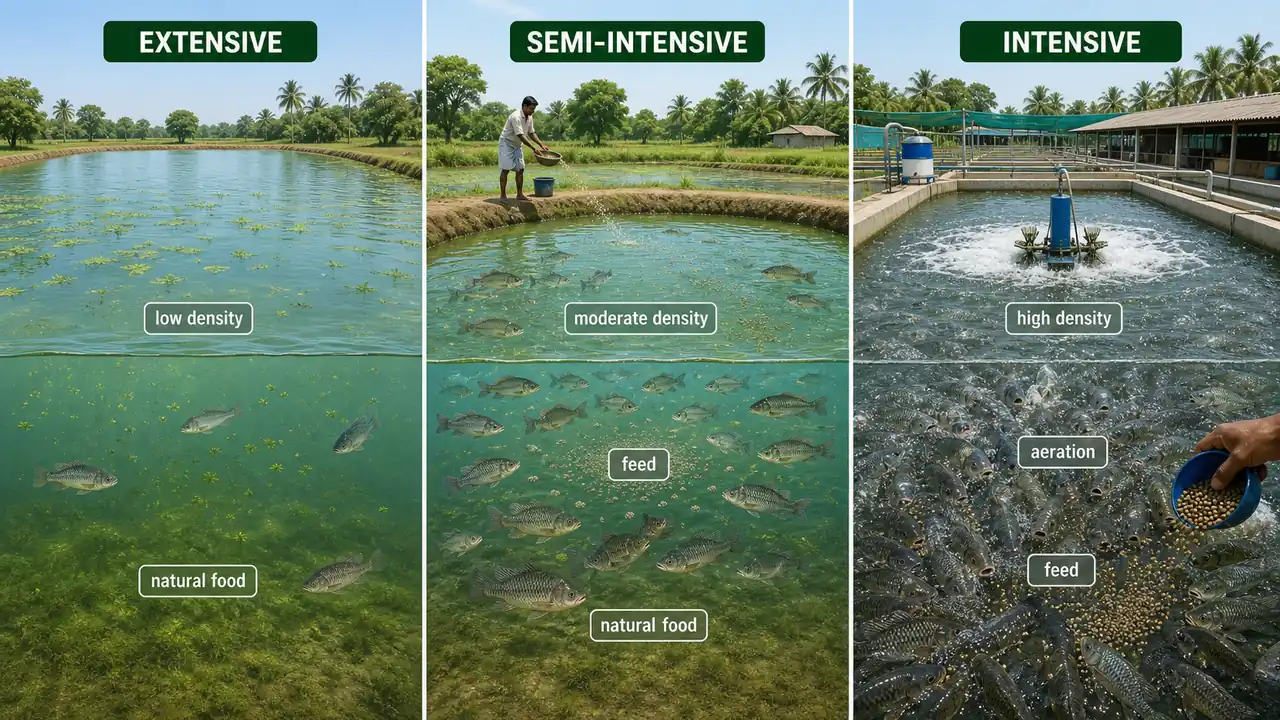
👉🏻 Based on the type of environment within which the cultivation takes place and the species is cultivated (Eg. Based on Salinity)
Salinity is a major factor determining which species can be cultured and where:
- Freshwater: This refers to farming of aquatic animals in zero saline water. Freshwater aquaculture includes culture in ponds, tanks, reservoirs, rivers, and rice paddies.
- Brackish water: Brackish water is a mixture of seawater and freshwater with a salinity less than 30 ppt (Parts Per Thousand). Examples are: Estuaries, backwaters, creeks and mangrove waterways. Brackish water environments are particularly important for shrimp farming in India.
- Marine: This refers to farming of aquatic animals and plants in sea water. Marine aquaculture (also called mariculture) includes cage farming of fish, mussel culture, oyster culture, and seaweed cultivation.
👉🏻 The main groups of species are:
- finfish, such as sea bass, sea bream, trout and carp
- crustacea, such as marine shrimp and freshwater crayfish
- molluscs, such as mussels, oysters and clams, and
- seaweeds
👉🏻 On the basis of species stocked for farming:
- Monoculture: Only one species is reared in a culture system. This approach is simpler to manage but may not utilize all available food niches in the pond.
- Polyculture:
- Two or more different fish species are farmed.
- Polyculture practices give higher yield than monoculture. This higher yield results from the complementary feeding habits of different species, which allows maximum utilization of all food resources available at different levels of the pond.
Principal requirements of different species for polyculture
- Different feeding habits — Each species should feed on a different type of food (e.g., plankton, weeds, detritus) to avoid competition.
- Should occupy different columns in a pond system — Species should utilize different ecological niches (surface, middle, and bottom layers) of the pond.
- Should attain marketable size at the same time — This allows simultaneous harvesting, which is more efficient and economical.
- Should be non-predatory in behaviour — Predatory species would consume the other stocked fish, defeating the purpose of polyculture.
Various Aquaculture Methods and Practices
- A number of aquaculture practices are used world-wide in three types of environment (freshwater, brackish water, and marine) for a great variety of culture organisms.
- Freshwater aquaculture is carried out either in fish ponds, fish pens, fish cages or, on a limited scale, in rice paddies.
- Brackish water aquaculture is done mainly in fish ponds located in coastal areas.
- Marine culture employs either fish cages or substrates for molluscs and seaweeds such as stakes, ropes, and rafts.
- Culture systems range from extensive to intensive depending on the stocking density of the culture organisms, the level of inputs, and the degree of management.
- In countries where government priority is directed toward increased fish production from aquaculture to help meet domestic demand, either as a result of the lack of access to large waterbodies or the over-exploitation of marine or inland fisheries, aquaculture practices are almost exclusively oriented toward production for domestic consumption.
- The following are some of the cultural practices: (Basically it is divided on the basis of enclosure used for culture)
- Fish Pond Culture
- Pen and Cage Culture
- Raceway
- Recirculating Aquaculture System (RAS)
Fish Pond Culture
Pond culture is the most common and widely practiced method of aquaculture worldwide. It involves constructing artificial water bodies where fish are stocked, managed, and harvested.
-
It is the common method of fish culture. Water is maintained in an enclosed area by artificial construction of dike/bund.
-
Depending upon the motive of farming, based on economic and commercial considerations, fish culture practices may be classified as under:
(i) Extensive Fish Culture
Extensive fish culture is the simplest and most basic form of aquaculture, suitable for farmers with limited capital and large water bodies.
- Large ponds, beels, etc. are brought under this culture where little care is taken with regard to its improvement.
- So it is the least managed fish farming. Here, the yield is modest and the expenditure is less as it is raised on natural food.
- In extensive fish farming, economic and labour inputs are usually low.
- Natural food production plays a very important role, and the system's productivity is relatively low.
- Fertiliser may be used to increase fertility and thusfish production
- The extensive fish farming system is the least managed form of fish farming, in which little care is taken.
- This system involves large ponds measuring 1 to 5 ha in area with stocking density limited to only less than 5,000 fishes/ha.
- No supplemental feeding or fertilisation is provided.
- Fish depends only on natural foods.
- Yield is poor (500 kg to 2 ton/ha), and survival is low.
- The labour and investment costs are low, and this system results in minimum income.
(ii) Intensive Fish Culture
Intensive fish culture represents the most advanced and high-input form of aquaculture, aimed at achieving maximum production from limited water resources.
- In this fish culture an all-out attempt is made to achieve maximum production of fish from an minimum quantity of water.
- It is the best managed form of fish farming and the fishes are fed on artificial food in addition to the natural feed.
- Here the yield is very high (over 6 ton/ha/year).
- Although the cost of investment is high, the earnings from this culture far exceed the cost, so as to ensure high profit.
- Intensive fish farming involves a high level of inputs and stocking the ponds with as many fish as possible.
- The fish are fed supplementary feed, while natural food production plays a minor role
- In this system, difficult management problems can arise caused by high fish stocking densities (increased susceptibility to diseases and dissolved oxygen shortage). Dissolved oxygen management is one of the most critical challenges in intensive systems, as overcrowding leads to rapid oxygen depletion.
- The high production costs force one to fetch a high market price in order to make the fish farm economically feasible.
- An intensive fish farming system is the well-managed form of fish farming, in which all attempts are made to achieve maximum production of fish from a minimum quantity of water.
- This system involves small ponds/tanks/raceways with very high stocking density (10-50 fish/m³ of water).
- Fish are fed wholly formulated feed.
- Proper management is undertaken to control water quality by use of aerators and nutrition by use of highly nutritious feed. Aerators are mechanical devices that increase the dissolved oxygen level in the water, which is essential for high-density stocking.
- The yield obtained ranges from 15 to 100 ton/ha or more.
- Although the cost of investment is high, the return from the yield of fish exceeds to ensure the profit.
(iii) Semi-Intensive Fish Culture
Semi-intensive fish culture strikes a balance between the low-input extensive system and the high-input intensive system. It is the most commonly practiced form of fish farming in India and many developing countries.
- Intensive culture possesses certain hazards, for which a culture between the first two, called semi-intensive culture, is generally practised.
- Here certain amount of management is required and the net profit is in between the above two.
- Semi-intensive fish farming requires a moderate level of inputs and fish production is increased by the use of fertiliser and/or supplementary feeding.
- This means higher labour and feed costs, but higher fish yields usually more than compensate for this.
- Semi-intensive fish culture system is more prevalent and involves rather small ponds (0.5 to 1 ha) with higher stocking density (10,000 to 15,000 fish/ha).
- In this system, care is taken to develop natural foods by fertilisation with/without supplemental feeding. Fertilisation (using organic manures like cow dung or inorganic fertilisers) promotes plankton growth, which forms the primary natural food for fish.
- However, the major food source is natural food.
- Yield is moderate (3 to 10 ton/ha), and survival is high.
Quick Comparison — Extensive vs Semi-Intensive vs Intensive
| Parameter | Extensive | Semi-Intensive | Intensive |
|---|---|---|---|
| Pond size | 1-5 ha | 0.5-1 ha | Small tanks/raceways |
| Stocking density | <5,000/ha | 10,000-15,000/ha | 10-50 fish/m³ |
| Feed | Natural only | Natural + supplementary | Wholly formulated |
| Yield | 0.5-2 ton/ha | 3-10 ton/ha | 15-100+ ton/ha |
| Investment | Low | Moderate | High |
Pen and Cage Culture
Pen and cage culture are innovative methods that allow fish farming in existing natural water bodies without the need to construct ponds. These methods are particularly useful for utilizing open water resources like lakes, reservoirs, and coastal waters.
- Pen and cage culture involve the rearing of fish within fixed or floating net enclosures supported by frameworks made of bamboo, wood, or metal, and set in sheltered, shallow portions of lakes, bays, rivers, and estuaries.
- Both cage and pen culture are types of enclosure culture and involve holding organisms captive within an enclosed space whilst maintaining a free exchange of water.
- The two methods, however, are distinct from one another.
- A cage is totally enclosed on all, or all but the top, sides by mesh or netting, whereas in pen culture the bottom of the enclosure is formed by the lake or sea bottom. This is the key difference: cages have an artificial bottom while pens use the natural bottom.
- Cage culture uses existing water resources (ponds, rivers, estuaries, open ocean, etc.) but confines the fish inside some type of mesh enclosure.
- The mesh retains the fish, making it easier to feed, observe and harvest them.
- The mesh also allows the water to pass freely between the fish and surrounding water resource, thus maintaining good water quality and removing wastes.
Cage Culture
- Rearing of fish from juvenile stage to commercial size in a volume of water enclosed on all sides (In some cases, the top maybe open).
- Advantages of Cage Culture:
- Effective use of existing waterbodies
- Technically simple
- Lower capital cost
- Easier stock management and monitoring
- Disadvantages of Cage Culture:
- Vulnerable to external water quality problems eg. Algal blooms, low oxygen
- Stock is more vulnerable to predators such as birds
- Growth rates are significantly influenced by ambient water parameters
Pen Culture
- Pen culture is defined as raising of fish in a volume of water enclosed on all sides except bottom. The natural bottom allows fish to access benthic food organisms and natural substrate.
- This system can be considered a hybrid between pond culture and cage culture.
- Advantages:
- Intensive utilization of available space
- Suitability for culturing many varied species
- Ease of harvest
- The flexibility of size and economy
- Availability of natural food and exchange of materials with the bottom
- Disadvantages:
- High demand for oxygen and water flow
- Pollution
- Rapid spread of diseases
- Risk of theft
- Conflict with multiple use of natural waters
Raceway
Raceway culture is a flow-through system that uses continuously moving water, making it ideal for species that require high dissolved oxygen levels and clean water, such as trout and salmon.
- Raceway culture is defined as raising of fish in running water.
- Raceways are designed to provide a flow-through system to enable rearing of much denser population of fishes.
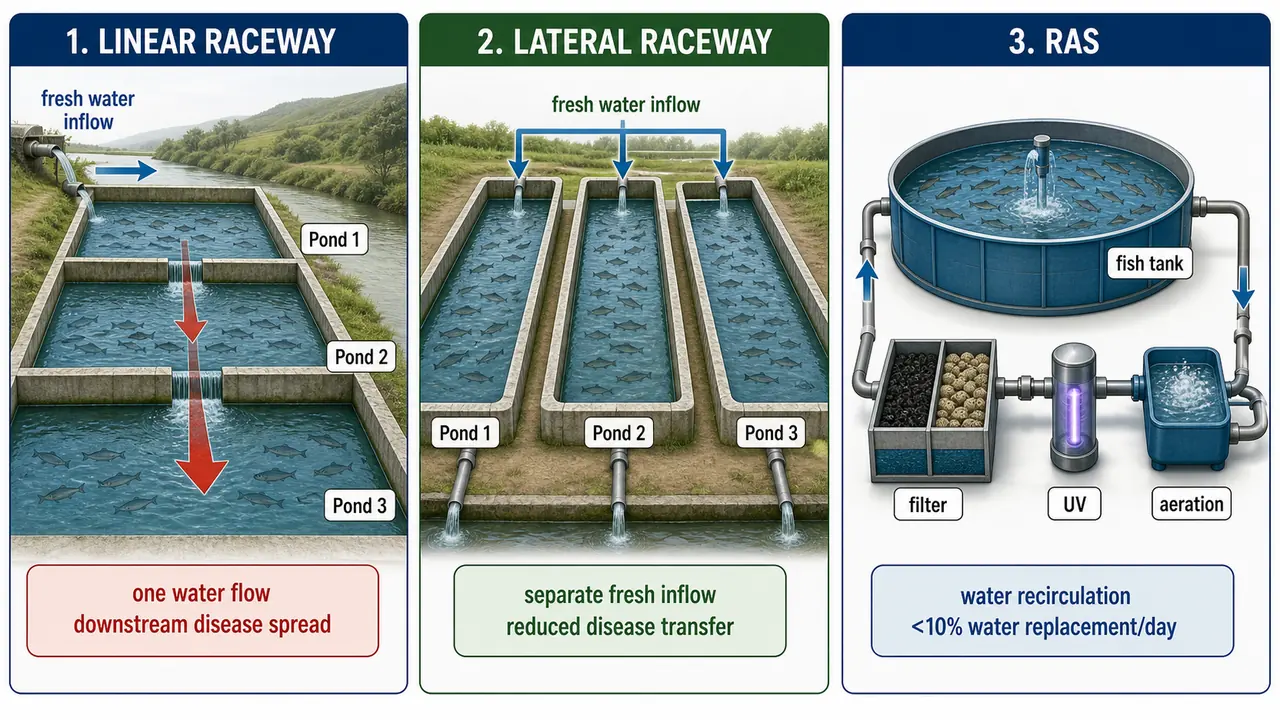
Types
Linear Type
- Ponds arranged in sequence the volume of water entering each pond is larger and as the same water is used repeatedly from pond to pond, occurrence of disease in initial ponds may directly affect the other connected ponds. The serial reuse of water is the main disadvantage of this arrangement, as water quality deteriorates progressively and disease can spread downstream through all connected ponds.
Lateral Type
- Ponds laid out in parallel in this type the volume of water entering each pond is smaller but a fresh supply of water is always ensured, and no transfer of disease from one pond to another. The lateral arrangement is generally preferred because each pond receives independent, fresh water supply, reducing the risk of disease transmission.
Recirculating Aquaculture System (RAS)
- A Recirculating Aquaculture System (RAS) can be defined as an aquaculture system that incorporates the treatment and reuse of water with less than 10% of total water volume replaced per day. RAS is one of the most technologically advanced forms of aquaculture, using biofilters, mechanical filters, UV sterilizers, and aeration systems to continuously clean and recycle the water. This makes it extremely water-efficient and allows fish farming in locations where water availability is limited.
IMPORTANT
RAS is increasingly relevant in water-scarce regions. Its defining threshold is <10% daily water replacement, making it the most water-efficient aquaculture system available.
Integrated Fish Farming
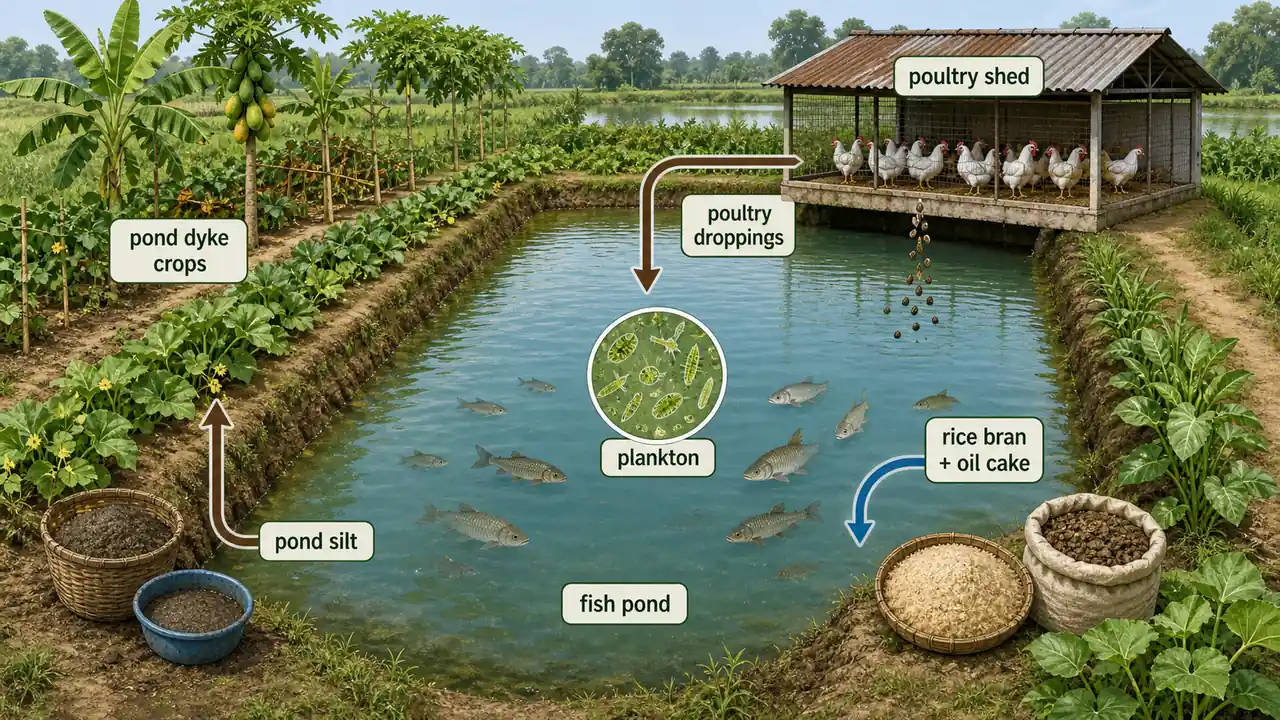
Integrated Fish Farming (IFF) is a highly sustainable and economically efficient approach that combines fish culture with other agricultural or livestock activities, creating a synergistic system where waste from one component becomes input for another.

- The principle of integrated fish farming involves farming of fish along with livestock or/and agricultural crops.
- This type of farming offers great efficiency in resource utilization, as waste or byproduct from one system is effectively recycled. For example, livestock manure fertilises the pond water, promoting plankton growth that serves as natural food for the fish.
- It also enables effective utilization of available farming space for maximizing production.
- The rising cost of protein-rich fish food and chemical fertilizers as well as the general concern for energy conservation have created awareness in the utilization of rice and other crop fields and livestock wastes for fish culture.
- Fish culture in combination with agriculture or livestock is a unique and lucrative venture and provides a higher farm income, makes available a cheap source of protein for the rural population, increases productivity on small land-holdings and increases the supply of feeds for the farm livestock.
- The scope of integrated farming is considerably wide.
- Ducks and geese are raised in pond, and pond-dykes are used for horticultural and agricultural crop products and animal rearing.
- The system provides meat, milk, eggs, fruits, vegetables, mushroom, fodder and grains, in addition to fish.
- Hence this system provides better production, provides more employment, and improves socio-economic status of farmers and betterment of rural economy.
👉🏻 Integrated fish farming can be broadly classified into two, namely:
-
Agriculture-fish and Livestock-fish systems.
-
Agri-based systems include rice-fish integration, horticulture-fish system, mushroom-fish system, seri-fish system. Rice-fish integration is particularly popular in countries like China, Bangladesh, and parts of India, where fish are raised in flooded rice paddies.
-
Livestock-fish system includes cattle-fish system, pig-fish system, poultry-fish system, duck-fish system, goat-fish system, rabbit-fish system. Among these, the duck-fish system and poultry-fish system are the most popular due to the high manure output of birds, which effectively fertilises pond water.
Seaweed cultivation
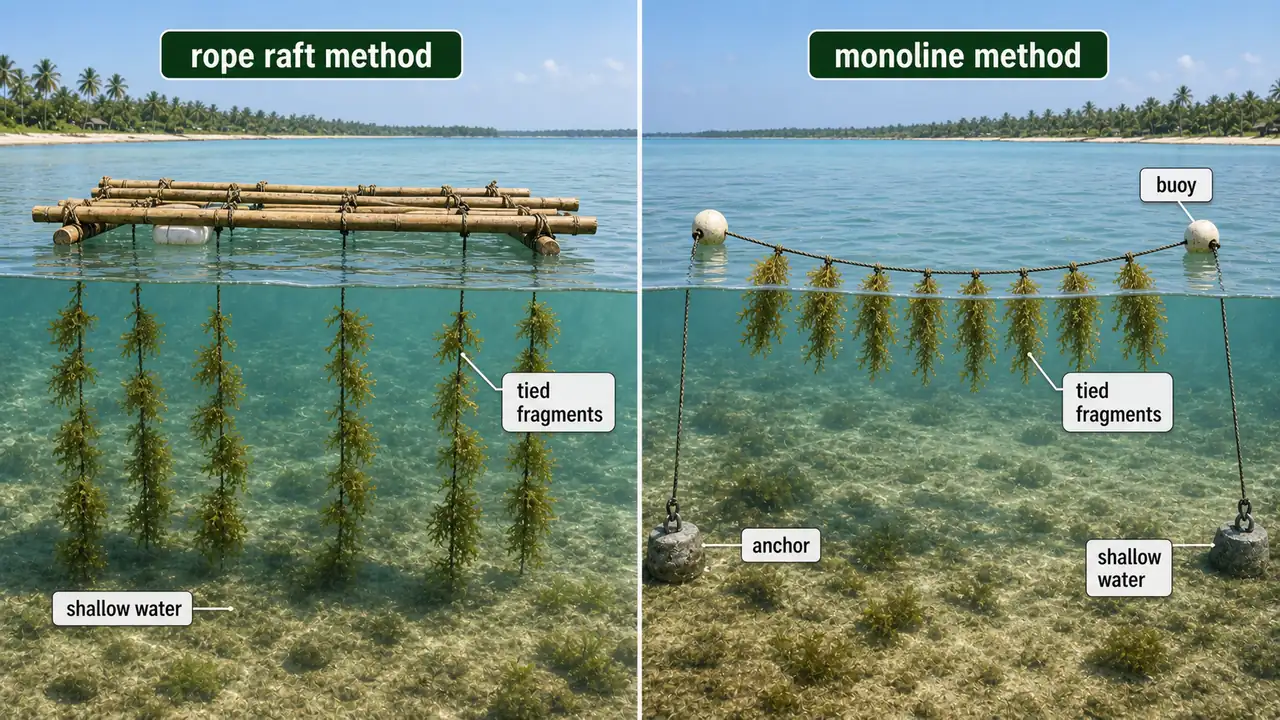
Seaweed cultivation
- It is the practice of cultivating and harvesting seaweed, also known as kelp farming. Seaweed is an important aquaculture product used in the production of agar, carrageenan, and alginate — substances widely used in the food, pharmaceutical, and cosmetic industries. India's coastal states like Tamil Nadu are emerging as key areas for seaweed cultivation.
Fish lean/ban period
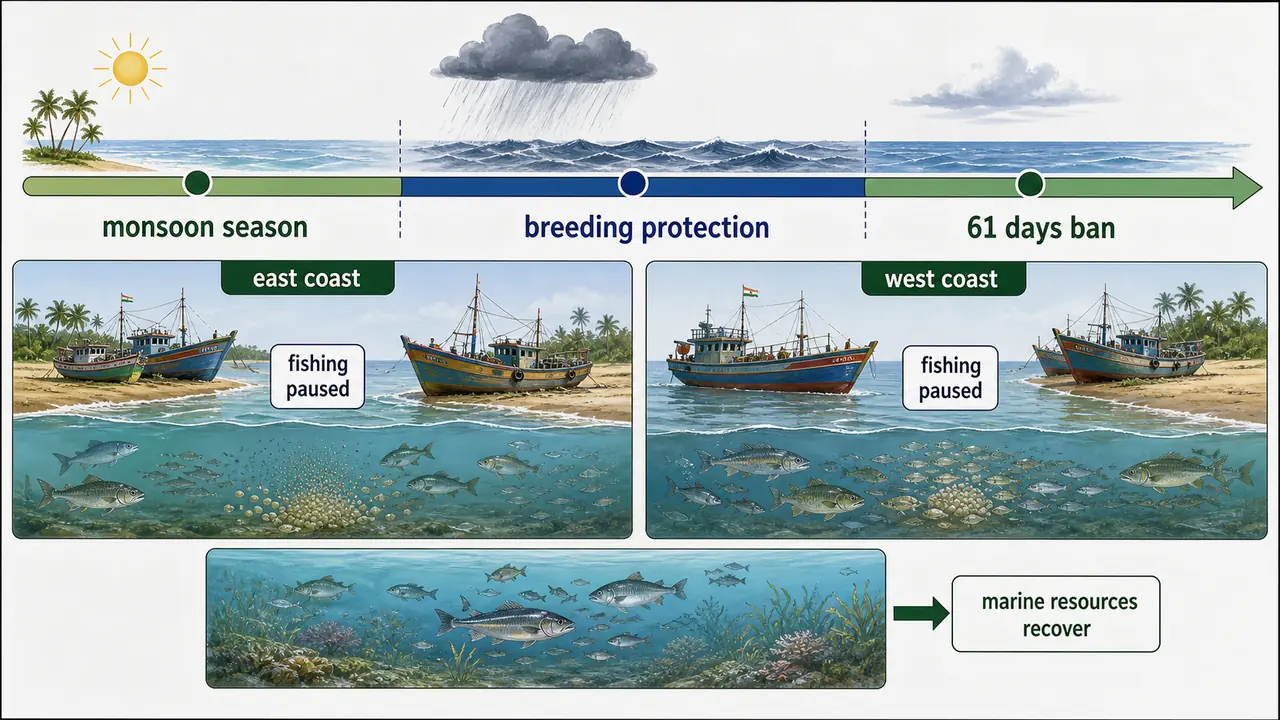
The fish lean/ban period is a conservation measure designed to allow marine species to reproduce without disturbance during their breeding season.
- The period during which fishing is banned to enable reproduction of marine species and to increase the marine resources.
- In India, the annual fishing ban period is 61 days. This ban is typically enforced along the east and west coasts of India during the monsoon season, which coincides with the peak breeding period of many commercially important marine species.
Summary Cheat Sheet
| Concept / Topic | Key Details |
|---|---|
| Aquaculture definition | Farming of aquatic organisms with human intervention (stocking, feeding, protection) |
| Key distinction | Aquaculture = owned stock; Fisheries = common property harvest |
| FAO definition year | 1988 |
| Optimal pH for fish | 7.5–8.5 (slightly alkaline) |
| Liming to manuring interval | 7–10 days gap |
| Lime for acid water | 250 kg (IBPS 2018); max 600 kg/ha/month |
| Hatchling | Larvae with yolk sac; mouth not formed; 2–3 days |
| Spawn | After yolk absorption; mouth formed; starts feeding |
| Fry | 1–2 cm; assumes fish shape; feeds on zooplankton |
| Fingerling | 10–15 cm; size of a finger; ready for stocking |
| Fish seed stages | Hatchling → Spawn → Fry → Fingerling |
| Integrated fish farming | Agriculture-fish (rice-fish) and Livestock-fish (duck-fish, poultry-fish) |
| Mariculture | Aquaculture in marine (saltwater) environments |
| Brackish water | Mix of fresh and salt water; used for shrimp culture |
| Annual fishing ban | 61 days during monsoon season |
| Induced breeding | Hormone injection to stimulate spawning in captivity |
| Bundh breeding | Natural breeding in enclosed shallow water areas |