🌹 Rose — The King of Flowers
Complete guide to rose cultivation covering propagation by T-budding, rootstocks, post-harvest handling, rose oil, varieties, physiological disorders, and key breeding facts for competitive exams.

In the rose farms of Hosur, Tamil Nadu — which ranks 2nd in the world for rose cultivation — workers carefully perform T-budding in the cool months of November-February, inserting a single bud from a prized variety onto a vigorous rootstock. About 60-65 days later, the new plant will bloom. The science of rose cultivation is a blend of precision horticulture and artistry that makes this flower the undisputed King of Flowers across civilizations.
The rose is one of the most important commercial flowers in the world, valued for its beauty, fragrance, and versatility. It holds immense cultural, economic, and horticultural significance.
IMPORTANT
Rose is one of the most frequently tested flower crops in competitive exams. Pay special attention to propagation method, rootstocks, varieties, and post-harvest details.
- Botanical Name: Rosa spp. The genus Rosa includes over 300 species and thousands of cultivated varieties, making it one of the most diverse flowering plant groups.
- Family: Rosaceae. The Rosaceae family also includes many important fruit crops such as apples, pears, strawberries, and cherries.
- Origin: India (Northern hemisphere). While roses are found across the Northern Hemisphere, India is considered one of the important centres of origin for several wild rose species.
- King of flowers, National flower of England, Iran, UK. The rose has been universally recognized as the king of flowers due to its unmatched beauty, fragrance, and cultural importance across civilizations.
- Symbol of beauty, to convey message of love. Throughout history and across cultures, the rose has been used to express deep emotions, particularly love, admiration, and respect.
- Best time for planting: End of September to middle of October. This period is ideal because the weather is cooling down, allowing new plants to establish their root systems before the growing season.
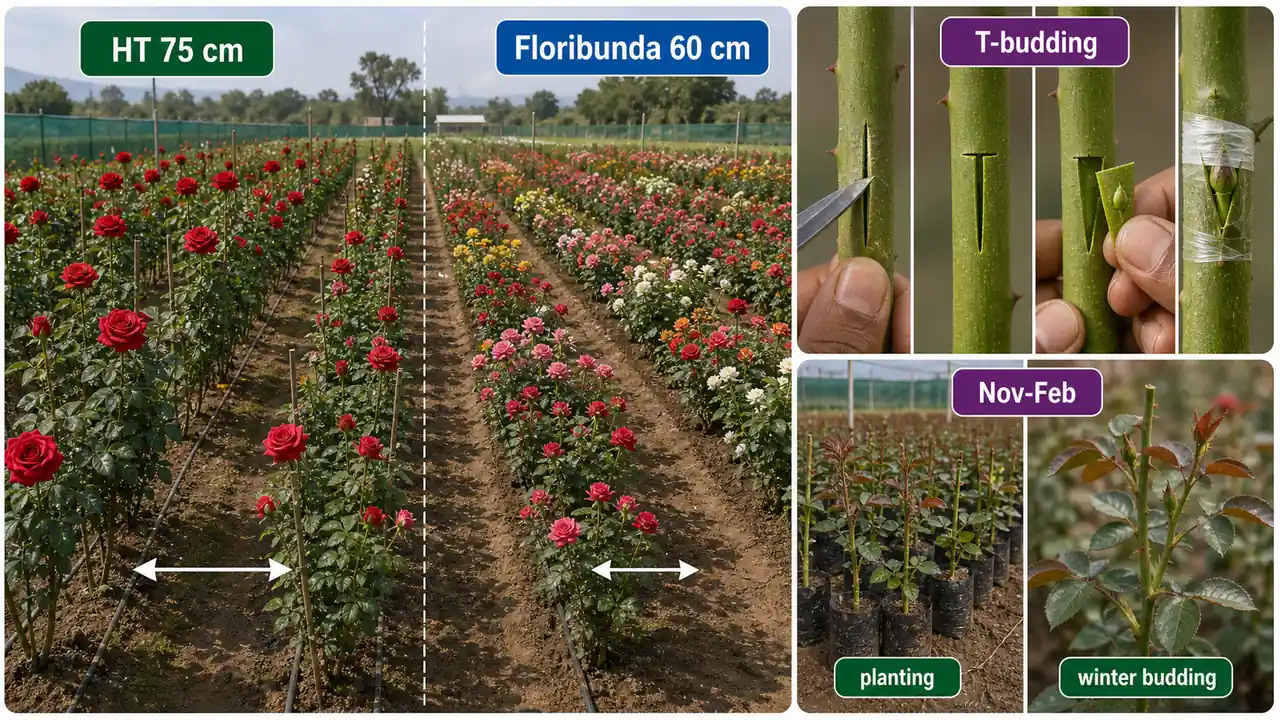
- Spacing: H.T. roses: 75 cm, Floribunda: 60 cm. Hybrid Tea (H.T.) roses require wider spacing due to their vigorous growth habit, while Floribunda varieties, being more compact, can be planted closer together.
- Commercial method of propagation: T or shield budding. T-budding (also called shield budding) is the most widely used commercial method for rose propagation. A single bud from the desired variety is inserted into a T-shaped incision on the rootstock bark.
- Best time for budding: November to February. This period provides optimal conditions for bud union and successful graft establishment in most parts of India.
- Rootstock: The choice of rootstock is critical for rose cultivation as it influences plant vigor, disease resistance, and adaptability to local conditions.
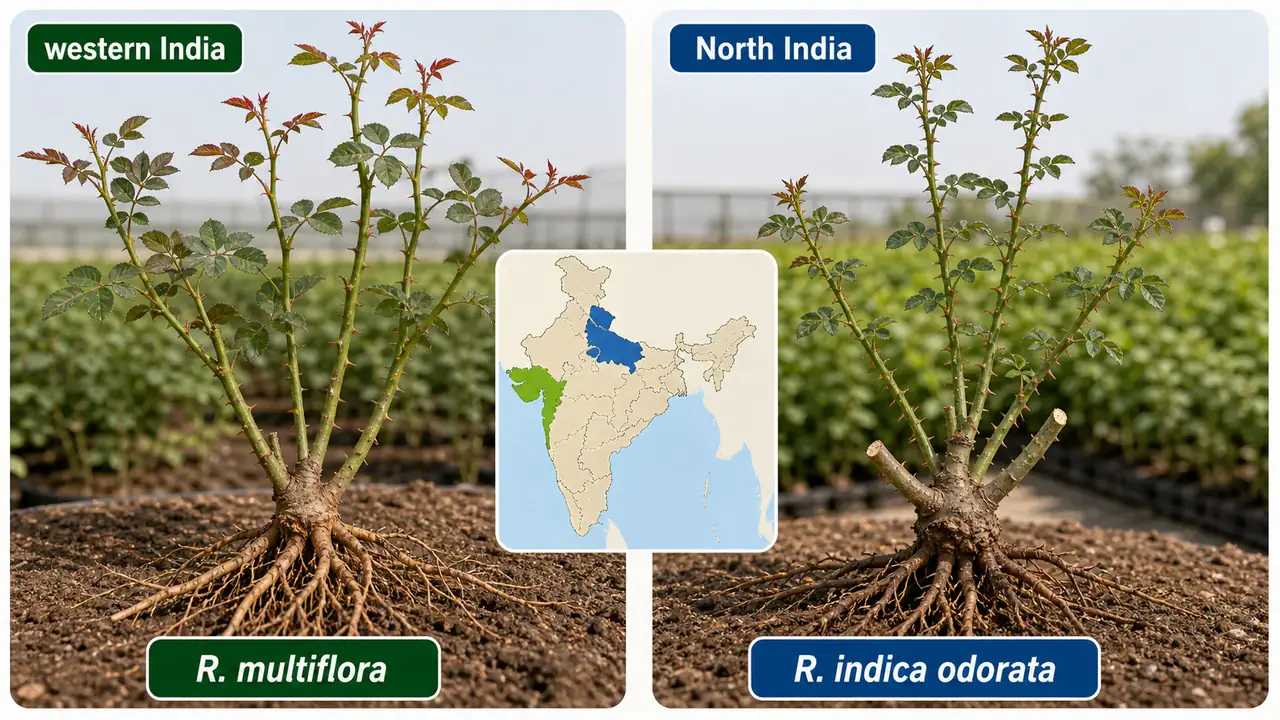
- Rosa multiflora (Edward rose) -- most commonly used rootstock of western India. This rootstock is preferred in western regions for its vigorous growth and compatibility with many commercial varieties.
- Rosa indica var odorata -- most commonly used rootstock in North India. It is well adapted to the climatic conditions of northern India and provides excellent compatibility with popular rose cultivars.
-
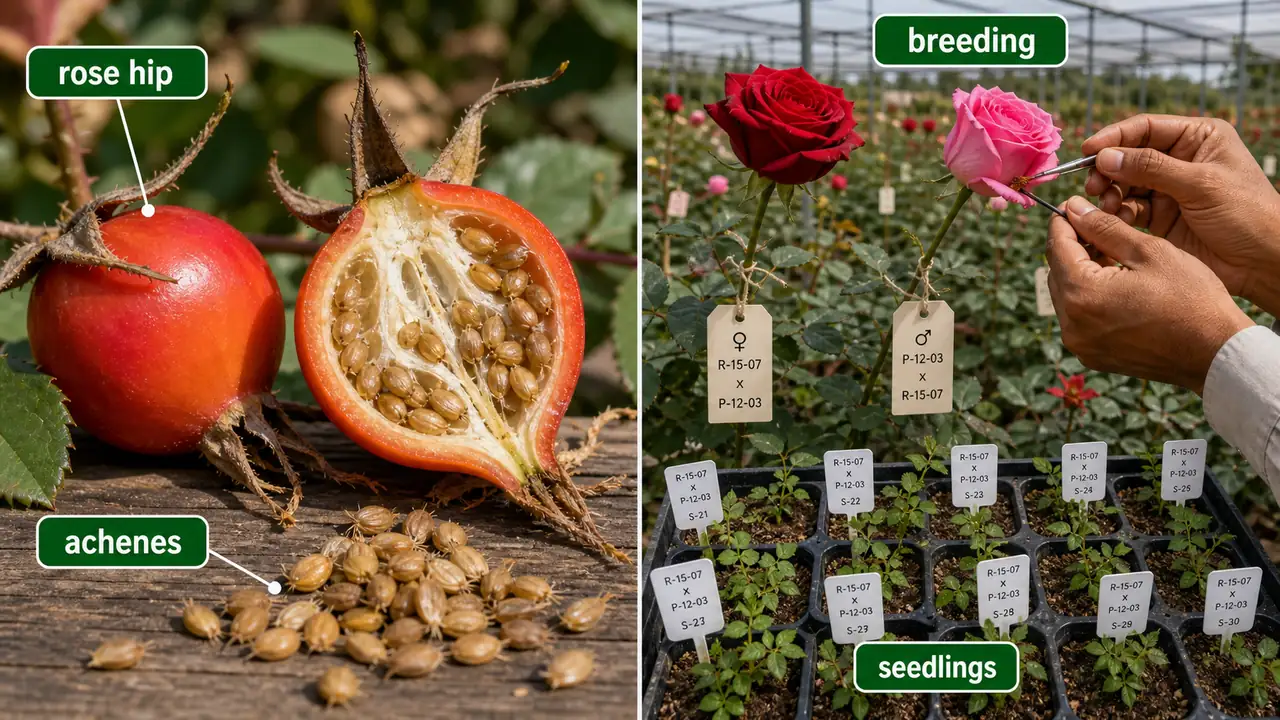
Fruit of rose: Rose hip exams -- black in colour, berry type (excellent source of Vitamin C). The rose hip is the fruit (accessory fruit) that develops after flowering. It contains significantly more Vitamin C than citrus fruits.
Pro Content Locked
Upgrade to Pro to access this lesson and all other premium content.
₹99 charged monthly · Cancel anytime
- All Agriculture & Banking Courses
- AI Lesson Questions (100/day)
- AI Doubt Solver (50/day)
- Glows & Grows Feedback (30/day)
- AI Section Quiz (20/day)
- 22-Language Translation (100/day)
- Recall Questions (20/day)
- AI Quiz (15/day)
- AI Quiz Paper Analysis (100/day)
- AI Step-by-Step Explanations (100/day)
- Spaced Repetition Recall (FSRS)
- AI Tutor
- Immersive Text Questions
- Audio Lessons — Hindi & English
- Mock Tests & Previous Year Papers
- Summary & Mind Maps
- XP, Levels, Leaderboard & Badges
- Generate New Classrooms
- Voice AI Teacher (AgriDots Live)
- AI Revision Assistant
- Knowledge Gap Analysis
- Interactive Revision (LangGraph)
🔒 Secure via Razorpay · Cancel anytime · No hidden fees
In the rose farms of Hosur, Tamil Nadu — which ranks 2nd in the world for rose cultivation — workers carefully perform T-budding in the cool months of November-February, inserting a single bud from a prized variety onto a vigorous rootstock. About 60-65 days later, the new plant will bloom. The science of rose cultivation is a blend of precision horticulture and artistry that makes this flower the undisputed King of Flowers across civilizations.
The rose is one of the most important commercial flowers in the world, valued for its beauty, fragrance, and versatility. It holds immense cultural, economic, and horticultural significance.
IMPORTANT
Rose is one of the most frequently tested flower crops in competitive exams. Pay special attention to propagation method, rootstocks, varieties, and post-harvest details.
- Botanical Name: Rosa spp. The genus Rosa includes over 300 species and thousands of cultivated varieties, making it one of the most diverse flowering plant groups.
- Family: Rosaceae. The Rosaceae family also includes many important fruit crops such as apples, pears, strawberries, and cherries.
- Origin: India (Northern hemisphere). While roses are found across the Northern Hemisphere, India is considered one of the important centres of origin for several wild rose species.
- King of flowers, National flower of England, Iran, UK. The rose has been universally recognized as the king of flowers due to its unmatched beauty, fragrance, and cultural importance across civilizations.
- Symbol of beauty, to convey message of love. Throughout history and across cultures, the rose has been used to express deep emotions, particularly love, admiration, and respect.
- Best time for planting: End of September to middle of October. This period is ideal because the weather is cooling down, allowing new plants to establish their root systems before the growing season.
- Spacing: H.T. roses: 75 cm, Floribunda: 60 cm. Hybrid Tea (H.T.) roses require wider spacing due to their vigorous growth habit, while Floribunda varieties, being more compact, can be planted closer together.
- Commercial method of propagation: T or shield budding. T-budding (also called shield budding) is the most widely used commercial method for rose propagation. A single bud from the desired variety is inserted into a T-shaped incision on the rootstock bark.
- Best time for budding: November to February. This period provides optimal conditions for bud union and successful graft establishment in most parts of India.
- Rootstock: The choice of rootstock is critical for rose cultivation as it influences plant vigor, disease resistance, and adaptability to local conditions.
- Rosa multiflora (Edward rose) -- most commonly used rootstock of western India. This rootstock is preferred in western regions for its vigorous growth and compatibility with many commercial varieties.
- Rosa indica var odorata -- most commonly used rootstock in North India. It is well adapted to the climatic conditions of northern India and provides excellent compatibility with popular rose cultivars.
-
Fruit of rose: Rose hip exams -- black in colour, berry type (excellent source of Vitamin C). The rose hip is the fruit (accessory fruit) that develops after flowering. It contains significantly more Vitamin C than citrus fruits.
-
Rose seed -- Achenes. The true seeds of the rose are technically called achenes, and they are found inside the rose hip.
-
B.K. Roy Choudhary -- 1st Indian Rose breeder who raised the variety Dr. S.D. Mukherjee in 1935. This was a pioneering achievement in Indian rose breeding, marking the beginning of indigenous rose variety development.
-
B.S. Bhattacharjee (Father of Rose Breeding) -- a fine rose breeder who evolved the variety Ramkrishnadev. He is honoured as the Father of Rose Breeding in India for his extraordinary contributions to developing new rose varieties suited to Indian conditions.
-
Dr. B.P. Pal evolved the 1st rose variety -- Rose Sherbat. Dr. B.P. Pal, a renowned Indian geneticist and the first Director of the Indian Agricultural Research Institute (IARI), made significant contributions to rose breeding in India.
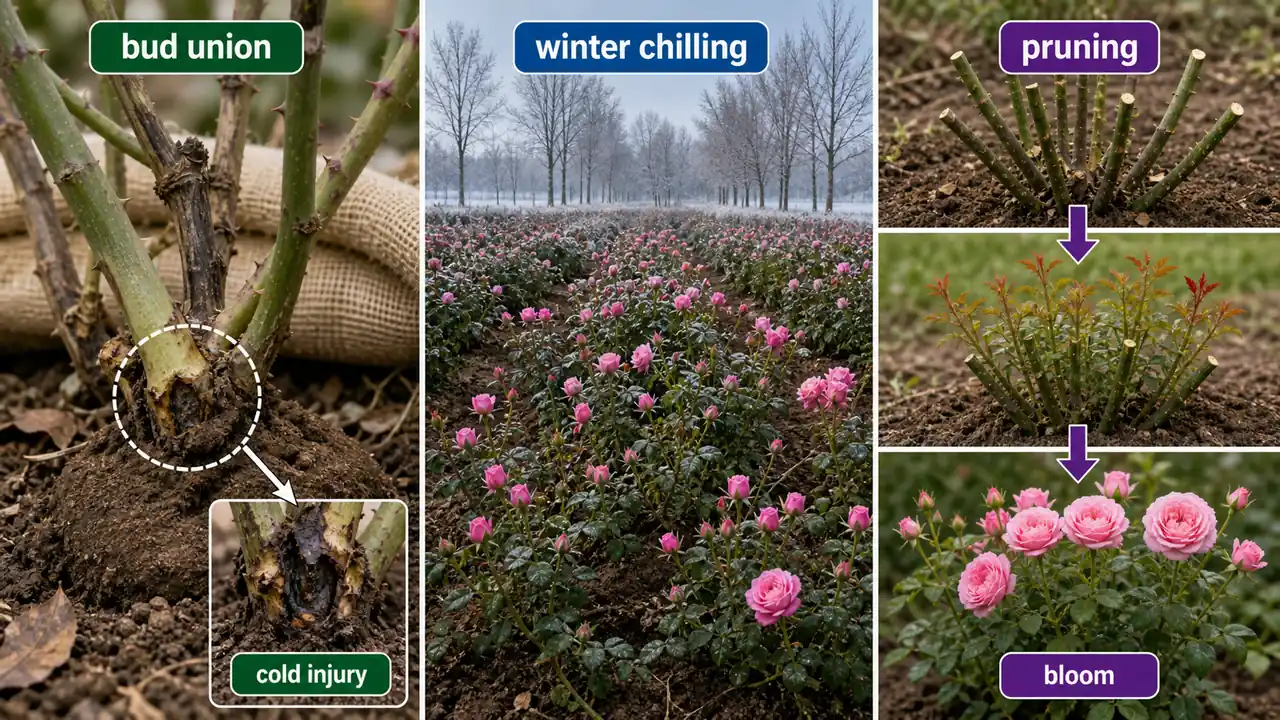
- Bud union is most susceptible to low temperature than any other part of rose. The bud union (the junction where the scion meets the rootstock) is the most vulnerable part of the plant to frost and cold injury. Protecting this area during winter is essential.
- Winter chilling is necessary for flower bud formation in Rosa damascena. Rosa damascena (the Damask rose, used for rose oil and rose water) requires a period of cold exposure (vernalization) to initiate proper flower bud development.
- Most varieties take about 60-65 days for blooming after pruning. This timeframe is important for timing the flower harvest for specific markets, festivals, or events.
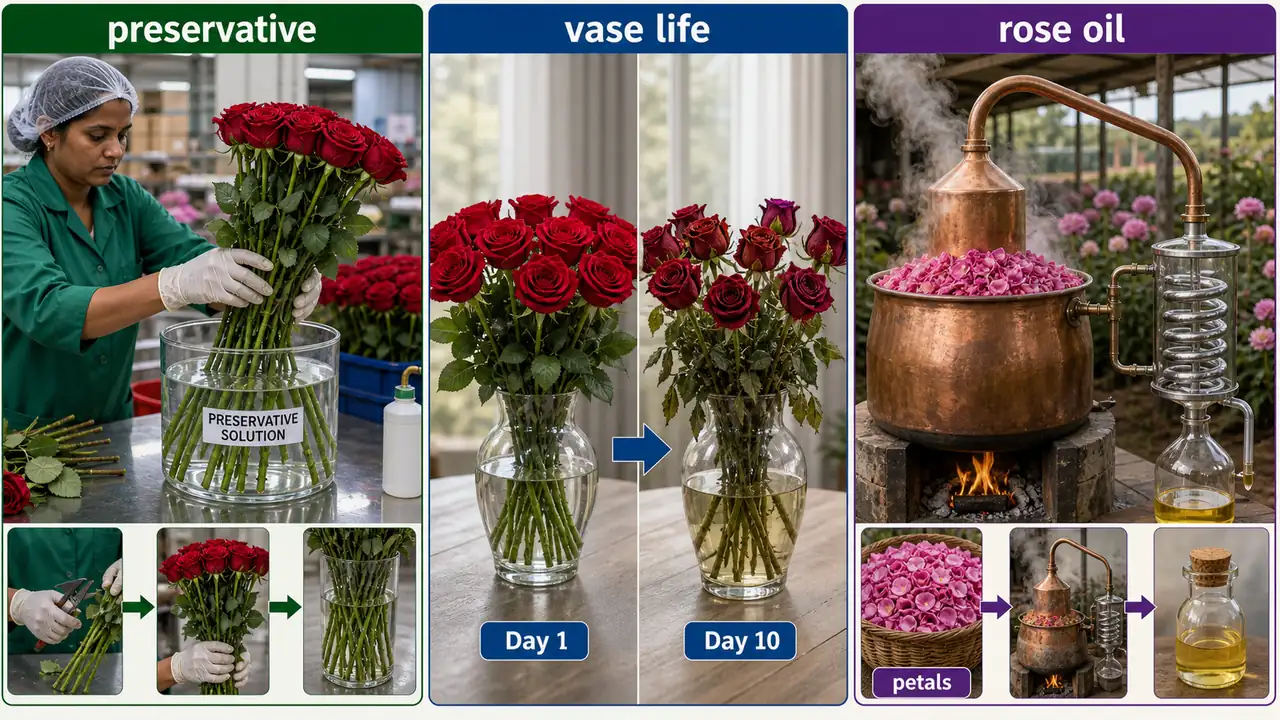
- Preservative solution: 1-3% sugar + 100-200 PPM HQC. To extend the vase life of cut roses, they are placed in a preservative solution containing sugar (as an energy source) and HQC (8-Hydroxyquinoline Citrate) (as an antimicrobial agent to prevent stem blockage).
- Minimum vase life of cut rose should be 12 days. This is the commercial standard for cut roses to be considered marketable.
- Oil percentage in Rosa damascena is 0.03%. Rose oil (also called attar of roses or rose otto) is one of the most expensive essential oils in the world. The extremely low oil yield means it takes approximately 3,000-5,000 kg of rose petals to produce just 1 kg of rose oil.

-
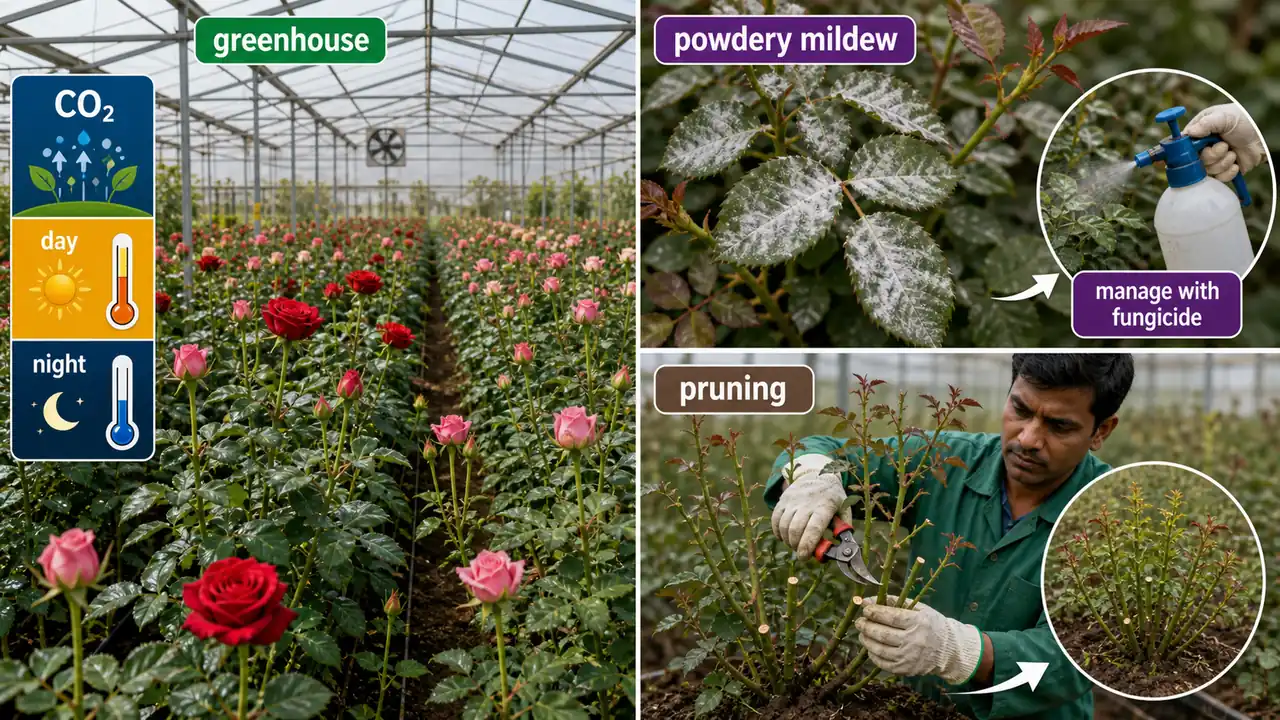
Greenhouse conditions for optimal rose cultivation:
- Day temperature: 25 °C
- Night temperature: 16 °C
- CO2: 1000-3000 PPM. Elevated CO2 enrichment in greenhouses promotes vigorous growth and improved flower quality.
-
Topaz -- best control over powdery mildew of rose. Topaz is a systemic fungicide (containing penconazole) that is highly effective against powdery mildew, one of the most common and damaging fungal diseases in roses.
-
To increase shelf life -- pulsing treatment is done. Pulsing involves placing freshly cut flower stems in a concentrated preservative solution for a short duration (typically a few hours) to extend their post-harvest life.
-
Hosur (Tamil Nadu) ranks 2nd in the world for raising roses. Hosur is one of the largest rose-growing centres globally, second only to certain regions in the Netherlands, demonstrating India's prominence in commercial rose production.
-
Pruning -- a technical aspect of rose cultivation. Pruning is an essential horticultural practice that controls plant shape, removes dead or diseased wood, promotes new growth, and influences flowering time and quality.
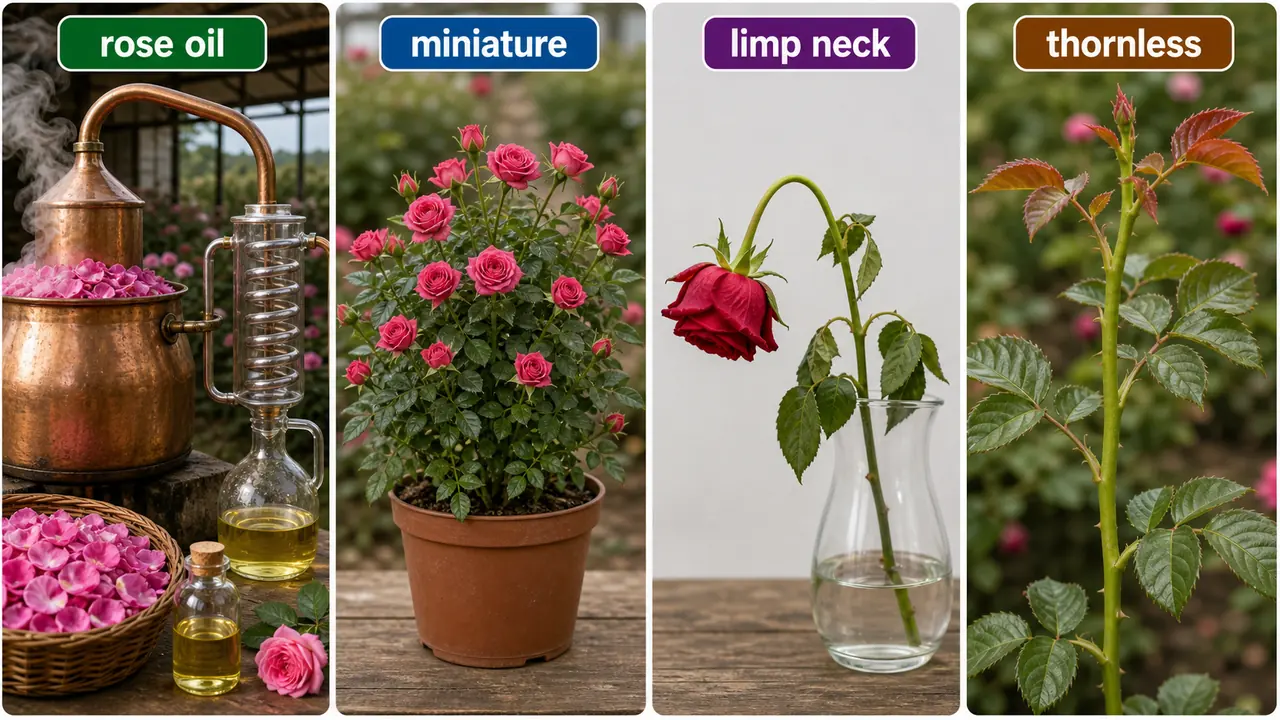
- Most costly oil -- Rose oil. Rose oil (attar of roses) is among the most expensive essential oils in the world, prized in the perfumery, cosmetics, and aromatherapy industries.
- Miniature roses -- resistant to pests and diseases. Miniature roses are compact varieties that naturally exhibit greater resistance, making them excellent choices for home gardens and container cultivation.
- Limp neck -- a rose post-harvest disorder. Also called bent neck, this occurs when the flower head bends at the peduncle due to water stress or vascular blockage. Proper post-harvest handling and preservative solutions help prevent this condition.
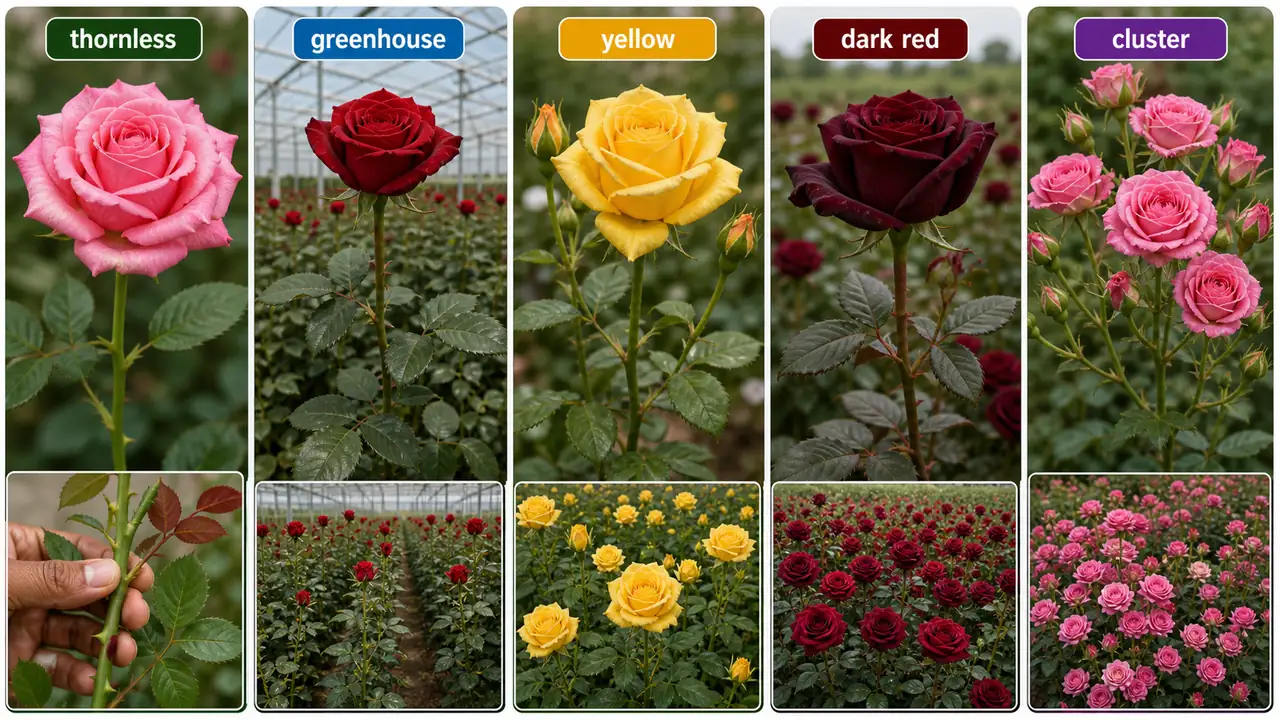
- Thornless varieties of rose: Suchitra, Pusa Mohit. These thornless varieties are particularly valued for ease of handling during harvest and floral arrangement work.
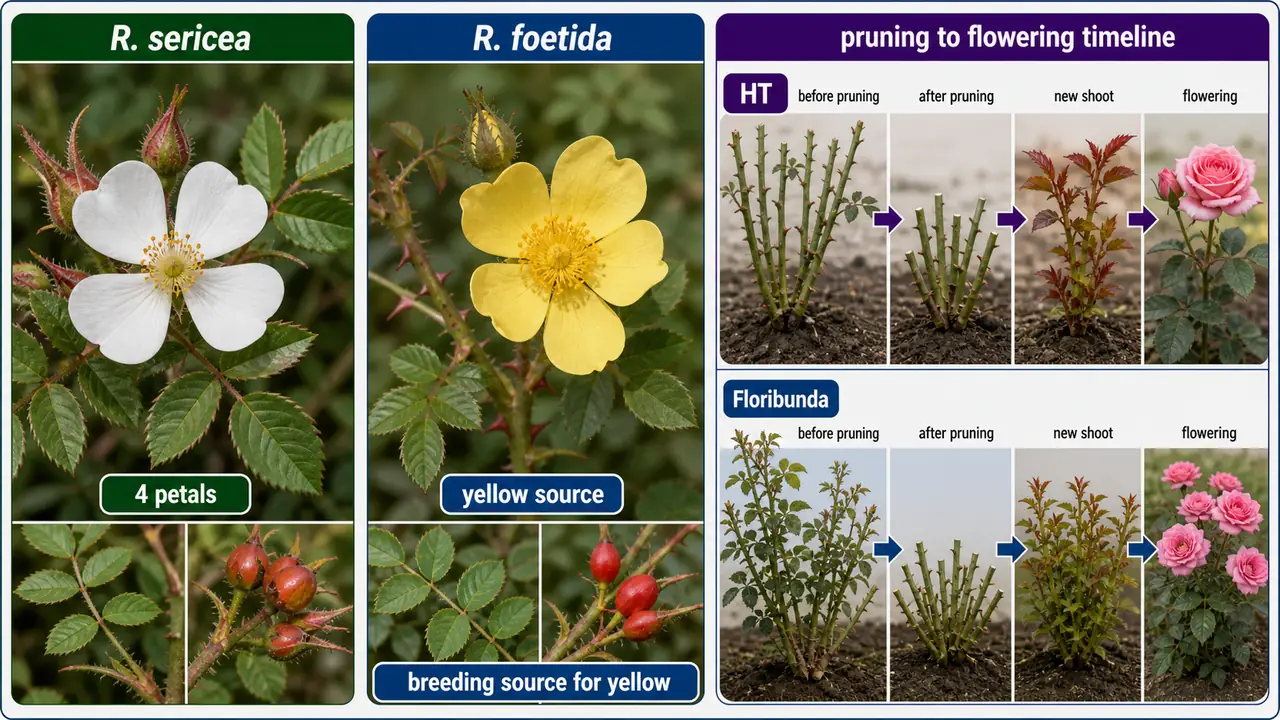
- Rose species having four petals: Rosa sericea. Most rose species have five petals, but Rosa sericea is unique in having only four petals, making it easily distinguishable from other species.
- Rose species from which yellow colour is extracted: Rosa foetida. It is historically important as the source of the yellow colour gene introduced into modern hybrid tea roses through breeding programs.
- Maiden type rose: Does not require pruning. Maiden roses are varieties that bloom well without the need for annual pruning, simplifying their maintenance.
- Flowering in Hybrid Tea roses: 42 days after pruning. Hybrid Tea roses produce flowers relatively quickly, which is useful for timing flower production.
- Flowering in Floribundas: 45 days after pruning. Floribunda roses take slightly longer post-pruning to bloom, producing clusters of flowers rather than single blooms.
- Commercial life of rose is 8 years. A well-maintained rose plantation remains commercially productive for approximately 8 years, after which it is typically replaced with new plants for optimal yield.
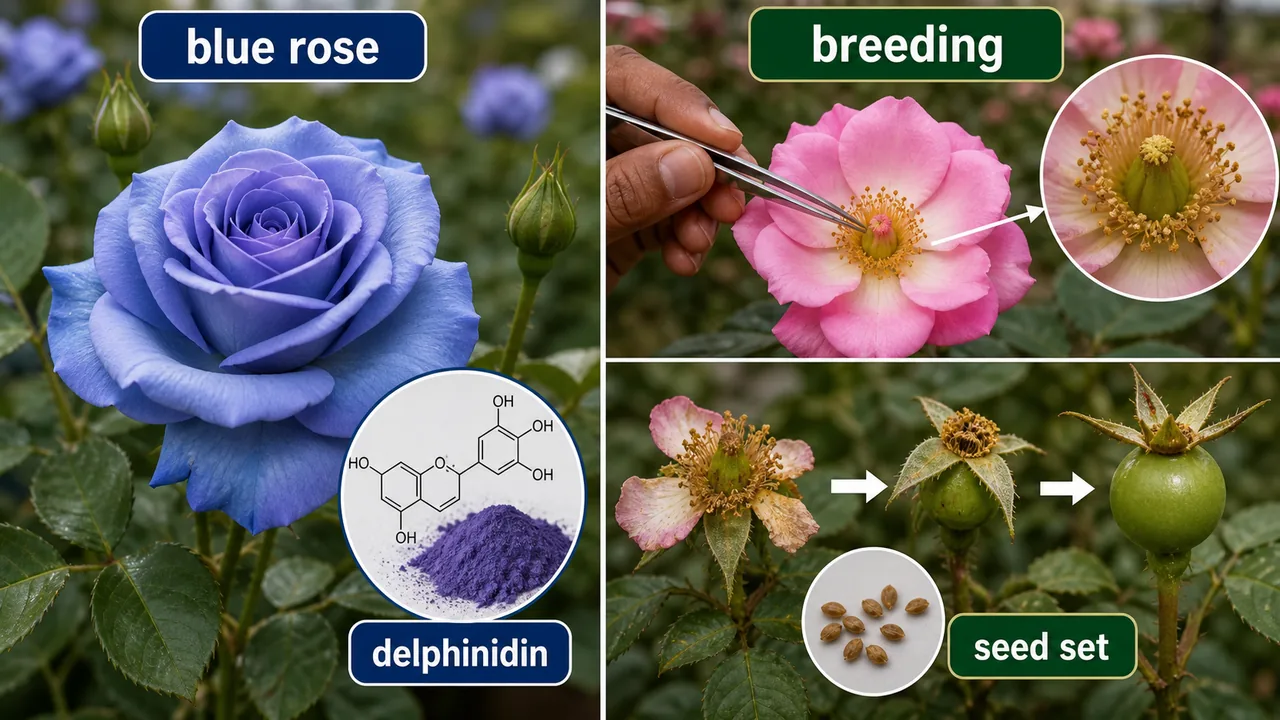
- Blue pigmentation in rose is due to Delphinidin. The rare blue colour in roses is attributed to the pigment delphinidin, an anthocyanin compound that produces blue-violet hues.
- Blue colour rose variety: Samba. The variety Samba is noted for its blue-toned colouration, though truly blue roses remain extremely rare in nature.
- Major problem in rose breeding is seed setting. Poor seed set is the biggest challenge in rose hybridization programs, as many crosses fail to produce viable seeds, making the breeding process slow and difficult.
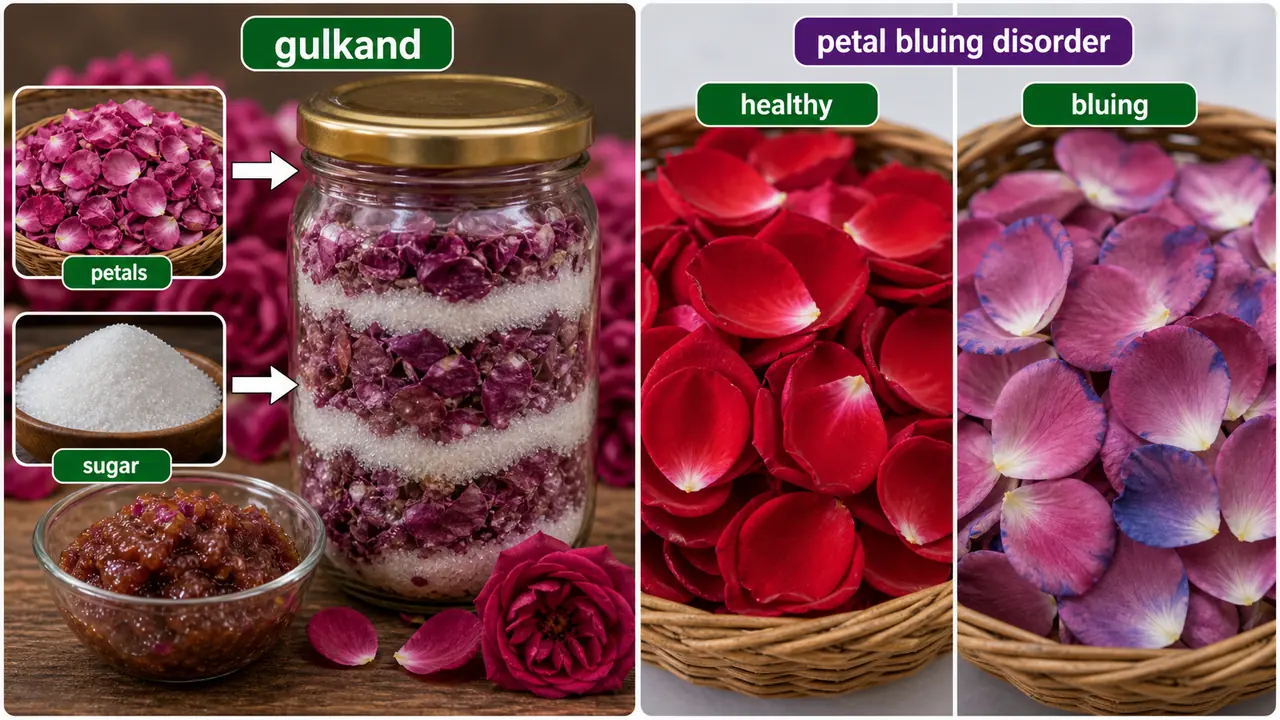
- Gulkand is prepared by mixing petal and sugar in 1:1 ratio. Gulkand is a traditional Indian sweet preserve made by layering fresh rose petals with an equal weight of sugar. It is valued in Ayurvedic medicine for its cooling properties and digestive benefits.
- Bluing of rose petals is due to accumulation of ammonia. As rose petals age or are stored improperly, ammonia can accumulate in the tissues, causing an undesirable shift from red/pink to blue-purple shades. This is an important consideration in post-harvest handling.
TIP
Key rose numbers to remember: Planting = Sept-Oct, Budding = Nov-Feb, HT flowering = 42 days, Floribunda = 45 days, General blooming = 60-65 days, Vase life = 12 days, Commercial life = 8 years, Oil yield = 0.03%.
Varieties
The following are some important commercial rose varieties grown in India and worldwide:
- Grand gala: thornless variety (Popular thornless root stock). Grand Gala is widely cultivated for its ease of handling and strong market demand.
- First Red: Mostly grown in green houses. First Red is a popular greenhouse variety prized for its deep red colour and long vase life.
- Kiss
- Black magic
- Yellow river
- Konfetti
- Starlite
- Hollywood
- Vivaldi
- Frisco
Summary Cheat Sheet
| Concept / Topic | Key Details / Explanation |
|---|---|
| Botanical identity and status | Rose is Rosa spp. of the Rosaceae family, is called the King of Flowers, and is treated in the lesson as a globally important ornamental crop with strong cultural and commercial value. |
| Origin and symbolic value | The lesson places rose in the Northern Hemisphere/India origin context, notes its symbolic role in beauty and love, and recalls it as the national flower of England and Iran. |
| Planting and spacing | The best planting time is end of September to mid-October; spacing is 75 cm for Hybrid Tea roses and 60 cm for Floribunda roses. |
| Commercial propagation | The standard commercial propagation method is T-budding or shield budding, and the best budding season is November to February. |
| Important rootstocks | Rosa multiflora (Edward rose) is the common rootstock in western India, while Rosa indica var. odorata is the important rootstock in North India. |
| Fruit and seed facts | The fruit is the rose hip, described here as a black berry-type structure rich in vitamin C, and the true seeds are achenes. |
Summary Continued
| Concept / Topic | Key Details / Explanation |
|---|---|
| Important Indian rose breeders | B.K. Roy Choudhary is identified as the first Indian rose breeder who raised Dr. S.D. Mukherjee in 1935; B.S. Bhattacharjee is called the Father of Rose Breeding and is linked with Ramkrishnadev; Dr. B.P. Pal evolved the first rose variety Rose Sherbat. |
| Temperature sensitivity and flowering | The bud union is the most cold-sensitive part; Rosa damascena needs winter chilling for flower-bud formation; general blooming after pruning takes about 60-65 days. |
| Post-harvest preservative and vase life | A preservative of 1-3% sugar + 100-200 ppm HQC is used to extend vase life, and the minimum commercial vase life of cut rose should be 12 days. |
| Rose oil | Rosa damascena contains about 0.03% oil, and rose oil is among the most costly essential oils in the world. |
| Greenhouse conditions | The lesson gives optimal greenhouse conditions as 25°C day temperature, 16°C night temperature, and 1000-3000 ppm CO2. |
Summary Continued
| Concept / Topic | Key Details / Explanation |
|---|---|
| Disease and shelf-life management | Topaz is highlighted for powdery mildew control, and pulsing treatment is used to improve shelf life. |
| Hosur fact | Hosur, Tamil Nadu is noted as ranking 2nd in the world for raising roses. |
| Pruning and production timing | Pruning is an essential technical operation; Hybrid Tea roses flower in about 42 days after pruning, while Floribundas flower in about 45 days. |
| Commercial longevity | The commercial life of a rose planting is about 8 years. |
| Post-harvest disorder and hardy types | Limp neck (bent neck) is a key post-harvest disorder, while miniature roses are described as relatively resistant to pests and diseases. |
| Thornless and special species facts | Suchitra and Pusa Mohit are thornless varieties; Rosa sericea is the rose species with four petals; Rosa foetida is the species used as the source of yellow colour in breeding. |
| Special pruning and breeding facts | Maiden-type roses do not require pruning; the major problem in rose breeding is seed setting. |
| Pigment and colour facts | Blue pigmentation is linked with delphinidin, and Samba is named as a blue-colour rose variety. |
| Value-added product and bluing disorder | Gulkand is made by mixing rose petals and sugar in 1:1 ratio, and bluing of petals is caused by ammonia accumulation. |
| Key numerical revision set | The main numbers to remember are planting: Sept-Oct, budding: Nov-Feb, HT flowering: 42 days, Floribunda flowering: 45 days, general blooming: 60-65 days, vase life: 12 days, commercial life: 8 years, and oil yield: 0.03%. |
| Important varieties | The lesson lists important commercial varieties such as Grand Gala, First Red, Kiss, Black Magic, Yellow River, Konfetti, Starlite, Hollywood, Vivaldi, and Frisco. |