🍅 Tomato — India's Most Versatile Vegetable Crop
Complete guide to tomato cultivation covering botany, climate requirements, varieties (including Flavr Savr), seed rates, physiological disorders like BER, diseases, pests, and IPM strategies for competitive exams.
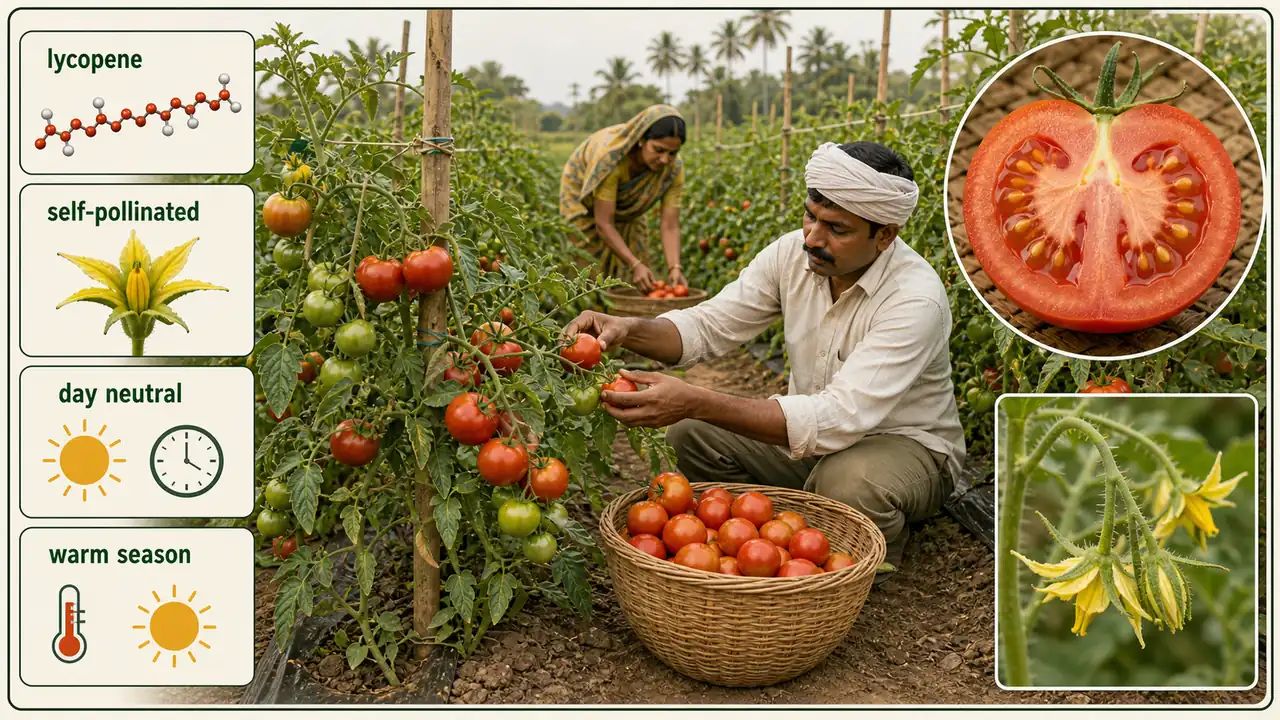
A farmer in Nashik harvests his tomato crop 65 days after pruning, carefully timing the pick so the fruits reach Mumbai's markets at their peak red colour. That vivid red comes from lycopene, the same pigment that makes tomato one of the most powerful antioxidant-rich foods on the planet. From fresh salads to processed ketchup, tomato is arguably the most versatile vegetable crop grown in India.
IMPORTANT
Key exam facts: Tomato is day neutral and self-pollinated. Its red colour is due to lycopene. Night temperature (15-20 degrees C) is more important than day temperature for fruit setting. BER is caused by calcium deficiency, not a pathogen.
Botanical Identity
| Parameter | Detail |
|---|---|
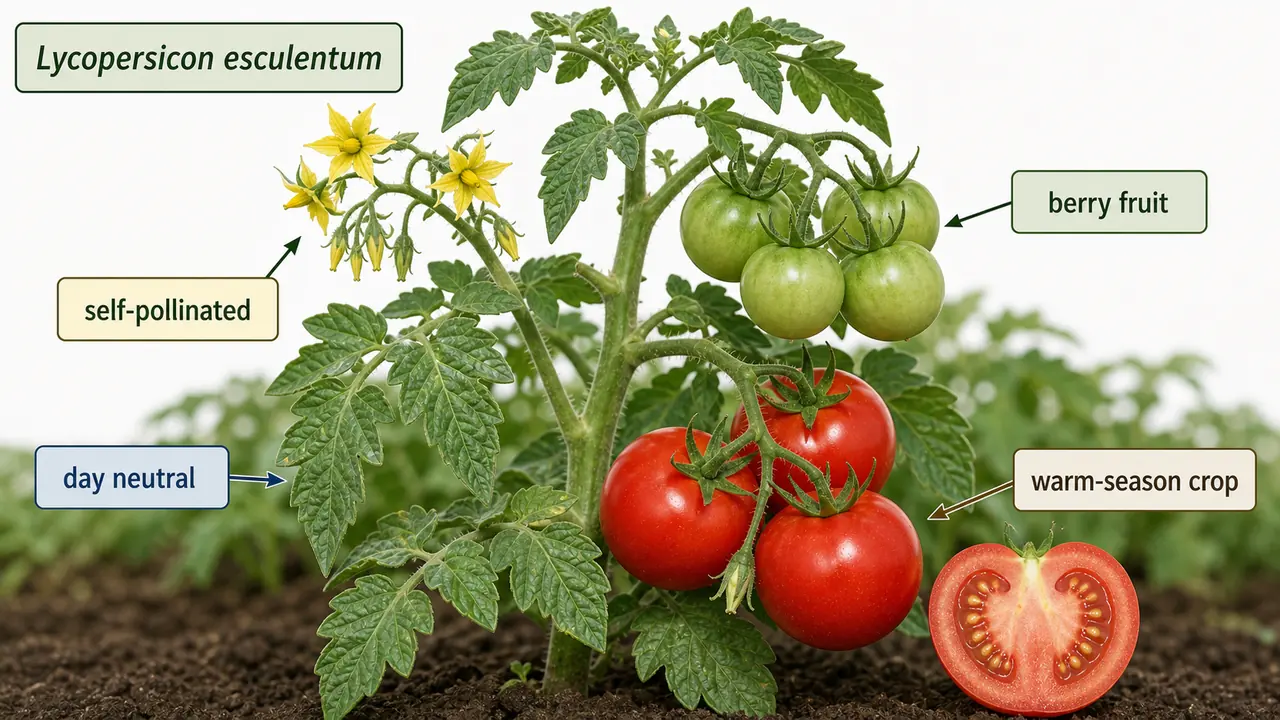
| Botanical Name | Lycopersicon esculentum |
| Family | Solanaceae |
| Origin | Peru (South America) |
| Fruit type | Berry |
| Pollination | Self-pollinated |
| Photoperiod | Day neutral |
| Season | Warm season crop, but grown in all seasons |
Tomato belongs to the Solanaceae family — the same family as brinjal, chilli, and potato. It was brought to the rest of the world from Peru by Spanish explorers in the 16th century.
Pro Content Locked
Upgrade to Pro to access this lesson and all other premium content.
Charged once for one year · ₹1188 total
Save ₹100/month vs ₹2388/year launch price
- All Agriculture & Banking Courses
- AI Lesson Questions (100/day)
- AI Doubt Solver (50/day)
- Glows & Grows Feedback (30/day)
- AI Section Quiz (20/day)
- 22-Language Translation (100/day)
- Recall Questions (20/day)
- AI Quiz (15/day)
- AI Quiz Paper Analysis (100/day)
- AI Step-by-Step Explanations (100/day)
- Spaced Repetition Recall (FSRS)
- AI Tutor
- Immersive Text Questions
- Audio Lessons — Hindi & English
- Mock Tests & Previous Year Papers
- Summary & Mind Maps
- XP, Levels, Leaderboard & Badges
- Generate New Classrooms
- Voice AI Teacher (AgriDots Live)
- AI Revision Assistant
- Knowledge Gap Analysis
- Interactive Revision (LangGraph)
🔒 Secure one-time yearly payment via Razorpay · No hidden fees
A farmer in Nashik harvests his tomato crop 65 days after pruning, carefully timing the pick so the fruits reach Mumbai's markets at their peak red colour. That vivid red comes from lycopene, the same pigment that makes tomato one of the most powerful antioxidant-rich foods on the planet. From fresh salads to processed ketchup, tomato is arguably the most versatile vegetable crop grown in India.
IMPORTANT
Key exam facts: Tomato is day neutral and self-pollinated. Its red colour is due to lycopene. Night temperature (15-20 degrees C) is more important than day temperature for fruit setting. BER is caused by calcium deficiency, not a pathogen.
Botanical Identity
| Parameter | Detail |
|---|---|
| Botanical Name | Lycopersicon esculentum |
| Family | Solanaceae |
| Origin | Peru (South America) |
| Fruit type | Berry |
| Pollination | Self-pollinated |
| Photoperiod | Day neutral |
| Season | Warm season crop, but grown in all seasons |
Tomato belongs to the Solanaceae family — the same family as brinjal, chilli, and potato. It was brought to the rest of the world from Peru by Spanish explorers in the 16th century.
Climate and Growing Conditions
Tomato is basically a warm season crop but can be grown across all seasons with proper variety selection. However, certain conditions are critical:
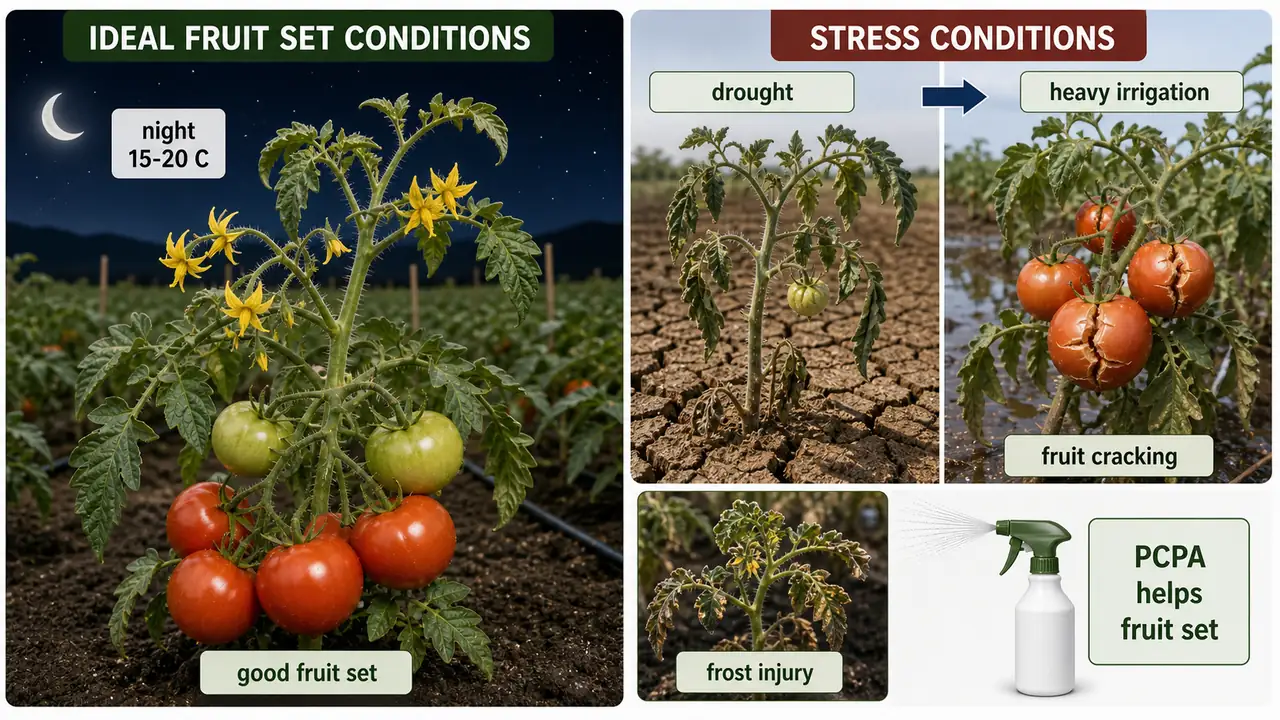
- Night temperature is more important than day temperature for fruit set: 15-20 degrees C is the ideal range. Night temperatures in this range promote better pollen viability and fruit setting.
- Tomato is susceptible to frost — exposure causes tissue damage and plant death.
- A period of drought followed by sudden heavy irrigation during fruiting causes cracking of fruits due to sudden turgor pressure changes in the cells.
- In adverse conditions, spraying PCPA (Para-Chlorophenoxyacetic acid) promotes higher fruit setting even under unfavourable temperatures.
Nutritional and Agricultural Value
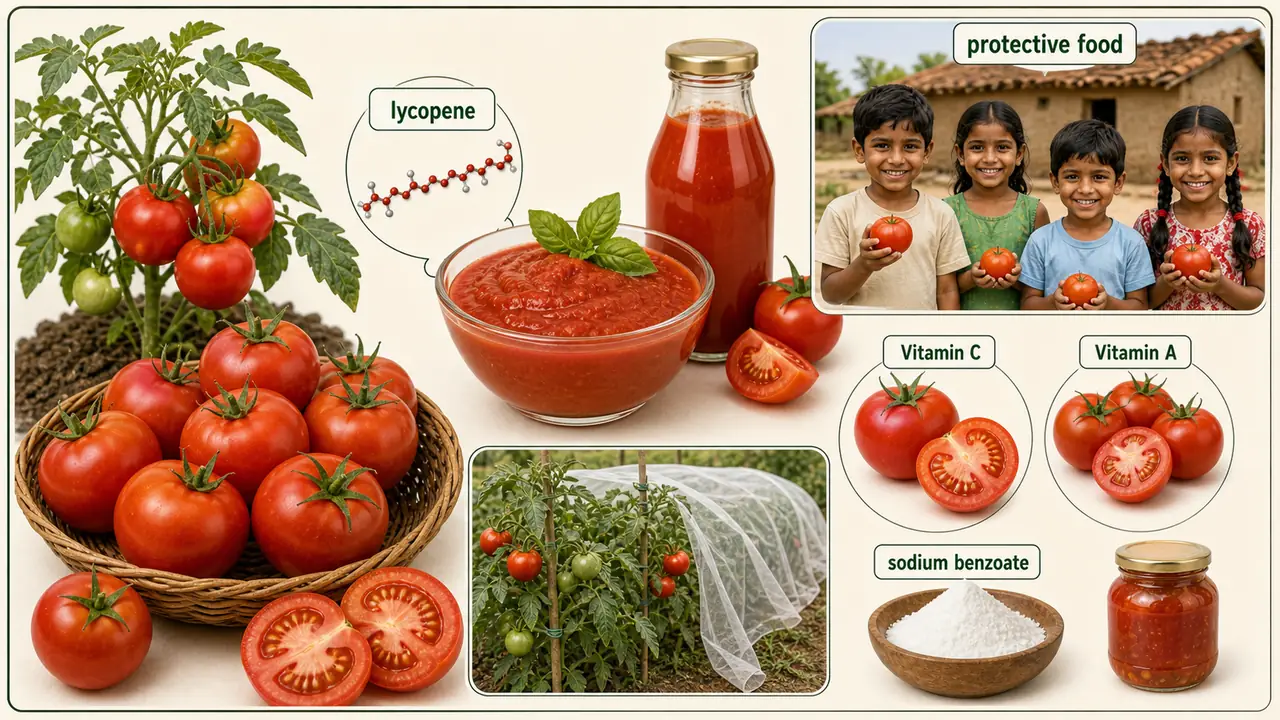
- Red colour is due to lycopene, a powerful carotenoid pigment and natural antioxidant.
- Tomato fruits are regarded as protective food because they are rich in Vitamin C, Vitamin A, and minerals.
- Chemical used for tomato sauce preservation: Sodium benzoate (a food preservative that inhibits microbial growth).
Seed Rate
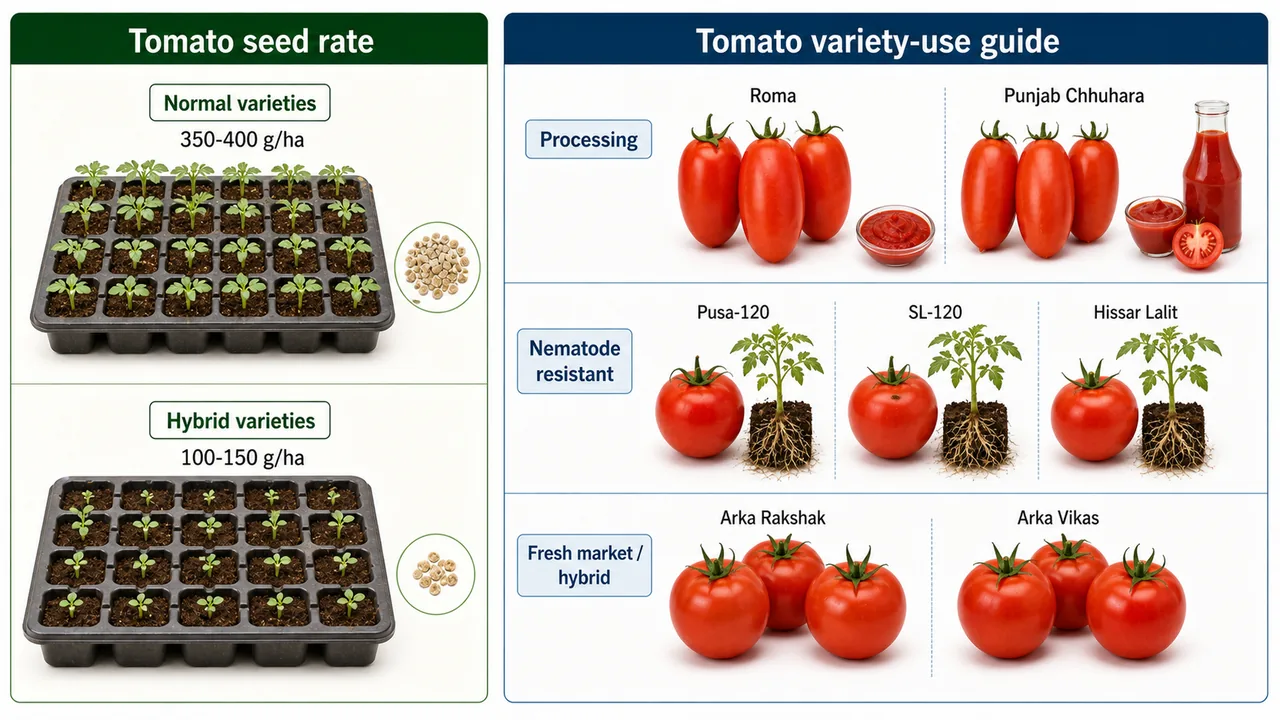
| Type | Seed Rate |
|---|---|
| Normal varieties | 350-400 g/ha |
| Hybrid varieties | 100-150 g/ha |
The seed rate for hybrids is lower because hybrid seeds are more expensive and have higher germination rates, so fewer seeds are needed per hectare.
Important Varieties
Understanding varieties by their special traits helps in exam preparation and practical selection:
| Variety | Special Feature |
|---|---|
| Pusa Ruby | Sioux x Improved Meeruti (popular OP variety) |
| Roma | Firm, oval fruits; ideal for processing (paste, ketchup) |
| Punjab Chhuhara | Determinate variety (stops growing after fixed height; suits mechanical harvest) |
| Pusa Sheetal | Bred for winter season cultivation |
| Pusa-120 | Nematode resistant |
| SL-120 | Nematode resistant |
| Hissar Lalit | Nematode resistant |
| Parker | Fruit borer (H. armigera) resistant |
| Punjab Chhuhara & Roma | Suitable for processing (thick pericarp, low moisture) |
| Arka Vikas | Popular variety with good yield |
| Arka Rakshak | Disease-resistant hybrid |
| Arka Sourabh | Good quality fruits |
| Arka Apeksha & Arka Vishes | Recent IIHR hybrids; 50 t/ha (up to 100 t/ha with drip irrigation) |
The Flavr Savr Story
Flavr Savr was the world's first genetically modified food crop approved for commercial sale, developed in 1994 by Calgene Company. It was engineered with an antisense gene to slow production of the enzyme polygalacturonase, which breaks down cell walls during ripening — resulting in a tomato that stayed firm longer on the shelf.
NOTE
Flavr Savr is a landmark in biotechnology history — it was the first GM food ever approved for human consumption.

Physiological Disorders
These disorders are caused by environmental stress or nutrient imbalances, not pathogens. This distinction is frequently tested in exams.
Blossom End Rot (BER)
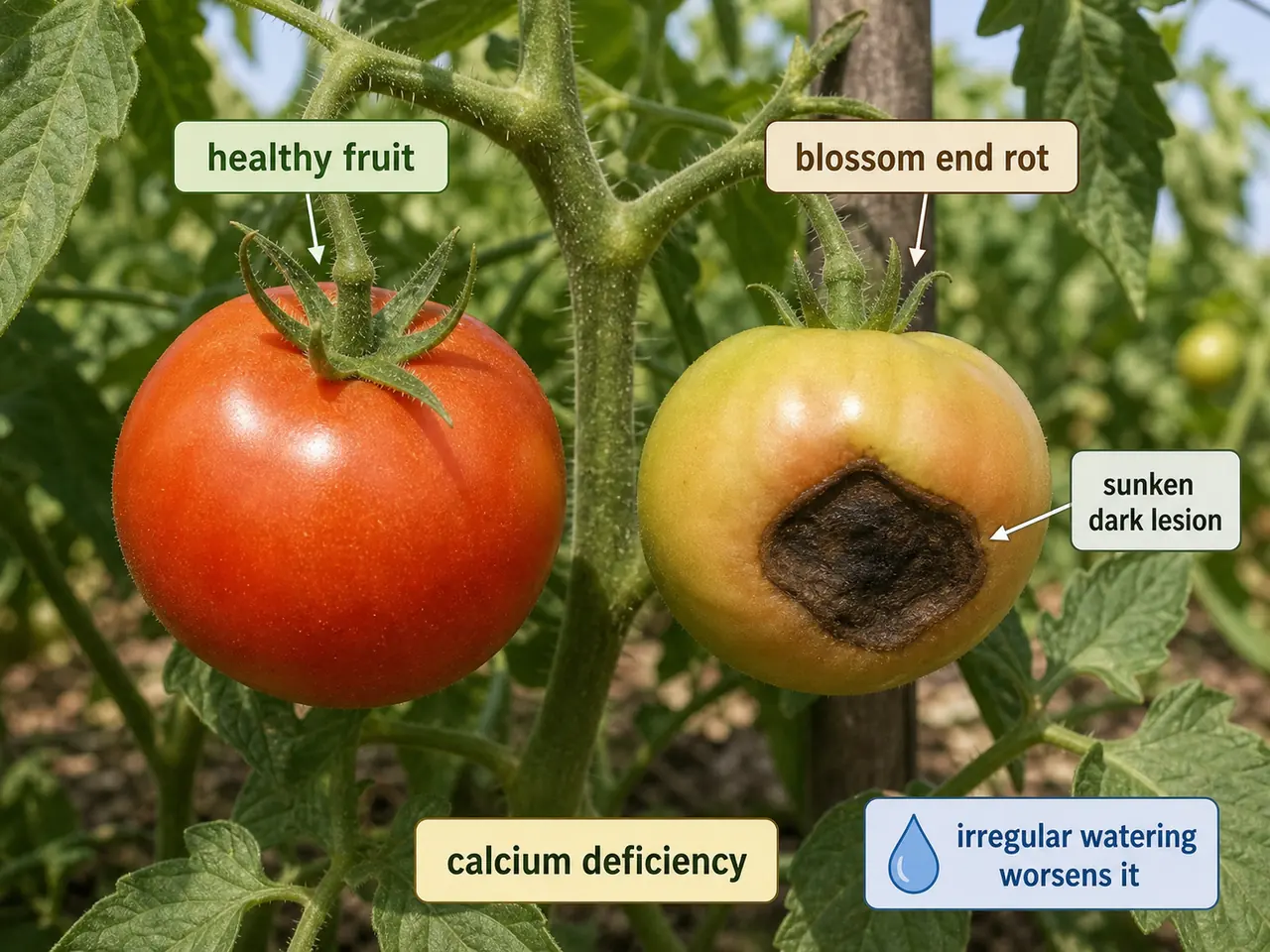
BER is the most important physiological disorder of tomato, caused by calcium deficiency. It appears as a dark, sunken lesion at the blossom end of the fruit. Irregular watering worsens the condition by disrupting calcium transport to developing fruits.
IMPORTANT
BER is a physiological disorder, NOT a disease caused by any pathogen. This is a frequently tested distinction in exams.
| Disorder | Character | Causes |
|---|---|---|
| Fruit cracking | Cracking in tomato fruits is common; concentric and radial cracking are severe. | Effect of soil moisture and boron deficiency |
| Blossom end rot (BER) | BER is a severe disorder in greenhouse cultivated tomatoes. | Due to Ca deficiency and high temperature |
| Puffiness | Fruit surface is generally flattened and locules are unfilled with pulp and seeds. | Poor pollination, low or high temperature |
| Sun scald | Whitish, sunken and papery lesion develops due to sun heat. | Exposure of fruits to high temperature > 40°C |
| Cat face | — | — |
Cultural Practices
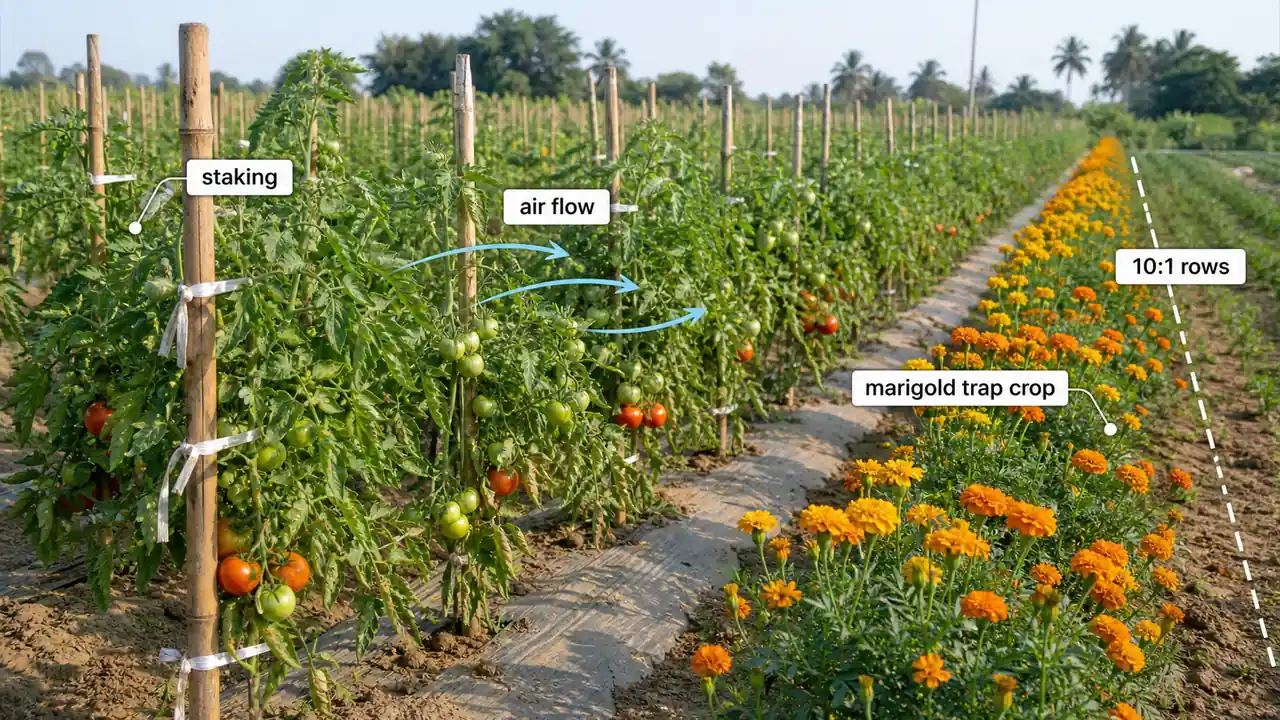
- Staking is done to support the plant — stems are tied to support structures every 6-8 inches as they grow. Staking prevents sprawling, improves air circulation, reduces disease incidence, and makes harvesting easier.
- Marigold as a trap crop: Planting marigold alongside tomato in a 10:1 ratio (10 rows of tomato to 1 row of marigold) attracts fruit borer moths to lay eggs on marigold instead of tomato — an effective IPM strategy.
Major Diseases
Bacterial Blight
- Cause: Bacterial pathogen
- Symptoms: Water-soaked lesions on leaves and stems, leading to rapid wilting and yield loss
- Management: Copper oxychloride @ 3g/litre + Bacteromycin @ 0.1 g/litre, or Mancozeb @ 3g/litre

Leaf Curl (Viral)
- Cause: Virus
- Vector: Whitefly (Bemisia tabaci) — carries the virus from infected to healthy plants during feeding
- Management: Control the whitefly vector population

Major Pests
| Pest | Scientific Name | Damage | Management |
|---|---|---|---|
| Fruit borer | Helicoverpa armigera | Larvae bore into fruits | Marigold trap crop (10:1 ratio) |
| Whitefly | Bemisia tabaci | Sap-sucking; vectors leaf curl virus | Insecticide sprays, yellow sticky traps |
| Serpentine leaf miner | Liriomyza trifolii | Larvae mine through leaves creating serpentine tunnels | Neem-based sprays |


Tomato: Field Problem Diagnosis Guide
When a farmer reports tomato problems, diagnose by symptom:
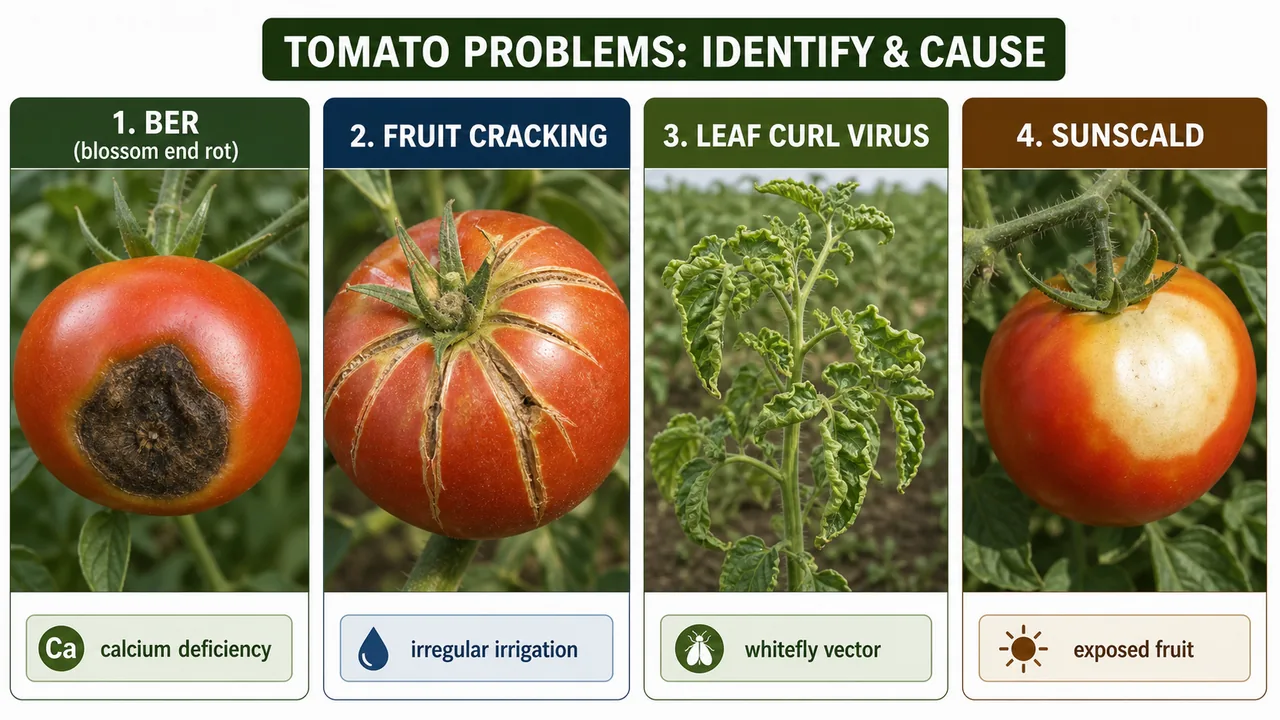
| Symptom | Cause | NOT Caused By | Solution |
|---|---|---|---|
| Black leathery patch at blossom end of fruit | BER (Blossom End Rot) — calcium deficiency | NOT a disease (no pathogen) | Calcium spray (CaCl₂ 0.5%); avoid irregular irrigation |
| Fruit cracking (radial/concentric) | Sudden heavy irrigation after dry period | NOT a disease | Even, regular irrigation; mulching |
| Leaf curling upward + stunted plant | Leaf curl virus — transmitted by whitefly (Bemisia tabaci) | NOT nutrient deficiency | Control whitefly (imidacloprid); use resistant varieties |
| Sunscald (white/yellow patches on exposed fruit) | Excessive direct sun on defoliated plants | NOT a disease | Maintain canopy; don't over-prune |
| Bore holes in fruit with larva inside | Fruit borer (H. armigera) | — | Marigold trap crop (10:1); HaNPV; neem spray |
| Cat-facing (misshapen fruits with scars) | Poor pollination due to low temperature | NOT genetic defect | Spray PCPA for better fruit set in cool weather |
Variety selection guide:
| Farmer's Need | Recommended Type | Example Varieties |
|---|---|---|
| Fresh market (round, firm, long shelf life) | Indeterminate hybrid | Pusa Rohini, Arka Rakshak, private hybrids |
| Processing (paste, sauce, ketchup) | Determinate, high TSS, oval/pear shape | Roma, Punjab Chhuhara, Pusa Gaurav |
| Nematode-infested soil | Resistant varieties | Pusa-120, SL-120, Hissar Lalit |
| Protected cultivation (polyhouse) | Indeterminate, parthenocarpic | Imported hybrids (Tolstoi, Arka Rakshak) |
Key exam distinction: Determinate varieties (bush type, self-topping) suit processing — uniform ripening, mechanical harvest. Indeterminate varieties (vine type, need staking) suit fresh market — prolonged harvest over months.
Summary Cheat Sheet
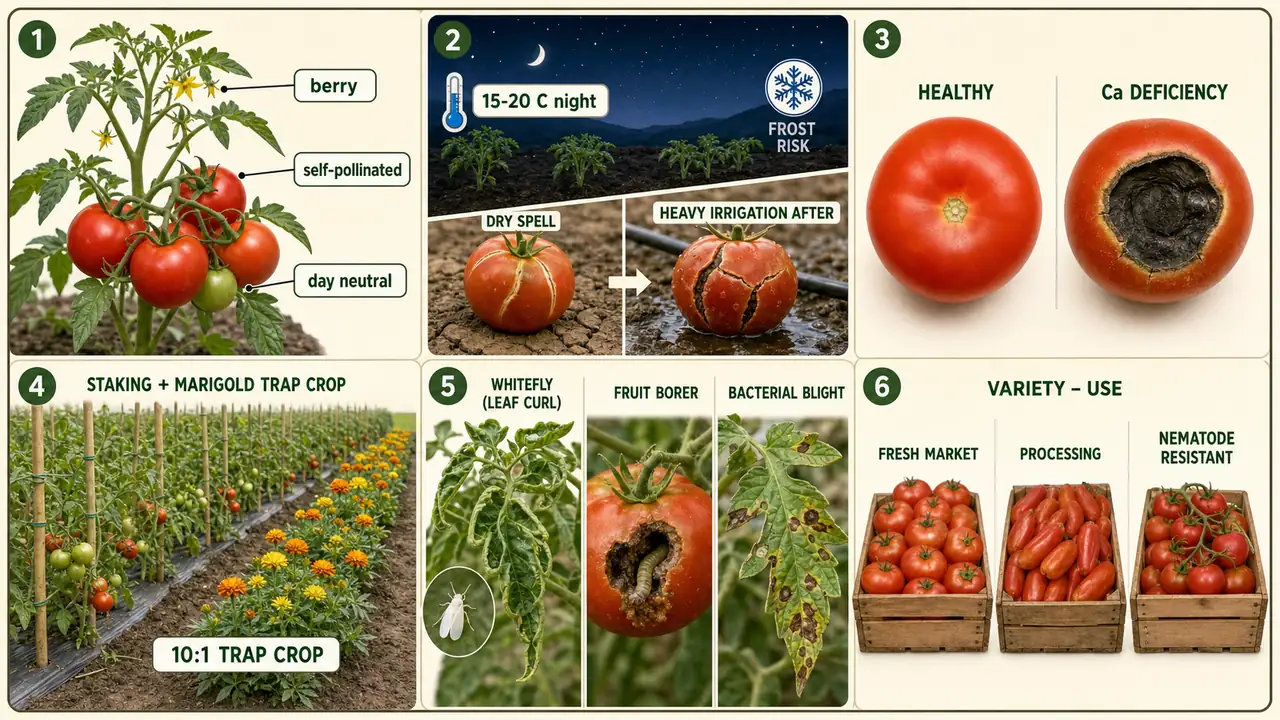
| Concept / Topic | Key Details / Explanation |
|---|---|
| Botanical identity | Tomato is Lycopersicon esculentum of the Solanaceae family, originated in Peru, has a berry fruit type, is self-pollinated, and is day neutral. |
| Crop nature and climate | Tomato is basically a warm-season crop, but with proper variety choice it can be grown in multiple seasons. |
| Key fruit-setting condition | Night temperature of 15-20°C is more important than day temperature for good fruit set and pollen viability. |
| Climate stresses | Tomato is susceptible to frost, and a dry spell followed by sudden heavy irrigation can cause fruit cracking. |
| Fruit-setting aid | Under adverse conditions, spraying PCPA can improve fruit setting. |
| Nutritional and processing facts | The red colour is due to lycopene, tomato is treated as a protective food rich in vitamins and minerals, and sodium benzoate is the preservative named for tomato sauce. |
| Seed rate | Seed rate is 350-400 g/ha for normal varieties and 100-150 g/ha for hybrids. |
| Important open-pollinated and special varieties | Key named varieties include Pusa Ruby, Roma, Punjab Chhuhara, Pusa Sheetal, Pusa-120, SL-120, Hissar Lalit, Parker, Arka Vikas, Arka Rakshak, Arka Sourabh, Arka Apeksha, and Arka Vishes. |
| Processing and resistance traits | Roma and Punjab Chhuhara are highlighted for processing; Pusa-120, SL-120, and Hissar Lalit are nematode resistant; Parker is fruit-borer resistant. |
| Flavr Savr | Flavr Savr was developed in 1994 by Calgene and is treated as the first genetically modified food crop approved for commercial sale. |
| Main physiological disorder | Blossom End Rot (BER) is the major physiological disorder and is caused by calcium deficiency, not by any pathogen. |
Summary Continued
| Concept / Topic | Key Details / Explanation |
|---|---|
| BER recognition and management | BER appears as a dark, sunken lesion at the blossom end, and irregular watering worsens it by disrupting calcium transport. |
| Main cultural practices | Staking is important for support, air circulation, and easier harvest, and marigold is used as a trap crop in a 10:1 tomato-to-marigold ratio against fruit borer. |
| Major diseases | The lesson emphasizes Bacterial blight and Leaf curl virus. |
| Bacterial blight | Bacterial blight causes water-soaked lesions and wilting and is managed with copper oxychloride + bacteromycin or mancozeb. |
| Leaf curl virus | Leaf curl is a viral disease spread by whitefly (Bemisia tabaci), so management focuses on controlling the vector. |
| Major pests | The main pests covered are fruit borer (Helicoverpa armigera), whitefly (Bemisia tabaci), and serpentine leaf miner (Liriomyza trifolii). |
| Field diagnosis: black patch at blossom end | A black leathery patch at the blossom end indicates BER, which is a calcium-deficiency disorder, not an infectious disease. |
| Field diagnosis: cracking, sunscald, and leaf curl | Fruit cracking follows irrigation shock, sunscald results from excessive exposure after canopy loss, and leaf curling with stunting points to leaf curl virus spread by whitefly. |
| Field diagnosis: borer and cat-facing | Bore holes with larvae inside indicate fruit borer, while cat-facing is linked to poor pollination under low temperature. |
| Variety selection logic | The lesson distinguishes indeterminate hybrids for fresh market, determinate high-TSS types for processing, nematode-resistant varieties for infested soil, and indeterminate/parthenocarpic types for protected cultivation. |
| Determinate vs indeterminate | The key exam contrast is determinate varieties for processing and uniform ripening versus indeterminate types for prolonged fresh-market harvest. |