🧄 Garlic — The Medicinal Bulb Crop
Complete guide to garlic covering sulphur compounds, allicin biochemistry, diallyl disulphide flavour chemistry, and medicinal properties for competitive exams.
A farmer in Madhya Pradesh crushes a fresh garlic clove, and immediately the sharp, pungent aroma fills the air. That smell does not exist inside the intact clove — it only appears after the tissue is damaged. This is because the compound responsible for garlic's flavour and medicinal power, allicin, is produced only when the enzyme alliinase acts on the precursor amino acid alliin upon tissue disruption. This elegant biochemical defence mechanism is what makes garlic one of the most studied medicinal plants in the world.
IMPORTANT
Key exam facts: Garlic flavour = Diallyl disulphide (sulphur compound). Antibacterial substance = Allicin. Precursor amino acid = Alliin. Remember the biochemistry chain: Alliin → Alliinase → Allicin → Diallyl disulphide.

Chemical Compounds of Garlic
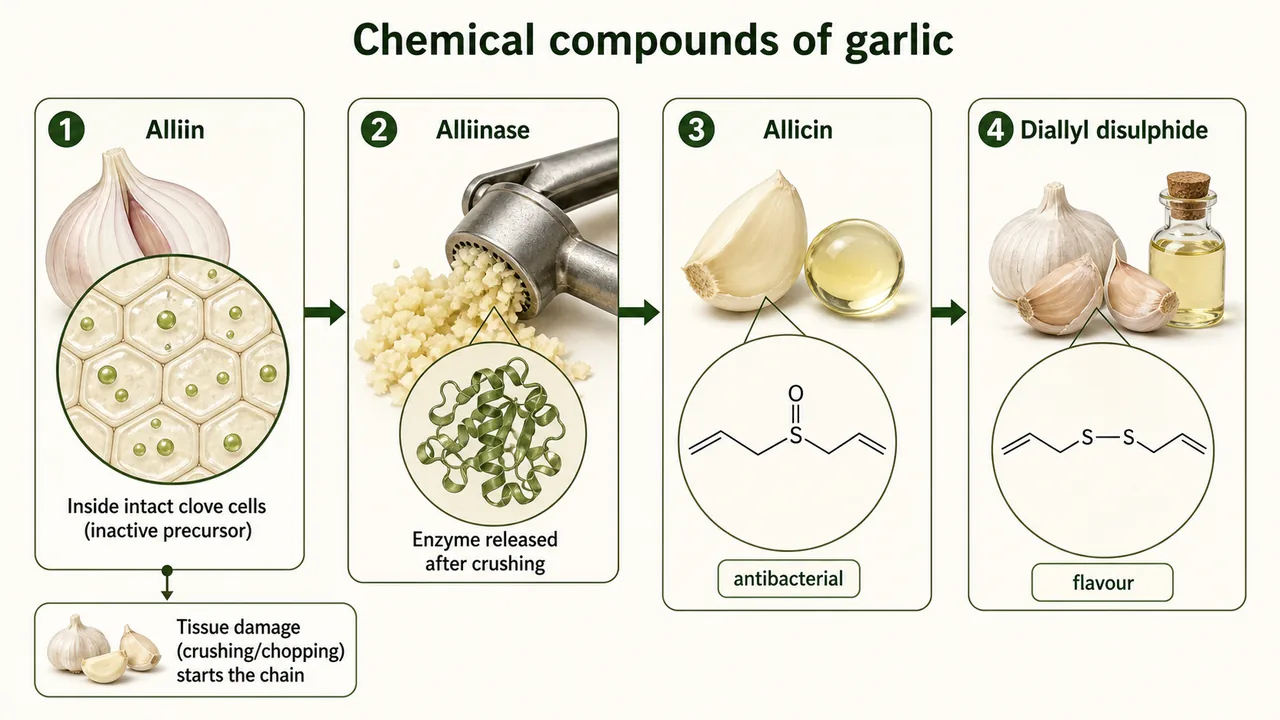
| Compound | Nature | Role |
|---|---|---|
| Diallyl disulphide | Volatile organosulphur compound | Flavour — the pungent aroma and sharp taste |
| Allicin | Active sulphur compound | Antibacterial, antifungal, and antiviral properties |
| Alliin | Water-soluble sulphur amino acid | Precursor to allicin (inactive in intact cells) |
| Alliinase | Enzyme | Converts alliin to allicin upon tissue damage |
The intensity of garlic flavour depends on the sulphur content of the soil in which it is grown. Soils rich in sulphur produce more pungent garlic.
Pro Content Locked
Upgrade to Pro to access this lesson and all other premium content.
Charged once for one year · ₹1188 total
Save ₹100/month vs ₹2388/year launch price
- All Agriculture & Banking Courses
- AI Lesson Questions (100/day)
- AI Doubt Solver (50/day)
- Glows & Grows Feedback (30/day)
- AI Section Quiz (20/day)
- 22-Language Translation (100/day)
- Recall Questions (20/day)
- AI Quiz (15/day)
- AI Quiz Paper Analysis (100/day)
- AI Step-by-Step Explanations (100/day)
- Spaced Repetition Recall (FSRS)
- AI Tutor
- Immersive Text Questions
- Audio Lessons — Hindi & English
- Mock Tests & Previous Year Papers
- Summary & Mind Maps
- XP, Levels, Leaderboard & Badges
- Generate New Classrooms
- Voice AI Teacher (AgriDots Live)
- AI Revision Assistant
- Knowledge Gap Analysis
- Interactive Revision (LangGraph)
🔒 Secure one-time yearly payment via Razorpay · No hidden fees
A farmer in Madhya Pradesh crushes a fresh garlic clove, and immediately the sharp, pungent aroma fills the air. That smell does not exist inside the intact clove — it only appears after the tissue is damaged. This is because the compound responsible for garlic's flavour and medicinal power, allicin, is produced only when the enzyme alliinase acts on the precursor amino acid alliin upon tissue disruption. This elegant biochemical defence mechanism is what makes garlic one of the most studied medicinal plants in the world.
IMPORTANT
Key exam facts: Garlic flavour = Diallyl disulphide (sulphur compound). Antibacterial substance = Allicin. Precursor amino acid = Alliin. Remember the biochemistry chain: Alliin → Alliinase → Allicin → Diallyl disulphide.
Chemical Compounds of Garlic
| Compound | Nature | Role |
|---|---|---|
| Diallyl disulphide | Volatile organosulphur compound | Flavour — the pungent aroma and sharp taste |
| Allicin | Active sulphur compound | Antibacterial, antifungal, and antiviral properties |
| Alliin | Water-soluble sulphur amino acid | Precursor to allicin (inactive in intact cells) |
| Alliinase | Enzyme | Converts alliin to allicin upon tissue damage |
The intensity of garlic flavour depends on the sulphur content of the soil in which it is grown. Soils rich in sulphur produce more pungent garlic.
The Biochemistry Chain
Understanding how garlic develops its flavour and medicinal properties is a frequently tested concept:
Garlic Biochemistry Chain
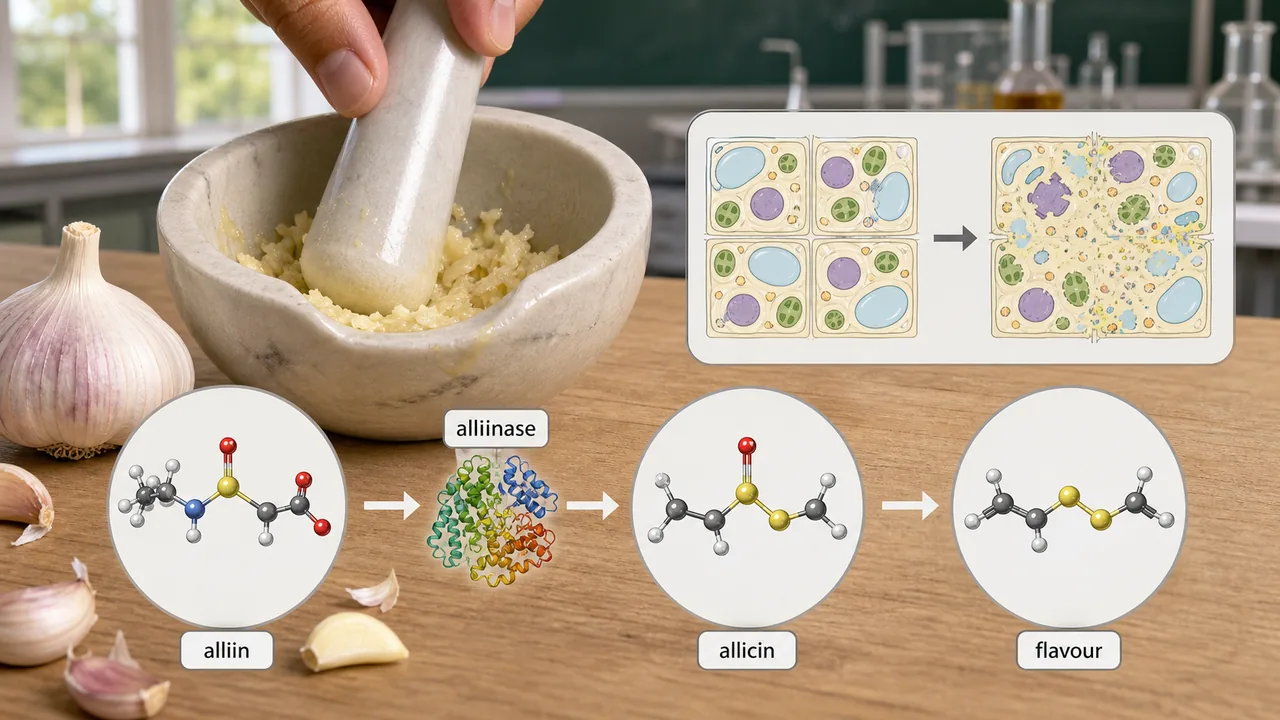
Alliin (inactive, in intact cells) → tissue damage → Alliinase enzyme acts → Allicin (active antibacterial compound) → Further breakdown → Diallyl disulphide (flavour compound)
This chain explains why garlic only develops its strong smell and medicinal properties after being crushed or cut. Inside an intact clove, alliin and alliinase are stored in separate cell compartments. Only when the cell walls are broken do they come into contact.
Comparison of Pungency Compounds in Allium and Solanaceous Crops
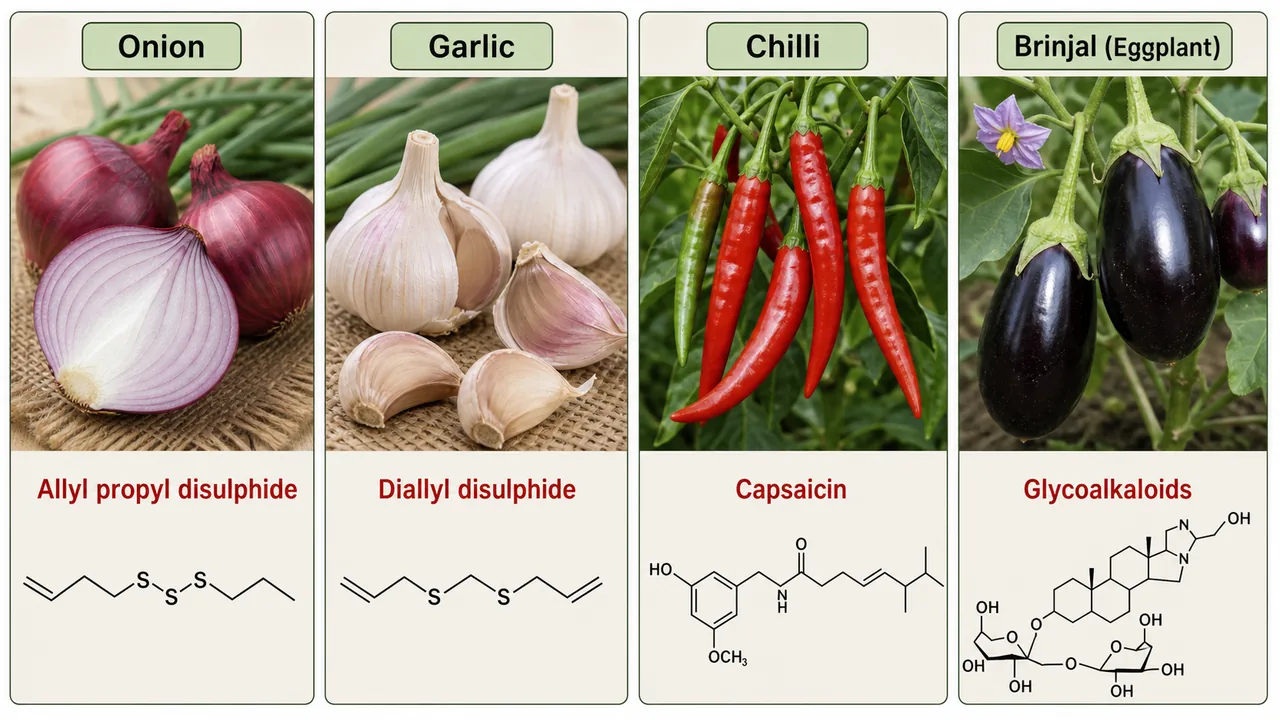
| Crop | Pungency Compound | Chemical Nature |
|---|---|---|
| Garlic | Diallyl disulphide | Organosulphur |
| Onion | Allyl propyl disulphide | Organosulphur |
| Chilli | Capsaicin | Alkaloid |
TIP
Mnemonic — "GAO": Garlic = Diallyl disulphide, Onion = Allyl propyl disulphide, Both are Organosulphur compounds. Chilli is different — capsaicin is an alkaloid, not a sulphur compound.
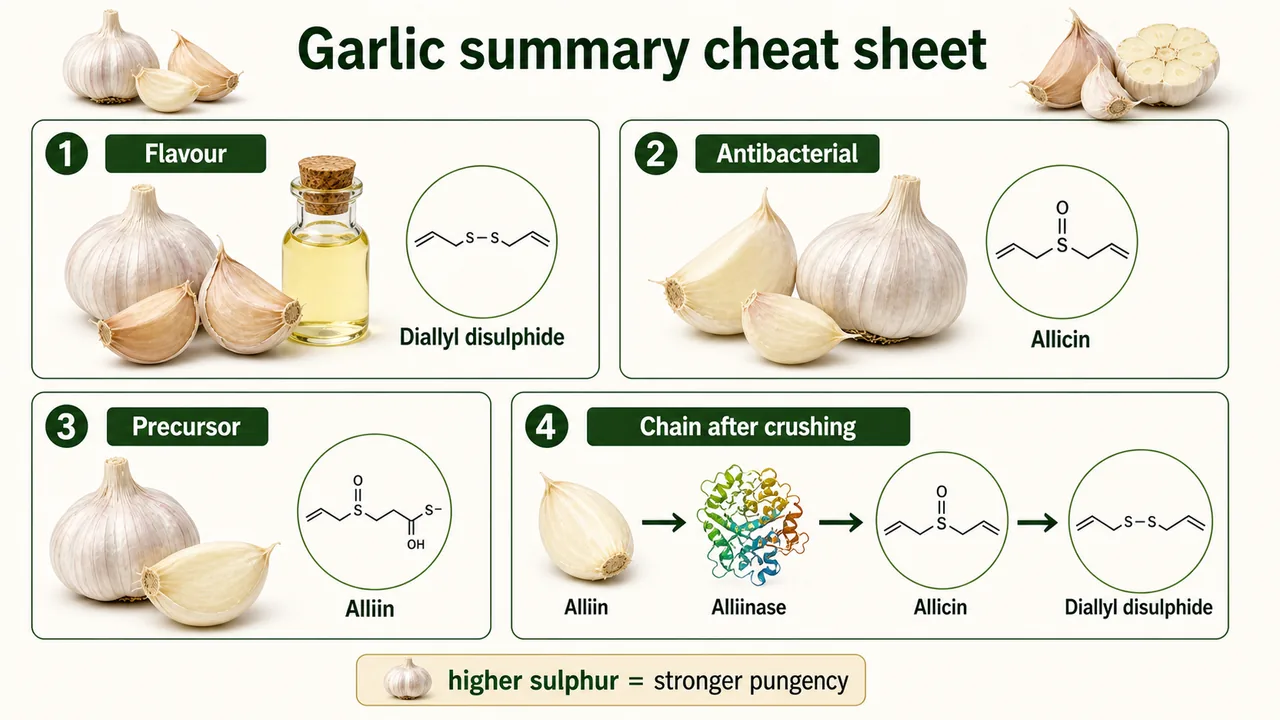
Summary Cheat Sheet
| Concept / Topic | Key Details / Explanation |
|---|---|
| Key flavour and medicinal compounds | Garlic flavour is due to diallyl disulphide, the main antibacterial compound is allicin, alliin is the inactive precursor amino acid, and alliinase is the enzyme that starts the conversion after tissue damage. |
| Sulphur link to pungency | Garlic pungency depends on sulphur chemistry, and stronger flavour develops in crops grown on soils with better sulphur availability. |
| Biochemical conversion chain | The lesson's key recall chain is Alliin -> Alliinase -> Allicin -> Diallyl disulphide. |
| Why crushing garlic matters | Intact cloves do not have the characteristic smell because alliin and alliinase remain separated; crushing or cutting the clove lets them react, first forming allicin and then the flavour-rich sulphur compounds. |
| Comparison with onion and chilli | Garlic and onion both owe pungency to organosulphur compounds, while chilli pungency comes from capsaicin, an alkaloid; the comparison to remember is garlic = diallyl disulphide, onion = allyl propyl disulphide, chilli = capsaicin. |