🥕 Carrot and Beetroot — Root Vegetables Rich in Pigments
Complete guide to carrot and beetroot cultivation covering colour pigments, Asiatic vs European types, forking disorder, varieties like Pusa Kesar and Kashi Krishna, and beetroot betalain pigments for competitive exams.
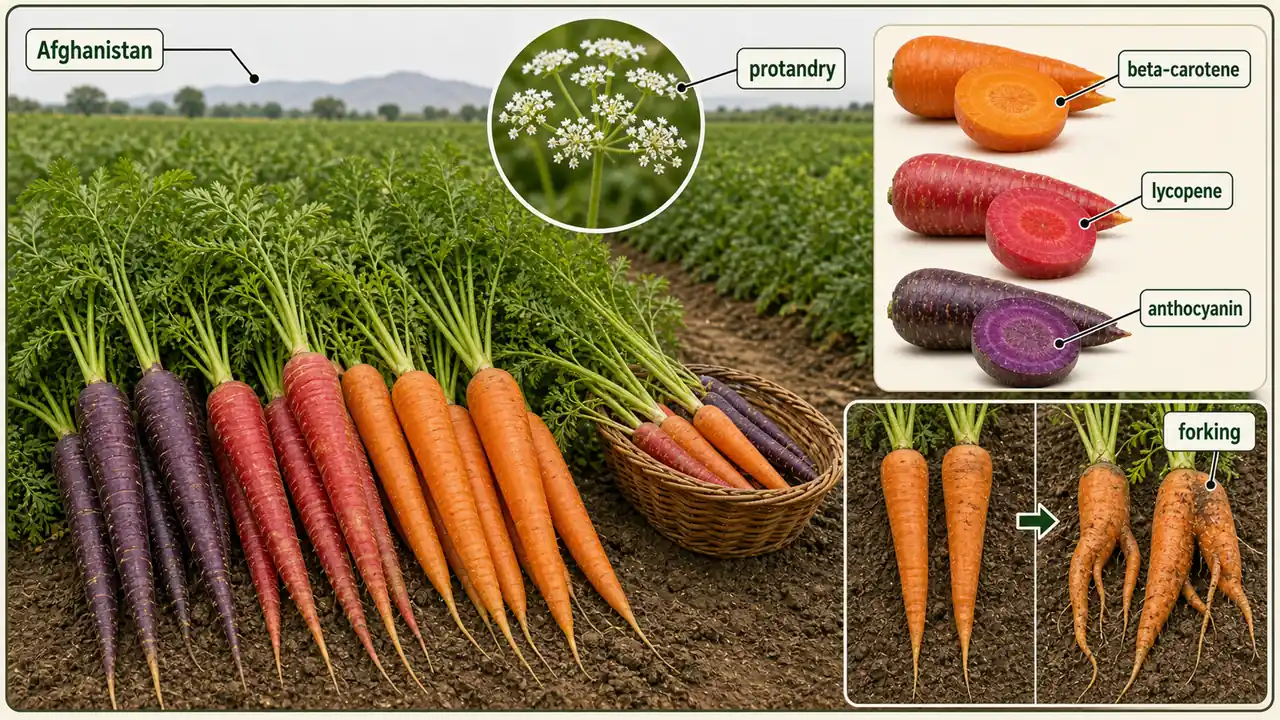
In the winter fields of Punjab, a farmer pulls a bright orange carrot from deep, well-prepared sandy loam soil — the root is smooth, straight, and rich in beta-carotene. Just a few rows away, a neighbouring plot on heavy clay soil tells a different story: roots emerge misshapen and forked, split by encountering a hard pan of compacted soil below the surface. This contrast illustrates why soil preparation is everything in root vegetable cultivation — and why understanding the science of carrot farming matters for both farmers and exam aspirants.
IMPORTANT
Key exam facts: Carrot origin is Afghanistan. It is highly cross-pollinated (protandry). Orange colour = beta-carotene, Red = lycopene, Purple = anthocyanin. Forking is caused by hard pan in soil. Pusa Meghali has the highest Vitamin A content.
Botanical Identity
| Parameter | Detail |
|---|---|
| Botanical Name | Daucus carota |
| Family | Umbelliferae (Apiaceae) |
| Origin | Afghanistan |
| Fruit type | Schizocarp |
| Inflorescence | Umbel |
| Pollination | Highly cross-pollinated (over 95%, due to protandry) |
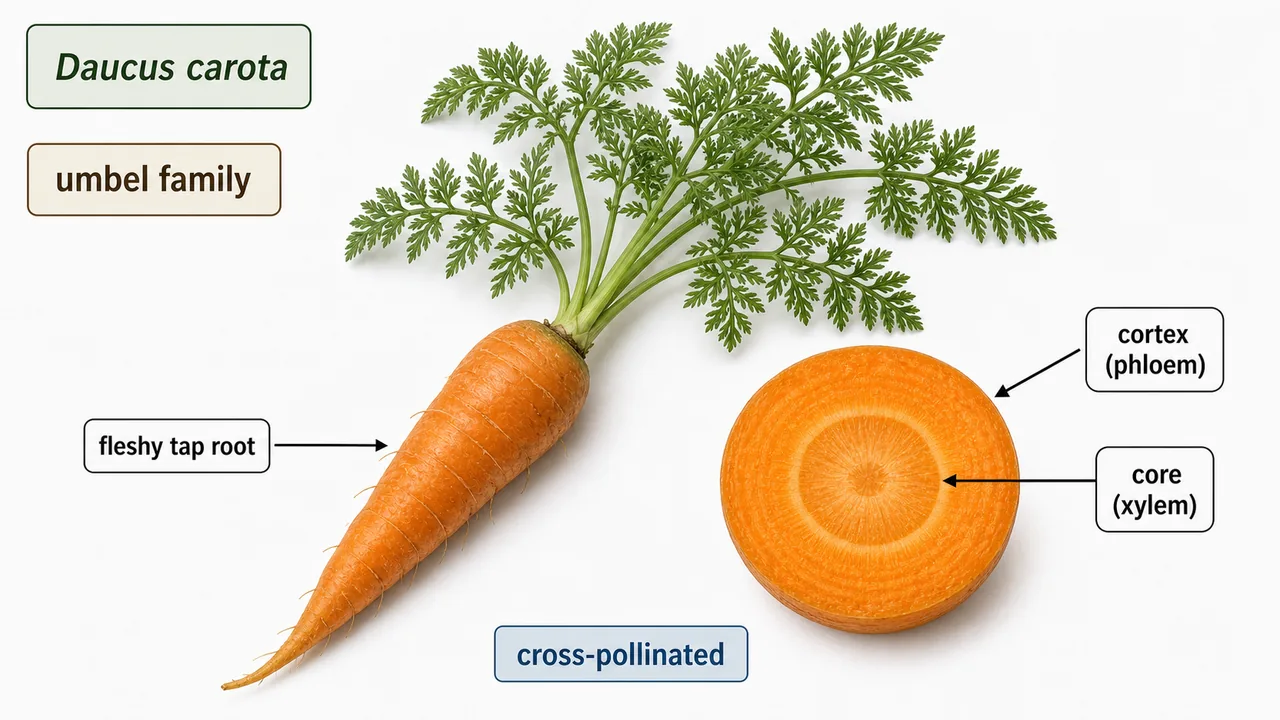
| Edible part | Fleshy tap root (outer cortex = phloem, inner core = xylem) |
| Optimal pH | 6.6-7.1 |
| Season | Cool season crop |
| Life cycle | Annual for root production, biennial for flowering and seed |
| Seed rate | 5-6 kg/ha |
| Reproduction potential | 50,000 seeds/plant |
Protandry (male parts maturing before female parts) in carrot promotes cross-pollination and is commonly observed in the Umbelliferae family.
Pro Content Locked
Upgrade to Pro to access this lesson and all other premium content.
Charged once for one year · ₹1188 total
Save ₹100/month vs ₹2388/year launch price
- All Agriculture & Banking Courses
- AI Lesson Questions (100/day)
- AI Doubt Solver (50/day)
- Glows & Grows Feedback (30/day)
- AI Section Quiz (20/day)
- 22-Language Translation (100/day)
- Recall Questions (20/day)
- AI Quiz (15/day)
- AI Quiz Paper Analysis (100/day)
- AI Step-by-Step Explanations (100/day)
- Spaced Repetition Recall (FSRS)
- AI Tutor
- Immersive Text Questions
- Audio Lessons — Hindi & English
- Mock Tests & Previous Year Papers
- Summary & Mind Maps
- XP, Levels, Leaderboard & Badges
- Generate New Classrooms
- Voice AI Teacher (AgriDots Live)
- AI Revision Assistant
- Knowledge Gap Analysis
- Interactive Revision (LangGraph)
🔒 Secure one-time yearly payment via Razorpay · No hidden fees
In the winter fields of Punjab, a farmer pulls a bright orange carrot from deep, well-prepared sandy loam soil — the root is smooth, straight, and rich in beta-carotene. Just a few rows away, a neighbouring plot on heavy clay soil tells a different story: roots emerge misshapen and forked, split by encountering a hard pan of compacted soil below the surface. This contrast illustrates why soil preparation is everything in root vegetable cultivation — and why understanding the science of carrot farming matters for both farmers and exam aspirants.
IMPORTANT
Key exam facts: Carrot origin is Afghanistan. It is highly cross-pollinated (protandry). Orange colour = beta-carotene, Red = lycopene, Purple = anthocyanin. Forking is caused by hard pan in soil. Pusa Meghali has the highest Vitamin A content.
Botanical Identity
| Parameter | Detail |
|---|---|
| Botanical Name | Daucus carota |
| Family | Umbelliferae (Apiaceae) |
| Origin | Afghanistan |
| Fruit type | Schizocarp |
| Inflorescence | Umbel |
| Pollination | Highly cross-pollinated (over 95%, due to protandry) |
| Edible part | Fleshy tap root (outer cortex = phloem, inner core = xylem) |
| Optimal pH | 6.6-7.1 |
| Season | Cool season crop |
| Life cycle | Annual for root production, biennial for flowering and seed |
| Seed rate | 5-6 kg/ha |
| Reproduction potential | 50,000 seeds/plant |
Protandry (male parts maturing before female parts) in carrot promotes cross-pollination and is commonly observed in the Umbelliferae family.
Colour Pigments in Carrot
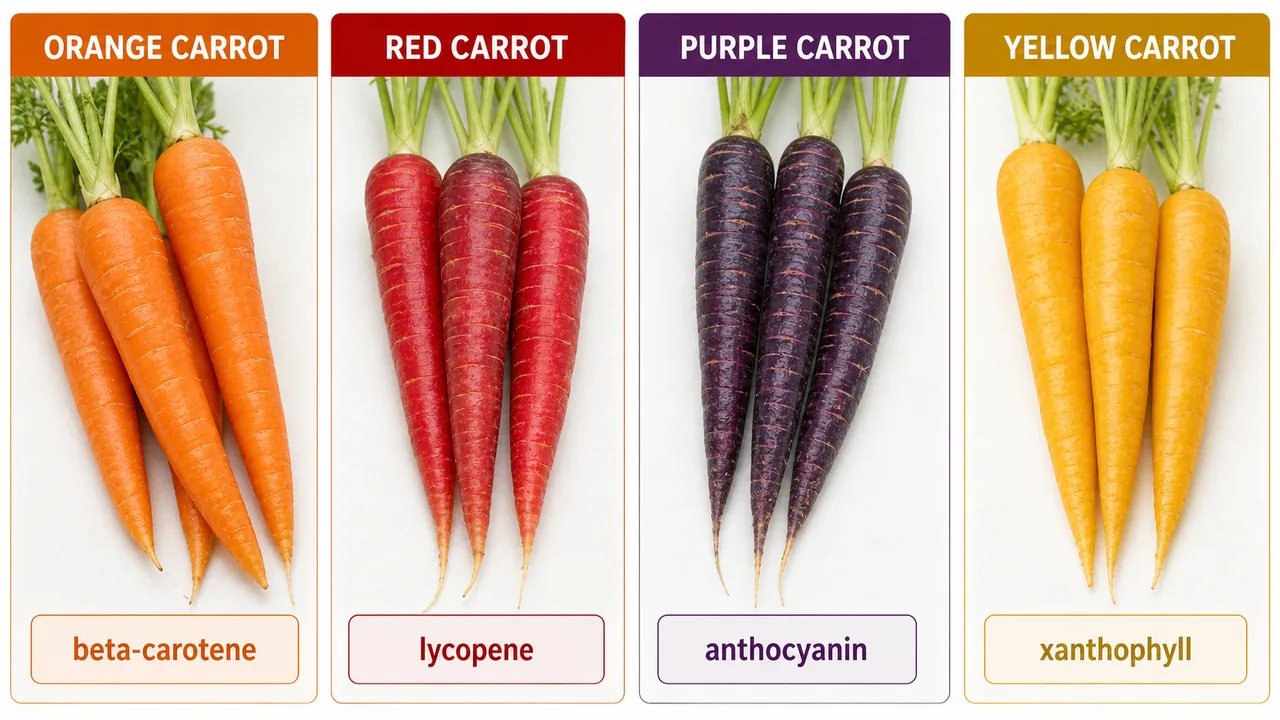
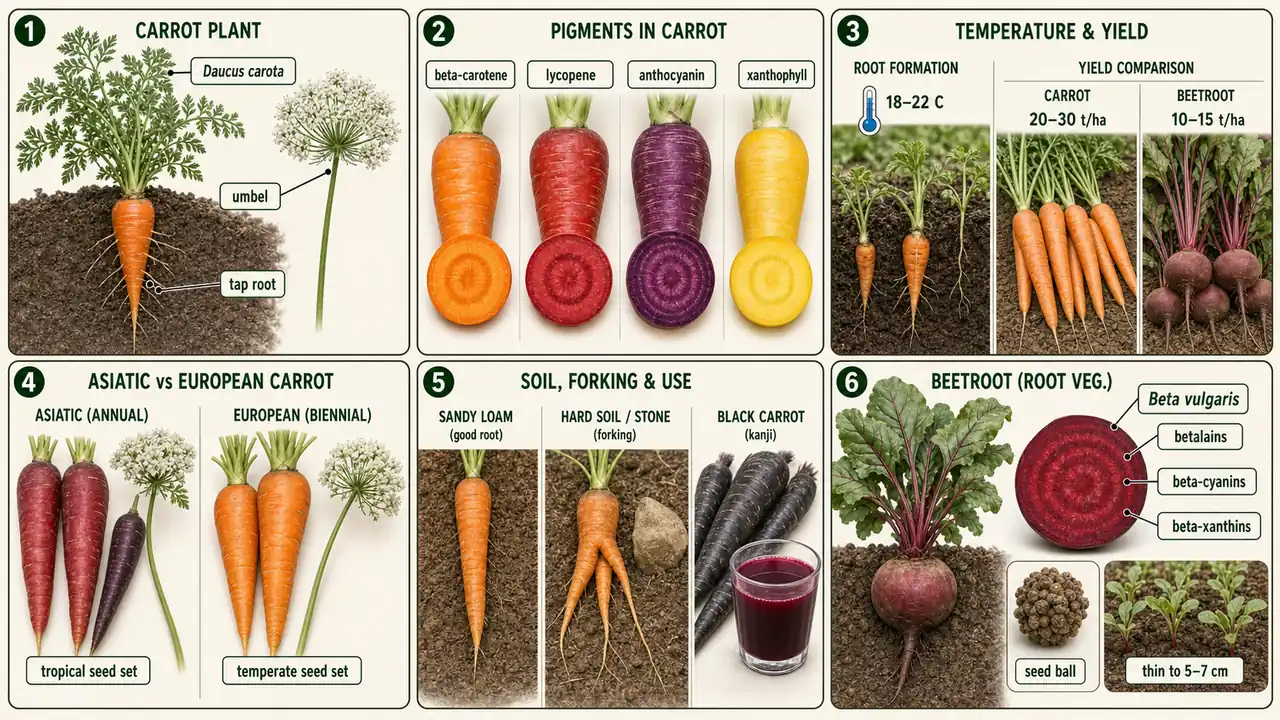
Different carrot colours are caused by different pigments — a frequently tested topic:
| Colour | Pigment |
|---|---|
| Orange | Beta-carotene |
| Red | Lycopene |
| Purple | Anthocyanin |
| Yellow | Xanthophyll (Lutein) |
- Carrot roots are rich in carotenes: 1890 microgram/100 g.
- Carrot contains sucrose 10 times that of glucose or fructose.
- Isocoumarin is responsible for the bitter flavour in carrot.
Optimum Temperature
| Parameter | Temperature |
|---|---|
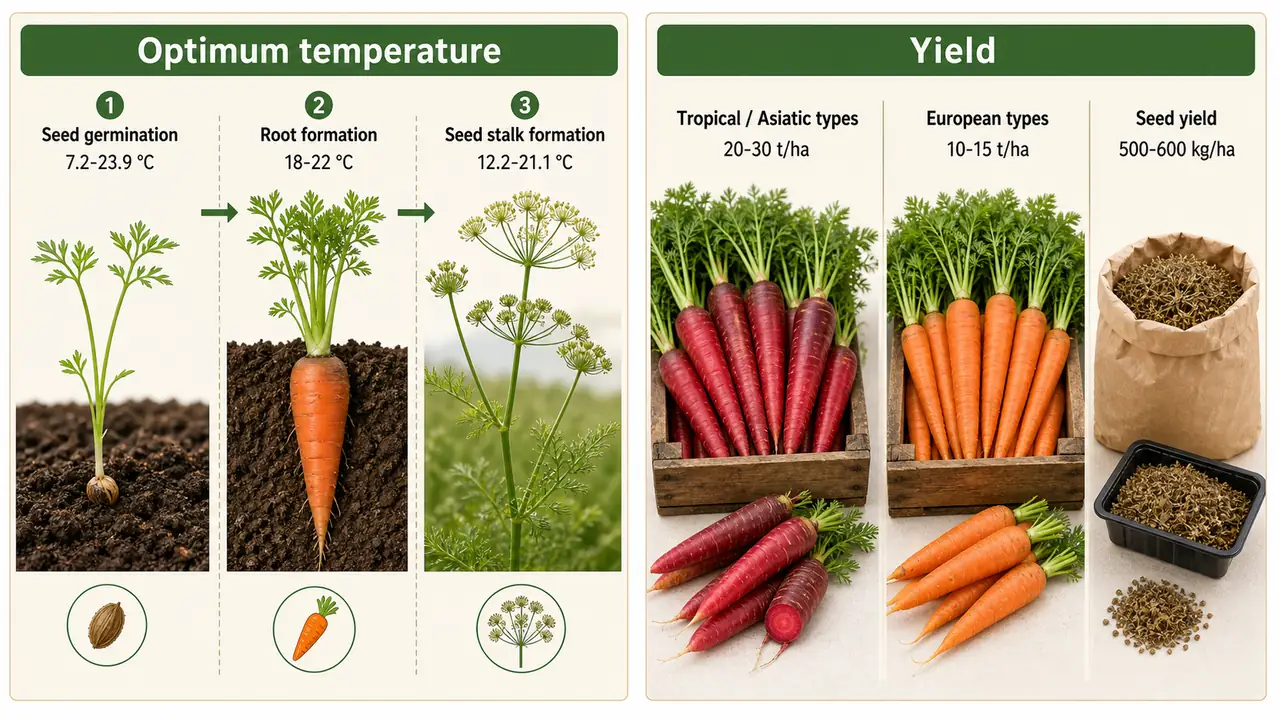
| Root formation | 18-22 degrees C |
| Seed germination | 7.2-23.9 degrees C |
| Seed stalk formation | 12.2-21.1 degrees C |
Yield
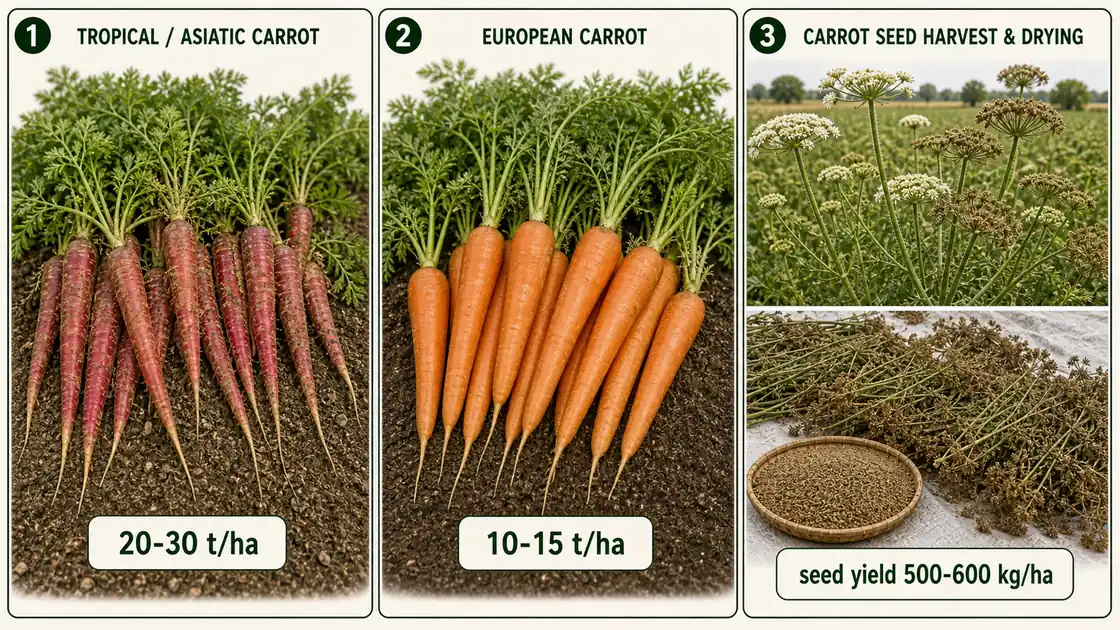
| Type | Yield |
|---|---|
| Tropical/Asiatic types | 20-30 t/ha |
| European types | 10-15 t/ha |
| Seed yield | 500-600 kg/ha |
Asiatic vs European Carrot Types
This comparison is frequently asked in exams:
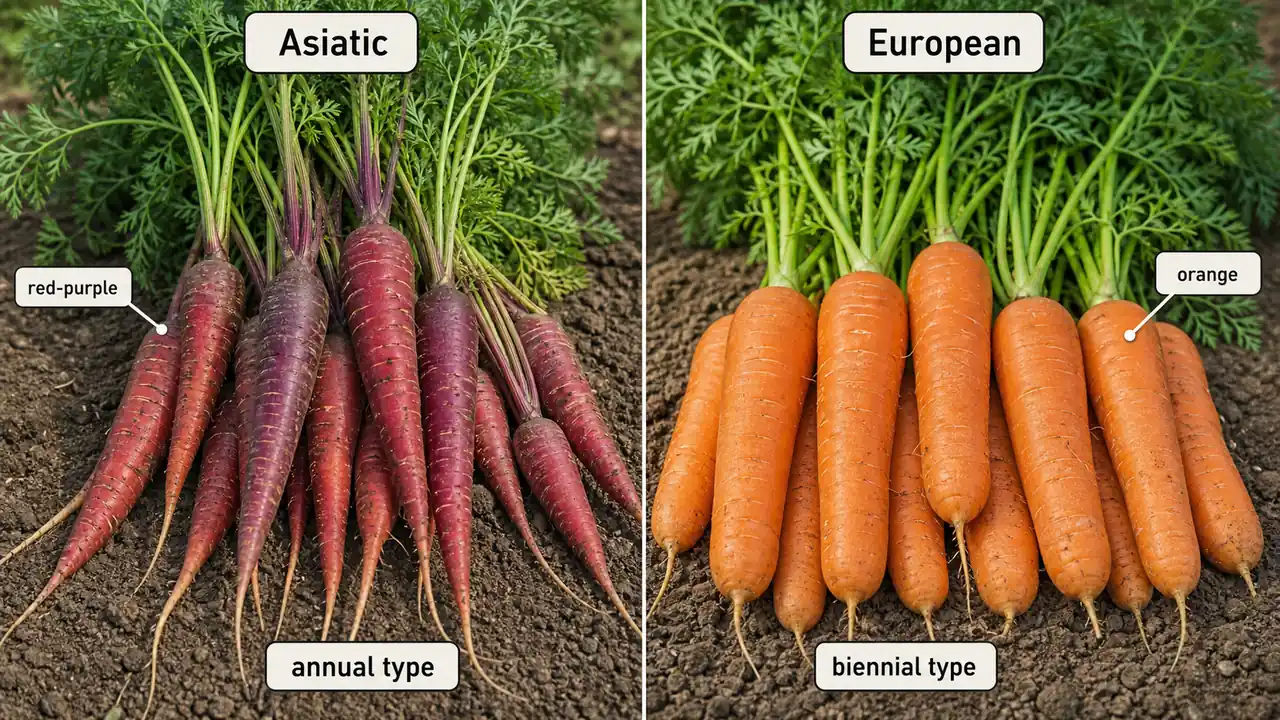
Carrot Types: Asiatic vs European - Quick Comparison
| Feature | Asiatic Type | European Type |
|---|---|---|
| Colour | Red to dark purple | Orange |
| Main pigment | Anthocyanin | Beta-carotene |
| Carotene content | Low | High |
| Life cycle | Annual | Biennial |
| Yield | High (20-30 t/ha) | Moderate (10-15 t/ha) |
| Quality | Softer, juicier | Firmer, blunt core |
| Seed setting | Under tropical climate | Only under temperate climate |
Cultivation Considerations
- Carrots grown on heavy soils are rough and coarse. Light, sandy loam soils are ideal for smooth, straight root development.
- Forking occurs when the growing root tip encounters a compacted layer (hard pan) or stones, causing the root to split into multiple branches. Deep ploughing and raised bed cultivation help prevent this.
- Kanji — a traditional North Indian fermented probiotic beverage — is prepared from black carrot with mustard seeds and salt, popular during Holi.


Important Varieties
Tropical / Asiatic Varieties
| Variety | Special Feature |
|---|---|
| Pusa Kesar | Suitable for early sowing (heat tolerant); Local Red x Nantes Half Long |
| Pusa Meghali | Highest Vitamin A content; Pusa Kesar x Nantes |
Temperate / European Varieties
| Variety | Special Feature |
|---|---|
| Pusa Yamdagini | EC-9981 x Nantes |
| Chantenay | Suitable for processing and canning (short, thick roots) |
| Zeno | Suitable for Nilgiri hills (introduced from Germany) |
| Danvers | Standard European type |
| Nantes Half Long | Fine-textured, cylindrical roots |
| Early Nantes | Early-maturing Nantes type |
Other Notable Varieties
| Variety | Feature |
|---|---|
| Imperator | Nantes x Chantenay hybrid |
| Hissar Garlic | Selection variety |
| Ooty-1 | Suited for Nilgiri conditions |
| Kashi Krishna | Latest black carrot variety by IIVR, Varanasi; high anthocyanin, used as natural food colourant |

Beetroot
Beetroot is another important root vegetable, often studied alongside carrot.
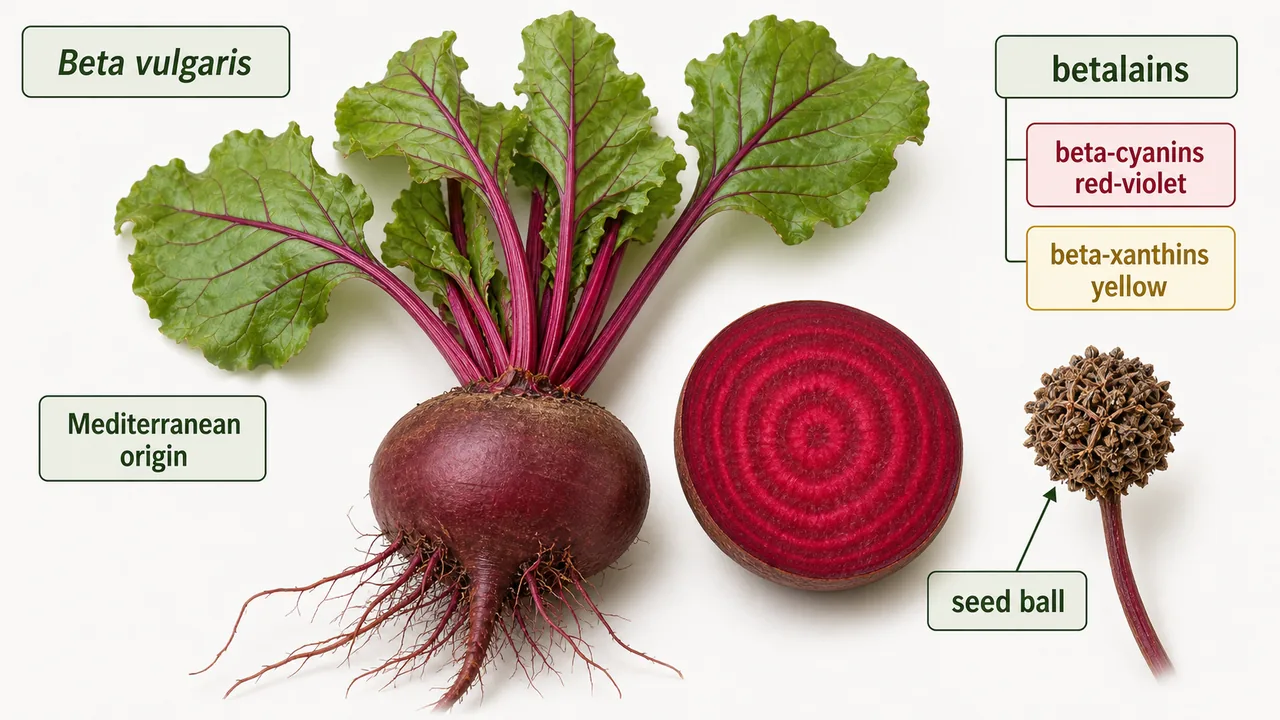
| Parameter | Detail |
|---|---|
| Botanical Name | Beta vulgaris |
| Family | Chenopodiaceae |
| Origin | Mediterranean region |
| Inflorescence | Spike |
| Optimal temperature | 20-22 degrees C |
| Harvest size | Diameter of 3.5 cm |
| Indian varieties | None — all are introductions from abroad |
Beetroot Pigments (Betalains)
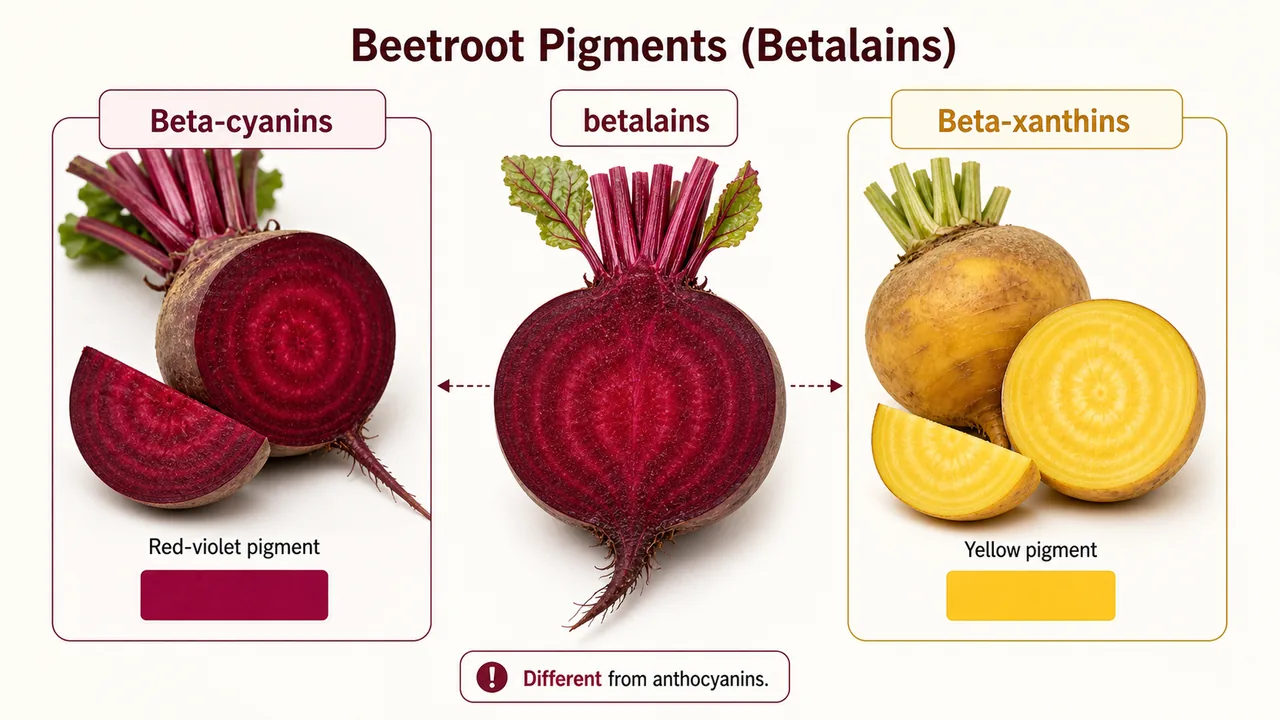
| Pigment | Colour |
|---|---|
| Beta-cyanins | Red-violet |
| Beta-xanthins | Yellow |
These betalain pigments are unique to the order Caryophyllales and are entirely different from anthocyanins found in most other coloured vegetables.
Beetroot Varieties
- Detroit Dark Red, Crimson Globe, Early Wonder, Crosby Egyptian
Key Facts
- A single seed ball contains about 50 seeds — thinning after germination is compulsory.
- Rich source of folic acid — essential during pregnancy to reduce risk of spina bifida.
Summary Cheat Sheet
| Concept / Topic | Key Details / Explanation |
|---|---|
| Carrot identity | Carrot is Daucus carota of the Apiaceae/Umbelliferae family, originated in Afghanistan, bears a schizocarp fruit and umbel inflorescence, and is highly cross-pollinated because of protandry. |
| Root and crop facts | The edible part is the fleshy tap root, optimum pH is 6.6-7.1, root-production crop is annual but seed production is biennial, seed rate is 5-6 kg/ha, and a plant may produce about 50,000 seeds. |
| Carrot pigments | Orange colour is due to beta-carotene, red to lycopene, purple to anthocyanin, and yellow to xanthophyll/lutein. |
| Composition and taste | Carrot contains high carotene, has much more sucrose than glucose or fructose, and isocoumarin is responsible for bitter flavour. |
| Temperature and yield | Optimum temperature is 18-22 degrees C for root formation; Asiatic or tropical carrots yield 20-30 t/ha, European types yield 10-15 t/ha, and seed yield is about 500-600 kg/ha. |
| Asiatic vs European types | Asiatic carrots are usually red to purple, annual, higher yielding, softer, and can set seed in tropical conditions; European carrots are generally orange, biennial, firmer, and set seed best in temperate climates. |
Summary Continued
| Concept / Topic | Key Details / Explanation |
|---|---|
| Forking and soil requirement | Light sandy loam is best for smooth roots; forking occurs when roots hit a hard pan or stones, so deep tillage and raised beds help prevent it. |
| Cultural fact | Kanji, a fermented drink, is prepared from black carrot. |
| Important carrot varieties | Pusa Kesar is heat tolerant, Pusa Meghali has the highest Vitamin A, Pusa Yamdagini, Chantenay, Zeno, Danvers, Nantes Half Long, Early Nantes, Imperator, Hissar Garlic, Ooty-1, and Kashi Krishna are other important named varieties. |
| Beetroot identity | Beetroot is Beta vulgaris of the Chenopodiaceae family, originated in the Mediterranean, has spike inflorescence, and grows best at 20-22 degrees C. |
| Beetroot pigments and harvest | Harvest size is about 3.5 cm diameter; red-violet colour comes from beta-cyanins and yellow colour from beta-xanthins, which are betalain pigments. |
| Beetroot varieties and seed fact | Important varieties are Detroit Dark Red, Crimson Globe, Early Wonder, and Crosby Egyptian; a seed ball may contain about 50 seeds, so thinning is necessary, and beetroot is a good source of folic acid. |