🦠 Bacteria — Structure, Classification, and Role in Agriculture
Bacterial shapes, flagella types, reproduction, temperature classification, Gram staining, and important bacteria in nutrient cycling with mnemonics and exam tips
From Field to Lab — Bacteria All Around Us
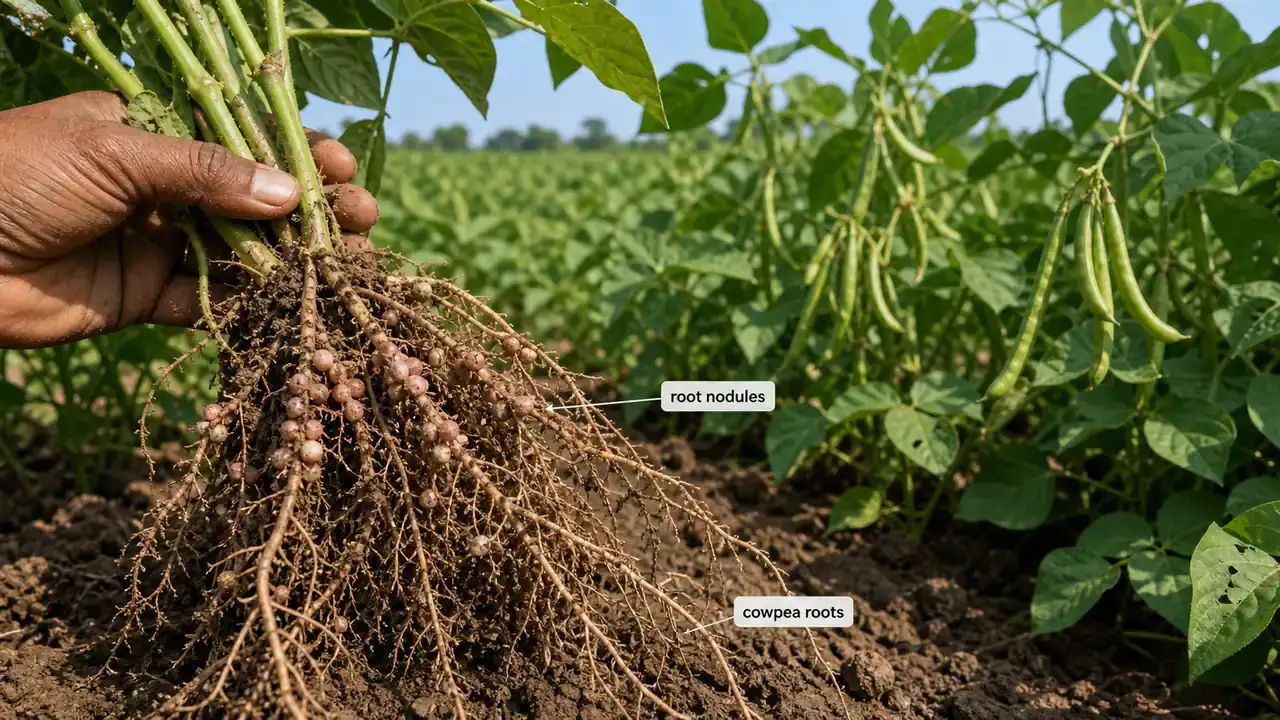
Imagine pulling up a healthy groundnut plant. The roots are studded with small pinkish nodules — each one is a miniature nitrogen factory powered by Rhizobium bacteria. A few metres away, decomposing crop residue is being broken down by billions of soil bacteria, releasing nutrients for the next crop. In a dairy nearby, Lactobacillus bacteria are turning milk into curd.
Bacteria are everywhere in agriculture — as allies (nitrogen fixers, decomposers) and as enemies (plant pathogens causing blight, wilt, and canker). Understanding their structure and behaviour is essential for managing both.
What Are Bacteria?
Bacteria are prokaryotic, unicellular microorganisms that are the most abundant organisms in soil. They measure 0.5–3.0 microns in size.
The first bacterial plant disease is usually credited to T.J. Burrill (1882), who showed that fire blight of apple and pear is caused by Erwinia amylovora. This was a foundational step in the development of plant pathology.
Key chemical facts:
- Bacterial cytoplasmic membrane is composed of Phospholipids and Proteins
- Bacterial capsule is composed of Polysaccharides
- All enzymes are chemically Proteins
- Enzymes are Colloidal in nature

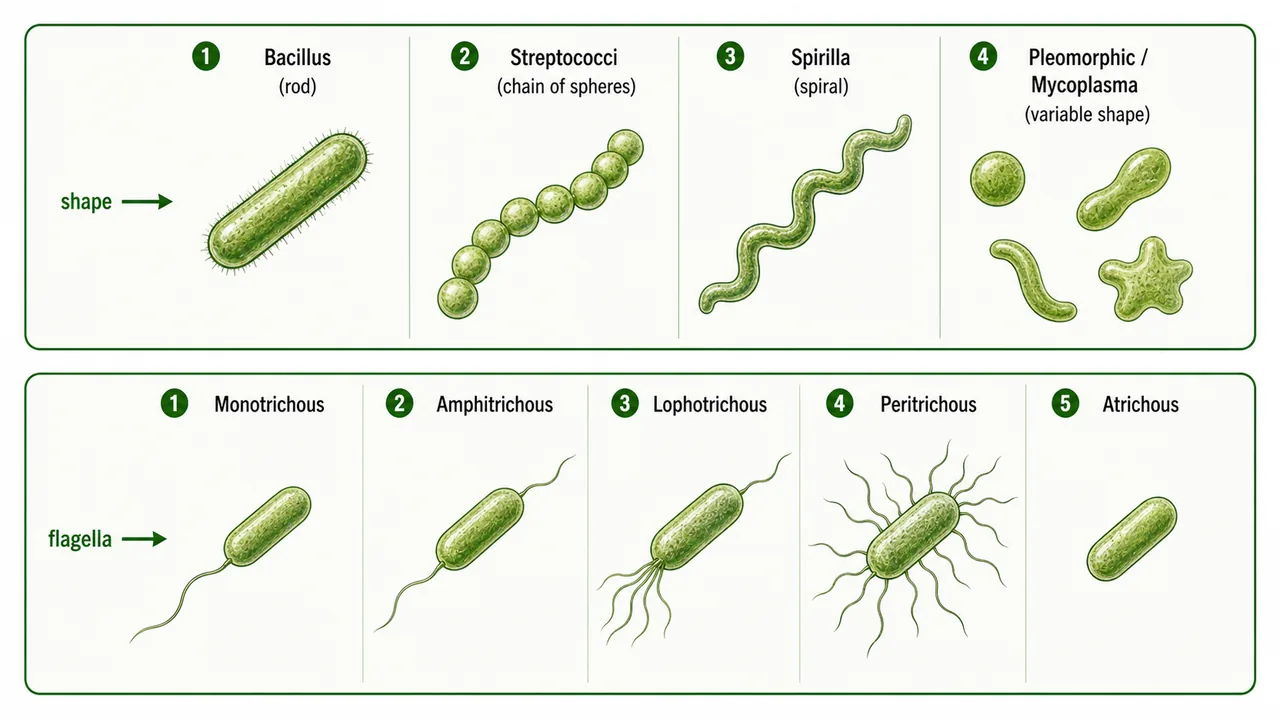
Bacterial Shapes
The shape of a bacterium is one of the first characteristics used for identification. Exams frequently ask you to match shapes with their technical names.
| Shape | Technical Name | Example | Field Relevance |
|---|---|---|---|
| Rod-shaped | Bacillus | Bacillus subtilis | Many soil bacteria are rod-shaped |
| Spherical | Coccus / Cocci | Micrococcus | Common textbook spherical form |
| Spherical (in chain) | Streptococci | Streptococcus | S. lactis produces lactic acid in dairy |
| Comma-shaped | Vibrio | Vibrio cholerae | Important diagnostic shape |
| Helical / Spiral | Spirilla | Spirillum | Found in waterlogged soils |
| Variable shape | Pleomorphic / Polymorphic | Arthrobacter / Mycoplasma | Variable form under different conditions |
Additional facts:
- Arrangement of rod-shaped bacteria like matchsticks in a matchbox is known as Pallisade arrangement
- Mycoplasmas are the most highly pleomorphic organisms
TIP
Mnemonic — "Big Snakes Spiral Past": Bacillus = rod, Streptococci = spherical chain, Spiralla = spiral, Pleomorphic = variable.
Flagella — Organs of Bacterial Locomotion
Flagella are whip-like appendages that allow bacteria to move. The protein present in flagella is called Flagellin.
| Flagella Type | Description | Example / Memory Aid |
|---|---|---|
| Monotrichous | Single polar flagellum | Mono = 1 |
| Amphitrichous | One flagellum at each end | Amphi = both ends |
| Lophotrichous | Cluster of flagella at one pole | Lopho = tuft/cluster |
| Cephalotrichous | Tuft of flagella specifically at one end | One-sided tuft |
| Peritrichous | Flagella all around the cell | E. coli, Agrobacterium, Salmonella |
| Atrichous | No flagella at all | Flagella absent |
NOTE
In direct example-based recall, Xanthomonas and Vibrio are frequently used under the single-polar / monotrichous pattern.
TIP
Mnemonic — "MALPA": Monotrichous (1), Amphitrichous (2 ends), Lophotrichous (cluster), Peritrichous (all around), Atrichous (none). Think of a monkey (MALPA in Hindi) waving its arms in all directions.
Bacterial Taxis — Movement Responses
Bacteria do not move randomly; they respond to environmental signals. This directed movement is called taxis.
| Stimulus | Response Name | Agricultural Example |
|---|---|---|
| Light | Phototaxis | Photosynthetic bacteria move toward light |
| Chemical substances | Chemotaxis | Rhizobium moves toward root exudates of legumes |
Bacterial Reproduction and Respiration
- The most common method of reproduction in bacteria is Binary fission (asexual — one cell divides into two identical cells)
- Bacteria utilising free oxygen for respiration are called Aerobic
- Clostridium is a strict anaerobic bacterium (important in nitrogen fixation — C. pasteurianum fixes N₂ in waterlogged soils)
- Membranous invaginations into the bacterial cytoplasm are known as Mesosomes — they assist in cell division and respiration
- Other less-emphasized bacterial reproduction modes include budding, fragmentation, and spore formation
PGPR and Genetic Recombination
PGPR (Plant Growth Promoting Rhizobacteria)
- PGPR are bacteria that colonize the root region and enhance plant growth.
- Important examples include Azospirillum, Azotobacter, Pseudomonas, and Rhizobium.
- Related habitat terms often asked in objective exams:
- Rhizosphere = the soil region influenced by root exudates
- Rhizoplane = the actual root surface colonized by microbes
- Phyllosphere = the immediate environment around the leaf surface where microbes are abundant; the term is classically associated with Ruinen
- Phylloplane = the actual surface of the leaf itself
- In direct microbial-interaction recall, important predators of bacteria include bacteriophages (viral predators), Bdellovibrio (a predatory bacterium), and various protozoa that graze on bacterial populations in soil and water.
Gene Transfer in Bacteria
| Process | Core idea | Key scientists |
|---|---|---|
| Conjugation | DNA transfer by direct cell-to-cell contact, often through the F-factor system | Lederberg and Tatum (1946) |
| Transformation | Uptake of naked DNA from the environment | Griffith (1928) |
| Transduction | DNA transfer through a bacteriophage vector | Zinder and Lederberg (1952) |
IMPORTANT
A common exam separator is the vector/mechanism:
- Conjugation = direct contact
- Transformation = naked DNA
- Transduction = bacteriophage
- In older bacterial-genetics one-liners, the F-factor is the classical fertility determinant attached to conjugation.
Temperature Classification of Bacteria
Different bacteria thrive at different temperatures. This classification explains why certain bacterial diseases appear only in specific seasons.
| Type | Temperature Range | Examples | Agricultural Relevance |
|---|---|---|---|
| Psychrophilic | Low (0–20°C) | Cold-adapted bacteria | Active in cold storage, winter soils |
| Mesophilic | Moderate (20–45°C) | Most soil and plant pathogens | Most crop diseases occur in this range |
| Thermophilic | High (45–80°C) | Compost bacteria | Essential for composting crop residues |
IMPORTANT
Most plant pathogenic bacteria are mesophilic (25–40°C). This is why bacterial diseases like leaf blight of rice are more prevalent during the warm, humid kharif season.
NOTE
In compact textbook tables, the optimum for many mesophilic bacteria is often remembered as around 37°C.
Other temperature-related terms:
- Bacteria that can survive low temperatures but do not actively grow there are called Psychroduric
- Bacteria that survive at pasteurisation temperature are called Thermoduric
- Bacteria surviving at high salt concentration are called Halophilic
TIP
Mnemonic — "Psycho Messes with Thermo": Psychrophilic = cold, Mesophilic = moderate, Thermophilic = hot. The prefix tells the temperature preference.
Important Bacteria in Agriculture
Nitrogen Cycle
- Rhizobium — Gram-negative rods; fix N₂ symbiotically in legume root nodules
- Bacteria NOT responsible for N-fixation: E. coli
Sulphur Cycle
- Key bacteria: Thiobacillus, Arthrobacter, Desulfovibrio desulfuricans
Phosphorus Cycle
- Key organisms: Bacillus, Pseudomonas, Penicillium, Micrococcus, Flavobacterium, Aspergillus, Fusarium
Industrial Microbiology
- Lactic acid is produced by Streptococcus lactis or Lactobacillus
- Saccharomyces cerevisiae — Brewer's yeast (fermentation of alcohol)
- Candida milleri — Baker's yeast (bread making)
- In enzyme-production recall, invertase is classically linked with Saccharomyces cerevisiae, and some objective tables also pair it with Candida utilis.
- In the next stage of oxidative fermentation, bacteria such as Acetobacter and Gluconobacter convert ethanol into acetic acid, which is the microbiological basis of vinegar production.
- In antibiotic-production recall, industrial penicillin is classically associated with Penicillium chrysogenum, while streptomycin is linked with Selman Waksman and Streptomyces griseus.
- A standard fermented-food example is sauerkraut, where early fermentation is classically associated with Leuconostoc and later strongly acidic stages with Lactobacillus.
- In compact fermentation recall, both lactic acid fermentation and alcohol fermentation are usually remembered as giving a net gain of 2 ATP.
- In single-cell-protein recall, important microbial examples include Spirulina, Chlorella, Saccharomyces, Candida, Pseudomonas, Bacillus, Lactobacillus, Aspergillus, and Rhizopus.
- For direct industrial one-liners, Aspergillus niger is the standard microbial source of citric acid, and Mucor is a classical fungal source linked with the rennin / rennet-type enzyme used in cheese making.
Environmental Microbiology
- In applied agricultural microbiology, bioremediation means using microorganisms to remove, detoxify, or degrade pollutants from soil or water.
- A standard textbook example is Pseudomonas putida, which is well known for degrading crude petroleum / hydrocarbon pollutants.
- When the cleanup is done mainly by plants rather than microbes, the process is called phytoremediation.
- In textbook special-use recalls, Clostridium is linked with retting of jute, Bacillus pasteurii with urea degradation, and Bacillus megaterium with curing of tobacco leaves.
- Among unusual bacterial groups, Leptothrix is remembered as an iron bacterium, while the phloem-limited but walled bacterium most often recalled in crop pathology is Candidatus Liberibacter.
Nutritional Types of Bacteria
| Type | Meaning | Examples |
|---|---|---|
| Photoautotrophs | Use light energy and fix their own carbon | Cyanobacteria, purple sulphur bacteria, green sulphur bacteria |
| Chemoautotrophs | Oxidize inorganic substances for energy | Nitrifying bacteria, sulphur bacteria |
| Heterotrophs | Depend on organic matter as food source | Many saprophytic bacteria |
Quick antimicrobial terms often asked in objective exams:
- Bactericide = a substance that kills bacteria
- Bacteriostatic = a substance that inhibits bacterial growth without necessarily killing the cells
- In water-quality microbiology, Escherichia coli (E. coli) is the classical index organism of faecal contamination, because its presence strongly suggests contamination by intestinal waste.
Gram Staining — A Fundamental Classification Tool
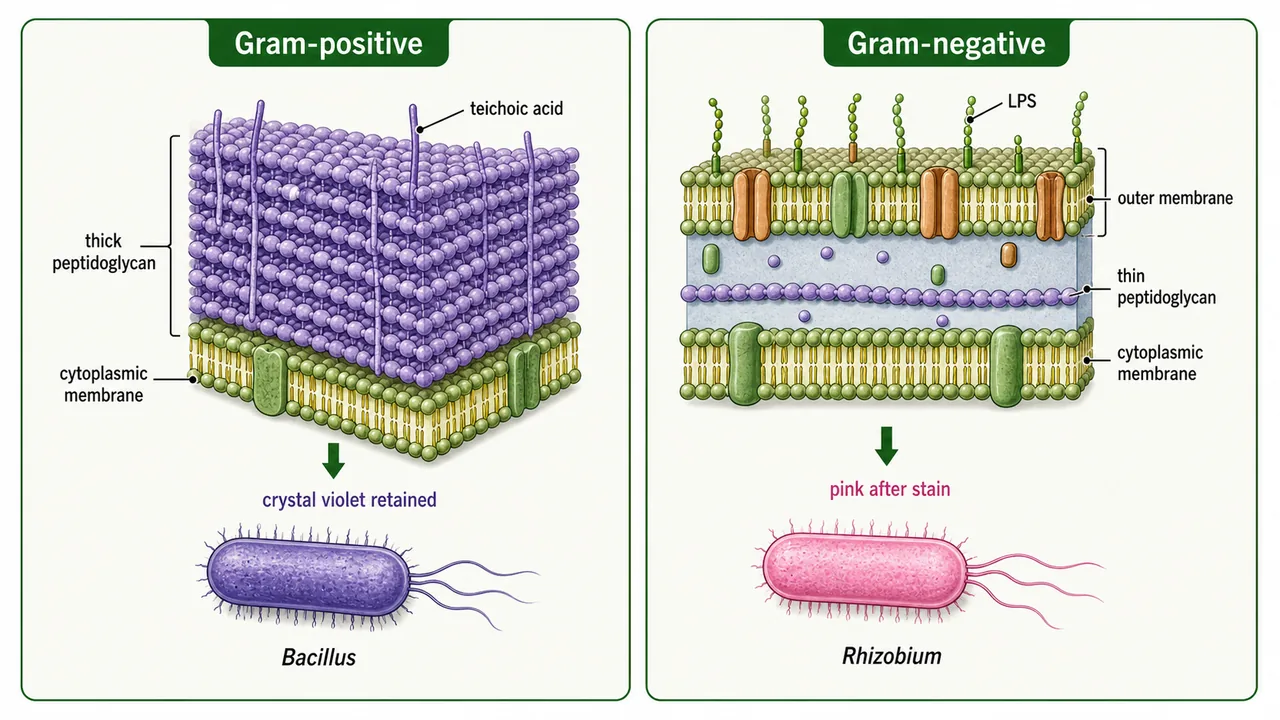
Gram staining is a technique of differential staining suggested by Gram. It divides bacteria into two large groups based on their cell wall structure.
| Feature | Gram-positive | Gram-negative |
|---|---|---|
| Stain retention | Retain crystal violet stain (appear purple) | Do not retain stain (appear pink/red) |
| Cell wall | Thick peptidoglycan layer | Thin peptidoglycan + outer membrane |
| Example | Bacillus, Clostridium | Rhizobium, Pseudomonas, Xanthomonas |
Key facts:
- Antibiotics are effective against bacteria — primarily Gram-negative bacteria
- Antibiotic Penicillin was discovered by Alexander Fleming
- Bacitracin is classically associated with Bacillus subtilis and Bacillus licheniformis
- Actinomycetes (Streptomyces) are the richest source of antibiotics
- In the classical Gram-stain sequence, the reagents are applied as crystal violet (primary stain) → iodine (mordant) → alcohol / acetone (decolorizer) → safranin (counterstain); some older notes also mention basic fuchsin as an alternative counterstain.
- When the wall of a Gram-positive bacterium is removed by lysozyme, the resulting wall-less cell is called a protoplast, whereas the corresponding partially wall-deficient form from a Gram-negative bacterium is called a spheroplast.
- A few compact cell-wall recalls that often appear in MCQs are: peptidoglycan / murein as the chief bacterial wall material, teichoic acid as a Gram-positive-wall marker, and lipopolysaccharide plus a prominent periplasmic space as Gram-negative markers.
- In culture-media recall, most bacteria grow best near a neutral pH around 6.5-7.5, while fungi are more favored by an acidic pH around 4.5-5.5; this is one reason acidic media suppress bacterial overgrowth during fungal isolation.
- Nutrient Agar (NA) is the standard general-purpose culture medium for many bacteria, complementing PDA for fungi.
- The most germicidal region of ultraviolet light in lab recall is around 265 nm.
- A standard stain used for demonstrating bacterial endospores is malachite green.
- Classical endospore-forming bacterial genera include Bacillus, Clostridium, and Sporosarcina.
- In compact culture-character recall, Xanthomonas is classically remembered for producing a yellow pigment on culture media.
- Pseudomonas species are similarly remembered for producing a fluorescent pigment.
- In older cytology-style one-liners, the bacterial chromosome number is conventionally treated as one, and the chief storage reserve is remembered as glycogen.
NOTE
Rhizobium is Gram-negative. Most plant pathogenic bacteria (Xanthomonas, Pseudomonas, Erwinia) are also Gram-negative. This is important because Gram-negative bacteria have an outer membrane that makes them naturally resistant to certain antibiotics.
Comparison Table — Aerobic vs Anaerobic Bacteria
| Feature | Aerobic | Anaerobic |
|---|---|---|
| Oxygen requirement | Require free O₂ | Cannot tolerate O₂ |
| Example | Azotobacter (free-living N-fixer) | Clostridium pasteurianum (anaerobic N-fixer) |
| Habitat | Well-aerated soils | Waterlogged soils, deep soil layers |
| Agricultural role | Decomposition, nitrification | N-fixation in paddy soils |
Summary Table — Key Facts at a Glance
| Fact | Answer |
|---|---|
| Bacterial size | 0.5–3.0 microns |
| Cell membrane composition | Phospholipids and Proteins |
| Capsule composition | Polysaccharides |
| Rod-shaped bacteria | Bacillus |
| Matchstick arrangement | Pallisade |
| Flagella protein | Flagellin |
| Comma-shaped bacteria | Vibrio |
| Single flagellum | Monotrichous |
| Flagella all around | Peritrichous |
| Most common reproduction | Binary fission |
| Strict anaerobe | Clostridium |
| Most pathogens temperature | Mesophilic (25–40°C) |
| Survive low temperature without active growth | Psychroduric |
| Survive pasteurisation | Thermoduric |
| High salt tolerance | Halophilic |
| Symbiotic N-fixer | Rhizobium (Gram-negative rod) |
| Not an N-fixer | E. coli |
| Index organism of faecal contamination in water | E. coli |
| Microbial cleanup of pollutants | Bioremediation |
| Plant-based cleanup of pollutants | Phytoremediation |
| Bacterium effective in degrading crude petroleum | Pseudomonas putida |
| Vinegar-producing bacteria | Acetobacter and Gluconobacter |
| Brewer's yeast | Saccharomyces cerevisiae |
| Baker's yeast | Candida milleri |
| Richest antibiotic source | Actinomycetes (Streptomyces) |
| Penicillin discoverer | Alexander Fleming |
| Differential staining | Gram |
| Mesosomes are | Membranous invaginations in cytoplasm |
| Gram-positive wall marker | Teichoic acid |
| Gram-negative wall marker | Lipopolysaccharide (LPS) |
| Acetic acid fermentation bacterium | Acetobacter aceti |
Summary Cheat Sheet
| Fact | Answer |
|---|---|
| Bacterial size | 0.5–3.0 microns |
| Cell membrane composition | Phospholipids and Proteins |
| Capsule composition | Polysaccharides |
| Rod-shaped bacteria | Bacillus |
| Spherical in chain | Streptococci |
| Spiral shape | Spirilla |
| Variable shape (most pleomorphic) | Mycoplasma |
| Matchstick arrangement | Pallisade |
| Flagella protein | Flagellin |
| Single flagellum | Monotrichous |
| Two flagella (one at each end) | Amphitrichous |
| Tuft of flagella at one end | Cephalotrichous |
| Flagella all around | Peritrichous |
| No flagella | Atrichous |
| Movement toward light | Phototaxis |
| Movement toward chemicals | Chemotaxis |
| Most common reproduction | Binary fission |
| Plant-growth-promoting rhizobacteria | PGPR |
| Rhizosphere | Soil region influenced by root exudates |
| Rhizoplane | Actual root surface colonized by microbes |
| Phyllosphere | Immediate microbial environment around the leaf surface |
| Phylloplane | Actual surface of the leaf itself |
| Conjugation discovered by | Lederberg and Tatum |
| Transformation discovered by | Griffith |
| Transduction discovered by | Zinder and Lederberg |
| Strict anaerobe (N-fixer) | Clostridium |
| Most plant pathogen temperature | Mesophilic (25–40°C) |
| Survive pasteurisation | Thermoduric |
| High salt tolerance | Halophilic |
| Symbiotic N-fixer | Rhizobium (Gram-negative rod) |
| Index organism of faecal contamination in water | E. coli |
| Microbial cleanup of pollutants | Bioremediation |
| Plant-based cleanup of pollutants | Phytoremediation |
| Crude petroleum degrader | Pseudomonas putida |
| Vinegar-producing bacteria | Acetobacter and Gluconobacter |
| Richest antibiotic source | Actinomycetes (Streptomyces) |
| Penicillin discoverer | Alexander Fleming |
| Baker's yeast | Candida milleri |
| Brewer's yeast | Saccharomyces cerevisiae |
Lesson Doubts
Ask questions, get expert answers