🎄 Plant Growth Hormones — Auxins, Gibberellins, Cytokinins, ABA, and Ethylene
Discovery, physiological effects, and agricultural applications of the five major plant hormones — auxins, gibberellins, cytokinins, abscisic acid, and ethylene with comparison tables
From Field to Lab — The Invisible Architects of Every Crop
In the previous lesson, we defined plant growth — its phases, measurement, and rate patterns. But growth does not happen on its own. It is orchestrated by chemical messengers called plant hormones (phytohormones) that tell cells when to divide, elongate, differentiate, ripen, or die. Without hormones, the growth machinery we studied would have no coordination.
When a tea planter prunes the growing tips to make bushes denser, the hidden logic is auxin — removing the auxin-rich apical bud releases lateral buds from dormancy. When a farmer applies gibberellic acid to seedless grapes, the berries grow larger without pollination. When a fruit seller places unripe bananas alongside a ripe apple in a closed box, the ethylene released by the apple triggers ripening in the bananas. Every agricultural practice from rooting of cuttings to weed control to fruit ripening involves plant hormones.
Pro Content Locked
Upgrade to Pro to access this lesson and all other premium content.
Charged once for one year · ₹1188 total
Save ₹100/month vs ₹2388/year launch price
- All Agriculture & Banking Courses
- AI Lesson Questions (100/day)
- AI Doubt Solver (50/day)
- Glows & Grows Feedback (30/day)
- AI Section Quiz (20/day)
- 22-Language Translation (100/day)
- Recall Questions (20/day)
- AI Quiz (15/day)
- AI Quiz Paper Analysis (100/day)
- AI Step-by-Step Explanations (100/day)
- Spaced Repetition Recall (FSRS)
- AI Tutor
- Immersive Text Questions
- Audio Lessons — Hindi & English
- Mock Tests & Previous Year Papers
- Summary & Mind Maps
- XP, Levels, Leaderboard & Badges
- Generate New Classrooms
- Voice AI Teacher (AgriDots Live)
- AI Revision Assistant
- Knowledge Gap Analysis
- Interactive Revision (LangGraph)
🔒 Secure one-time yearly payment via Razorpay · No hidden fees
From Field to Lab — The Invisible Architects of Every Crop
In the previous lesson, we defined plant growth — its phases, measurement, and rate patterns. But growth does not happen on its own. It is orchestrated by chemical messengers called plant hormones (phytohormones) that tell cells when to divide, elongate, differentiate, ripen, or die. Without hormones, the growth machinery we studied would have no coordination.
When a tea planter prunes the growing tips to make bushes denser, the hidden logic is auxin — removing the auxin-rich apical bud releases lateral buds from dormancy. When a farmer applies gibberellic acid to seedless grapes, the berries grow larger without pollination. When a fruit seller places unripe bananas alongside a ripe apple in a closed box, the ethylene released by the apple triggers ripening in the bananas. Every agricultural practice from rooting of cuttings to weed control to fruit ripening involves plant hormones.
This lesson covers:
- Auxins — discovery, IAA, synthetic auxins (2,4-D), apical dominance, rooting, weed control
- Gibberellins — Bakanae disease, GA₃, bolting, malting, seedless grapes
- Cytokinins — kinetin, zeatin, cell division, tissue culture ratios
- Abscisic acid (ABA) — stress hormone, stomatal closure, dormancy
- Ethylene — gaseous hormone, fruit ripening, ethephon, triple response
- Growth retardants — Cycocel, Maleic Hydrazide, Paclobutrazol
This is one of the highest-yield topics in plant physiology for competitive exams.
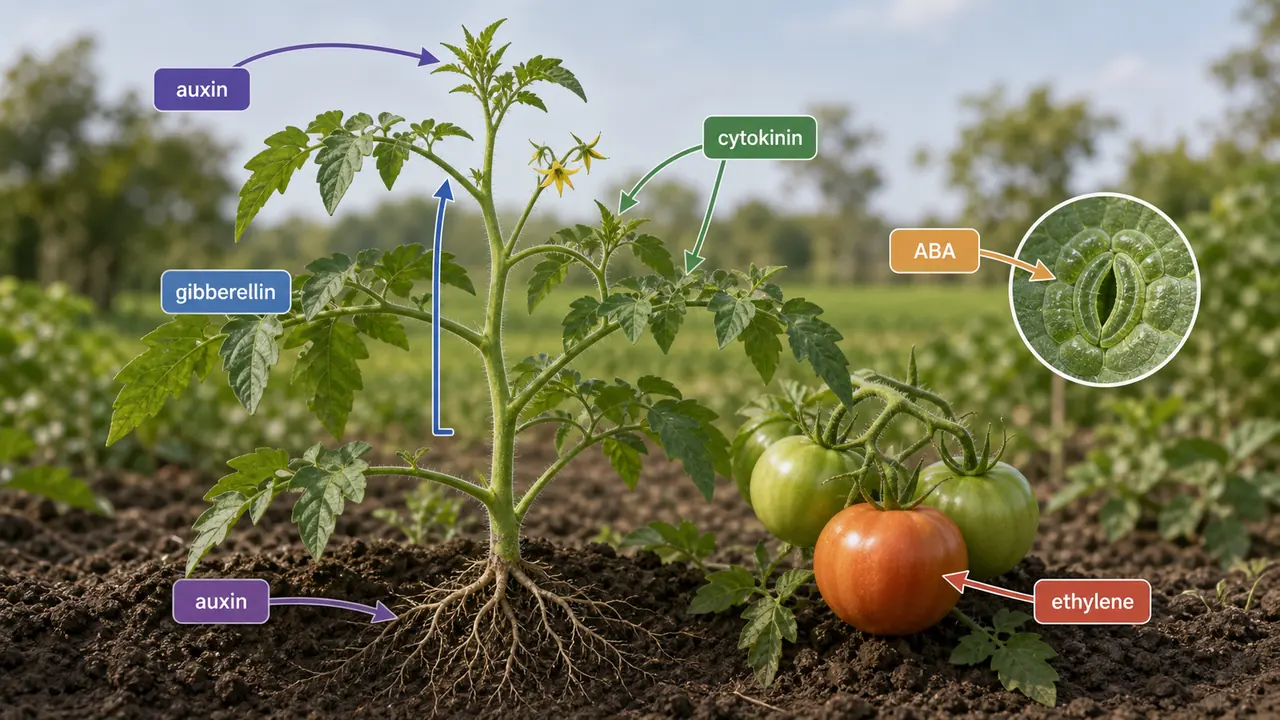
What Are Plant Hormones?
Plant hormones (phytohormones) bridge the gap between the cellular growth processes of the previous lesson and the whole-plant developmental responses we see in the field. They are produced in minute quantities but control every aspect of plant life.
Plant hormones (phytohormones) are organic substances produced in meristematic tissues, translocated to target sites, and active in extremely minute quantities (parts per million).
The word hormone is classically linked with Starling (1905) and the Greek root hormao ("to excite" or "to set in motion"), which fits the role of phytohormones as chemical growth regulators.
- Term "Phytohormone" suggested by Thimann (1948)
- Plant Growth Regulators (PGR) include both natural hormones and synthetic compounds
Classification
| Category | Examples | General Effect |
|---|---|---|
| Growth promoters | Auxins, Gibberellins, Cytokinins | Stimulate cell division, enlargement, differentiation |
| Growth inhibitors | Abscisic acid (ABA), Ethylene | Retard growth, induce dormancy, promote senescence |
1. Auxins — The "Growth Hormone"
Auxin was the first plant hormone discovered and remains the most studied. It controls cell elongation, root initiation, apical dominance, and tropisms. Its name comes from the Greek auxein ("to grow"). Auxin is unique among plant hormones because it exhibits polar transport — it moves in only one direction (apex to base).
Discovery
| Year | Scientist | Contribution |
|---|---|---|
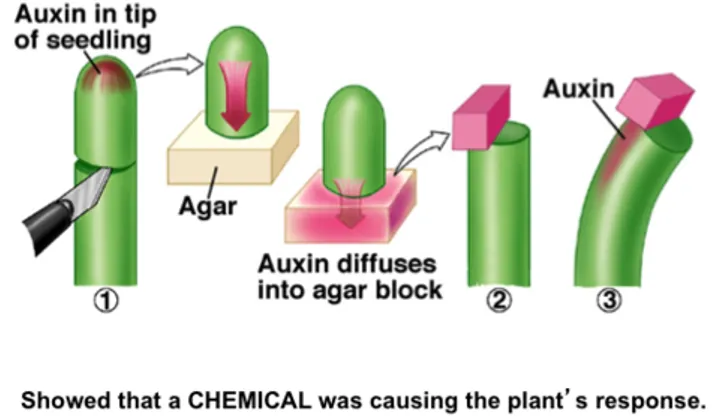
| 1880 | Charles Darwin & F. Darwin | Observed phototropic bending in Phalaris (Canary Grass) coleoptile |
| 1928 | F.W. Went | Isolated auxin from oat coleoptile tips; credited with discovery of auxin |
| 1931 | Kogl & Haagen-Smit | Coined the term "Auxin" |
| — | — | First isolated from human urine |
- Avena Curvature Test (Went's bioassay): Agar block with auxin placed on decapitated oat coleoptile → degree of curvature proportional to auxin concentration
Key Facts
| Property | Detail |
|---|---|
| Natural auxin | Indole Acetic Acid (IAA) |
| Other natural auxin recall | Phenyl Acetic Acid (PAA) |
| Precursor | Tryptophan (via Shikimic acid pathway) |
| Nutrient for IAA synthesis | Zinc (Zn) |
| Transport | Polar (apex → base = basipetal); active, energy-dependent |
| Highest concentration | Coleoptile tip > root tip |
Synthetic Auxins
| Compound | Abbreviation | Special Use |
|---|---|---|
| Indole-3-Butyric Acid | IBA | Root induction in cuttings |
| Naphthalene Acetic Acid | NAA | Fruit thinning, rooting |
| 2,4-Dichlorophenoxyacetic acid | 2,4-D | Selective weedkiller (kills broadleaf weeds); discovered by Pokorny |
| 2,4,5-Trichlorophenoxyacetic acid | 2,4,5-T | Used as a defoliant |
| Malic Hydrazide | MH | Anti-auxin property |
Classical isolation recalls also connect auxin with maize kernels and with the 1931 Kogl & Smith work on material isolated from human urine.
Free vs Bound Auxins
| Type | Status | Example |
|---|---|---|
| Free auxins | Physiologically active, used in metabolism | Normal auxin pool |
| Bound auxins | Attached to enzymes or anti-auxins, inactive | Mango — no rooting even with NAA (bound auxin) |
Physiological Effects and Agricultural Applications
| Effect | Mechanism | Agricultural Application |
|---|---|---|
| Apical dominance | Auxin from apical bud inhibits lateral buds | Pruning in tea gardens releases laterals → bushy growth |
| Cell division | Stimulates cambial activity and callus formation | Tissue culture, grafting (strengthens stock-scion union) |
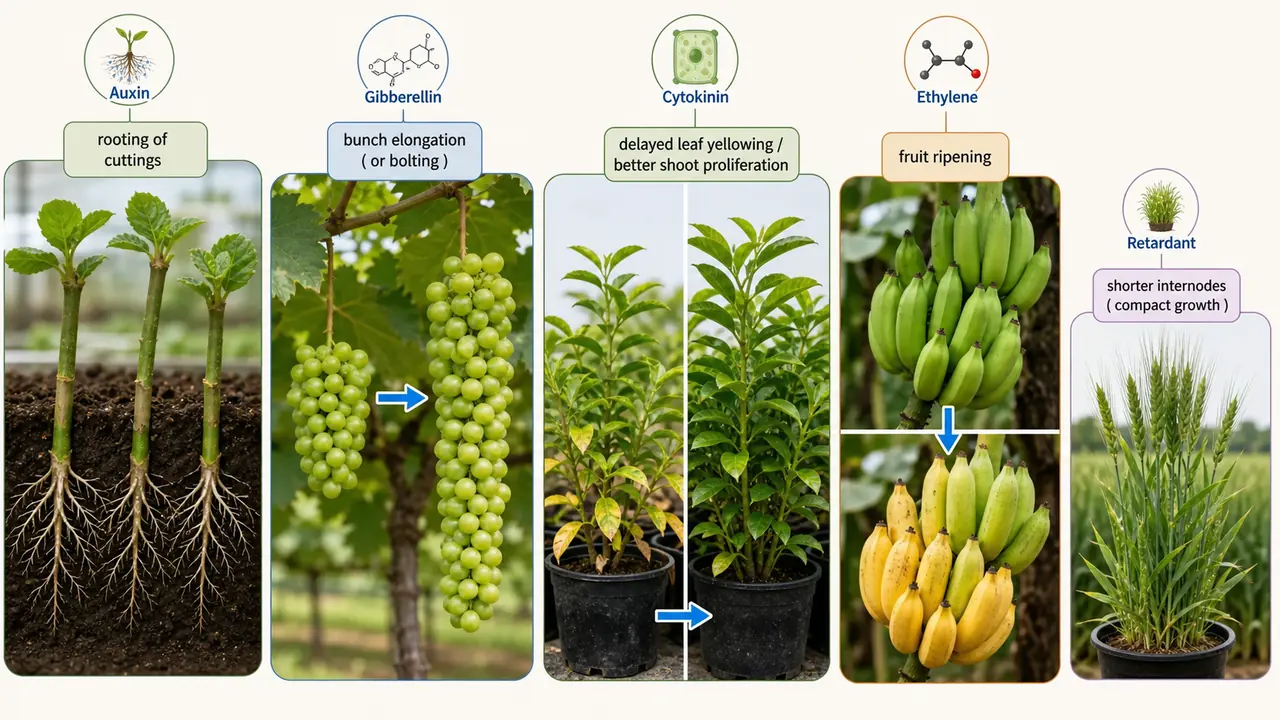
| Root initiation | Promotes adventitious root formation | IBA/NAA for rooting stem cuttings |
| Phototropism | Auxin accumulates on shaded side → more growth → bending toward light | — |
| Weed control | 2,4-D at high concentration kills broadleaf weeds | Selective herbicide in wheat, rice, maize |
| Parthenocarpy | Induces seedless fruit development | Seedless watermelon, tomato |
| Preventing abscission | NAA prevents abscission — detachment of fruit/leaf from plant | Apple and mango orchards before harvest |
| Fruit thinning | NAA removes excess fruits | Apple, citrus orchards |
- Auxin can promote shoot elongation but inhibit root elongation at higher effective levels, partly through interaction with ethylene.
- Acid growth theory explains auxin-driven wall loosening and cell elongation.
- 2,4-D behaves as a growth regulator at low concentration but as a selective herbicide at higher concentration.
- In tissue-culture recall, 2,4-D is strongly associated with callus induction, while IBA and NAA are standard for root induction.
- Anti-auxin recalls commonly include maleic hydrazide and para-coumaric acid.
IMPORTANT
Polar transport of auxin is basipetal (apex → base) and requires ATP from aerobic respiration. Under anaerobic conditions, polar transport stops and auxin moves freely. This is unique to auxin among all plant hormones.
2. Gibberellins (GA)
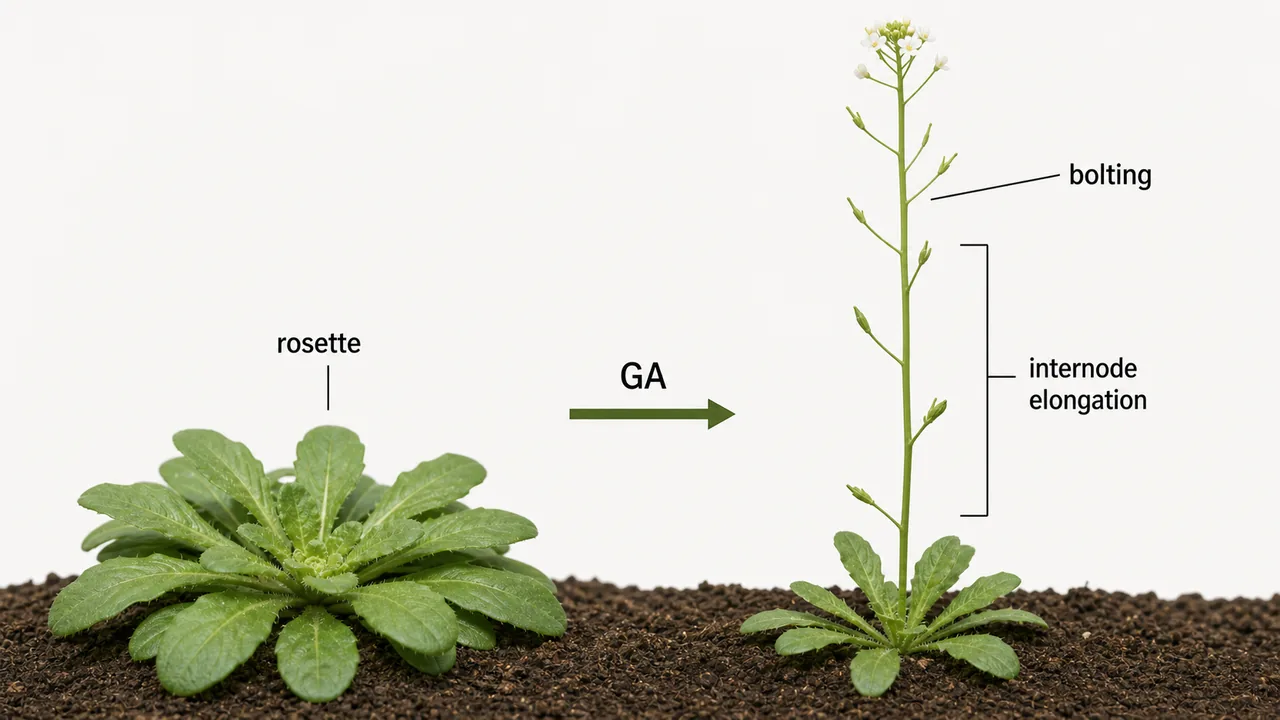
Gibberellins are the stem elongation hormones. While auxin primarily causes cell elongation in coleoptiles, gibberellins dramatically increase internodal length in intact plants. Their discovery came from a plant disease — one of the best stories in plant science.
| Property | Detail |
|---|---|
| Discovery | From Bakanae disease (foolish seedling) of rice; fungus Gibberella fujikuroi (Fusarium moniliforme) |
| Discovered by | Kurosawa (1926) |
| Isolation recall | Yabuta & Sumiki (1938) |
| Most common form | GA₃ (Gibberellic acid) |
| Precursor | Kaurene (a diterpene) |
| Key effect | Stem elongation (internodal elongation) |
- Gibberellin biosynthesis is classically tied to the isoprenoid / mevalonate pathway, with acetyl-CoA feeding the precursor stream before kaurene formation.
- Major synthesis recalls include young leaves, shoot tips, root tips, and developing seeds.
- Gibberellin transport is generally described as passive and non-polar.
Agricultural Applications
| Application | Example |
|---|---|
| Break seed/bud dormancy | Potato tuber sprouting |
| Bolting in rosette plants | Cabbage, sugarbeet (long day substitute) |
| Seedless fruit (parthenocarpy) | Seedless grapes — GA₃ spray at flowering |
| Increase sugarcane yield | Internodal elongation → more juice |
| Malting in barley | GA₃ promotes alpha-amylase production for starch digestion in brewing |
| Substitute for vernalisation | Can replace cold treatment in some crops |
| Reversal of dwarfism | Genetic dwarf plants grow taller with GA₃ |
| Promote maleness | Supports male-flower tendency in some classical sex-expression recalls |
TIP
Exam favourite: Gibberellins were discovered from the "foolish seedling" (Bakanae) disease of rice — infected plants grew abnormally tall. The fungus Fusarium moniliforme produces gibberellic acid.
3. Cytokinins
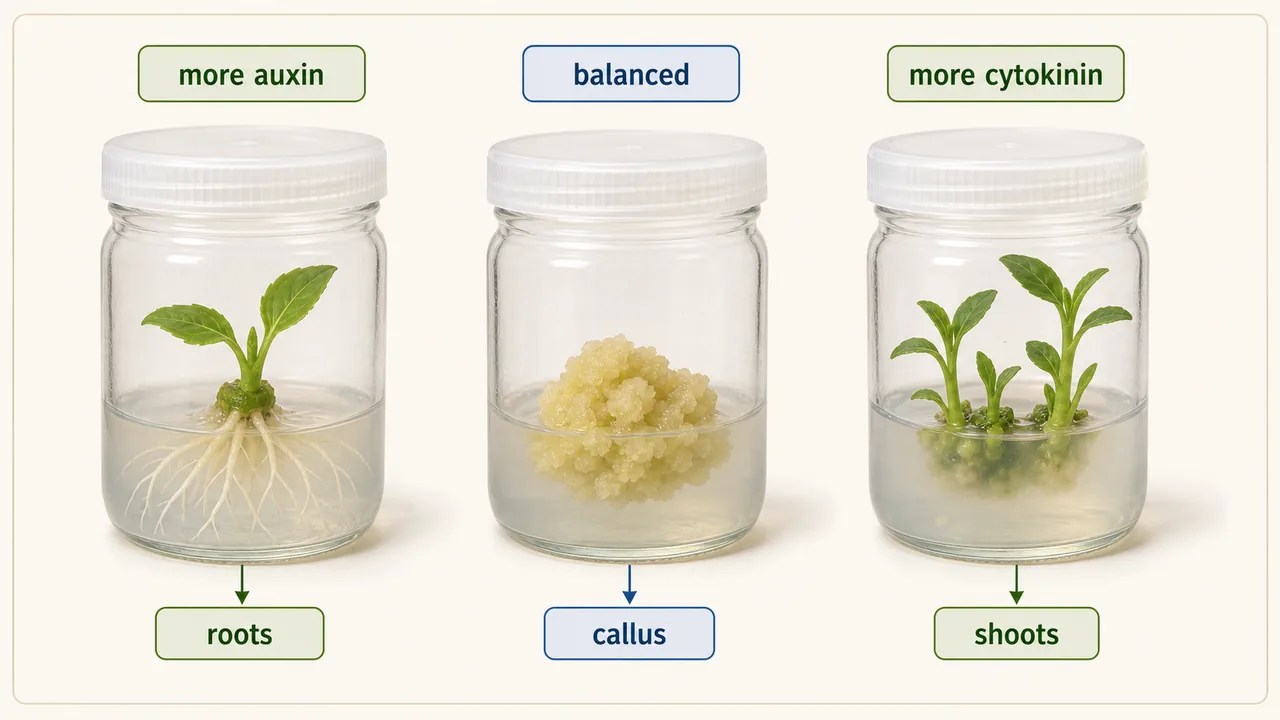
Cytokinins promote cell division (cytokinesis) and work in concert with auxins. The ratio of auxin to cytokinin is the master switch that determines whether a tissue produces roots, shoots, or undifferentiated callus — a principle that underpins all of modern plant tissue culture.
In chemical terms, the classical cytokinins are understood as adenine / purine derivatives, which is why compounds such as kinetin and zeatin are grouped together within the same hormone class.
| Property | Detail |
|---|---|
| Discovery | Kinetin — first cytokinin, discovered from autoclaved herring sperm DNA by Miller (1955). Kinetin is not natural — it is synthetic |
| Natural cytokinin | Zeatin (from maize endosperm) — first naturally occurring cytokinin |
| Site of synthesis | Root tips |
| Transport | Through xylem (upward) |
| Key effect | Cell division (cytokinesis) |
- Classical cytokinin history also connects Letham with zeatin isolation and early characterization.
- Cytokinin movement is often described as both acropetal and basipetal, though long-distance transport from roots to shoots is emphasized most in field examples.
- A standard cytokinin bioassay recall is radish cotyledon expansion.
- Cytokinins are also associated with tRNA and with abnormal branching symptoms such as witches' broom.
Agricultural Applications
| Application | Detail |
|---|---|
| Delay senescence | Keeps leaves green longer (Richmond-Lang effect) |
| Promote cell division | Essential in tissue culture media (with auxin) |
| Break dormancy | Seed germination |
| Auxin:Cytokinin ratio | High auxin → root formation; High cytokinin → shoot formation (tissue culture) |
IMPORTANT
In tissue culture, the auxin to cytokinin ratio determines organogenesis:
- High auxin : Low cytokinin → Root formation
- Low auxin : High cytokinin → Shoot formation
- Equal ratio → Callus growth
4. Abscisic Acid (ABA) — The "Stress Hormone"
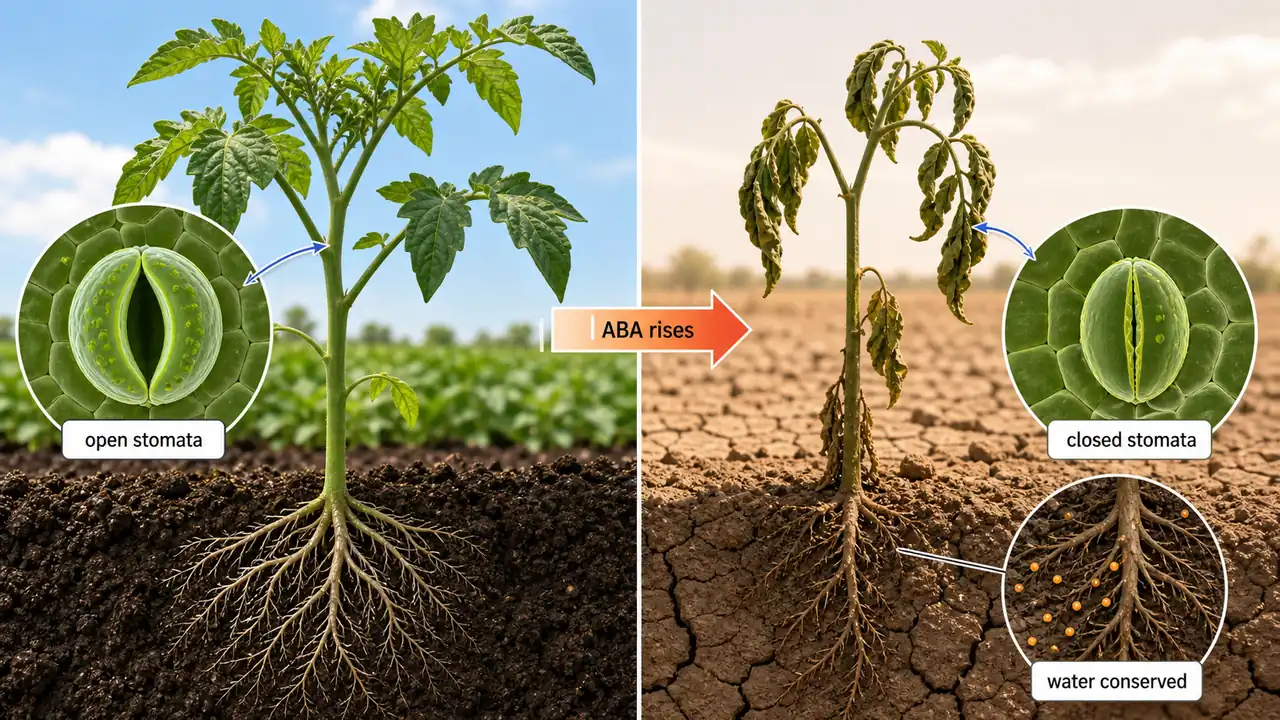
The first three hormones (auxin, GA, cytokinin) are growth promoters. ABA is the first growth inhibitor — it acts as the plant's "emergency brake," shutting down growth and conserving resources when conditions turn unfavourable. It is central to drought tolerance and seed dormancy.
In biosynthetic terms, ABA is now understood as a carotenoid-derived hormone. In exam-oriented plant physiology, the carotenoid intermediates violaxanthin and especially xanthoxin are commonly linked with the pathway leading to ABA formation.
| Property | Detail |
|---|---|
| Nature | Growth inhibitor |
| Also called | Stress hormone, Dormin |
| Early isolation history | Wareing linked the dormancy factor with Dormin; Addicott & Ohkuma (1963) isolated the cotton-fruit abscission factor later unified as ABA |
| Chemical nature | Sesquiterpenoid |
| Major synthesis site | Plastids / chloroplasts |
| Key effect | Stomatal closure under drought (blocks H⁺ excretion from guard cells) |
- ABA-related abscission is now interpreted mainly through its ability to stimulate ethylene production, while ethylene remains the primary abscission hormone in most field examples.
Effects
| Effect | Agricultural Relevance |
|---|---|
| Stomatal closure | Water conservation during drought |
| Promotes dormancy | Seed dormancy, bud dormancy |
| Inhibits growth | Counteracts auxins and gibberellins |
| Promotes leaf abscission | Leaf fall in deciduous trees |
| Promotes senescence | Aging of plant parts |
| Prevents vivipary and supports seed maturation | Helps maintain proper maturation and resting phase before germination |
| Improves stress hardiness | Supports cold hardiness, drought tolerance, and growth suppression under stress |
| Proline accumulation | ABA triggers accumulation of amino acid Proline under stress for osmoprotection |
- ABA is often described as an anti-gibberellin regulator because it suppresses many GA-linked growth responses.
- Classical recall also links ABA with reduced DNA, RNA, and protein synthesis during strong growth inhibition.
TIP
Mnemonic — "ABA = Always Blocking Activity": ABA closes stomata, promotes dormancy, inhibits growth, and promotes abscission — it is the "brake pedal" of plant hormones.
5. Ethylene — The "Ripening Hormone"
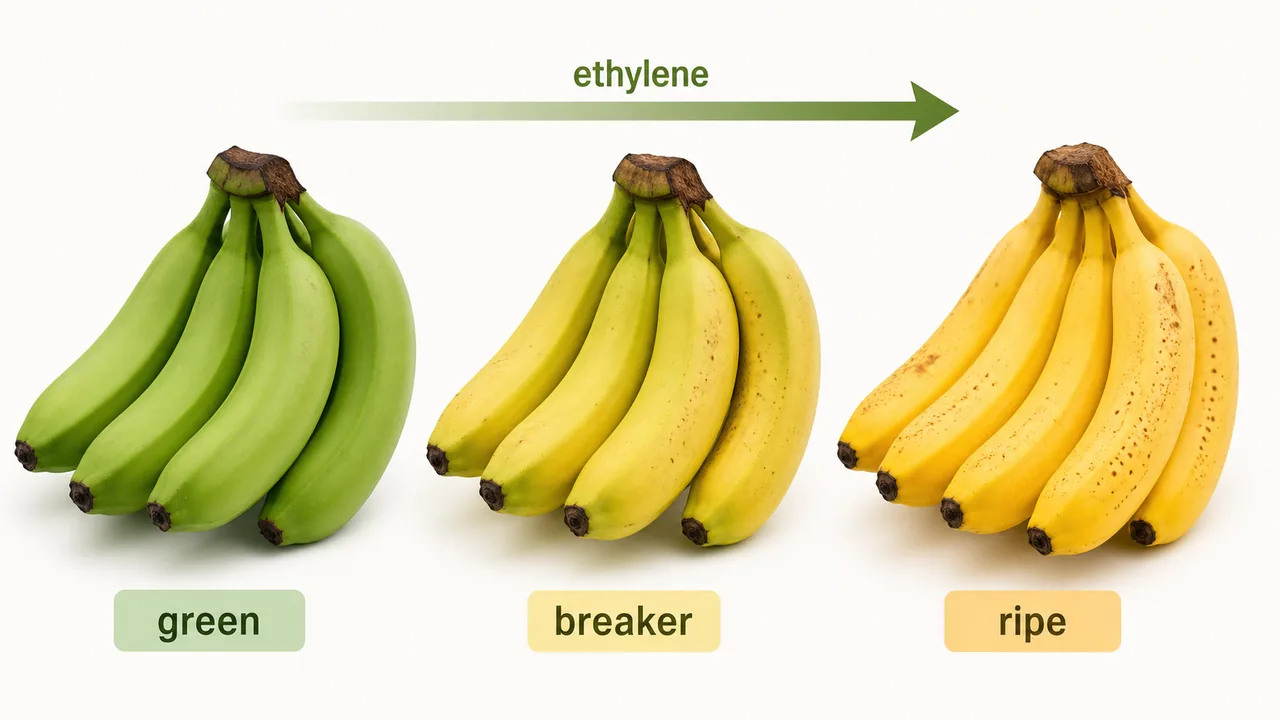
Ethylene is unique among all plant hormones — it is a gas (C₂H₄). Despite being classified as a growth inhibitor, it has both promotive and inhibitive roles. Its most famous effect is fruit ripening, which is why a single ripe fruit can trigger ripening in an entire batch.
| Property | Detail |
|---|---|
| Nature | Gaseous hormone (only gaseous PGR) |
| Precursor | Amino acid Methionine |
| Biosynthesis | Methionine → SAM → ACC → Ethylene |
| Commercial form | Ethephon (Ethrel) — releases ethylene on application |
| Key effect | Fruit ripening |
| Source example | Ripe apple releases ethylene → ripens nearby bananas |
- Natural ethylene biosynthesis commonly increases in response to auxin and proceeds through the ACC intermediate.
- Older leaves generally produce more ethylene than younger leaves, which helps explain their stronger tendency toward senescence and abscission.
- Standard ethylene-action inhibitors include silver nitrate and silver thiosulfate.
- Calcium carbide releases acetylene that can trigger ripening, but its use for artificial fruit ripening is prohibited because of food-safety concerns.
Effects and Applications
| Effect | Agricultural Application |
|---|---|
| Fruit ripening | Artificial ripening of banana, mango, tomato |
| Abscission | Promotes leaf and fruit drop (harvest aid in cotton) |
| Senescence | Accelerates aging |
| Breaks dormancy | Potato tuber sprouting |
| Triple response | Inhibits stem elongation, promotes radial expansion, causes horizontal growth |
| Epinasty | Downward bending of leaves or petioles due to differential growth |
| Feminising effect | Increases female flowers in cucumber |
| Flower induction | Pineapple and Mango — ethephon triggers flowering |
| Degreening of citrus | Uniform colour development in oranges |
| Latex flow in Rubber | Ethephon application increases latex yield |
| Waterlogging adaptation | Promotes aerenchyma formation in rice roots and other flooded conditions |
| Adventitious rooting and petal ageing | Can stimulate adventitious roots and accelerate flower-petal discolouration / senescence |
TIP
Ethephon (Ethrel) is a synthetic ethylene releaser. Key uses: fruit ripening, latex flow in rubber, flower induction in pineapple, cotton defoliation.
IMPORTANT
In controlled-atmosphere storage, a relatively higher O₂ : CO₂ balance is maintained because excess CO₂ suppresses ethylene action and helps slow ripening.
6. Growth Retardants and Inhibitors
Beyond the five natural hormones, agriculture uses synthetic growth retardants that manipulate plant architecture. These chemicals typically work by blocking gibberellin biosynthesis, reducing stem elongation while allowing root growth and flowering to proceed normally.
Growth Inhibitors vs Growth Retardants
| Feature | Growth inhibitors | Growth retardants |
|---|---|---|
| Main role | Suppress or redirect broader physiological processes | Mainly slow stem and internode elongation |
| Typical mode | Often anti-auxin or anti-gibberellin in effect | Commonly inhibit gibberellin biosynthesis |
| Scope | Affect dormancy, senescence, abscission, and other developmental responses | Used mainly to regulate plant height and architecture |
| Examples | ABA, Ethylene, Maleic hydrazide, TIBA | CCC, Mepiquat chloride, Paclobutrazol, AMO-1618 |
| Chemical | Trade Name | Key Agricultural Use |
|---|---|---|
| Chlormequat | Cycocel (CCC) | Prevents crop lodging in wheat — reduces stem elongation by inhibiting GA synthesis |
| Maleic Hydrazide (MH) | — | Inhibits cell division; sucker suppressant in tobacco; prevents sprouting in stored onions and potatoes |
| Paclobutrazol | Cultar | Reduces vegetative growth; promotes flowering in mango |
| Daminozide | Alar / B-9 | Promotes compactness in ornamental plants |
| Morphactin | — | Inhibits phototropism and geotropism |
TIP
Key exam facts: Cycocel (CCC) = anti-lodging in wheat. Maleic Hydrazide = sucker control in tobacco, sprouting inhibition in onion/potato. Cultar = flowering in mango.
High-Yield Field Uses of PGRs
- NAA / IBA promote root development in stem cuttings, while NAA is also used to reduce flower and fruit drop in mango.
- NAA can support uniform flowering in pineapple through ethylene-linked responses, and NAA @ 40 ppm is a classic recall for reducing early shedding of buds and squares in cotton.
- GA₃ is used to improve berry size in seedless grapes and to accelerate malt production in barley.
- GA₃ @ 100 ppm during panicle initiation is a standard agronomy recall for improving panicle exertion, seed weight, and yield in hybrid rice.
- Ethrel @ 100-250 ppm is a common recall for increasing femaleness in cucumber and melons at the 2-3 leaf stage, and ethylene also supports degreening in citrus and banana marketing.
- Paclobutrazol is widely associated with reducing biennial bearing in mango, while CCC (Cycocel) is linked with lodging control and increased tillering in cereals.
- Maleic hydrazide prevents premature sprouting in stored onion and potato, and TIBA is a classical recall for nipping in chickpea.
Other Plant Growth Regulators
- Jasmonic acid is linked with stress signalling and can inhibit germination of non-dormant seeds while helping stimulate germination in some dormant-seed contexts.
- Brassinosteroids are steroidal regulators discovered from rape pollen and are classically connected with campesterol as a biosynthetic precursor.
- Triacontanol is a growth-promoting regulator classically isolated from alfalfa and associated with yield improvement in crops such as rice and maize.
Exam Mnemonics
TIP
"A-G-C-E-A" — The 5 hormones in order: Auxin (cell elongation) → Gibberellin (stem elongation) → Cytokinin (cell division) → Ethylene (ripening) → ABA (stress)
Precursor mnemonic: "T-K-A-M-M" Tryptophan (Auxin) → Kaurene (GA) → Adenine (Cytokinin) → Methionine (Ethylene) → Mevalonic acid (ABA)
Master Comparison — Five Plant Hormones
| Feature | Auxin | Gibberellin | Cytokinin | ABA | Ethylene |
|---|---|---|---|---|---|
| Type | Promoter | Promoter | Promoter | Inhibitor | Inhibitor |
| Key effect | Cell elongation | Stem elongation | Cell division | Stomatal closure | Fruit ripening |
| Natural form | IAA | GA₃ | Zeatin | ABA | C₂H₄ |
| Precursor | Tryptophan | Kaurene | Adenine | Mevalonic acid | Methionine |
| Site of synthesis | Shoot apex, young leaves | Young leaves, root tips | Root tips | Leaves, root caps | All tissues (esp. ripening fruits) |
| Transport | Polar (basipetal) | Non-polar | Non-polar | Non-polar | Diffusion (gas) |
| Dormancy | — | Breaks dormancy | Breaks dormancy | Induces dormancy | Breaks dormancy |
| Senescence | — | Delays | Delays | Promotes | Promotes |
| Agricultural use | Rooting, weed control | Seedless grapes, bolting | Tissue culture | Drought tolerance | Fruit ripening |
Summary Table — Key Facts at a Glance
| Fact | Answer |
|---|---|
| Auxin discoverer | F.W. Went |
| Natural auxin | IAA |
| IAA precursor | Tryptophan |
| Nutrient for IAA | Zinc (Zn) |
| Auxin transport | Polar (basipetal) |
| Selective weedkiller | 2,4-D |
| Gibberellin from | Bakanae disease of rice |
| First cytokinin | Kinetin (from herring sperm DNA) |
| Natural cytokinin | Zeatin (from maize) |
| Stress hormone | ABA |
| ABA closes | Stomata |
| Only gaseous hormone | Ethylene |
| Ethylene key effect | Fruit ripening |
| High auxin:cytokinin ratio | Root formation |
| Low auxin:cytokinin ratio | Shoot formation |
| Apical dominance due to | Auxin |
| Parthenocarpy by | Auxin or Gibberellin |
| Auxin term coined by | Kogl & Haagen-Smit (1931) |
| 2,4-D discovered by | Pokorny |
| GA₃ discovered by | Kurosawa (1926) from Bakanae disease |
| GA₃ precursor | Kaurene (diterpene) |
| Malting in barley | GA₃ promotes alpha-amylase |
| Cytokinin site | Root tips; transport via xylem |
| Ethylene pathway | Methionine → SAM → ACC → Ethylene |
| Ethephon (Ethrel) | Synthetic ethylene; pineapple flowering, rubber latex |
| ABA triggers | Proline accumulation under stress |
| Cycocel (CCC) | Anti-lodging in wheat — inhibits GA |
| Maleic Hydrazide | Sucker control (tobacco); sprouting inhibition (onion/potato) |
| Paclobutrazol (Cultar) | Promotes flowering in mango |
| Precursor mnemonic | T-K-A-M-M (Tryptophan, Kaurene, Adenine, Methionine, Mevalonic acid) |
Plant Growth Regulators: Practical Field Applications
How farmers and horticulturists actually USE plant hormones:
| Problem | PGR to Use | How It Works | Crop Example |
|---|---|---|---|
| Promote rooting in cuttings | IBA (Indole Butyric Acid) | Stimulates adventitious root formation | Grape, pomegranate cuttings |
| Induce flowering in mango off-season | Paclobutrazol (Cultar) | Inhibits GA synthesis → stops vegetative growth → triggers flowering | Mango, litchi |
| Prevent lodging in wheat | Cycocel (CCC) | Anti-gibberellin → shorter, stiffer stems | Wheat under high N conditions |
| Ripen fruits uniformly (tomato, banana) | Ethephon (Ethrel) | Releases ethylene → triggers ripening cascade | Banana (for uniform colour), tomato |
| Induce flowering in pineapple | Ethephon or calcium carbide | Ethylene promotes flowering in bromeliads | Pineapple (synchronised harvest) |
| Prevent sprouting in stored onion/potato | Maleic Hydrazide (MH) | Suppresses cell division in buds | Onion, potato (pre-harvest spray) |
| Improve fruit set in tomato (cold weather) | PCPA (Para-Chlorophenoxyacetic Acid) | Parthenocarpic fruit development without pollination | Tomato, brinjal |
| Promote latex flow in rubber | Ethephon | Ethylene increases bark permeability | Rubber trees |
| Control suckers in tobacco | Maleic Hydrazide | Kills axillary buds without damaging main stem | Tobacco |
| Increase sugarcane internode length | GA₃ (Gibberellic acid) | Promotes cell elongation in internodes | Sugarcane (higher sugar yield per cane) |
Exam-critical mnemonic — hormone precursors "T-K-A-M-M":
- Tryptophan → Auxin (IAA)
- Kaurene → Gibberellin (GA₃)
- Adenine → Cytokinin
- Methionine → Ethylene (via SAM → ACC)
- Mevalonic acid → ABA
The 5 classical hormones as a team analogy: Auxin = the builder (cell elongation, root initiation). Gibberellin = the stretcher (stem elongation, seed germination). Cytokinin = the divider (cell division, delay senescence). Ethylene = the ageing signal (ripening, abscission). ABA = the brake (dormancy, stomatal closure under stress). They don't work alone — it's the RATIO between them that determines plant behaviour.
Summary Cheat Sheet
| Fact | Answer |
|---|---|
| Term "Phytohormone" suggested by | Thimann (1948) |
| Darwin's phototropism experiment plant | Phalaris (Canary Grass) coleoptile |
| Went's bioassay name | Avena Curvature Test |
| Auxin first isolated from | Human urine |
| IBA is used for | Root induction in cuttings |
| 2,4,5-T is used as | Defoliant |
| Bound auxin example | Mango — no rooting even with NAA |
| Gibberellin fungus (perfect stage) | Gibberella fujikuroi |
| Gibberellin fungus (imperfect stage) | Fusarium moniliforme |
| GA₃ substitutes for | Vernalisation (cold treatment) |
| GA₃ causes bolting in | Rosette plants (cabbage, sugarbeet) |
| Kinetin discovered by | Miller (1955) |
| Kinetin source | Autoclaved herring sperm DNA |
| Cytokinin synthesised in | Root tips, transported via xylem |
| Richmond-Lang effect | Cytokinin delays senescence (keeps leaves green) |
| Equal auxin:cytokinin ratio produces | Callus growth |
| ABA also called | Dormin |
| ABA mechanism on stomata | Blocks H⁺ excretion from guard cells |
| Ethylene biosynthesis pathway | Methionine → SAM → ACC → Ethylene |
| Triple response of ethylene | Inhibits stem elongation, promotes radial expansion, horizontal growth |
| Ethylene feminising effect on | Cucumber (increases female flowers) |
| Ethephon triggers flowering in | Pineapple and Mango |
| Ethephon increases latex in | Rubber |
| Daminozide trade name | Alar / B-9 |
| Morphactin inhibits | Phototropism and geotropism |
| Only hormone with polar transport | Auxin |
| Growth promoter hormones | Auxin, Gibberellin, Cytokinin |
| Growth inhibitor hormones | ABA, Ethylene |
TIP
Next: Lesson 05-03 covers Photoperiodism and Vernalisation — how day length and temperature signals interact with these hormones to control the timing of flowering in crops.