🦠 Biofertilizers: Living Microbes for Sustainable Soil Fertility
Complete guide to biofertilizers — Rhizobium, Azotobacter, Azospirillum, BGA, Azolla, PSB, mycorrhizae, and PGPR. Covers nitrogen fixation mechanisms, application rates, and exam-focused comparisons.
Introduction
A soybean farmer in Madhya Pradesh inoculates seeds with Rhizobium culture before sowing. Within weeks, pink-coloured nodules appear on the roots -- a sign of active nitrogen fixation. The crop fixes 80-100 kg N/ha from the atmosphere, reducing the need for urea by half. After harvest, 40-80 kg N remains in the soil for the next wheat crop. This is the power of biofertilizers -- living microbes that convert free atmospheric nitrogen and locked-up soil phosphorus into plant-available forms at almost zero cost.
What Are Biofertilizers?
NOTE
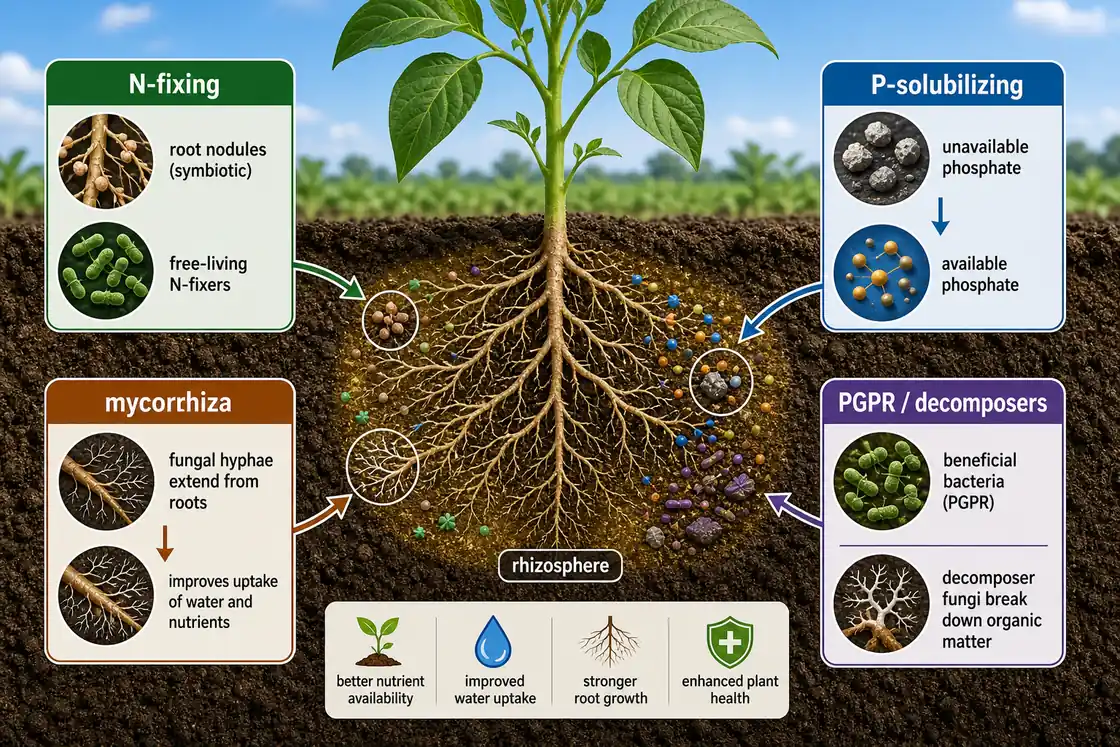
Biofertilizers are NOT chemical fertilizers. They are living microbial products that enhance natural soil processes. They do not directly supply nutrients in chemical form -- they make existing soil nutrients available or fix atmospheric nitrogen biologically.
Pro Content Locked
Upgrade to Pro to access this lesson and all other premium content.
Charged once for one year · ₹1188 total
Save ₹100/month vs ₹2388/year launch price
- All Agriculture & Banking Courses
- AI Lesson Questions (100/day)
- AI Doubt Solver (50/day)
- Glows & Grows Feedback (30/day)
- AI Section Quiz (20/day)
- 22-Language Translation (100/day)
- Recall Questions (20/day)
- AI Quiz (15/day)
- AI Quiz Paper Analysis (100/day)
- AI Step-by-Step Explanations (100/day)
- Spaced Repetition Recall (FSRS)
- AI Tutor
- Immersive Text Questions
- Audio Lessons — Hindi & English
- Mock Tests & Previous Year Papers
- Summary & Mind Maps
- XP, Levels, Leaderboard & Badges
- Generate New Classrooms
- Voice AI Teacher (AgriDots Live)
- AI Revision Assistant
- Knowledge Gap Analysis
- Interactive Revision (LangGraph)
🔒 Secure one-time yearly payment via Razorpay · No hidden fees
Introduction
A soybean farmer in Madhya Pradesh inoculates seeds with Rhizobium culture before sowing. Within weeks, pink-coloured nodules appear on the roots -- a sign of active nitrogen fixation. The crop fixes 80-100 kg N/ha from the atmosphere, reducing the need for urea by half. After harvest, 40-80 kg N remains in the soil for the next wheat crop. This is the power of biofertilizers -- living microbes that convert free atmospheric nitrogen and locked-up soil phosphorus into plant-available forms at almost zero cost.
What Are Biofertilizers?
NOTE
Biofertilizers are NOT chemical fertilizers. They are living microbial products that enhance natural soil processes. They do not directly supply nutrients in chemical form -- they make existing soil nutrients available or fix atmospheric nitrogen biologically.
Key terms:
- Rhizosphere -- the soil zone directly influenced by plant roots, root secretions, and associated microorganisms. This is the most biologically active zone in soil.
- Microbial inoculants -- another name for biofertilizers
Application sequence mnemonic -- FIR (like the tree):
TIP
Fungicide > Insecticide > Rhizobium. Always apply chemical treatments first, biofertilizer last -- so living microbes are not killed by chemicals.
Biofertilizers are a key component of integrated nutrient management (INM) -- cost-effective, renewable, and environment-friendly.
Classification of Biofertilizers
| Category | Type | Key Organisms | Crops/Application |
|---|---|---|---|
| N2-fixing | Symbiotic | Rhizobium, Frankia, Anabaena azollae | Legumes, non-legume trees, Azolla-rice |
| N2-fixing | Associative symbiotic | Azospirillum | Sorghum, grasses, cereals |
| N2-fixing | Free-living (aerobic) | Azotobacter, Beijerinckia, Anabaena | Rice, cotton, sugarcane |
| N2-fixing | Free-living (anaerobic) | Clostridium | Waterlogged soils |
| N2-fixing | Facultative anaerobic | Klebsiella | Various crops |
| N2-fixing | Endophytic | Gluconacetobacter, Burkholderia | Sugarcane, rice |
| P-solubilizing (PSB) | Bacteria | Bacillus megaterium, Pseudomonas striata | All crops |
| P-mobilizing | Fungi (VAM/AM) | Glomus sp., Gigaspora sp. | ~80% of land plants |
| PGPR | Bacteria | Pseudomonas fluorescens | Biocontrol + growth promotion |
| OMD | Fungi | Trichoderma, Aspergillus | Compost acceleration |
Nitrogen-Fixing Biofertilizers
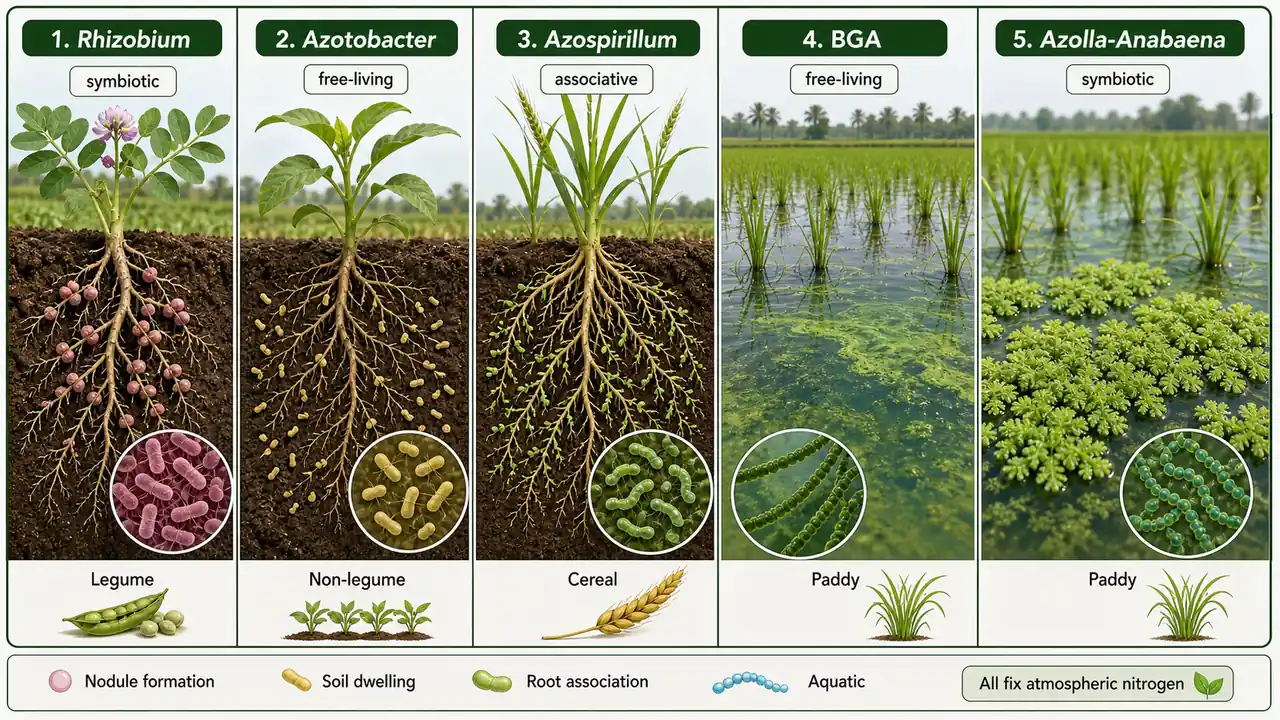
These microorganisms convert atmospheric N2 (which plants cannot use) into ammonia (NH3) (which plants can use). They are classified by their relationship with plants:
| Relationship | Organisms | How They Work |
|---|---|---|
| Free-living (aerobic) | Azotobacter, Beijerinckia, Anabaena | Fix N independently, no plant association needed |
| Free-living (anaerobic) | Clostridium | Fix N in oxygen-free conditions |
| Facultative anaerobic | Klebsiella | Work with or without oxygen |
| Associative symbiotic | Azospirillum | Live near roots but no nodules |
| Symbiotic | Rhizobium, Frankia, Anabaena azollae | Form mutually beneficial partnership with host |
| Endophytic | Gluconacetobacter, Burkholderia | Live inside plant tissues |
(a) Rhizobium -- The Most Important Biofertilizer
- Type: Symbiotic N2-fixer (forms root nodules with legumes)
- Organism: Rhizobium spp. -- aerobic, heterotrophic bacteria
- N-fixation: 50-200 kg N/ha/year
- Crops: All leguminous crops -- pulses (moong, arhar, lentil, chickpea), groundnut, soybean, berseem, lucerne
- Residual benefit: Leaves 40-80 kg N in soil for subsequent crop
- Yield increase: 25-30%
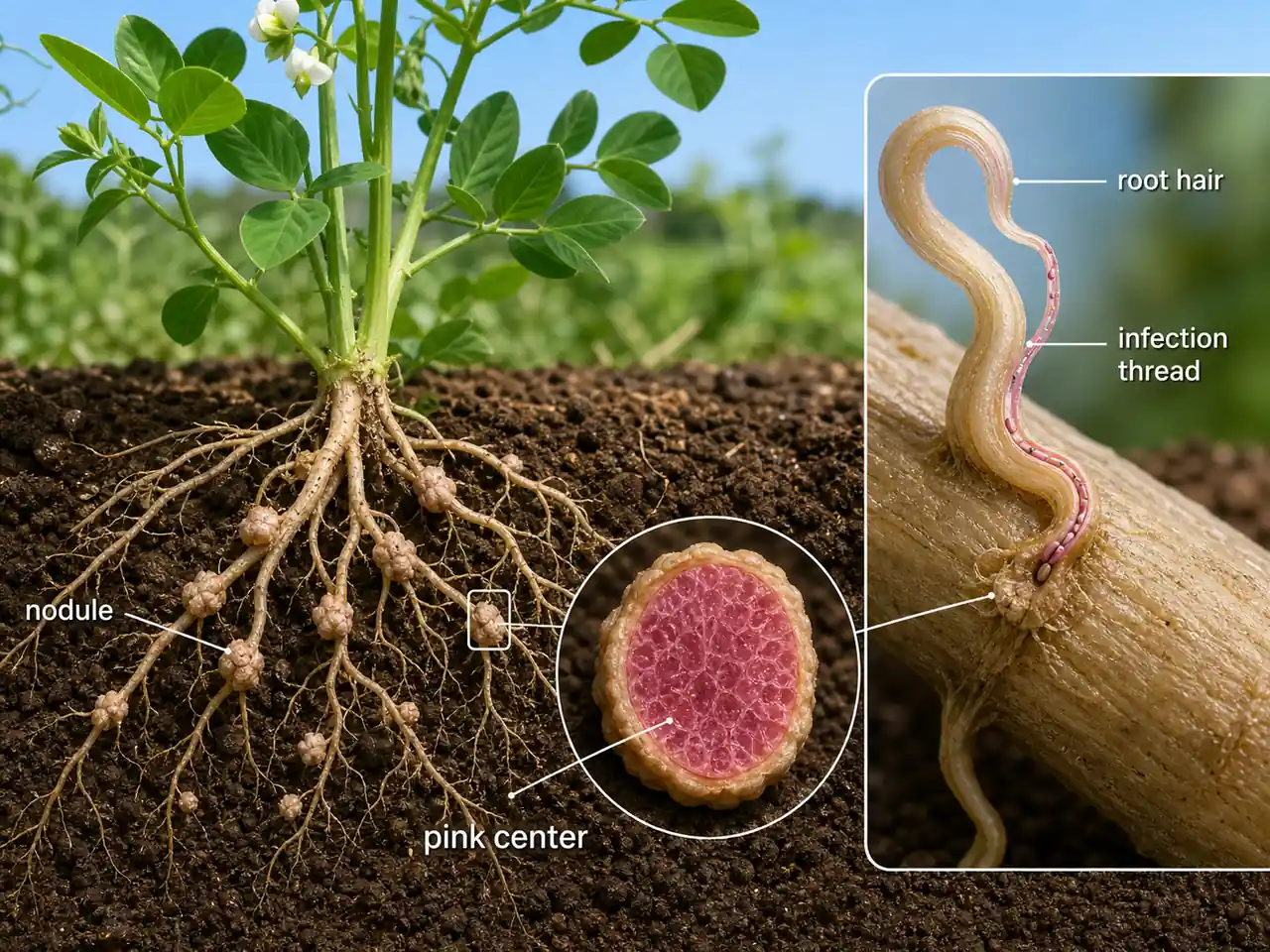
How it works: Rhizobium forms nodules on legume roots. Inside the nodules, Leghemoglobin (a pinkish-red pigment) acts as an oxygen carrier, delivering oxygen slowly to the bacteria while protecting the Nitrogenase enzyme from oxygen inactivation. Nitrogenase is the enzyme that actually converts N2 to NH3.
TIP
Leghemoglobin is pinkish-red (like blood hemoglobin). If you cut a nodule and see pink/red colour, nitrogen fixation is active. A green or white nodule means fixation has stopped.
Important: Rhizobium is host-specific -- different legumes need different Rhizobium strains. Optimum pH for nodulation is >5.0; legumes fail to develop nodules when pH is less than 5.0.
IMPORTANT
Rhizobium fixes 50-200 kg N/ha/year through symbiosis with legumes. It is the most widely studied and commercially important biofertilizer. Example: Lucerne fixes >250 kg N/ha, while green gram fixes only 20 kg N/ha.
(b) Azotobacter -- For Non-Legumes
- Type: Free-living, aerobic N2-fixer
- N-fixation: 5-20 kg N/ha/year
- Crops: Rice, Cotton, Sugarcane and other non-leguminous crops
- Species: Azotobacter chroococcum and Azotobacter vinelandii
- Optimum pH: 6.5-8.0 (does not perform well in acidic soils)
- Also produces growth regulators (IAA, IBA, NAA, GA) and vitamins
- Secretes antibiotics acting as biopesticides
- Application: Mix 3-5 kg inoculum with 5 tonne FYM per hectare
Think of Azotobacter as the biofertilizer for crops that Rhizobium cannot help -- all the non-legumes like rice, cotton, and sugarcane.
(c) Azospirillum -- For Grasses and Cereals
- Type: Associative symbiotic N2-fixer
- Crops: Sorghum and other Poaceae (grasses) -- rice, wheat, corn, oats, barley
- Fixes nitrogen within the rhizosphere but has no direct physical contact with plants -- called associative symbiosis exams-20
- Does not form nodules
- Also produces growth hormones and improves root development
The key difference from Rhizobium: Azospirillum lives near roots but never enters them or forms nodules.
(d) Blue Green Algae (BGA / Cyanobacteria) -- For Paddy
- Type: Free-living, photosynthetic (autotrophic) N2-fixer
- N-fixation: 20-25 kg N/ha in rice fields
- Crops: Primarily paddy (rice) -- thrive in waterlogged, flooded conditions
- Key genera: Anabaena, Nostoc, Aulosira, Tolypothrix, Calothrix
- Fix nitrogen using heterocysts (specialized thick-walled cells)
- Also supply growth regulators (IAA, IBA, NAA, GA1 to GA33) and vitamins
BGA are unique because they are both photosynthetic (make their own food) and nitrogen-fixing -- completely self-sustaining in flooded rice fields.
(e) Azolla-Anabaena Association -- The Floating Nitrogen Factory
- Type: Symbiotic -- water fern Azolla pinnata with cyanobacterium Anabaena azollae
- N-fixation: 25-35 kg N/ha/year (some sources: 30-40 kg N/ha)
- Optimum temperature: 20-30 degree C
- pH: 5.5-7.0
- Unlike BGA, Azolla thrives well at low temperature
| Use Mode | When It Is Used | What Happens in the Field | Key Recall Point |
|---|---|---|---|
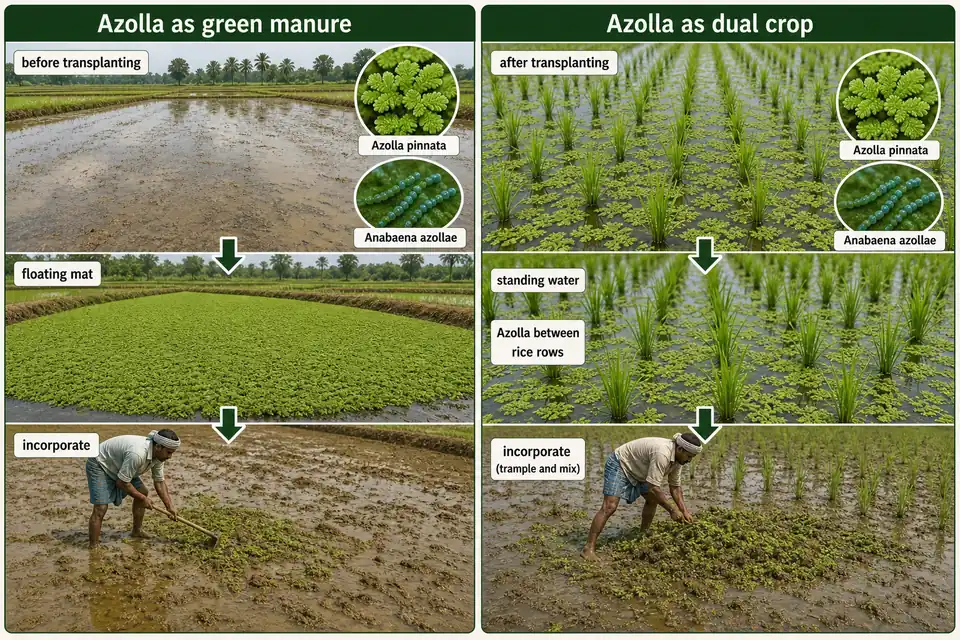
| Azolla as green manure | Before transplanting rice | Azolla grows on flooded field for 2-3 weeks, forms a floating mat, then is incorporated into puddled soil | Adds organic matter and fixed nitrogen before crop establishment |
| Azolla as dual crop | After transplanting rice | Azolla floats between rice rows in standing water and is later incorporated by trampling/mixing | Works alongside the rice crop while continuing nitrogen fixation |
| Symbiotic partner | In both methods | Azolla pinnata houses Anabaena azollae | A floating N-fixing partnership suited to paddy fields |
How it is used in rice cultivation:
- As green manure: Azolla grows on flooded fields for 2-3 weeks before transplanting, then water is drained and Azolla is incorporated by ploughing
- As dual crop: 1000-5000 kg/ha of Azolla is applied one week after transplanting with 25-50 kg/ha SSP and 5-10 cm standing water. When a thick mat forms, it is incorporated by trampling.
Anabaena colonizes cavities formed at the base of Azolla fronds.
TIP
Azolla is like a "floating nitrogen factory" -- it combines green manuring (adds organic matter) with biofertilization (fixes atmospheric N). One of nature's most efficient N-fixing partnerships.
Nitrogen Fixation: The Big Picture
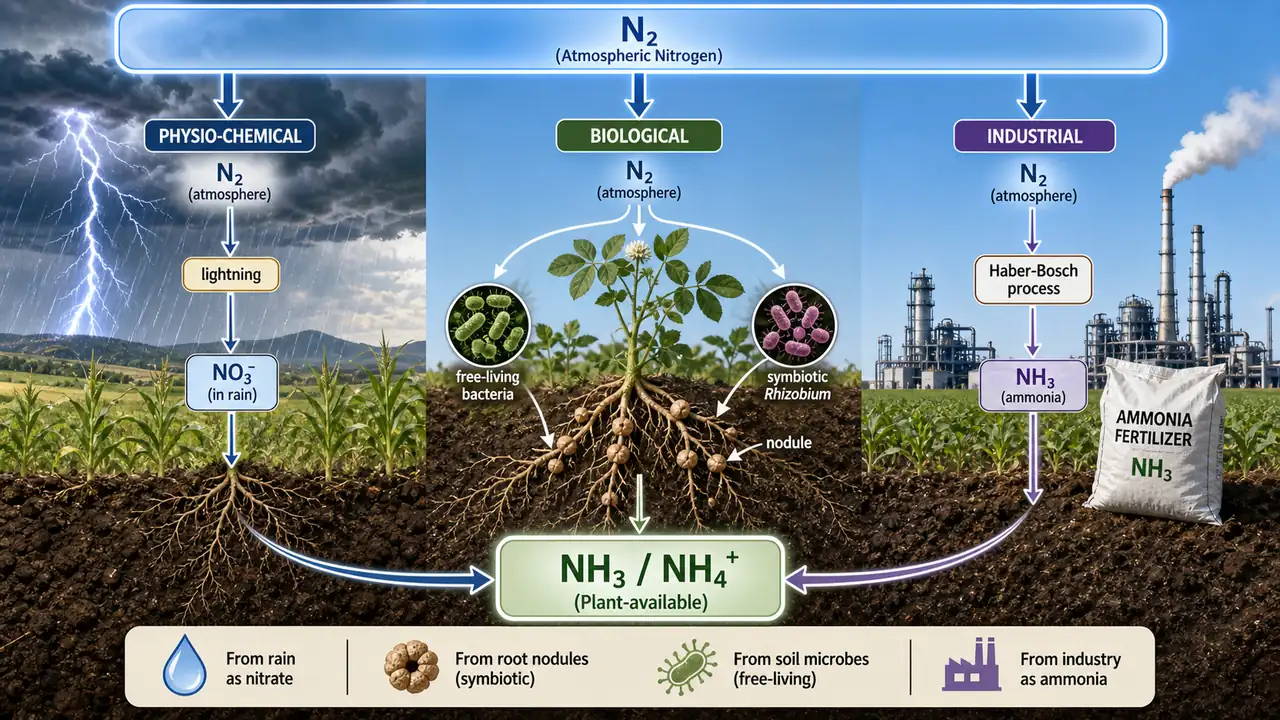
Nitrogen fixation converts atmospheric N2 into ammonia (NH3) that plants can use. Two pathways exist:
| Pathway | Mechanism | Scale |
|---|---|---|
| Physio-chemical | Lightning discharge in atmosphere | Minor contribution |
| Biological (biochemical) | Soil microorganisms | 190 tonnes N/year globally |
| Industrial | Haber-Bosch reduction process | ~50 tonnes N/year |
Biological fixation is nearly 4 times greater than industrial fixation -- underscoring the importance of biofertilizers.
| Organism Type | N-fixation Rate |
|---|---|
| Non-symbiotic bacteria | 50-55 kg N/year/acre |
| Symbiotic organisms | 300-350 kg N/year/acre |
Symbiotic N-Fixation
Symbiosis = living together for mutual benefit. The plant provides sugars from photosynthesis and the microbe provides fixed nitrogen in return.
Nodule-Forming Symbiosis
(i) With legumes (Rhizobium):
- Boussingault first proved experimentally that legumes use atmospheric N2
- Leghemoglobin carries O2 to bacteroids slowly, protecting nitrogenase from oxygen inactivation
- Rhizobium is aerobic and heterotrophic
- Range: Green gram fixes 20 kg N/ha; Lucerne fixes more than 250 kg N/ha
(ii) With non-legumes (Frankia):
- About 160 species from 13 genera of non-legumes
- The actinomycete Frankia forms root nodules on trees like Casuarina and Alder
Actinomycetes are intermediate between true fungi and bacteria. They grow best in moist, aerated soil. Growth ceases below pH 5.5 (unlike fungi, which tolerate acidity).
Factors Affecting Nodulation and N-Fixation
| Factor | Effect |
|---|---|
| pH < 5.0 | Legumes fail to develop nodules |
| Excess soil N | Inhibits nodule formation (plant has less incentive for symbiosis) |
| Adequate P | Promotes nodulation (energy for fixation) |
| Excess moisture | Detrimental -- Rhizobia are aerobic, waterlogging reduces O2 |
Non-Nodule Symbiosis (Azolla-Anabaena)
- Anabaena azollae lives in leaf cavities of water fern Azolla pinnata
- Fixes 30-40 kg N/ha
- Optimum: 20-30 degree C, pH 5.5-7.0
- Thrives at lower temperatures than BGA
Non-Symbiotic (Free-Living) N-Fixation
These organisms fix nitrogen independently, without any plant partnership.
Heterotrophic Fixers (need organic matter for energy)
| Organism | Type | Optimum pH | Key Feature |
|---|---|---|---|
| Azotobacter chroococcum | Aerobic | 6.5-8.0 | Temperate soils; for rice, cotton, sugarcane |
| Beijerinckia | Aerobic | 5.0-9.0 | Tropical soils; wider pH tolerance |
| Clostridium | Anaerobic | 5.0-9.0 | Waterlogged soils; fixes N without oxygen |
All fix 5-20 kg N/ha/year. Applied by mixing 3-5 kg inoculum with 5 tonne FYM per hectare.
Autotrophic Fixers (make their own food using light)
- Rhodospirillum -- anaerobic photosynthetic bacterium
- Blue green algae -- photosynthetic, fix 20-25 kg N/ha in rice fields
N-Fixation Rates: Complete Comparison
Summary: N-fixation rates by different biofertilizers
| Biofertilizer | N-fixation (kg N/ha/year) | Type |
|---|---|---|
| Lucerne (with Rhizobium) | >250 | Symbiotic |
| Rhizobium (general range) | 50-200 | Symbiotic |
| Azolla-Anabaena | 25-40 | Symbiotic (non-nodule) |
| BGA (Blue Green Algae) | 20-25 | Free-living (autotrophic) |
| Green gram (with Rhizobium) | 20 | Symbiotic |
| Free-living bacteria (Azotobacter etc.) | 5-20 | Free-living (heterotrophic) |
Phosphorus-Related Biofertilizers
Phosphate Solubilizing Bacteria (PSB)
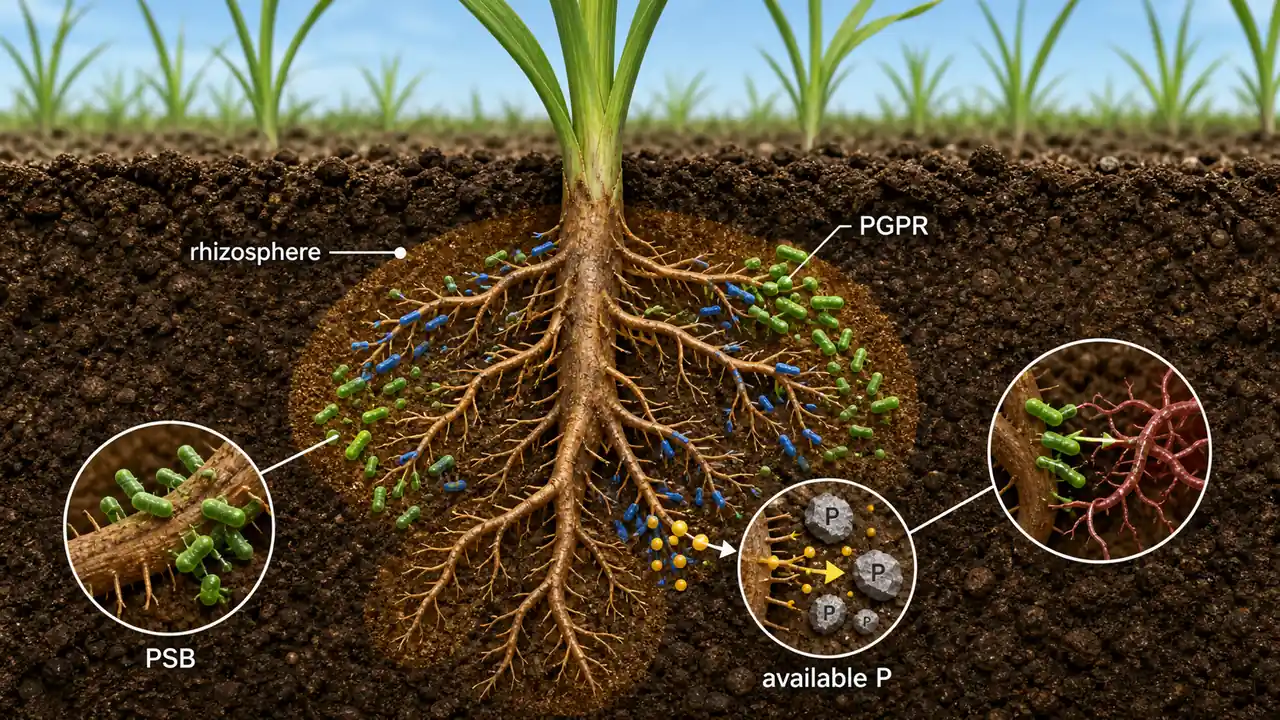
Most soil phosphorus exists in insoluble forms that plants cannot use. PSB organisms produce organic acids (citric, oxalic, gluconic acid) that dissolve these insoluble phosphate compounds.
Key PSB organisms:
- Bacillus megaterium var. phosphaticum, B. subtilis, B. circulans
- Pseudomonas striata
PSB fungi: Penicillium sp., Aspergillus awamori
PSB can also solubilize P from rock phosphate, slag, and bone meal -- an economical and environment-friendly alternative to chemical P-fertilizers.
Mycorrhizae -- Fungi That Extend Root Reach
Mycorrhiza (literally "fungus-root") is a mutualistic association between plant roots and fungal hyphae. The plant feeds the fungus sugars; the fungus returns phosphorus and other nutrients from soil volumes far beyond root reach.
Consider a nursery raising citrus seedlings: mycorrhiza-inoculated seedlings establish faster, absorb more phosphorus, and survive transplantation shock better than uninoculated ones.
VAM (Vesicular Arbuscular Mycorrhiza) is the most common type, associating with approximately 80% of all land plants.
Types of Mycorrhizae
| Type | Key Feature | Location | Genera |
|---|---|---|---|
| Ectomycorrhiza | Forms external mantle + Hartig net between cells | Outside and between root cells (no intracellular penetration) | Laccaria, Pisolithus, Boletus, Amanita |
| Endomycorrhiza (AM) | Fungus lives inside root cells | Within cortical cells | Glomus, Gigaspora, Acaulospora, Scutellospora |
| Ericoid mycorrhiza | Specialized for Ericaceous plants | Inside root cells | Pezizella ericae |
| Orchid mycorrhiza | Specialized for orchids | Inside root cells | Rhizoctonia solani |
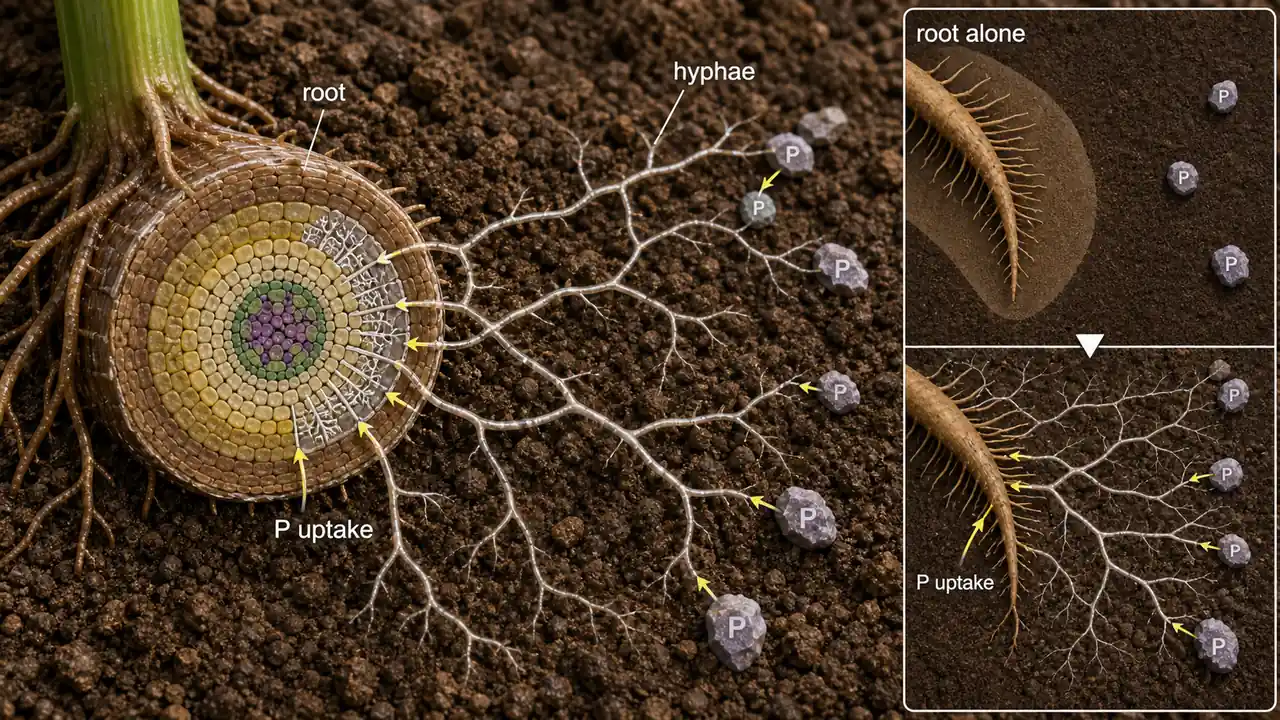
Ectomycorrhiza details:
- Sheath/Mantle increases absorbing surface area and protects roots
- Hartig net acts as storage and transport organ for P
Benefits of VAM inoculation:
- Improved mineral nutrition -- especially P, Zn, Cu, K, S, NH4+
- Greater soil exploration by fungal hyphae
- Protection against root pathogens
- Improved water relations
- Better tolerance to salinity and heavy metal stress
- Protection against transplantation shock
Silicate and Zinc Solubilizers
- Bacillus sp. solubilizes silicate and zinc in soil
- Azozink -- zinc-solubilizing bacterial biofertilizer developed for zinc-deficient soils
- Important because 50% of Indian soils are zinc-deficient
Plant Growth Promoting Rhizobacteria (PGPR)
- Key organism: Pseudomonas fluorescens
- Promote growth through nutrient solubilization, plant growth hormones, and biocontrol of pathogens
- Act as both growth promoter and disease suppressor
Organic Matter Decomposers (OMD)
- Cellulolytic fungi: Aspergillus, Penicillium, Trichoderma (also a biocontrol agent)
- Lignolytic organisms: Arthrobacter, Agaricus
- Break down complex organic matter for quick nutrient release -- useful as compost accelerators
Benefits of Biofertilizers
| Benefit | Details |
|---|---|
| Nitrogen fixation | Rhizobium: 50-200 kg N/ha; BGA: 20-25 kg N/ha |
| Yield increase | 25-30% with Rhizobium |
| Residual N | 40-80 kg N left for subsequent crop |
| Growth regulators | IAA, IBA, NAA, GA1-GA33, vitamins |
| Biopesticide action | Azotobacter and Azospirillum secrete antibiotics |
| Soil improvement | Better structure, WHC, CEC, buffering capacity |
| Microbial enrichment | Increases beneficial soil microorganism populations |
| Eco-friendly | Technologically feasible, socially acceptable, zero pollution |
Application Methods and Rates
(a) Seed Inoculant (Seed Treatment)
- 20 g of Rhizobium culture treats 1 kg seed
- One packet = 200 g of culture
| Crop Type | Culture Required | Packets per ha |
|---|---|---|
| Small-seeded pulses (moong, arhar, lentil, berseem, lucerne) | 500 g | 2.5 |
| Soybean, Bengal gram | 1 kg | 5 |
| Groundnut (80-100 kg seed/ha) | 1.5 kg | 7.5 |
(b) Soil Inoculant
- 10 packets (2 kg/ha) of Azotobacter/Azospirillum mixed with 25 kg FYM + 25 kg soil and broadcast before transplanting
Biofertilizer Application Rates - Quick Reference for Exams
| Crop Type | Biofertilizer | Rate per ha | Packets/ha |
|---|---|---|---|
| Small-seeded pulses (moong, arhar, lentil) | Rhizobium | 500 g | 2.5 |
| Soybean, Bengal gram | Rhizobium | 1 kg | 5 |
| Groundnut | Rhizobium | 1.5 kg | 7.5 |
| Non-legumes (rice, cotton, sugarcane) | Azotobacter | 2 kg + 25 kg FYM + 25 kg soil | 10 |
| Grasses/cereals (sorghum, wheat) | Azospirillum | 2 kg + 25 kg FYM + 25 kg soil | 10 |
| Rice (Azolla as dual crop) | Azolla | 1000-5000 kg/ha + 25-50 kg SSP | - |
| Free-living bacteria | Azotobacter/others | 3-5 kg + 5 tonne FYM | - |
IMPORTANT
Memorize packet requirements: Small-seeded pulses = 2.5, Soybean/Bengal gram = 5, Groundnut = 7.5 packets/ha. These are frequently asked in exams and exams.
Exam Tips and Mnemonics
TIP
"FIR" -- Application sequence: Fungicide > Insecticide > Rhizobium
"Rhizobium is host-specific" -- each legume needs its own strain
"Pink nodule = active fixation" -- Leghemoglobin gives pink colour
"pH 5 is the cut-off" -- No nodulation below pH 5.0
"2.5 - 5 - 7.5" -- Packets/ha for small pulses, soybean, groundnut
Azotobacter = non-legumes (rice, cotton, sugarcane) Azospirillum = grasses (sorghum, wheat, corn) BGA = paddy (waterlogged fields)
"VAM = 80%" -- VAM mycorrhiza associates with 80% of land plants
"50% Indian soils lack Zn" -- hence Azozink biofertilizer matters
Summary Cheat Sheet
| Concept / Topic | Key Details |
|---|---|
| Biofertilizer definition | Preparations of living microbial cells; NOT chemical fertilizers |
| Rhizosphere | Soil zone around plant roots; most biologically active zone |
| Application order (FIR) | Fungicide → Insecticide → Rhizobium (chemicals first, biofertilizer last) |
| Rhizobium — type | Symbiotic, aerobic, heterotrophic; forms root nodules on legumes |
| Rhizobium — N fixation | 50–200 kg N/ha/year; yield increase 25–30%; residual 40–80 kg N |
| Leghemoglobin | Pinkish-red pigment in nodules; protects nitrogenase from O₂ |
| Rhizobium pH cut-off | No nodulation below pH 5.0; host-specific strains |
| Azotobacter — type & crops | Free-living, aerobic; rice, cotton, sugarcane; pH 6.5–8.0 |
| Azotobacter — N fixation | 5–20 kg N/ha/year; also produces IAA, GA, antibiotics |
| Azospirillum — type & crops | Associative symbiotic; sorghum, grasses, cereals; no nodules |
| BGA (Cyanobacteria) | Free-living, autotrophic; 20–25 kg N/ha in paddy; fix N via heterocysts |
| Azolla-Anabaena | Symbiotic fern + cyanobacterium; 25–35 kg N/ha; temp 20–30°C, pH 5.5–7.0 |
| Lucerne N fixation | Highest among legumes: >250 kg N/ha |
| PSB organisms | Bacillus megaterium, Pseudomonas striata; produce organic acids to solubilize P |
| VAM / AM Mycorrhiza | Fungus–root mutualism; associates with 80% of land plants; mobilizes P, Zn, Cu |
| Ectomycorrhiza vs Endomycorrhiza | Ecto: external mantle + Hartig net; Endo (AM): fungus inside root cortical cells |
| Azozink | Zinc-solubilizing biofertilizer; 50% of Indian soils are Zn-deficient |
| PGPR | Pseudomonas fluorescens; growth promotion + biocontrol |
| Trichoderma | Cellulolytic fungus; OMD + biocontrol agent |
| Biological vs industrial N fixation | 190 vs ~50 tonnes N/year globally |
| Rhizobium packets/ha | Small pulses: 2.5; Soybean: 5; Groundnut: 7.5 |
| Soil inoculant rate | 10 packets (2 kg/ha) + 25 kg FYM + 25 kg soil |
| Frankia | Actinomycete; forms nodules on non-legume trees (e.g., Casuarina) |
| INM | Biofertilizers are a key component of Integrated Nutrient Management |
| Application sequence | FIR: Fungicide > Insecticide > Rhizobium; Exam tip: Very High |
| Rhizobium yield increase | 25-30%; residual 40-80 kg N for next crop; Exam tip: High |