👛 Nitrogen in Soil: Forms, Cycle, Fixation, Functions & Deficiency
Complete guide to nitrogen — soil forms, transformations, N cycle, biological fixation, losses, functions, deficiency and toxicity symptoms for competitive exams
Why Nitrogen Matters: A Farmer's Perspective
A rice farmer in West Bengal notices that his paddy leaves are turning uniformly yellow from the bottom up, and growth is stunted. The culprit? Nitrogen deficiency — the single most common nutrient limitation in Indian agriculture. Nitrogen drives vegetative growth, chlorophyll production, and protein synthesis. Understanding how N behaves in soil is essential for every farmer and every exam candidate.
Nitrogen in Soil: Basic Facts
| Property | Value |
|---|---|
| Soil weight (furrow slice) | 2 x 10⁶ kg/ha (top 15 cm layer turned during ploughing) |
| Total N in Indian soils | 0.03–0.05% (~1000 kg N/ha), mostly in organic forms |
| Total N in tropical soils | 0.03–0.1% |
| Available N (mineralised/season) | Only 1-3% of total N |
| N as bound amino acids | 20-40% of total surface soil N |
| N as hexose amines | 5-10% |
| N from rainfall | 4.6 kg N/ha/year (converted to NO3- during lightning) |
| Average plant concentration | 1.5% (dry weight basis) |
| Cheapest N source | Crop residues (temperate regions) |
Agricultural example: A wheat field in Haryana with 0.04% total N contains about 800 kg N/ha, but only 8-24 kg/ha is mineralised each season. This is why fertilizer N application is essential for high yields.
Pro Content Locked
Upgrade to Pro to access this lesson and all other premium content.
₹99 charged monthly · Cancel anytime
- All Agriculture & Banking Courses
- AI Lesson Questions (100/day)
- AI Doubt Solver (50/day)
- Glows & Grows Feedback (30/day)
- AI Section Quiz (20/day)
- 22-Language Translation (100/day)
- Recall Questions (20/day)
- AI Quiz (15/day)
- AI Quiz Paper Analysis (100/day)
- AI Step-by-Step Explanations (100/day)
- Spaced Repetition Recall (FSRS)
- AI Tutor
- Immersive Text Questions
- Audio Lessons — Hindi & English
- Mock Tests & Previous Year Papers
- Summary & Mind Maps
- XP, Levels, Leaderboard & Badges
- Generate New Classrooms
- Voice AI Teacher (AgriDots Live)
- AI Revision Assistant
- Knowledge Gap Analysis
- Interactive Revision (LangGraph)
🔒 Secure via Razorpay · Cancel anytime · No hidden fees
Why Nitrogen Matters: A Farmer's Perspective
A rice farmer in West Bengal notices that his paddy leaves are turning uniformly yellow from the bottom up, and growth is stunted. The culprit? Nitrogen deficiency — the single most common nutrient limitation in Indian agriculture. Nitrogen drives vegetative growth, chlorophyll production, and protein synthesis. Understanding how N behaves in soil is essential for every farmer and every exam candidate.
Nitrogen in Soil: Basic Facts
| Property | Value |
|---|---|
| Soil weight (furrow slice) | 2 x 10⁶ kg/ha (top 15 cm layer turned during ploughing) |
| Total N in Indian soils | 0.03–0.05% (~1000 kg N/ha), mostly in organic forms |
| Total N in tropical soils | 0.03–0.1% |
| Available N (mineralised/season) | Only 1-3% of total N |
| N as bound amino acids | 20-40% of total surface soil N |
| N as hexose amines | 5-10% |
| N from rainfall | 4.6 kg N/ha/year (converted to NO3- during lightning) |
| Average plant concentration | 1.5% (dry weight basis) |
| Cheapest N source | Crop residues (temperate regions) |
Agricultural example: A wheat field in Haryana with 0.04% total N contains about 800 kg N/ha, but only 8-24 kg/ha is mineralised each season. This is why fertilizer N application is essential for high yields.
Forms of Soil Nitrogen
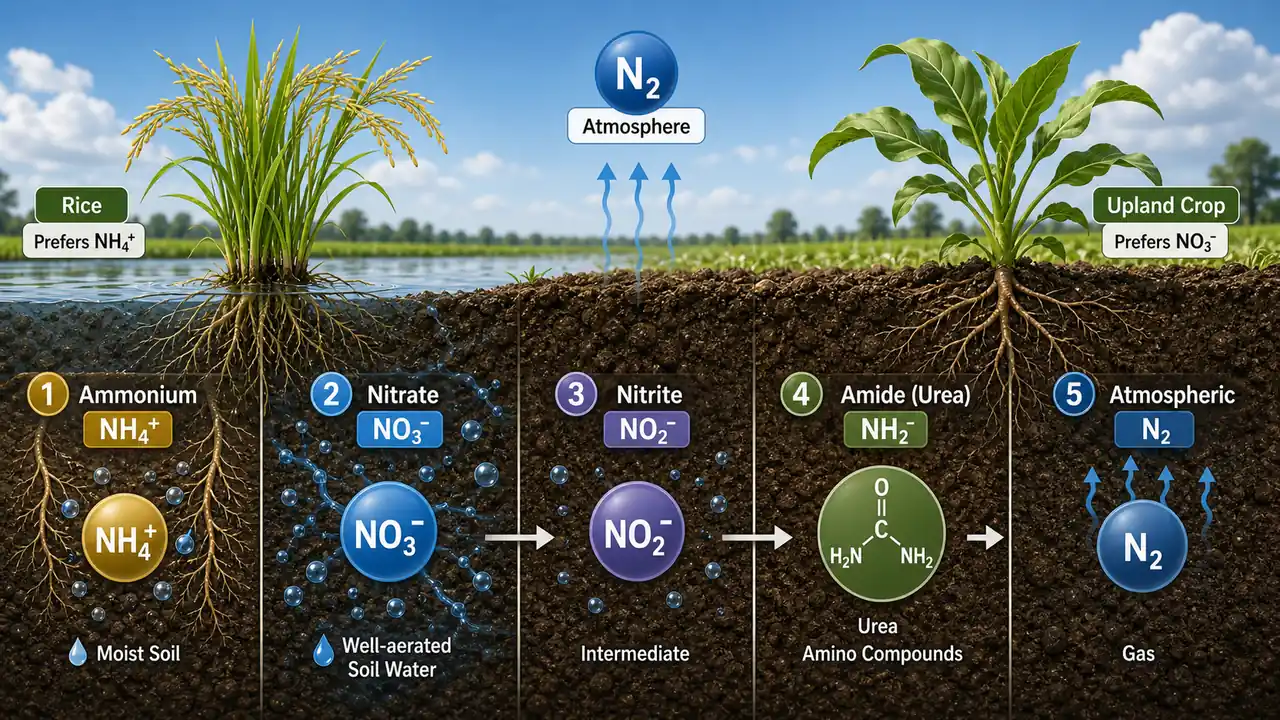
| Form | Type | Details |
|---|---|---|
| NH4+ (Ammonium) | Inorganic | Preferred by rice, sugarcane, tea in waterlogged/acidic soils |
| NO3- (Nitrate) | Inorganic | Preferred by most crops in well-aerated soils |
| NO2- (Nitrite) | Inorganic | Intermediate; toxic at high levels |
| NH2 (Amide) | Organic | Urea and amino acids — dominant soil N reservoir; absorbed in foliar application |
| N2 (Elemental) | Gaseous | 78% of atmosphere; unavailable without fixation |
TIP
Uptake summary: Most plants absorb N as NO3- (nitrate). Rice and crops in waterlogged/acidic soils prefer NH4+ (ammonium). In foliar spray, NH2 (amide/urea) form is absorbed.
Nitrogen Transformations in Soil
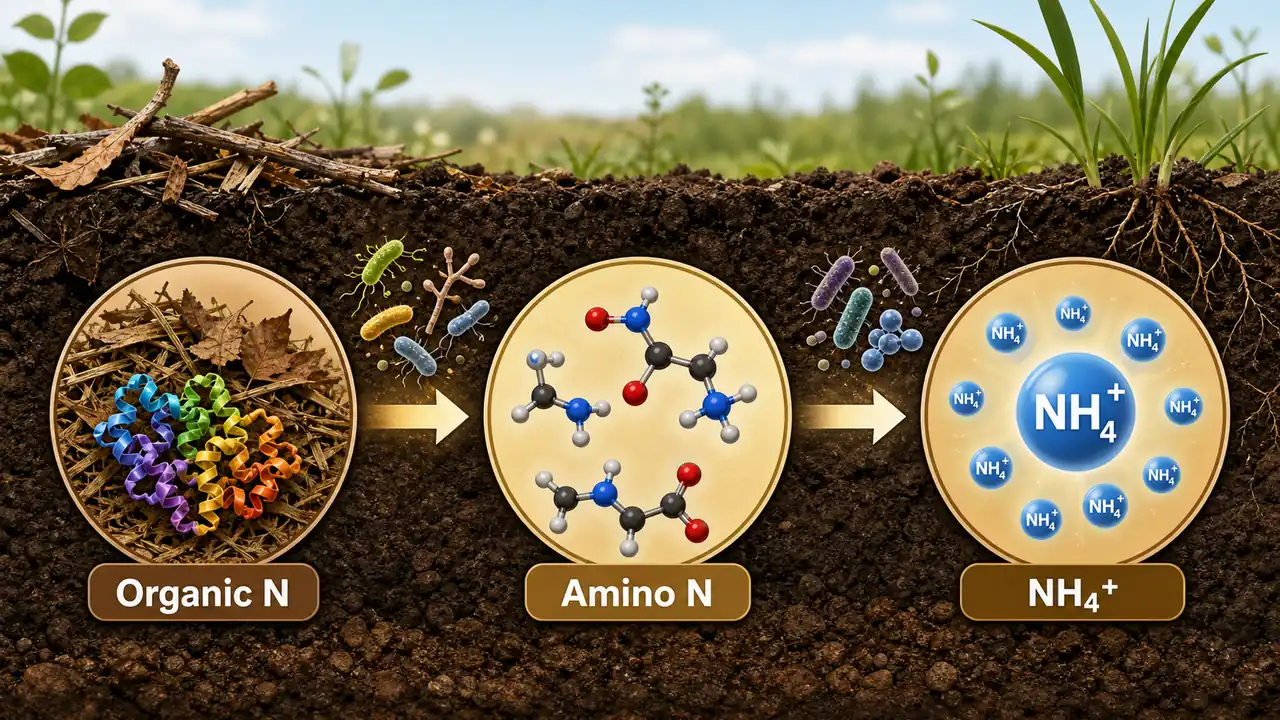
Nitrogen undergoes a complex series of transformations driven by soil microorganisms. Understanding these is key to managing N efficiently.
Mineralization: Organic N to Inorganic N
Mineralization converts unavailable organic N into plant-usable forms. It involves two sequential reactions:
Step 1: Aminisation
- Hydrolytic decomposition of proteins releasing amines and amino acids
- Carried out by heterotrophs: Bacillus, Pseudomonas, Clostridium, Serratia, Micrococcus
- In neutral/sodic soils — bacteria are active; in acidic soils — fungi are active

| Condition | End Products |
|---|---|
| Aerobic proteolysis | CO2, (NH4)2SO4, H2O |
| Anaerobic conditions | Ammonia, amides, CO2, H2S |
Step 2: Ammonification
- Amines and amino acids decomposed by heterotrophs to release NH4+
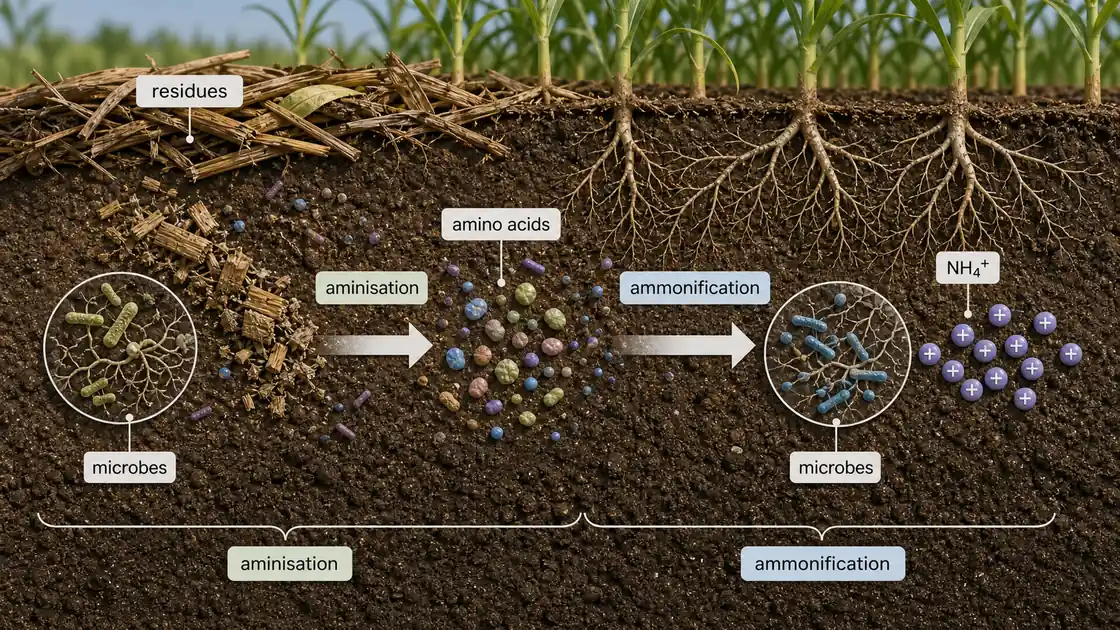

The released NH3 can follow several pathways:
- Converted to nitrites and nitrates (nitrification)
- Absorbed directly by plants
- Utilized by heterotrophic organisms
- Fixed in clay lattice — in subsoil 40-50%, in topsoil 6%, especially by montmorillonite, illite, vermiculite
- Mineralization increases with rising temperature, adequate (not excessive) moisture, and good O2 supply
Conversion of Urea
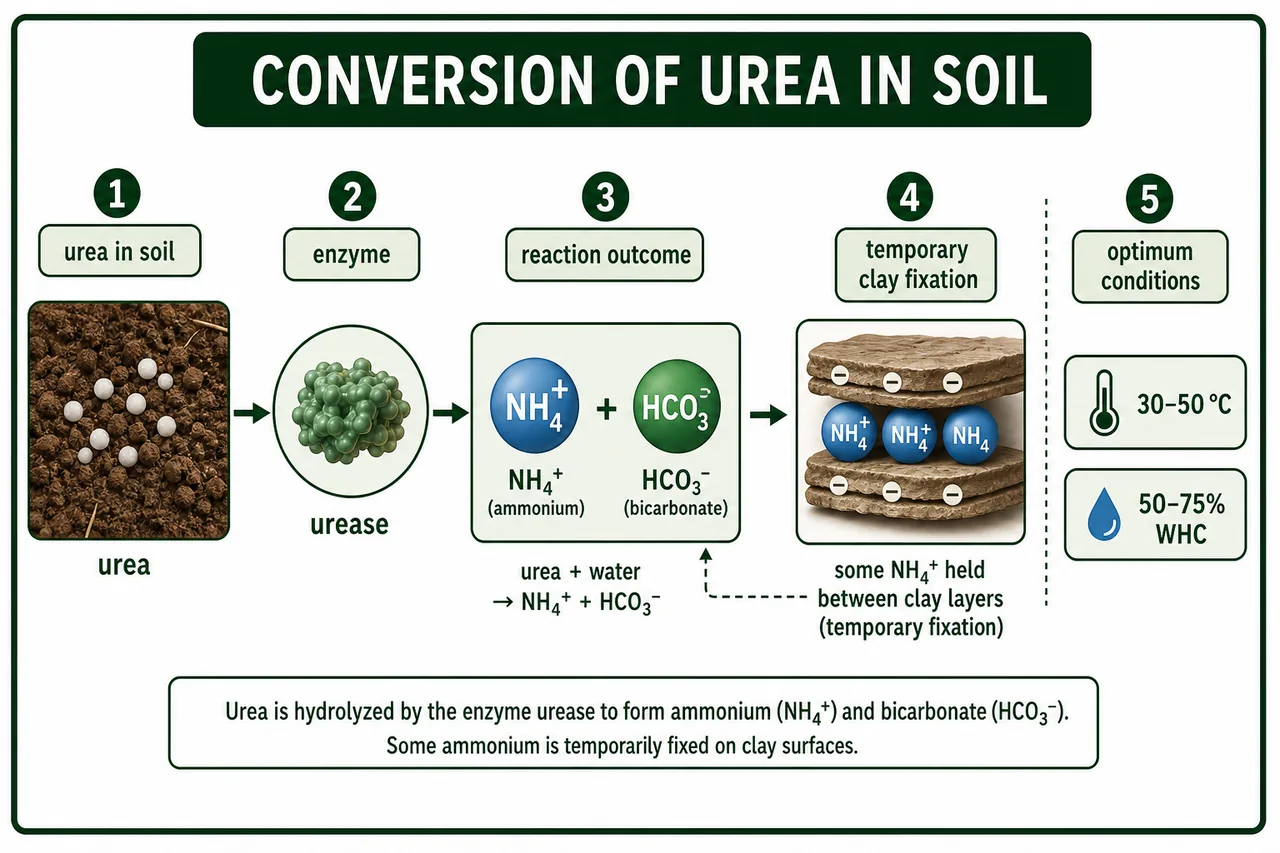
- Urea is hydrolysed by the enzyme urease produced by Bacilli, Micrococcus, Pseudomonas, Clostridium, Aerobacter, Corynebacterium
- CO(NH2)2 + H+ + 2H2O → 2NH4+ + HCO3-
- Optimum water holding capacity: 50-75%; optimum temperature: 30-50°C
- Released NH4+ can be fixed by clay (especially illite) because NH4+ (radius 0.143 A) and K+ (radius 0.133 A) have similar ionic radii
Immobilization: Inorganic N to Organic N
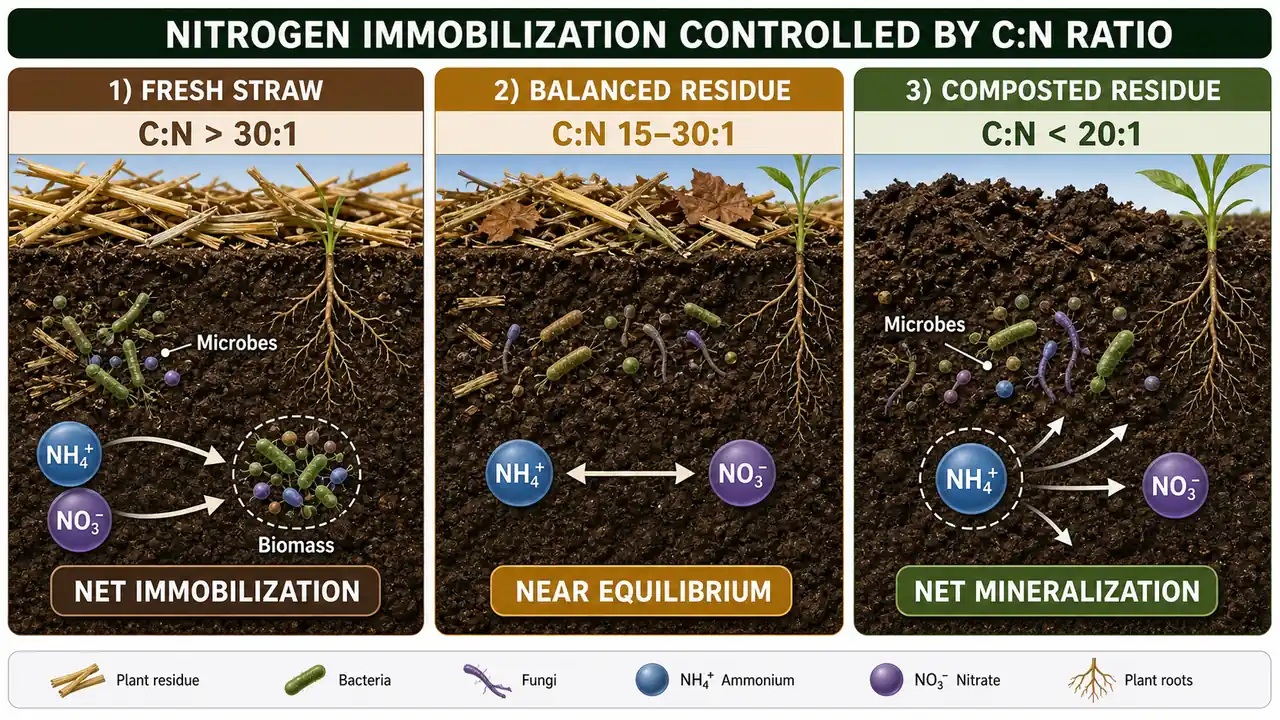
| C:N Ratio | Process | What Happens |
|---|---|---|
| > 30:1 | Net Immobilization | Microbes consume more N than they release |
| < 20:1 | Net Mineralization | Excess N is released as NH4+ |
| 15-30 | Both processes | System near equilibrium |
Agricultural example: Adding fresh wheat straw (C:N = 80:1) to soil causes N immobilization — soil microbes grab available N to decompose the carbon-rich straw, temporarily starving the next crop. Solution: either apply extra N fertilizer or compost the straw before incorporation.
N Factor
- Number of units of inorganic N immobilized per 100 units of material decomposed
- Values range from < 0.1 to 1.3
Nitrification
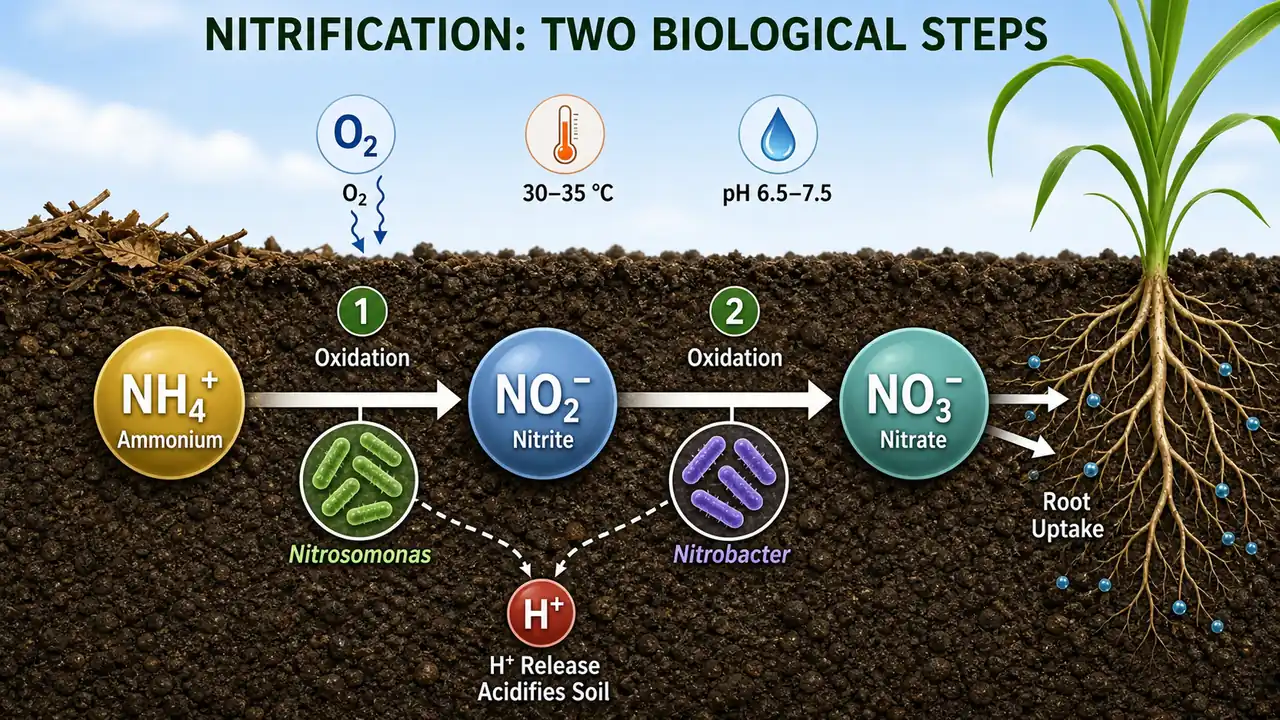
| Step | Reaction | Organism |
|---|---|---|
| Step 1 | NH4+ → NO2- (Nitrite) | Nitrosomonas (also Nitrosolobus, Nitrospira, Nitrosovibrio) |
| Step 2 | NO2- → NO3- (Nitrate) | Nitrobacter |
| Condition | Optimum |
|---|---|
| Temperature | 30-35°C |
| pH | 6.5-7.5 (slows significantly in very acidic soils) |
| Oxygen | Requires molecular O2 — occurs best in well-aerated soils |
IMPORTANT
Three key implications of nitrification:
- Requires molecular oxygen — occurs in well-aerated soils
- Releases H+ — causes soil acidification over time
- Influenced by soil environmental conditions (moisture, temperature)
Agricultural example: Long-term use of ammonium sulphate on tea gardens in Assam gradually lowers soil pH because nitrification releases H+ ions. Periodic liming is needed to counteract this.
Losses of Nitrogen
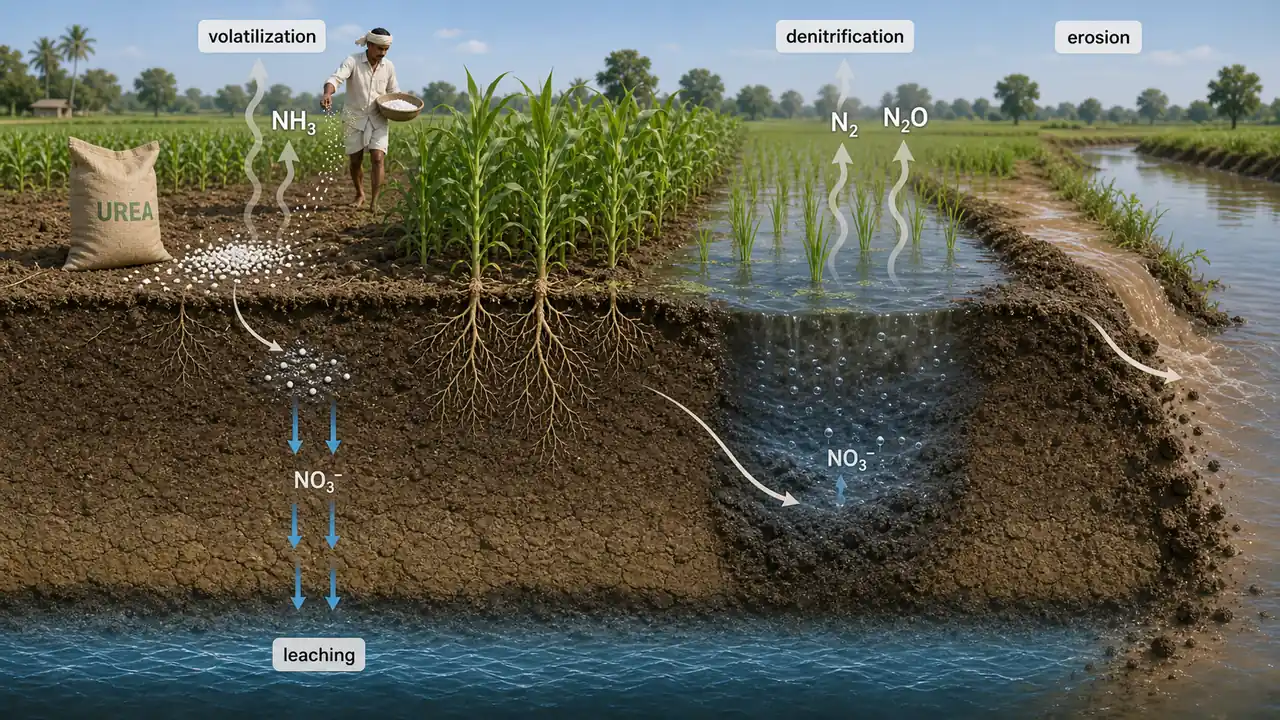
Nitrogen is the most mobile and loss-prone nutrient. Understanding loss pathways is critical for efficient management.
| Loss Pathway | Mechanism | Magnitude |
|---|---|---|
| Crop removal | N carried away in grain and biomass | Major pathway |
| Leaching/drainage | NO3- (negative charge) moves freely with water | 11-18% loss |
| Volatilization | NH3 gas lost to atmosphere (pH > 8) | 60% of N loss in India |
| Denitrification | Biological reduction of NO3- to N2/N2O under anaerobic conditions | Significant in waterlogged soils |
| Erosion | Topsoil rich in organic N physically removed | 8-15 kg/ha/year |
| Clay fixation | NH4+ trapped in illite/vermiculite crystal lattice | Temporary unavailability |
| Immobilization | Microbes incorporate N into their biomass | Temporary; released upon microbial death |
| Elemental N loss | Chemical reduction of amide/NH4 to gaseous N | Non-biological pathway |
Volatilization
- When pH > 8, NH4+ converts to NH3 gas and escapes
- Increases in poorly drained soils (e.g., rice fields)
- 60% of N loss in India is due to volatilization
- In alkali soils, N application is raised by at least 25% to compensate
Denitrification
- Biological reduction: NO3- → NO2- → NO → N2O → N2
- Denitrifying bacteria: Pseudomonas and Bacillus (also Achromobacter, Micrococcus)
- Occurs under anaerobic/waterlogged conditions
- Reduced by: adequate drainage, phosphate residues, avoiding excess N accumulation
- In heavy clay soils, loss is up to 50% of added fertilizer
Leaching Loss
- Primarily affects nitrate (NO3-) — negative charge, not adsorbed by soil colloids
- Most severe in humid areas and sandy soils
Agricultural example: In a sugarcane field, after ratoon harvest, the residual phosphatic fertilizer and high organic matter benefit the following wheat crop — wheat yield is higher due to available P and N from decomposing sugarcane residues.
Nitrogen Cycle
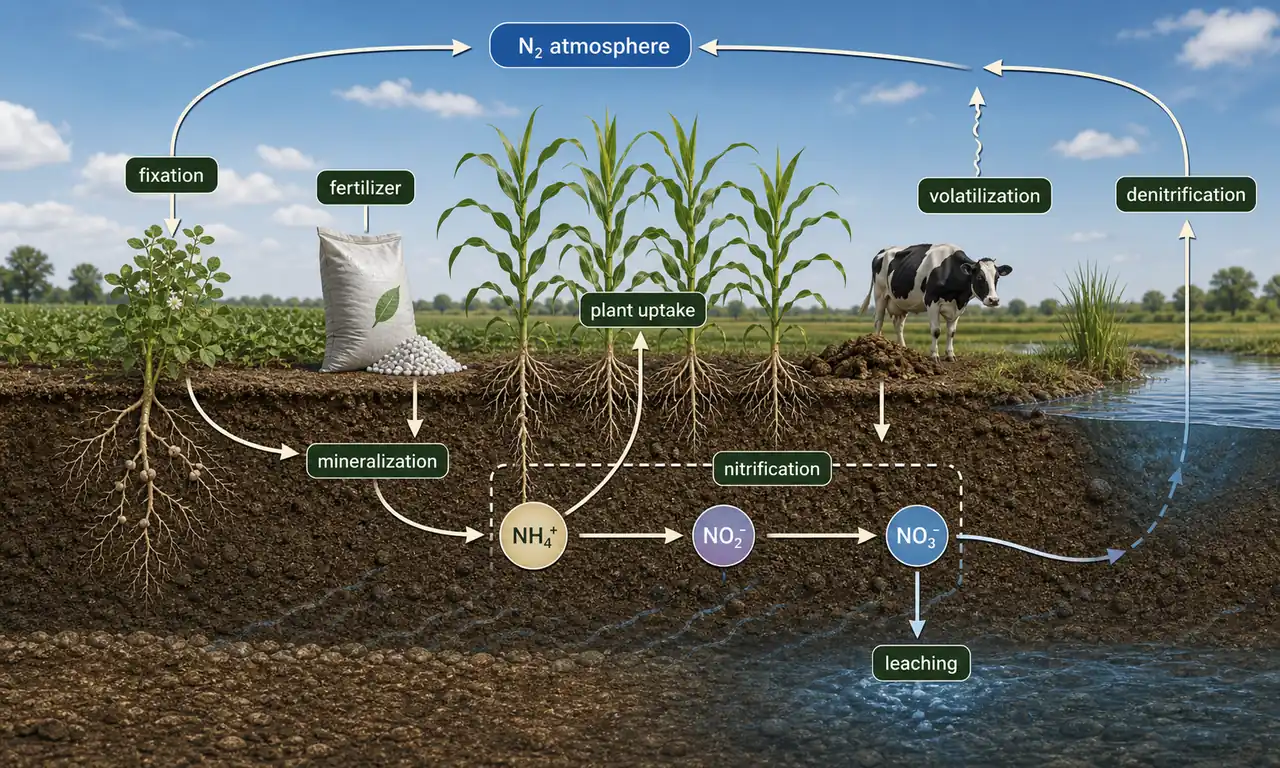
The N cycle operates in the soil-plant-atmosphere system through continuous transformations between organic and inorganic forms.
| Component | Processes |
|---|---|
| N Inputs (gains) | Biological fixation, fertilizers, atmospheric deposition, organic residues |
| N Outputs (losses) | Crop removal, leaching, denitrification, volatilization, erosion |
| N Cycling within soil | Mineralization, immobilization, nitrification |
TIP
N Cycle Summary: Atmosphere N2 → Fixed (BNF/Industry) → NH4+ (Ammonification) → NO3- (Nitrification) → Plant uptake / Leaching / Denitrification back to N2. Organic matter decomposition feeds back through mineralization.
Nitrogen Fixation
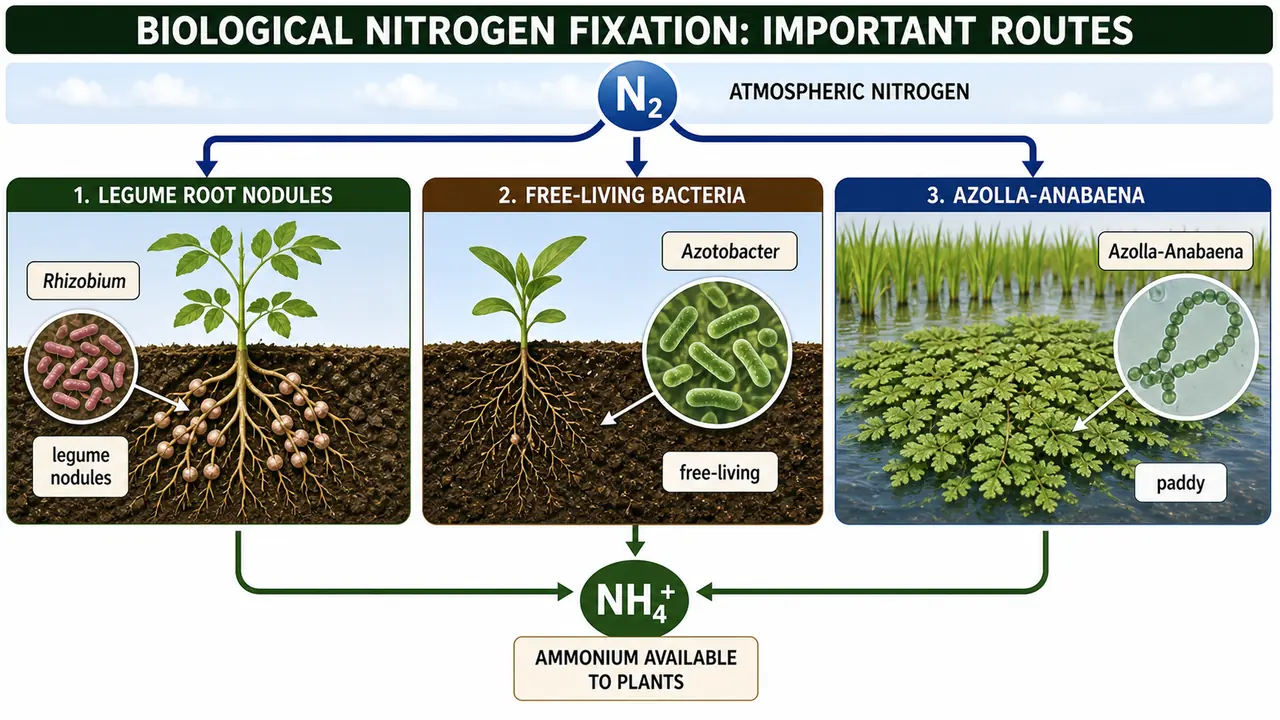
A. Symbiotic N Fixation
The mutually beneficial relationship between host plant and nitrogen-fixing bacteria. The plant provides carbohydrates; bacteria provide fixed N.
| Organisms | Properties | Active location |
|---|---|---|
| Azotobacter | Aerobic, Free living | Soil, water, rhizosphere, leaf surface |
| Azospirillum | Micro aerobic rhizobacteria; free fixers | Free living in Rhizosphere, Colonize roots of cereals and also gives phytotonic effect |
| Rhizobium | Symbiotic | Root nodules of legumes |
| Actinomycetes, Frankia, Beijerinckia | Symbiotic | Non leguminous forest tree roots, leaf surfaces |
| Cyanobacteria | Photo autotrophic; Anabaena - symbiotic | In wetland flood water; Anabaena associate with Azolla |
1. Legume (Nodule-forming)
| Aspect | Details |
|---|---|
| Organisms | Rhizobium and Bradyrhizobium |
| N fixed | 40-60% of agricultural BNF; averages ~75% of total N used by the plant |
| Nodule appearance | Effective nodules: pink to red centres (due to leghemoglobin); pale/green = ineffective |
| Rhizobium type | Aerobic and heterotrophic bacterium |
| Exception | Rajma does not fix atmospheric N despite being a pulse crop |
| Rhizobium spp. | Legumes inoculated |
|---|---|
| 1. Rhizobium meliloti | Melilotus (Sweet clover), Medicago (Lucern), Trigonella (Methi) |
| 2. R. trifoli | Trifolium (berseem) |
| 3. R. leguminosanim | Pea, Lentil |
| 4. R. phaseoli | Phaseolus |
| 5. R. japonicum | Soybean, Cow pea, Groundnut, Sunhemp |
Agricultural example: Growing soybean before wheat in a rotation benefits the wheat crop — soybean's Rhizobium fixes 50-100 kg N/ha, much of which remains in the soil as root residues for the following crop.
2. Non-legume (Nodule-forming)
- Trees like Casuarina form nodules when infected with Frankia (an Actinomycete)
- Actinomycetes are bacteria, not fungi — despite filamentous morphology
- Important for forestry and land reclamation
3. Non-legume (Non-nodule-forming)
| Organism | Crop Association | N Fixed |
|---|---|---|
| Azospirillum | Sorghum, pearl millet (associated with roots) | Variable |
| Azotobacter chroococcum | Wheat, rice, cotton, sugarcane (free-living) | Variable |
| Azolla-Anabaena (Cyanobacteria in water fern) | Rice Exams | 30-105 kg N/season, meeting 75% N requirement of rice |
| Beijerinckia | Tropical plants (fixes N on leaf surfaces) | Variable |
TIP
Exam favourite: Azolla is the most widely used bio-fertilizer in rice (process called azofixation). It can replace 75% of the chemical N requirement.
B. Non-symbiotic (Free-living) N Fixation
| Organism | Condition | N Fixed |
|---|---|---|
| Cyanobacteria (photoautotrophic) | Wetland floodwater | 20-30 kg N/ha/year |
| Azotobacter, Beijerinckia | Aerobic upland soils | Variable |
| Clostridium | Anaerobic wetland soils | Variable |
C. Industrial N Fixation
- Haber-Bosch process: H2 + N2 → NH3
- Conditions: 1200°C temperature, 500 atm pressure
- Products: Anhydrous NH3, urea, ammonium sulphate, ammonium nitrate
D. Atmospheric N Additions
- Rainfall brings NH3, NO3-, NO2-, N2O, and organic N back to soil
- 10-20% of NO3- in rainfall comes from N2 fixation by lightning energy
Functions of Nitrogen
IMPORTANT
Nitrogen is essential for photosynthesis (constituent of chlorophyll), imparts green colour, stimulates vegetative growth, and governs the utilization of P, K, and other elements.
| Function | Agricultural Significance |
|---|---|
| Component of amino acids, proteins, nucleic acids, enzymes, coenzymes, alkaloids | Every metabolic process involves N-containing compounds |
| Constituent of chlorophyll | Fixes atmospheric CO2 through photosynthesis |
| Component of RNA and DNA | Responsible for genetic code transfer |
| Improves quality of leafy vegetables and fodders | Lusher, greener foliage with greater nutritive value |
| Increases protein content in grain | Quality improvement in wheat, rice, pulses |
| Feeds soil microorganisms (chemoautotrophs) | Sustains soil biological activity |
| Stimulates fruit bud formation, fruit set, fruit quality AIC 2017 | Important for horticultural crops |
| Governs utilization of K, P, and other elements | Central role in nutrient balance |
| Concentration in sufficient plants: 1-5% | Below 1% indicates deficiency |
Deficiency of Nitrogen

| Symptom | Details |
|---|---|
| Uniform chlorosis (including veins) | Lower leaves turn yellow first; upper leaves remain green |
| V-shaped yellowing | At tips of lower leaves in cereals |
| Stunted growth | Reduced plant height and biomass |
| Buttoning in cauliflower | Premature formation of small, unmarketable heads |
| Purple stems (tomato) | Stem becomes purple and hard; flower buds yellow; flower drop increases |
| Yellow veins (coffee) | New leaves very small |
| Reduced flowering and yield | Lower protein content |
| Necrosis | Severe deficiency leads to death of lower leaves |
| Hard, small fruits | Low bearing capacity of trees; premature fruit dropping |
Agricultural example: In a maize field, if the lower leaves show uniform pale yellow colour while the top is green, it is classic N deficiency. Apply urea as top-dressing immediately.
Excess of Nitrogen (Toxicity)
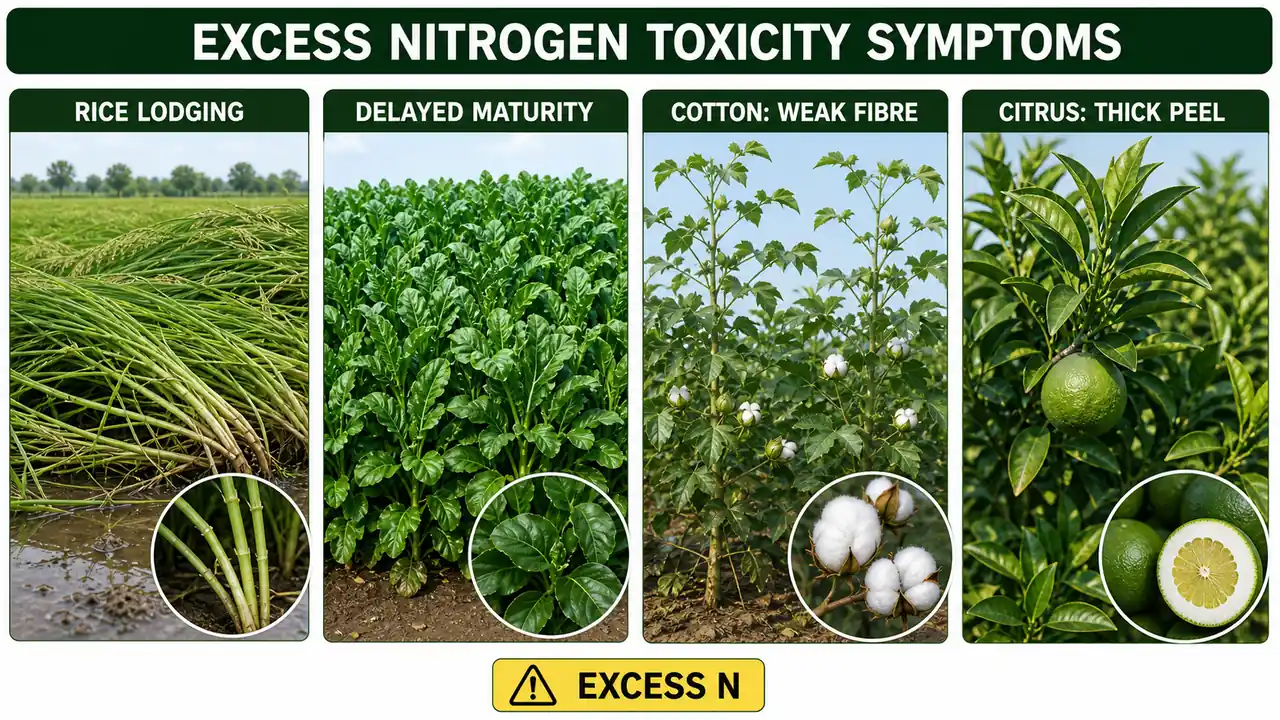
| Crop | Toxicity Symptom |
|---|---|
| Rice | Lodging — weak, tall stems cannot support heavy grain heads |
| Cotton | Weak fibre quality |
| Citrus | Slender shoots, profuse vegetation, thick peel, rough leathery skin |
| Coffee | Interferes with K uptake — N:K imbalance (antagonism) |
| General | Dark green colour, excess vegetative growth, flower abortion, more succulent leaves susceptible to pests |
Ammonium toxicity specifically causes carbohydrate depletion, downward cupping of leaves, stem lesions, and blossom-end rot.
Nutrient Mobility Summary
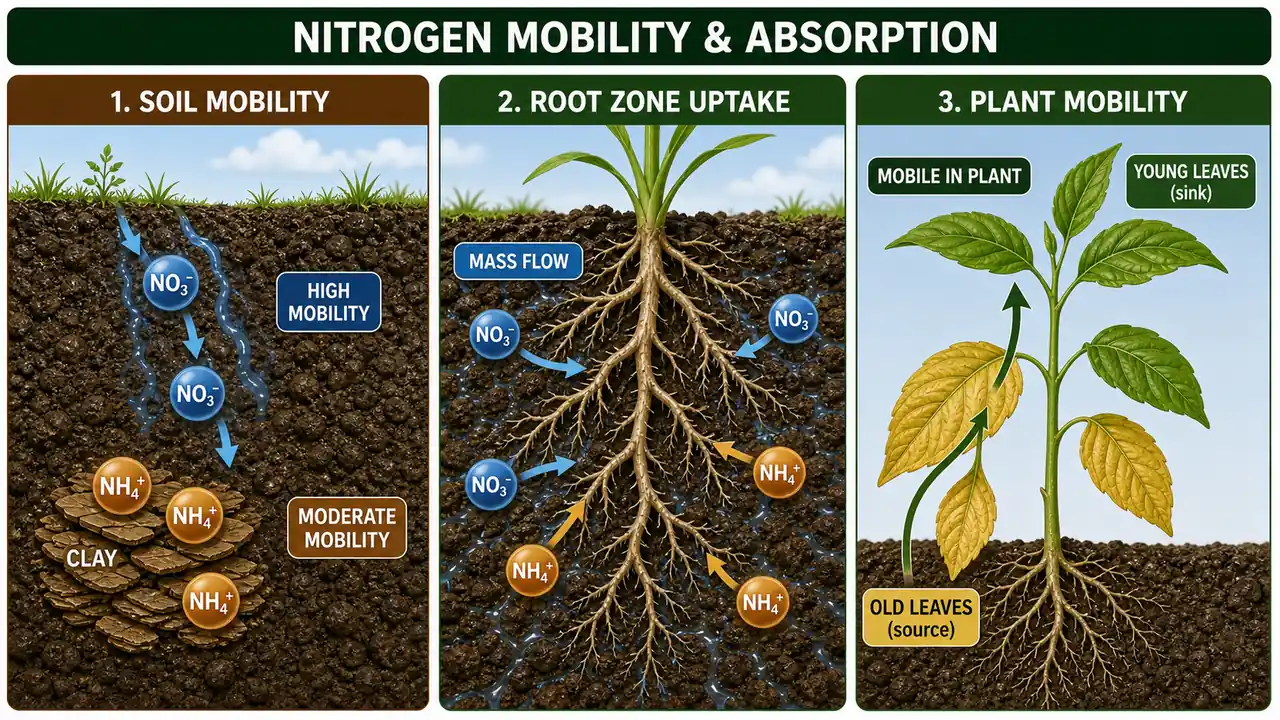
| Property | Nitrogen |
|---|---|
| Mobility in soil | NO3- is highly mobile (prone to leaching); NH4+ is moderately mobile |
| Mobility in plant | Highly mobile — translocated from old to new tissues |
| Deficiency appears on | Older/lower leaves first |
| Uptake form | NO3-, NH4+, NH2 (foliar) |
| Primary uptake mechanism | Mass flow (99%) |
| Foliar absorption | Rapid |
| Average plant concentration | 1.5% |
TIP
Mnemonic for N transformations: "Amino acids → Ammonium → Nitrite → Nitrate → Denitrification" — AANND (think: "All About Nitrogen Needs Discussion")
Explore More
https://www.youtube.com/watch?v=o1_D4FscMnU
References
- Tisdale, S.L., Nelson, W.L., Beaton, J.D., Havlin, J.L. 1997. Soil Fertility and Fertilizers. 5th ed. Prentice Hall of India, New Delhi.
- Singh, S.S. 1995. Soil Fertility and Nutrient Management. Kalyani Publishers, Ludhiana.
- Maliwal, G.L. and Somani, L.L. 2011. Soil Technology. Agrotech.
- IARI Toppers Soil Science Part-9 (6th Edition 2025).
Summary Cheat Sheet
| Concept / Topic | Key Details |
|---|---|
| Total N in Indian soils | 0.03–0.05% (~1000 kg N/ha); mostly organic forms |
| Available N per season | Only 1–3% of total N is mineralised |
| Furrow slice weight | 2 × 10⁶ kg/ha (top 15 cm) |
| N from rainfall | 4.6 kg N/ha/year (lightning converts N₂ to NO₃⁻) |
| Plant N concentration | Average 1.5% dry weight |
| NH₄⁺ preference | Rice, sugarcane, tea (waterlogged/acidic soils) |
| NO₃⁻ preference | Most crops in well-aerated soils |
| Aminisation | Proteins → amines + amino acids; by Bacillus, Pseudomonas, Clostridium |
| Ammonification | Amines/amino acids → NH₄⁺; by heterotrophs |
| Urease enzyme | Hydrolyses urea; optimum 30–50°C, WHC 50–75% |
| Nitrification Step 1 | NH₄⁺ → NO₂⁻ by Nitrosomonas; optimum 30–35°C, pH 6.5–7.5 |
| Nitrification Step 2 | NO₂⁻ → NO₃⁻ by Nitrobacter |
| C:N > 30 | Net immobilization (microbes consume N) |
| C:N < 20 | Net mineralization (excess N released) |
| NH₄⁺ clay fixation | By montmorillonite, illite, vermiculite; NH₄⁺ radius ≈ K⁺ radius |
| Volatilization | 60% of N loss in India; occurs at pH > 8 as NH₃ gas |
| Alkali soil N compensation | Raise N dose by at least 25% |
| Denitrification bacteria | Pseudomonas, Bacillus; anaerobic; NO₃⁻ → N₂ |
| Leaching | Affects NO₃⁻ (negative charge, not adsorbed); 11–18% loss |
| Erosion N loss | 8–15 kg/ha/year |
| Haber-Bosch process | Industrial N fixation; 1200°C, 500 atm |
| Azolla in rice | Fixes 30–105 kg N/season; meets 75% N requirement |
| Rajma exception | Does not fix atmospheric N despite being a pulse |
| Rhizobium contribution | 40–60% of agricultural BNF |
| N deficiency signs | Uniform chlorosis on older/lower leaves; V-shaped yellowing in cereals |
| Buttoning in cauliflower | Classic N deficiency disorder |
| N toxicity signs | Dark green, lodging, delayed maturity, pest susceptibility |
| N mobility in plant | Highly mobile — symptoms on older leaves first |
| Total soil N | 0.03-0.05%; only 1-3% mineralised per season |
| Most common form absorbed | NO3- (most crops); NH4+ (rice, tea) |
| Denitrifying bacteria | Pseudomonas, Bacillus |
| Major N loss in India | 60% through volatilization |
| Best bio-fertilizer for rice | Azolla (fixes 30-105 kg N/season) |
| Industrial fixation | Haber-Bosch process (1200°C, 500 atm) |
| Called | The "growth nutrient" |