👯 Secondary Nutrients: Calcium, Magnesium & Sulphur
Complete guide to secondary macronutrients — Ca, Mg, S sources, forms, functions, deficiency diseases (Bitter Pit, Grass Tetany, Akiochi, Tea Yellows), and toxicity for competitive exams
Why Secondary Nutrients Matter: A Farmer's Perspective
An apple grower in Himachal Pradesh finds dark, sunken spots on his fruit — Bitter Pit, caused by calcium deficiency. A dairy farmer in Haryana loses cattle to Grass Tetany because pasture grasses have too little magnesium. A mustard farmer in Rajasthan gets poor oil content because sulphur is deficient. These three secondary nutrients — Ca, Mg, and S — are called "secondary" not because they are less important biologically, but because they are needed in smaller quantities than N, P, and K.
Quick Comparison: Ca vs. Mg vs. S
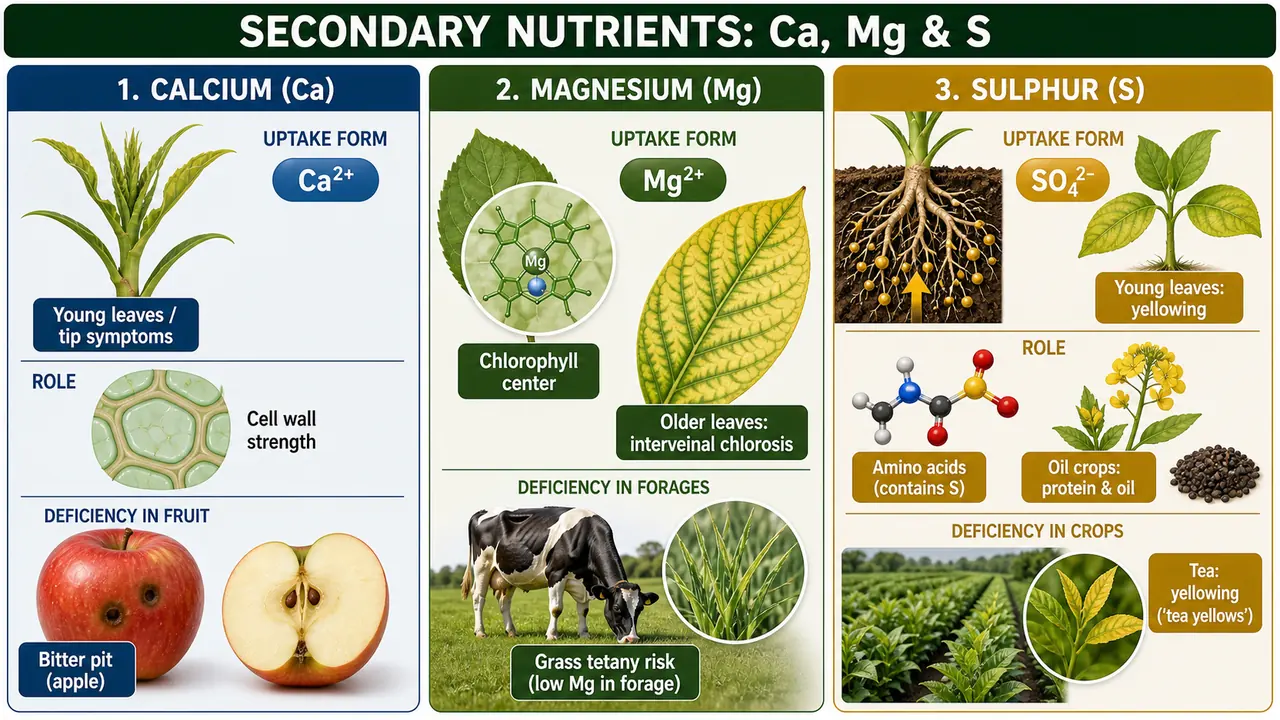
| Property | Calcium (Ca) | Magnesium (Mg) | Sulphur (S) |
|---|---|---|---|
| Uptake form | Ca2+ | Mg2+ | SO42- |
| Average plant concentration | 0.5% | 0.2% | 0.1% |
| Plant concentration range | 0.2-1.0% | 0.1-0.6% | 0.1-0.4% |
| Mobility in plant | Immobile | Mobile | Immobile |
| Deficiency appears on | Young leaves/tips | Older leaves | Young leaves |
| Main uptake mechanism | Mass flow (88%) | Mass flow (73%) | Mass flow (94%) |
| Key function | Cell wall structure | Central atom of chlorophyll | Amino acid synthesis |
| Famous deficiency disease | Bitter Pit (apple) | Grass Tetany (cattle) | Akiochi (rice) — toxicity |
Calcium (Ca)
Sources of Soil Calcium
| Source | Details |
|---|---|
| Earth crust | 3.64% Ca |
| Primary mineral | Anorthite (CaAl2Si2O3) — plagioclase feldspar |
| Arid/semi-arid minerals | Calcite (CaCO3), Dolomite (CaMg(CO3)2), Gypsum (CaSO4.2H2O) |
| Arid region soils | High Ca regardless of texture — low rainfall means little leaching |
| Humid region soils | Even soils from limestone become acidic due to Ca removal by leaching |
Agricultural example: The black cotton soils of Maharashtra (formed from basalt) are naturally rich in Ca. But the red laterite soils of Kerala, under heavy monsoon rainfall, lose Ca through leaching and need regular liming.
Pro Content Locked
Upgrade to Pro to access this lesson and all other premium content.
₹99 charged monthly · Cancel anytime
- All Agriculture & Banking Courses
- AI Lesson Questions (100/day)
- AI Doubt Solver (50/day)
- Glows & Grows Feedback (30/day)
- AI Section Quiz (20/day)
- 22-Language Translation (100/day)
- Recall Questions (20/day)
- AI Quiz (15/day)
- AI Quiz Paper Analysis (100/day)
- AI Step-by-Step Explanations (100/day)
- Spaced Repetition Recall (FSRS)
- AI Tutor
- Immersive Text Questions
- Audio Lessons — Hindi & English
- Mock Tests & Previous Year Papers
- Summary & Mind Maps
- XP, Levels, Leaderboard & Badges
- Generate New Classrooms
- Voice AI Teacher (AgriDots Live)
- AI Revision Assistant
- Knowledge Gap Analysis
- Interactive Revision (LangGraph)
🔒 Secure via Razorpay · Cancel anytime · No hidden fees
Why Secondary Nutrients Matter: A Farmer's Perspective
An apple grower in Himachal Pradesh finds dark, sunken spots on his fruit — Bitter Pit, caused by calcium deficiency. A dairy farmer in Haryana loses cattle to Grass Tetany because pasture grasses have too little magnesium. A mustard farmer in Rajasthan gets poor oil content because sulphur is deficient. These three secondary nutrients — Ca, Mg, and S — are called "secondary" not because they are less important biologically, but because they are needed in smaller quantities than N, P, and K.
Quick Comparison: Ca vs. Mg vs. S
| Property | Calcium (Ca) | Magnesium (Mg) | Sulphur (S) |
|---|---|---|---|
| Uptake form | Ca2+ | Mg2+ | SO42- |
| Average plant concentration | 0.5% | 0.2% | 0.1% |
| Plant concentration range | 0.2-1.0% | 0.1-0.6% | 0.1-0.4% |
| Mobility in plant | Immobile | Mobile | Immobile |
| Deficiency appears on | Young leaves/tips | Older leaves | Young leaves |
| Main uptake mechanism | Mass flow (88%) | Mass flow (73%) | Mass flow (94%) |
| Key function | Cell wall structure | Central atom of chlorophyll | Amino acid synthesis |
| Famous deficiency disease | Bitter Pit (apple) | Grass Tetany (cattle) | Akiochi (rice) — toxicity |
Calcium (Ca)
Sources of Soil Calcium
| Source | Details |
|---|---|
| Earth crust | 3.64% Ca |
| Primary mineral | Anorthite (CaAl2Si2O3) — plagioclase feldspar |
| Arid/semi-arid minerals | Calcite (CaCO3), Dolomite (CaMg(CO3)2), Gypsum (CaSO4.2H2O) |
| Arid region soils | High Ca regardless of texture — low rainfall means little leaching |
| Humid region soils | Even soils from limestone become acidic due to Ca removal by leaching |
Agricultural example: The black cotton soils of Maharashtra (formed from basalt) are naturally rich in Ca. But the red laterite soils of Kerala, under heavy monsoon rainfall, lose Ca through leaching and need regular liming.
Forms of Calcium in Soil
| Form | Availability |
|---|---|
| Solution Ca2+ | Immediately plant-available |
| Exchangeable Ca | Held on soil colloids; released into solution as needed |
| Mineral Ca | Locked in primary and secondary minerals; slowly released |
These forms exist in dynamic equilibrium — when solution Ca is depleted by plant uptake or leaching, exchangeable Ca replenishes it.
Functions of Calcium
| Function | Agricultural Significance |
|---|---|
| Cell wall formation — calcium pectate in middle lamella | Middle lamella acts as a biological gatekeeper; weak without Ca |
| Root development and cell division (meristematic activity) Exams | Critical in Telophase for cell plate formation |
| Chromosome stability | Constituent of chromosome structure |
| Disease resistance | Stabilises pectin, strengthens cell walls |
| Sugar translocation | Helps transport sugars within plants |
| Enzyme activation | Activates phosphatase and kinase |
| Fruit quality | Increases stiffness and storage quality |
| Seed production | Present in seeds as calcium phytate |
TIP
Exam Tip: Ca is immobile in plant but mobile in soil. This contrast is frequently tested. Symptoms always appear on young leaves and growing tips.
Deficiency of Calcium
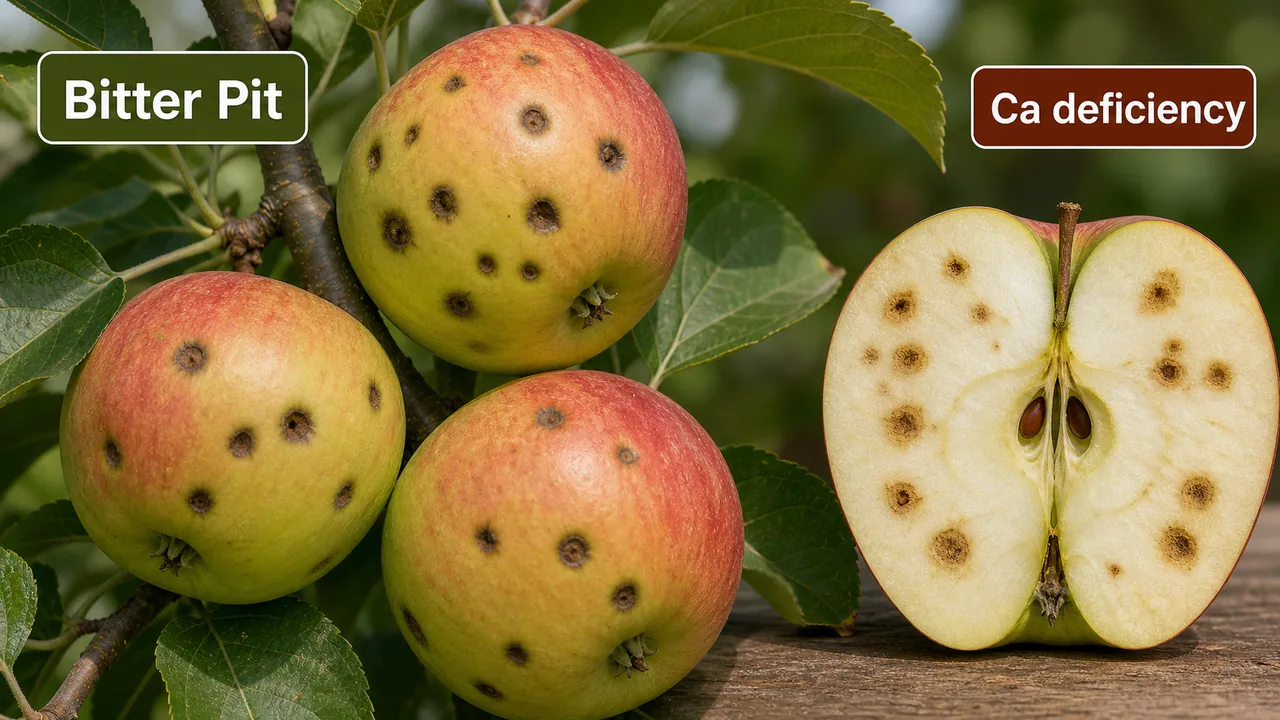
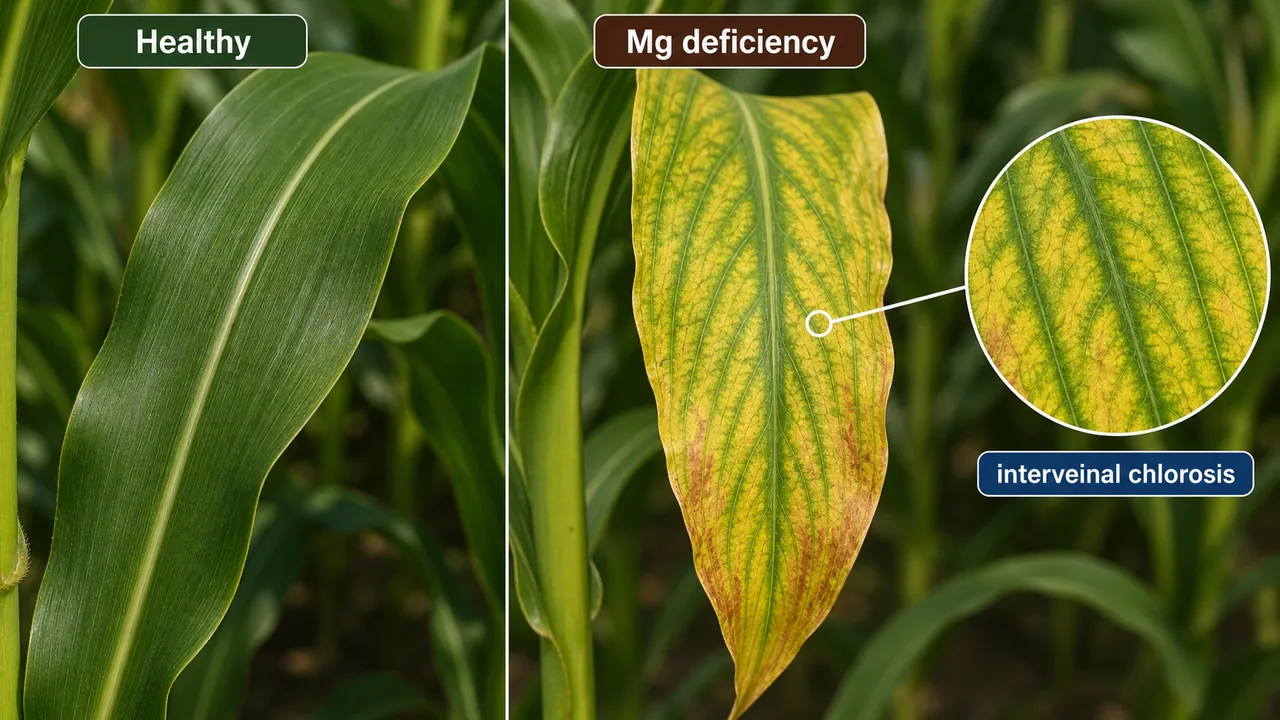
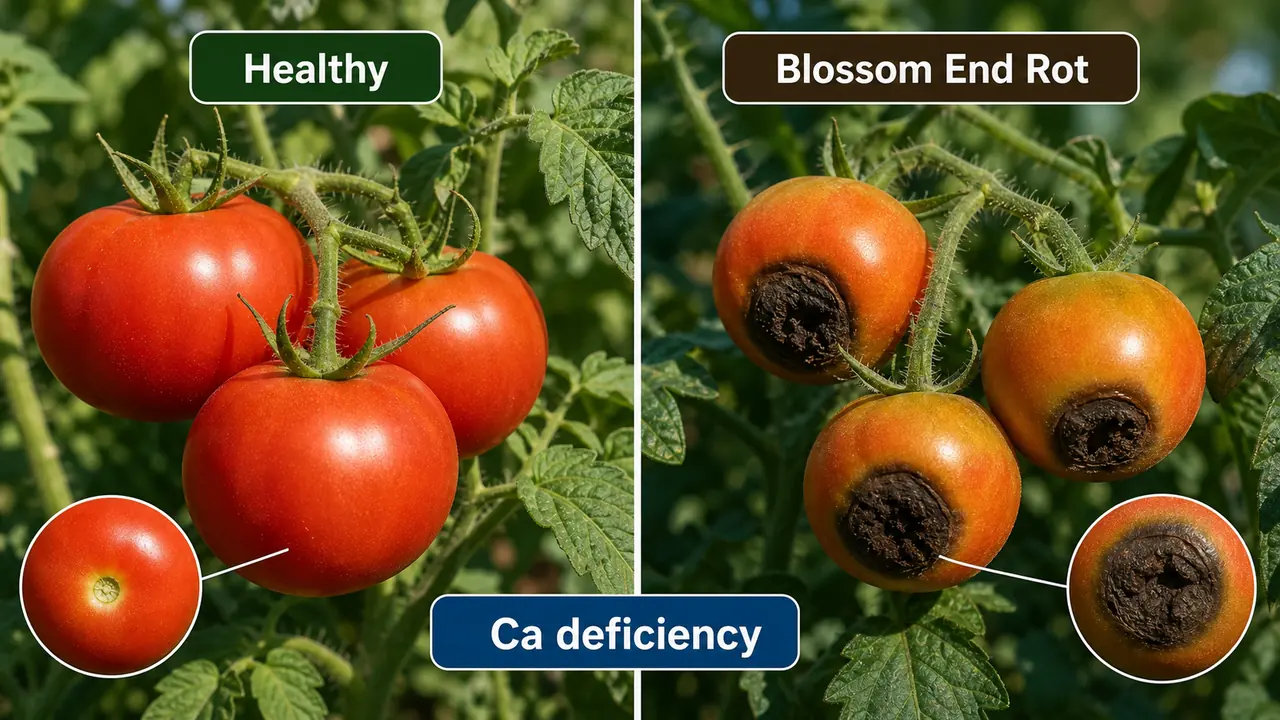
These two classic calcium-disorder visuals are high-yield because they tie a nutrient concept directly to field diagnosis.
Soils seldom become Ca-deficient if pH is maintained near neutral. Deficiency is more common in acidic, highly leached soils and rapidly growing crops.
| Symptom | Details |
|---|---|
| Young leaves — small, distorted, cup-shaped (hook-shaped), crinkled Exams | Resembles boron deficiency |
| Bud leaf — chlorotic white with green base, tip hooks downward | Becomes brittle |
| Corn — colorless tips covered with sticky gelatinous material | Leaves adhere to one another |
| Growing points die (terminal buds desiccate) | Die-back in fruit trees |
| Bitter Pit in apple Exams | Dark brown sunken spots on fruit; corky areas in flesh |
| Blossom End Rot in tomato | Dark, sunken, leathery patch at blossom end of fruit |
| Brassica — severe loss of colour in young leaves | Terminal bud leaves hooked; old leaves collapse |
| Premature shedding of buds and blossoms | Reduced fruit quality; fruit rotting |
Agricultural example: Blossom End Rot in tomato is often triggered by inconsistent watering rather than absolute Ca deficiency — uneven irrigation disrupts Ca transport to developing fruits. Regular, consistent watering is the best prevention.
Magnesium (Mg)
Sources of Soil Magnesium
| Type | Minerals |
|---|---|
| Earth crust | 1.93% Mg |
| Primary minerals | Biotite, Dolomite, Hornblende, Olivine, Serpentine |
| Secondary minerals | Chlorite, Illite, Montmorillonite |
| Arid regions | Epsomite (MgSO4.7H2O) accumulates |
Forms of Magnesium in Soil
- Occurs predominantly as exchangeable and solution Mg
- Coarse-textured (sandy) soils have the greatest potential for Mg deficiency — lower CEC holds less Mg, prone to leaching
- Competition between NH4+ and Mg2+ lowers Mg availability — heavy ammonium-based fertilisation suppresses Mg uptake
Functions of Magnesium
| Function | Agricultural Significance |
|---|---|
| Only mineral constituent of chlorophyll — located at its centre exams 2017/18 | Without Mg, photosynthesis cannot occur |
| Chlorophyll accounts for 15-20% of total Mg in plants | Remaining 80-85% serves other functions |
| Structural component of ribosomes | Activates polypeptide chain formation |
| Required for phosphorylation (ATP transfer) | Essential for every energy-dependent process |
| RuBisCO activation — requires Mg2+ as cofactor | The most abundant enzyme on Earth |
| Promotes uptake and translocation of P and sugars | Improves phloem loading of sugars |
| Increases oil content of oilseed crops | Important for mustard, soybean, groundnut |
| Regulates cellular pH, cation-anion balance, turgor | Maintains cell homeostasis |
| Essential for protein synthesis | Along with N and S |
TIP
Exam Tip: Mg is mobile in plant — deficiency appears on older leaves. Key phrase: "Mg = Middle of chlorophyll."
Deficiency of Magnesium
| Symptom | Details |
|---|---|
| Interveinal chlorosis — veins remain green, interveinal areas turn yellow | Hallmark symptom; striped/mottled pattern |
| Stiff, brittle, twisted leaves | Wrinkled and distorted; remain small |
| Cotton — lower leaves reddish-purple then necrotic | Called "Redding of leaves" |
| Brassica — chlorosis with interveinal mottling on older leaves | Called "Puckering" |
| Grass Tetany (Hypomagnesemia) | Cattle on Mg-deficient forages; worsened by high NH4+ and K fertilisation |
| Sand Drown in Tobacco | Severe interveinal chlorosis on sandy soils |
| Vine plants — stalk necrosis, stem die-back | Premature leaf drop, fruit loss |


Agricultural example: A dairy farmer in Punjab heavily fertilises his berseem (clover) pasture with ammonium sulphate and MOP. The high NH4+ and K suppress Mg uptake in the forage. His cattle develop Grass Tetany — muscle tremors and seizures. Solution: apply dolomite (supplies both Ca and Mg) and reduce K fertiliser.
Toxicity of Magnesium
- Excess Mg absorption → browning of roots → growth ceases → death of roots and leaves
- Counteracted by CO2 antagonistic action
Sulphur (S)
S vs. N Deficiency — A Common Exam Trap
TIP
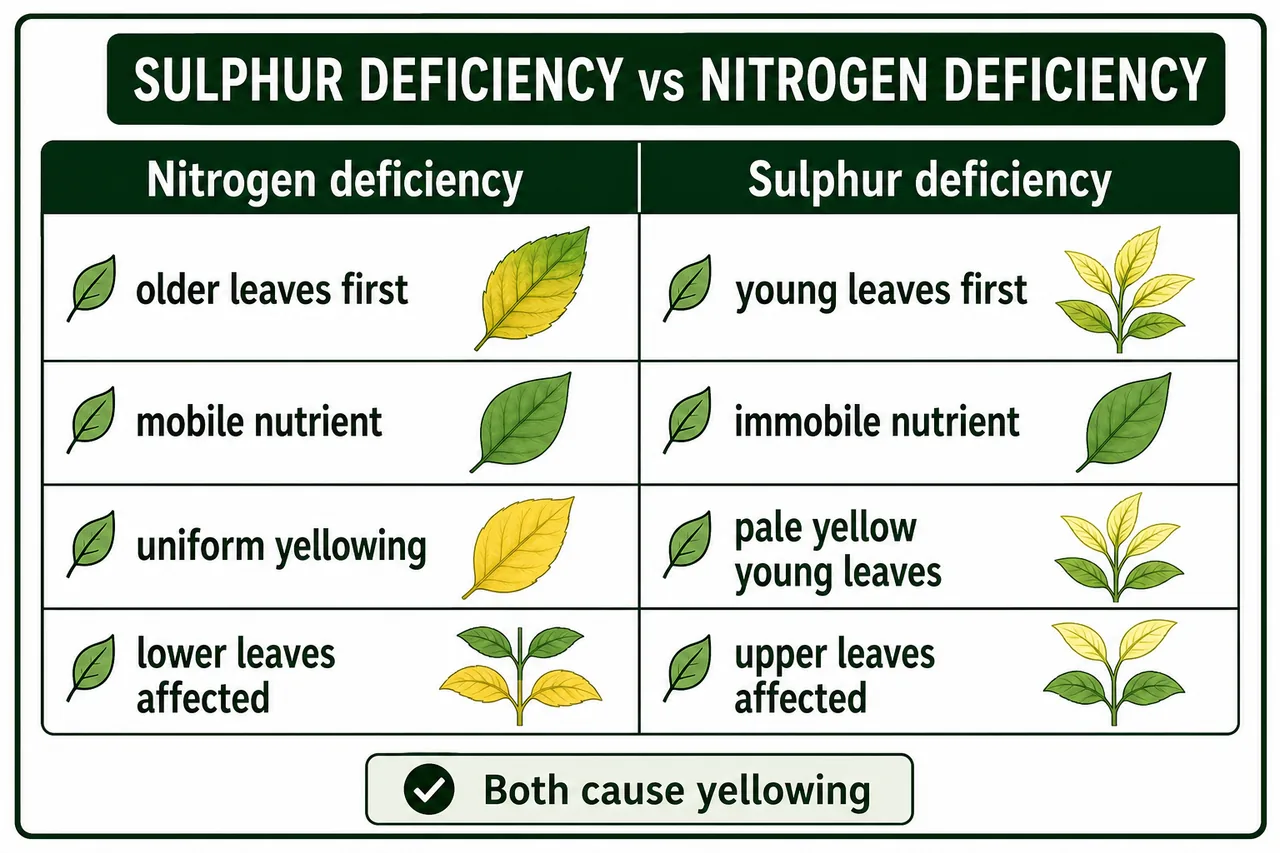
Both S and N deficiency cause yellowing. The key difference:
- N deficiency → older/lower leaves (N is mobile)
- S deficiency → younger/upper leaves (S is immobile) This distinction is one of the most frequently tested questions.
| Feature | Nitrogen Deficiency | Sulphur Deficiency |
|---|---|---|
| Nutrient mobility in plant | Mobile | Immobile |
| Leaves affected first | Older / lower leaves | Younger / upper leaves |
| Yellowing pattern | More uniform yellowing on older foliage | Pale yellow young leaves first |
| High-yield exam clue | Mobile nutrient shifts to new growth | Immobile nutrient cannot move to new growth |
Sources of Sulphur
| Source | Details |
|---|---|
| Atmosphere | < 0.05 ppm as SO2 |
| Earth crust | 0.06-0.10% |
| Gypsum | CaSO4.2H2O — most common S mineral and widely used fertiliser |
| Epsomite | MgSO4.7H2O |
| Mirabilite | Na2SO4.10H2O |
| Pyrite | FeS2 — important in waterlogged soils |
Forms of Sulphur in Soil
| Form | Proportion | Details |
|---|---|---|
| Organic S | 90% | Mineralization by microbes is the primary pathway to plant availability |
| Solution SO42- | Small | Immediately available |
| Adsorbed SO42- | Small | On Fe/Al oxide surfaces; released as solution S is depleted |
| Insoluble SO42- | Variable | Slowly available |
| Reduced inorganic S | Variable | Sulphides; found in waterlogged/anaerobic conditions |
S Mineralization and Immobilization
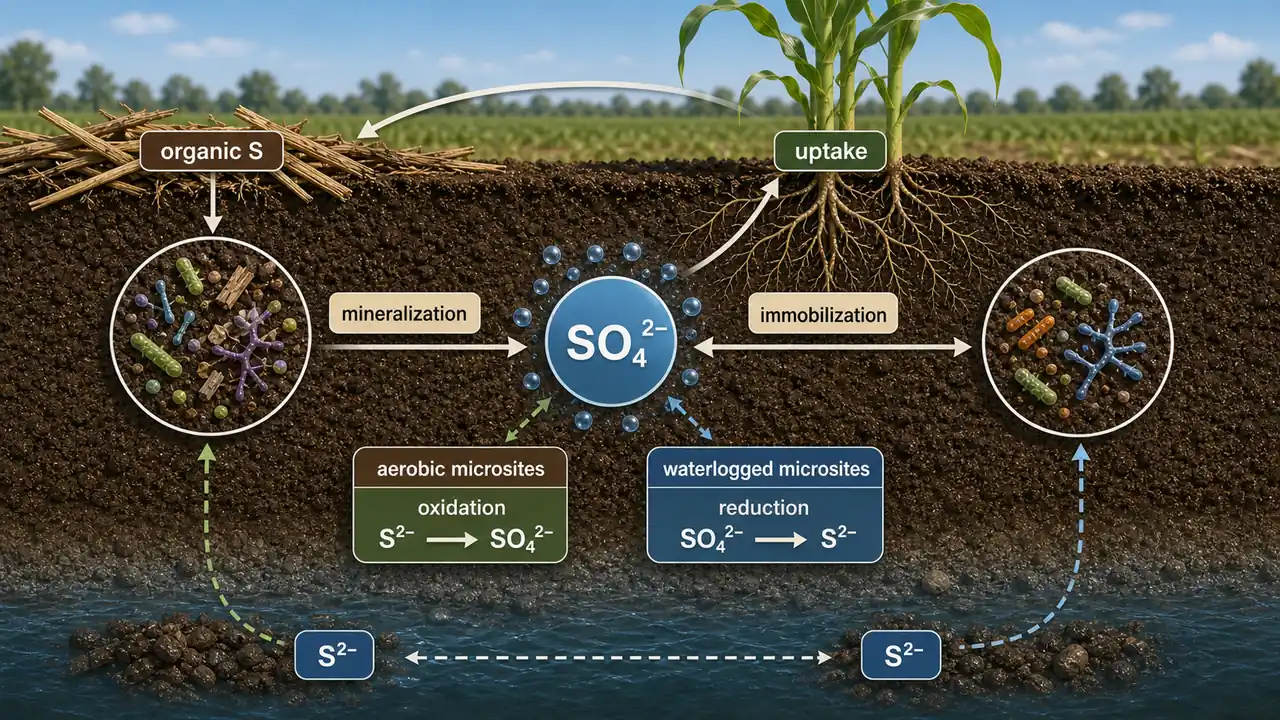
Just like nitrogen, the C:S ratio of decomposing material determines which process dominates:
| C:S Ratio | Process |
|---|---|
| > 400:1 | Net Immobilization |
| < 200:1 | Net Mineralization |
| 200-400 | Both processes |
Factors Affecting S Oxidation and Mineralization
| Factor | Optimum | Details |
|---|---|---|
| Key organism | Thiobacillus | Chemolithotropic S-oxidising bacteria |
| Temperature | 25-40°C | Bell-shaped response curve |
| Moisture | Field capacity | Aerobic S-oxidising bacteria need O2 |
| pH | 4.0 or lower | Thiobacillus thrives in extremely acidic conditions |
| Plant presence | Active | Root exudates stimulate microbial activity in rhizosphere |
Functions of Sulphur
| Function | Agricultural Significance |
|---|---|
| Synthesis of S-containing amino acids — Cysteine, Cystine, Methionine | Without these, complete proteins cannot be formed |
| Activates proteolytic enzymes (e.g., papainase in papaya) | Synthesis of papain |
| Constituent of vitamins — Thiamine, Biotin | And coenzymes, glutathione, Acetyl CoA, ferredoxin |
| Role in chlorophyll synthesis | Structural formation of chlorophyll |
| Pungency in onion, mustard, cabbage, cauliflower, garlic | Polysulfides give characteristic smell/taste |
| Increases oil content — flax, soybean, groundnut | Critical for oilseed economics |
| Disulfide linkages (-S-S-) | Stabilise protein tertiary structure |
| Sulfhydryl (-SH) groups | Increase cold resistance |
| Required for N fixation in legumes | Part of nitrogenase enzyme system |
| Promotes root growth and seed formation | Overall plant development |
Agricultural example: In Rajasthan's mustard belt, farmers who apply 20-40 kg S/ha (as gypsum) along with NPK see 15-20% higher oil content and significantly better seed yield compared to NPK alone.
Deficiency of Sulphur
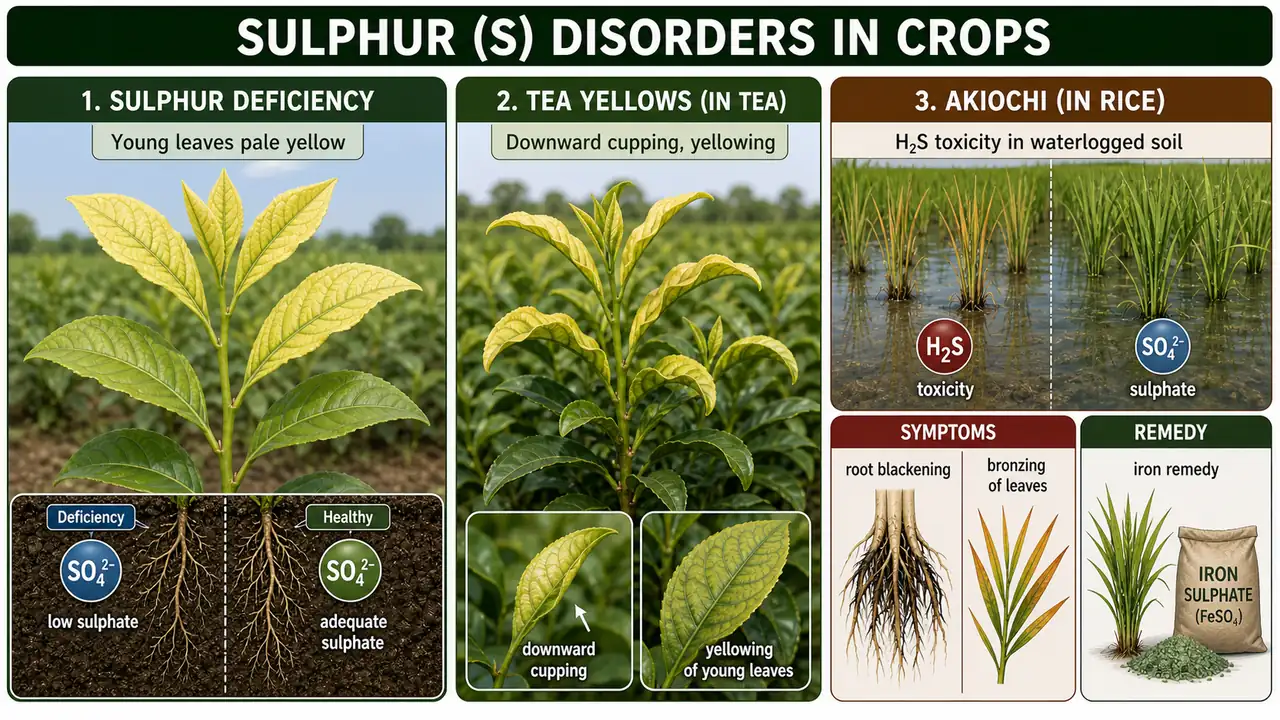
S is immobile in plant — deficiency appears on young leaves.
| Symptom | Details |
|---|---|
| Younger leaves — uniformly yellowish-green | Stalks short and slender; growth retarded |
| Veins paler than interveinal areas | Unlike N deficiency where entire leaf is uniformly yellow |
| No dead spots; plants do not lose lower leaves (unlike N) | Leaves thick and firm |
| Poor seed set in rapeseed | Reduced oil and protein content |
| Tea Yellows | Yellowing and downward cupping in tea |
| Brassica — leaf cupping and curling | Lamina restricted |
| Cabbage — reddening and purpling | Upper and lower surfaces affected |
| Fruits — do not mature fully | Remain light green |
Toxicity of Sulphur
| Condition | Details |
|---|---|
| Akiochi disease in rice | H2S toxicity in waterlogged, high-OM soils with low Fe |
| Mechanism | Under anaerobic conditions, SO42- reduced to toxic H2S by sulphur-reducing bacteria |
| Symptoms | Root blackening, growth depression (means "autumn decline" in Japanese) |
| Remedy | Adding iron-containing materials (binds H2S as insoluble FeS) |
| Sulphide injury | Necrosis of leaves |
Agricultural example: In the organic-rich paddy soils of coastal Odisha, Akiochi can be severe. Applying ferrous sulphate not only provides Fe but also binds toxic H2S, protecting rice roots.
Nutrient Uptake Mechanisms
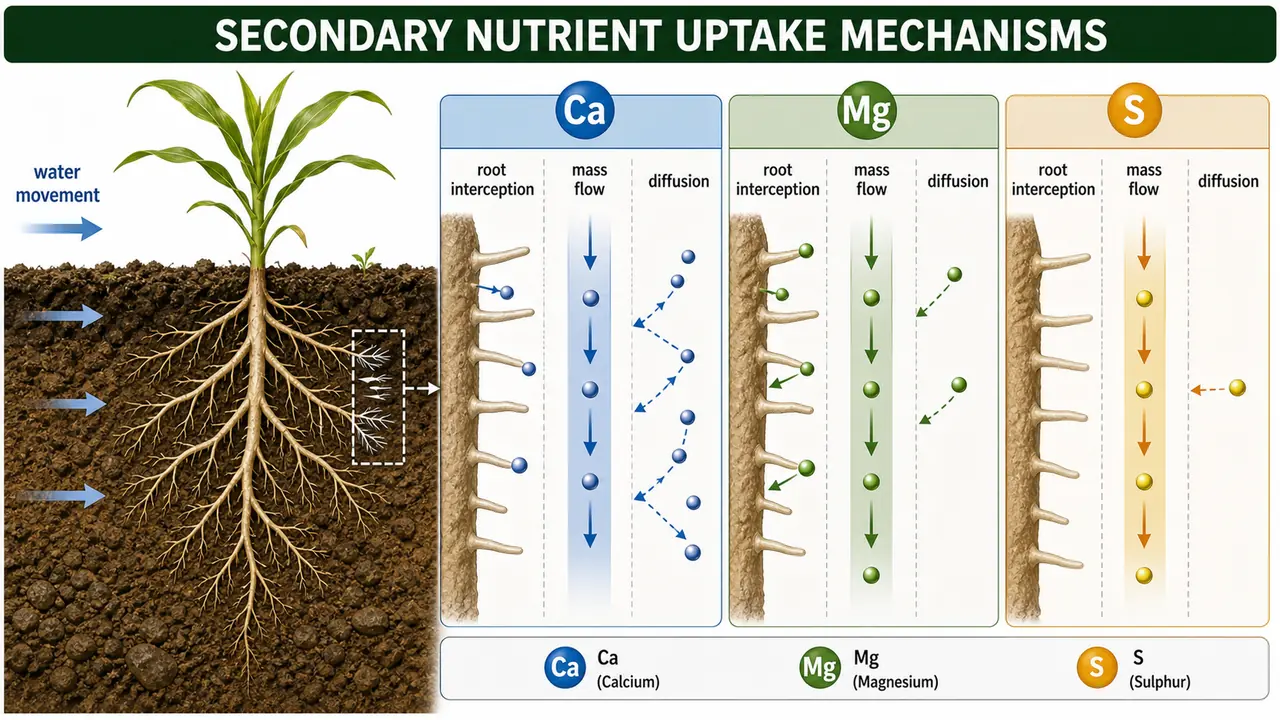
| Nutrient | Root Interception | Mass Flow | Diffusion |
|---|---|---|---|
| Ca | 12% | 88% | 0% |
| Mg | 27% | 73% | 0% |
| S | 4% | 94% | 2% |
TIP
Mnemonics for secondary nutrients:
- Ca = "Cell walls, Apple Bitter Pit, Can't move in plant (immobile)"
- Mg = "Middle of chlorophyll, Moves in plant (mobile), Mg-deficient cattle get Grass Tetany"
- S = "Smells in onion/mustard, Stays put in plant (immobile), Sulphur amino acids (Cys, Cystine, Met)"
References
- Tisdale, S.L., Nelson, W.L., Beaton, J.D., Havlin, J.L. 1997. Soil Fertility and Fertilizers. 5th ed. Prentice Hall of India, New Delhi.
- Singh, S.S. 1995. Soil Fertility and Nutrient Management. Kalyani Publishers, Ludhiana.
- Maliwal, G.L. and Somani, L.L. 2011. Soil Technology. Agrotech.
- IARI Toppers Soil Science Part-9 (6th Edition 2025).
Summary Cheat Sheet
| Concept / Topic | Key Details |
|---|---|
| Ca uptake form & conc. | Ca²⁺; avg. 0.5% dry weight |
| Ca mobility | Immobile in plant → deficiency on young leaves/tips |
| Ca main function | Cell wall formation — calcium pectate in middle lamella |
| Ca role in cell division | Critical in Telophase for cell plate formation |
| Bitter Pit | Ca deficiency in apple — dark brown sunken spots on fruit |
| Blossom End Rot | Ca deficiency in tomato — dark leathery patch at blossom end |
| Ca uptake mechanism | Mass flow (88%), root interception (12%) |
| Ca primary mineral | Anorthite (plagioclase feldspar); also calcite, dolomite, gypsum |
| Mg uptake form & conc. | Mg²⁺; avg. 0.2% dry weight |
| Mg mobility | Mobile in plant → deficiency on older leaves |
| Mg main function | Central atom of chlorophyll; chlorophyll has 15–20% of total plant Mg |
| Mg other functions | RuBisCO activation; phosphorylation (ATP); increases oil content |
| Interveinal chlorosis | Hallmark Mg deficiency — veins green, interveinal areas yellow |
| Grass Tetany | Cattle on Mg-deficient forages; worsened by high K and NH₄⁺ |
| Sand Drown | Severe Mg deficiency in tobacco on sandy soils |
| Puckering | Mg deficiency in brassica |
| Mg toxicity | Browning of roots → growth ceases → death |
| S uptake form & conc. | SO₄²⁻; avg. 0.1% dry weight |
| S mobility | Immobile in plant → deficiency on young leaves |
| S vs N deficiency | Both yellow; N on older leaves (mobile), S on younger leaves (immobile) |
| S main function | Synthesis of cysteine, cystine, methionine (S-amino acids) |
| S and pungency | Polysulfides give smell/taste to onion, mustard, garlic, cabbage |
| S and oil content | Increases oil in flax, soybean, groundnut |
| S vitamins | Constituent of thiamine and biotin |
| Tea Yellows | S deficiency in tea — yellowing + downward cupping |
| Akiochi disease | H₂S toxicity in waterlogged rice; remedy: add iron materials |
| Organic S in soil | 90% of soil S is organic; mineralised by microbes |
| S mineralization C:S ratio | <200:1 = net mineralization; >400:1 = net immobilization |
| Thiobacillus | Key S-oxidising bacterium; thrives at pH ≤ 4.0 |
| S and N fixation | S is part of nitrogenase enzyme system |
| Avg. plant conc. | 0.5%; Exam tip: 0.2% |
| Mobility in plant | Immobile; Exam tip: Mobile |
| Deficiency on | Young leaves/tips; Exam tip: Older leaves |
| Key deficiency disease | Bitter Pit (apple), Blossom End Rot (tomato); Exam tip: Grass Tetany, Sand Drown (tobacco), Puckering (brassica) |
| Key toxicity issue | —; Exam tip: Root browning |
| C:S immobilization | —; Exam tip: — |
| C:S mineralization | —; Exam tip: — |