🍡Micronutrients: Fe, Mn, Cu, Zn, B, Mo, Cl, Ni & Beneficial Elements
Complete guide to all 8 micronutrients and 6 beneficial elements — functions, deficiency diseases (Khaira, White Bud, Whiptail, Hollow Heart), toxicity, and diagnostic terms for competitive exams
Why Micronutrients Matter: A Farmer's Perspective
A rice farmer in eastern UP sees reddish-brown spots on 3-4 week old seedlings — Khaira disease, caused by zinc deficiency. A cauliflower grower in Punjab gets hollow stems — boron deficiency. An apple orchardist in Kashmir finds internal cork in his fruits — again boron. Despite using adequate NPK, these farmers lose 20-40% of their potential yield because they ignored trace elements. Micronutrients are needed in tiny amounts, but their absence causes devastating crop losses.
Micronutrient Concentrations at a Glance
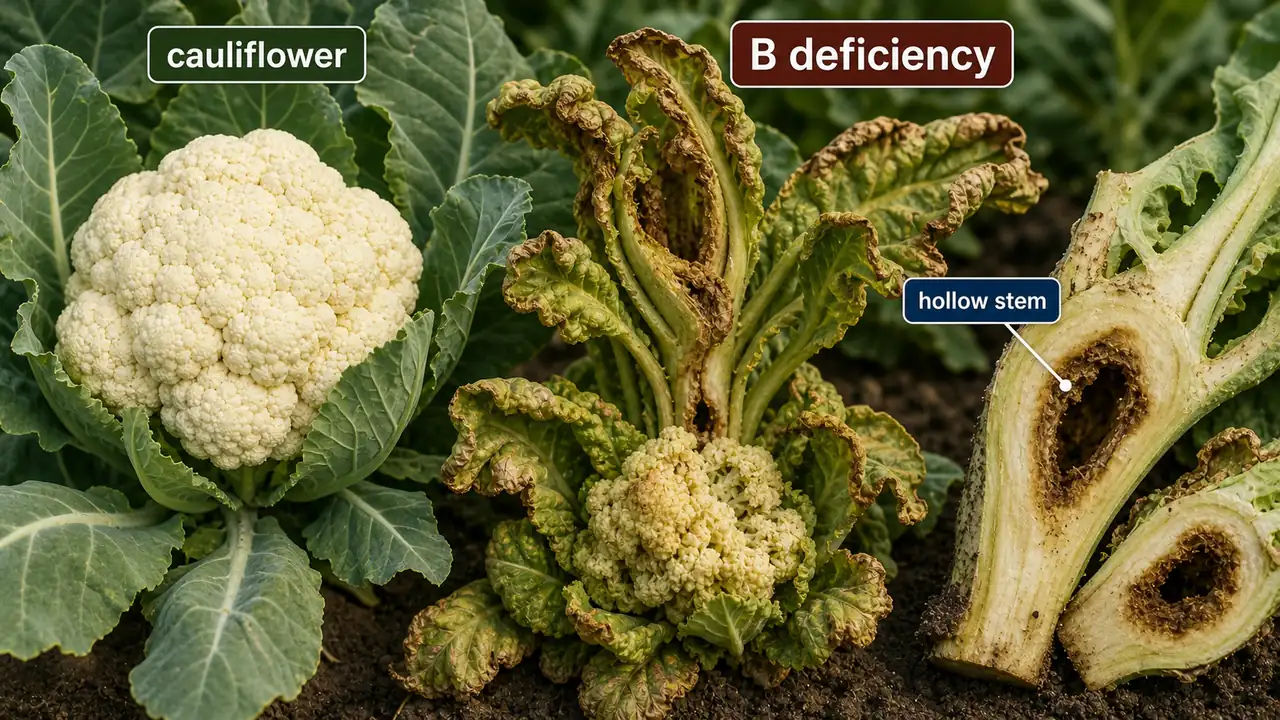
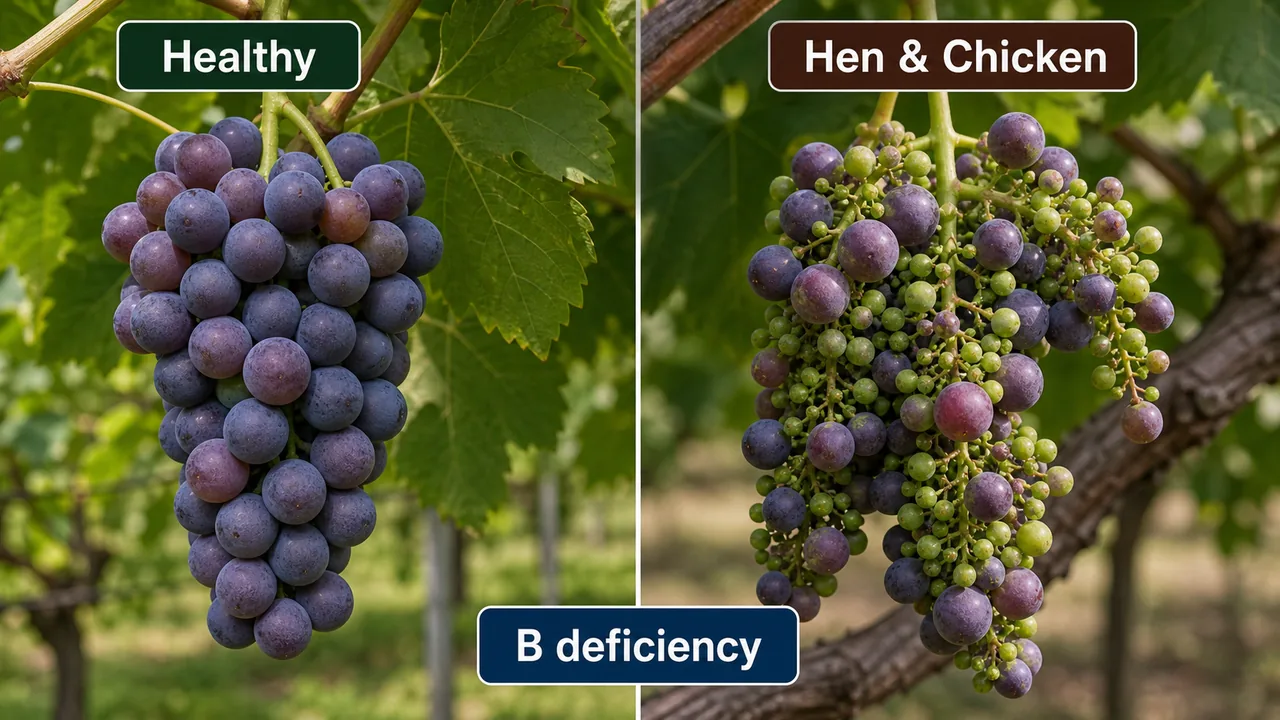
This gallery groups the most tested micronutrient deficiency visuals so symptom-based MCQs can be revised from one place.
NOTE
These are average plant concentrations. Despite being needed in tiny amounts (ppm), each is absolutely essential.
Micronutrient
Symbol
Average Plant Concentration
Uptake Form
Chlorine
Cl
100 ppm (0.01%)
Cl-
Iron
Fe
100 ppm
Fe2+, Fe3+
Manganese
Mn
50 ppm
Mn2+
Boron
B
20 ppm
H3BO3, BO3-
Zinc
Zn
20 ppm
Zn2+
Copper
Cu
6 ppm
Cu2+
Molybdenum
Mo
0.1 ppm
MoO42-
Nickel
Ni
0.1-1.0 ppm
Ni2+
Iron (Fe)
Key Facts
Property
Details
Earth crust
5% Iron
Primary minerals
Olivine, Pyrite, Hematite, Goethite
pH relationship
10-fold increase in Fe availability for each unit decrease in pH
Mobility in plant
Immobile — deficiency on younger leaves
Content in plants
100 ppm
Functions of Iron
Function
Agricultural Significance
Biosynthesis of chlorophyll
Fe is not a part of chlorophyll but is essential for making it
Oxidation-reduction reactions
Regulates respiration, photosynthesis, nitrate and sulphate reduction
From Greek meaning "claw" — chelate molecules wrap around and grip metal ions
Soluble organic compounds that keep Fe, Mn, Cu, Zn in soluble form, preventing fixation
Natural chelates: products of microbial activity and organic matter degradation
Citric acid and oxalic acid from root exudates have chelating properties
Deficiency of Iron
Symptom
Details
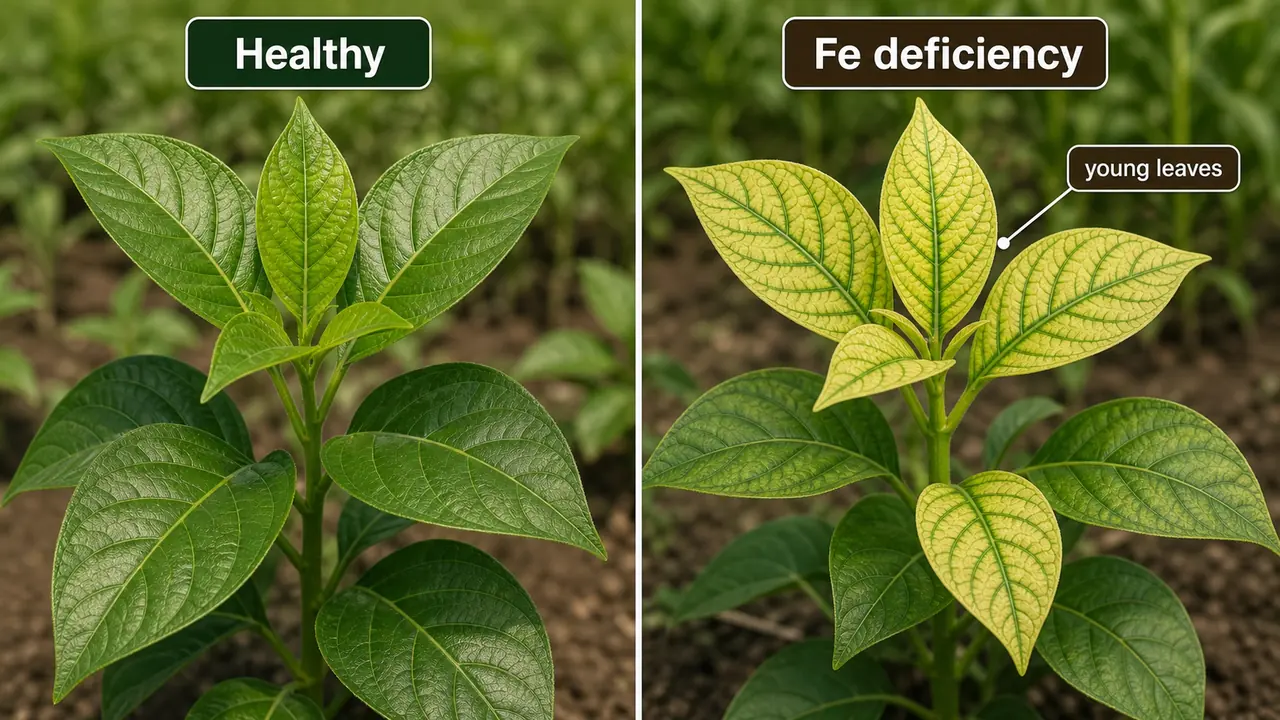
Interveinal chlorosis of younger leaves
Principal veins remain conspicuously green; other portions turn yellow to white
Called "Iron chlorosis" or "Lime-induced chlorosis" ARS Mains-2017
Common in calcareous/alkaline soils
Severe deficiency — leaves become "pale white"
Sharp distinction between veins and chlorotic areas
Brassica — necrotic terminal buds at early seedling stage
Growing point damage
Reddish-brown necrotic spots along leaf margins in tree crops
Young shoot damage
Agricultural example: In the calcareous soils of Gujarat (pH > 8), sorghum and groundnut commonly show lime-induced iron chlorosis. Foliar spray of 0.5% FeSO4 + 0.25% citric acid provides quick correction.
🔐
Pro Content Locked
Upgrade to Pro to access this lesson and all other premium content.
Pro
PopularSave ₹100/mo
₹99/mo
₹199
Launch prices slashed to nearly half
₹99 charged monthly · Cancel anytime
All Agriculture & Banking Courses
AI Lesson Questions (100/day)
AI Doubt Solver (50/day)
Glows & Grows Feedback (30/day)
AI Section Quiz (20/day)
22-Language Translation (100/day)
Recall Questions (20/day)
AI Quiz (15/day)
AI Quiz Paper Analysis (100/day)
AI Step-by-Step Explanations (100/day)
Spaced Repetition Recall (FSRS)
AI Tutor
Immersive Text Questions
Audio Lessons — Hindi & English
Mock Tests & Previous Year Papers
Summary & Mind Maps
XP, Levels, Leaderboard & Badges
Generate New Classrooms
Voice AI Teacher (AgriDots Live)
AI Revision Assistant
Knowledge Gap Analysis
Interactive Revision (LangGraph)
🔒 Secure via Razorpay · Cancel anytime · No hidden fees
Mind Map: Micronutrients & Beneficial Elements
Why Micronutrients Matter: A Farmer's Perspective
A rice farmer in eastern UP sees reddish-brown spots on 3-4 week old seedlings — Khaira disease, caused by zinc deficiency. A cauliflower grower in Punjab gets hollow stems — boron deficiency. An apple orchardist in Kashmir finds internal cork in his fruits — again boron. Despite using adequate NPK, these farmers lose 20-40% of their potential yield because they ignored trace elements. Micronutrients are needed in tiny amounts, but their absence causes devastating crop losses.
Micronutrient Concentrations at a Glance
This gallery groups the most tested micronutrient deficiency visuals so symptom-based MCQs can be revised from one place.
NOTE
These are average plant concentrations. Despite being needed in tiny amounts (ppm), each is absolutely essential.
Micronutrient
Symbol
Average Plant Concentration
Uptake Form
Chlorine
Cl
100 ppm (0.01%)
Cl-
Iron
Fe
100 ppm
Fe2+, Fe3+
Manganese
Mn
50 ppm
Mn2+
Boron
B
20 ppm
H3BO3, BO3-
Zinc
Zn
20 ppm
Zn2+
Copper
Cu
6 ppm
Cu2+
Molybdenum
Mo
0.1 ppm
MoO42-
Nickel
Ni
0.1-1.0 ppm
Ni2+
Iron (Fe)
Key Facts
Property
Details
Earth crust
5% Iron
Primary minerals
Olivine, Pyrite, Hematite, Goethite
pH relationship
10-fold increase in Fe availability for each unit decrease in pH
Mobility in plant
Immobile — deficiency on younger leaves
Content in plants
100 ppm
Functions of Iron
Function
Agricultural Significance
Biosynthesis of chlorophyll
Fe is not a part of chlorophyll but is essential for making it
Oxidation-reduction reactions
Regulates respiration, photosynthesis, nitrate and sulphate reduction
From Greek meaning "claw" — chelate molecules wrap around and grip metal ions
Soluble organic compounds that keep Fe, Mn, Cu, Zn in soluble form, preventing fixation
Natural chelates: products of microbial activity and organic matter degradation
Citric acid and oxalic acid from root exudates have chelating properties
Deficiency of Iron
Symptom
Details
Interveinal chlorosis of younger leaves
Principal veins remain conspicuously green; other portions turn yellow to white
Called "Iron chlorosis" or "Lime-induced chlorosis" ARS Mains-2017
Common in calcareous/alkaline soils
Severe deficiency — leaves become "pale white"
Sharp distinction between veins and chlorotic areas
Brassica — necrotic terminal buds at early seedling stage
Growing point damage
Reddish-brown necrotic spots along leaf margins in tree crops
Young shoot damage
Agricultural example: In the calcareous soils of Gujarat (pH > 8), sorghum and groundnut commonly show lime-induced iron chlorosis. Foliar spray of 0.5% FeSO4 + 0.25% citric acid provides quick correction.
Toxicity of Iron
Condition
Details
Bronzing in rice
Fe levels > 300 ppm in leaf blade at tillering
Mechanism
Under waterlogging, Fe3+ reduces to highly soluble Fe2+ → excessive uptake
Akiochi disease in rice
Caused by both H2S toxicity and Fe deficiency
Manganese (Mn)
Key Facts
Property
Details
Earth crust
1000 ppm
Primary minerals
Manganite MnO(OH), Braunite Mn2O3
pH effect
Liming decreases Mn availability (precipitates as MnO2)
Content in plants
25-500 mg/kg
Mobility in plant
Immobile — deficiency on younger leaves
Functions of Manganese
Function
Details
Water-splitting enzyme in Photosystem II
Without Mn, light reactions cannot proceed
Helps in chlorophyll formation
Essential for photosynthesis
Helps movement of Iron within plant
Fe translocation
Constituent of Mn-SOD (superoxide dismutase)
Protects cells against superoxide free radicals in mitochondria
Role in TCA cycle (respiration)
Oxidative and non-oxidative decarboxylation with NAD
Deficiency of Manganese
Symptom
Details
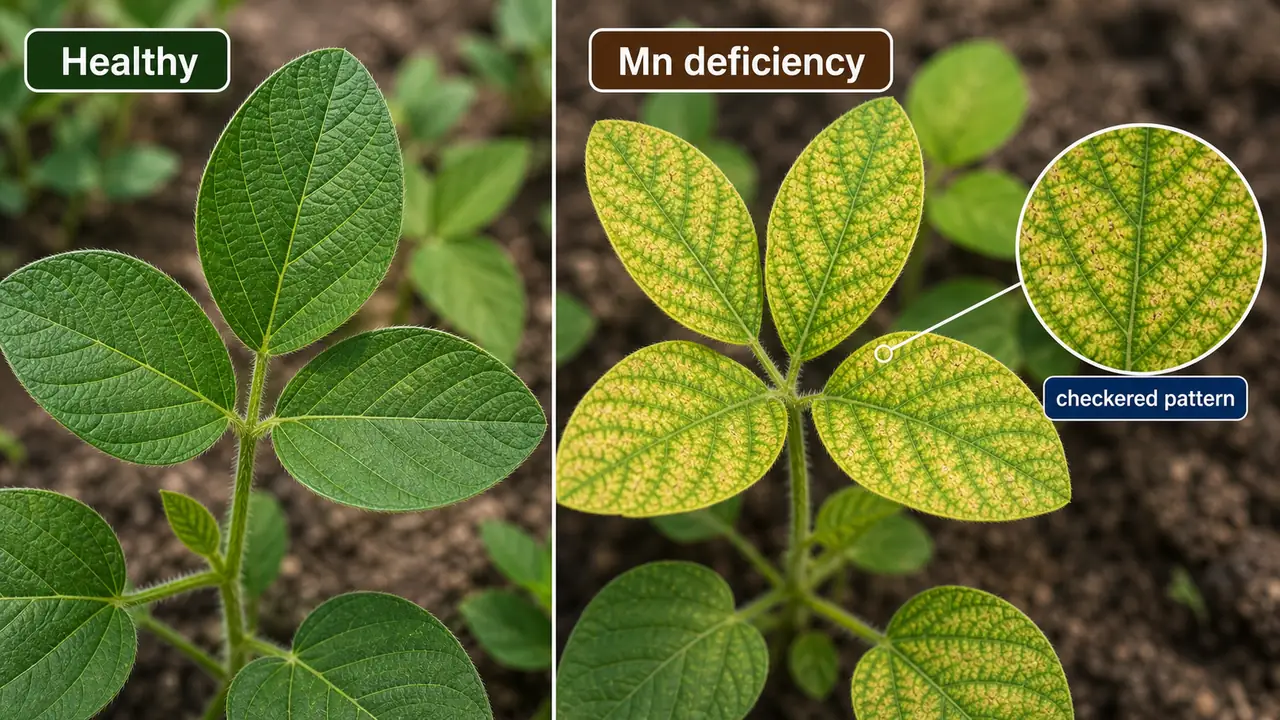
Interveinal chlorosis of young leaves
Chlorotic and necrotic spots between veins
Greyish areas near base of younger leaves
Become yellowish to yellow-orange
Chequered appearance of leaf
Principal and smaller veins stay green
Deficiency occurs when pH exceeds 6.5
Mn tied up and unavailable
Crop-specific Mn deficiency diseases:
Crop
Disease Name
Oats
Gray Specks / Streaks
Peas
Marsh Spot
Sugarbeet
Speckled Yellow
Sugarcane
Pahala Blight / Streak Disease
Apple
Little Leaf (due to Mn, not Zn in apple)
Wheat
More susceptible to root rot disease
TIP
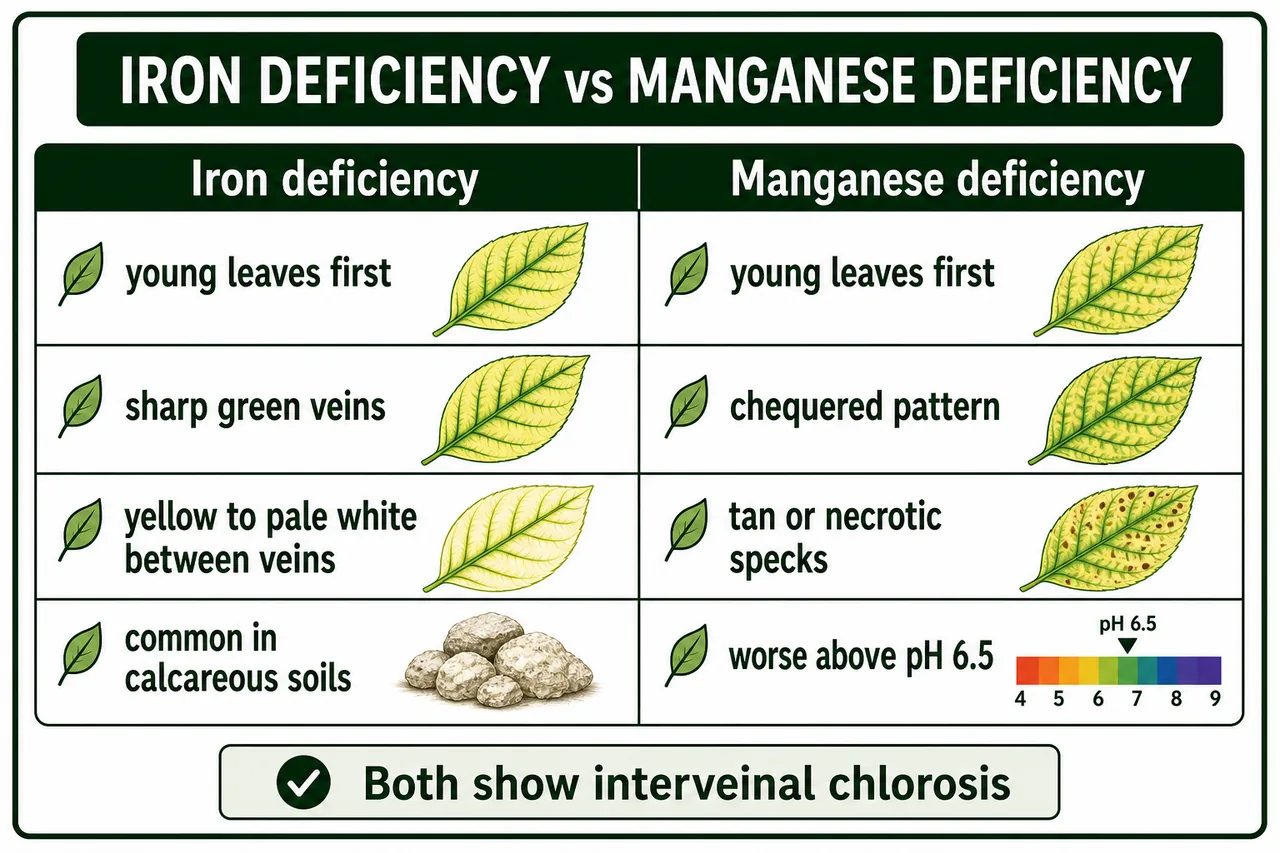
Distinguishing Fe vs. Mn deficiency: Both cause interveinal chlorosis on young leaves. But Mn deficiency shows tan, sunken spots in chlorotic areas and a chequered pattern. Fe deficiency shows a sharper vein-interveinal contrast without sunken spots.
This comparison board makes the usual confusion easier to resolve: both affect young leaves, but iron deficiency gives sharper green veins while manganese deficiency develops a chequered, speckled pattern.
Feature
Iron Deficiency
Manganese Deficiency
Leaves affected first
Young leaves
Young leaves
Shared hallmark
Interveinal chlorosis
Interveinal chlorosis
Vein pattern
Sharp green vein contrast
Chequered green-vein pattern
Tissue colour between veins
Yellow to pale white
Yellow with tan or necrotic specks
Typical soil clue
Common in calcareous or alkaline soils
Often worsens when soil pH exceeds 6.5
Toxicity of Manganese
Crinkle Leaf of cotton — Mn toxicity in highly acid red-yellow soils
Also affects tobacco, soybeans, tree fruits, rapeseed on extremely acid soils
Copper (Cu)
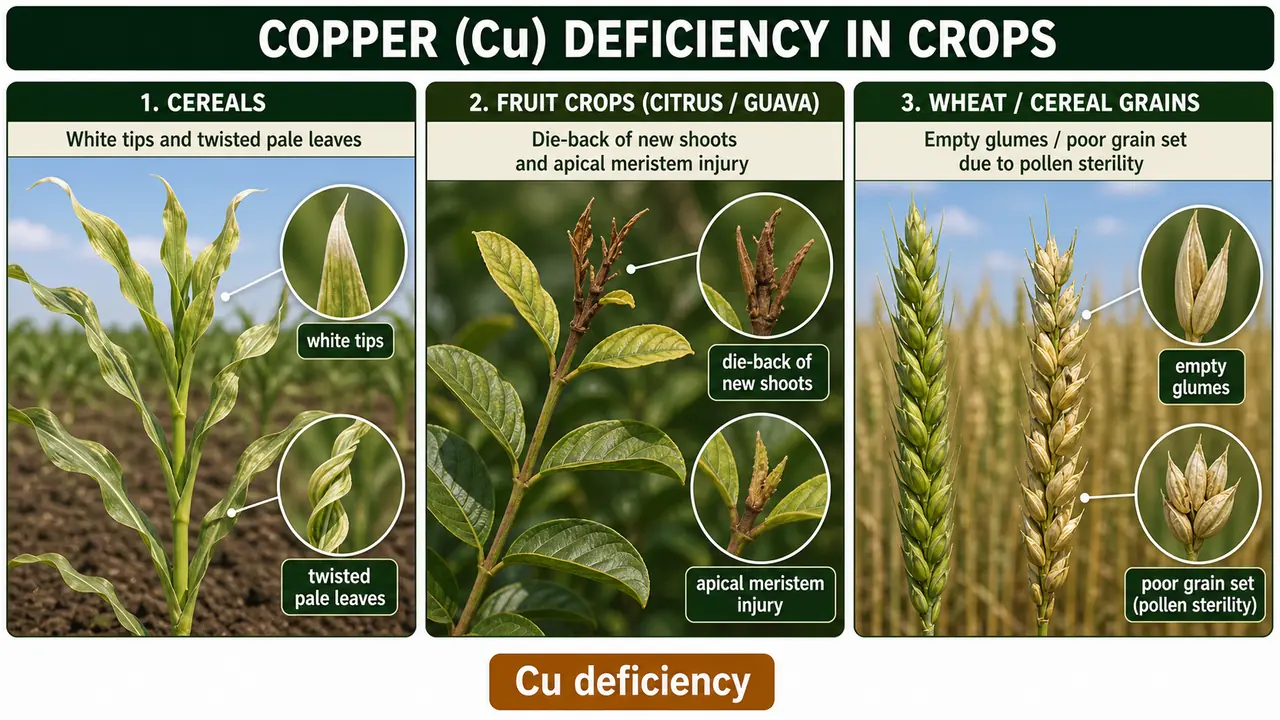
This copper-deficiency board keeps the most tested field clues together: white tips, die-back, and poor grain set.
### Key Facts
Property
Details
pH effect
Cu availability decreases with increasing pH
Content in plants
5-20 mg/kg
Uptake form
Cu2+ (cupric ion)
Poisonous
Even in very small excess concentrations
Functions of Copper
Function
Details
Essential for synthesis of Vitamin A
Component of plastocyanin
Essential for electron transport in photosynthesis
Electron carrier in oxidation-reduction
Similar functions to Fe
Helps in chlorophyll synthesis
Via iron utilisation
Involved in SOD production (in stroma)
Protects thylakoids
Disease resistance
Strengthens cell walls
Pollen formation and fertilisation
Enhances male flower fertility
Ethylene biosynthesis
Fruit ripening
Indirectly affects nodule formationexams 2016
In legumes
Deficiency of Copper
More prevalent in crops on peat and muck (organic) soils — these soils bind Cu strongly, leaving little available.
Symptom
Details
White tips, narrow twisted leaves
Interveinal chlorotic mottling
Die-back of new growth
Necrosis of apical meristems
Pollen sterility
Critical stage: microsporogenesis — poor fruit set
Empty glumes in wheat
No grain formation
Tip drying and bluish-green leaf tips in rice
Crop-specific Cu deficiency diseases:
Crop
Disease Name
Citrus
Die Back, Exanthema, Gummosis, Little Leaf
Guava
Fruit cracking, terminal bud Die Back
Cereals
Reclamation disease, bleaching and withering of young leaves
Agricultural example: In the newly reclaimed peat soils of Kerala's Kuttanad region, copper deficiency is common in rice. Application of copper sulphate at 5-10 kg/ha corrects the problem.
Explains why Zn deficiency causes stunted growth and small leaves
Gibberellic acid metabolism and RNA synthesis
Growth hormone regulation
Photosynthesis, chlorophyll synthesis, protein synthesis
Broad metabolic role
Membrane protein stabilisation
Via sulfhydryl group binding
Influences P translocation
Zn deficiency → excessive P translocation → P toxicity
Deficiency of Zinc
General symptoms: interveinal chlorosis, dead spots, dwarfing, rosetting (reduced internodes), chlorotic/brown rusty spots, lower auxin level.
Crop-specific Zn deficiency diseases:
Crop
Disease Name
Key Symptom
Rice
Khaira Disease
Reddish-brown pigmentation on 3-4 week seedlings; papery necrotic tissue
Maize
White Bud
Light yellow areas between veins; white necrotic spots; emerging leaves yellow-white
Citrus
Mottle Leaf / Frenching
Mottled chlorosis
Brinjal, Mango, Cotton
Little Leaf
Reduced leaf size, shortened internodes
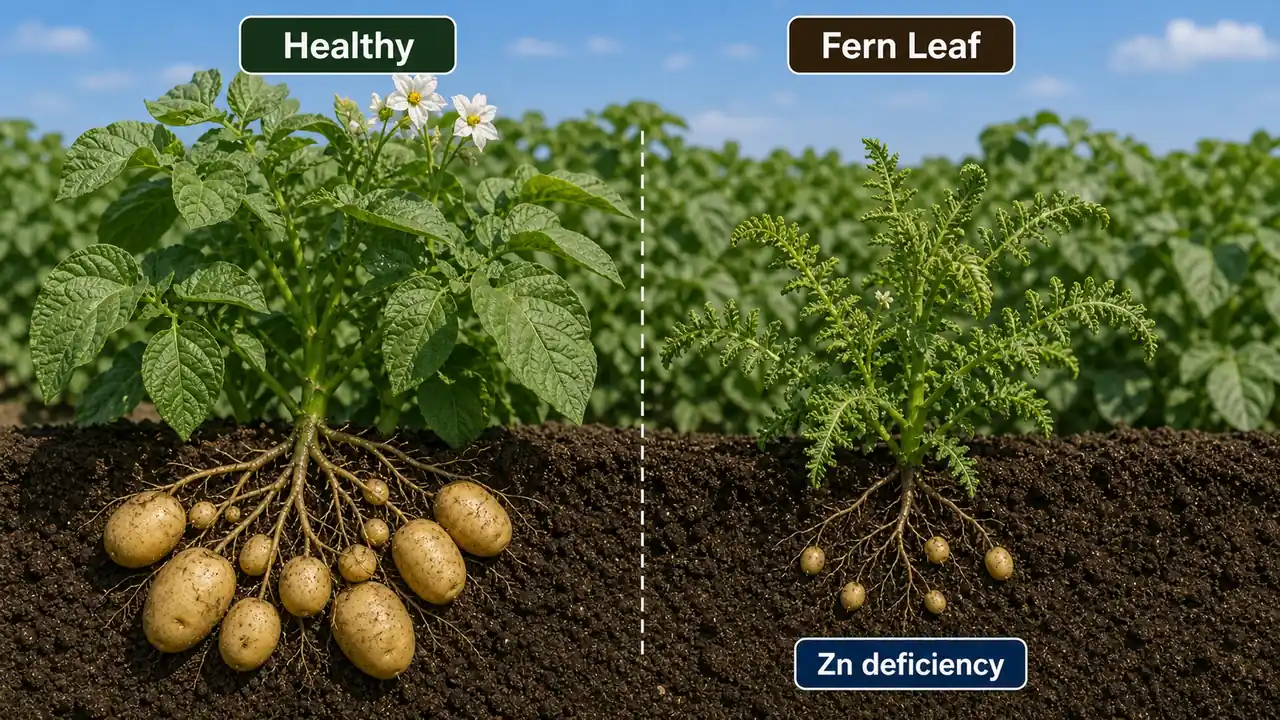
Potato
Fern Leaf
Fern-like leaf deformation
Fruit trees
Rosette
Clustering of small leaves at shoot tips
Agricultural example: Khaira disease is one of the most widespread nutritional disorders of rice in India, especially in the alkaline soils of UP and Bihar. Basal application of ZnSO4 at 25 kg/ha prevents it effectively.
Toxicity of Zinc
Excess Zn causes Fe deficiency due to cation competition
Boron (B)
NOTE
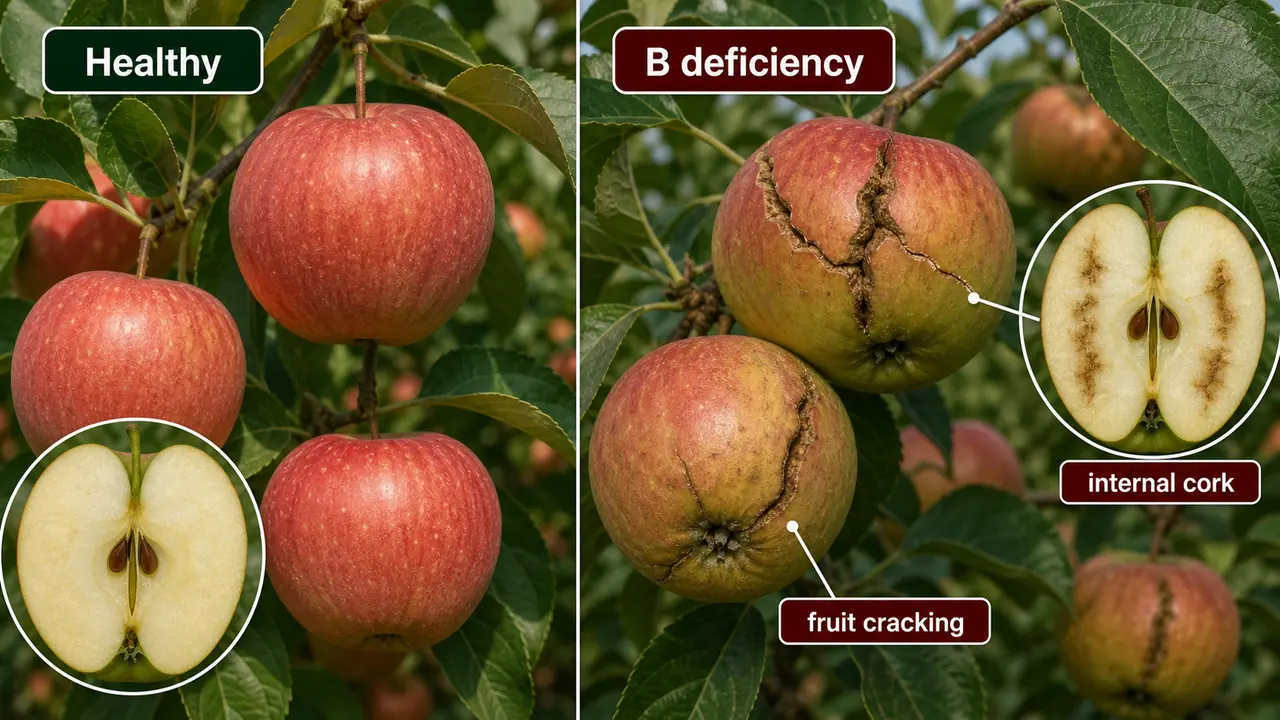
Boron deficiency diseases are among the most frequently asked topics: Apple (Fruit Cracking, Internal Cork), Cauliflower (Hollow Stem), Sugarbeet (Hollow Heart), Mango (Black Tip), Grape (Hen & Chicken).
Key Facts
Property
Details
Only non-metal among micronutrients
Content in plants
10-200 mg/kg
Primary mineral
Tourmaline and borosilicates
Absorption form
H3BO3 (boric acid — neutral molecule, unlike other nutrients)
Mobility
Immobile in plants — deficiency on terminal buds/youngest leaves
Functions of Boron
Function
Agricultural Significance
New cell development in meristematic tissue
Essential for cell division
Cell wall formation and stabilisation, lignification, xylem differentiation
Structural role
Pollen germination and pollen tube growth
Without B, pollination fails → poor fruit/seed set
Translocation of sugars through cellular membranes
Prevents sugar polymerisation
Ca metabolism — keeps Ca soluble in cells
Regulator of K/Ca ratio
N and carbohydrate metabolism
Broad metabolic role
Water relations — prevents hydration of root tips
Strengthens roots
Disease resistance
Against virus, fungi, insects
Nodule formation in legumes
Important for N fixation
Deficiency of Boron
General symptoms: terminal bud death/discolouration, rosetting, cracking/cork formation, shortened internodes.
Crop-specific B deficiency diseases:
Crop
Disease Name
Apple
Fruit Cracking, Internal Cork Exams
Pomegranate
Fruit Cracking
Grape
Hen & Chicken Disease (small and large berries mixed)
Cauliflower
Browning / Hollow Stem
Sugarbeet
Hollow Heart / Heart Rot / Brown Heart
Mango
Necrosis / Black Tip
Tobacco
Top Sickness
Citrus
Fruit Cracking Exams
Orange
Bitter fruits with thickened peels, blackish discolouration
Papaya
Deformed fruits
Flowers
"Blossom Blast" — flowers wilt, die, persist on tree
Agricultural example: In apple orchards of Kashmir, internal cork causes unmarketable fruits. Foliar spray of 0.2% borax at pink bud stage prevents the problem.
Toxicity of Boron
Yellowing of leaf tips and margins → scorching → early leaf drop
Molybdenum (Mo)
Key Facts
Property
Details
Unique pH behaviour
Mo availability increases with increasing pH — only micronutrient that becomes more available as pH rises
Content in plants
0.2-2 mg/kg
Called "Nano-nutrient" UPPSC 2021
Needed in extremely small quantities
Liming
Increases Mo availability
Functions of Molybdenum
Function
Details
Component of nitrate reductase
Catalyses NO3- → NO2-; essential for N utilisation
Agricultural example: Cauliflower in the acidic soils of Jharkhand develops Whiptail because low pH reduces Mo availability. Liming the soil (not just applying Mo) is the long-term solution.
Chlorine (Cl)
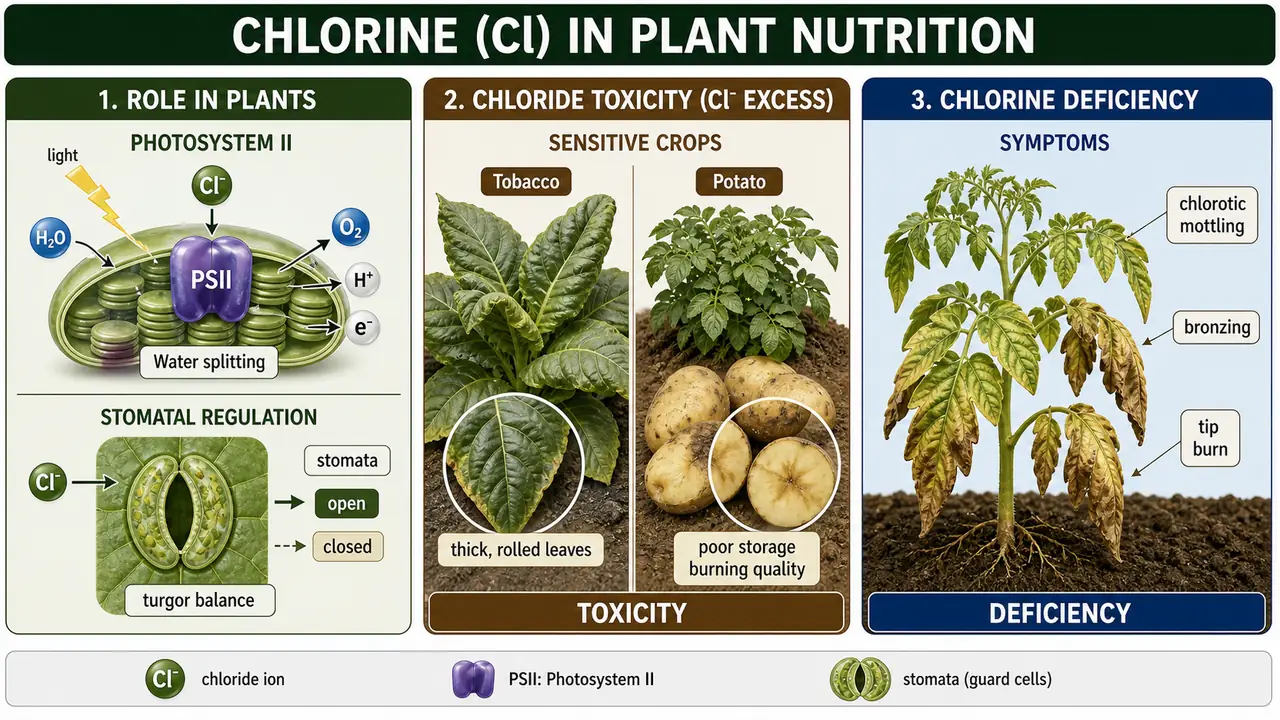
This chlorine board links its real physiological role with the crop-quality problems caused by chloride excess and the rare deficiency pattern.
### Key Facts
Property
Details
Plant concentration
0.2-2.0% (100 ppm average)
Uptake form
Cl- through roots and aerial parts
Functions of Chlorine
Function
Details
O2 evolution in Photosystem II
Works alongside Mn in water-splitting
Stomata regulation
Counter ion for K+ fluxes in guard cells
Disease resistance
Increases osmotic pressure in cell sap
Turgor production in guard cells
Via osmotic pressure
WARNING
Cl- makes tobacco leaves thick, brittle, and burn unevenly — so KCl (MOP) is avoided for tobacco; K2SO4 (SOP) is preferred. Cl- also interferes with starch formation, so is avoided in rice and potato.
Deficiency of Chlorine
Wilted appearance, chlorotic mottling, bronzing, tissue necrosis in tomato
Burning of tips and margins, over-wilting, leaf fall
Toxicity of Chlorine
Bronze or yellow leaves with scorched margins
Most sensitive crops: tobacco, legumes, potato, sugarcane
Leaves thicken and roll; storage quality of potato tubers affected
Nickel (Ni)
Key Facts
Property
Details
Plant concentration
0.1-1.0 ppm
Most recently recognised
Essential micronutrient (added 1987)
Toxicity risk
High Ni from sewage sludge may induce Zn or Fe deficiency
Functions of Nickel
Function
Details
Metal component of urease enzyme
Without Ni, urease cannot function → toxic urea accumulates in leaf tips
Essential for N metabolism
Stimulates nodule weight and crop yield
Needed for grain filling and seed vitality
Beneficial Elements
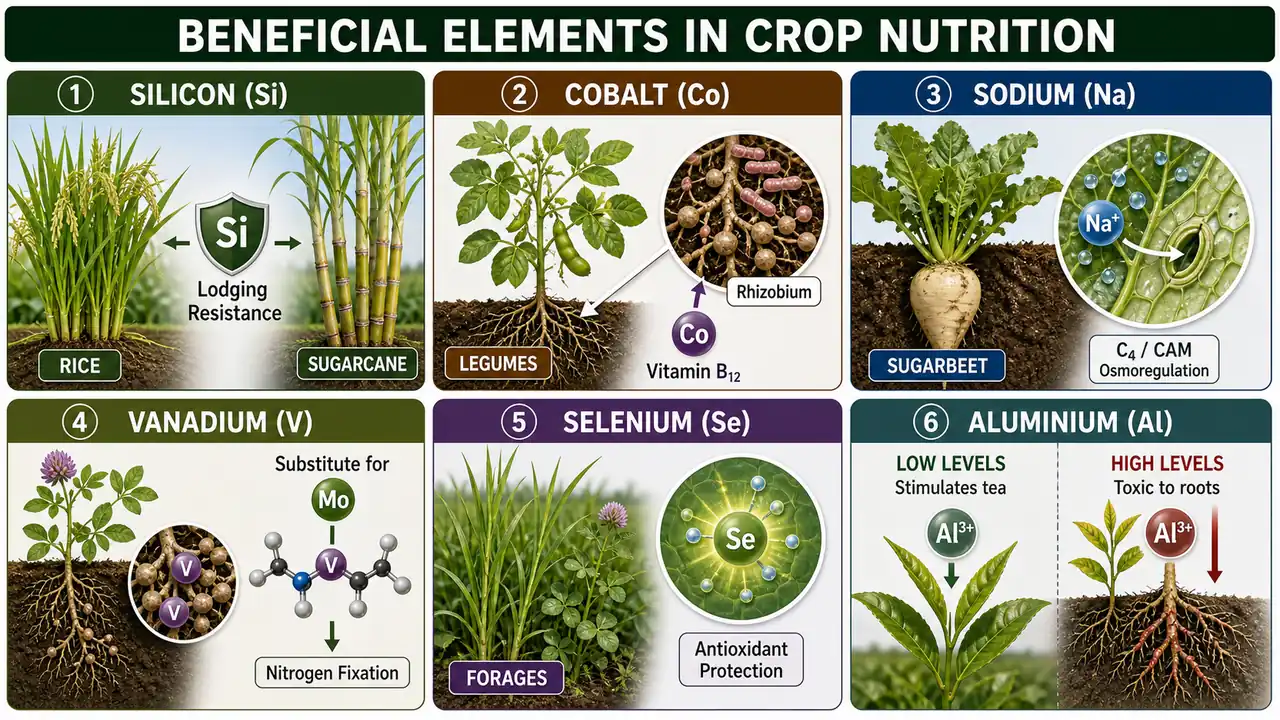
This board groups the six beneficial elements with their hallmark crop associations so they are easier to separate from true essential micronutrients.
These are not essential for all plants but significantly boost growth or stress tolerance in specific crops.
Element
Key Functions
Important Crops
Silicon (Si)
Strengthens cell walls, disease/pest resistance, reduces lodging, drought resistance. Si needed when rice straw < 11% Si
Rice, Sugarcane, Maize. Freckling in sugarcane = low Si symptom
Cobalt (Co)
Component of Vitamin B12; essential for leghemoglobin formation and N2 fixation by Rhizobium
Legumes (not essential for the plant itself, but for its N-fixing bacteria)
Sodium (Na)
Replaces K in C4/CAM plants; PEP regeneration; osmo-regulation; drought resistance
Sugarbeet, Turnip, C4 plants
Vanadium (V)
Substitutes for Mo in N fixation; beneficial for microorganism growth
Green algae, N-fixing bacteria
Selenium (Se)
Analogous to S; can replace S in methionine, cysteine, cystine synthesis; antioxidant
Important for animal nutrition via forages
Aluminium (Al)
Activator of glandular system at low concentration; toxic at higher amounts (damages root tips in acid soils)
Tea (stimulated by low Al)
Nutrient Mobility and Absorption Summary
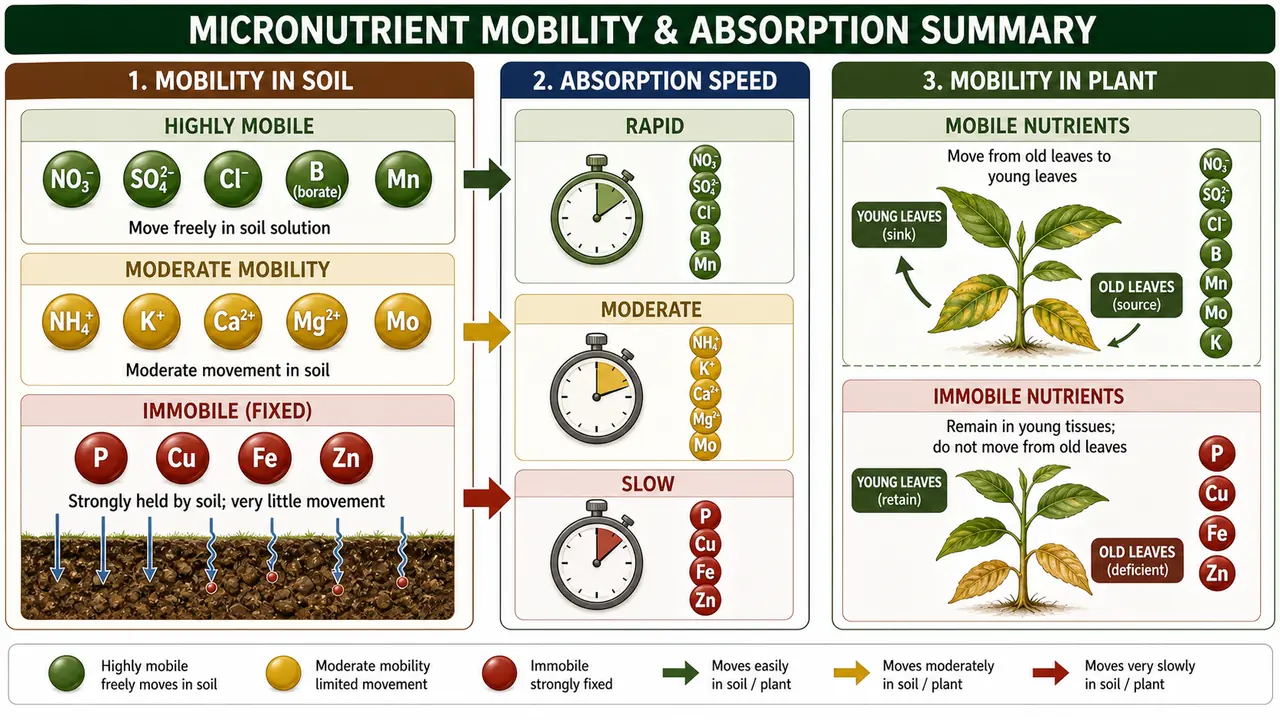
This summary helps separate how fast nutrients move in soil from how they redistribute inside the plant after uptake.
Absorption Speed
Speed
Nutrients
Rapid
Urea Nitrogen, Potassium, Zinc
Moderate
Calcium, Sulfate, Manganese, Boron
Slow
Magnesium, Copper, Iron, Molybdenum
Mobility in Soil
Mobility
Nutrients
Highly mobile (prone to leaching)
NO3-, SO42-, Cl-, H2BO32-, Mn2+
Moderately mobile
NH4+, K, Ca, Mg, Mo
Immobile
Organic N, P, Cu, Fe, Mn, Zn (chelated forms are mobile)
Mobility in Plant
Mobility
Nutrients
Deficiency Appears On
Highly mobile
N, P, K, Cl, Mo, Mg
Older leaves first
Moderately mobile
S, Cu, Fe, Mn, Zn
New growth
Immobile
B, Ca
Growing tips / youngest leaves
Key Diagnostic Terms
Use this visual to anchor the main idea in key diagnostic terms for faster recall.
Term
Meaning
Caused by Deficiency of
Chlorosis
Yellowing of leaves
N, K, Fe, Mg, Mn, Zn, S
Mottled
Coloured spots (anthocyanin) on leaf surface
N, Mg, P, S
Necrosis
Patches of dead tissue
Mg, K, Zn, Ca, Mo
Summary Cheat Sheet
Concept / Topic
Key Details
Absorption speed
Rapid: Urea N, K, Zn; Moderate: Ca, sulfate, Mn, B; Slow: Mg, Cu, Fe, Mo
Mobile: N, P, K, Cl, Mo, Mg → symptoms on older leaves; Moderately mobile: S, Cu, Fe, Mn, Zn; Immobile: B, Ca → symptoms on growing tips / youngest leaves
Chlorosis
Yellowing of leaves; linked with N, K, Fe, Mg, Mn, Zn, S deficiency
Mottled
Coloured or anthocyanin spots on leaf surface; linked with N, Mg, P, S deficiency
Necrosis
Dead tissue patches; linked with Mg, K, Zn, Ca, Mo deficiency
Rice - Khaira disease
Zn deficiency
Rice - Bronzing
Fe toxicity
Rice - Akiochi
H₂S toxicity + Fe deficiency
Maize - White bud
Zn deficiency
Oats - Gray specks
Mn deficiency
Peas - Marsh spot
Mn deficiency
Sugarbeet - Speckled yellow
Mn deficiency
Sugarbeet - Hollow heart
B deficiency
Sugarcane - Pahala blight
Mn deficiency
Apple - Fruit cracking / internal cork
B deficiency
Cauliflower - Hollow stem / browning
B deficiency
Cauliflower/Cabbage - Whiptail
Mo deficiency
Mango - Black tip
B deficiency
Grape - Hen & Chicken
B deficiency
Citrus - Die back / exanthema
Cu deficiency
Citrus - Mottle leaf / frenching
Zn deficiency
Citrus - Yellow spot
Mo deficiency
Potato - Fern leaf
Zn deficiency
Tobacco - Top sickness
B deficiency
Cotton - Crinkle leaf
Mn toxicity
Wheat - Empty glumes
Cu deficiency
Tea - Tea yellows
S or Fe deficiency
Tobacco - Sand drown
Mg deficiency
TIP
Mnemonic for Boron deficiency crops: "Apple Cauliflower Sugarbeet Mango Grape Tobacco Citrus" — "ACareful Student Must Get Top Class" = all Boron deficiency!
References
- Tisdale, S.L., Nelson, W.L., Beaton, J.D., Havlin, J.L. 1997. Soil Fertility and Fertilizers. 5th ed. Prentice Hall of India, New Delhi.
- Singh, S.S. 1995. Soil Fertility and Nutrient Management. Kalyani Publishers, Ludhiana.
- Mortvedt, J.J. et al. (Eds.). Micronutrients in Agriculture. No.4, SSSA, Madison, Wisconsin, USA.
- IARI Toppers Soil Science Part-9 (6th Edition 2025).