Renewable Energy and Green Technology
Lecture notes covering Renewable Energy and Green Technology as per ICAR 5th Dean Committee syllabus. Course Code: AENG 352 | Credits: 2(1+1).
Frequently Asked Questions
What is Renewable Energy and Green Technology in BSc Agriculture?
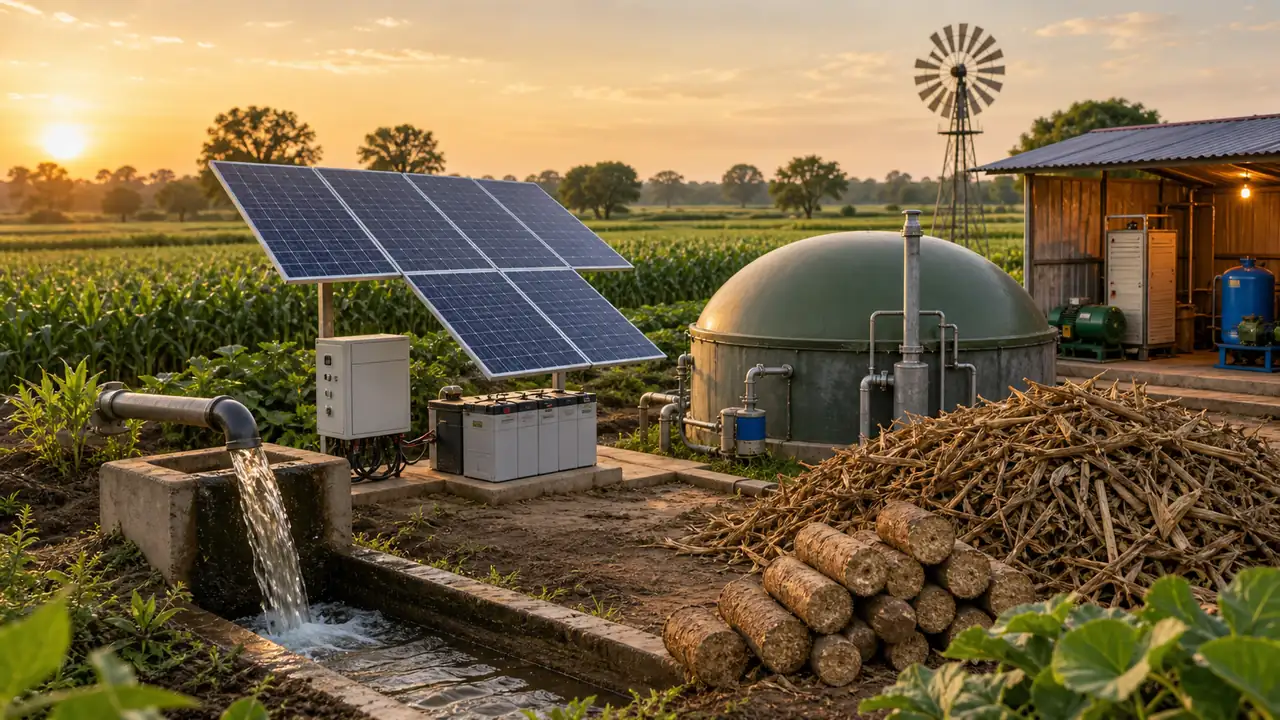
Renewable Energy and Green Technology is the AENG 352 course that explains how agriculture can use solar, biomass, biogas, wind, and related energy systems to reduce dependence on conventional fuels. It helps students connect farm operations with cleaner and more sustainable energy options.
Why is renewable energy important in agriculture?
Renewable energy is important because farms need energy for pumping, drying, heating, lighting, fencing, and processing, and alternative sources can reduce cost and improve energy security. It is also important because agriculture produces biomass and organic waste that can be converted into useful energy.
What renewable energy sources are commonly used in agriculture?
The most commonly discussed sources in this course are biomass, biogas, biofuels, solar energy, and wind energy. Students usually study these because they have direct applications in farm power, heating, drying, irrigation, and rural energy systems.
What is the difference between biogas and biodiesel?
Biogas is a gaseous fuel produced mainly from the breakdown of organic matter under anaerobic conditions, while biodiesel is a liquid fuel made from certain oils or fats for use as a fuel substitute. This difference is important because the source material, production process, and end use are not the same.
What is solar photovoltaic or solar PV in agriculture?
Solar photovoltaic systems convert sunlight into electricity and are commonly studied in agriculture for uses such as lighting, water pumping, fencing, and other on-farm applications. In this course, solar PV is important because it shows how renewable electricity can directly support farm operations.
What is the role of solar drying in renewable energy?
Solar drying uses solar energy to remove moisture from agricultural produce more safely and efficiently than uncontrolled open drying in many situations. It is important because drying is closely linked with post-harvest quality, storage safety, and reduction of losses.
Is wind energy important in agriculture?
Yes. Wind energy is important because it can support electricity generation or related energy uses in suitable locations, and it is one of the major renewable energy options studied alongside solar and biomass. Its usefulness depends strongly on local wind conditions and practical feasibility.
How should I prepare AENG 352 for exams?
Prepare AENG 352 by clearly understanding each energy source, its working principle, and its farm application instead of memorizing only gadget names. Students usually perform better when they connect concepts like biogas, solar PV, biodiesel, and solar drying to real agricultural use cases.