Introductory Agriculture
Course overview and lecture index for AGRO 102, focused on the heritage, evolution, and institutional growth of Indian agriculture.
Frequently Asked Questions
What is AGRO 102 Introductory Agriculture in BSc Agriculture?
AGRO 102 is the introductory agriculture course that gives students the historical, cultural, and institutional background of Indian agriculture. Instead of focusing mainly on modern crop techniques, it explains how farming traditions, indigenous knowledge, and agricultural development evolved over time.
Is AGRO 102 mainly about agricultural heritage?
Yes. AGRO 102 closely overlaps with the agricultural heritage stream taught in many BSc Agriculture programmes. It helps students understand how ancient practices, texts, institutions, and farming traditions shaped Indian agriculture before modern agricultural science became formalized.
Why is the Indus civilization important in Introductory Agriculture?
The Indus civilization is important because it is one of the earliest major examples of organized agriculture, settlement, storage, and water management in the Indian subcontinent. Students study it to understand how early farming systems supported civilization itself.
Why is Kautilya important in agricultural heritage?
Kautilya is important because his writings are often studied as a major historical source on agriculture, land administration, irrigation, livestock, and state policy in ancient India. In AGRO 102, he represents the link between agriculture and organized governance.
Does AGRO 102 include traditional water harvesting and indigenous farming knowledge?
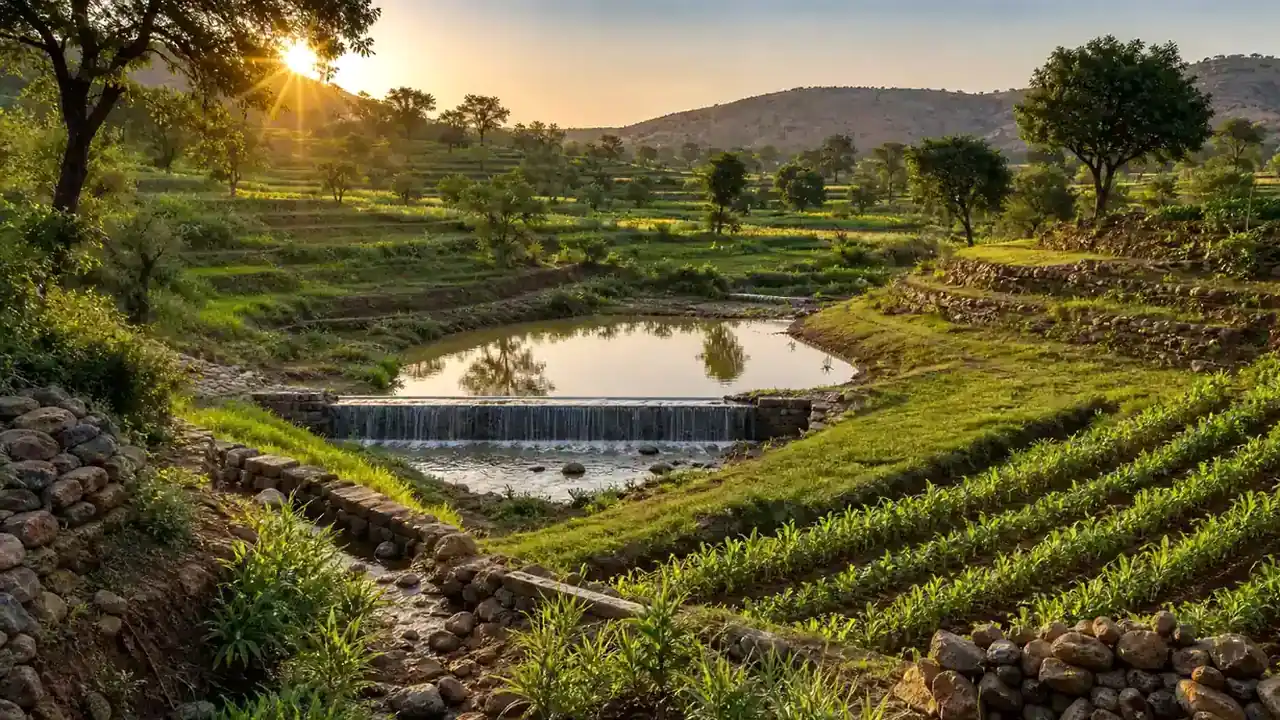
Yes. Traditional water harvesting, indigenous soil knowledge, and local farming practices are central to AGRO 102 because they show how earlier agricultural communities adapted to climate, land, and resource limitations through practical systems that still have relevance today.
Why are cattle and mixed farming discussed in Introductory Agriculture?
Cattle and mixed farming are discussed because they were historically central to Indian agriculture for draught power, manure, nutrient recycling, and household-level farming sustainability. These topics help students see agriculture as an integrated system rather than only crop cultivation.
What is the relevance of AGRO 102 for modern agriculture students?
AGRO 102 is relevant because it helps students connect modern agriculture with older systems of sustainability, biodiversity, local adaptation, and water management. It also gives useful background for understanding how present agricultural institutions and policies evolved.
How should I prepare AGRO 102 for exams?
Prepare AGRO 102 by studying it chronologically and thematically together, such as ancient civilizations, Kautilya, indigenous knowledge, water harvesting, and institutional development. Students usually score better when they understand the continuity between historical practices and present agricultural systems.