🪰 Order Odonata
Diagnostic features and biological importance of dragonflies and damselflies in Odonata.
Odonata includes some of the most beautiful and efficient predatory insects in the field, especially dragonflies and damselflies. Their large eyes, net-veined wings, aerial hunting ability, and aquatic naiads make them easy to recognize and agriculturally useful as natural enemies.
Meaning and General Characters of Odonata
- Odon means tooth
- Common representatives are dragonflies and damselflies
Important characters of the order:
- medium to large, attractively coloured insects
- head globular and constricted behind into a petiolate neck
- compound eyes very large
- three ocelli present
- mouthparts adapted for biting; mandibles strongly toothed
- wings equal or subequal, membranous, with net-like venation and many cross veins
- a dark pterostigma near the costal apex
- subcosta ends at nodus
- no wing-flexing mechanism
- legs placed anteroventrally and adapted for grasping prey
- abdomen long and slender
- development hemimetabolous, with aquatic naiad stage
Male odonates show a special reproductive feature: the gonopore lies on the ninth abdominal segment, but the functional copulatory organ is on the second abdominal sternite. Transfer of sperm before mating is called intra-male sperm translocation.
Large compound eyes, net-veined membranous wings with pterostigma, predatory legs, and aquatic naiads are key identifying features of Odonata.Importance of Odonata
Adults are active aerial predators and can catch prey in flight. Naiads are also predatory and live in fresh water.
Because both stages are predaceous, dragonflies and damselflies are ecologically important and often beneficial in agro-ecosystems.

Anisoptera and Zygoptera Compared
Odonata is divided into two suborders:
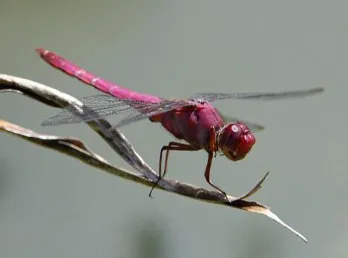
- Anisoptera - dragonflies
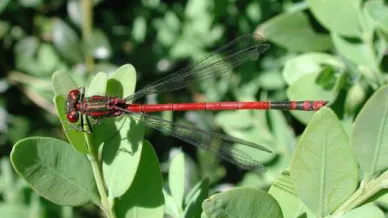
- Zygoptera - damselflies
Adult characters
| Character | Anisoptera (Dragonflies) | Zygoptera (Damselflies) |
|---|---|---|
| Flight | Strong fliers | Weak fliers |
| Wings | Hindwings broader basally than forewings | Wings equal |
| Wing attachment | Wings broadly attached | Wings petiolated and narrowly attached |
| Wing venation | Forewings and hindwings differ | Venation similar in both wings |
| Resting position | Wings spread laterally at rest | Wings held above abdomen |
| Eyes | Large and meeting dorsally (holoptic) | Wide apart (dichoptic) |
| Male terminal appendages | Three terminal appendages: two superior cerci and one inferior appendage (epiproct) | Four terminal appendages: superior cerci plus inferior appendages (paraprocts) |
| Oviposition | Exophytic | Endophytic |
Naiad characters
| Character | Anisopteran naiad | Zygopteran naiad |
|---|---|---|
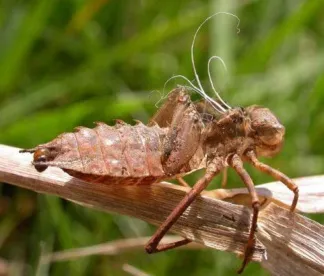
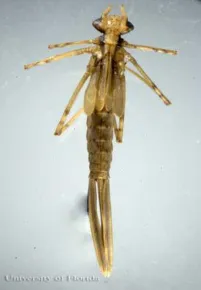
| Body form | Stout and robust | Slender and fragile |
| Gills | Internal, associated with rectum | Three external caudal gills |
| Movement | Jet propulsion by forceful expulsion of water through anus | No jet propulsion |
Summary Cheat Sheet
- Odonata includes dragonflies and damselflies.
- Important order features are large eyes, biting mouthparts, net-veined membranous wings, pterostigma, predatory legs, and aquatic naiads.
- Development is hemimetabolous.
- Adults and naiads are both predatory, so Odonata is generally beneficial.
- Anisoptera are strong fliers with broader hindwings and eyes meeting dorsally.
- Zygoptera are weaker fliers with similar wings and eyes widely separated.
- Anisopteran naiads have internal rectal gills and jet propulsion, while zygopteran naiads have external caudal gills.
References
2 sources • [1] [2]
References
Fundamentals of Entomology
Insect Morphology and Systematics
Lesson Doubts
Ask questions, get expert answers