🌾 Order Thysanoptera and Thripidae
Important characters and family traits of thrips in Order Thysanoptera.
Thrips are tiny insects, but they are important in agriculture because they damage crops by rasping and sucking plant tissues, and some species also transmit diseases. Their fringed wings and asymmetrical mouthparts make them one of the most distinctive insect orders in systematics.
Meaning and General Characters of Thysanoptera
Thysanoptera has also been referred to by the older name Physopoda.
- Thysano means fringe
- ptera means wings
- common name: thrips
Important characters:
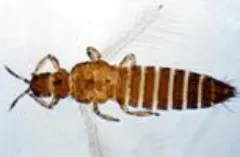
- minute, slender, soft-bodied insects
- mouthparts rasping and sucking
- mouth cone formed by labrum, labium, and basal maxillary region
- three stylets are present, derived from two maxillae and the left mandible
- right mandible is absent, so the mouthparts are asymmetrical
- wings may be absent or, if present, are long, narrow, and fringed with hairs
- weak fliers; passive wind-assisted movement is common
- tarsi one- or two-segmented, with a protrusible vesicle at the apex
- abdomen usually pointed
- appendicular ovipositor may be present or absent
- nymph is followed by prepupal and pupal-like stages
Classification of the Order
Thysanoptera is divided into two suborders:
- Terebrantia - female with appendicular ovipositor; wing venation present
- Tubulifera - ovipositor absent; abdomen tubular; wing venation absent
Agricultural Importance
Thrips are important mainly because:
- they suck plant sap
- many species injure crops in nursery and field conditions
- some species act as vectors of plant diseases
- a few species are predatory and beneficial
One important example is rice thrips, Stenchaetothrips biformis, a recognized pest in rice nurseries.
Summary Cheat Sheet
- Thysanoptera means fringe-winged insects and includes thrips.
- Important order characters are minute body size, rasping-sucking asymmetrical mouthparts, narrow fringed wings, and protrusible tarsal vesicle.
- The order is divided into Terebrantia and Tubulifera.
- In Terebrantia, the female has an ovipositor and wing venation is present.
- In Tubulifera, the abdomen is tubular, the ovipositor is absent, and wing venation is absent.
- Thrips are agriculturally important because they suck plant sap, may transmit plant diseases, and sometimes act as predators.
- Stenchaetothrips biformis is an important thrips pest in rice nursery.
References
2 sources • [1] [2]
References
[1]
Fundamentals of Entomology
[2]
Insect Morphology and Systematics
Lesson Doubts
Ask questions, get expert answers