🪶 Order Neuroptera and Chrysopidae
Key characters and beneficial importance of lacewings and related neuropterans.
Neuroptera includes several soft-bodied, net-winged insects that are especially important in biological control. Lacewings, ant lions, mantispids, and owlflies are all recognized by their delicate membranous wings with many cross veins and by the predatory habit of their immature stages.
Meaning and General Characters of Neuroptera
- Neuro means nerve
- ptera means wings
Common representatives are lacewings, ant lions, mantispid flies, and owlflies.
General characters:
- soft-bodied insects
- antennae filiform, sometimes with a terminal club
- mouthparts chewing in adults
- wings equal, membranous, and provided with many cross veins
- wings held roof-like over the abdomen
- weak fliers
- larva campodeiform with mandibulosuctorial mouthparts
- pupa exarate
Pupation occurs in a silken cocoon. Six of the eight Malpighian tubules are modified as silk glands, and the cocoon is spun through anal spinnerets.
Soft body, net-veined wings, campodeiform predatory larvae, and cocoon spinning by modified Malpighian tubules are important identifying features of Neuroptera.Classification
Neuroptera is divided into two suborders:
- Megaloptera
- Planipennia
The families emphasized in this lesson belong to Planipennia.
Family Chrysopidae
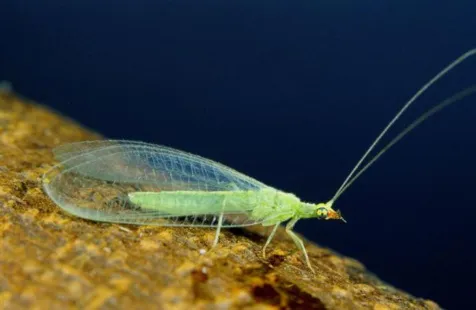
Chrysopidae includes green lacewings, goldeneyes, stinkflies, and aphid lions.
Important features:
- body pale green
- eyes golden yellow
- eggs laid on stalks, reducing predation and cannibalism
- larvae prey on soft-bodied insects, especially aphids
- larvae may carry debris on the body as camouflage
- adults emit a characteristic foul-smelling fluid from a prothoracic stink gland when disturbed
- widely mass-multiplied and released for aphid control
Other Important Families
Mantispidae
Mantispid flies resemble praying mantids in general appearance.
Important features:
- prothorax elongated
- forelegs raptorial with strongly spined femur
- larvae prey on spiderlings in ground-spider nests
- development involves hypermetamorphosis
Myrmeleontidae
Ant lions have the following features:
- adult resembles a damselfly
- antennae long and clubbed
- weak fliers
- larva makes pits in sandy soil and traps ants and other small insects
Ascalaphidae
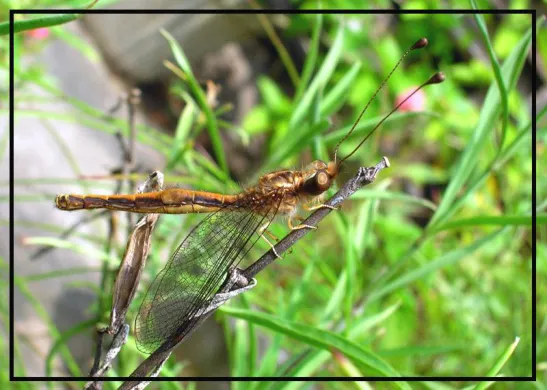
Owlflies show these features:
- adult resembles a dragonfly
- antennae long, conspicuous, and clubbed
- hypostigmal cell present in wings
Summary Cheat Sheet
- Neuroptera includes lacewings, ant lions, mantispid flies, and owlflies.
- Important order characters are soft body, equal membranous wings with many cross veins, roof-like wing position, campodeiform larva, and exarate pupa.
- The order is divided into Megaloptera and Planipennia.
- Chrysopidae are important beneficial insects because their larvae prey on aphids and other soft-bodied pests.
- Chrysopid eggs are laid on stalks, and adults may release a stinking defensive fluid.
- Mantispidae have raptorial forelegs and show hypermetamorphosis.
- Myrmeleontidae larvae trap prey in sandy pits.
- Ascalaphidae are owlflies with clubbed antennae and dragonfly-like appearance.
References
2 sources • [1] [2]
References
Fundamentals of Entomology
Insect Morphology and Systematics
Lesson Doubts
Ask questions, get expert answers