📈 Diseases of Grapes
Diseases of Grapes.
This lesson summarizes major grape diseases with a focus on symptom recognition, pathogen characteristics, epidemiology, and management strategies.
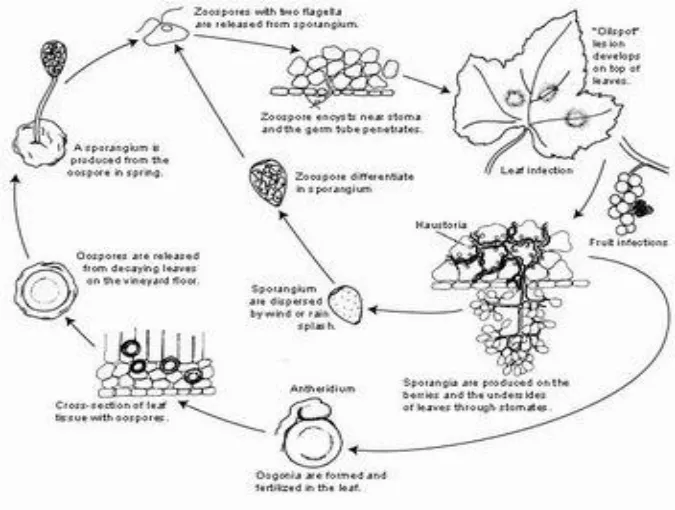
Downy mildew: Plasmopara viticola
Symptoms
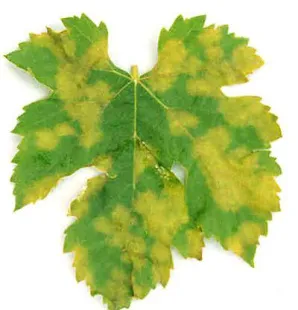
Irregular, yellowish, translucent sports on the upper surface of the leaves.
Correspondingly on the lower surface, white, powdery growth on leaves. Affected leaves
become, yellow, brown and gets dried. Premature defoliation. Dwarfing of tender shoots. Brown,
sunken lesions on the stem. White growth of fungus on berries which subsequently becomes
leathery and shrivels. Later infection of berries result in soft rot symptoms. No cracking of the
skin of the berries.
Pathogen
Mycelium is intercellular with spherical haustoria, coenocytic, thin walled and hyaline.
Sporangiophores arise from hyphae in the sub stomatal spaces. It branched at right angle to the
main axis and at regular intervals. Secondary branches arise from lower branches.The sporangia
are thin walled, oval or lemon shaped. The Zoospores are pear shaped, biflagellate and 7 – 9
micron meter. The oospores are thick walled.
Mode of Spread and Survival
Through sporangia by wind, rain etc. As oospores present in the infected leaves, shoots and
berries. Also as dormant mycelium in infected twigs. Optimum temperature: 20-22°C. Relative
humidity: 80-100 per cent.
Disease Cycle
Management
Spray Bordeaux mixture 1 % or Metalaxyl + Mancozeb 0.4 %.
Powdery mildew : Uncinula necator
Symptoms
leaves.Malformation and discolouration of affected
leaves. Discolouration of stem to dark brown. Floral
Early berry infection results in shedding of affected
skin of the berries.
Pathogen
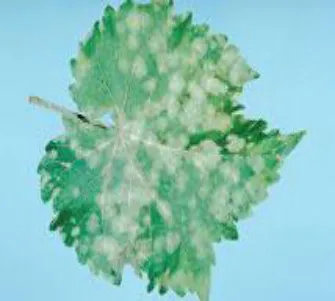
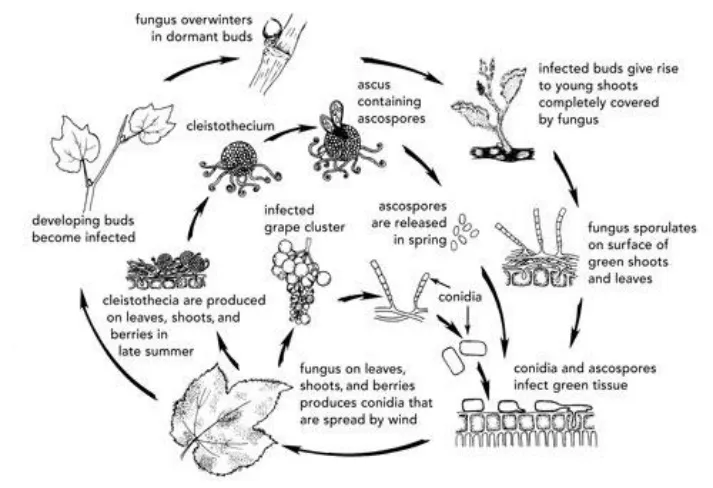
White growth consists of mycelium, conidiophores and conidia. Mycelium is external,
septate and hyaline. Conidiophores are short and arise from external mycelium. Conidia are
produced in chain. They are single celled, hyaline and barrel shaped. The fungus is oidium type.
Mode of Spread and Survival
It spread through air-borne conidia . Through dormont mycelium and conidia present in
the infected shoots and buds. Sultry warm conditions with dull cloudy weather, highly
favourable.
Disease Cycle
Management
Spray Inorganic sulphur 0.25 % or Chinomethionate 0.1 % or Dinocap 0.05 %.
Bird’s Eye Spot/Anthracnose: Gloeosporium ampelophagum ( Elsinoe amphelina)
Symptoms
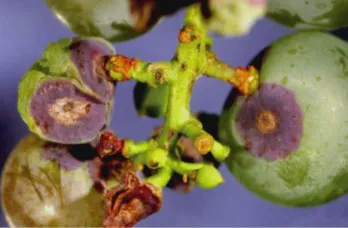
and in late stages these spots are surrounded by a dark
margin which gives it the “bird’s-eye rot”
appearance. The spots vary in size from 1/4 inch in
diameter to about half the fruit. The fungus also attacks shoots, tendrils, petioles, leaf veins, and
fruit stems. Numerous spots sometimes occur on the young shoots. These spots may unite and
girdle the stem, causing death of the tips. Spots on petioles and leaves cause them to curl or
become distorted.
Pathogen
Mycelium is septate and dark colored. Conidia single celled oval and hyaline.
Mode of Spread and Survival
Seed-borne-infected vine, cuttings and air-borne conidia. As dormant mycelium in the
infected stem-cankers. Warm wet weather. Low lying and badly drained soils.
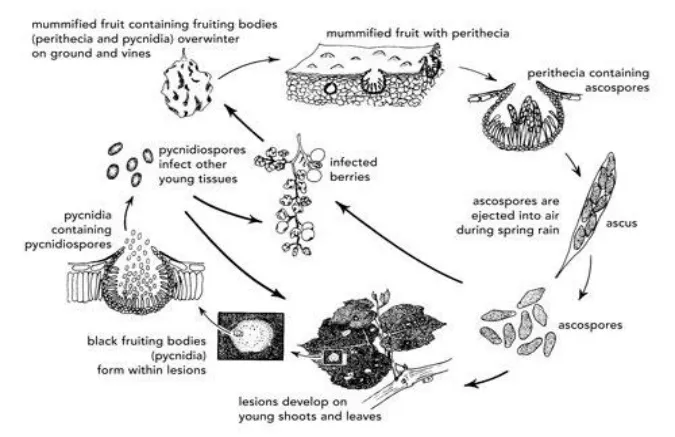
Disease Cycle
Management
Removal of infected twigs.Copper oxychloride 0.2% or Mancozeb 0.25%
Summary Cheat Sheet
| Focus Area | Key Takeaway |
|---|---|
| Major diseases | Revise causal organisms, hallmark symptoms, and crop stage of attack. |
| Spread and survival | Link each disease with inoculum source, vector, and favorable conditions. |
| Management | Prioritize integrated management: sanitation, resistant varieties, and timely sprays. |
References
1 source • [1]
References
Class notes and standard plant pathology references
Lesson Doubts
Ask questions, get expert answers