Plant Pathology
Core BSc Agriculture Plant Pathology courses covering plant pathogens, nematodes, crop diseases, and practical disease management.
Course Structure
What's Inside

Fundamentals of Plant Pathology
Lecture notes covering Fundamentals of Plant Pathology as per ICAR 5th Dean Committee syllabus. Course Code: PATH 171 | Credits: 4(3+1).
Diseases of Field & Horticultural Crops & their Management-I
Lecture notes covering Diseases of Field & Horticultural Crops & their Management-I as per ICAR 5th Dean Committee syllabus. Course Code: PATH 272 | Credits: 3(2+1).
Diseases of Field & Horticultural Crops & their Management-II
Lecture notes covering Diseases of Field & Horticultural Crops & their Management-II as per ICAR 5th Dean Committee syllabus. Course Code: PATH 373 | Credits: 3(2+1).
Principles of Integrated Pest and Disease Management
Lecture notes covering Principles of Integrated Pest and Disease Management as per ICAR 5th Dean Committee syllabus. Course Code: PATH 374 | Credits: 3(2+1).
Introductory Nematology
Lecture notes covering Introductory Nematology. Course Code: PATH 172 | Credits: 2(1+1).
Diseases of Horticultural Crops and their Management
Lecture notes covering Diseases of Horticultural Crops and their Management. Course Code: PATH 371 | Credits: 3(2+1).
Plant Pathology
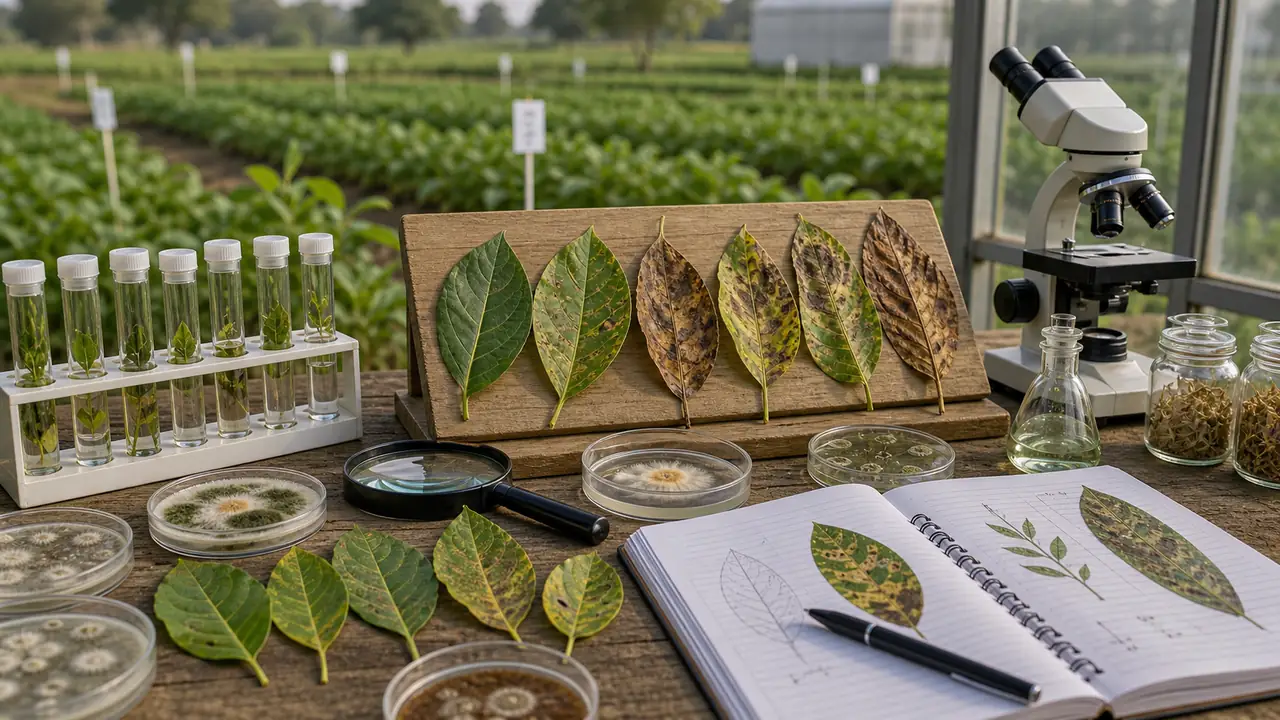
Plant pathology studies why plants fall sick, how diseases spread, and how farmers can prevent crop loss. In agriculture, this subject connects diagnosis, pathogen biology, field observation, and practical disease management across cereals, pulses, fruits, vegetables, and plantation crops.
Courses included in this section
- Plant Pathogens and Principles of Plant Pathology
- Introductory Nematology
- Diseases of Field and Horticultural Crops and their Management I
- Disease of Horticultural Crops and their Management
- Diseases of Field and Horticultural Crops and their Management II
- Principles of Integrated Pest and Disease Management
Why Plant Pathology matters
Healthy crops are the base of yield, quality, and farm income. A student who understands symptoms, causal organisms, disease cycles, and control measures can make better decisions in crop production, extension work, input advisory, and competitive-exam preparation.
Main learning themes
Students using this section move from basic concepts to applied field management. The section covers important plant pathogens, disease development, nematode damage, major field and horticultural crop diseases, diagnostic thinking, and integrated approaches that combine cultural, biological, and chemical control.
How to study this section well
Start with the fundamentals before memorizing crop-wise diseases. Learn each disease through a fixed frame: symptom, causal organism, spread, favorable conditions, and management. Revise with crop groups, compare similar diseases side by side, and pay attention to practical components such as specimen identification, field diagnosis, and herbarium work.
Who benefits most from this section
This section is especially useful for BSc Agriculture students, ICAR-aligned university learners, and aspirants preparing for agriculture-focused exams such as IBPS AFO and NABARD where plant-disease concepts, pathogen recognition, and management logic are repeatedly tested.
Core takeaway
Plant pathology is not just about naming diseases. It trains students to observe crop problems carefully, identify likely causes, and choose management measures that are timely, economical, and field-ready.
Frequently Asked Questions
Why is plant pathology important in agriculture?
Plant pathology is important because crop diseases directly reduce yield, quality, and farm income, and understanding their causes and spread helps farmers prevent avoidable losses.
What is plant pathology in simple words?
Plant pathology is the study of plant diseases, the organisms or factors that cause them, how they develop, and how they can be diagnosed and managed.
What topics are covered in plant pathology?
This subject typically covers plant pathogens, disease symptoms, disease cycles, nematodes, epidemiology, diagnosis, fungicides, host resistance, and integrated disease management across major crop groups.
Why do agriculture students study plant diseases crop by crop?
They study them crop by crop because symptoms, pathogens, favorable conditions, and management measures differ across cereals, pulses, vegetables, fruits, and plantation crops.
What is the difference between plant pathology and pest management?
Plant pathology focuses mainly on diseases caused by pathogens or abiotic disorders, while pest management covers a broader set of crop-damaging organisms such as insects, mites, nematodes, and diseases together.
How should students study plant pathology effectively?
Students should revise each disease through one fixed frame: symptom, causal organism, spread or survival, favorable conditions, and management, then compare similar diseases side by side for recall.