🍈 Diseases of Guava
Learn the major diseases listed for guava and related fruit crops in this lesson, with emphasis on symptom recognition and management logic.
This lesson groups together important diseases affecting guava and related fruit crops, with a strong emphasis on recognizing symptoms and linking them to the correct mode of spread. That matters because fungal, viral, and vector-borne problems require very different management decisions.
Powdery Mildew
Causal organism: Oidium caricae
The original notes describe powdery mildew as a superficial fungal disease producing white mycelial growth on leaves, flower stalks, and fruits. Severe infection causes yellowing and defoliation.
Key management logic
- spray wettable sulphur or other recommended fungicides noted in the source
- protect young, actively growing tissue
- act early, because powdery mildew spreads rapidly under suitable weather
The practical lesson is simple: once powdery growth becomes extensive, flower and fruit quality decline sharply.
Papaya Ring Spot
Causal organism: Papaya ring spot virus
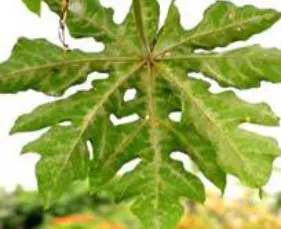
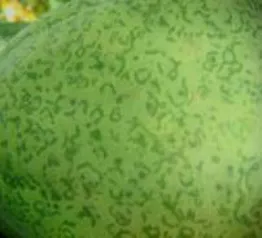
Although the folder name is guava, the source lesson also includes papaya viral diseases. Symptoms noted in the lecture include:
- vein clearing
- puckering and mosaic mottling
- severe leaf distortion
- shoe-string type narrowing
- ring spots on fruits
- stunting and poor fruit set
Spread
The lesson states that the virus is spread by aphids such as Aphis gossypii and A. craccivora, and that nearby cucurbits can act as important associated hosts.
Management logic
- raise seedlings under insect-proof conditions
- plant only healthy seedlings
- rogue infected plants quickly
- use barrier crops such as sorghum or maize
- avoid nearby reservoir hosts such as cucurbits
Leaf Curl
Causal organism: Papaya leaf curl virus
The source notes describe:
- curling and crinkling of leaves
- inward and downward rolling
- thickened veins
- leathery and brittle leaves
- severe stunting
- failure of flowering and fruiting in badly affected plants
Spread
This disease is spread by whitefly, especially Bemisia tabaci.
Management logic
- uproot affected plants
- avoid nearby host crops that encourage vector movement
- manage the whitefly vector
This is a classic example of viral disease management through vector control plus roguing, not fungicide use.
Anthracnose
Causal organism: Colletotrichum gloeosporioides
Anthracnose is important because it affects leaves, stems, and especially fruits. The notes mention brown superficial discoloration, sunken lesions, coalescing spots, salmon-pink spore masses under humid conditions, and mummification of fruits.
Practical significance
- reduces fruit quality
- causes pre- and post-harvest loss
- becomes severe in humid weather
Management logic
- remove infected plant parts
- reduce orchard humidity where possible
- use suitable fungicidal protection based on local recommendation
Summary Cheat Sheet
| Disease | Cause | Main symptom clue | Core management idea |
|---|---|---|---|
| Powdery mildew | Oidium caricae | White superficial fungal growth and defoliation | Early sulphur-based protection |
| Papaya ring spot | Virus | Mosaic, shoe-string leaves, concentric fruit rings | Healthy seedlings + aphid control + roguing |
| Leaf curl | Virus | Curling, crinkling, thickened veins, stunting | Whitefly control + plant removal |
| Anthracnose | Colletotrichum gloeosporioides | Sunken fruit lesions and pink spore masses | Sanitation + humidity reduction + fungicidal protection |
Lesson Doubts
Ask questions, get expert answers