📈 Diseases of Chilli
Diseases of Chilli.
This lesson focuses on major chilli diseases including fungal and viral problems, with practical control approaches for production and exams.
Damping off: Pythium aphanidermatum
Symptoms :
Seedlings killed before emergence. Water soaking and shrivelling of stem. Factors
favouring infection:Moist soils poordrainage 90-100% R.H soil temperature 20°C.
Pathogen
Mycelium is hyaline, coenocytic and zoosporangia are lobed and branched. Zoospores
are biflagellate and oogonia are spherical with smooth walled.Antheridia are monoclinous,
intercalary or terminal. Oospores are aplerotic, single with thick wall.
Mode of spread and survival
The pathogen is soil borne. Zoospores spread through irrigation water. The disease
spreads to main field by planting infected seedlings.
Management
Soil drenching with Copper oxychloride 0.25%
Fruit Rot and Die Back- Colletotrichum capsici
Symptoms:
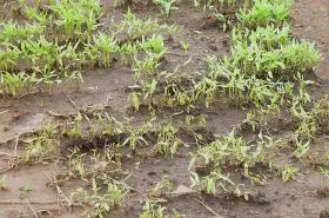
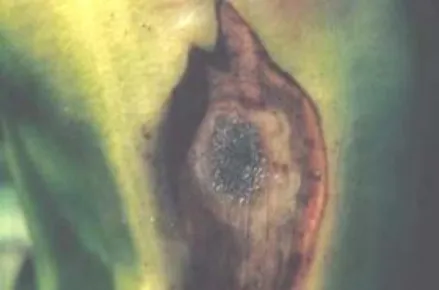 As the fungus causes necrosis of tender twigs from the tip backwards the disease is called
die-back Infection usually begins when the crop is in flower. Flowers drop and dry up. There is
profuse shedding of flowers. The flower stalk shrivel and dry up. This drying up spreads from
the flower stalks to the stem and subsequently causes die-back of the branches and stem and the
branches wither. Partia1lly affected plants bear fruits which are few and of low quality. On the
surface of the soil the necrotic areas are found separated from the healthy area by a dark brown
to black band.
Pathogen
The mycelium is septate and inter and intra cellular. Conidia in mass appear pinkish.
They are borne singly at the tip of conidiophores.
Mode of spread and survival
The fungus is seed borne and the secondary infection is by air borne conidia ans also by
rain. The disease spreads rapidly by wind blown rains during rainy season. Flies and other
insects are found responsible for dissemination of the spores from one fruit to another. The
fungus may not survive long in soil, but may survive on the dead twigs stored under dry
conditions. Seeds from badly diseased fruits may also carry the primary inoculum.
Management
Use of disease-free seeds is important in preventing the disease. Seed treatment with
Thiram or Captan 4g/kg is found to be -effective in eliminating the seed-borne inoculum. Good
control of the disease has been reported by three sprayings with Ziram O. 25% Captan 0.2% or
miltox 0.2%. Chemicals like wettable sulphur 0.2%, copper oxychloride 0.25% and Zineb 0.15%
not only reduced the disease incidence but also increased the yield of fruits. The first spraying
should be given just before flowering and the second at the time of fruit formation. Third
spraying may be given a fortnight after second spraying.
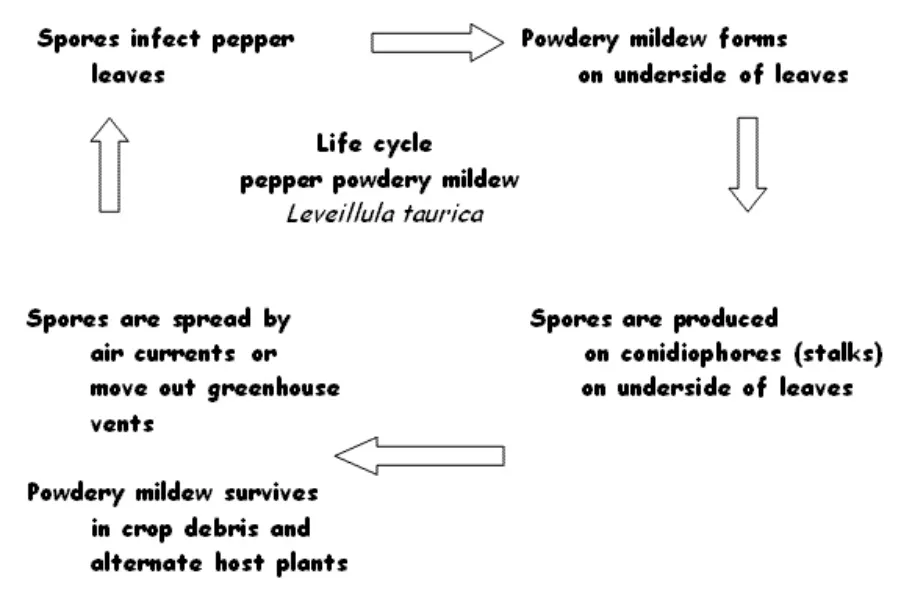
Powdery mildew: Leveillula taurica
Symptoms
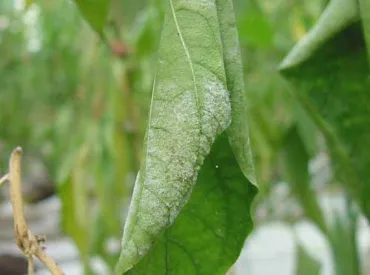 Shedding of foliage. White powdery growth on lower side of leaves.
Disease cycle
The powdery mildew disease cycle (life cycle) starts when spores (known as conidia) land on
a chilli leaf. Spores germinate much like a seed and begin to grow into the leaf. chilli powdery
mildew parasitizes the plant using it as a food source. The fungus initially grows unseen within
the leaf for a latency period of 18-21 days. Then the fungus grows out of the breathing pores
(stomates) on the under surface of the leaf, producing spores which are borne singly on
numerous, fine strands or stalks (conidiophores). These fungal strands become visible as white
patches or mildew colonies on the under side of the leaf. Repeated cycles of powdery mildew
can lead to severe outbreaks of powdery mildew that economically damage the crop.
Management
Spray Wettable sulphur 0.25% or Dinocap (Karathane) 0.05%
Bacterial leaf spot: Xanthomonas campestris pv. vesicatoria
Symptoms
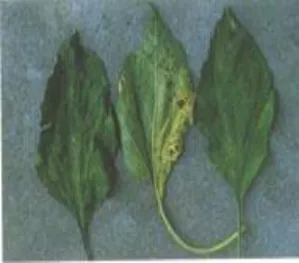 The leaves exhibit small circular or irregular, dark brown or black greasy spots. As the spots
enlarge in size, the centre becomes lighter Surrounded by a dark band of tissue. The spot
coalesce to form irregular lesions. Severely affected leaves become chlorotic and fall off.
Petioles and stems are also affected. Stem infection leads to formation of cankerous growth and
wilting of branches. On the fruits round, raised water soaked spots with a pale yellow border and
produced. The spots turn brown developing a depression in the centre wherein shining droplets
of Bacterial cozen may be observed.
Mode of spread and survival
The disease is primarily seed borne. It spreads in the nursery and is further disseminated
with infected transplants. Spattering rains are the chief means of dissemination. The bacterium
subsists in infected debris.
Management
Seed treatment with 0.1% mercuric chloride solution for 2 to 5 minutes is effective.
Seedlings may be sprayed with Bordeaux mixture 1. Per cent or copper oxychloride 0.25%.
Spraying with streptomycin should not be done after fruits begin to form. Field sanitation is
important. Also seeds must be obtained from disease free plants.
Cercospora leaf spot : Cercospora capsici
Symptoms
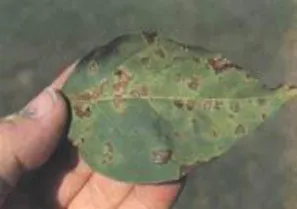
Leaf lesions typically are brown and circular with small to large light grey centers and dark
brown margins. The lesions may enlarge to 1cm or more in diameter and some times coalesce.
Stem, petiole and pod lesions also have light grey centers with dark borders, but they are
typically elliptical. Severely infected leaves drop off prematurely resulting in reduced yield.
Pathogen
Stromata are well developed. Conidiophores are 30- 60 x 4.5 – 5.5 micron meter. Conidia
are subhyaline to coloured, acicular to obculate.
Mode of spread and survival
Primary source of infection are infected seeds, volunteer plants and infected plant debris.
Secondary spread is through air borne conidia.
Management
Spray twice at 10-15 days interval with Mancozeb 0.25% or Chlorothalonil (Kavach)
0.1%.
Fusarium wilt : Fusarium oxysporum f.sp.capsici
Symptoms
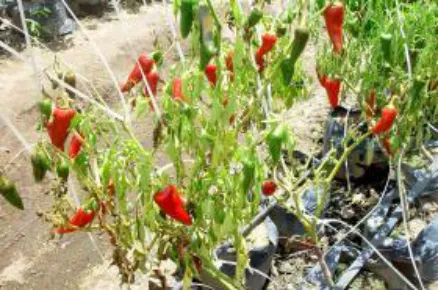
Fusarium wilt is characterised by wilting of the plant and upward and inward rolling of the
leaves. The leaves turn yellow and die. Generally appear localised areas of the field where a high
percentage of the plants wilt and die, although scattered wilted plants may also occur. Disease
symptoms are characterised by an initial slight yellowing of the foliage and wilting of the upper
leaves that progress in a few days into a permanent wilt with the leaves still attached. By the time
above - ground symptoms are evident, the vascular system of the plant is discoloured,
particularly in the lower stem and roots.
Pathogen
Mycelium is grayish white. Microconidia are formed singly, hyaline and cylindrical.
Macro conidia are cylindrical to falcate. Chlamydospores are globose to oval and rough walled.
Management
Use of wilt resistant varieties. Drenching with 1% Bordeaux mixture or Blue copper or
Fytolan 0.25% may give protection.· Seed treatment with 4g Trichoderma viride formulation or
2g Carbendazim per kg seed is effective. Mix 2kg T.viride formulation mixed with 50kg FYM,
 sprinkle water and cover with a thin polythene sheet. When mycelia growth is visible on the heap
after 15 days, apply the mixture in rows of chilli in an area of one acre.
Leaf curl
Leaves curl towards midrib and become deformed. Stunted plant growth due to shortened
internodes and leaves greatly reduced in size. Flower buds abcise before attaining full size and
anthers do not contain pollen grains. The virus is generally transmitted by whitefly. So control
measures of whitefly in this regard would be helpful.
Mosaic Viruses
Light green and dark green patches on the leaves. Stunted plant growth during early
stages. Yellowing, chlorotic ring spots on leaves and fruits.
Management of viral diseases
Control measures are not known for majority of viral diseases. Hence, mechanical, cultural
methods are mostly recommended. The infected plants should be uprooted and burnt or buried to
avoid further infection. Avoid monoculture of chilli crop. Selection of healthy and disease - free
seed. Suitable insecticidal sprays reduce the incidence of viral diseases, since majority of viral
diseases are transmitted by insect vectors. Soaking seeds in a solution containing 150 g
Trisodium orthriphosphate per litre of water for 30 minutes inhibits seed - borne inoculum.
Treated seed should be washed with fresh water and dried before sowing. Nursery beds
should be covered with nylon net or straw to protect the seedlings from viral infection. Raise 2-3
rows of maize or sorghum as border crop to restrict the spread of aphid vectors. Apply
Carbofuran 3G @ 4-5 Kg/acre in the mainfield to control sucking complex and insect vectors
selectively. If it is not possible spray the crop with systemic insecticides. Like Monocrotophos
1.5 ml or Dimethoate 2ml of Acephate 1g per litre of water. Collect and destroy infected virus
plants as soon as they are noticed.
Bacterial soft rot - Erwinia carotovora subsp. Carotovora
Symptoms
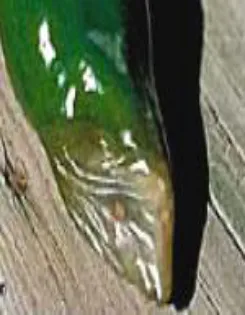 The fleshy fruit peduncle is highly susceptible and is frequently the initial point of infection.
Both ripe and green fruit may be affected. Initially, the lesions on the fruit are light to dark
colored, water-soaked, and somewhat sunken. The affected areas expand very rapidly,
particularly under high temperatures, and tissues lose their texture. In later stages, bacterial ooze
may develop from affected areas, and secondary organisms follow, often invading the rotted
tissue. Post-harvest softening of stem end of fruit. The affected fruit hang from the plant like a
water-filled bag.
Conditions for Disease Development
The bacteria may persist in fields where peppers are rotated with other susceptible crops
such as cabbage and potato. The bacteria may be present as a contaminant on the surface of
pepper seed. The bacteria can be transmitted by drainage water, irrigation water, or by sprinkler
irrigation, but a wound is necessary for infection to occur. Wounding often arises from rough
handling of plants during weeding, or due to a strong wind, or from insect feeding. European and
Asiatic corn borers may introduce bacteria into the fruit peduncle of pepper during feeding. A
high rate of nitrogen fertilization is associated wit increased susceptibility to soft rot. Warm,
moist weather is also highly favorable for infection.
Management
Use chlorinated wash water to reduce populations of soft rot bacteria and to reduce the
risk of infection during washing. This will not reduce soft rot development in fruit infected
with the bacterium prior to harvest. Allow fruit to dry thoroughly. During packing and storage,
the fruit should be kept clean and maintained in a cool, dry place
Alternaria Rot- Alternaria sp.
Symptoms
The fungus is reported to enter wounds (sunscald or punctures). Dusty black spores on
fruit spots are characteristic. In most instances this disease follows blossom-end rot, but it also
follows injuries, chilling, and other decays. On the fruit, large greenish-brown to brown lesions
covered, with grayish-brown mold are produced. Similar lesions on the lower-part of the fruit are
characteristic of Alternaria rot following blossom-end rot. The larger lesions may show
alternating light and dark-brown concentric zones. Shipping peppers under standard refrigeration
will check the development of this rot, but when the fruit is removed from refrigeration the decay
will advance rapidly at moderate to warm temperatures.
Pathogen
Hyphae are septate, branched, light brown becoming darker with age and inter and intra
cellular. Conidiophores emerge through stomata. Conidia are single and muriform.
Mode of spread and survival
Infected seeds, volunteer plants and infected plant debris are primary source of infection.
Management
Pre storage dry heat
The effectiveness of a prestorage dry heat treatment and hot water dip in reducing storage
rots of capsicum caused by Alternaria alternata . Treatment with hot air at 38˚C for 48-72 h or
hot water at 50˚C to 53˚C for 2 to 3 min, resulted in reduction in the pathogenicity and
development of these pathogens in inoculate peppers.
Summary Cheat Sheet
| Focus Area | Key Takeaway |
|---|---|
| Major diseases | Revise causal organisms, hallmark symptoms, and crop stage of attack. |
| Spread and survival | Link each disease with inoculum source, vector, and favorable conditions. |
| Management | Prioritize integrated management: sanitation, resistant varieties, and timely sprays. |
References
1 source • [1]
References
Class notes and standard plant pathology references
Lesson Doubts
Ask questions, get expert answers