📈 Diseases of Chrysanthemum
Diseases of Chrysanthemum.
This lesson on Diseases of Chrysanthemum covers major diseases, key symptoms, spread/survival, and management points for exam-focused and field-level understanding.
Wilt - Fusarium oxysporum f.sp . chrysanthemi
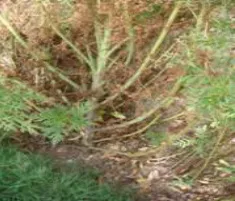
Symptoms
Initial symptoms are in the form of yellowing and browning of leaves. Affected leaves
die from the base of the plant upward. Infected plants are stunted and often fail to produce
flower. Wilting may cause rotting of root or the base of the stem.
Mode of spread
The fungus is soil borne. The disease spreads through cuttings.
Management
Drenching the soil with or Carbendazim 0.1% is effective. Before planting dipping the
rooted cuttings in a solution of Thiram @1.5g/litre of water. Since the disease spreads mostly
through cuttings, it is important to use disease free planting material. Disease can further be
minimized by following strict sanitation; periodical monitoring; crop rotation and roguing of
infected plants.
Rust - Puccinia chrysanthemi
Symptoms
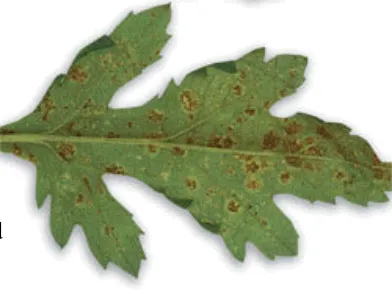
The disease symptoms are in the form of brown
blister-like swellings, which appear on the
undersides of leaves. These burst open releasing
plants become very weak and fail to bloom properly.
Management
 Early removal of infected leaves/plants helps to prevent the further spread of the disease.
Spraying the plants with Karathane @ 0.025% or Wettable Sulphur @ 0.3 % is effective in
controlling the disease.
Septoria Leaf Spot - Sepotria chrysanthemella
Symptoms
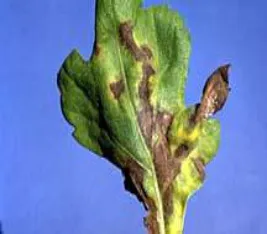
Leaf spots occur during cool-wet periods of the rainy season. Since the pathogens are
spread through rain splashes the lowermost leaves get infected first. Serious infection may result
in premature withering of the leaves; the dead leaves hang to the stem for some time. When
flowering starts the infection occurs on flower buds, which rot completely.
Pathogen
Pycnidia are numerous, amphigenous, sub epidermal, globose or lens shaped. Conidia are
hyaline, filiform, straight or flexuous often curved or worm like.
Mode of spread and survival
Infected debris in the soil appeared to be primary source of infection or systemic
infection carried through suckers. The fungus do not infect other members of the family
compositae and is specific to chrysanthemum cultivars only.
Management
This disease can be controlled by spraying Carbendazim 0.1% six times at 15 days
intervals from the end of July or spraying Benomyl (0.1%) followed by Captafol (0.2%)
Destruction of disease debris and avoiding excessive
irrigation is recommended.
Powdery Mildew - Oidium chrysanthemi
Symptoms
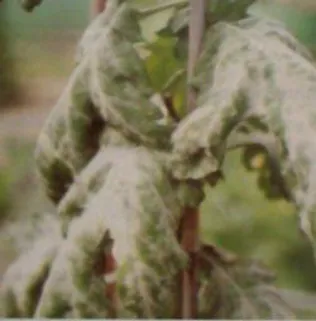 Infection is more severe in older plants under humid conditions. The growth of the
fungus on the leaves appears as powdery coating. Infected leaves turn yellow and dry out.
Infected plants remains stunted and fail to flower.
Management
Disease can be effectively controlled with Sulphur fungicides or Captan (0.2%). Good
ventilation and proper spacing for free circulation of air is recommended.
Summary Cheat Sheet
| Focus Area | Key Takeaway |
|---|---|
| Disease diagnosis | Identify each disease using hallmark symptoms and affected plant part. |
| Spread and survival | Remember seed-, soil-, water-, and vector-borne survival pathways. |
| Management | Use integrated control: sanitation, resistant material, and need-based sprays/drenches. |
References
2 sources • [1] [2]
References
Lesson Doubts
Ask questions, get expert answers