🐛 Insect-Pest Management and IPM
A fuller lesson on chemical, biological, and mechanical pest control with the logic of IPM.
Insect-Pest Management and IPM
Crop protection is most effective when we understand that not every pest problem should be handled by one method alone.
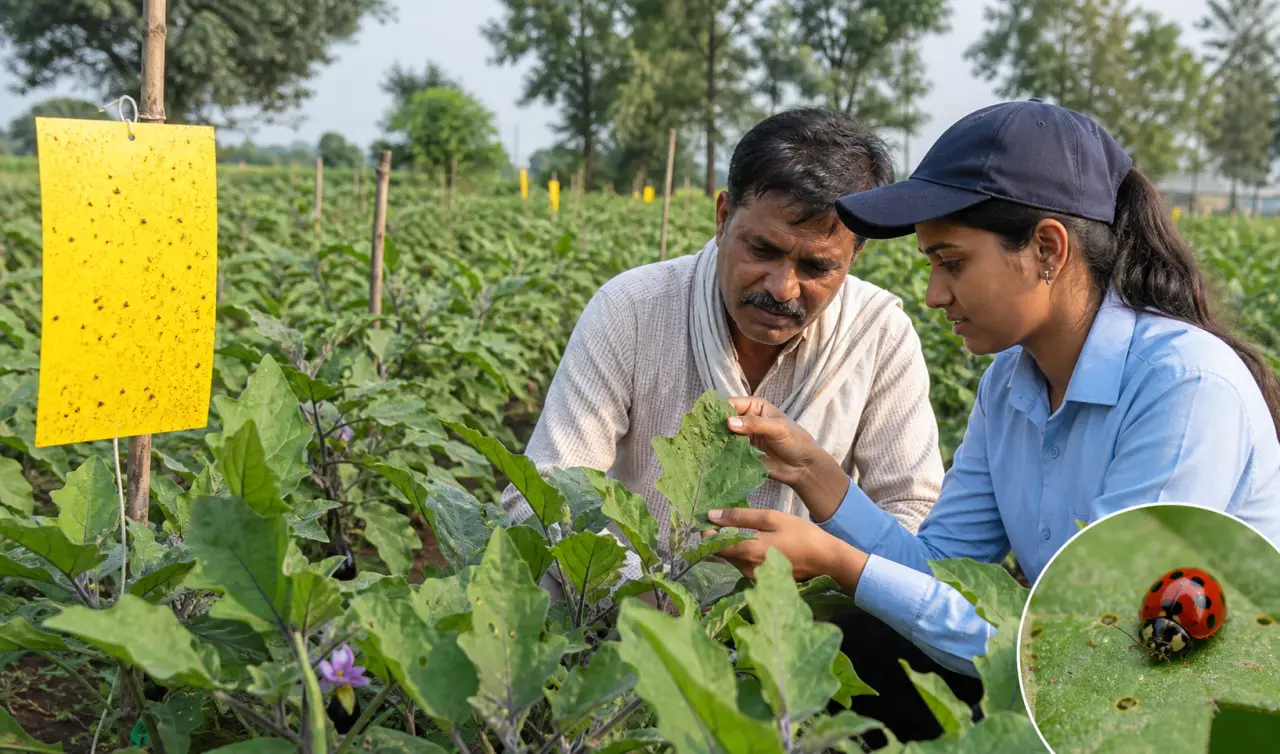
Start with the doctor analogy
A good doctor does not give the strongest medicine to every patient without diagnosis. First comes observation, then diagnosis, then the most suitable treatment. IPM follows the same logic in crop protection:
- scout the field
- identify the pest and useful natural enemies
- judge whether damage may cross the economic level
- choose cultural, mechanical, biological, or chemical action as needed
This makes IPM a decision system, not a spray schedule.
Main methods of insect-pest management
| Method | Main idea |
|---|---|
| Chemical | use of insecticides or related chemical control agents |
| Biological | use of natural enemies or biological control means |
| Mechanical | hand picking, traps, barriers, destruction of infested parts |
These methods also connect naturally with cultural and regulatory thinking once integrated pest management is discussed.
Pro Content Locked
Upgrade to Pro to access this lesson and all other premium content.
₹99 charged monthly · Cancel anytime
- All Agriculture & Banking Courses
- AI Lesson Questions (100/day)
- AI Doubt Solver (50/day)
- Glows & Grows Feedback (30/day)
- AI Section Quiz (20/day)
- 22-Language Translation (100/day)
- Recall Questions (20/day)
- AI Quiz (15/day)
- AI Quiz Paper Analysis (100/day)
- AI Step-by-Step Explanations (100/day)
- Spaced Repetition Recall (FSRS)
- AI Tutor
- Immersive Text Questions
- Audio Lessons — Hindi & English
- Mock Tests & Previous Year Papers
- Summary & Mind Maps
- XP, Levels, Leaderboard & Badges
- Generate New Classrooms
- Voice AI Teacher (AgriDots Live)
- AI Revision Assistant
- Knowledge Gap Analysis
- Interactive Revision (LangGraph)
🔒 Secure via Razorpay · Cancel anytime · No hidden fees
Insect-Pest Management and IPM
Crop protection is most effective when we understand that not every pest problem should be handled by one method alone.
Start with the doctor analogy
A good doctor does not give the strongest medicine to every patient without diagnosis. First comes observation, then diagnosis, then the most suitable treatment. IPM follows the same logic in crop protection:
- scout the field
- identify the pest and useful natural enemies
- judge whether damage may cross the economic level
- choose cultural, mechanical, biological, or chemical action as needed
This makes IPM a decision system, not a spray schedule.
Main methods of insect-pest management
| Method | Main idea |
|---|---|
| Chemical | use of insecticides or related chemical control agents |
| Biological | use of natural enemies or biological control means |
| Mechanical | hand picking, traps, barriers, destruction of infested parts |
These methods also connect naturally with cultural and regulatory thinking once integrated pest management is discussed.
Chemical control
Chemical methods can give quick action, especially in severe infestations. But overdependence creates problems such as:
- residue concerns
- resistance development
- harm to beneficial organisms
- environmental risk
It is also clear why farmers still depend on chemicals in many situations: they can be timely, flexible, and rapidly protective when pest populations rise sharply and crop loss risk becomes immediate.
What a pesticide means
A pesticide is a chemical used to prevent, destroy, repel, or manage pests. Depending on the target, students may see terms such as:
- insecticide
- fungicide
- herbicide
- rodenticide
- acaricide
- nematicide
Classification of pesticides in a student-friendly way
Pesticides can be classified in more than one way:
By target organism
- insecticides -> insect pests
- fungicides -> fungal diseases
- herbicides -> weeds
- acaricides -> mites and ticks
- nematicides -> nematodes
- rodenticides -> rats and related rodents
By mode of action
- contact pesticides act where they touch the pest
- systemic pesticides move within the plant and affect feeding pests
The text explains this more practically:
- systemic pesticides may be absorbed through seed, soil, or leaves and then circulate through plant tissues
- non-systemic pesticides mainly kill pests when the chemical comes into direct contact with them
By chemical nature
Broad groups also include:
- botanical compounds
- synthetic organic compounds
- organophosphorus compounds
- carbamates
- microbial compounds
- growth-regulator compounds
- synthetic pyrethroids
Classic examples help anchor the categories:
- botanical compounds linked with pyrethrum-type origin
- DDT and aldrin as older organochlorine examples
- Bacillus thuringiensis as a microbial insecticidal source
- growth regulators as compounds that disturb normal insect development
Farmer caution box
Fast action does not always mean best action. Repeated broad-spectrum spraying can kill natural enemies, increase resistance, and sometimes cause pest resurgence. A Class 12 answer should therefore say that chemicals are important, but they must be selective, need-based, and integrated with other control methods.
By formulation
Students should also remember that pesticides may be sold as:
- dusts
- granules
- emulsifiable concentrates
- flowables
- wettable powders
- poisonous baits
The knapsack sprayer is one of the most common field application tools, which is a practical point students can remember for farm-level pesticide use.
Systemic and non-systemic pesticides
- A systemic pesticide is absorbed and moved within the plant body.
- A non-systemic pesticide acts mainly where it contacts the pest or the treated surface.
This distinction is directly relevant because it often appears in short-definition questions.
Advantages of chemical control
Important examples include:
- cost effectiveness in many cases
- timeliness and flexibility
- protection of produce quality and quantity
- prevention of severe pest damage
- quick intervention when other methods are too slow
Disadvantages of chemical control
The textbook is equally clear about its risks:
- reduction of beneficial species
- spray drift and vapour injury
- residue problems in food and livestock feed
- groundwater contamination through leaching
- resistance development in target pests
- poisoning hazards and other health effects
Biological control
Biological methods use living organisms or biological processes to suppress pests. This approach is attractive because it supports ecological balance and fits well with safer farming systems.
Natural enemies in biological control
Biological control can involve:
- predators
- parasitoids
- pathogens
Important terms include:
- parasitoid
- superparasitism
- hyperparasitism
- protelian parasite
Natural and applied biological control
Two useful ideas should be distinguished:
- natural biological control -> natural enemies suppress pests without deliberate human manipulation
- applied biological control -> humans conserve, multiply, or release useful natural enemies
This distinction matters because biological control is both a natural ecological process and a practical management strategy.
Advantages of biological control
- can be long-lasting
- helps reduce environmental pollution
- usually conserves ecological balance better than repeated spray dependence
- can be economical over time
Limitations of biological control
- usually slower than chemical control
- may not provide instant outbreak relief
- establishment may fail
- success depends on ecological suitability
Examples of biological control students can mention
Classic examples include:
- cottony cushion scale control by Rodolia cardinalis
- cactus control by Cactoblastis cactorum
- mosquito larval control by fish
- sugarcane stem-borer suppression through Trichogramma
Including one named example strengthens a descriptive answer.
Mechanical control
Mechanical methods include:
- hand removal
- traps
- barriers
- destruction of affected plant parts
These may look simple, but in many farm situations they are practical and cost-effective.
Main mechanical-control practices
A wide range of mechanical measures includes:
- handpicking
- burning
- trapping
- barriers
- temperature control
- drying
- radiation
- ultrasonic or behavior-based disturbance
Handpicking
Useful where infestation is low, the pest is visible, and labour is available.
Burning
Crop residues, trash, or pest shelters are sometimes destroyed through controlled burning.
Trapping
Important trap ideas include:
- yellow pan traps
- sticky traps
- pitfall traps
- light traps
- pheromone traps
Barriers
Examples include:
- cloth screens over nursery beds
- collars around young plants
- trench barriers
- sticky bands on tree trunks
Drying and temperature control
These are especially useful in stored-product protection because many stored-grain pests require a certain moisture level and temperature range.
Cultural and regulatory methods
Even before spraying is discussed, pest control begins with preventive field management. Important measures include:
- resistant varieties
- crop rotation
- sanitation
- timely field operations
- quarantine and area-wide suppression in some cases
Cultural-control practices
Several specific cultural tactics are important here:
- crop rotation
- sanitation
- soil solarization
- timed planting and harvesting
- resistant varieties
- intercropping
- certified plants
- allelopathy
Soil solarization
Soil solarization means using a clear plastic sheet over moist soil during high heat so that trapped solar energy suppresses soil-borne pests, pathogens, and some weed seeds.
These methods reduce starting pest pressure and make other methods more effective.
What IPM means
Integrated Pest Management means combining different pest-control methods in a scientific, need-based, and economical way.
IPM can also be understood as a stable crop-protection system based on ecological understanding, selective intervention, and balanced use of all suitable methods.
The textbook also explains why IPM emerged historically: when biological control alone or chemical control alone failed to give fully satisfactory results, or created environmental problems, the need arose to blend them into one unified management programme.
Main principles of IPM
- do not spray blindly
- observe pest level and crop stage
- use preventive and cultural practices first where possible
- conserve useful organisms
- use chemicals only when needed and in a rational way
Components of IPM
IPM can be organized around:
- cultural control
- mechanical control
- biological control
- chemical control
- regulatory methods
The aim is not to eliminate every insect, but to keep pest population below the economic injury level.
Regulatory methods in simple words
Regulatory action is included because some pest problems go beyond a single farmer’s field. It may involve:
- plant quarantine
- animal quarantine
- area-wide eradication or suppression
- collective action against migratory or noxious pests such as locusts
Role of biological control inside IPM
Biological control has a strong place inside IPM. Its main roles include:
- conserving useful organisms already present
- augmenting their population
- recolonizing useful species where they were wiped out
- combining them with resistant varieties and careful chemical use
This is why indiscriminate insecticide use is treated as an IPM failure: it may kill the helpers along with the pest.
Three practical ways to integrate biological control are:
- conserve existing natural enemies
- augment or release useful organisms where needed
- combine biological control with non-disruptive cultural and chemical methods
Useful examples of conservation include:
- use selective insecticides to which natural enemies are less vulnerable
- prefer methods such as soil application where natural enemies are less exposed
- plant nectar-producing flowers near the crop
- maintain crop diversity or intercropping that supports parasitic activity
Role of insecticides inside IPM
Insecticides are not rejected completely. Instead, they should be:
- used only when pest pressure crosses tolerable levels
- selected carefully
- applied in a way that reduces damage to natural enemies
- integrated with other methods rather than used blindly
It also points toward selective tools such as:
- pheromones
- hormones
- repellents
- antifeedants
- sterilants
This reinforces a central IPM idea: insecticides still have a place, but preference should move toward selective and ecologically safer options.
Selectivity can also be improved through:
- dosage modification
- correct timing
- better formulations
- better placement of the material
Role of varietal resistance inside IPM
An important point here is that very high resistance is not always the best long-term ecological answer. Moderate resistance can sometimes work better with natural enemies and with broader IPM stability.
This is a subtle but valuable school-level idea. IPM is about system stability, not only the strongest possible single-point resistance.
Advantages of varietal resistance in IPM
The textbook highlights that varietal resistance offers:
- specificity
- compatibility with other methods
- cumulative usefulness over generations
- low disturbance to the ecosystem
Simple IPM flow logic
Students can remember IPM through a field sequence:
- choose suitable or resistant crop material
- use cultural and sanitation measures
- monitor pest level and crop stage
- conserve natural enemies
- use mechanical methods where practical
- apply selective chemicals only when justified
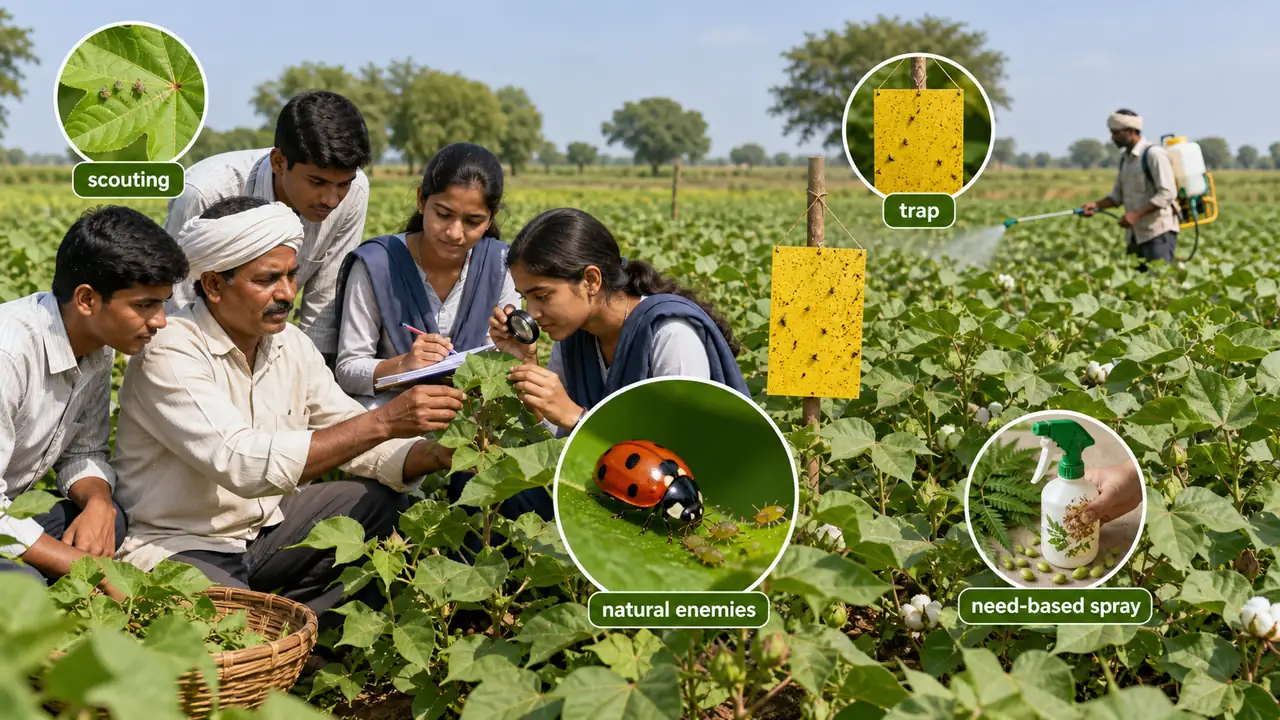
Source examples of IPM programmes
Several real-world style examples can be mentioned in long answers:
- cotton pest control in Peru through coordinated cultural, chemical, and biological measures
- paddy IPM under FAO-supported programmes in Asia
- sugarcane IPM using Trichogramma and improved cultural practice
- locust control through surveillance and area-wide management
These examples are useful because they show that IPM is not a slogan. It is a tested field strategy applied in major crops and regions.
Why IPM is better than one-method control
IPM helps:
- reduce unnecessary pesticide use
- improve long-term effectiveness
- protect beneficial organisms
- lower environmental burden
- support sustainable agriculture
It is considered superior because it is based on ecological understanding rather than blind, repetitive pesticide dependence.
Role of resistance and biological control inside IPM
Moderate varietal resistance and natural enemies work well inside IPM because they reduce pest pressure without completely destabilizing the agro-ecosystem. This makes the system more durable over time.
Field examples
Important examples include:
- cotton pest management in Peru
- paddy IPM programmes
- sugarcane IPM using biological and cultural support
- locust control using surveillance plus multiple methods
Slightly deeper view of the examples
- Cotton in Peru is a classic example of recovery from pesticide-driven crisis through integrated methods.
- Paddy IPM is used to show biological, chemical, and cultural integration.
- Sugarcane IPM shows why biological control becomes important when ordinary spraying is technically difficult or unsafe.
- Locust IPM shows surveillance plus mechanical, chemical, and biological actions working together.
One example is often enough to make the pattern concrete.
Example logic
A farmer may first monitor the field, remove heavily infested parts, use traps or biological measures, and only then apply a chemical if the pest crosses damaging levels. That is the spirit of IPM.
Pest-control methods in a source-complete sequence
Pest management can be learned as a ladder: first understand the pest, then choose the safest effective combination of chemical, biological, mechanical, and integrated methods.
Chemical control
Chemical control uses pesticides to kill or suppress pests. Insecticides are only one part of the pesticide group. Depending on the target organism, the pesticide may be called an insecticide, fungicide, herbicide, rodenticide, nematicide, acaricide, or bactericide.
Chemical control is popular because it is quick, visible, and useful during severe pest outbreaks. But overuse creates problems:
- pest resistance
- resurgence after natural enemies are killed
- secondary pest outbreak
- residue problems
- hazards to applicators, livestock, pollinators, and consumers
- environmental contamination
Chemical methods therefore remain part of rational pest management rather than being used blindly.
Mechanical and physical control
Mechanical control directly removes or destroys pests and infested material. Examples include hand picking, clipping infested shoots, removing egg masses, using traps, destroying crop residues that shelter pests, and using barriers.
Physical control uses physical factors such as heat, light, moisture, or exclusion. Examples include soil solarization, light traps, sticky traps, and temperature treatment where appropriate. These methods are especially useful in nurseries, small plots, stored produce, and early infestation stages.
Cultural control
Cultural control changes crop management so pests find it harder to survive or multiply. Important examples include:
- crop rotation
- timely sowing
- field sanitation
- resistant or tolerant varieties
- balanced fertilization
- proper spacing
- deep summer ploughing where it exposes pest stages
- destruction of alternate hosts and volunteer plants
This is why pest management begins before the pest is visible. A clean, well-managed field often prevents a small pest population from becoming an outbreak.
Biological-control vocabulary students must know
| Term | Meaning | Example logic |
|---|---|---|
| Predator | kills and eats many prey during life | ladybird beetle feeding on aphids |
| Parasitoid | develops on or inside one host and finally kills it | Trichogramma parasitizing eggs |
| Parasite | lives at the expense of host, usually not killing immediately | broader biological relationship |
| Pathogen | disease-causing organism used against pests | fungi, bacteria, or viruses attacking insects |
| Conservation | protect existing natural enemies | avoid unnecessary broad-spectrum sprays |
| Augmentation | increase natural enemy population by release | release lab-reared parasitoids |
| Classical control | introduce a natural enemy against an introduced pest | long-term area-level approach |
Biological control is powerful because it uses ecological relationships. Its limitation is that it may act slowly and needs correct identification, timing, and field conditions.
Economic threshold thinking
IPM becomes scientific when decisions are based on pest level, crop stage, and expected loss. A farmer should not spray simply because one insect is seen. The key question is whether the pest population is likely to cause economic damage.
This is the meaning behind threshold-based pest management:
- observe the field
- identify pest and natural enemies
- estimate damage or population
- compare with tolerable level
- choose suitable control only when needed
This protects money, beneficial organisms, and the environment.
How to build a complete IPM explanation
Use this order:
- define IPM as integration of compatible pest-control methods
- mention monitoring and economic threshold
- include cultural control
- include mechanical and physical methods
- include biological control
- include need-based selective chemical control
- end with benefits: safe, economical, ecological, and sustainable
Crop examples
- paddy: monitoring, cultural care, biological support, and need-based chemical action
- sugarcane: biological control is important because hidden borers are difficult to manage by spray alone
- cotton: repeated spraying can create resistance and resurgence, so IPM is essential
- locust: surveillance and area-wide coordination are as important as direct control
These examples show why IPM is not a single product. It is a decision-making system.
Summary Cheat Sheet
| Concept / Topic | Key Details / Explanation |
|---|---|
| Main pest-management idea | Pest management should begin with observation, diagnosis, and threshold-based action, not blind spraying. |
| Main control methods | The major methods are chemical, biological, and mechanical, supported by cultural and regulatory measures in full IPM. |
| Chemical control | Chemical control is fast and flexible, but it should not be the only strategy because overuse causes residues, resistance, and harm to beneficial organisms. |
| Pesticides and their types | A pesticide is a substance used to manage pests. Important categories include insecticides, fungicides, herbicides, acaricides, nematicides, and rodenticides. |
| Systemic vs non-systemic pesticides | Systemic pesticides move within plant tissues, while non-systemic or contact pesticides act mainly where they touch the pest or treated surface. |
| Biological control | Biological control uses living natural enemies such as predators, parasitoids, and pathogens to suppress pest populations. |
| Key biological-control terms | Important terms are parasitoid, superparasitism, hyperparasitism, multiple parasitism, and protelian parasite. |
| Mechanical control | Mechanical control includes handpicking, traps, barriers, burning, drying, and destruction of infested parts. |
| Preventive cultural methods | Important preventive methods are crop rotation, sanitation, resistant varieties, timed planting, intercropping, and soil solarization. |
| Soil solarization | Soil solarization means covering moist soil with clear polythene so trapped solar heat suppresses soil-borne pests, pathogens, and some weed seeds. |
| Meaning of IPM | IPM means combining all suitable control methods in a scientific, need-based, economical, and ecological way for safe crop protection. |
| Threshold idea in IPM | The logic of IPM is to keep pests below the economic injury level, not to eliminate every insect unthinkingly. |
| Best IPM conclusion | IPM works best when varietal resistance, biological control, mechanical or cultural measures, and selective chemical use support each other. |
Lesson Doubts
Ask questions, get expert answers