💐 Post-Harvest Management of Flowers
A detailed lesson on harvest stage, hydration, pre-cooling, storage, and handling of flowers.
Post-Harvest Management of Flowers
Flowers are highly perishable and highly appearance-sensitive. A flower may still be alive biologically, yet lose market value quickly if freshness, shape, colour, or vase life declines.
See the crop like a buyer
In flowers, the buyer judges with the eyes first. A small bend in gladiolus, a bruised rose petal, or yellowing carnation leaves can reduce grade immediately. So the goal is not just to keep flowers alive, but to keep them beautiful enough for the market purpose.
When you study each practice, imagine a flower moving from field to vase:
cutting -> water uptake -> cooling -> bunching -> packing -> transport -> opening in the buyer's vase
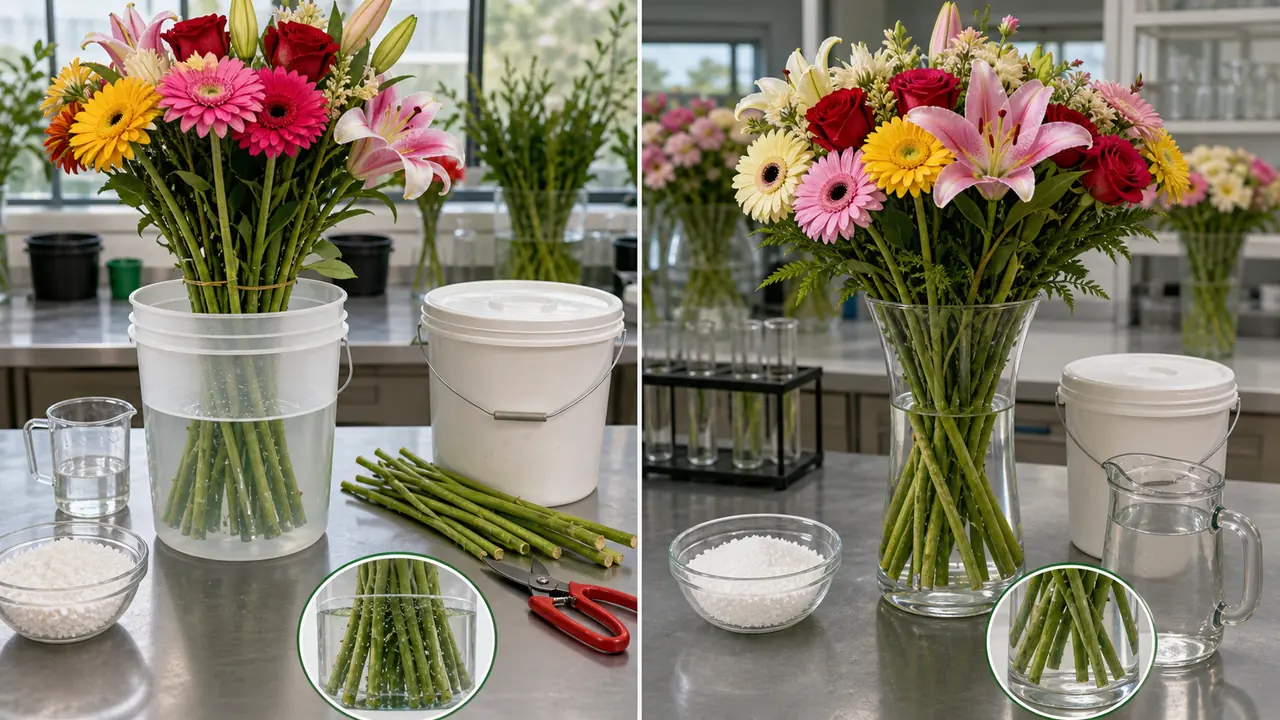
Special features of flowers
- they lose water quickly
- they bruise easily
- some are sensitive to ethylene
- harvest stage strongly affects opening and vase life
Flowers must be handled with patience, softness, and skill, especially when they are being prepared for distant or export markets. In flowers, poor handling shows immediately through bent neck, petal injury, colour loss, poor opening, and short vase life.
Pro Content Locked
Upgrade to Pro to access this lesson and all other premium content.
₹99 charged monthly · Cancel anytime
- All Agriculture & Banking Courses
- AI Lesson Questions (100/day)
- AI Doubt Solver (50/day)
- Glows & Grows Feedback (30/day)
- AI Section Quiz (20/day)
- 22-Language Translation (100/day)
- Recall Questions (20/day)
- AI Quiz (15/day)
- AI Quiz Paper Analysis (100/day)
- AI Step-by-Step Explanations (100/day)
- Spaced Repetition Recall (FSRS)
- AI Tutor
- Immersive Text Questions
- Audio Lessons — Hindi & English
- Mock Tests & Previous Year Papers
- Summary & Mind Maps
- XP, Levels, Leaderboard & Badges
- Generate New Classrooms
- Voice AI Teacher (AgriDots Live)
- AI Revision Assistant
- Knowledge Gap Analysis
- Interactive Revision (LangGraph)
🔒 Secure via Razorpay · Cancel anytime · No hidden fees
Post-Harvest Management of Flowers
Flowers are highly perishable and highly appearance-sensitive. A flower may still be alive biologically, yet lose market value quickly if freshness, shape, colour, or vase life declines.
See the crop like a buyer
In flowers, the buyer judges with the eyes first. A small bend in gladiolus, a bruised rose petal, or yellowing carnation leaves can reduce grade immediately. So the goal is not just to keep flowers alive, but to keep them beautiful enough for the market purpose.
When you study each practice, imagine a flower moving from field to vase:
cutting -> water uptake -> cooling -> bunching -> packing -> transport -> opening in the buyer's vase
Special features of flowers
- they lose water quickly
- they bruise easily
- some are sensitive to ethylene
- harvest stage strongly affects opening and vase life
Flowers must be handled with patience, softness, and skill, especially when they are being prepared for distant or export markets. In flowers, poor handling shows immediately through bent neck, petal injury, colour loss, poor opening, and short vase life.
Core practices
| Practice | Purpose |
|---|---|
| Correct harvest stage | best opening and shelf life |
| Pre-cooling | removes field heat |
| Conditioning | restores water balance |
| Clean storage | slows respiration and decay |
| Careful transport | prevents bending and crushing |
Flowers need patient, soft, and expert handling, especially for distant and export markets. That phrase captures the whole spirit of the topic.
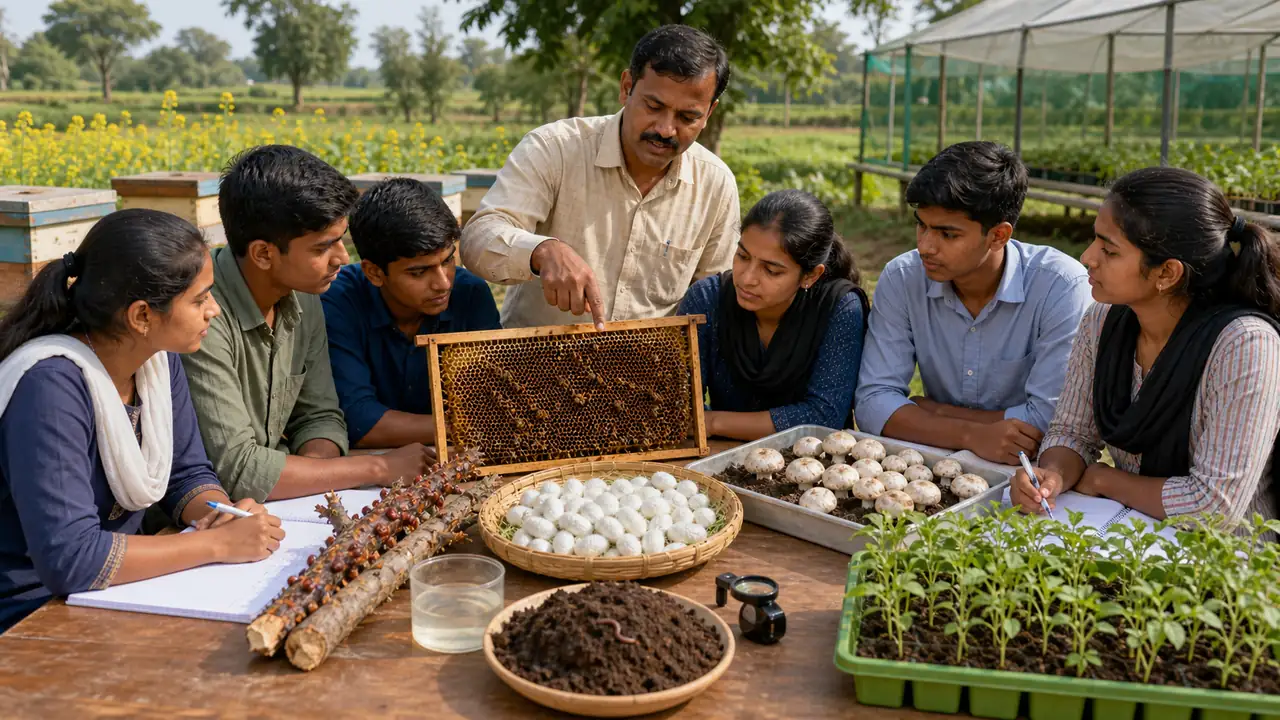
Flower handling as a complete chain
A flower cannot be grown poorly, cut at the wrong stage, left in the sun, packed roughly, and still give long vase life.
The final vase life is a combined result of:
- pre-harvest health
- harvest stage
- water uptake
- temperature control
- packaging and transport care
Three sets of factors to remember
Pre-harvest factors
- varietal or genetic character
- light and temperature conditions
- balanced nutrition
- low disease and insect damage
Some extra points are worth remembering:
- different cultivars naturally differ in vase life
- very high nitrogen may increase disease susceptibility and weaken keeping quality
- nutrient imbalance such as iron deficiency can reduce quality in certain flowers
- pollutants, toxic gases, insects, and pathogens can increase ethylene effects and shorten vase life
Harvest factors
- correct stage of opening
- cool harvest time
- clean sharp cutting tools
- quick transfer to shade and water
Harvest decisions can be organized around three practical questions:
- when should the flower be harvested in its development stage?
- when in the day should it be harvested?
- how should it be cut and handled?
In general:
- spike-type flowers are often cut when some florets have opened
- daisy-type flowers are often cut when blooms are fully open
- flowers for preservation are often harvested at a more mature stage than flowers for fresh wholesale markets
- the coolest part of the day is preferred for cutting
- flowers should not be harvested with free surface moisture from dew or rain
Latex-bearing stems may need special treatment. Hot-water dipping is mentioned for crops such as dahlia and poinsettia after cutting.
Post-harvest factors
- hydration
- preservative use
- cooling and storage
- grading, packing, and transport care
These steps decide whether the flower only survives or actually remains marketable and attractive.
Why market value falls so quickly
Flower loss is not only biological spoilage. Flowers often lose value much earlier because of:
- bent neck
- bruised petals
- poor opening
- shortened vase life
- stem blockage
- colour fading
Why bud-stage harvest is common
Many flowers for distant markets are harvested at bud stage or partial opening because:
- they travel better
- they are less likely to be damaged
- they often open later in water
- marketable life can improve
The exact stage differs across rose, carnation, gladiolus, lily, gerbera, chrysanthemum, and other flowers.
Some buds open well in water and are therefore preferred for earlier harvest. This makes bud-stage harvest a transport and storage strategy, not just a cutting habit.
Rose for local market vs distant market
A rose sold in the same town can be harvested at a more open stage because it reaches the buyer quickly. A rose sent to a distant market is harvested tighter because it must survive packing and travel, then open later. This is why the "correct harvest stage" changes with market distance.
This example shows why harvest recommendations are crop-specific and market-specific.
Important crop-wise harvest examples
Many crop-wise examples are useful because they show how the same principle changes slightly from crop to crop.
Rose
- local market: outer one or two petals begin to unfurl
- distant market: fully coloured tight bud
- loose flower trade: fully open flower
Carnation
- standard type for local market: half-open or paint-brush stage
- standard type for distant market: cross developed on bud and colour visible
- spray type for local market: two flowers open and others showing colour
- spray type for distant market: about half the flowers showing colour
Chrysanthemum
- standard type for local market: half-open flowers
- standard type for distant market: outer row of florets starts unfurling
- spray type for distant market: about half the flowers show colour
- loose flower type: fully open flower
Gladiolus and lilies
- local market: lower florets opened
- distant market: lower florets show colour
Other examples
- tuberose is cut at developed-bud stage, not at full open stage
- orchids are usually marketed when most or all flowers are open, depending on species
- anthurium is harvested when a part of the spadix shows colour change
- gerbera is harvested before pollen is seen on the outer ray florets
The important pattern is:
local sale allows more open flowers; distant sale prefers tighter, stronger, earlier harvest stages.
Expanded harvest-stage table
The table below restates the harvest stages in one place:
| Flower | Lesson-aligned harvesting stage |
|---|---|
| Rose | local: outer petals start unfurling; distant: fully coloured tight bud; loose: fully open |
| Standard carnation | local: half open or paint-brush stage; distant: cross visible on bud with colour |
| Spray carnation | local: two flowers open and others show colour; distant: about half show colour |
| Standard chrysanthemum | local: half opened; distant: outer row of florets begins unfurling |
| Spray chrysanthemum | local: a few flowers open and others show colour; distant: about half show colour |
| Pot mums | about half the buds show colour |
| Gladiolus | local: lower florets opened; distant: lower florets show colour |
| Oriental and Asiatic lilies | local: one or two florets open; distant: one or two florets show colour |
| Gypsophila | roughly one-fourth to one-third flowers open in the inflorescence |
| Tuberose | single: developed buds not yet open; double: basal buds begin opening |
| Dendrobium orchid | large part of inflorescence open |
| Anthurium | part of the spadix changes colour, showing maturity |
| Alstroemeria | local: several florets open; distant: first floret starts opening and others show colour |
| Gerbera | before outer ray florets show pollen or when petals are perpendicular to stalk |
| Marigold, calendula, annual aster, dahlia, zinnia | fully open flowers |
| Cockscomb, delphinium, goldenrod, larkspur, lily-of-the-valley, sweet pea, sweet William | about half florets open |
| Daffodil / narcissus / jonquil | goose-neck stage |
| Freesia | first bud beginning to open |
| Snapdragon | about one-third florets open |
| Pansy | almost open flower |
This table shows the crop-specific logic clearly. Some flowers are harvested fully open because they are used as loose or decorative flowers. Others are harvested at bud or partial-opening stage because the stem must travel, open later, and keep longer.
Why flowers differ from fruits and cereals
Flowers are sold mainly for decorative use, so quality is judged by:
- bloom stage
- colour brightness
- stem strength
- leaf freshness
- absence of disease or bruising
- vase life after purchase
That is why flower post-harvest management pays much more attention to hydration, pulsing, preservatives, and stem function than cereal post-harvest handling does.
Water uptake and vase life
The end of flower life depends heavily on:
- water uptake into the stem
- transport of water within tissues
- water loss by transpiration
- the ability of tissues to retain water
That is why blockage of xylem by microbes or impurities becomes such a major problem in cut flowers.
Conditioning and pulsing
Conditioning
Conditioning restores turgidity in flowers that wilted after harvest, storage, or transport. It commonly uses clean or demineralized water, often with germicidal support.
Pulsing
Pulsing means treating flowers for a short period with concentrated sugar and supportive chemicals before storage or long transport.
It is especially useful for:
- long-distance transport
- long storage periods
- tighter bud-stage material
Ethylene-sensitive flowers may be pulsed with silver thiosulphate (STS) in suitable systems.
Pre-cooling and storage
Pre-cooling is essential because it removes field heat and:
- slows senescence
- delays rapid water loss
- reduces ethylene sensitivity
- supports longer storage life
Important points include methods such as room cooling and vacuum cooling. After pre-cooling and pulsing, flowers can be stored at low temperature with suitable humidity depending on crop requirement.
Grading, bunching, and packaging
A few practical trade details are useful here:
- flowers are graded after harvest
- bunches may be made in counts such as 5, 10, 20, 50, or 100
- cut flowers are commonly packed in corrugated cardboard boxes or sleeves
Good packaging should protect against:
- physical damage
- water loss
- harmful external transport conditions
Transport guidance
Several practical transport rules are important:
- flowers sensitive to geotropic bending should travel upright
- insulated vehicles may be enough for short duration after pre-cooling and packing
- air shipment is rapid but often has weaker temperature control, so pretreatment becomes more important
- shipment may occur by road, air, or sea depending on market destination
Geotropic bending and leaf yellowing
Some flowers bend in response to gravity when transported horizontally. Gladiolus and snapdragon are classic examples. If these are packed flat for too long, the stem may curve and lose market grade. Therefore, upright transport is preferred where practical.
Another transport problem is lack of light during prolonged, warm transport, which can cause yellowing of leaves in many flowers. This is why temperature management, shorter transit time, and crop-specific pretreatments are important.
Why export flower handling is stricter
Export flowers face longer chains:
- farm harvest
- grading and bunching
- pre-cooling
- packing
- local transport
- airport handling
- flight or long-distance shipment
- wholesale handling
- retail display
At every step there is risk of heat gain, water loss, ethylene exposure, bruising, and microbial blockage. So soft and expert handling is a practical requirement for preserving value.
Fresh-flower preservatives
Fresh-flower preservatives are added to water to help flowers last longer.
They usually work through a combination of:
- sugar for energy
- germicide to reduce microbial blockage
- acidifier to keep water uptake efficient
It also notes that vase-water pH is often kept acidic because uptake improves and microbial growth declines.
Summary Cheat Sheet
| Concept / Topic | Key Details / Explanation |
|---|---|
| Nature of flower post-harvest management | Flowers are highly perishable and appearance-sensitive, so the goal is not only to keep them alive but to keep them fresh, attractive, and marketable. |
| Special features of flowers | Flowers lose water quickly, bruise easily, may be ethylene sensitive, and their harvest stage strongly affects opening and vase life. |
| Core handling chain | The basic chain is cutting -> water uptake -> cooling -> bunching -> packing -> transport -> opening in the buyer's vase. |
| Three factor groups | Flower quality depends on pre-harvest factors, harvest factors, and post-harvest factors. |
| Pre-harvest factors | Important pre-harvest factors are varietal character, light and temperature conditions, balanced nutrition, and low disease or insect damage. |
| Harvest factors | Key harvest points are correct stage of opening, cool harvest time, clean sharp cutting tools, and quick transfer to shade and water. |
| Post-harvest factors | Important post-harvest steps are hydration, preservative use, pre-cooling, storage, grading, bunching, packing, and careful transport. |
| Why bud-stage harvest is common | Flowers for distant markets are often harvested at bud stage or partial opening because they travel better, suffer less damage, and can open later in water. |
| Market-distance rule | A strong memory line is: local sale allows a more open flower, distant sale needs a tighter, stronger, transport-safe stage. |
| Crop-wise harvest examples | Examples include rose tighter for distant sale, carnation at paint-brush or colour-show stage, gladiolus when lower florets show colour, and gerbera before outer florets shed pollen. |
| Water uptake and vase life | Vase life depends on water uptake, internal water movement, water loss by transpiration, and tissue water retention. Microbial blockage of xylem is a major cause of wilting. |
| Conditioning and pulsing | Conditioning restores turgidity after harvest or transport. Pulsing gives short-term treatment with concentrated sugar and supportive chemicals before storage or long transport. |
| Pre-cooling and storage | Pre-cooling removes field heat and helps slow senescence, water loss, and ethylene sensitivity, supporting longer storage life. |
| Grading, bunching, and packaging | Flowers are graded and bunched for uniformity and packed in sleeves or corrugated boxes to protect against physical damage and water loss. |
| Transport guidance | Sensitive flowers may need upright transport to avoid geotropic bending, and long-distance movement needs cool conditions, suitable humidity, and fast handling. |
| Best chapter memory line | The strongest recall line is conditioning + pulsing + pre-cooling + careful transport, backed by correct harvest stage and gentle handling. |
Lesson Doubts
Ask questions, get expert answers