🦠 Biopesticides and Formulations
A deeper lesson on microbial, botanical, biochemical, and biotic-agent biopesticides and why formulation matters.
Biopesticides and Formulations
Biopesticides are pest-control products made from naturally occurring biological sources. They help control pests in a comparatively eco-friendly and often target-specific way.
Why biopesticides matter
- reduce dependence on harsh chemicals
- fit well with eco-friendly farming
- support organic and low-residue agriculture
- integrate well with IPM
What formulation means
Formulation means converting the active biological material into a practical product form that can be:
- stored safely
- transported easily
- mixed correctly
- applied evenly in the field
Without proper formulation, even a good biological agent may fail because it degrades too fast or does not reach the target effectively.
Main types of biopesticides
| Type | Simple meaning |
|---|---|
| Microbial | based on bacteria, fungi, viruses, protozoa, nematodes, or their products |
| PIPs | plant-incorporated protectants produced by plants carrying pesticidal traits |
| Botanical | derived from plant extracts or plant-based insecticidal substances |
| Biochemical | natural substances that alter pest behaviour or development |
| Biotic agents | predators and parasitoids used as natural enemies |
These should not be seen as isolated labels. Together they form a full pest-management spectrum, ranging from microbes to behaviour-modifying signals and living natural enemies.
Pro Content Locked
Upgrade to Pro to access this lesson and all other premium content.
₹99 charged monthly · Cancel anytime
- All Agriculture & Banking Courses
- AI Lesson Questions (100/day)
- AI Doubt Solver (50/day)
- Glows & Grows Feedback (30/day)
- AI Section Quiz (20/day)
- 22-Language Translation (100/day)
- Recall Questions (20/day)
- AI Quiz (15/day)
- AI Quiz Paper Analysis (100/day)
- AI Step-by-Step Explanations (100/day)
- Spaced Repetition Recall (FSRS)
- AI Tutor
- Immersive Text Questions
- Audio Lessons — Hindi & English
- Mock Tests & Previous Year Papers
- Summary & Mind Maps
- XP, Levels, Leaderboard & Badges
- Generate New Classrooms
- Voice AI Teacher (AgriDots Live)
- AI Revision Assistant
- Knowledge Gap Analysis
- Interactive Revision (LangGraph)
🔒 Secure via Razorpay · Cancel anytime · No hidden fees
Biopesticides and Formulations
Biopesticides are pest-control products made from naturally occurring biological sources. They help control pests in a comparatively eco-friendly and often target-specific way.
Why biopesticides matter
- reduce dependence on harsh chemicals
- fit well with eco-friendly farming
- support organic and low-residue agriculture
- integrate well with IPM
What formulation means
Formulation means converting the active biological material into a practical product form that can be:
- stored safely
- transported easily
- mixed correctly
- applied evenly in the field
Without proper formulation, even a good biological agent may fail because it degrades too fast or does not reach the target effectively.
Main types of biopesticides
| Type | Simple meaning |
|---|---|
| Microbial | based on bacteria, fungi, viruses, protozoa, nematodes, or their products |
| PIPs | plant-incorporated protectants produced by plants carrying pesticidal traits |
| Botanical | derived from plant extracts or plant-based insecticidal substances |
| Biochemical | natural substances that alter pest behaviour or development |
| Biotic agents | predators and parasitoids used as natural enemies |
These should not be seen as isolated labels. Together they form a full pest-management spectrum, ranging from microbes to behaviour-modifying signals and living natural enemies.
Microbial pesticides
Microbial pesticides are made from microscopic living organisms or toxins produced by them. Their biggest strength is usually specificity, meaning they often affect only limited target pests and are comparatively safer for many non-target organisms.
Microbial group at a glance
| Group | Examples | Main target idea |
|---|---|---|
| Bacteria | Bacillus thuringiensis, Agrobacterium radiobacter, Pseudomonas fluorescens | insect larvae or plant diseases |
| Fungi | Trichoderma, Metarhizium, Beauveria, Verticillium | soil diseases or insect pests |
| Viruses | baculoviruses / NPV group | selected caterpillar-type pests |
| Nematodes/protozoa | broader microbial category | specialized biological control use |
This table helps students avoid a common mistake: all biopesticides are not plant extracts. Many are living microbes or microbial products.
Important examples
1) Bacillus thuringiensis (Bt)
- bacterium used against lepidopteran pests
- releases toxins in the insect gut after ingestion
- commonly cited for bollworms and stem borers
2) Pseudomonas fluorescens
- used in disease suppression
- associated with protection against damping-off and root-zone pathogens
- valued for quick rhizosphere colonization
3) Trichoderma
- free-living fungus used against soil-borne diseases
- acts through competition, antibiosis, mycoparasitism, and enzyme-based action
- important in root-rot and similar disease management
4) Metarhizium anisopliae and Beauveria bassiana
- entomopathogenic fungi
- infect insects through contact and growth through the cuticle
- used in insect-pest management rather than plant nutrition
5) Additional examples
- Agrobacterium radiobacter for crown gall suppression
- Verticillium lecanii against aphids and whiteflies
- Nomuraea rileyi against caterpillar groups
- Baculoviruses against selected insect pests
The broader microbial group also includes nucleopolyhedrosis viruses, while Bt, Trichoderma, and viral bioagents remain core examples.
Microbial details
| Bioagent | What students should remember |
|---|---|
| Bt | toxin acts after the larva eats it; important against lepidopteran pests |
| Agrobacterium radiobacter | protects roots against crown gall by root colonization and agrocin-like antagonism |
| Pseudomonas fluorescens | rhizosphere colonizer used against damping-off and root pathogens |
| Trichoderma | competes, parasitizes, and suppresses soil-borne fungi |
| Metarhizium anisopliae | insect-contact fungus that penetrates the cuticle |
| Beauveria bassiana | infects insects through spores and kills after internal growth |
| Verticillium lecanii | useful against soft-bodied insects such as aphids and whiteflies |
| Nomuraea rileyi | associated with caterpillar suppression |
| Baculoviruses | DNA-virus group used for specific insect pest control |
Mode of action: how biopesticides work
Biopesticides do not all kill pests in the same way. Their action may be:
- toxic after ingestion, as in Bt toxins against larvae
- infection through cuticle, as in entomopathogenic fungi
- competition in rhizosphere, as in many disease-control microbes
- antibiosis, where one organism produces inhibitory substances
- mycoparasitism, where a beneficial fungus attacks a pathogen fungus
- behaviour disruption, as in pheromones and confusants
- growth disruption, as in insect growth regulators
- direct natural enemy action, as in predators and parasitoids
This matters for field use. A product that must be eaten should be applied where larvae feed. A fungal product may need humidity. A pheromone product must be placed before mating activity peaks.
Plant-incorporated protectants (PIPs)
PIPs are pesticidal substances that a plant itself produces after the required trait has been introduced into the plant. Bt protein is the simplest example here.
PIPs made simple
In a normal microbial spray, the farmer applies the biopesticide from outside. In a plant-incorporated protectant, the plant is able to produce the protective substance because the required genetic instruction has been introduced into it.
For Class 12, the safe answer is:
- PIPs are pesticidal substances produced inside the plant
- Bt-Cry protein is the standard example
- the focus is the protective substance and its genetic material, not a general statement that "the whole plant is a pesticide"
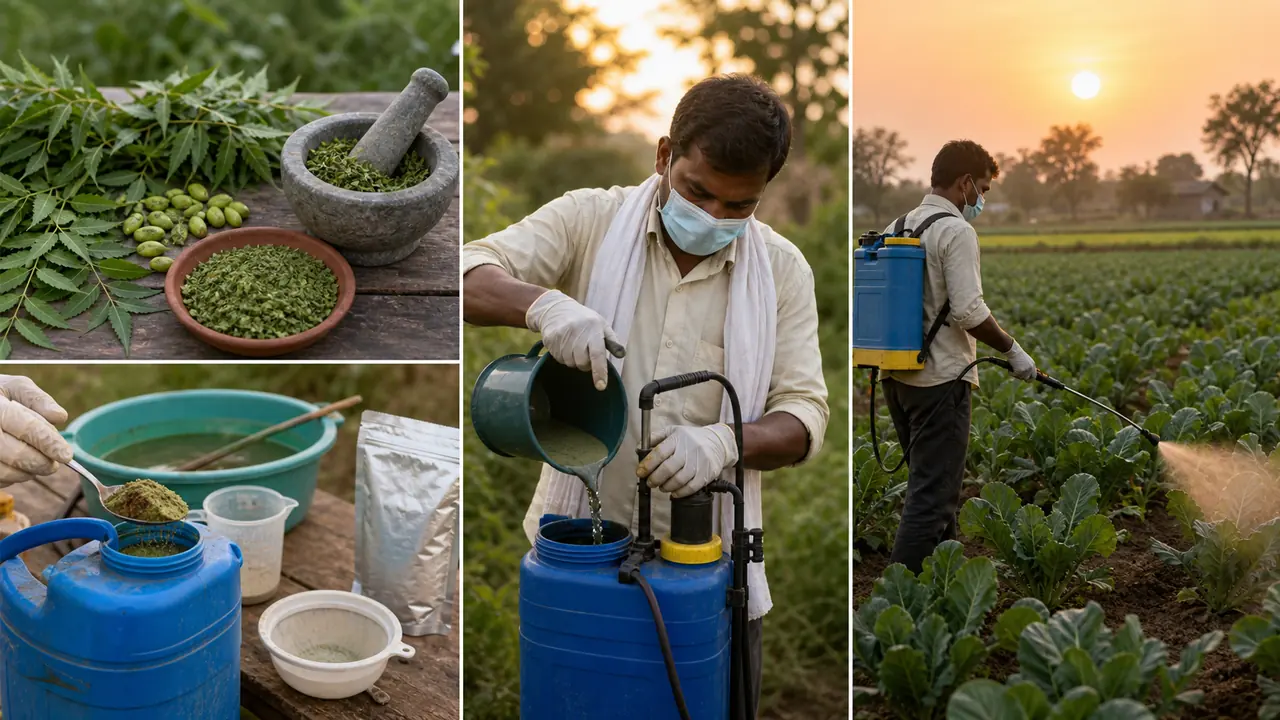
Botanical pesticides
These are obtained from plant materials. They may be crude preparations, extracts, oils, powders, or purified active substances.
Important idea
Many plants naturally produce compounds that defend them from insects, pathogens, or competitors. Agriculture uses some of these compounds in a controlled way.
Common examples students may hear about
- neem products such as azadirachtin
- natural pyrethrum-type products
- garlic- or pepper-based repellent logic in small-scale systems
Important examples include:
- nicotine-type products
- rotenone-related materials
- pyrethrum
- limonene and linalool
- neem-based compounds
The textbook uses these examples to show that botanical protection is not just one neem spray idea. It includes many plant-derived materials that may repel, deter, inhibit, or directly suppress pests.
Botanical examples and functions
| Botanical material | Broad effect students can mention |
|---|---|
| Neem / azadirachtin | feeding deterrence, growth regulation, reproduction disturbance |
| Pyrethrum | quick insect knockdown effect in many products |
| Rotenone-type compounds | activity against leaf-feeding insects |
| Limonene/linalool | action against insects such as fleas, aphids, mites, and flies in this discussion |
| Garlic, pepper, citronella, eucalyptus oils | repellent or irritant logic |
Botanical products should still be used carefully. "Natural" does not mean careless; dose, crop stage, beneficial insects, and label recommendation still matter.
Biochemical pesticides
These control pests through non-toxic mechanisms, often by affecting behaviour, communication, or development rather than directly poisoning the pest in a conventional way.
Important biochemical ideas
- pheromones
- attractants
- repellents
- feeding deterrents
- growth regulators
Semiochemicals
Special importance should be given to semiochemicals, which are behaviour-modifying chemical signals. The main terms are:
- pheromones
- allomones
- kairomones
- synomones
- apneumones
Their agricultural value lies in monitoring, trapping, and mating disruption.
This is why biochemical tools can be powerful even when they are not classic poisons: they interfere with pest communication, attraction, feeding, development, or reproduction.
Semiochemical comparison
| Term | Simple meaning |
|---|---|
| Pheromone | signal between individuals of the same species |
| Allomone | signal benefiting the sender species |
| Kairomone | signal benefiting the receiver species |
| Synomone | signal benefiting both sender and receiver |
| Apneumone | signal linked with non-living sources |
How pheromone tools are used
- monitoring pest population before spraying
- mass trapping selected insects
- mating disruption by confusing males
- attract-and-kill strategies
This is an important idea because it connects biopesticides with decision-based IPM instead of routine pesticide use.
Hormones and insect growth regulators
Biochemical control can also disrupt moulting, metamorphosis, and reproduction. Azadirachtin is especially important as a soft growth-regulating botanical molecule used in IPM.
IGRs disturb moulting, development, metamorphosis, or reproduction. As a result, many insects fail to become normal reproducing adults.
It also emphasizes why azadirachtin matters:
- it acts like a soft growth-regulating molecule
- exposed larvae or nymphs may moult abnormally
- surviving insects may become deformed adults
- beneficial insects are often less affected when they do not directly feed on treated foliage
Plant extracts, enzymes, feeding deterrents, repellents, and confusants
Biochemical control can be extended into several strategy types:
- plant extracts that discourage feeding or harm pests
- enzyme-based interference with insect digestion
- feeding deterrents
- repellents
- confusants that mislead pest insects
Behaviour-management terms
| Term | Field meaning |
|---|---|
| Feeding deterrent | pest stops feeding and crop damage slows |
| Repellent | pest avoids landing, feeding, or remaining on the treated surface |
| Confusant | pest receives misleading signals and fails to locate food or mate |
| IGR | pest fails to moult, develop, or reproduce normally |
| Plant growth regulator | alters plant growth or physiological responses; some oils may also show minimum-risk pesticide effects |
Advanced examples such as fraxinellone and dictamnine are given for feeding deterrence, along with repellents like citronella, neem oil, and lemon eucalyptus oil. The concept is more important than memorizing every chemical name: these substances change pest behaviour or development.
Biotic agents: natural enemies
Biotic control uses living natural enemies.
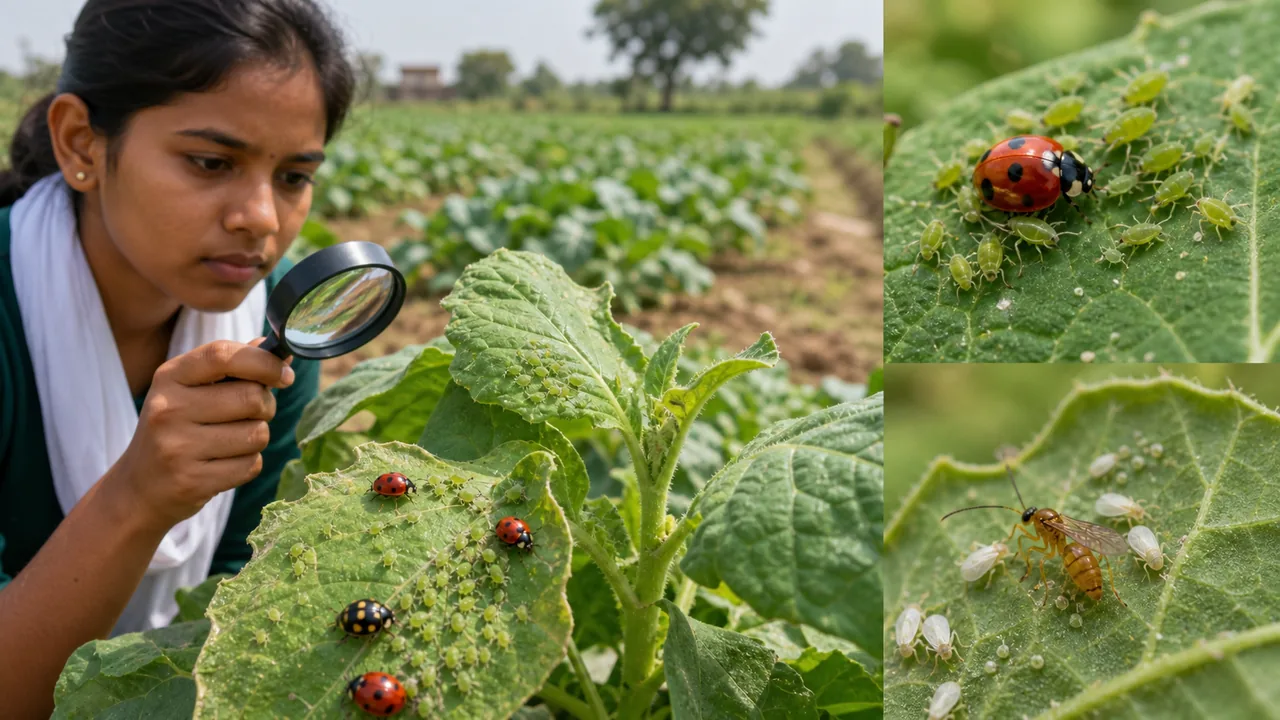
Predators
Predators consume several prey during their lifetime. Examples commonly mentioned in agricultural biology include:
- ladybird beetles
- lacewings
- predatory bugs
- spiders
Other examples include rove beetles, ground beetles, syrphid fly larvae, mantids, and predatory mites.
Predators are defined very clearly:
- they are free living
- they usually consume several prey during development
- they are often as large as or larger than the prey
Parasitoids
Parasitoids develop on or inside a host insect and eventually kill it. They are especially important in biological control programmes.
Important parasitoid names here include Trichogramma, Encarsia, Bathyplectes, and Muscidifurax.
It also explains parasitoid logic in a stepwise way:
- adult lays one or more eggs on or in the host
- larva develops using host tissues or fluids
- host gradually weakens and finally dies
- parasitoid pupates in or around the host system
This is why parasitoids are so valuable in biological control programmes.
Predator versus parasitoid
| Feature | Predator | Parasitoid |
|---|---|---|
| Number of prey/hosts | eats many prey | usually completes development on one host |
| Lifestyle | free-living | larva develops on or in host |
| Host result | prey is eaten | host eventually dies |
| Examples | ladybird, lacewing, spider, predatory mite | Trichogramma, Encarsia, Bathyplectes |
This distinction is frequently tested because both are natural enemies, but their life strategies are different.
Plant growth regulators and minimum-risk pesticide ideas
Soft pest management is also broadened by discussing plant oils and plant regulators that may disturb membranes, growth, or key plant and insect processes.
Examples mentioned include materials associated with:
- cottonseed
- clove
- garlic
- cedar
- rosemary
- peppermint
These examples matter because they show that biological or botanical control can involve repellency, contact injury, growth disturbance, and behavioural interference.
Biopesticides in specialized systems
The discussion even extends into systems like sericulture, where it highlights:
- neem products as safer pest-management tools
- whitefly control through biological approaches
- parasitoids like Encarsia in targeted suppression
Why sericulture needs careful biopesticide choice
Silkworms are insects too. Therefore, pest control in mulberry gardens must avoid harming the silkworm-rearing enterprise. Neem-based products and parasitoids are linked here with whitefly suppression in mulberry. The key lesson is:
mulberry protection must control pests without poisoning the silkworm production chain
This is exactly why biological and selective tools are important in specialized agricultural enterprises.
Why formulation is necessary in practice
A good formulation should be:
- stable enough for storage
- easy to apply
- effective on the target pest
- safer to the crop and beneficial organisms
This is important because the field environment is much harsher than the laboratory environment.
The formulation logic also implies that a product should:
- protect the active organism or molecule from rapid breakdown
- spread properly during application
- stay compatible with the delivery method
- remain effective long enough to reach the target
Formulation checklist for field success
Before recommending a biopesticide, ask:
- Is the target pest correctly identified?
- Is the vulnerable pest stage present?
- Is the product compatible with the crop and weather?
- Is enough humidity or leaf coverage available for the agent?
- Will the product harm beneficial organisms or allied enterprises?
- Is the application timing linked with monitoring?
- Is it part of IPM rather than a blind replacement for every chemical?
Main points for a full answer
A full answer on biopesticides usually includes:
- define biopesticide
- write major types
- give two microbial examples
- give one botanical or biochemical example
- connect with IPM, low residue, and eco-friendly farming
For a longer answer, add:
- PIPs
- semiochemical categories
- predator/parasitoid difference
- formulation importance
- limitations and correct timing
Practical limits
- biopesticides are not instant solutions to every problem
- their success depends on timing and correct use
- they often work best inside IPM
- target specificity is a strength, but it also means they are not universal substitutes for every pest problem
Realistic judgment is also encouraged here:
- advanced biological tools should be assessed carefully before wide use
- environment and pest stage strongly affect success
- profitable control programmes usually depend on selective timing, not blind routine spraying
Role in agriculture
This topic shows a shift in farming logic:
- away from broad chemical dependence
- toward selective, ecological, and system-based management
Additional notes
Named botanical, biochemical and natural-enemy examples
| Category | Exact examples and target memory |
|---|---|
| Pyrethrum / pyrethrins | from Tanacetum cinerariifolium; classic delousing and insect-control example |
| Nicotine / nicotinoids | tobacco-derived idea; source links nicotine with plum beetle control |
| Limonene and linalool | fleas, aphids, mites, fire ants, flies, paper wasps, house crickets |
| Neem | sucking and chewing insects; also important in sericulture whitefly management |
| Pyrethrum | ants, aphids, roaches, fleas, flies, ticks |
| Rotenone / rotenoids | aphids, asparagus beetle, bean leaf beetle, potato beetle, cucumber beetle, flea beetle, strawberry leaf beetle, caterpillars, fleas and lice |
| Ryania | caterpillars such as corn borer and corn earworm, also thrips |
| Sabadilla | squash bugs, harlequin bugs, thrips, caterpillars, leafhoppers, stink bug |
| Feeding deterrents | fraxinellone and dictamnine from Dictamnus dasycarpus, against Tribolium castaneum and Sitophilus zeamais |
| Repellents | DEET, lemon eucalyptus oil, icaridin, nepetalactone, dimethyl carbate, dimethyl phthalate, citronella oil, neem oil, metofluthrin |
| Confusants / pheromones | mating disruption such as codling moth control in apples |
| Plant oils | cottonseed, clove, garlic, cedar, rosemary, peppermint oils |
| IGRs | hormone mimics, chitin-synthesis disruptors, azadirachtin as a major botanical IGR |
Sericulture whitefly biological-control examples
| Pest context | Biocontrol memory |
|---|---|
| Whiteflies on mulberry | Dialeuropora decempuncta, Aleurodicus dispersus, and Aleuroclava sp. can reduce mulberry leaf value |
| Neem-based products | safer alternative for pest management in sericulture |
| Exotic parasitoids | Encarsia haitiensis and Encarsia meritoria are promising aphelinid parasitoids |
Predators usually attack many prey during their lifetime and are free living. Parasitoids usually develop on or inside a host and eventually kill it. This predator-versus-parasitoid distinction is a favourite short-answer point.
Biopesticides as ecosystem management
Biopesticides are not "weak pesticides." They are pest-management tools that use biology more intelligently. Some infect pests, some repel them, some confuse mating, some slow development, and some are living enemies that attack the pest directly.
A simple analogy
| Biopesticide type | Security analogy | Example |
|---|---|---|
| Microbial pesticide | disease sent specifically to the pest | Bt against caterpillars |
| Botanical pesticide | plant-made defence chemical | neem-based products |
| Semiochemical | fake signal or confusion message | pheromone trap or mating disruption |
| Predator | patrol guard that eats many pests | ladybird beetle |
| Parasitoid | specialist undercover agent | egg or larval parasitoid |
| Formulation | delivery package | wettable powder, granule, liquid |
Small farm situation
A vegetable grower finds caterpillars and immediately thinks of a chemical spray. A better IPM-minded student first asks: crop stage, pest level, natural enemies, Bt suitability, neem option, pheromone trap, and formulation quality. This is the difference between spraying by fear and managing by diagnosis.
Summary Cheat Sheet
| Concept / Topic | Key Details / Explanation |
|---|---|
| Meaning of biopesticides | Biopesticides come from biological sources and are used for safer crop protection. |
| Major groups | Important groups include microbial, botanical, biochemical, and other biotic-agent types. |
| Role in sustainable farming | Biopesticides are especially important in organic farming and IPM because they reduce heavy chemical dependence. |
| Formulation | Formulation means converting the active product into a form that is practically usable, storable, and applicable in the field. |
| Advanced terms | Important Unit 5 terms include PIPs (plant-incorporated protectants), semiochemicals, and IGRs (insect growth regulators). |
| Predator vs parasitoid | Predators eat many prey, while parasitoids usually develop on or in one host and eventually kill it. |
| Best lesson takeaway | Biopesticides are not just active agents; formulation and correct biological targeting decide field success. |
Lesson Doubts
Ask questions, get expert answers